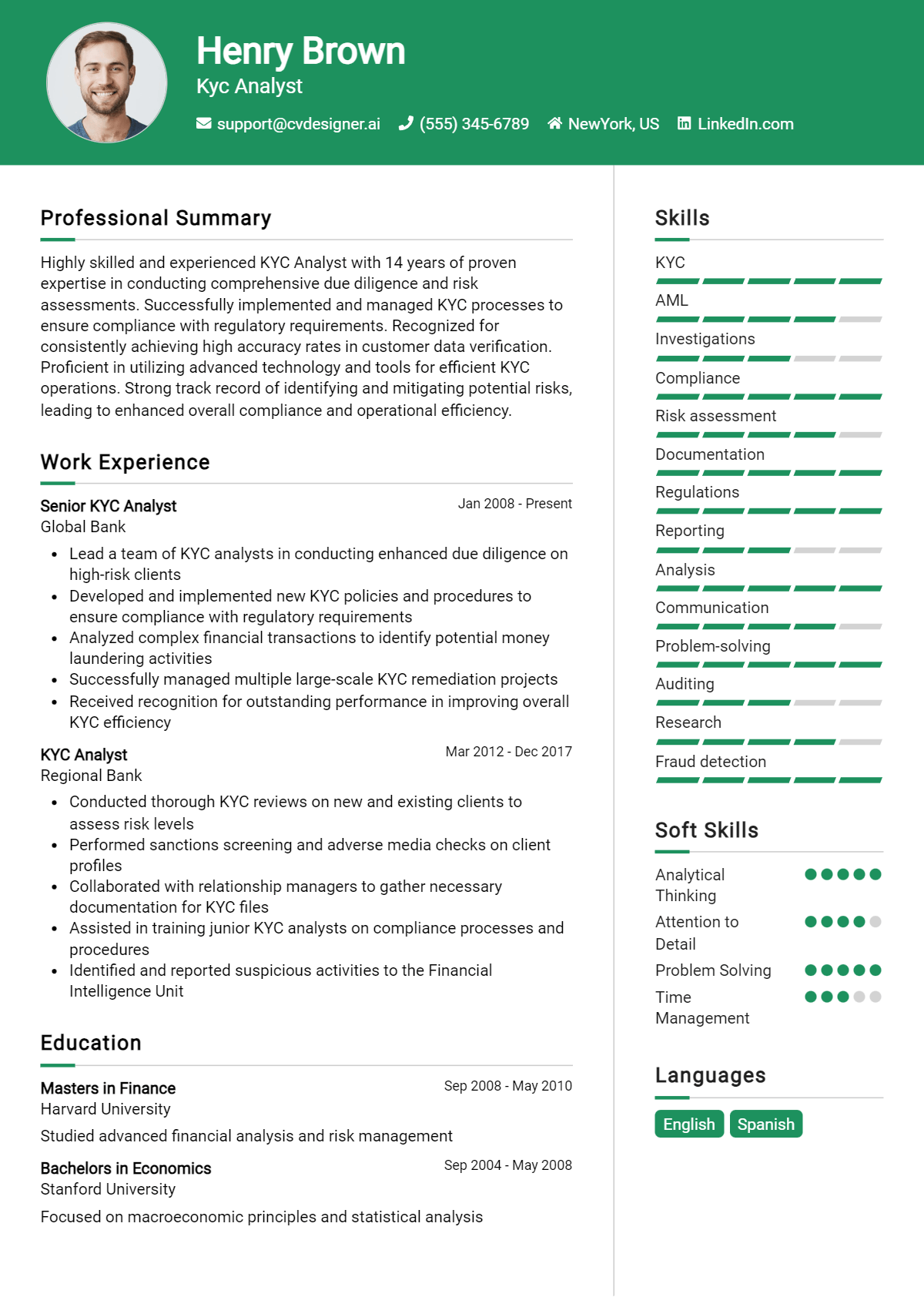
As you prepare for your interview as a KYC Analyst, it's crucial to familiarize yourself with the types of questions you may encounter. This role requires a strong understanding of compliance, risk assessment, and customer verification processes. To help you excel, we have compiled a collection of the top interview questions along with detailed answers and examples. These resources will not only enhance your preparation but also boost your confidence on interview day. Be sure to check them out!
Preparing for an interview is crucial, especially for a KYC Analyst role, as it demonstrates your relevant skills, experience, and personality. Well-crafted responses to common interview questions can significantly increase your chances of securing the position by showcasing your ability to handle responsibilities in the role.
1. What do you understand by KYC and why is it important?
KYC, or Know Your Customer, is a process to verify the identity of clients. It's vital for preventing fraud, ensuring compliance with regulations, and protecting the institution from financial crimes.
Example:
KYC is essential as it helps identify and mitigate risks of money laundering and protects the organization from potential legal issues.
2. Describe your experience with KYC processes.
I have over three years of experience in KYC processes, including customer onboarding, risk assessment, and maintaining compliance with regulatory requirements to ensure efficient operations.
Example:
In my previous role, I managed KYC documentation for onboarding clients, ensuring compliance with AML regulations and maintaining accurate records.
3. How do you handle discrepancies in customer information?
When discrepancies arise, I conduct thorough investigations, cross-reference documents, and communicate with clients to resolve issues while documenting the process for compliance purposes.
Example:
I would gather all relevant documentation, reach out to the customer for clarification, and ensure all findings are documented for compliance review.
4. Can you explain how you stay updated with KYC regulations?
I stay updated by regularly attending training sessions, participating in webinars, and reviewing publications from regulatory bodies to ensure compliance with the latest KYC regulations.
Example:
I subscribe to industry newsletters and attend conferences to stay informed about the latest changes in KYC regulations and best practices.
5. What tools or software do you use for KYC compliance?
I utilize various tools such as AML software, customer relationship management systems, and data verification platforms to enhance KYC compliance and streamline processes.
Example:
I frequently use tools like LexisNexis and Actimize for risk assessment and maintaining accurate KYC records.
6. How do you prioritize tasks when handling multiple KYC requests?
I prioritize tasks based on urgency and complexity, using a task management system to track deadlines, ensuring timely processing while maintaining accuracy and compliance.
Example:
I assess the risk level of each request and prioritize high-risk clients to ensure compliance deadlines are met efficiently.
7. Describe a challenging situation you've faced in KYC compliance.
I once encountered incomplete documentation from a high-risk client. I communicated effectively with the client, requested the necessary information, and ensured compliance while minimizing delays.
Example:
I resolved a case with missing ID by coordinating with the client to gather required documents while keeping my team informed to ensure compliance.
8. How do you ensure data privacy and security in KYC processing?
I adhere to data protection regulations by implementing secure data handling practices, using encrypted systems, and regularly training staff on compliance and data privacy policies.
Example:
I follow strict protocols for data security and conduct regular audits to ensure compliance with data protection regulations.
9. What steps do you take to ensure compliance with KYC regulations?
I prioritize staying updated on KYC regulations and guidelines, conducting thorough customer risk assessments, and implementing robust verification processes to ensure compliance at every stage.
Example:
I regularly review regulatory updates and adjust our processes accordingly, ensuring thorough documentation and verification checks to maintain compliance with all relevant KYC regulations.
10. How do you handle discrepancies in customer information?
I investigate discrepancies by cross-referencing various data sources and reaching out to the customer for clarification, ensuring all findings are documented and reported as needed.
Example:
Upon finding a discrepancy, I validate the information through our databases and contact the customer directly to clarify, documenting every step of the process.
11. Can you describe a time when you identified a potential risk during the KYC process?
During a routine review, I noticed a pattern of inconsistent addresses among multiple accounts. I escalated the issue, leading to an investigation that prevented potential fraud.
Example:
I identified multiple accounts linked to the same IP address with different names. This raised a red flag, prompting a deeper investigation that confirmed fraudulent activity.
12. What tools or software do you find most effective for KYC compliance?
I find tools like AML screening software and customer verification platforms essential for automating compliance tasks and enhancing our ability to perform thorough due diligence.
Example:
I use platforms like LexisNexis for screening and identity verification, which streamline the KYC process and help ensure compliance with current regulations.
13. How do you stay informed about changes in KYC regulations?
I subscribe to industry newsletters, attend webinars, and participate in professional forums to keep abreast of changes in KYC regulations and best practices.
Example:
I regularly check resources like the Financial Action Task Force (FATF) updates and engage with professional networks to stay informed about KYC regulatory changes.
14. Describe your experience working with regulatory bodies.
I have collaborated with regulatory bodies during audits, providing necessary documentation and ensuring our processes meet compliance standards while fostering a cooperative relationship.
Example:
In previous roles, I assisted regulatory audits by preparing required documentation and addressing inquiries, ensuring compliance and fostering transparency with the regulators.
15. How do you prioritize tasks in a high-volume KYC environment?
I use a combination of risk assessment and deadlines to prioritize tasks, ensuring high-risk cases are addressed first while maintaining a steady workflow for routine verifications.
Example:
I prioritize tasks based on risk levels, addressing high-risk clients first and scheduling routine checks to meet deadlines without compromising accuracy.
16. What do you believe is the most challenging aspect of being a KYC Analyst?
The most challenging aspect is keeping up with evolving regulations and technology while ensuring thoroughness and accuracy in the KYC process, which is vital for compliance.
Example:
Staying updated with constantly changing regulations can be challenging, but I embrace continuous learning to adapt and ensure our compliance efforts are effective.
17. Can you explain the importance of customer due diligence (CDD) in KYC processes?
Customer due diligence is essential in KYC as it helps identify and mitigate risks associated with money laundering and terrorist financing. It ensures that organizations know their customers and can make informed decisions.
Example:
CDD is crucial as it establishes a customer's identity, assesses potential risks, and helps prevent financial crimes, ensuring compliance with regulatory frameworks.
18. How do you handle discrepancies in customer information during the KYC process?
I address discrepancies by conducting thorough investigations, reaching out to clients for clarification, and verifying information through reliable sources. This ensures data accuracy and maintains compliance with regulatory standards.
Example:
When discrepancies arise, I verify the information through direct communication and reliable databases, ensuring compliance and maintaining customer trust.
19. Describe a time when you identified a potential red flag during the KYC process.
I once noticed unusual transaction patterns from a client with a low-risk profile. I escalated my findings to the compliance team, leading to further investigation and risk mitigation.
Example:
I identified a client with sudden high-value transactions inconsistent with their profile. Reporting this led to a thorough investigation and necessary actions to mitigate risk.
20. What tools or software are you familiar with for conducting KYC checks?
I have experience using tools like World-Check, LexisNexis, and various CRM systems. These tools aid in efficient customer screening, risk assessment, and ongoing monitoring.
Example:
I frequently use World-Check and LexisNexis for KYC checks, facilitating comprehensive customer screening and compliance with regulations.
21. How do you stay updated with KYC regulations and compliance changes?
I stay updated through continuous education, attending webinars, subscribing to industry newsletters, and participating in professional organizations focused on compliance and regulatory standards.
Example:
I follow industry newsletters and attend webinars to stay informed about evolving KYC regulations, ensuring my knowledge is current and relevant.
22. Can you discuss the role of risk assessment in KYC processes?
Risk assessment is vital in KYC as it helps prioritize clients based on their risk profiles, enabling organizations to allocate resources effectively and mitigate potential threats to financial integrity.
Example:
Risk assessment allows us to categorize clients based on their risk exposure, ensuring we focus on high-risk individuals for thorough scrutiny.
23. What steps do you take to ensure data privacy and security in KYC processes?
I adhere to data protection regulations, implement secure data storage solutions, and conduct regular audits to ensure that customer information is handled confidentially and securely.
Example:
To ensure data privacy, I follow strict protocols, use encrypted storage methods, and conduct regular audits to prevent unauthorized access.
24. Explain how you would approach a situation where a customer refuses to provide necessary KYC documentation.
I would explain the regulatory requirements and the importance of KYC for both the customer and the organization. If they still refuse, I would escalate the issue according to company policy.
Example:
I would clarify the necessity of documentation for compliance. If the customer insists on refusing, I would follow our escalation procedures for resolution.
25. How do you prioritize tasks when dealing with multiple KYC requests?
I prioritize tasks by assessing the urgency and complexity of each request. I utilize a tracking system to manage deadlines and ensure compliance while maintaining high-quality checks. Example: I typically categorize requests by their risk levels, processing high-risk cases first to mitigate any potential issues promptly.
26. Can you describe a situation where you identified a potential red flag during the KYC process?
During a routine review, I found discrepancies in a client’s provided identification and documentation. I escalated the issue, leading to further investigation and ultimately preventing fraudulent activity. Example: I noticed inconsistent addresses on documents and promptly raised this concern, resulting in a deeper inquiry that confirmed my suspicions.
27. What tools and software have you used for KYC processes?
I have experience with various KYC software like Actimize and LexisNexis, along with Excel for data analysis. These tools helped streamline processes and enhance compliance tracking. Example: In my previous role, I used Actimize to automate risk assessments, significantly reducing manual errors and processing time.
28. How do you stay updated with the latest regulations and compliance requirements?
I subscribe to industry newsletters, participate in webinars, and attend compliance workshops. Networking with other professionals also helps me stay informed about regulatory changes. Example: I attend quarterly compliance seminars and am part of a professional group that shares updates and best practices in the KYC field.
29. Describe your experience with Enhanced Due Diligence (EDD).
I have conducted EDD on high-risk clients, involving in-depth analysis of their business activities and source of funds. This process ensured our compliance with AML regulations. Example: For a high-net-worth client, I conducted EDD by reviewing their financial history and verifying their business transactions with third-party sources.
30. What steps do you take if a customer refuses to provide necessary documentation?
I would explain the regulatory requirements and the importance of the documentation for compliance. If they still refuse, I would escalate the issue according to company policy. Example: I would calmly inform the customer that without the documents, we cannot proceed, ensuring they understand the compliance obligations involved.
31. How do you handle discrepancies in customer information during the KYC process?
I investigate discrepancies by cross-referencing multiple data sources and reaching out to the client for clarification. Clear communication is key to resolving any inconsistencies effectively. Example: I once found conflicting information on a client's address, so I contacted them directly to clarify and updated our records accordingly.
32. What role does technology play in enhancing the KYC process?
Technology plays a crucial role in automating data collection, risk assessments, and compliance checks. It improves efficiency, accuracy, and helps maintain robust records for audits. Example: Implementing automated KYC solutions significantly reduced manual workload and increased our team's ability to focus on higher-risk assessments and investigations.
33. How do you ensure compliance with KYC regulations?
I stay updated on regulatory changes and utilize compliance software to automate checks. Regular training and audits also help in maintaining adherence to KYC regulations within my team.
Example:
I ensure compliance by conducting regular reviews and updates of our KYC policies, and I participate in training sessions to remain informed about regulatory changes.
34. Can you describe a challenging KYC case you managed?
I once investigated a complex case involving multiple jurisdictions. I collaborated with local teams, analyzed transaction patterns, and eventually uncovered fraudulent activity, which led to a successful report to authorities.
Example:
I managed a case where a client’s identity was disputed. I conducted thorough investigations and successfully verified their identity through documentation and cross-referencing databases.
35. What role does technology play in your KYC processes?
Technology is crucial in streamlining KYC processes. I utilize various software tools for data collection, risk assessment, and regulatory reporting, enhancing efficiency and accuracy in compliance.
Example:
I rely on automated KYC platforms that help in data verification and risk scoring, which significantly reduces manual errors and speeds up the onboarding process.
36. How do you handle discrepancies found during KYC checks?
When discrepancies arise, I conduct a thorough investigation to gather additional information. I communicate with the client for clarification and adjust our risk assessment accordingly to ensure compliance.
Example:
In cases of discrepancies, I reach out to clients for further documentation and conduct additional checks to understand the inconsistencies before taking any action.
37. Describe your experience with customer due diligence.
I have performed due diligence by assessing customer profiles, verifying identities, and analyzing transaction behavior to identify potential risks, ensuring robust compliance with KYC requirements.
Example:
In my previous role, I conducted extensive customer due diligence, which included analyzing financial transactions and ensuring all client information was accurately documented.
38. How do you prioritize your workload in high-pressure situations?
I prioritize tasks based on deadlines and risk levels. I maintain an organized schedule and use tools to track progress, ensuring that critical KYC checks are completed efficiently.
Example:
In high-pressure situations, I focus on urgent tasks first, using a checklist to manage my workload effectively while ensuring compliance deadlines are met.
39. What steps do you take to stay updated on KYC regulations?
I subscribe to industry newsletters, attend workshops, and participate in webinars. Networking with peers also helps me stay informed about the latest trends and regulatory changes in KYC.
Example:
I follow regulatory bodies and industry publications, and I regularly attend compliance seminars to stay current on KYC regulations and best practices.
40. Explain how you would deal with a difficult client during the KYC process.
I approach difficult clients with patience and empathy. I listen to their concerns, provide clear explanations of the KYC process, and work collaboratively to resolve any issues they face.
Example:
In dealing with difficult clients, I remain calm and respectful, ensuring clear communication to help them understand the KYC requirements and facilitate the process.
41. How do you approach updating KYC records for existing clients?
I prioritize regular reviews of client records, ensuring information is current and compliant. I utilize automated systems to flag outdated data and conduct manual checks as needed, maintaining accuracy and thoroughness in updates.
Example:
I regularly review client files and use our CRM system to identify outdated information, ensuring that all updates are documented and compliant with regulations.
42. Can you describe a time when you identified a potential red flag during a KYC review?
During a routine check, I noticed discrepancies in a client’s financial statements. I escalated my findings to compliance, leading to further investigation and ultimately preventing a potential case of fraud.
Example:
I once found inconsistent transaction patterns in a client’s profile, which I reported to my supervisor, prompting a deeper investigation that uncovered fraudulent activity.
43. How do you ensure compliance with KYC regulations in your daily tasks?
I stay updated on regulatory changes and ensure all procedures align with current standards. Regular training and collaboration with compliance teams help me maintain a strong understanding of KYC requirements.
Example:
I participate in ongoing training sessions and consult regulatory updates frequently to ensure my work aligns with KYC compliance requirements.
44. What tools do you use for KYC verification, and how do they enhance your efficiency?
I use various tools like identity verification software and transaction monitoring systems. These tools streamline the verification process, reduce manual errors, and allow me to focus on more complex cases.
Example:
I utilize software like LexisNexis for identity verification, enabling faster checks and thorough compliance with KYC regulations.
45. How do you handle a situation where a client refuses to provide necessary KYC information?
I explain the importance of KYC compliance and its impact on their accounts. If they still refuse, I follow company policy, which may involve restricting their account until we receive the required information.
Example:
I would clearly communicate the consequences of non-compliance, emphasizing that KYC is essential for their account's security and integrity.
46. What strategies do you use to stay organized when managing multiple KYC cases?
I prioritize tasks based on urgency and complexity, utilizing task management software to keep track of deadlines and critical information. This approach ensures I maintain focus and thoroughness across all cases.
Example:
I use project management tools to prioritize and track my KYC cases effectively, ensuring timely completion without sacrificing quality.
How Do I Prepare For A Kyc Analyst Interview?
Preparing for a KYC Analyst interview is crucial to making a positive impression on the hiring manager. A well-prepared candidate demonstrates not only their interest in the role but also their commitment to understanding the complexities of KYC processes and regulations. Here are some key preparation tips to help you succeed:
- Research the company and its values to align your answers with their mission and goals.
- Practice answering common interview questions related to KYC, compliance, and risk management.
- Prepare examples that demonstrate your skills and experience relevant to the KYC Analyst role.
- Familiarize yourself with current regulations and trends in the KYC and AML (Anti-Money Laundering) sectors.
- Review the job description carefully to understand the specific requirements and responsibilities of the position.
- Be ready to discuss tools and software you have used in your previous roles related to KYC processes.
- Prepare thoughtful questions to ask the interviewer that reflect your interest in the role and the company.
Frequently Asked Questions (FAQ) for Kyc Analyst Interview
Being well-prepared for an interview is crucial, especially for a KYC Analyst position where attention to detail and analytical skills are key. Understanding the most commonly asked questions can help you present yourself confidently and effectively, ensuring you make a positive impression on your potential employer.
What should I bring to a Kyc Analyst interview?
When attending a KYC Analyst interview, it’s important to bring several key items. Prepare copies of your resume to share with interviewers, along with a list of references. Additionally, bring a notepad and pen for taking notes, as well as any certifications or documents that showcase your qualifications. Having a folder to keep everything organized can also reflect your professionalism and attention to detail.
How should I prepare for technical questions in a Kyc Analyst interview?
To prepare for technical questions, review the fundamental principles of KYC, anti-money laundering (AML), and regulatory compliance. Familiarize yourself with common tools and software used in the industry, and be ready to discuss specific methodologies for risk assessment and customer due diligence. Practicing with sample technical questions can also help you articulate your thought process and demonstrate your analytical skills during the interview.
How can I best present my skills if I have little experience?
If you have limited experience as a KYC Analyst, focus on transferable skills gained from previous jobs or educational experiences. Highlight your analytical abilities, attention to detail, and understanding of compliance-related concepts. Discuss any relevant coursework or projects, and emphasize your willingness to learn and adapt. Employers often value enthusiasm and a proactive approach just as much as experience.
What should I wear to a Kyc Analyst interview?
Selecting the right attire for a KYC Analyst interview is essential, as it reflects your professionalism and respect for the company culture. Opt for business formal or business casual attire, depending on the company's dress code. Generally, a tailored suit or professional dress is a safe choice. Make sure your clothes are clean and pressed, and pay attention to grooming, as first impressions can significantly impact how you are perceived.
How should I follow up after the interview?
Following up after your interview is a great way to express appreciation and reiterate your interest in the position. Send a thank-you email within 24 hours, addressing the interviewer by name and thanking them for the opportunity to interview. You can briefly mention a key point from the conversation to personalize your message. This not only shows your enthusiasm for the role but also keeps you top of mind as the hiring process continues.
Conclusion
In this interview guide for KYC Analysts, we have covered essential topics including the importance of understanding regulatory frameworks, the significance of attention to detail, and the need for strong analytical skills. Preparation and practice are vital components to succeeding in your interview, as they allow you to demonstrate your expertise and confidence effectively.
By preparing for both technical and behavioral questions, candidates can significantly enhance their chances of making a positive impression on interviewers. A well-rounded preparation strategy will not only showcase your qualifications but also your ability to fit into the company culture.
We encourage you to leverage the tips and examples provided in this guide to approach your interviews with confidence. Remember, each interview is an opportunity to showcase your skills and passion for the role. Good luck!
For further assistance, check out our [resume templates](https://resumedesign.ai/resume-templates/), explore our [resume builder](https://app.resumedesign.ai/), read our [interview preparation tips](#), and create effective [cover letter templates](https://resumedesign.ai/cover-letter-templates/).