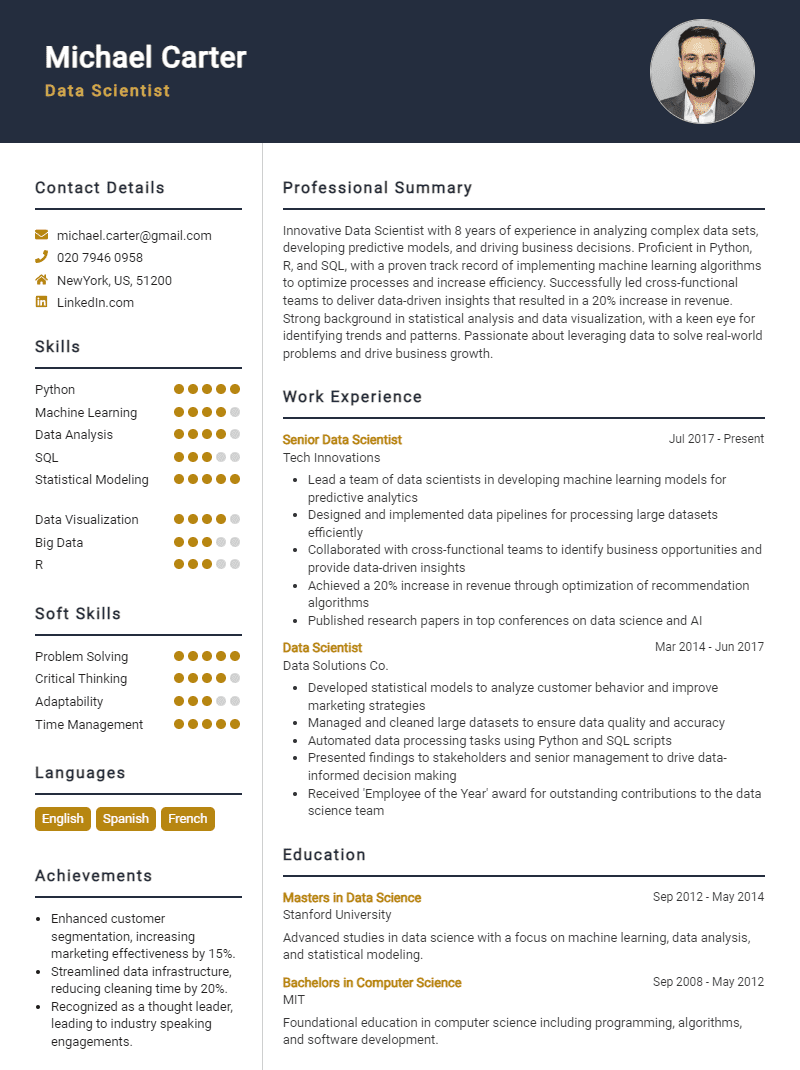
When preparing for a software engineering interview, it's essential to anticipate the types of questions you may encounter. These interviews often delve into your technical skills, problem-solving abilities, and understanding of software development principles. Being well-prepared can significantly increase your chances of standing out as a candidate.
Here is a list of common job interview questions for software engineers, along with examples of the best answers. These questions typically explore your work history and experience, highlight what you can bring to the employer, and assess your aspirations for future growth within the field. By reflecting on these questions and crafting thoughtful responses, you can demonstrate your qualifications and enthusiasm for the role.
1. What programming languages are you most comfortable with?
I am most comfortable with Python, Java, and JavaScript. Each has its strengths; for example, I use Python for data analysis, Java for enterprise applications, and JavaScript for web development. I adapt my programming style based on project requirements and team dynamics.
Example:
I primarily use Python for backend development, Java for Android apps, and JavaScript for front-end interfaces. Each language helps me tackle specific challenges effectively, ensuring optimal performance and user experience.
2. Can you describe your experience with version control systems?
I have extensive experience using Git for version control. I regularly collaborate with teams on GitHub, managing branches, resolving merge conflicts, and conducting code reviews. This process enhances code quality and fosters effective team communication, which is vital for project success.
Example:
I utilize Git for all my projects, focusing on branching strategies and pull requests for collaboration. This approach ensures that our team maintains code quality while allowing for smooth integration of new features.
3. How do you approach debugging a complex issue?
When debugging, I first reproduce the issue to understand it better. Then, I use tools like breakpoints and logging to identify the root cause. After isolating the problem, I implement a solution and test thoroughly to ensure it’s resolved without introducing new bugs.
Example:
I start by recreating the bug, analyzing logs, and using breakpoints to pinpoint the issue. Once identified, I carefully implement a fix and conduct extensive tests to confirm the resolution is effective and does not introduce new issues.
4. What is your experience with agile methodologies?
I have worked in agile environments for over three years, participating in daily stand-ups, sprint planning, and retrospectives. This experience has honed my ability to adapt to changing requirements quickly and deliver high-quality software in iterative cycles, promoting team collaboration and efficiency.
Example:
I have actively participated in agile teams, attending daily stand-ups and retrospectives. This methodology has improved my adaptability and collaboration skills, allowing us to deliver features iteratively and respond to client feedback efficiently.
5. How do you prioritize tasks when working on multiple projects?
I prioritize tasks by assessing deadlines, project importance, and team dependencies. Using tools like Trello, I create a prioritized task list and communicate regularly with stakeholders to ensure alignment. This structured approach helps me manage my workload effectively and meet project goals.
Example:
I evaluate project deadlines and urgency, then use a task management tool to organize my workload. Regular communication with stakeholders helps me adjust priorities as needed, ensuring I stay focused on high-impact tasks.
6. Describe a challenging project you worked on and how you handled it.
I worked on a project with tight deadlines and complex requirements. I organized the team for daily stand-ups and delegated tasks based on each member’s strengths. By maintaining open communication and focusing on iterative progress, we successfully delivered the project on time, meeting all client expectations.
Example:
In a recent project with tight deadlines, I organized daily stand-ups to track progress and address issues. By leveraging team strengths and maintaining open communication, we delivered the project on schedule and exceeded client expectations.
7. What are your thoughts on code reviews?
I believe code reviews are essential for maintaining code quality and fostering knowledge sharing within the team. They help identify potential issues early, encourage best practices, and enhance overall team collaboration. I actively participate in reviews, providing constructive feedback and learning from my peers.
Example:
Code reviews are crucial for ensuring code quality and team learning. I appreciate the opportunity to provide constructive feedback and gain insights from others, ultimately enhancing our project's robustness and maintainability.
8. How do you stay updated with new technologies and industry trends?
I stay updated by following tech blogs, participating in webinars, and attending industry conferences. I also engage with online communities and contribute to open-source projects. This continuous learning approach keeps my skills sharp and allows me to apply the latest technologies in my work.
<strong>Example:</strong>
<div class='interview-answer'>I follow tech blogs, attend webinars, and participate in local meetups to stay informed about industry trends. Eng
9. How do you approach debugging a complex issue in your code?
I begin by replicating the issue to understand it better. Then, I utilize debugging tools and logs to trace the problem. I methodically isolate components to determine the root cause, ensuring to document my findings and solutions for future reference.
Example:
I once faced a memory leak in a project. I used profiling tools to identify the leak source, isolated the code causing it, and modified the implementation. This approach not only fixed the bug but also improved performance.
10. Can you describe a time when you had to learn a new technology quickly?
In my previous role, we decided to migrate to a microservices architecture. I dedicated my evenings to studying Docker and Kubernetes through online courses and hands-on practice, successfully leading the deployment of our first microservice within two weeks, much to my team's satisfaction.
Example:
When our team adopted React, I spent weekends learning it via tutorials. Within a month, I built a fully functional component for our application, which enhanced user experience significantly and became a key part of our project.
11. How do you ensure the quality of your code?
I follow best practices like writing clean, maintainable code and implementing automated tests. Code reviews are essential; I regularly seek feedback from peers. Additionally, I use linters and adhere to style guides to maintain consistency and readability throughout my codebase.
Example:
I utilize unit tests and integration tests to cover critical functionalities. During my last project, I paired with a colleague for code reviews, which improved our code quality and reduced bugs before deployment.
12. What strategies do you use for version control and collaboration in your projects?
I primarily use Git for version control, creating branches for features, bugs, and experiments. I encourage frequent commits with descriptive messages. For collaboration, I utilize pull requests and code reviews to facilitate feedback and maintain code quality across the team.
Example:
In my last project, I organized weekly stand-ups to discuss branches and challenges. This open communication ensured everyone was aligned, and the pull request process helped us maintain high-quality code through collaborative reviews.
13. Describe a challenging project you worked on and how you overcame obstacles.
I worked on a complex e-commerce platform where performance was critical. We faced scalability issues during peak times. I proposed a caching strategy using Redis, which reduced load times significantly, leading to improved user experience and handling increased traffic efficiently.
Example:
While developing a mobile app, we encountered API response delays. I recommended implementing asynchronous calls, which resolved the issue and boosted the app's responsiveness, ultimately enhancing user satisfaction.
14. How do you prioritize tasks in a fast-paced environment?
I assess tasks based on urgency and impact, using tools like Kanban boards for visibility. I communicate regularly with stakeholders to understand priorities and adjust my focus accordingly, ensuring I meet deadlines while maintaining high-quality deliverables.
Example:
In a recent sprint, I prioritized bug fixes over new features after consulting with the product owner. This focus improved overall product stability, allowing us to deliver a polished release to our users on time.
15. What is your experience with Agile methodologies?
I have worked in Agile environments for over three years, participating in daily stand-ups, sprint planning, and retrospectives. I appreciate the iterative approach, which allows for flexibility and continuous feedback, enabling the team to deliver high-quality software efficiently.
Example:
In my last role, I was part of a Scrum team. I contributed to sprint ceremonies and helped refine user stories, which enhanced our team's productivity and responsiveness to changing requirements, leading to successful project completions.
16. How do you stay current with new technologies and industry trends?
I regularly read tech blogs, follow industry leaders on social media, and attend webinars and conferences. I also engage in online communities and contribute to open-source projects, which helps me learn from others and stay informed about emerging trends and tools.
<strong>Example:</strong>
<div class='interview-answer'>I subscribe to newsletters like Hacker News and attend local meetups. This year, I learned about GraphQL through a workshop, which I later implemented in a project
17. Can you explain the concept of RESTful APIs?
RESTful APIs are architectural styles that allow different software applications to communicate over HTTP. They utilize standard HTTP methods like GET, POST, PUT, and DELETE, enabling stateless interactions and resource manipulation using URLs, which promotes scalability and simplicity in client-server communication.
Example:
RESTful APIs allow applications to interact using standard HTTP methods. For instance, a GET request retrieves data, while POST creates new entries. This stateless communication enhances scalability and efficiency in web service implementation.
18. Describe a time you had to debug a complex issue.
In a previous project, I encountered a performance issue in a web application. I used profiling tools to identify bottlenecks in the code. After isolating the problem, I optimized the algorithm, resulting in a 50% performance improvement and a smoother user experience.
Example:
I faced a performance issue in a web app. Using profiling tools, I pinpointed the bottleneck in the code. After optimizing the algorithm, I achieved a 50% performance boost, greatly enhancing the user experience.
19. What is your experience with version control systems?
I have extensive experience using Git for version control. I regularly create branches for features, utilize pull requests for code reviews, and maintain clear commit messages. This practice ensures code integrity and facilitates collaboration among team members, streamlining the development process.
Example:
I use Git for version control, creating branches for features and using pull requests for code reviews. This approach enhances collaboration and maintains code integrity, ensuring a smooth development process.
20. How do you approach learning a new programming language?
When learning a new programming language, I start with foundational concepts through online courses or tutorials. I then practice by building small projects, gradually integrating advanced features. This hands-on approach helps solidify my understanding and enables effective application of the language in real-world scenarios.
Example:
I begin learning a new language with online courses covering basics. Next, I apply my knowledge by building small projects, which helps reinforce concepts and prepares me for real-world applications.
21. What strategies do you use to optimize application performance?
To optimize application performance, I focus on efficient algorithms, minimize database queries, and utilize caching mechanisms. Additionally, I perform code reviews and profiling to identify bottlenecks, ensuring the application runs smoothly and meets user expectations for speed and responsiveness.
Example:
I optimize performance by using efficient algorithms and minimizing database queries. Implementing caching and conducting code reviews helps to identify bottlenecks, ensuring the application performs well and meets user expectations.
22. Explain the importance of unit testing in software development.
Unit testing is crucial as it ensures individual components work correctly before integration. It helps catch bugs early, enhances code quality, and facilitates changes in the codebase without introducing new issues. This practice ultimately leads to more reliable software and easier maintenance.
Example:
Unit testing is vital for verifying that individual components function correctly. It allows early bug detection, improves code quality, and supports easier maintenance, leading to more reliable software overall.
23. How do you prioritize tasks in a software development project?
I prioritize tasks by assessing their impact on project goals and deadlines. I use techniques like the MoSCoW method to categorize tasks into must-haves, should-haves, could-haves, and won't-haves, ensuring efficient resource allocation and timely completion of critical features.
Example:
I prioritize tasks based on their impact on project goals and deadlines. By using the MoSCoW method, I categorize tasks to ensure efficient resource allocation and timely completion of critical features.
24. Can you describe your experience with Agile methodologies?
I have worked extensively in Agile environments, participating in daily stand-ups, sprint planning, and retrospectives. This iterative approach allows for continuous feedback and adaptation, ensuring that the team remains aligned with project goals and can quickly respond to changing requirements.
Example:
I have extensive experience in Agile environments, engaging in daily stand-ups and sprint planning. This iterative process fosters continuous feedback and adaptability, keeping the team aligned with project goals and responsive to changes.
25. How do you approach debugging a complex issue in your code?
I start by reproducing the issue consistently, then isolate the problematic code. I use debugging tools and logs to trace the flow and identify where it deviates. Once I find the root cause, I implement a solution and test extensively to prevent future occurrences.
Example:
When facing a bug in our API, I replicated it in a test environment, analyzed logs to trace the execution path, identified a faulty condition, fixed it, and then wrote unit tests to ensure the issue wouldn't reoccur.
26. Can you describe a time when you had to work with a difficult team member?
I encountered a team member resistant to feedback. I initiated a one-on-one discussion to understand their perspective and shared my views constructively. By focusing on our common goal and fostering open communication, we improved collaboration and completed the project successfully.
Example:
In a project, a colleague was dismissive of suggestions. I scheduled a meeting to discuss our objectives, which helped us align better. After that, our teamwork improved significantly, leading to successful project delivery.
27. How do you ensure the quality of your code?
I follow best practices, such as writing clean, maintainable code and conducting code reviews with peers. I also implement automated testing and continuous integration to catch issues early. Regular refactoring helps maintain code quality over time.
Example:
I write unit tests for every feature I develop. Using code reviews with my team, we ensure adherence to coding standards, and I leverage CI tools to automate testing, catching issues before deployment.
28. What is your experience with version control systems?
I have extensive experience using Git for version control. I utilize branching strategies to manage features and bug fixes while ensuring smooth collaboration with my team. I am also comfortable with resolving merge conflicts and maintaining a clean commit history.
Example:
In my last project, I used Git to manage multiple feature branches. I regularly merged changes into the main branch and resolved conflicts through effective communication with my team, ensuring seamless integration.
29. How do you stay updated with the latest technologies and trends in software development?
I regularly read tech blogs, participate in online courses, and attend webinars. Engaging in developer communities on platforms like GitHub and Stack Overflow also helps me learn from peers. I practice new technologies through personal projects to solidify my understanding.
Example:
I subscribe to newsletters from tech sites, attend local meetups, and follow influential developers on Twitter. Additionally, I work on side projects to experiment with new frameworks and languages.
30. Describe a challenging project you worked on and how you overcame the challenges.
I worked on a project with tight deadlines and resource limitations. I prioritized tasks, streamlined the development process, and communicated regularly with stakeholders for feedback. By leveraging agile methodologies, we delivered the project on time while maintaining quality.
Example:
In a recent project, we faced unexpected technical hurdles. I coordinated daily stand-ups, prioritized critical issues, and delegated tasks effectively, which allowed us to adapt quickly and meet our deadline without compromising quality.
31. What programming languages are you most comfortable with, and why?
I am most comfortable with JavaScript and Python. JavaScript allows me to build dynamic web applications, while Python is excellent for data analysis and machine learning tasks. Both languages have strong community support and extensive libraries, making development efficient.
Example:
I primarily work with JavaScript for front-end development due to its versatility and frameworks like React. I also use Python for backend services and data manipulation because of its readability and vast library support.
32. How would you handle a situation where you are assigned a task outside your expertise?
I would first assess the task and identify gaps in my knowledge. Then, I would seek resources, consult with colleagues, or request mentorship. By approaching the challenge with a learning mindset, I can acquire the necessary skills and complete the task effectively.
Example:
When assigned a task involving cloud services, I researched online tutorials, reached out to a knowledgeable colleague for guidance, and successfully completed the task, gaining valuable experience in the process.
33. How do you prioritize tasks when working on multiple projects?
I prioritize tasks by assessing deadlines, project impact, and team dependencies. I use tools like Trello or Jira to visualize workload and ensure I focus on high-priority tasks first. Communication with team members is essential to align priorities.
Example:
I often create a priority matrix to categorize tasks, balancing urgency and importance. For instance, during a recent project, I focused on critical features first to meet a tight deadline while keeping stakeholders informed.
34. Describe a time you had to learn a new technology quickly.
In my previous role, I had to learn React in just a few weeks for a project. I utilized online courses and documentation, built small applications, and sought help from colleagues to accelerate my learning process and contribute effectively.
Example:
I was tasked with developing a feature in React with a tight deadline. I dedicated evenings to online tutorials and completed a small project that helped solidify my understanding before applying it to the main project.
35. How do you handle feedback on your code?
I view feedback as an opportunity for growth. I take the time to understand the critique, ask clarifying questions if needed, and incorporate the suggestions into my code. Constructive criticism helps me improve and fosters collaboration.
Example:
After receiving feedback on my code performance, I reviewed the suggested changes, implemented them, and even researched further optimizations. This process not only improved my code but also strengthened my relationship with the reviewer.
36. Can you explain a challenging bug you encountered and how you resolved it?
I once faced a memory leak issue in a Node.js application. After profiling the application, I identified unused event listeners. I removed them and implemented proper cleanup methods, which resolved the issue and improved performance significantly.
Example:
I encountered a bug causing the app to crash under load. By using logging and monitoring tools, I traced the issue to a memory leak and fixed it by optimizing resource management, enhancing stability in future releases.
37. What strategies do you use for testing your code?
I employ unit testing, integration testing, and end-to-end testing to ensure code quality. I use frameworks like Jest and Mocha for unit tests and automate tests to run during the CI/CD pipeline for continuous feedback.
Example:
In a recent project, I wrote unit tests for all functions using Jest, ensuring high coverage. This proactive testing helped catch bugs early and allowed for smoother integration during the development cycle.
38. How do you stay updated with the latest technology trends?
I regularly read tech blogs, participate in online forums, and attend webinars and conferences. Networking with other professionals and experimenting with new tools in personal projects also helps me stay current with industry trends.
Example:
I subscribe to newsletters from sites like Hacker News and follow influential tech blogs. Recently, I attended a workshop on cloud technologies, which expanded my knowledge and allowed me to apply new skills in my projects.
39. Describe your experience with version control systems.
I have extensive experience with Git for version control. I use it for branching, merging, and maintaining code history. Collaborating with teams using platforms like GitHub has taught me the importance of clear commit messages and pull requests.
Example:
I regularly use Git for version control, managing branches for features and bug fixes. In my last project, I implemented a branching strategy that improved team collaboration and streamlined our deployment process.
40. What is your approach to writing documentation for your code?
I believe documentation is crucial for maintainability. I document code using comments, write README files for projects, and maintain wikis for more complex systems. Clear, organized documentation helps onboarding new team members and future maintenance.
Example:
In my last role, I created detailed README files and inline comments for all my functions. This practice helped new developers quickly understand the codebase, significantly reducing their ramp-up time.
41. Can you explain the difference between REST and SOAP?
REST is an architectural style that uses HTTP and is stateless, while SOAP is a protocol that relies on XML for messaging and can be stateful. REST is typically faster and more flexible, making it ideal for web services in modern applications.
'Example:'
REST is simpler and uses standard HTTP methods, which makes it suitable for web APIs. SOAP provides strict standards for security and transactions, making it better for enterprise solutions needing higher reliability and security.
42. What is your approach to debugging a complex issue?
I start by reproducing the issue consistently, then I break down the problem into smaller parts. Using logging and debugging tools, I isolate the culprit and analyze the potential root causes, applying fixes iteratively while testing after each change.
'Example:'
When facing a complex issue, I first replicate it in a controlled environment. I utilize debugging tools to inspect variables and flow, identifying the fault before implementing a solution, ensuring thorough testing to prevent recurrence.
43. How do you ensure code quality in your projects?
I ensure code quality by adhering to coding standards, incorporating code reviews, and writing unit tests. Automated testing and continuous integration help catch issues early, while regular refactoring maintains clean code and enhances maintainability throughout the project lifecycle.
'Example:'
To maintain code quality, I follow best practices, conduct peer reviews, and implement unit tests. I also utilize CI/CD pipelines to automate testing, which helps catch errors early and ensures consistent quality throughout development.
44. Describe a challenging technical problem you faced and how you solved it.
I once encountered a performance bottleneck in a data processing application. After profiling the code, I identified inefficient algorithms. I optimized them, implemented caching, and parallelized tasks, resulting in a significant performance improvement and meeting the project deadline.
'Example:'
A major challenge involved slow query performance in a web app. I analyzed the queries, optimized them with indexing, and restructured the database. This led to a 70% decrease in load times, greatly enhancing user experience.
45. What tools do you use for version control and why?
I use Git for version control due to its distributed nature, branching capabilities, and ease of collaboration. Tools like GitHub further enhance teamwork through pull requests and code reviews, allowing for a streamlined development process and history tracking.
'Example:'
I prefer Git for version control because it supports branching, making it easy to manage features and fixes. Platforms like GitHub facilitate collaboration, enabling code reviews and tracking changes effectively, which is crucial for team projects.
46. How do you prioritize tasks when working on multiple projects?
I assess project deadlines, impact, and complexity to prioritize tasks effectively. Using tools like Kanban boards helps visualize progress. Regular communication with stakeholders ensures alignment on priorities, allowing me to adapt and focus on high-impact tasks first.
'Example:'
I prioritize tasks by evaluating deadlines and project impact. I use task management tools to visualize workload and regularly update stakeholders, ensuring alignment. This adaptability helps me focus on high-priority items while managing multiple projects efficiently.
How Do I Prepare For A Software Engineer Job Interview?
Preparing for a software engineer job interview is crucial to making a positive impression on the hiring manager. A well-prepared candidate demonstrates not only technical skills but also a genuine interest in the company and its mission. Here are some key tips to help you get ready for your interview:
- Research the company and its values to align your answers with their mission.
- Practice answering common interview questions, such as those related to algorithms and data structures.
- Prepare examples that demonstrate your skills and experience relevant to the software engineering role.
- Brush up on coding skills through online platforms or coding challenges to enhance your problem-solving abilities.
- Understand the technologies and tools used by the company to show your familiarity and readiness to contribute.
- Prepare questions to ask the interviewer about the team, projects, and company culture to show your engagement.
- Dress appropriately for the interview to project professionalism and confidence.
Frequently Asked Questions (FAQ) for Software Engineer Job Interview
Preparing for a software engineer job interview can be a daunting task, especially with the variety of questions that may arise. Understanding the common inquiries and their expectations can significantly enhance your confidence and performance. Below are some frequently asked questions that can help you navigate the interview process effectively.
What should I bring to a Software Engineer interview?
It is essential to come prepared to your software engineer interview with several key items. Make sure to bring multiple copies of your resume, a list of references, and any relevant portfolio work or project documentation that can showcase your skills. Additionally, having a notebook and pen can be useful for taking notes during the interview, especially if you have questions for the interviewer. Being organized and prepared will leave a positive impression.
How should I prepare for technical questions in a Software Engineer interview?
To prepare for technical questions, it’s crucial to review the fundamentals of software engineering relevant to the position. Familiarize yourself with algorithms, data structures, and coding best practices. Practice common coding challenges on platforms like LeetCode or HackerRank to sharpen your problem-solving skills. Additionally, consider studying the company’s tech stack to anticipate specific technologies or methodologies they may inquire about during the interview.
How can I best present my skills if I have little experience?
If you have limited experience, focus on showcasing your relevant skills and projects. Highlight any internships, personal projects, or contributions to open-source software that demonstrate your technical abilities. Be ready to discuss your learning process and how you've developed your skills through coursework or self-study. Employers often value passion and a willingness to learn, so emphasize your enthusiasm for the field and your proactive approach to skill development.
What should I wear to a Software Engineer interview?
Dress appropriately for the company culture while leaning towards business casual attire for software engineer interviews. This typically includes a collared shirt and slacks for men, or a blouse and dress pants or a professional dress for women. If you are uncertain about the dress code, it can be beneficial to reach out to the HR contact for guidance. The goal is to present yourself as professional and respectful of the interview setting.
How should I follow up after the interview?
Following up after your interview is a crucial step in the process. Send a thank-you email to your interviewers within 24 hours, expressing gratitude for the opportunity and reiterating your interest in the position. Highlight any key points from the interview that resonated with you. This not only shows your enthusiasm but also helps keep you top of mind as they make their decision. Be concise and professional in your communication.
Conclusion
In summary, this interview guide has highlighted the essential elements of preparing for a Software Engineer interview, emphasizing the importance of thorough preparation, consistent practice, and the demonstration of relevant technical and soft skills. Candidates who are well-prepared for both technical and behavioral questions significantly enhance their chances of success in the competitive job market.
By utilizing the tips and examples provided in this guide, candidates can approach their interviews with confidence and poise. Remember, every bit of preparation counts, and the effort you invest now will pay off in your job search journey.
For further assistance, check out these helpful resources: resume templates, resume builder, interview preparation tips, and cover letter templates.