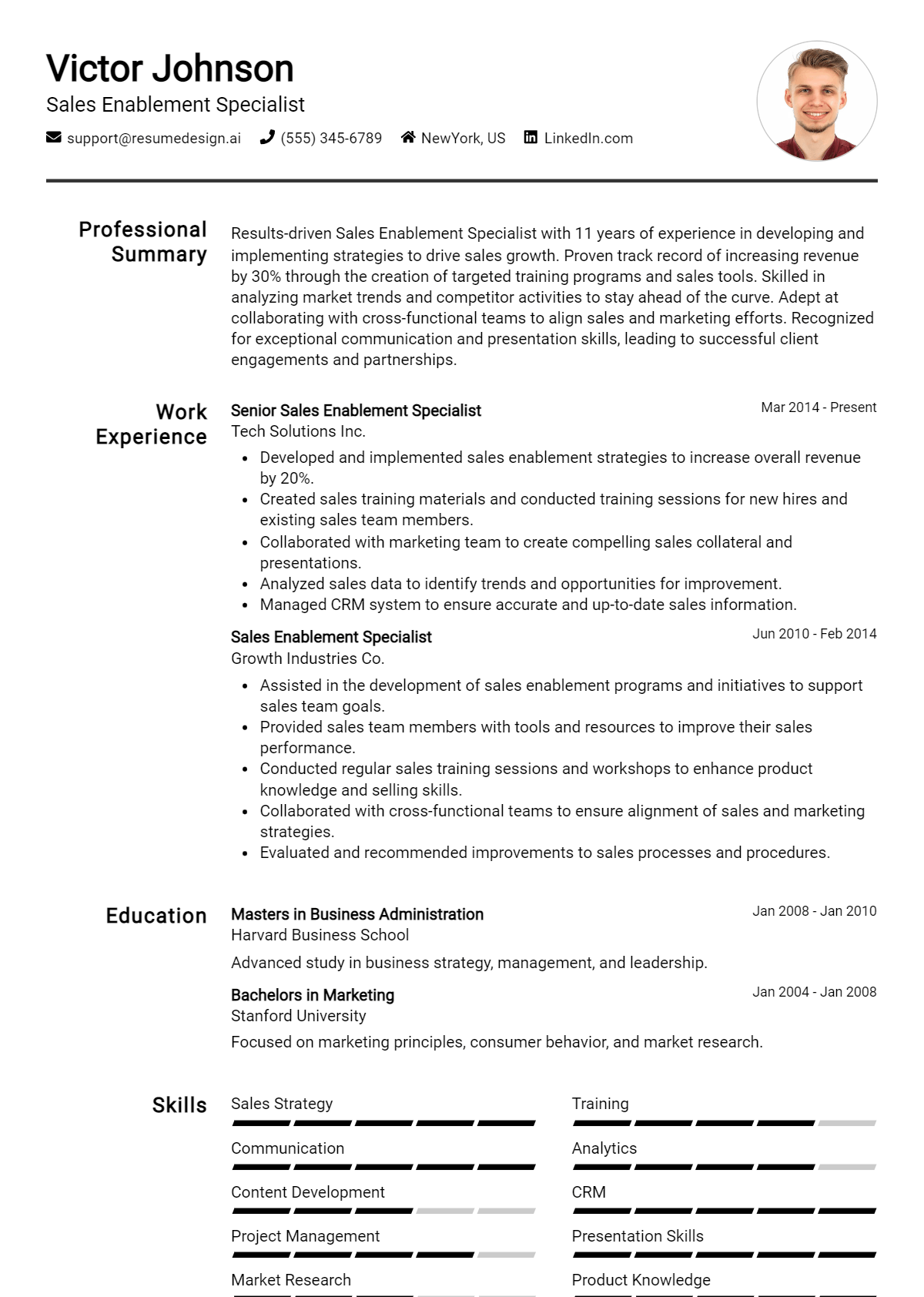
As a Sales Enablement Specialist, your role is crucial in bridging the gap between sales and marketing, ensuring that sales teams have the tools, training, and resources they need to succeed. Preparing for your interview is essential, as hiring managers will be looking for candidates who not only understand the intricacies of sales processes but also possess the skills to enhance team performance. To help you navigate this important step in your career, we've compiled a list of common job interview questions that you may encounter during your interview.
Here is a list of common job interview questions, with examples of the best answers. These questions cover your work history and experience, what you have to offer the employer, and your goals for the future. By preparing thoughtful responses, you’ll demonstrate your expertise and ability to contribute to the success of the sales team and the organization as a whole.
9. How do you measure the effectiveness of sales enablement initiatives?
To measure effectiveness, I utilize key performance indicators such as sales cycle length, win rates, and feedback from the sales team. Regular surveys and analytics help refine our approach and ensure alignment with business goals.
Example:
I track metrics like quota attainment and training completion rates. By analyzing these alongside sales feedback, I can identify gaps and adjust our enablement strategies to enhance performance continuously.
10. Can you describe a successful sales training program you developed?
I designed a comprehensive onboarding program focused on product knowledge and sales techniques. It included interactive workshops and role-playing scenarios, leading to a 30% increase in new hire performance metrics within three months.
Example:
I created a training program that combined e-learning with live sessions. This approach reduced onboarding time by 20% and significantly improved new reps’ confidence, resulting in quicker ramp-up times.
11. How do you ensure alignment between sales and marketing teams?
I facilitate regular meetings and collaborative workshops to promote open communication. By sharing data insights and aligning messaging, both teams can work towards common goals and enhance the customer experience.
Example:
I set up bi-weekly alignment meetings where sales and marketing discuss strategies, share feedback, and review performance metrics. This collaboration fosters a unified approach to outreach and lead nurturing.
12. What tools do you find most useful for sales enablement?
I prefer using CRM systems like Salesforce for tracking performance, along with training platforms like Lessonly for onboarding. Additionally, content management tools like Seismic help organize resources effectively for the sales team.
Example:
I often utilize HubSpot for CRM needs, alongside tools like Highspot for managing sales content. These tools streamline processes and enhance information accessibility for the sales team.
13. How do you handle resistance from the sales team when implementing new processes?
I address resistance by actively listening to concerns and demonstrating the benefits of new processes through pilot programs. Engaging key influencers within the team can also facilitate smoother transitions.
Example:
I focus on open communication, sharing data that highlights the advantages of new processes. By involving team members early and addressing their feedback, I’ve successfully mitigated resistance in past initiatives.
14. Describe a time you improved sales collateral.
I revamped our sales deck by incorporating customer success stories and data-driven insights, which made it more persuasive. Post-implementation, we saw a 15% increase in engagement during sales presentations.
Example:
I updated our product brochures to include more visual elements and testimonials. This change led to a noticeable improvement in the sales team’s ability to engage potential clients effectively.
15. How do you prioritize sales enablement initiatives?
I prioritize initiatives based on sales feedback, business objectives, and potential impact. By analyzing performance data, I can focus on the most critical areas that will drive revenue growth and improve sales efficiency.
Example:
I assess feedback from the sales team alongside key metrics, prioritizing initiatives that directly align with our revenue goals. This ensures that the most impactful projects receive attention first.
16. What strategies do you use to keep sales training engaging?
I incorporate interactive elements like role-playing, gamification, and real-life scenarios. Regularly updating content and encouraging peer-to-peer learning also keeps the training fresh and engaging for the sales team.
Example:
I utilize gamification techniques and interactive quizzes to keep training sessions lively. Incorporating real-world case studies also helps make the content relatable and engaging for participants.
17. How do you measure the effectiveness of sales enablement initiatives?
I measure effectiveness through key performance indicators (KPIs) such as sales productivity, training completion rates, and revenue growth. Regular feedback from sales teams also helps refine our strategies and ensures alignment with their needs.
Example:
I track KPIs like win rates and average deal size after training sessions. I also conduct surveys to gather feedback, ensuring our initiatives continuously improve according to the sales team’s needs.
18. Can you describe a time when you successfully improved a sales process?
In my previous role, I identified that our sales reps were spending too much time on administrative tasks. I implemented a CRM automation tool, which streamlined processes and allowed reps to focus more on selling, resulting in a 20% increase in productivity.
Example:
I noticed reps were bogged down by manual data entry. After implementing a CRM automation tool, we reduced administrative tasks by 30%, allowing the team to focus on client engagement, significantly boosting our sales figures.
19. How do you ensure that sales training materials are engaging and effective?
I focus on interactivity by incorporating multimedia elements like videos, quizzes, and role-playing scenarios. Regular feedback from participants also guides adjustments, ensuring materials remain relevant and engaging for the sales team.
Example:
I utilize various formats like videos and interactive quizzes to keep training engaging. Post-training surveys help me understand engagement levels, enabling continuous improvements in our training materials.
20. What role does technology play in your sales enablement strategy?
Technology is crucial in streamlining workflows, facilitating training, and providing analytics. Tools like CRM systems and learning management platforms enhance communication and allow me to track the effectiveness of our enablement initiatives more efficiently.
Example:
I leverage CRM systems for tracking sales activities and learning platforms for training. This tech integration helps provide real-time insights and enhances collaboration among teams, improving our sales enablement efforts.
21. How do you collaborate with sales and marketing teams?
Collaboration is key. I facilitate regular meetings to align on goals, share insights, and create cohesive messaging. By integrating feedback from both teams, we ensure our resources are effective and resonate with our target audience.
Example:
I organize monthly alignment sessions with sales and marketing to discuss strategies and challenges. This collaboration helps us create unified messaging and ensures our enablement materials support both teams effectively.
22. Describe a time when you had to handle resistance from the sales team regarding a new tool or process.
When introducing a new CRM, some team members were resistant due to usability concerns. I organized training sessions and gathered feedback to address their issues, resulting in increased adoption and improved sales tracking.
Example:
Initially, the sales team resisted adopting a new CRM. I scheduled hands-on training and provided ongoing support, which alleviated their concerns and led to a smooth transition and increased productivity.
23. What strategies do you use to keep sales enablement content up to date?
I establish a content review schedule and gather input from sales teams regularly. By staying informed on market trends and using analytics to determine content effectiveness, I ensure our resources remain relevant and valuable.
Example:
I implement a quarterly review of all sales content and solicit feedback from the sales team. This proactive approach helps us keep our materials relevant and aligned with current market conditions.
24. How do you handle feedback from the sales team about sales enablement resources?
I treat feedback as an opportunity for improvement. I actively solicit their input, analyze the feedback, and make necessary adjustments to resources, ensuring they feel heard and that our materials remain effective.
Example:
I create feedback loops through surveys and one-on-one sessions. This approach allows me to adjust sales resources based on their insights, ensuring our enablement materials truly support their efforts.
25. How do you measure the success of a sales enablement program?
I measure success through KPIs such as sales productivity, win rates, and time-to-first-deal. Regular feedback from sales teams also provides valuable insights. I believe in a continuous improvement approach, adjusting programs based on data-driven results.
Example:
I track metrics like sales conversion rates and overall revenue growth. I also solicit feedback from sales reps to understand what works and what doesn't, allowing me to refine our enablement initiatives effectively.
26. Can you describe a time you had to develop a training program for a new product?
I once developed a training program for a new software tool. I collaborated with product managers to create content tailored to sales needs, utilizing role-play scenarios for engagement. The training led to a 30% increase in product adoption within three months.
Example:
Upon launching a new CRM, I organized workshops and created quick-reference guides. This initiative helped the sales team feel confident using the tool, resulting in a noticeable increase in their productivity and customer interactions.
27. How do you align sales enablement strategies with overall business goals?
I ensure alignment by closely collaborating with leadership and understanding the business objectives. I then tailor enablement strategies to support those goals, regularly reviewing our progress and making adjustments based on feedback and performance metrics.
Example:
I conduct quarterly meetings with stakeholders to discuss business goals and adjust our sales enablement strategies accordingly, ensuring they support the company's objectives and help drive sales success.
28. What tools do you find essential for sales enablement?
Essential tools include CRM systems, sales training platforms, and analytics software. These tools help streamline processes, enhance training, and provide insights into sales performance, enabling teams to make informed decisions and improve their strategies.
Example:
I rely heavily on platforms like Salesforce for tracking sales activities and learning management systems for training. Analytics tools like Tableau help visualize data trends, which inform our enablement strategies.
29. How do you keep up with industry trends related to sales enablement?
I subscribe to industry newsletters, attend webinars, and participate in professional groups. Networking with peers and engaging in continuous learning helps me stay updated on best practices and emerging technologies that can enhance our sales enablement efforts.
Example:
I regularly read sales enablement blogs and participate in online forums. Attending industry conferences has also helped me gain insights into trends and new methodologies that can improve our practices.
30. Describe a challenge you faced in sales enablement and how you overcame it.
I faced resistance when implementing a new training platform. To overcome this, I gathered input from the sales team, incorporated their feedback into the platform, and scheduled demo sessions to showcase its benefits, leading to higher acceptance rates.
Example:
When launching a new tool, I encountered pushback from the sales team. I organized a focus group to address concerns and demonstrated how the tool would simplify their workflows, ultimately gaining their support.
31. How do you ensure effective communication between sales and marketing teams?
I establish regular meetings and collaborative projects between sales and marketing. Implementing shared goals and using feedback loops helps both teams stay aligned, ensuring that marketing initiatives support sales efforts and that sales insights inform marketing strategies.
Example:
I set up bi-weekly meetings between the two teams to discuss ongoing campaigns and share insights. This collaboration fosters better understanding and alignment, leading to more effective marketing materials that resonate with our sales efforts.
32. What role does technology play in your sales enablement strategy?
Technology is crucial for streamlining processes, enhancing training delivery, and analyzing data. I leverage tools like CRM systems, content management platforms, and analytics software to optimize our sales enablement efforts and improve team performance.
Example:
I utilize technology to automate training and track performance metrics. For instance, using a learning management system allows me to deliver content efficiently, while analytics tools provide insights to refine our enablement strategies.
33. How do you prioritize sales enablement initiatives when resources are limited?
I assess the sales team's immediate needs and align initiatives with business goals. By focusing on high-impact areas, such as training and tools that improve conversion rates, I ensure resources are allocated effectively.
Example:
In my previous role, I prioritized training for a new product launch, which led to a 20% increase in sales within the first quarter.
34. Can you describe a time when you successfully implemented a sales training program?
I created a comprehensive training program for a new CRM system. By collaborating with sales reps, I tailored the content to their needs, resulting in a 30% increase in CRM adoption and improved sales tracking.
Example:
After the training, feedback from sales reps was overwhelmingly positive, and we saw a noticeable increase in productivity.
35. How do you measure the effectiveness of sales enablement initiatives?
I utilize KPIs such as sales performance metrics, training completion rates, and feedback surveys. By analyzing these data points, I can adjust programs to enhance their effectiveness and ensure alignment with sales goals.
Example:
In my last position, I tracked sales conversion rates pre- and post-training, demonstrating a clear positive impact from our initiatives.
36. What tools do you consider essential for a sales enablement program?
Essential tools include CRM systems, sales training platforms, and content management systems. These facilitate efficient communication, tracking of sales activities, and easy access to resources needed for successful selling.
Example:
Using a robust CRM allowed our team to streamline processes and have real-time access to client information, enhancing our sales strategies.
37. How do you ensure alignment between sales and marketing teams?
I promote regular communication between sales and marketing through joint meetings and shared goals. Collaboratively developing content ensures that both teams are on the same page regarding messaging and target audiences.
Example:
This collaboration led to a cohesive campaign that improved lead quality and increased conversions by 15%.
38. Describe a challenge you faced in sales enablement and how you overcame it.
We faced resistance to a new sales tool. I organized demonstrations and gathered feedback, addressing concerns directly. By showcasing the tool's benefits, I gained buy-in, leading to successful implementation and improved sales processes.
Example:
Post-implementation, we saw a 25% decrease in administrative tasks for the sales team, allowing them to focus on selling.
39. What role does technology play in your sales enablement strategy?
Technology is integral to my strategy, enabling streamlined processes, enhanced training, and data analysis. By leveraging tools like analytics platforms, I can track performance and improve the effectiveness of sales enablement initiatives.
Example:
Incorporating AI tools helped us identify training gaps, leading to targeted programs that improved overall sales performance.
40. How do you handle feedback from sales teams regarding enablement materials?
I actively seek feedback through surveys and meetings. I treat feedback as a vital resource to refine enablement materials, ensuring they meet the sales team’s evolving needs and contribute to their success.
Example:
Incorporating feedback led to a significant enhancement in our sales playbooks, increasing their usage and effectiveness among the team.
41. How do you assess the effectiveness of your sales enablement programs?
To assess effectiveness, I use metrics like sales performance data, feedback from sales teams, and engagement statistics on training materials. Regularly reviewing these metrics allows me to adjust programs to better meet the needs of the sales team and drive results.
Example:
I analyze sales conversion rates and gather feedback through surveys. This data helps me identify gaps and improve content, ensuring our enablement strategies align with team needs and ultimately enhance performance.
42. Describe a time when you had to collaborate with other departments to achieve a sales goal.
I worked with marketing to align messaging for a product launch. By collaborating closely, we ensured that training materials reflected marketing strategies, which led to a successful launch and exceeded sales targets by 20% in the first quarter.
Example:
In a recent project, I partnered with the product team to create training for a new solution. This collaboration ensured that sales reps were well-informed, leading to a seamless launch and improved customer engagement.
43. How do you keep up with the latest trends and developments in sales enablement?
I regularly attend industry webinars, follow thought leaders on social media, and participate in sales enablement communities. Staying updated helps me integrate best practices and innovative strategies into our programs, ensuring our team remains competitive.
Example:
I subscribe to relevant newsletters and attend conferences. Engaging with industry experts not only keeps me informed but also sparks new ideas to enhance our sales enablement initiatives.
44. Can you explain how you create training materials tailored to different sales roles?
I assess the unique needs of each role through interviews and surveys. This information informs the development of role-specific training materials that address particular challenges and scenarios, ensuring that all sales team members receive relevant and actionable content.
Example:
For instance, I created tailored training for inside sales versus field sales teams, focusing on their specific sales processes, challenges, and customer interactions to maximize effectiveness and engagement.
45. What tools and technologies have you used to support sales enablement?
I have utilized CRM systems, learning management systems (LMS), and sales enablement platforms like Seismic. These tools facilitate the organization of content, track training progress, and enhance collaboration among sales teams, ultimately driving better results.
Example:
Using tools like Salesforce for CRM and Lessonly for training helped streamline our processes, allowing sales reps to access resources quickly and improve their performance on the job.
46. How do you handle resistance from sales teams when implementing new processes or tools?
I address resistance by first understanding their concerns and providing clear communication about benefits. Involving them in the implementation process fosters buy-in, and I offer ongoing support to ensure they feel confident using the new tools.
Example:
When introducing a new CRM, I held workshops to demonstrate its advantages. By addressing their feedback and providing training, I successfully gained their trust and increased adoption rates significantly.
How Do I Prepare For A Sales Enablement Specialist Job Interview?
Preparing for a job interview is crucial to making a positive impression on the hiring manager. A well-prepared candidate not only demonstrates their interest in the role but also showcases their skills and alignment with the company's goals. Here are some key tips to help you get ready for your interview as a Sales Enablement Specialist:
- Research the company and its values to understand its mission and how you can contribute.
- Practice answering common interview questions related to sales enablement and your previous experiences.
- Prepare examples that demonstrate your skills and experience relevant to the Sales Enablement Specialist role.
- Familiarize yourself with the tools and technologies commonly used in sales enablement, such as CRM systems.
- Review the job description thoroughly to identify key responsibilities and required skills.
- Prepare thoughtful questions to ask the interviewer about the team, company culture, and expectations for the role.
- Dress appropriately for the interview to convey professionalism and confidence.
Frequently Asked Questions (FAQ) for Sales Enablement Specialist Job Interview
Preparing for an interview can be a daunting task, especially for a role as dynamic as a Sales Enablement Specialist. Understanding the types of questions you may encounter can help ease your nerves and allow you to present your best self. Below are some frequently asked questions and tips on how to tackle them effectively.
What should I bring to a Sales Enablement Specialist interview?
When attending a Sales Enablement Specialist interview, it's essential to bring several key items. Start with multiple copies of your resume, as interviewers may want to refer to it during the discussion. Additionally, prepare a portfolio showcasing previous work, such as training materials or sales collateral you’ve developed. Don’t forget to bring a notepad and a pen for taking notes, as well as any questions you may have for the interviewer. This preparation not only demonstrates your professionalism but also your enthusiasm for the role.
How should I prepare for technical questions in a Sales Enablement Specialist interview?
To effectively prepare for technical questions, familiarize yourself with the tools and technologies commonly used in sales enablement, such as CRM systems, content management platforms, and analytics software. Review the job description to understand the specific technical skills required. Additionally, consider practicing your answers to potential scenario-based questions, where you may need to demonstrate your problem-solving skills. Being well-versed in these areas will help you feel more confident and articulate during the interview.
How can I best present my skills if I have little experience?
If you have limited experience, focus on transferable skills and relevant coursework or projects. Highlight your ability to learn quickly, adapt to new environments, and collaborate effectively with teams. Use examples from internships, volunteer work, or academic projects that showcase skills such as communication, organization, and strategic thinking. It’s important to convey your eagerness to grow in the role and how your unique perspective can add value to the team.
What should I wear to a Sales Enablement Specialist interview?
Choosing the right outfit for your interview is critical in making a positive first impression. Aim for business professional attire, such as a tailored suit or a smart dress, that reflects the company culture. Research the organization's dress code, which can often be found on their website or social media pages. When in doubt, it’s better to be slightly overdressed than underdressed, as this shows your seriousness about the opportunity and respect for the interview process.
How should I follow up after the interview?
Following up after your interview is an important step in reinforcing your interest in the Sales Enablement Specialist position. Send a personalized thank-you email to each interviewer within 24 hours, expressing your gratitude for the opportunity and briefly reiterating your enthusiasm for the role. Mention specific points from the interview that resonated with you, which demonstrates your attentiveness. This follow-up can help keep you top of mind as they make their hiring decision.
Conclusion
In summary, this Sales Enablement Specialist Interview Guide has highlighted the critical components of preparing for your upcoming interview. We’ve emphasized the importance of thorough preparation, consistent practice, and showcasing your relevant skills to stand out as a candidate. By focusing on both technical and behavioral questions, you can significantly enhance your chances of success in securing the position.
As you prepare to approach your interviews, remember to leverage the tips and examples provided in this guide. With confidence and the right resources at your disposal, you are well-equipped to make a lasting impression.
For further assistance, check out these helpful resources: resume templates, resume builder, interview preparation tips, and cover letter templates.