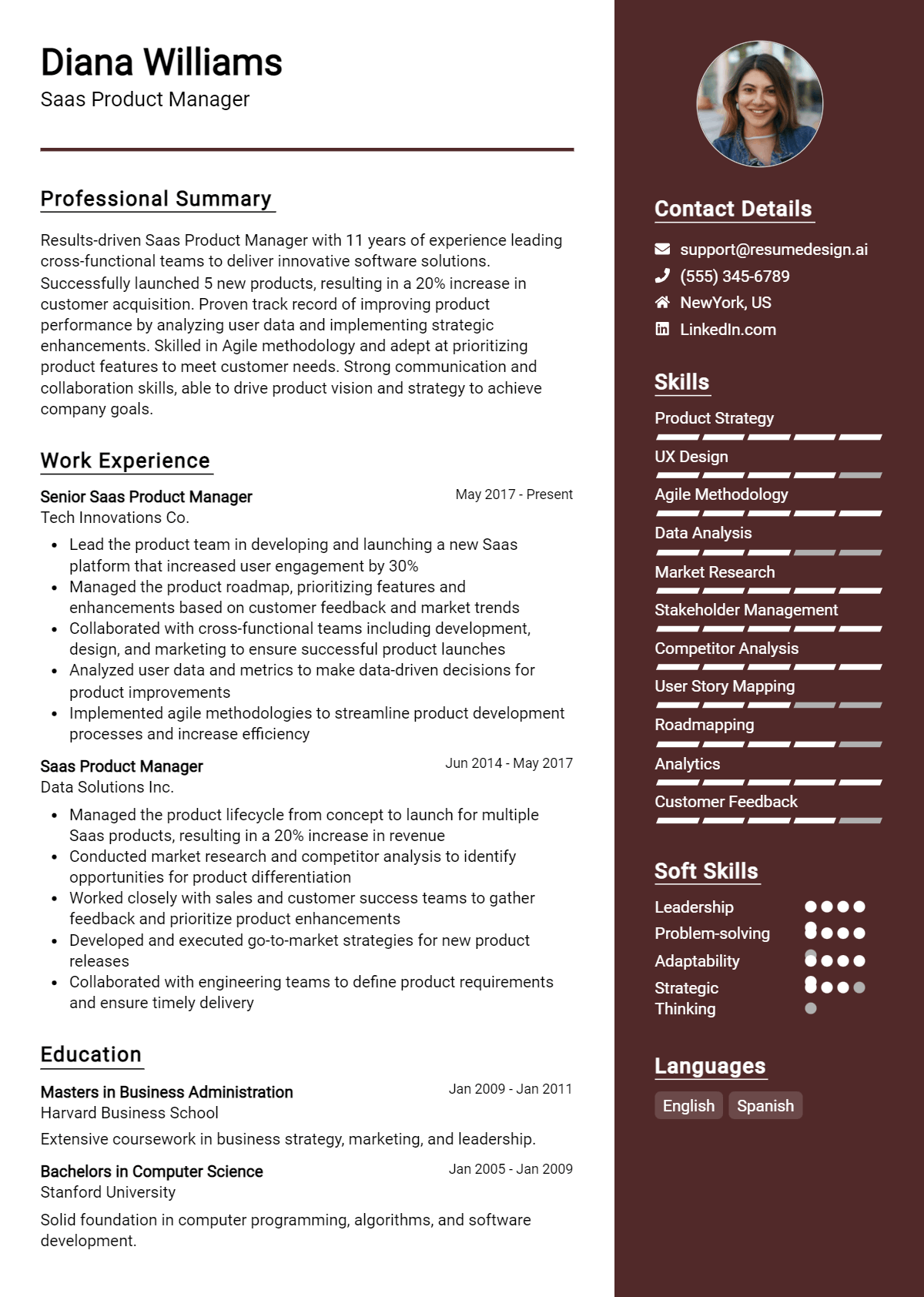
When preparing for a job interview as a SaaS Product Manager, it's essential to anticipate the types of questions you may encounter. This role demands a unique blend of technical knowledge, strategic thinking, and exceptional communication skills. To help you stand out from the competition, we've compiled a list of common interview questions that will allow you to showcase your expertise and suitability for the position.
Here is a list of common job interview questions, with examples of the best answers. These questions cover your work history and experience, what you have to offer the employer, and your goals for the future. By thoughtfully addressing these inquiries, you can effectively demonstrate your understanding of the SaaS landscape, your ability to manage product lifecycles, and your vision for driving customer success in a dynamic environment.
1. What is your experience with SaaS product development?
I have over five years of experience in SaaS product development, focusing on customer feedback integration and agile methodologies. I've led cross-functional teams to launch successful features that improved user engagement and retention, ensuring alignment with market needs and business goals.
Example:
I managed a team that developed a project management tool, increasing user engagement by 30% through iterative testing and feedback integration.
2. How do you prioritize features in a SaaS product?
I prioritize features using a combination of customer feedback, market research, and business impact analysis. I utilize frameworks like RICE (Reach, Impact, Confidence, Effort) to evaluate potential features, ensuring alignment with strategic goals and maximizing user value.
Example:
I recently used the RICE framework to prioritize new features for our CRM, resulting in a 25% increase in user satisfaction ratings.
3. How do you handle competing priorities from stakeholders?
I manage competing priorities by facilitating open communication with stakeholders, understanding their needs, and aligning on shared goals. I often use a prioritization framework to balance these requests while ensuring the product strategy remains focused and aligned with customer needs.
Example:
In my last role, I organized a stakeholder workshop to align on priorities, which helped reduce conflicts and streamline our roadmap.
4. Describe your experience with user testing and feedback.
I regularly conduct user testing sessions to gather direct feedback on product features. Analyzing this data helps me iterate on designs and optimize user experiences. I also employ surveys and interviews to gain insights into customer needs and pain points, fostering continuous improvement.
Example:
I implemented a user feedback loop for our app, leading to a 40% reduction in user-reported issues after the next release.
5. How do you measure the success of a SaaS product?
I measure success through key performance indicators (KPIs) such as customer acquisition costs, churn rates, and net promoter scores (NPS). I also analyze product usage metrics to understand user engagement and satisfaction, allowing me to make data-driven decisions for future enhancements.
Example:
In my previous role, we tracked NPS and reduced churn by 15% through targeted feature improvements based on user feedback.
6. Can you explain how you approach market research?
My approach to market research involves analyzing industry trends, competitor offerings, and customer needs. I utilize various tools like surveys, interviews, and competitive analysis frameworks to gather insights, which inform our product roadmap and positioning strategies effectively.
Example:
I conducted market research that identified a gap in our competitor's offerings, leading to the successful launch of a new feature that boosted our market share.
7. How do you ensure your team stays aligned with the product vision?
I ensure team alignment with the product vision by conducting regular meetings, sharing updates, and fostering an open feedback culture. I utilize visual roadmaps and OKRs to keep everyone informed about priorities and progress, reinforcing the vision in each phase of product development.
Example:
I implemented bi-weekly check-ins to discuss progress and challenges, which significantly improved team alignment and morale.
8. What tools do you use for product management?
I use tools like Jira for project management, Confluence for documentation, and Figma for design collaboration. Additionally, I leverage analytics tools like Google Analytics and Mixpanel to track user behavior and inform product decisions, ensuring a data-driven approach to product management.
Example:
In my last project, I integrated Figma and Jira, which streamlined our design and development process, reducing turnaround time by 20%.
9. How do you prioritize features in a SaaS product roadmap?
I utilize a combination of customer feedback, data analysis, and strategic alignment with business goals to prioritize features. This ensures that we address both user needs and organizational objectives effectively, allowing for a balanced approach to product development.
Example:
By conducting customer surveys and utilizing analytics tools, I prioritize features that enhance user experience while aligning with our quarterly goals, ensuring we deliver maximum value to our customers and stakeholders.
10. Can you describe a time you had to manage conflicting stakeholder interests?
I once faced conflicting requests from marketing and engineering. I organized a meeting to understand their needs and presented a compromise that incorporated essential features while keeping development timelines intact. This fostered collaboration and ensured all parties felt heard.
Example:
In a previous project, I facilitated a workshop with both teams to discuss priorities and reached a consensus that satisfied their requirements while adhering to our timeline, fostering a collaborative environment.
11. What metrics do you consider essential for measuring the success of a SaaS product?
Key metrics include Monthly Recurring Revenue (MRR), Customer Churn Rate, Customer Acquisition Cost (CAC), and Net Promoter Score (NPS). These metrics provide insights into financial health, customer satisfaction, and growth potential, guiding product strategy.
Example:
I focus on MRR and NPS as primary metrics. MRR reflects our revenue stability, while NPS gauges customer satisfaction, allowing us to pivot our strategy based on user feedback and financial trends.
12. How do you ensure your team stays aligned on product goals?
I hold regular stand-up meetings and quarterly planning sessions to ensure everyone is aligned on product goals. I also use project management tools to track progress and maintain transparency, enabling the team to stay focused and cohesive.
Example:
By implementing weekly check-ins and using tools like Trello, I keep the team updated on priorities and progress, ensuring everyone is aligned and aware of our product goals.
13. Describe your experience with user testing and feedback collection.
I have conducted user testing sessions to gather qualitative feedback and used tools like surveys for quantitative data. This dual approach helps identify usability issues and prioritize enhancements based on real user insights, ultimately improving the product.
Example:
In my last role, I organized user testing sessions and analyzed survey results, which led us to implement critical UI changes that significantly improved user satisfaction and engagement.
14. How do you handle product launches in a SaaS environment?
I create detailed launch plans that include timelines, marketing strategies, and customer training resources. Coordination with cross-functional teams ensures a smooth rollout, and post-launch metrics are monitored to evaluate success and gather feedback for future improvements.
Example:
For a recent launch, I coordinated with marketing and support teams, established a timeline, and ensured customers received comprehensive training, leading to a successful rollout and positive reception.
15. What strategies do you employ to reduce customer churn?
I analyze churn data to identify patterns and implement user feedback mechanisms. Enhancing onboarding processes and offering customer support resources effectively reduce churn, as satisfied customers are more likely to remain engaged with the product.
Example:
By improving our onboarding experience based on user feedback and providing proactive support, we reduced churn by 15% in six months, demonstrating the impact of customer-centric strategies.
16. How do you stay updated on industry trends and competitor products?
I regularly attend industry webinars, read relevant publications, and follow key thought leaders on platforms like LinkedIn. Additionally, I analyze competitor offerings to identify gaps and opportunities, ensuring our product remains competitive and innovative.
Example:
I subscribe to industry newsletters and participate in forums, which helps me stay informed about trends and competitor movements, allowing our product strategy to adapt proactively.
17. How do you prioritize features in a SaaS product?
I prioritize features based on customer feedback, market trends, and alignment with our product vision. I utilize frameworks like the MoSCoW method to categorize features into must-haves, should-haves, could-haves, and won't-haves to ensure efficient resource allocation.
Example:
I regularly conduct user interviews and analyze usage data, applying the MoSCoW framework to prioritize features. This approach helps in delivering the most valuable features first, ensuring customer satisfaction while maintaining alignment with our product strategy.
18. Describe a time when you had to pivot your product strategy.
I once led a project that initially focused on a specific industry. However, user feedback indicated a broader market need. After analyzing the data, I pivoted our strategy, expanding our target audience, which ultimately increased user adoption and revenue.
Example:
After receiving feedback that our product was too niche, I conducted market research and redirected our strategy to cater to a wider audience. This pivot led to a 30% increase in user adoption within six months.
19. How do you measure the success of a SaaS product?
I measure success through key performance indicators (KPIs) such as monthly recurring revenue (MRR), customer retention rate, and user engagement metrics. Regularly reviewing these metrics allows us to adjust our strategy and improve product offerings.
Example:
I focus on MRR and churn rate as primary KPIs. By tracking user engagement and satisfaction scores, I can identify areas for improvement and celebrate successes, ensuring our product continues to meet market needs.
20. How do you ensure alignment between engineering and product teams?
I facilitate regular cross-functional meetings and utilize project management tools to maintain alignment. Clear communication of product goals and timelines helps both teams stay focused and addresses any potential roadblocks early in the process.
Example:
I hold weekly sync-ups with engineering and product teams to discuss progress and challenges. Using tools like Jira ensures everyone is on the same page, fostering collaboration and timely delivery of features.
21. What role does user feedback play in your product development process?
User feedback is crucial in my product development process. I actively gather insights through surveys, interviews, and usability tests, which inform feature prioritization and enhancements, ensuring we meet user needs and improve overall satisfaction.
Example:
I implement regular feedback loops by conducting surveys and usability tests, integrating user insights into our development cycle. This practice helps us refine our product and address user concerns proactively.
22. How do you handle competing priorities from stakeholders?
I address competing priorities by facilitating discussions among stakeholders to understand their needs and aligning them with our product vision. I use a prioritization framework to ensure decisions are data-driven and transparent, fostering collaboration.
Example:
When faced with conflicting priorities, I organize a stakeholder meeting to discuss objectives. Using a scoring model, we can objectively evaluate the impact of each request, ensuring alignment with our overall strategy.
23. Can you describe your experience with A/B testing?
I have extensive experience with A/B testing to optimize product features. By designing experiments that isolate variables, I analyze user behavior and feedback, allowing data-driven decisions that enhance user experience and drive engagement.
Example:
In my previous role, I implemented A/B testing for a new feature, comparing user engagement metrics. The insights gained led to a significant redesign that increased user interaction by 25%.
24. What strategies do you use for onboarding new users?
I design onboarding experiences that are intuitive and informative, using tutorials, tooltips, and progress tracking. Continuous feedback during onboarding helps refine these strategies, ensuring users quickly understand the product's value and features.
Example:
I prioritize creating a seamless onboarding flow with interactive tutorials and progress indicators. Gathering user feedback post-onboarding helps me continuously improve the experience, ensuring users feel confident using our product.
25. How do you prioritize features in a SaaS product roadmap?
Prioritization involves balancing customer feedback, business goals, and technical feasibility. I use frameworks like RICE (Reach, Impact, Confidence, Effort) to assess features systematically, ensuring alignment with strategic objectives while addressing user needs effectively.
Example:
I prioritize features by conducting user surveys and analyzing their potential impact using the RICE framework. This ensures that I focus on high-impact features that align with our strategic goals and customer needs.
26. Can you describe a time when you had to make a difficult trade-off decision?
In a previous role, we faced a tight deadline for a major release. I had to choose between adding a desired feature or ensuring system stability. I opted for stability, knowing it would enhance user trust and satisfaction in the long run.
Example:
I prioritized system stability over adding a new feature for a launch. This decision, though tough, was essential for maintaining user trust and ensuring a smooth experience, leading to better long-term customer satisfaction.
27. How do you gather and incorporate customer feedback into your product development process?
I utilize multiple channels such as surveys, user interviews, and support tickets to gather feedback. This information is analyzed and prioritized for incorporation into the product backlog, ensuring our development aligns with user needs and enhances satisfaction.
Example:
I regularly conduct user interviews and analyze support tickets to gather feedback. This data informs our backlog prioritization, ensuring we address customer needs effectively and continuously improve the product based on real user experiences.
28. What metrics do you use to measure the success of a SaaS product?
Key metrics include Monthly Recurring Revenue (MRR), Customer Acquisition Cost (CAC), churn rate, and Net Promoter Score (NPS). These metrics provide insights into financial health, user satisfaction, and overall product performance, guiding strategic decisions.
Example:
I track MRR, churn rate, and NPS to gauge product success. These metrics help identify growth opportunities and areas needing improvement, allowing us to adapt our strategy and enhance user satisfaction effectively.
29. Describe a time when you successfully launched a new feature.
I led the launch of a new analytics dashboard that improved user engagement. We conducted beta testing with select users, incorporated their feedback, and executed a marketing campaign that resulted in a 30% increase in feature adoption within the first month.
Example:
I successfully launched an analytics dashboard by involving users in the beta phase, gathering feedback, and executing a targeted marketing campaign. This resulted in a 30% adoption increase within the first month post-launch.
30. How do you handle conflicting feedback from stakeholders?
I facilitate discussions to understand each stakeholder's perspective and the underlying reasons for their feedback. By prioritizing based on business impact and user needs, I can make informed decisions and communicate the rationale to all parties involved.
Example:
When faced with conflicting feedback, I organize a discussion to clarify each perspective. I then prioritize based on user impact and business goals, ensuring that all stakeholders understand the final decision's rationale.
31. What strategies do you use to ensure cross-team collaboration?
I promote regular communication through stand-up meetings and shared project management tools. Additionally, I encourage collaboration by involving key team members early in the product development process, fostering a culture of teamwork and shared ownership.
Example:
I ensure cross-team collaboration by scheduling regular stand-ups and using shared project management tools. Involving key stakeholders early on fosters teamwork and ensures alignment throughout the product development process.
32. How do you stay updated with industry trends and advancements in SaaS?
I stay informed through industry blogs, webinars, and networking with peers. Participating in SaaS conferences and online courses also helps me keep abreast of new technologies and best practices, allowing me to bring innovative ideas to my product management role.
Example:
I regularly read industry blogs, attend webinars, and network with other SaaS professionals. This continuous learning helps me stay updated on trends and incorporate innovative ideas into our product strategy.
33. How do you prioritize features in a SaaS product roadmap?
I prioritize features by evaluating customer feedback, market trends, and business goals. I use frameworks like RICE or MoSCoW to ensure a balanced approach that aligns with our strategic objectives and maximizes user value.
Example:
For instance, I prioritized a new reporting feature based on customer demand and potential revenue impact, which significantly increased user satisfaction and retention.
34. Describe a time when you had to manage a product launch under tight deadlines.
In a previous role, I led a product launch with a two-week deadline. I coordinated cross-functional teams, streamlined communication, and focused on essential features, ensuring we met our launch date without compromising quality.
Example:
Ultimately, we launched successfully, receiving positive feedback and achieving 150% of our user adoption target within the first month.
35. How do you handle conflicting stakeholder priorities?
I address conflicting stakeholder priorities through transparent communication and by facilitating discussions to understand their needs. I then align their goals with product strategy, using data to prioritize effectively and ensure stakeholder buy-in.
Example:
For example, I once mediated between sales and engineering, resulting in a prioritized feature that satisfied both teams and enhanced customer experience.
36. What metrics do you consider essential for measuring the success of a SaaS product?
Key metrics include Monthly Recurring Revenue (MRR), Customer Churn Rate, Customer Lifetime Value (CLV), and Net Promoter Score (NPS). These metrics provide insights into revenue health and customer satisfaction, guiding product decisions.
Example:
By regularly analyzing these metrics, I successfully identified churn patterns and implemented features that improved user retention by 20%.
37. Can you explain your approach to user research in product development?
I prioritize user research by conducting interviews, surveys, and usability testing. This helps me gather qualitative and quantitative insights, ensuring the product meets user needs and expectations throughout development.
Example:
For a recent feature, user feedback led to significant design changes that improved usability, resulting in a 30% increase in user engagement post-launch.
38. How do you stay updated with industry trends and competitive analysis?
I stay updated through industry publications, webinars, and networking with other professionals. Regularly analyzing competitors helps me identify market gaps and opportunities, ensuring our product remains competitive and relevant.
Example:
This approach allowed me to identify an emerging trend in AI that we successfully integrated, differentiating our product in the market.
39. Describe how you handle customer feedback during the product lifecycle.
I actively solicit customer feedback through surveys, support tickets, and user interviews. This feedback informs product iterations, ensuring we continually enhance the product and address user pain points effectively.
Example:
For instance, feedback from a beta test led to the addition of a highly requested feature, boosting user satisfaction rates significantly.
40. What role does cross-functional collaboration play in your product management process?
Cross-functional collaboration is vital for product success. Engaging teams like engineering, marketing, and sales ensures diverse perspectives are considered, aligning efforts with product goals and enhancing execution across the board.
Example:
In a recent project, this collaboration improved communication, leading to a smoother launch and a product that exceeded market expectations.
41. How do you prioritize features in a SaaS product?
I prioritize features by assessing customer needs, analyzing market trends, and evaluating development resources. I use frameworks like the MoSCoW method to categorize features, ensuring alignment with business goals and delivering maximum value to users.
Example:
For instance, I prioritized a feature that improved user retention by collecting feedback from customers and analyzing usage data, ensuring it aligned with our strategic objectives.
42. Describe a time when you had to deal with a difficult stakeholder.
I once faced a stakeholder resistant to a product change. I scheduled a meeting to understand their concerns and presented data supporting the change's benefits. This transparency helped build trust and resulted in their support for the new direction.
Example:
By actively listening and addressing their concerns, I turned a challenging situation into a collaborative effort, leading to a successful product launch.
43. How do you measure the success of a SaaS product?
Success is measured through key performance indicators (KPIs) such as customer acquisition cost, churn rate, and user engagement metrics. Regularly reviewing these metrics helps us understand product performance and informs future enhancements.
Example:
For example, I implemented a dashboard to track these KPIs, allowing the team to make data-driven decisions and improve user satisfaction.
44. What strategies do you employ for effective user onboarding?
I focus on creating an intuitive onboarding experience by utilizing tutorials, tooltips, and user feedback. A strong onboarding process reduces churn and enhances user satisfaction, ensuring customers quickly realize the product's value.
Example:
I developed an onboarding checklist that guided users through key features, resulting in a 30% increase in user activation rates.
45. How do you stay updated with industry trends?
I stay updated by subscribing to industry newsletters, attending webinars, and participating in relevant online communities. Engaging with thought leaders and networking helps me gain insights into market trends and emerging technologies.
Example:
Recently, I attended a SaaS conference that introduced me to innovative product strategies, which I later applied in my role.
46. Can you describe your experience with agile methodologies?
I have extensive experience with agile methodologies, particularly Scrum and Kanban. I prioritize iterative development, enabling rapid feedback and flexibility to adjust based on user needs, resulting in enhanced product quality and team collaboration.
Example:
In my last role, I led daily stand-ups and sprint reviews, which improved our development cycle and fostered better communication within the team.
How Do I Prepare For A SaaS Product Manager Job Interview?
Preparing for a SaaS Product Manager job interview is crucial to making a positive impression on the hiring manager. A well-prepared candidate not only demonstrates their qualifications but also shows their genuine interest in the role and the company. Here are some key preparation tips to help you succeed:
- Research the company and its values to understand its mission and culture.
- Familiarize yourself with the company's products and services, including any recent updates or launches.
- Practice answering common interview questions specific to product management, such as those related to prioritization and stakeholder management.
- Prepare examples that demonstrate your skills and experience relevant to the SaaS Product Manager role.
- Understand key metrics and KPIs used in SaaS product management to discuss how you have influenced them in your previous roles.
- Be ready to discuss your approach to user feedback and how it informs product development.
- Prepare insightful questions to ask the interviewer about the company's product strategy and future roadmap.
Frequently Asked Questions (FAQ) for SaaS Product Manager Job Interview
Preparing for a job interview as a SaaS Product Manager is crucial for success, as it helps candidates anticipate the types of questions they may face and formulate thoughtful responses. This preparation can significantly enhance confidence and performance during the interview process.
What should I bring to a SaaS Product Manager interview?
When attending a SaaS Product Manager interview, it's essential to come prepared with several key items. Bring multiple copies of your resume, a list of references, and any relevant work samples or a portfolio that showcases your previous projects. Additionally, a notepad and pen can be useful for taking notes during the interview, and if applicable, a laptop or tablet for demonstrating any software tools you’ve developed or worked with can be advantageous. Ensuring you have these materials can help you present yourself professionally and demonstrate your preparedness.
How should I prepare for technical questions in a SaaS Product Manager interview?
To prepare for technical questions, start by reviewing the fundamentals of SaaS products and the technologies your potential employer utilizes. Familiarize yourself with key concepts such as cloud computing, APIs, user experience design, and data analytics. Additionally, consider practicing answers to common technical scenarios you might encounter, such as describing how you would handle product roadmapping or prioritizing features. Engaging in mock interviews with a peer or mentor can also help refine your responses and boost your confidence in tackling technical inquiries.
How can I best present my skills if I have little experience?
If you have limited experience, focus on showcasing transferable skills and relevant projects, even if they are from academic or side endeavors. Highlight your ability to learn quickly, adapt to new technologies, and collaborate effectively with teams. Use the STAR method (Situation, Task, Action, Result) to structure your responses, emphasizing challenges you faced in past projects and how you overcame them. Additionally, expressing a genuine passion for the product management field and a willingness to learn can resonate positively with hiring managers.
What should I wear to a SaaS Product Manager interview?
Dressing appropriately for a SaaS Product Manager interview typically means aiming for business casual attire. This could include smart trousers or a skirt paired with a button-down shirt or blouse. It's important to ensure that your outfit is tidy and professional, as first impressions matter. However, company culture can vary, so if you know the organization leans more casual, you might opt for well-fitted jeans with a professional top. Ultimately, choose an outfit that makes you feel confident and comfortable while maintaining a polished appearance.
How should I follow up after the interview?
Following up after an interview is an essential step in the job search process. Send a thank-you email within 24 hours to express your gratitude for the opportunity to interview and reiterate your interest in the position. In your message, consider mentioning specific points from the interview that resonated with you or clarifying any questions you might not have fully answered. This not only shows your enthusiasm for the role but also helps keep you top-of-mind with the interviewers as they make their decisions.
Conclusion
In this interview guide for SaaS Product Managers, we've covered essential strategies and insights to help you excel in your interviews. Preparation and practice are crucial components of your journey, as they empower you to showcase your relevant skills effectively. By focusing on both technical and behavioral questions, you can significantly enhance your chances of success and stand out in a competitive job market.
As you move forward, remember to leverage the tips and examples provided in this guide to approach your interviews with confidence. Your dedication to preparation will reflect in your performance, making a lasting impression on potential employers. Embrace this opportunity to shine!
For further assistance, check out these helpful resources: resume templates, resume builder, interview preparation tips, and cover letter templates.