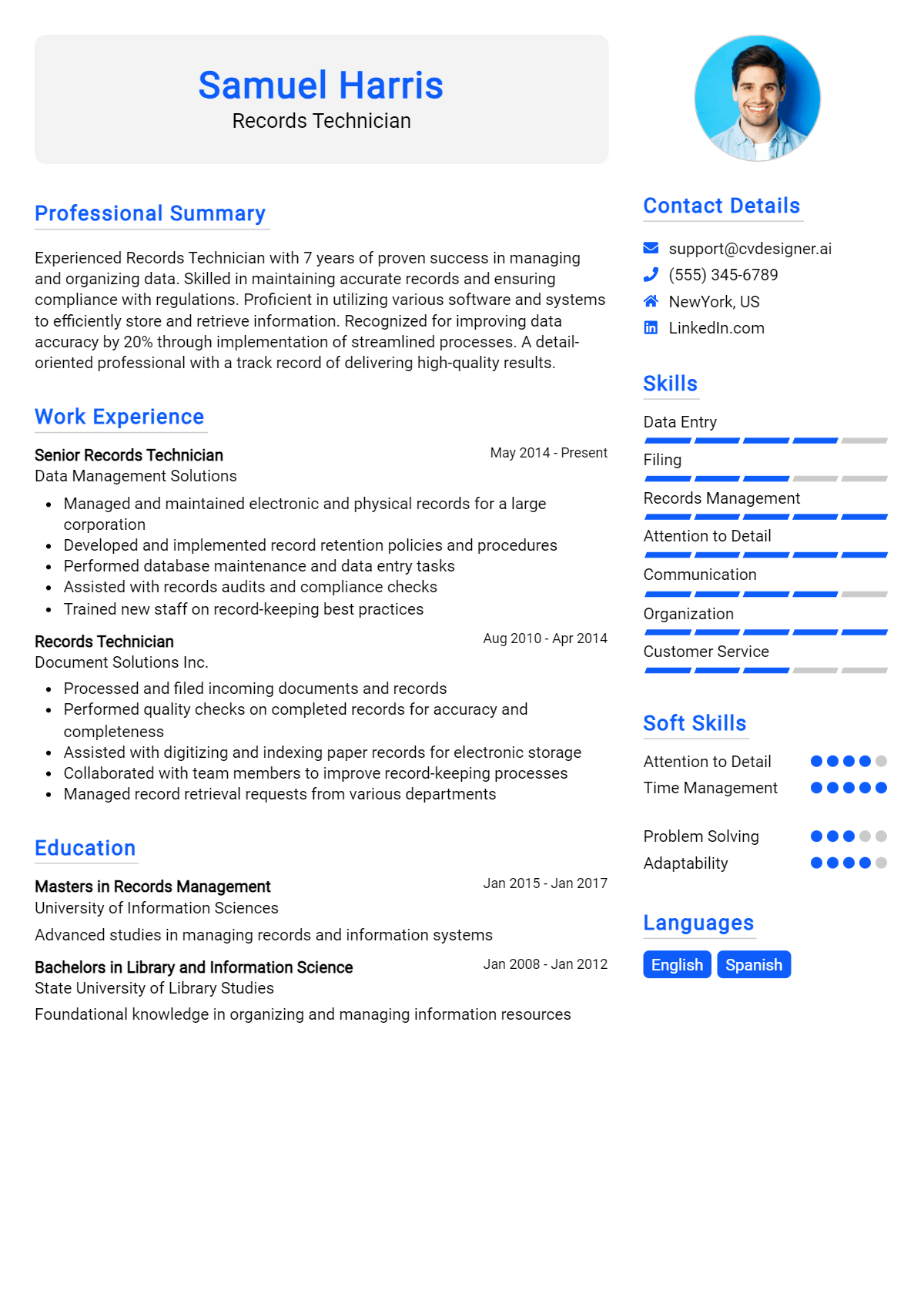
Preparing for a job interview as a Records Technician involves understanding both the technical and organizational aspects of the role. This position requires a keen attention to detail, strong organizational skills, and knowledge of records management systems. As you get ready to showcase your qualifications, it's essential to anticipate the questions you might face and formulate thoughtful responses that highlight your expertise and fit for the job.
Here is a list of common job interview questions for a Records Technician, along with examples of the best answers. These questions cover your work history and experience in managing records, what you have to offer the employer in terms of skills and qualifications, and your goals for the future in the field of records management. By preparing for these questions, you can confidently demonstrate your capabilities and enthusiasm for the role.
1. What experience do you have with record management systems?
I have over three years of experience using various record management systems, including electronic and paper-based methods. I am adept at data entry, retrieval, and ensuring compliance with storage regulations. This experience has honed my attention to detail and organizational skills.
Example:
In my previous role, I utilized an electronic records management system to digitize over 5,000 files, which improved retrieval time by 30%. My attention to detail ensured accuracy throughout the process.
2. How do you ensure the confidentiality of sensitive information?
I prioritize confidentiality by implementing strict access controls and adhering to data protection regulations. Regular training on privacy policies and secure handling procedures ensures that I and my colleagues maintain confidentiality at all times.
Example:
I ensure confidentiality by limiting access to sensitive records only to authorized personnel. Additionally, I regularly review and update our security protocols to comply with regulations like HIPAA.
3. Describe a time when you had to manage multiple tasks.
In my previous role, I managed multiple projects simultaneously, including filing, data entry, and preparing reports. I prioritized tasks based on deadlines and used a task management tool to stay organized, ensuring all projects were completed efficiently.
Example:
During a busy quarter, I juggled data entry and record audits. I created a schedule and allocated specific times for each task, which helped me meet all deadlines without sacrificing quality.
4. How do you handle discrepancies found in records?
When discrepancies arise, I investigate thoroughly by cross-referencing original documents and consulting with relevant departments. I document my findings and make the necessary corrections to maintain accurate records and prevent future issues.
Example:
In a previous position, I discovered a data entry error. I traced the source, corrected it, and implemented a double-check process that significantly reduced similar discrepancies in the future.
5. What strategies do you use for organizing records?
I employ a systematic approach to organizing records, utilizing categorization, labeling, and digital indexing. This ensures easy retrieval and compliance with regulations, while also implementing regular audits to maintain organization standards.
Example:
I organize records by using a hierarchical file structure and consistent naming conventions. This method has improved retrieval times and increased team efficiency during audits.
6. Can you give an example of how you improved a process?
At my last job, I streamlined the record retrieval process by creating a shared digital index. This reduced retrieval time by 40%, allowing team members to access needed information quickly and efficiently.
Example:
I implemented a color-coded filing system that significantly reduced the time spent searching for physical documents, improving our overall workflow and productivity in the office.
7. How do you stay updated on record management best practices?
I stay updated by attending workshops, participating in online courses, and subscribing to industry publications. Networking with other professionals also helps me learn new techniques and best practices in record management.
Example:
I regularly attend webinars and conferences related to records management. This helps me stay informed about the latest technologies and compliance regulations in the industry.
8. What tools or software are you proficient in for records management?
I am proficient in various records management software, including Microsoft Excel, Access, and specialized systems like FileTrail. My experience enables me to efficiently manage, track, and retrieve records with accuracy.
Example:
I have extensive experience using SharePoint for document management and tracking, as well as Excel for data analysis, which has enhanced my productivity in records management roles.
9. How do you prioritize your workload when dealing with multiple requests for records?
I assess the urgency and importance of each request, often consulting with relevant departments for timelines. I use a task management system to organize requests based on deadlines, ensuring I meet critical needs first while maintaining accuracy and efficiency.
Example:
I prioritize by evaluating deadlines and consulting with stakeholders to determine urgency, allowing me to address high-priority requests first while maintaining a systematic approach to manage all tasks efficiently.
10. Can you describe a time when you had to handle a difficult record retrieval request?
In a previous role, I faced a request for a decade-old record that was poorly archived. I systematically searched through physical files and digital archives, eventually locating the document. My persistence ensured the requester received the information promptly, enhancing their trust in our services.
Example:
I once dealt with a decade-old record retrieval request. I meticulously searched through both physical and digital archives, locating the document and ensuring the requester received it on time, which built their trust in our records management.
11. What strategies do you use to ensure data accuracy in records management?
I implement regular audits and cross-checking methods to verify data accuracy. I also ensure that all team members are trained on data entry standards and protocols, which helps maintain high levels of accuracy across all records.
Example:
I employ regular audits and cross-checks to maintain data accuracy. Additionally, I conduct training sessions to ensure that all team members understand and adhere to data entry standards.
12. How do you handle confidential information in your role?
I strictly adhere to data protection laws and company policies regarding confidentiality. I ensure that sensitive records are stored securely and accessible only to authorized personnel. Regular training on data handling practices is also crucial for all team members.
Example:
I prioritize confidentiality by following data protection laws and company policies. Sensitive records are stored securely, with access limited to authorized personnel to maintain data integrity.
13. What software tools are you familiar with for managing records?
I am proficient in various records management software, including Microsoft SharePoint, FileMaker Pro, and document imaging systems. These tools help streamline the record-keeping process, making retrieval and archiving more efficient.
Example:
I am experienced with Microsoft SharePoint, FileMaker Pro, and document imaging software, which significantly enhances the efficiency and organization of our record-keeping processes.
14. Describe your experience with electronic record management systems.
I have extensive experience using electronic record management systems, which include digitizing paper documents, managing metadata, and ensuring compliance with regulations. This has improved retrieval times and reduced physical storage needs significantly in my previous roles.
Example:
I have worked extensively with electronic record management systems, digitizing documents and managing metadata, which greatly improved our retrieval times and reduced physical storage requirements.
15. How do you stay updated on industry best practices and regulations?
I stay informed through professional organizations, attending workshops, and subscribing to industry publications. Networking with peers also helps me learn about emerging trends and regulatory changes impacting records management.
Example:
I keep updated on industry best practices by joining professional organizations, attending workshops, and networking with peers, which helps me stay informed on trends and regulatory changes.
16. How would you handle a situation where you discovered a significant error in the records?
I would first assess the error's impact and then notify the relevant stakeholders. I would document the issue and collaborate with my team to correct the records, ensuring proper communication to prevent similar errors in the future.
Example:
Upon discovering a significant error, I would assess its impact, notify stakeholders, and work with my team to correct the records while documenting the issue to prevent future occurrences.
17. How do you prioritize your tasks when managing multiple records requests?
I assess the urgency and importance of each request, organizing them based on deadlines and complexity. This ensures that critical tasks are addressed promptly while maintaining a systematic approach to managing my workload effectively.
Example:
I use a priority matrix to categorize requests, focusing on those with imminent deadlines first, while also setting aside time for routine tasks to maintain overall efficiency in records management.
18. Can you describe a time when you identified a discrepancy in records and how you handled it?
During a routine audit, I noticed inconsistencies in patient records. I promptly notified my supervisor, investigated the issue, and implemented corrective measures, ensuring accuracy and compliance with regulations. This proactive approach helped maintain the integrity of our records management system.
Example:
I found mismatched patient data during an audit, so I cross-referenced the records, reported the discrepancies, and worked with the team to rectify them, ensuring compliance and enhancing our quality control processes.
19. What software or tools are you familiar with for records management?
I am proficient in several records management systems, including Document Management Systems (DMS) like SharePoint and electronic health record systems (EHR) such as Epic. My experience encompasses data entry, retrieval, and maintaining security protocols within these platforms.
Example:
I have extensive experience with SharePoint for document management and Epic for electronic health records, allowing me to efficiently manage, retrieve, and secure sensitive information as required in my previous role.
20. How do you ensure compliance with privacy regulations in managing records?
I stay updated on relevant privacy regulations, such as HIPAA and GDPR, and ensure that all records handling practices comply. This includes secure storage, restricted access, and regular training for staff on privacy protocols to minimize risk.
Example:
I conduct regular training sessions on privacy regulations, implement strict access controls, and routinely audit our processes to ensure compliance with HIPAA guidelines in managing sensitive records.
21. Describe your experience with digitizing paper records.
I have successfully led projects to digitize paper records, involving scanning, indexing, and ensuring quality control. This not only improved accessibility but also enhanced our storage efficiency and security, making it easier to retrieve records when needed.
Example:
In my last role, I oversaw a project to convert paper records into digital format, improving retrieval time by 60% and reducing physical storage needs significantly, which streamlined our workflow.
22. How do you handle confidential information in your role?
Handling confidential information is paramount. I follow strict protocols, including limited access to sensitive records, secure storage solutions, and regular training to ensure that all staff understand the importance of confidentiality in records management.
Example:
I ensure that confidential information is only accessible to authorized personnel and utilize encryption for digital records, along with conducting regular audits to maintain compliance with confidentiality standards.
23. What strategies do you use to stay organized in your work?
I implement a combination of digital tools and physical filing systems to keep records organized. Regularly scheduled reviews and updates help maintain organization, ensuring that I can quickly locate and manage records as needed without unnecessary delays.
Example:
I use a color-coded filing system for physical records paired with digital tagging in our DMS, enabling swift access to information while maintaining a clear organization structure.
24. Can you discuss a challenging records management situation and how you resolved it?
Once, we faced a major backlog in records requests due to staff shortages. I coordinated with my team to prioritize urgent requests and implemented a temporary triage system, which helped clear the backlog efficiently while maintaining service quality.
Example:
Faced with a backlog, I organized a team meeting to delegate tasks effectively, focusing on urgent requests first, which allowed us to resolve the issue within a week without compromising accuracy.
25. How do you prioritize tasks when managing multiple records requests?
I prioritize tasks based on urgency and complexity. By assessing deadlines and the impact of each request, I can allocate my time effectively. I also maintain communication with requesters to manage expectations and ensure timely responses.
Example:
I use a priority matrix to categorize requests. For instance, urgent legal documents take precedence over routine inquiries, allowing me to maintain organization and meet deadlines efficiently.
26. Can you describe your experience with electronic records management systems?
I have extensive experience with electronic records management systems like SharePoint and Documentum. I regularly input, retrieve, and manage records, ensuring data integrity and compliance with regulations, which helps streamline our record-keeping processes.
Example:
I successfully implemented a new Documentum system, training staff and optimizing workflows, which reduced retrieval times by 30% and enhanced compliance with record-keeping standards.
27. How do you ensure confidentiality when handling sensitive records?
I adhere strictly to privacy regulations and organizational policies. By using secure systems, limiting access to authorized personnel, and conducting regular training on confidentiality, I ensure sensitive records are protected at all times.
Example:
In my previous role, I developed protocols for handling sensitive information, including secure storage and restricted access, which significantly reduced data breaches.
28. What methods do you use to verify the accuracy of records?
I utilize cross-referencing techniques and automated validation checks. By regularly auditing records and implementing feedback loops, I can identify discrepancies early and maintain a high level of data accuracy.
Example:
I conducted quarterly audits, comparing records against original documents, which resulted in a 15% increase in overall data accuracy and reliability.
29. How do you manage records retention schedules?
I manage retention schedules by staying updated on regulatory requirements and organizational policies. I regularly review and update schedules to ensure compliance and facilitate timely disposition of obsolete records while preserving essential information.
Example:
I implemented a review system for our retention schedule, ensuring all records are evaluated annually, which led to more efficient use of storage and compliance with regulations.
30. Describe a time you improved a records management process.
In my previous role, I identified inefficiencies in our filing system. I reorganized the physical and electronic files, creating a streamlined taxonomy, which reduced retrieval time by 40% and improved overall efficiency.
Example:
After reorganizing our records, I received positive feedback from colleagues, noting the ease of access and clarity in locating documents, significantly enhancing our workflow.
31. How do you handle disputes regarding record accuracy?
I approach disputes calmly, first verifying the records in question. I communicate openly with involved parties, providing evidence and facilitating discussions to reach a resolution, ensuring transparency and trust in the records management process.
Example:
In a past situation, I addressed a discrepancy by reviewing original documents with the concerned parties, leading to a mutually agreed solution that enhanced trust in our records.
32. What role does technology play in your records management practices?
Technology is crucial in my records management practices. I leverage software for efficient data entry, retrieval, and storage, along with automation tools to streamline workflows and minimize human error, resulting in improved productivity.
Example:
I implemented an automated document scanning system, which reduced manual entry errors by 25%, significantly enhancing our records management efficiency and accuracy.
33. How do you prioritize your tasks when managing multiple records requests?
I prioritize tasks based on urgency and complexity, often using a checklist. I assess deadlines and allocate time accordingly, ensuring that critical requests are addressed first. Effective communication with stakeholders helps manage expectations and maintain workflow.
Example:
I use a priority matrix to categorize requests. For instance, urgent legal documents are processed before routine inquiries, enabling efficient management of my workload while ensuring compliance with deadlines.
34. Describe a time when you had to handle a difficult record retrieval situation.
I encountered a situation where records were misfiled, causing delays. I systematically searched for the documents while keeping the requester informed. After locating the files, I implemented a new organization system to prevent future issues.
Example:
In one instance, I found critical documents that were misplaced. I communicated with the team, rectified the issue quickly, and established a more robust filing system to enhance future retrieval efficiency.
35. What methods do you use to ensure data accuracy in record-keeping?
I utilize double-checking techniques and regular audits to ensure data accuracy. Training team members on data entry protocols and using software validation tools also minimizes errors, enhancing the integrity of our records.
Example:
I conduct monthly audits to verify data accuracy and train staff on best practices. Using software that flags inconsistencies further aids in maintaining high-quality records.
36. How do you stay updated on changes in record-keeping regulations?
I stay informed by subscribing to industry newsletters, attending workshops, and participating in professional organizations. Regular training sessions also help me understand changes in laws and best practices in record management.
Example:
I follow regulatory bodies online and attend annual conferences. This helps me adapt to changes promptly and maintain compliance in our record-keeping practices.
37. Can you explain your experience with electronic records management systems?
I have extensive experience with electronic records management systems, including training staff on usage and troubleshooting issues. I also participate in system upgrades to enhance functionality and ensure our records are efficiently stored and retrieved.
Example:
I’ve managed a transition to an electronic records system, training colleagues and ensuring data migration was accurate. This improved our efficiency and accessibility significantly.
38. How do you handle confidential information in records management?
I adhere to strict confidentiality policies, ensuring that sensitive information is accessible only to authorized personnel. Regular training on data privacy and secure storage practices helps maintain confidentiality across all records.
Example:
I enforce strict access controls and regularly update our confidentiality protocols. This ensures sensitive information is only accessed by those with the right clearance.
39. Describe a time you improved a records management process.
I identified inefficiencies in our filing system and proposed a digital solution. After implementing a new electronic system, retrieval times decreased significantly, leading to improved productivity and reduced frustration among staff.
Example:
I streamlined our document retrieval process by digitizing records, which cut retrieval times by 50%. Team feedback has been overwhelmingly positive, and efficiency has greatly improved.
40. How do you train new staff on records management procedures?
I develop a comprehensive training program that includes hands-on sessions and clear documentation. I encourage questions and provide scenarios for practical understanding, ensuring new staff feel confident in their roles.
Example:
I conduct orientation sessions that blend theory with practical application, using real examples to illustrate processes. This approach fosters a better understanding and retention of information.
41. How do you ensure the accuracy and integrity of records in your care?
I employ a meticulous approach, double-checking data entries and maintaining organized filing systems. Regular audits help identify discrepancies, while training team members on best practices reinforces our commitment to accuracy and integrity.
Example:
I regularly perform audits of our records to catch any errors. Additionally, I train my colleagues on data entry protocols to ensure everyone understands the importance of maintaining accurate records.
42. Describe a time when you had to handle a difficult situation involving records management.
Once, I discovered missing documents critical to a project. I immediately alerted my supervisor, traced the records' last known location, and collaborated with the team to reconstruct the information. This proactive approach resolved the issue without delay.
Example:
I once found missing files crucial for an audit. I quickly informed my supervisor, traced the last known locations, and worked with the team to recreate the necessary documents, preventing any delays.
43. How do you prioritize your tasks when managing multiple records requests?
I prioritize tasks by assessing urgency and importance. I use a task management system to organize requests, ensuring that high-priority items are addressed first while keeping communication open with requesters about timelines.
Example:
I assess each request's urgency and importance, prioritizing those with tight deadlines. I maintain a task list to keep track of requests, ensuring that I communicate clear timelines to those involved.
44. What software or tools do you find most effective for records management?
I find Electronic Document Management Systems (EDMS) like SharePoint and specialized records management software invaluable. They streamline organization, retrieval, and sharing of documents, enhancing efficiency and collaboration among team members.
Example:
I use EDMS such as SharePoint for document management, as it allows easy organization and retrieval of records. These tools enhance collaboration across departments and ensure everyone has access to necessary information.
45. How do you handle confidential information in records management?
I strictly adhere to confidentiality protocols, ensuring sensitive records are accessed only by authorized personnel. I regularly conduct training on data protection and implement secure storage solutions to safeguard sensitive information.
Example:
I follow strict protocols for handling confidential information, ensuring that only authorized personnel have access. Regular training on data protection is also conducted to maintain security standards within the team.
46. Can you explain your experience with digitizing physical records?
I have led projects to digitize physical records, converting them into searchable formats. This involved scanning, indexing, and implementing a digital filing system, which improved access and reduced physical storage needs significantly.
Example:
I managed a project where we digitized thousands of physical records, using scanners and software to create searchable documents. This reduced our storage requirements and improved access to important information.
How Do I Prepare For A Records Technician Job Interview?
Preparing for a job interview is crucial in making a positive impression on the hiring manager. A well-prepared candidate not only demonstrates their enthusiasm for the role but also showcases their ability to handle the responsibilities that come with being a Records Technician. Here are some key preparation tips to help you succeed:
- Research the company and its values to understand its mission and culture.
- Practice answering common interview questions related to records management and organization.
- Prepare examples that demonstrate your skills and experience relevant to the Records Technician role.
- Familiarize yourself with the specific software and tools commonly used in records management.
- Dress professionally to convey your seriousness about the position and respect for the interview process.
- Prepare thoughtful questions to ask the interviewer that show your interest in the role and company.
- Review your resume and be ready to discuss your previous work experiences in detail.
Frequently Asked Questions (FAQ) for Records Technician Job Interview
Being prepared for your job interview as a Records Technician is crucial for showcasing your qualifications and confidence. Understanding common questions and formulating your responses can help you stand out among candidates. Below are frequently asked questions that can guide you in your preparation.
What should I bring to a Records Technician interview?
When attending a Records Technician interview, it’s essential to bring several key items. Start with multiple copies of your resume, as interviewers may want to refer to them during the discussion. Additionally, bring a notepad and pen for taking notes and jotting down important information. If you have certifications relevant to the role, include those documents as well. Having these materials organized not only shows your preparedness but also your professionalism.
How should I prepare for technical questions in a Records Technician interview?
To prepare for technical questions, familiarize yourself with common records management software and practices relevant to the position. Review the job description and identify any specific skills or tools mentioned. Consider researching industry standards for records management, such as compliance with regulations and data privacy. Practicing responses to potential technical scenarios can also help you articulate your experience and problem-solving abilities clearly during the interview.
How can I best present my skills if I have little experience?
If you have limited experience, focus on transferable skills that relate to the Records Technician role. Highlight your attention to detail, organizational skills, and proficiency with technology. Discuss any relevant coursework, internships, or volunteer work that demonstrates your ability to manage and maintain records effectively. Providing examples of how you have successfully applied these skills in past situations can help convey your readiness for the role, despite a lack of direct experience.
What should I wear to a Records Technician interview?
Your attire for a Records Technician interview should be professional and appropriate for an office environment. Opt for business casual clothing, such as slacks and a collared shirt or a modest dress. Ensure that your outfit is clean and well-fitted, as this reflects your attention to detail and professionalism. Dressing appropriately will help you make a positive first impression and convey your seriousness about the job opportunity.
How should I follow up after the interview?
Following up after your interview is a crucial step in demonstrating your continued interest in the position. Send a thank-you email within 24 hours, expressing appreciation for the opportunity to interview and reiterating your enthusiasm for the role. Mention something specific from the interview that resonated with you, which can help personalize your message. This follow-up not only reinforces your interest but also keeps you on the interviewer's radar as they make their decision.
Conclusion
In summary, this interview guide for the Records Technician role has highlighted the significance of thorough preparation and practice. By understanding the key responsibilities of the position and honing relevant skills, candidates can present themselves as strong contenders for the job. It is crucial to prepare for both technical and behavioral questions, as doing so can significantly enhance a candidate's chances of success during the interview process.
We encourage you to leverage the tips and examples provided in this guide to approach your interviews with confidence. Remember, each interview is an opportunity to showcase your abilities and passion for the Records Technician role. Good luck!
For further assistance, check out these helpful resources: resume templates, resume builder, interview preparation tips, and cover letter templates.