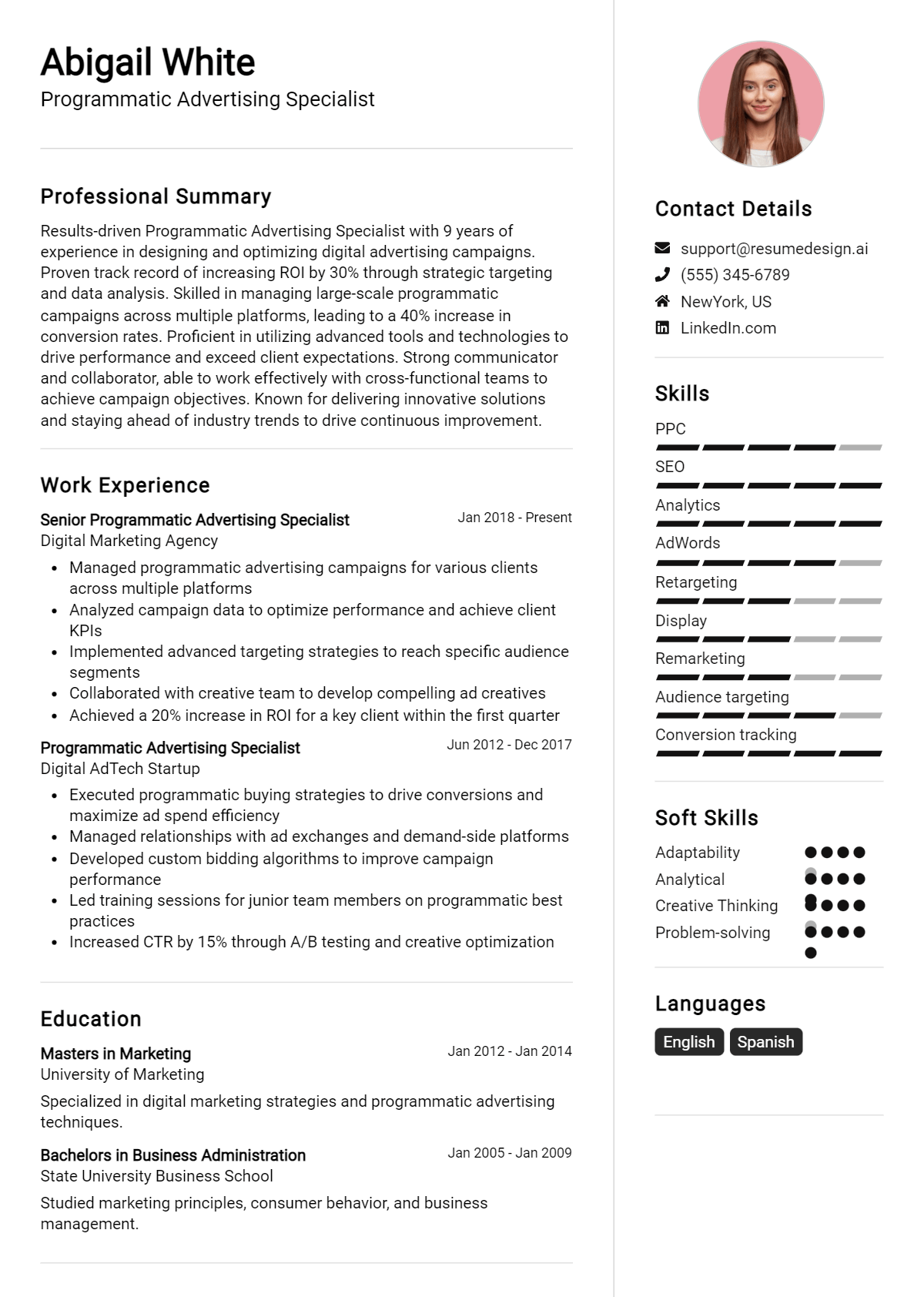
When preparing for an interview as a Programmatic Advertising Specialist, it's essential to anticipate the questions that may be posed by potential employers. Understanding the nuances of programmatic advertising, as well as showcasing your analytical skills and industry knowledge, can significantly enhance your chances of landing the job. This section aims to equip you with insights into the types of questions you may face and how to effectively articulate your responses.
Here is a list of common job interview questions for a Programmatic Advertising Specialist, along with examples of the best answers. These questions cover your work history and experience in digital marketing, what you bring to the table in terms of technical skills and innovative strategies, and your long-term goals in the evolving landscape of programmatic advertising.
1. What experience do you have with programmatic advertising platforms?
I have over three years of experience managing campaigns on platforms like Google Display Network and The Trade Desk. I have successfully optimized campaigns by leveraging data analytics to enhance targeting and increase ROI for clients across various industries.
Example:
I managed a $50,000 budget on The Trade Desk, optimizing it to reduce CPA by 30% through data analysis and audience segmentation.
2. How do you measure the success of a programmatic advertising campaign?
Success is measured through KPIs such as CTR, CPC, and conversion rates. I also analyze the return on ad spend (ROAS) and customer lifetime value (CLV) to assess overall effectiveness and make adjustments to improve performance throughout the campaign.
Example:
I track CTR and ROAS weekly, adjusting strategies to ensure we meet our 20% increase target for conversions within the campaign duration.
3. Can you explain the difference between real-time bidding and programmatic direct?
Real-time bidding (RTB) allows advertisers to bid on ad impressions in real-time, often leading to competitive pricing. In contrast, programmatic direct involves pre-negotiated deals with publishers, offering guaranteed inventory and more control over placements and audience targeting.
Example:
In my last role, I used RTB for flexibility while leveraging programmatic direct for brand safety and premium placements.
4. How do you handle underperforming ad campaigns?
I start by analyzing performance data to identify issues, such as low CTR or high CPC. Then, I adjust targeting parameters, creatives, or budgets. Continuous A/B testing is vital to find effective solutions and improve overall campaign performance.
Example:
When a campaign underperformed, I adjusted the audience targeting and tested new creatives, resulting in a 25% improvement in engagement.
5. What tools do you use for data analysis in programmatic advertising?
I primarily use Google Analytics, Tableau, and Datorama for data analysis. These tools help me track campaign performance, visualize data trends, and generate reports that inform strategic decisions for optimizing future advertising efforts.
Example:
Using Google Analytics, I identified traffic sources, allowing me to reallocate budget to higher-performing channels, boosting overall results.
6. How do you ensure brand safety in programmatic campaigns?
I utilize whitelists and blacklists to control where ads appear. Additionally, I partner with verification tools like Integral Ad Science and DoubleVerify to monitor placements and ensure compliance with brand safety standards, thereby protecting the client's reputation.
Example:
I maintained a whitelist of reputable sites for a luxury brand, ensuring no ads appeared on inappropriate content, safeguarding the brand's image.
7. What strategies do you use for audience targeting in programmatic advertising?
I utilize demographic, geographic, and behavioral targeting strategies, combined with retargeting techniques to reach users who have previously engaged. This multi-faceted approach increases relevance and engagement rates, optimizing campaign effectiveness.
Example:
By retargeting previous website visitors, I boosted conversion rates by 40%, demonstrating the power of tailored audience strategies.
8. Describe a challenging project you've worked on in programmatic advertising.
I once managed a multi-channel campaign with a tight deadline. Coordinating across teams, I implemented a streamlined workflow, ensuring timely delivery. The campaign achieved a 35% increase in conversions, highlighting my ability to manage high-pressure situations effectively.
Example:
During a last-minute project, I led a team to launch a campaign in three days, resulting in successful execution and exceeding conversion goals.
9. Can you explain the significance of data segmentation in programmatic advertising?
Data segmentation allows for targeted advertising based on user behaviors and demographics. This increases campaign efficiency and ROI by reaching the most relevant audiences. Utilizing segmentation leads to personalized ads that resonate with consumers, enhancing engagement and conversion rates.
Example:
By segmenting our audience based on past purchases, I was able to create tailored ads that improved click-through rates by 25%, showing the clear impact of targeted messaging in our programmatic campaigns.
10. What role does A/B testing play in your programmatic campaigns?
A/B testing is crucial for optimizing ad performance. It allows me to compare variations of ads to determine which performs better in real-time, leading to data-driven decisions that enhance overall campaign effectiveness and improve metrics such as CTR and conversion rates.
Example:
In a recent campaign, I implemented A/B testing on ad creatives, resulting in a 30% increase in conversions by identifying the highest-performing elements to scale across our programmatic efforts.
11. How do you stay updated with emerging trends in programmatic advertising?
I regularly read industry blogs, attend webinars, and participate in networking events. Engaging with thought leaders on platforms like LinkedIn helps me stay informed about the latest technologies and strategies, ensuring my skills and knowledge remain relevant in the fast-evolving programmatic landscape.
Example:
By following key industry publications and attending conferences, I recently learned about the rise of AI in programmatic, which I’ve started integrating into my campaigns for improved targeting.
12. Can you describe a challenging programmatic campaign you managed and how you overcame obstacles?
I managed a campaign with low initial engagement. I analyzed performance data, adjusted targeting parameters, and refreshed creative assets. By iterating quickly based on insights, we turned the campaign around, achieving a 50% increase in engagement within two weeks.
Example:
Faced with poor performance, I pivoted our strategy, optimizing targeting and creatives. This quick response led to a remarkable turnaround, achieving our KPI within the revised timeframe.
13. What metrics do you prioritize when evaluating programmatic ad performance?
I prioritize metrics like CTR, conversion rate, and ROI. These indicators provide insights into campaign effectiveness and audience engagement. Analyzing these metrics helps refine future strategies and optimize budget allocation for maximum impact and efficiency in programmatic advertising.
Example:
In my last campaign, I focused on CTR and conversion rates, which revealed underperforming segments. This data allowed for targeted optimizations that significantly improved overall campaign performance.
14. How do you approach audience targeting in programmatic advertising?
I utilize a mix of first-party data, behavioral insights, and lookalike audiences for precise targeting. This combination allows me to reach potential customers effectively. Tailoring messaging based on the audience's characteristics enhances relevance and boosts the likelihood of successful engagement.
Example:
By leveraging first-party data, I effectively targeted lookalike audiences, increasing our reach and engagement, ultimately driving a 40% increase in sales conversions.
15. What tools or platforms do you find essential for programmatic advertising?
Essential tools include demand-side platforms (DSPs) like The Trade Desk, analytics tools like Google Analytics, and programmatic media buying platforms. These tools help streamline campaign management, optimize performance, and provide valuable insights into audience behavior and ad effectiveness.
Example:
I frequently use The Trade Desk for its robust features. Coupled with Google Analytics, these tools allow me to monitor campaign performance and make data-driven adjustments in real-time.
16. How do you ensure compliance with privacy regulations in your advertising strategies?
I stay informed about privacy regulations like GDPR and CCPA and implement best practices for data handling. This includes obtaining consent for data collection and ensuring transparency with users about their data usage, which builds trust and protects the brand's reputation.
Example:
By integrating consent management tools, I ensure compliance with GDPR, fostering transparency and trust with our audience, which positively impacts our brand's reputation.
17. Can you explain how you optimize programmatic campaigns for better performance?
I analyze real-time data to identify underperforming segments and make adjustments, such as reallocating budget or tweaking targeting parameters. Continuous A/B testing helps refine strategies and improve ROI.
Example:
For instance, I noticed a drop in engagement from a specific demographic and shifted the budget to higher-performing segments, resulting in a 25% increase in conversions.
18. How do you stay updated with the latest trends in programmatic advertising?
I subscribe to industry newsletters, participate in webinars, and attend conferences. Engaging in online forums and following thought leaders helps me keep abreast of new technologies and strategies.
Example:
Recently, I attended a webinar on AI in advertising, which provided insights that I implemented in our campaigns, enhancing targeting efficiency.
19. What platforms have you worked with in programmatic advertising?
I’ve worked with various DSPs like The Trade Desk, Google Display & Video 360, and AppNexus. Each platform has unique features that I leverage based on campaign goals and audience targeting.
Example:
For example, I utilized The Trade Desk for a cross-channel campaign, effectively reaching audiences across devices and increasing overall engagement by 30%.
20. How do you measure the success of a programmatic advertising campaign?
I focus on key performance indicators like CTR, conversion rates, and ROI. Analyzing these metrics helps to determine effectiveness and guides future campaign strategies.
Example:
In a recent campaign, I tracked conversions and found a 40% increase in sales, which confirmed our targeting strategy was effective.
21. Describe a challenging campaign you've managed and how you overcame obstacles.
I faced a campaign with a low conversion rate. By conducting a thorough analysis, I identified targeting issues and adjusted creatives, leading to a significant improvement in performance.
Example:
In one campaign, refining the audience targeting increased our conversion rate from 1% to 4% within a month.
22. How do you approach audience segmentation in your campaigns?
I leverage data analysis to identify key audience segments based on demographics, interests, and behavior. This allows for tailored messaging that resonates with each group.
Example:
For a recent campaign, I segmented audiences by behavior, leading to improved engagement rates as we delivered more relevant ads.
23. What role does data privacy play in your programmatic strategies?
Data privacy is crucial; I ensure compliance with regulations like GDPR and CCPA. I prioritize transparent data usage and consent management to build consumer trust.
Example:
In my campaigns, I always implement privacy-first strategies, ensuring that user data is handled responsibly while maintaining effective targeting.
24. Can you discuss how programmatic advertising differs from traditional media buying?
Programmatic advertising uses automated technology and data-driven insights, allowing for real-time bidding and optimization, unlike traditional media which relies on manual processes and longer lead times.
Example:
This automation enabled me to adjust budgets instantly based on performance, achieving better results than traditional methods could provide.
25. How do you evaluate the success of a programmatic advertising campaign?
I evaluate success through metrics such as CTR, conversion rates, and ROI. Analyzing data allows me to identify trends and optimize campaigns. Continuous monitoring and adjusting strategies based on performance ensure that we meet our objectives effectively.
Example:
For a recent campaign, I focused on CTR and conversion rates, adjusting bids and placements regularly. By the end, we achieved a 30% increase in conversions and a 15% reduction in costs, demonstrating our campaign's success.
26. What role do data privacy regulations play in programmatic advertising?
Data privacy regulations like GDPR and CCPA significantly impact how we collect and use consumer data in programmatic advertising. Compliance is crucial to maintain trust and avoid penalties, driving us to implement transparent data practices and opt-in strategies.
Example:
I ensure compliance by implementing opt-in strategies and maintaining clear privacy policies. For instance, we adjusted our data collection methods to align with GDPR, enhancing transparency and consumer trust while effectively reaching our target audience.
27. Can you explain the difference between first-party, second-party, and third-party data?
First-party data is collected directly from users, second-party data is shared between trusted partners, and third-party data is gathered from various sources, often without direct user consent. Each type serves unique roles in targeting and personalization.
Example:
I utilize first-party data for its accuracy and relevance, while second-party data helps expand reach through partnerships. Third-party data can supplement insights, but I prioritize strategies that respect user privacy and consent.
28. What tools and platforms do you prefer for programmatic advertising, and why?
I prefer tools like Google Marketing Platform and The Trade Desk for their robust features and user-friendly interfaces. They offer comprehensive analytics, real-time bidding, and extensive inventory, allowing effective campaign management and optimization.
Example:
Using Google Marketing Platform, I efficiently managed campaigns, leveraging its analytics tools to refine targeting strategies. The platform's integration capabilities enhanced our overall performance, driving better results for our clients.
29. How do you stay updated with the latest trends in programmatic advertising?
I stay updated by following industry blogs, attending webinars, and participating in conferences. Engaging with professionals on platforms like LinkedIn also helps me gain insights and share knowledge about emerging trends and technologies.
Example:
I regularly read AdExchanger and attend industry events like Programmatic I/O. These platforms keep me informed about new technologies, helping me adapt our strategies to leverage the latest advancements in programmatic advertising.
30. Describe a challenging situation you faced in programmatic advertising and how you resolved it.
I encountered a low-performing campaign due to audience misalignment. I conducted a thorough analysis, adjusted targeting parameters, and tested new creatives. This proactive approach led to improved performance and a successful campaign outcome.
Example:
In a previous role, I faced a 20% drop in engagement. I revamped our targeting and A/B tested new creatives, which ultimately increased engagement rates by 35%, turning a struggling campaign into a success.
31. How do you approach budget allocation in programmatic campaigns?
I allocate budgets based on performance data, audience insights, and campaign goals. Continuous monitoring allows for reallocating funds to high-performing areas while minimizing spend on underperforming segments, ensuring optimal ROI.
Example:
For a recent campaign, I allocated 70% of the budget to top-performing segments. This strategy resulted in a 40% increase in conversions, demonstrating the effectiveness of data-driven budget allocation.
32. What strategies do you use to optimize ad placements in programmatic advertising?
I optimize ad placements by analyzing performance data, adjusting bidding strategies, and using dynamic creative optimization. Continuous A/B testing helps identify the best placements for our target audience, maximizing engagement.
Example:
By analyzing placement data, I discovered that certain sites performed significantly better. I adjusted bids accordingly and implemented A/B testing, leading to a 25% increase in CTR and improved overall campaign performance.
33. Can you explain how you optimize programmatic ad campaigns for better performance?
I optimize programmatic ad campaigns by analyzing key performance metrics, adjusting targeting parameters, and testing different creative formats. I also leverage A/B testing to determine the most effective ad placements and audiences, continually refining strategies based on real-time data.
Example:
In a recent campaign, I noticed underperformance in specific segments. By reallocating budget to better-performing areas and refining audience targeting, we achieved a 30% increase in engagement rates over four weeks.
34. How do you stay updated with the latest trends in programmatic advertising?
I stay updated by following industry publications, participating in webinars, and networking with other professionals. I also subscribe to newsletters and attend conferences to learn from thought leaders and gain insights into new technologies and strategies.
Example:
Recently, I attended a conference focused on AI in advertising, which provided valuable insights that I implemented in our campaigns, improving efficiency and targeting precision.
35. Can you describe a challenging situation you faced in programmatic advertising and how you resolved it?
I once faced an issue with a sudden drop in click-through rates. I conducted a thorough analysis and discovered targeting conflicts. By refining our audience segments and adjusting our bidding strategy, I was able to restore and enhance campaign performance.
Example:
After identifying the drop, I implemented a new audience segmentation strategy, which boosted our CTR by 25% in just two weeks, demonstrating the importance of continual monitoring and adjustment.
36. What tools do you find most effective for managing programmatic campaigns?
I find demand-side platforms (DSPs) like The Trade Desk and data management platforms (DMPs) crucial for managing campaigns. These tools offer robust analytics and targeting options, allowing for better decision-making and optimization of ad spend.
Example:
Using The Trade Desk, I successfully managed a multi-channel campaign, utilizing its analytics features to drive insights that led to a 20% reduction in CPA.
37. How do you measure the success of a programmatic advertising campaign?
I measure success through KPIs such as CTR, conversion rates, and return on ad spend (ROAS). Analyzing these metrics helps determine the effectiveness of the campaign and informs future strategy adjustments.
Example:
In a recent campaign, we achieved a 15% conversion rate and a ROAS of 400%, indicating strong performance and justifying our strategy and budget allocation.
38. What role does data play in your decision-making process for programmatic advertising?
Data is central to my decision-making process. I rely on analytics to inform targeting, budget allocation, and creative strategy. This data-driven approach enables more precise and effective campaign management.
Example:
By analyzing user behavior data, I adjusted our targeting strategy, resulting in a 40% increase in engagement, clearly demonstrating the power of data in driving campaign success.
39. How do you handle underperforming campaigns?
When facing underperforming campaigns, I conduct a thorough analysis to identify issues. I experiment with different creatives, adjust targeting parameters, and reallocate budgets as needed to improve performance and meet objectives.
Example:
In a campaign that was underperforming, I re-evaluated audience targeting and refreshed the ad creative, leading to a turnaround that boosted CTR by 35% within two weeks.
40. What strategies do you use to ensure brand safety in programmatic advertising?
To ensure brand safety, I utilize whitelists and blacklists, monitor ad placements, and collaborate with trusted partners. I also employ brand safety tools to filter content and maintain a positive brand image.
Example:
By implementing a strict blacklist and regularly reviewing placements, I successfully protected our brand from negative associations, ensuring a safe advertising environment.
41. How do you approach optimizing a programmatic campaign for better performance?
I analyze key performance metrics such as CTR, conversion rates, and ROI. By conducting A/B tests on creatives and targeting parameters, I refine the campaign continuously. Additionally, I leverage audience insights to enhance targeting precision and reduce waste.
Example:
For example, in my last campaign, I adjusted audience segments based on performance data, resulting in a 25% increase in conversions within a month.
42. What are some common challenges faced in programmatic advertising, and how do you overcome them?
Common challenges include ad fraud, data privacy issues, and managing multiple platforms. I mitigate these by employing reliable verification tools, staying updated on regulations, and utilizing demand-side platforms that streamline campaign management while ensuring compliance.
Example:
For instance, I implemented brand safety measures that reduced ad fraud by 30%, ensuring our campaigns were both effective and secure.
43. How do you measure the success of a programmatic advertising campaign?
Success is measured through KPIs such as CPA, ROAS, and engagement metrics. I track these metrics using analytics tools and dashboards. Regular reporting and analysis help to assess performance and make data-driven adjustments for future campaigns.
Example:
In a recent campaign, I reported a 15% increase in ROAS, illustrating the campaign's effectiveness and guiding future strategy.
44. Describe your experience with different programmatic platforms and tools.
I have hands-on experience with platforms like Google DV360, The Trade Desk, and AdRoll. Each platform offers unique features, and I leverage them based on campaign objectives, whether it's real-time bidding or audience targeting, to optimize performance.
Example:
For example, I successfully managed campaigns on DV360, which allowed for granular targeting and improved overall efficiency by 20%.
45. What strategies do you use to stay updated on trends in programmatic advertising?
I subscribe to industry newsletters, attend webinars, and participate in online forums. Engaging with fellow professionals and following thought leaders on social media helps me stay informed about the latest trends, technologies, and best practices in programmatic advertising.
Example:
Recently, I attended a webinar on AI in advertising, which inspired new strategies I applied to our campaigns, enhancing targeting and efficiency.
46. How do you handle discrepancies in data reporting across platforms?
I first cross-reference data from multiple sources to identify inconsistencies. Then, I investigate potential causes, such as tracking issues or attribution differences. Collaborating with technical teams helps resolve discrepancies for accurate reporting and decision-making.
Example:
In a prior role, I noticed a 20% discrepancy between platforms, which I resolved by adjusting tracking parameters, ensuring data integrity.
How Do I Prepare For A Programmatic Advertising Specialist Job Interview?
Preparing for a job interview is crucial for making a positive impression on the hiring manager. A well-prepared candidate not only demonstrates their qualifications but also showcases their enthusiasm for the role and the company. Here are some key preparation tips to help you excel in your interview for a Programmatic Advertising Specialist position:
- Research the company and its values to understand its mission and culture.
- Familiarize yourself with the latest trends and technologies in programmatic advertising.
- Practice answering common interview questions related to programmatic advertising and digital marketing.
- Prepare examples that demonstrate your skills and experience relevant to the Programmatic Advertising Specialist role.
- Review your resume and be ready to discuss any aspect of your work history in detail.
- Prepare insightful questions to ask the interviewer about the company’s approach to programmatic advertising.
- Dress professionally and ensure you have all necessary materials ready, including copies of your resume and a notepad for notes.
Frequently Asked Questions (FAQ) for Programmatic Advertising Specialist Job Interview
Preparing for an interview can significantly boost your confidence and help you make a great impression. Understanding the types of questions you may face allows you to strategize your responses and showcase your qualifications as a Programmatic Advertising Specialist effectively. Here are some frequently asked questions that can help you get ready for your interview.
What should I bring to a Programmatic Advertising Specialist interview?
When attending an interview for a Programmatic Advertising Specialist position, it’s essential to come prepared. Bring multiple copies of your resume, a list of references, and any certifications or portfolios that demonstrate your relevant skills and experience. Additionally, having a notebook and a pen can be useful for taking notes during the interview and jotting down any questions you may want to ask the interviewer.
How should I prepare for technical questions in a Programmatic Advertising Specialist interview?
Technical questions in a Programmatic Advertising Specialist interview often focus on your understanding of programmatic platforms, data analysis, and media buying strategies. To prepare, review key concepts related to real-time bidding, demand-side platforms, and audience segmentation. Familiarize yourself with industry tools and technologies you may encounter in the role. Practicing with mock interviews and discussing technical scenarios with peers can also increase your confidence in responding to these types of questions.
How can I best present my skills if I have little experience?
If you have limited experience in programmatic advertising, focus on showcasing your transferable skills and any relevant coursework or projects. Emphasize your understanding of digital marketing principles, analytical skills, and willingness to learn. Sharing personal projects or internships related to advertising can demonstrate your passion for the field. Tailor your responses to highlight your problem-solving abilities and how you can contribute to the team despite your limited experience.
What should I wear to a Programmatic Advertising Specialist interview?
Choosing the right attire for your interview is crucial in creating a positive first impression. For a Programmatic Advertising Specialist position, aim for business casual unless otherwise specified. This could mean wearing tailored pants or a skirt paired with a professional blouse or shirt. Ensure that your clothing is clean, well-fitted, and appropriate for the company culture. When in doubt, it's better to be slightly overdressed than underdressed.
How should I follow up after the interview?
Following up after your interview is an excellent way to reiterate your interest in the position and thank the interviewer for their time. Send a personalized thank-you email within 24 hours, expressing your gratitude and mentioning specific points discussed during the interview that resonated with you. This not only shows your professionalism but also reinforces your enthusiasm for the role. If you haven’t heard back within the timeframe discussed, it’s appropriate to send a polite follow-up email inquiring about the status of your application.
Conclusion
In this interview guide for the Programmatic Advertising Specialist role, we've highlighted crucial aspects of preparation, including the importance of understanding both technical and behavioral questions. By focusing on relevant skills and experiences, candidates can significantly enhance their chances of success in this competitive field.
Preparing thoroughly for both types of questions allows candidates to present themselves as well-rounded professionals who are ready to tackle the challenges of programmatic advertising. Remember, practice is key to building the confidence needed to shine during interviews.
We encourage you to take full advantage of the tips and examples provided in this guide. With dedication and preparation, you can approach your interviews with confidence and the knowledge that you are well-equipped to make a lasting impression.
For further assistance, check out these helpful resources: resume templates, resume builder, interview preparation tips, and cover letter templates.