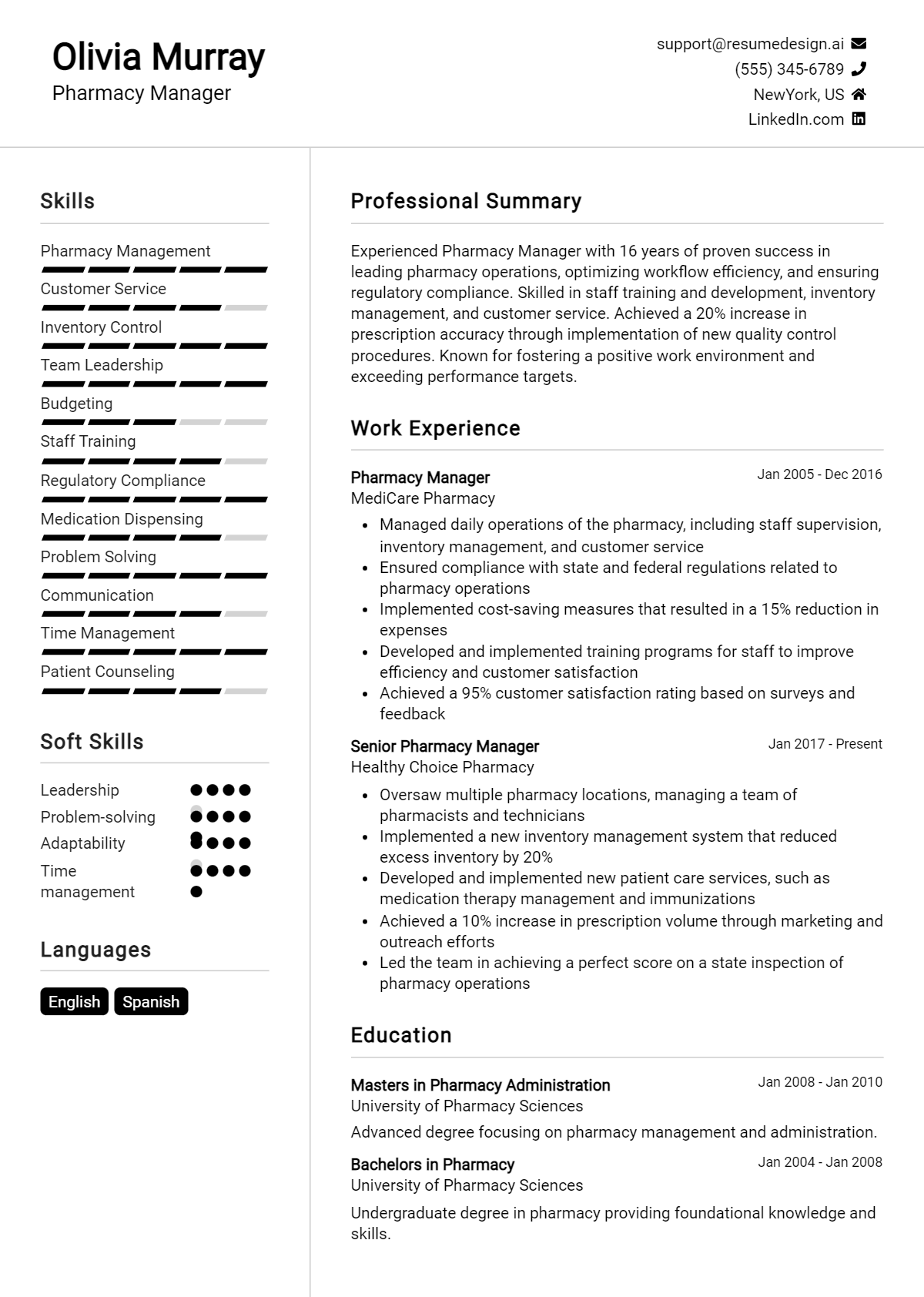
When preparing for a job interview as a Pharmacy Manager, it's essential to anticipate the types of questions you may encounter. This role not only requires extensive knowledge of pharmaceuticals but also strong leadership and management skills. Employers will look for candidates who can ensure operational efficiency, maintain compliance with healthcare regulations, and foster a positive environment for both staff and patients.
Here is a list of common job interview questions for Pharmacy Manager positions, along with examples of the best answers. These questions cover your work history and experience in pharmacy operations, highlight what you have to offer the employer in terms of leadership and patient care, and explore your goals for the future, ensuring you present yourself as the ideal candidate for the role.
1. What leadership style do you use as a Pharmacy Manager?
I adopt a collaborative leadership style, encouraging input from my team while also providing clear direction. This approach fosters a positive work environment and promotes team accountability, ultimately improving patient care and operational efficiency.
Example:
I believe in a participative style, where team feedback is valued. This builds trust and improves morale, allowing us to work together more effectively to address challenges and enhance patient care.
2. How do you ensure compliance with pharmacy regulations?
I maintain compliance by regularly reviewing state and federal regulations, conducting staff training, and implementing quality control measures. Establishing a culture of accountability ensures that all team members understand and adhere to the necessary protocols.
Example:
By conducting monthly training sessions and audits, I ensure that our team stays up-to-date with regulations. This proactive approach minimizes the risk of non-compliance and enhances our service quality.
3. Describe a challenging situation you faced in your previous role.
In my last position, we faced a sudden medication shortage. I quickly coordinated with suppliers, adjusted inventory management practices, and communicated transparently with patients, ensuring they received necessary alternatives without compromising care.
Example:
When a key medication was unavailable, I sourced alternatives and educated staff on substitutions, which maintained patient care continuity and minimized disruptions in service.
4. How do you handle conflicts within your team?
I address conflicts by facilitating open communication. I encourage team members to express their concerns and work together to find solutions. By mediating discussions and emphasizing our shared goals, I help restore collaboration and focus.
Example:
When conflicts arise, I hold a private meeting with the involved parties to discuss their perspectives. This helps clear misunderstandings and fosters a cooperative work environment.
5. What strategies do you use to enhance patient care?
I implement comprehensive patient counseling and medication management programs. Additionally, I focus on staff training to ensure they are knowledgeable about new medications and therapies, which ultimately leads to improved patient outcomes.
Example:
I prioritize patient education by organizing workshops on medication adherence, which empowers patients and significantly improves their health outcomes.
6. How do you manage inventory and control costs?
I utilize inventory management software to track usage patterns, ensuring optimal stock levels while minimizing waste. Regular audits and strategic supplier negotiations also help control costs without compromising quality.
Example:
By analyzing purchasing trends and adjusting order quantities accordingly, I’ve successfully reduced costs by 15% while maintaining adequate inventory levels.
7. Can you describe your experience with pharmacy technology?
I have extensive experience with pharmacy management systems, electronic health records, and automated dispensing systems. I continuously seek to leverage technology to streamline operations and enhance patient safety.
Example:
In my last role, I implemented a new pharmacy management system that improved prescription processing speed by 30%, greatly enhancing workflow efficiency.
8. How do you keep your team motivated?
I keep my team motivated by recognizing individual contributions, setting achievable goals, and fostering an inclusive environment. Regular team-building activities and professional development opportunities also enhance engagement and job satisfaction.
Example:
I celebrate team successes with rewards and recognition, ensuring everyone feels valued and motivated to achieve our pharmacy's goals.
9. How do you handle conflicts between pharmacy staff members?
I encourage open communication and mediation. I listen to both parties, understand their perspectives, and guide them towards a resolution. Promoting teamwork and establishing clear roles helps prevent conflicts from arising in the first place.
Example:
In a previous role, I facilitated a meeting to address a conflict, allowing each party to express their concerns. This led to a mutual understanding and improved collaboration among team members.
10. What strategies do you use to ensure compliance with pharmacy regulations?
I implement regular training sessions for staff on current regulations and conduct routine audits. Staying updated with regulatory changes and involving the team in compliance discussions fosters a culture of accountability and adherence.
Example:
By creating a compliance checklist and conducting monthly audits, I ensured our pharmacy met all state and federal regulations, resulting in zero violations during inspections.
11. How do you prioritize tasks in a busy pharmacy environment?
I assess urgency and importance, delegating tasks where appropriate. Using digital tools to track workflows helps streamline processes and ensures that critical tasks, such as patient care and medication safety, are prioritized effectively.
Example:
In my last position, I implemented a task management system that allowed us to prioritize prescriptions based on patient needs, improving our workflow efficiency by 20%.
12. Can you describe a time when you improved pharmacy operations?
I identified inefficiencies in our inventory management system and implemented an automated tracking solution. This reduced stockouts and waste, ultimately improving service delivery and patient satisfaction.
Example:
By switching to an automated inventory system, I decreased medication shortages by 30% and enhanced our order accuracy, leading to higher patient trust and satisfaction.
13. How do you ensure a high level of customer service in your pharmacy?
I train staff to prioritize patient interactions and actively seek feedback. Implementing a patient-centered approach and encouraging staff to build rapport with customers fosters a welcoming environment.
Example:
By conducting customer service training, our pharmacy received positive feedback, with a 25% increase in repeat customers within six months.
14. What role does technology play in your management style?
Technology is integral to my management style. I leverage pharmacy management systems to streamline operations, enhance communication, and improve patient safety, ensuring efficient service delivery.
Example:
Utilizing an electronic health record system improved our workflow efficiency, allowing us to process prescriptions 15% faster while minimizing errors.
15. How do you handle medication errors when they occur?
I approach medication errors with transparency and a learning mindset. I conduct a thorough investigation, report the incident, and implement corrective actions to prevent recurrence, ensuring patient safety is always the priority.
Example:
After a medication error, I led a team review to identify the cause and retrained staff on procedures, resulting in a 50% reduction in errors over the next quarter.
16. How do you stay current with pharmaceutical advancements?
I regularly attend industry conferences, participate in continuing education courses, and subscribe to relevant journals. Networking with peers also helps me stay informed about the latest research and innovations in the field.
Example:
By attending a recent pharmacy conference, I learned about new drug therapies and shared this knowledge with my team, enhancing our service offerings.
17. How do you handle conflicts among pharmacy staff?
I believe in addressing conflicts promptly through open communication. I would facilitate a meeting to allow each party to express their concerns, aiming for a collaborative resolution. This promotes a positive work environment and enhances teamwork. Example: I once mediated a dispute between two pharmacists by encouraging them to share their perspectives, which led to a mutual understanding and a plan to improve communication moving forward.
18. What strategies do you use to ensure compliance with regulations?
I implement regular training sessions and audits to ensure staff are aware of regulations. Additionally, I maintain open communication with regulatory bodies to stay updated on changes, fostering a culture of compliance within the pharmacy. Example: By conducting quarterly reviews and training, my team consistently achieved compliance during inspections, reducing any potential violations significantly.
19. How do you prioritize tasks in a busy pharmacy?
I prioritize tasks by assessing urgency and impact on patient care. I utilize a daily checklist and delegate responsibilities to ensure that critical tasks are completed promptly, while still managing longer-term projects effectively. Example: During peak hours, I focus on prescription fulfillment first, while delegating customer service inquiries to assistants, ensuring smooth operations without compromising quality.
20. How do you approach the hiring process for pharmacy staff?
My hiring process emphasizes finding candidates who align with our values and possess both technical skills and customer service abilities. I conduct behavioral interviews and practical assessments to gauge their fit for the team. Example: I once hired a technician who showed exceptional empathy during the interview; they later became a top performer in customer relations within our pharmacy.
21. How do you keep up with advancements in pharmacy practice?
I regularly attend professional development workshops and subscribe to industry journals. Networking with colleagues and participating in online forums also helps me stay informed about new therapies and technology in pharmacy practice. Example: Attending an annual pharmacy conference introduced me to innovative medication management tools, which I later implemented in our pharmacy for improved patient outcomes.
22. Can you describe a time when you had to implement a new process?
When we introduced a new inventory management system, I organized training sessions to ensure all staff were comfortable with the changes. Continuous feedback was encouraged, allowing us to refine the process based on team input. Example: The new system reduced medication errors by 30%, and staff reported feeling more confident in managing inventory due to the thorough training I facilitated.
23. How do you ensure patient safety in the pharmacy?
I prioritize patient safety by implementing strict protocols for medication dispensing and counseling. Regular training and monitoring help ensure that all staff adhere to these procedures, fostering a culture that values patient well-being. Example: By introducing double-check systems for high-risk medications, we significantly reduced dispensing errors and increased patient trust in our services.
24. How do you manage pharmacy budgets and financial performance?
I track expenses meticulously and analyze sales data to identify trends. By implementing cost-control measures and negotiating with suppliers, I ensure the pharmacy remains profitable while providing quality patient care. Example: My cost-saving initiatives led to a 15% reduction in overhead costs, enabling us to invest in new services that enhanced patient care.
25. How do you ensure compliance with pharmacy laws and regulations?
I stay updated with state and federal regulations by subscribing to industry newsletters and attending workshops. Regular audits of our processes help ensure compliance, and I provide ongoing training for my staff to reinforce the importance of adherence to these regulations.
Example:
By implementing a compliance checklist and conducting quarterly training sessions, I ensure that all team members are aware of the latest regulations, which has significantly reduced compliance-related issues.
26. Describe a time when you had to manage a difficult employee.
I once managed an employee who was consistently underperforming. I scheduled a private meeting to discuss their challenges and offered support. Together, we created a performance improvement plan, leading to noticeable progress and a more positive work environment.
Example:
After identifying the employee's struggles, I provided additional training and regular feedback. This approach improved their confidence and performance, ultimately benefiting the entire team.
27. How do you handle medication shortages in your pharmacy?
I proactively manage medication shortages by maintaining strong relationships with suppliers and utilizing alternative resources when necessary. Additionally, I communicate with patients about their options and encourage them to consult with their healthcare providers for alternatives.
Example:
When faced with a shortage, I quickly informed patients and suggested alternative medications, ensuring their treatment continued without interruption.
28. What strategies do you use to improve customer satisfaction?
I prioritize training staff on effective communication and empathy towards customers. Regularly gathering feedback through surveys helps us identify areas for improvement, ensuring our services meet patient needs and expectations.
Example:
Implementing a feedback system revealed that patients wanted longer consultation times, which we adjusted, resulting in a 20% increase in satisfaction ratings.
29. Can you discuss your experience with pharmacy software systems?
I have extensive experience with various pharmacy management systems, including Rx30 and PioneerRx. I ensure my team is well-trained in these systems to enhance workflow efficiency and reduce medication errors.
Example:
By conducting regular training sessions on our pharmacy software, I’ve increased our team’s efficiency, leading to fewer errors and faster service.
30. How do you approach staff training and development?
I believe in ongoing training and development through workshops, mentorship programs, and online courses. Tailoring training to individual needs enhances skill sets and motivates staff to grow professionally within the pharmacy.
Example:
I developed a mentorship program that pairs experienced pharmacists with new staff, resulting in improved skills and higher employee retention rates.
31. What measures do you take to ensure patient safety?
I implement strict protocols for medication dispensing, conduct regular safety audits, and encourage open communication among staff regarding any potential safety concerns. Continuous education on best practices is also crucial for patient safety.
Example:
Through rigorous checks and staff training, I’ve significantly reduced medication errors, enhancing overall patient safety in our pharmacy.
32. How do you manage inventory effectively in your pharmacy?
I utilize inventory management software to track stock levels and set reorder points. Regular audits and trend analysis help us optimize inventory levels, minimize waste, and ensure we have the right medications available for patients.
Example:
By implementing a just-in-time inventory system, I reduced excess stock by 30%, ensuring we meet patient demands without unnecessary waste.
33. How do you ensure compliance with pharmacy regulations and laws?
I stay updated on state and federal regulations by attending workshops and reading relevant publications. I implement regular training sessions for staff to reinforce compliance standards and conduct periodic audits to identify and rectify any potential issues.
Example:
I attend quarterly compliance seminars and conduct monthly staff training. This proactive approach ensures our pharmacy stays compliant, allowing us to avoid legal issues and provide safe patient care.
34. Describe a time you resolved a conflict within your team.
I once mediated a disagreement between two pharmacists over workflow processes. I facilitated a meeting where both parties expressed their concerns, and we collaboratively developed a new workflow that satisfied both sides, improving team harmony and efficiency.
Example:
When two pharmacists clashed over task responsibilities, I organized a discussion. By listening to their viewpoints, we created a revised workflow that improved communication and productivity, ultimately enhancing team morale.
35. How do you handle inventory management and control?
I utilize inventory management software to monitor stock levels and expiration dates. Regular audits and forecasting help minimize waste and ensure we have necessary medications available, optimizing our pharmacy operations.
Example:
I implemented a digital inventory system that tracks stock levels in real-time. This strategy reduced waste by 15% and ensured we always have critical medications in stock.
36. What strategies do you use to improve patient safety in the pharmacy?
I prioritize patient safety by implementing double-check systems for prescriptions and conducting regular training on error prevention. Engaging with patients to review their medications also promotes safety and adherence.
Example:
I introduced a double-check system for all prescriptions and held monthly safety training sessions, leading to a significant reduction in medication errors and increased patient trust.
37. How do you handle staff performance evaluations?
I conduct regular performance evaluations based on clear, measurable objectives. I provide constructive feedback and set development goals, fostering open communication to support staff growth and enhance team performance.
Example:
I hold quarterly evaluations where we discuss achievements and areas for improvement. This process encourages professional development and helps align team goals with pharmacy objectives.
38. What role does technology play in your pharmacy management approach?
Technology is crucial for streamlining operations. I implement electronic health records and automated dispensing systems to enhance efficiency and accuracy in medication management, ultimately improving patient care.
Example:
By integrating an automated dispensing system, we reduced medication retrieval time by 30%, allowing staff to focus more on patient interactions and care.
39. How do you approach training new staff members?
I develop a structured onboarding program that includes shadowing experienced staff, hands-on training, and regular check-ins. This ensures new hires understand our processes and feel supported as they acclimate.
Example:
I created a comprehensive onboarding guide and paired new staff with mentors for their first month, facilitating a smoother transition and promoting confidence in their roles.
40. How do you stay current with industry trends and advancements?
I regularly attend industry conferences, subscribe to pharmacy journals, and engage in professional networks. This commitment to continuous learning ensures I can implement innovative practices that benefit our pharmacy and patients.
Example:
Attending annual pharmacy conferences and participating in online webinars keeps me informed about emerging trends, which I incorporate into our practice to enhance patient care.
41. How do you ensure accurate medication dispensing in your pharmacy?
I implement a double-check system where both the pharmacist and technician verify prescriptions before dispensing. Additionally, I invest in training staff on the latest technologies that enhance accuracy, such as barcode scanning systems, and maintain a culture of attention to detail.
Example:
Implementing a double-check system for prescriptions has ensured accuracy in our pharmacy. Regular training sessions on technology usage have also minimized errors, leading to improved patient safety and satisfaction.
42. How do you handle conflicts between pharmacy staff members?
I address conflicts promptly by facilitating open communication. I encourage staff to express their concerns in a safe environment, and I mediate discussions to find common ground. This approach fosters teamwork and creates a more positive workplace culture.
Example:
When two staff members disagreed over workflow, I held a meeting for them to voice their concerns. By mediating the discussion, we reached a compromise that improved collaboration and efficiency in our pharmacy.
43. What strategies do you use to manage inventory effectively?
I utilize inventory management software to track stock levels and expiration dates. Regular audits and analytics help identify trends, allowing me to optimize orders and reduce waste. Establishing strong relationships with suppliers ensures timely restocking and cost efficiency.
Example:
By employing inventory management software, I monitor stock levels closely. Regular audits help me align orders with demand, which has reduced wastage and improved our overall inventory turnover rate significantly.
44. How do you stay updated with regulatory changes in pharmacy practice?
I subscribe to professional pharmacy organizations and attend relevant conferences to stay informed about regulatory changes. Additionally, I participate in online forums and webinars that discuss new legislation, ensuring our pharmacy remains compliant with state and federal regulations.
Example:
By attending annual pharmacy conferences and subscribing to industry newsletters, I stay current with regulatory changes. This proactive approach has helped me implement necessary adjustments in our pharmacy operations promptly.
45. Describe your experience with pharmacy technology and software.
I have extensive experience with pharmacy management systems, including electronic health records and automated dispensing systems. I prioritize training for staff to ensure they are proficient in using these technologies, which enhances workflow efficiency and reduces medication errors.
Example:
In my previous role, I implemented a new pharmacy management system. I led training sessions for all staff, which resulted in a smoother transition and improved our dispensing accuracy by 20% within the first three months.
46. How do you promote patient safety in your pharmacy?
I prioritize patient safety by fostering a culture of safety and continuous improvement. Regularly reviewing procedures, providing ongoing staff training, and utilizing technology for error detection are key strategies I employ to enhance patient safety in our pharmacy.
Example:
I implemented regular safety training sessions for our staff, focusing on error prevention techniques. This initiative greatly increased awareness and significantly reduced medication errors reported in our pharmacy.
How Do I Prepare For A Pharmacy Manager Job Interview?
Preparing for a pharmacy manager job interview is crucial to making a strong and positive impression on the hiring manager. A well-prepared candidate not only demonstrates their qualifications but also shows enthusiasm and commitment to the role. Here are some essential tips to help you get ready:
- Research the company and its values to understand its mission and culture.
- Practice answering common interview questions, especially those related to pharmacy management.
- Prepare examples that demonstrate your skills and experience relevant to the pharmacy manager position.
- Review relevant regulations and guidelines to showcase your knowledge of compliance.
- Be ready to discuss your leadership style and how you manage a pharmacy team effectively.
- Dress professionally and ensure you present yourself well to make a great first impression.
- Prepare thoughtful questions to ask the interviewer, showing your interest in the role and company.
Frequently Asked Questions (FAQ) for Pharmacy Manager Job Interview
Preparing for a pharmacy manager job interview involves anticipating common questions that may arise during the process. Understanding these questions can help you articulate your thoughts clearly and present yourself as a well-prepared candidate. Below are some frequently asked questions that can guide your preparation.
What should I bring to a Pharmacy Manager interview?
When attending a pharmacy manager interview, it's essential to bring several key items to demonstrate your professionalism and preparedness. Start with multiple copies of your resume, a list of references, and any relevant certifications or licenses. Additionally, consider bringing a notepad and pen to take notes, as well as a portfolio showcasing your accomplishments or projects related to pharmacy management. Having these materials on hand can help you feel more confident and organized during the interview.
How should I prepare for technical questions in a Pharmacy Manager interview?
To prepare for technical questions in a pharmacy manager interview, review the key responsibilities and regulations relevant to pharmacy management. Familiarize yourself with topics such as inventory management, medication safety, and pharmacy law. It may also be beneficial to study recent developments in the pharmaceutical industry, as well as common software systems and technologies used in pharmacy settings. Practicing answers to common technical questions will help you communicate your knowledge effectively during the interview.
How can I best present my skills if I have little experience?
If you have limited experience in pharmacy management, focus on highlighting transferable skills from previous roles, such as leadership, customer service, and problem-solving abilities. Discuss any relevant coursework, internships, or volunteer experiences that demonstrate your commitment to the field. Additionally, emphasize your willingness to learn and adapt, showcasing examples of how you've successfully navigated challenges in past positions. This approach can help convey your potential and readiness for the role despite a lack of direct experience.
What should I wear to a Pharmacy Manager interview?
Choosing the right attire for a pharmacy manager interview is crucial for making a positive first impression. Opt for professional business attire, such as a tailored suit or business casual outfit, depending on the company's culture. Ensure that your clothing is clean, pressed, and fits well. Additionally, pay attention to grooming and personal hygiene, as these factors contribute to your overall professionalism. Dressing appropriately can help you feel more confident and project a serious attitude toward the position.
How should I follow up after the interview?
Following up after a pharmacy manager interview is an important step to reinforce your interest in the position. Send a thank-you email within 24 hours of the interview, expressing gratitude for the opportunity and reiterating your enthusiasm for the role. In your message, mention specific topics discussed during the interview to personalize your note. If you haven’t heard back within the time frame provided by the interviewer, consider sending a polite follow-up email to inquire about the status of your application. This shows your continued interest and professionalism.
Conclusion
In summary, this interview guide has highlighted the essential elements for aspiring Pharmacy Managers to consider while preparing for their interviews. Emphasizing the significance of preparation and practice, it is crucial for candidates to demonstrate both technical knowledge and relevant skills effectively. By focusing on both technical and behavioral questions, candidates can significantly enhance their chances of success in the competitive job market.
As you move forward, remember to leverage the tips and examples provided in this guide to approach your interviews with confidence and poise. Your preparation will not only help you stand out but also empower you to make a lasting impression.
For further assistance, check out these helpful resources: resume templates, resume builder, interview preparation tips, and cover letter templates.