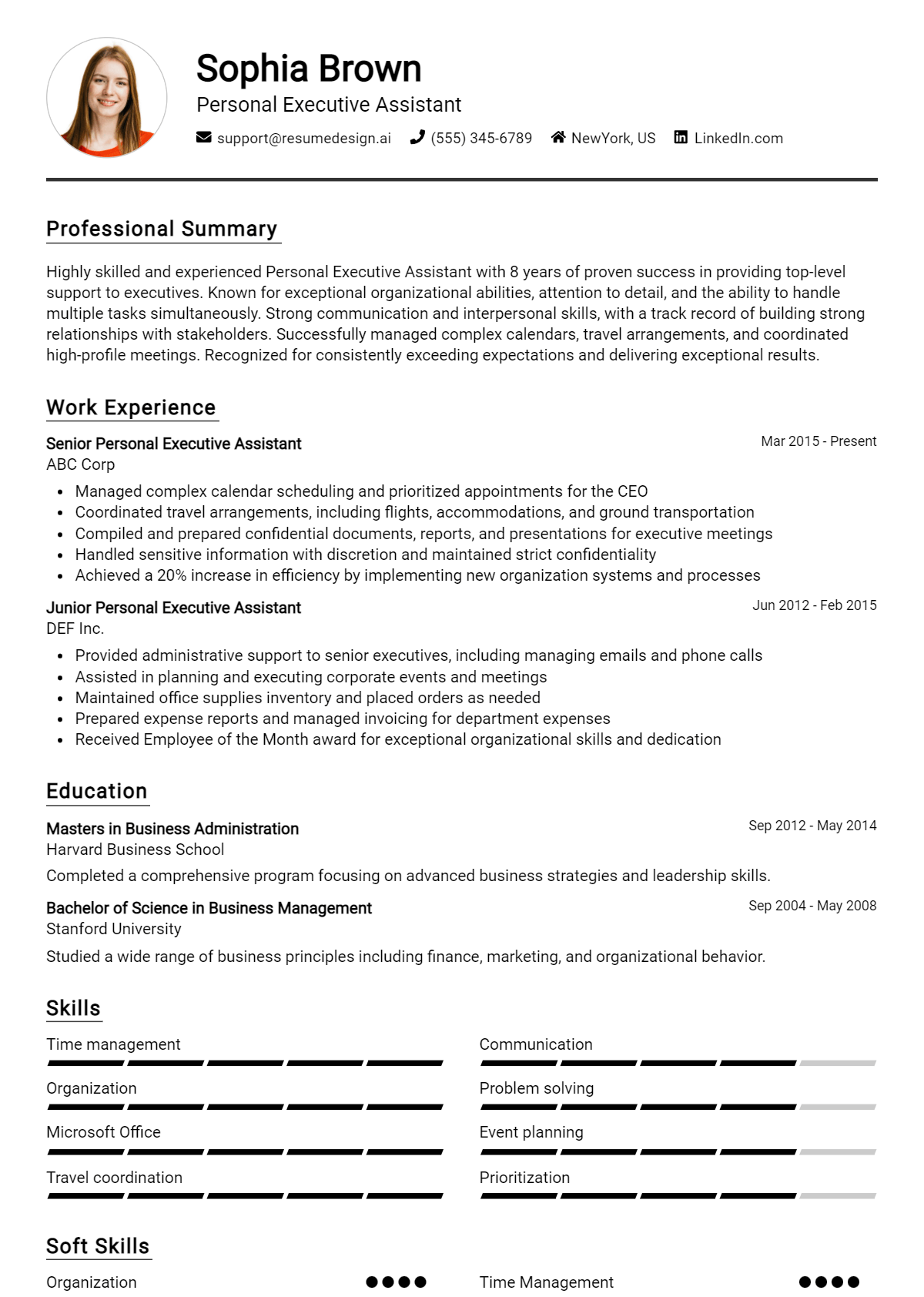
When preparing for a job interview as a Personal Executive Assistant, it's essential to anticipate the questions that employers typically ask to assess your suitability for the role. This position requires a unique blend of organizational skills, adaptability, and interpersonal communication, as you will be directly supporting high-level executives in their day-to-day activities. Understanding the key interview questions can help you present your qualifications effectively and demonstrate your potential as a valuable asset to the executive team.
Here is a list of common job interview questions for the Personal Executive Assistant role, along with examples of the best answers. These questions will delve into your work history and experience, highlighting what you can bring to the employer, and exploring your professional aspirations for the future. By preparing thoughtful responses, you can showcase your skills in time management, problem-solving, and proactive support, ultimately making a positive impression on your interviewer.
1. Can you describe your experience as a Personal Executive Assistant?
I have over five years of experience supporting executives in fast-paced environments. My role involved managing calendars, coordinating meetings, and handling communication, which honed my organizational and multitasking skills, ensuring I meet deadlines efficiently.
Example:
In my previous role, I managed the schedules of two executives, organized travel arrangements, and facilitated multiple meetings weekly, contributing to a 30% increase in productivity through effective time management and prioritization.
2. How do you prioritize tasks when managing multiple executives' schedules?
I prioritize tasks by assessing urgency and importance. I maintain a detailed calendar, use project management tools, and communicate regularly with executives to understand their needs, ensuring essential tasks are prioritized without compromising quality.
Example:
For example, I use a color-coded calendar system to highlight urgent tasks, ensuring I address critical appointments first while keeping track of ongoing projects to maintain balance and efficiency.
3. How do you handle confidential information?
Handling confidential information requires discretion and integrity. I ensure all sensitive documents are secured, limit access to authorized personnel, and adhere to company policies regarding confidentiality to maintain trust and professionalism.
Example:
In my previous job, I maintained confidentiality by using encrypted communication tools for sensitive discussions and implementing strict protocols for document handling, ensuring that sensitive information remained protected at all times.
4. Describe a challenging situation you faced in your role and how you resolved it.
Once, a last-minute meeting was scheduled, and I had to coordinate travel for an executive. I quickly assessed available flights, arranged transportation, and communicated changes effectively, ensuring the executive arrived on time and prepared.
Example:
I managed to book an alternative flight within two hours and organized ground transportation, demonstrating my ability to think on my feet and adapt to changing circumstances efficiently.
5. What tools or software do you use for scheduling and task management?
I regularly use tools like Microsoft Outlook for scheduling, Trello for task management, and Slack for communication. These tools enhance collaboration and organization, allowing for efficient information sharing and project tracking.
Example:
For instance, I utilize Google Calendar for scheduling and Asana for task assignments, ensuring that everyone stays informed and projects progress smoothly while meeting deadlines.
6. How do you ensure clear communication with your executive?
I establish regular check-ins and updates to ensure alignment on priorities. I also encourage open feedback, allowing us to address any concerns promptly and ensuring my executive feels supported and informed at all times.
Example:
In my last position, I scheduled weekly briefings to discuss ongoing projects and any new developments, which significantly improved our communication and workflow efficiency.
7. Can you give an example of how you manage conflicting priorities?
When faced with conflicting priorities, I assess deadlines and communicate with my executives to determine urgency. I then create a structured plan to tackle tasks systematically, ensuring that critical objectives are met without sacrificing quality.
Example:
For example, when two important projects overlapped, I coordinated with both teams to negotiate deadlines and allocated focused time to each, ensuring successful completion of both within the set timeframes.
8. What strategies do you use to stay organized in your role?
I employ a combination of digital tools and physical organization techniques. Utilizing checklists, color-coded calendars, and regular decluttering helps me manage my workload efficiently and ensures I remain focused on priority tasks.
Example:
For instance, I use a daily planner to outline my tasks each morning and implement a filing system for documents, maintaining an organized workspace that enhances my productivity.
9. How do you prioritize multiple tasks from different executives?
I assess the urgency and importance of each task by discussing priorities with the executives. I maintain a digital task list and use scheduling tools to manage deadlines effectively, ensuring that all tasks are completed promptly.
Example:
I regularly hold brief check-ins with executives to clarify priorities, then utilize project management software to track tasks, ensuring timely completion based on their urgency and significance.
10. Can you give an example of how you've handled a difficult situation with an executive?
Once, an executive faced a scheduling conflict that threatened a major meeting. I quickly communicated with all parties, proposed alternative times, and secured a new venue, allowing the meeting to proceed smoothly without any disruption.
Example:
I once resolved a last-minute venue change for an important meeting by quickly coordinating with vendors, ensuring all attendees were informed, and confirming the new location, which alleviated the executive's stress.
11. How do you maintain confidentiality in your role?
I adhere strictly to confidentiality agreements and best practices, ensuring sensitive information is securely stored and shared only with authorized personnel. I also limit discussions about confidential matters to private settings.
Example:
I always use encrypted communication methods for sensitive information and ensure discussions happen in private spaces, maintaining trust and confidentiality for my executives.
12. Describe your experience with travel arrangements.
I have extensive experience in organizing travel for executives, including booking flights, accommodations, and transportation. I ensure itineraries are detailed and consider preferences, budget, and time efficiency for seamless travel experiences.
Example:
For an executive's international trip, I coordinated flight schedules, arranged accommodations, and even planned local transportation, ensuring everything aligned with their preferences and schedule.
13. How do you handle a high-pressure environment?
I thrive in high-pressure situations by staying organized and focused. I prioritize tasks, take deep breaths to stay calm, and maintain clear communication with my executives to ensure we are aligned on urgent matters.
Example:
In high-pressure situations, I prioritize tasks, stay organized, and maintain open communication, effectively managing stress to ensure all priorities are addressed efficiently.
14. What tools do you use to stay organized?
I utilize digital tools such as calendars, project management software, and note-taking apps to stay organized. These tools help me track tasks, deadlines, and meetings, ensuring nothing is overlooked.
Example:
I primarily use tools like Google Calendar for scheduling and Trello for task management, allowing me to track and prioritize my workload effectively.
15. How do you handle last-minute requests?
I remain flexible and adaptable when facing last-minute requests. I assess the request's urgency, reprioritize my tasks if necessary, and ensure clear communication with the executive to manage expectations.
Example:
When receiving last-minute requests, I quickly evaluate my priorities, adjust my schedule, and communicate any changes with my executive, ensuring all needs are met efficiently.
16. What strategies do you use for effective communication?
I prioritize clear and concise communication by adjusting my style to the audience. I utilize various tools such as emails, meetings, and instant messaging, ensuring all parties are informed and aligned on tasks and goals.
Example:
I adapt my communication style based on the audience, using emails for detailed instructions and instant messaging for quick updates, ensuring everyone stays informed and engaged.
17. How do you prioritize tasks when supporting multiple executives?
I assess deadlines, urgency, and the executives’ preferences. I use digital tools to manage my to-do list effectively. Regular check-ins ensure alignment with their priorities, allowing me to adapt to any changes swiftly and maintain productivity across all tasks.
Example:
I prioritize tasks by evaluating their deadlines and importance. I use project management tools for tracking. Regular communication with executives helps me adjust priorities based on shifting needs, ensuring I always deliver on time.
18. Can you explain your experience with calendar management?
I have extensive experience managing complex calendars for multiple executives, scheduling meetings, and avoiding conflicts. I’m skilled in using calendar software to send invites, set reminders, and ensure all parties are informed about any changes or updates.
Example:
In my previous role, I managed multiple calendars. I utilized tools like Google Calendar, ensuring meetings were scheduled efficiently while avoiding conflicts. I regularly communicated with team members to keep everyone informed of changes.
19. Describe a situation where you had to handle a difficult client or stakeholder.
I once managed a client who was unhappy with the meeting arrangements. I listened actively to their concerns, offered solutions, and promptly adjusted the schedule. By demonstrating empathy and professionalism, I rebuilt trust and strengthened the working relationship.
Example:
I encountered a challenging client upset with scheduling. I listened to their concerns, proposed alternative meeting times, and ensured clear communication. This approach resolved the issue and improved our relationship, leading to successful future collaborations.
20. How do you maintain confidentiality in your role?
I prioritize confidentiality by adhering to company policies and only sharing sensitive information with authorized individuals. I use secure methods for document handling and maintain discretion in all communications to protect the privacy of executives and the organization.
Example:
I ensure confidentiality by strictly following company protocols. I limit access to sensitive information and use secure platforms for communication. Additionally, I prioritize discretion in my interactions, ensuring that confidential matters remain private.
21. What tools or software do you find essential for your work?
I rely on tools like Microsoft Office Suite, Google Workspace, and project management software like Asana. These tools help me manage tasks, organize documents, and collaborate effectively with teams, ensuring that I meet deadlines and streamline processes.
Example:
I find Microsoft Office and Google Workspace essential for document creation and collaboration. Additionally, I use project management software like Trello to track tasks and deadlines, enhancing my productivity and ensuring smooth workflow.
22. How do you handle scheduling conflicts?
When faced with scheduling conflicts, I evaluate the priorities of all parties involved. I communicate directly with stakeholders to propose alternative times, ensuring everyone’s needs are considered. Flexibility and clear communication are key to resolving conflicts effectively.
Example:
In case of scheduling conflicts, I assess priorities and communicate with all parties. I propose alternative times, ensuring everyone is accommodated. My goal is to find a solution that works for everyone while maintaining professionalism.
23. Describe a time you improved a process in your previous role.
I identified inefficiencies in our meeting scheduling process. I proposed implementing a shared online calendar that allowed team members to view availability. This change reduced scheduling conflicts and saved time, enhancing overall productivity for the entire team.
Example:
I noticed scheduling issues in my previous role and suggested a shared online calendar. This streamlined the process, reduced conflicts, and improved communication among team members, significantly enhancing our scheduling efficiency.
24. What strategies do you use to stay organized?
I utilize digital tools like to-do lists and calendar reminders to keep tasks organized. Regularly reviewing my priorities and setting daily goals helps me stay focused. Additionally, I maintain a tidy workspace to reduce distractions and enhance productivity.
Example:
To stay organized, I use digital tools like task managers and calendar apps. Daily reviews of my to-do list and setting clear priorities keep me focused, while maintaining an organized workspace minimizes distractions and boosts productivity.
25. How do you prioritize tasks when managing multiple deadlines?
I prioritize tasks by assessing urgency and importance, utilizing tools like to-do lists and calendars. I break down larger projects into smaller, manageable tasks and regularly communicate with my executive to ensure alignment on priorities.
Example:
I use a priority matrix to categorize tasks and regularly check in with my executive to reassess priorities, ensuring all deadlines are met efficiently.
26. Can you describe a time when you had to handle a difficult situation?
In a previous role, an important meeting was double-booked. I quickly contacted the parties involved, rescheduled the meeting, and ensured all necessary materials were sent out, minimizing disruption and maintaining professionalism.
Example:
When a conflict arose, I swiftly communicated with all parties, found a suitable alternative time, and handled logistics, ensuring the meeting proceeded smoothly without further issues.
27. What tools or software do you find most effective in your role?
I find project management tools like Asana and scheduling software like Calendly essential. They help streamline tasks, manage deadlines, and facilitate communication, improving overall efficiency in my role as an executive assistant.
Example:
I regularly use tools like Trello for task management and Slack for team communication, which enhance collaboration and keep projects organized.
28. How do you handle confidential information?
I treat all confidential information with the utmost care, adhering to company policies and guidelines. I ensure secure storage, limit access to necessary personnel, and maintain discretion in all communications.
Example:
I always follow established protocols for handling sensitive information, using encrypted communication and secure file storage to protect confidentiality.
29. What strategies do you use to manage your time effectively?
I use time-blocking to allocate specific periods for tasks, setting reminders for deadlines. I also review my schedule regularly, adjusting plans as needed to accommodate changing priorities while ensuring focus on long-term goals.
Example:
By implementing time-blocking and daily reviews of my schedule, I maximize productivity and remain adaptable to unexpected changes.
30. Describe your experience with travel arrangements.
I have extensive experience coordinating travel, including booking flights, accommodations, and transportation. I ensure all itineraries are organized, accounting for preferences and schedules, while also preparing contingency plans for any travel disruptions.
Example:
In my last role, I managed complex travel itineraries, ensuring seamless transitions and addressing unexpected changes promptly to minimize disruptions.
31. How do you ensure effective communication with your executive?
I maintain open lines of communication through regular check-ins, utilizing tools like email and instant messaging. I actively listen to my executive's needs and provide updates on tasks, ensuring clarity and alignment in our goals.
Example:
Through weekly check-ins and daily updates via email, I ensure my executive is always informed and aligned on priorities and tasks.
32. What do you think is the most important quality for a Personal Executive Assistant?
Adaptability is crucial for a Personal Executive Assistant. The ability to pivot and respond to changing circumstances while maintaining composure ensures that I can effectively support my executive in a fast-paced environment.
Example:
I believe adaptability is vital, as it allows me to respond quickly to unexpected changes and maintain efficiency in my support role.
33. How do you prioritize tasks when you have multiple deadlines approaching?
I prioritize tasks by assessing their urgency and importance, often using a matrix system. I communicate with my executive to clarify priorities and ensure alignment. This organized approach helps me manage time effectively and meet tight deadlines.
Example:
I create a priority list each morning, ranking tasks by their due dates and significance. This way, I can focus on high-impact items first while keeping track of upcoming deadlines.
34. Can you describe a challenging situation you faced as an assistant and how you resolved it?
Once, a last-minute meeting required rescheduling multiple appointments. I quickly contacted all parties, proposed alternative times, and updated the calendar efficiently. This proactive communication ensured everyone was informed and the executive's priorities were maintained.
Example:
I faced a scheduling conflict with a crucial client meeting. I promptly communicated with both parties to find a suitable solution, ensuring all participants were on board, which minimized disruption.
35. What tools do you use for task management and organization?
I utilize tools like Asana for project management, Google Calendar for scheduling, and Evernote for note-taking. These applications help streamline communication, track progress, and keep everything organized in one place, enhancing productivity.
Example:
I rely on Trello for visual task management and Google Drive for document collaboration, allowing me to stay organized and keep my executive informed at all times.
36. How do you handle confidential information?
I treat all confidential information with strict discretion, adhering to privacy policies and best practices. I ensure that sensitive documents are securely stored and only shared with authorized individuals to maintain trust and integrity.
Example:
I always use password protection for sensitive files and avoid discussing confidential matters in public settings to ensure information remains secure and private.
37. How do you adapt to changes in your executive's preferences or work style?
I remain flexible and observant, regularly seeking feedback from my executive. I adapt by adjusting my methods to align with their evolving preferences, ensuring I continue to provide effective support and maintain a strong working relationship.
Example:
When my executive shifted to digital note-taking, I quickly learned to use relevant apps, ensuring I met their evolving requirements without disrupting our workflow.
38. Describe your approach to managing travel arrangements.
I approach travel management by first understanding my executive's preferences and requirements. I research the best options, compare prices, and ensure seamless itineraries, including accommodations and transportation, while providing detailed travel information to minimize stress.
Example:
I coordinate all aspects of travel, from booking flights to arranging ground transportation, ensuring everything aligns with the executive's schedule and preferences for a smooth experience.
39. How do you ensure effective communication with your executive and other team members?
I ensure effective communication by maintaining regular check-ins, using collaborative tools, and being proactive in providing updates. I also encourage feedback to enhance clarity and ensure everyone is aligned on objectives and priorities.
Example:
I schedule weekly catch-ups and use shared platforms for updates, ensuring that both my executive and the team are always in sync regarding ongoing projects and tasks.
40. What qualities do you believe are essential for a Personal Executive Assistant?
Key qualities include excellent organizational skills, adaptability, strong communication abilities, and discretion. Additionally, being proactive and having a positive attitude are crucial for anticipating needs and maintaining a productive work environment.
Example:
I believe strong organizational skills, adaptability, and effective communication are vital. They help in anticipating needs and fostering collaborative relationships with my executive and the team.
41. Can you describe a time when you had to manage multiple tasks with tight deadlines?
In my previous role, I prioritized tasks by urgency and importance, using a digital planner to allocate time effectively. I communicated with team members to delegate where necessary, ensuring all deadlines were met without compromising quality.
Example:
During a project launch, I managed scheduling, logistics, and team communications simultaneously, successfully meeting all deadlines by prioritizing tasks and utilizing project management tools.
42. How do you handle confidential information?
I treat confidential information with the utmost care, following company protocols and using secure platforms for storage and communication. I also ensure that sensitive documents are only shared with authorized personnel, safeguarding privacy at all times.
Example:
In my last position, I regularly handled sensitive financial reports, maintaining confidentiality by using encrypted emails and limiting access to essential team members only.
43. Describe a situation where you had to resolve a conflict within a team.
I facilitated a discussion between two team members with differing opinions, encouraging open communication and active listening. By mediating the conversation, we reached a compromise that aligned with our project goals, improving team dynamics.
Example:
When two colleagues disagreed on a project direction, I organized a meeting to address their concerns, leading to a collaborative solution that satisfied both parties.
44. What tools do you use to stay organized?
I utilize a combination of digital tools like Google Calendar for scheduling, Trello for task management, and Evernote for note-taking. This suite helps me track deadlines, prioritize tasks, and maintain seamless communication with my executive and team.
Example:
I rely on tools like Asana for project tracking and Slack for team communication, ensuring I stay organized and responsive to my executive's needs.
45. How do you ensure effective communication with your executive?
I schedule regular check-ins to discuss priorities and updates, using concise summaries to respect their time. I also maintain open lines of communication via email and messaging apps, adapting my style to their preferences and needs.
Example:
I have weekly meetings with my executive to review priorities, and I provide daily email updates, ensuring they are always informed and aligned with ongoing tasks.
46. What do you think is the most important quality for a Personal Executive Assistant?
I believe adaptability is crucial for a Personal Executive Assistant. The ability to quickly adjust to changing priorities and demands while maintaining a proactive approach ensures that I can support my executive effectively in a dynamic environment.
Example:
In my experience, being adaptable has allowed me to handle unexpected changes smoothly, ensuring that my executive's priorities are always met, even in fast-paced situations.
How Do I Prepare For A Personal Executive Assistant Job Interview?
Preparing for an interview is crucial to making a positive impression on the hiring manager. A well-prepared candidate demonstrates professionalism, attention to detail, and genuine interest in the position. Here are some key preparation tips to help you succeed:
- Research the company and its values to understand its culture and mission.
- Practice answering common interview questions related to the Personal Executive Assistant role.
- Prepare examples that demonstrate your skills and experience relevant to the position.
- Review the job description thoroughly to align your qualifications with the requirements.
- Dress appropriately to convey professionalism and confidence.
- Prepare thoughtful questions to ask the interviewer about the role and the company.
- Bring necessary documents, such as your resume and references, neatly organized for easy access.
Frequently Asked Questions (FAQ) for Personal Executive Assistant Job Interview
Preparing for a job interview can be a daunting task, especially for the role of a Personal Executive Assistant, where attention to detail and professionalism are paramount. Understanding common questions that may arise can help candidates feel more confident and ready to showcase their skills effectively.
What should I bring to a Personal Executive Assistant interview?
For a Personal Executive Assistant interview, it’s essential to bring several key items that demonstrate your preparedness and professionalism. Start with multiple copies of your resume, a list of references, and any relevant certifications. Additionally, consider bringing a notepad and pen for taking notes during the interview. Having a portfolio that includes examples of your work or accomplishments can also make a positive impression. Remember to keep everything organized in a professional-looking folder or briefcase.
How should I prepare for technical questions in a Personal Executive Assistant interview?
To prepare for technical questions, first, research the specific tools and software commonly used in the role, such as Microsoft Office Suite, scheduling software, and communication platforms. Familiarize yourself with their features and functionalities. It may also be beneficial to practice using these tools if you have limited experience. Additionally, be ready to discuss your problem-solving skills and how you have used technology to improve efficiency in previous roles. This preparation will help you answer questions confidently and showcase your technical aptitude.
How can I best present my skills if I have little experience?
If you have limited experience as a Personal Executive Assistant, focus on transferable skills from previous roles, such as organization, communication, and time management. Use specific examples that highlight how you have successfully managed tasks or projects. Additionally, emphasize your willingness to learn and adapt, which is crucial for this role. Consider discussing relevant coursework or volunteer experiences that demonstrate your ability to support executives effectively, showing that you can add value despite your limited experience.
What should I wear to a Personal Executive Assistant interview?
Choosing the right attire for a Personal Executive Assistant interview is essential, as it reflects your professionalism and understanding of workplace expectations. Opt for business formal or business casual attire, depending on the company culture. A tailored suit or a professional dress paired with closed-toe shoes is usually a safe choice. Ensure your clothing is clean, pressed, and fits well. Additionally, pay attention to grooming and personal hygiene. Dressing appropriately shows that you respect the opportunity and understand the level of professionalism required in the role.
How should I follow up after the interview?
Following up after an interview is a crucial step that can leave a lasting impression. Send a thank-you email within 24 hours of the interview, expressing your gratitude for the opportunity and reiterating your interest in the position. Mention specific points discussed during the interview to personalize your message. Keep the tone professional and concise. If you haven’t heard back within the timeframe indicated by the interviewer, consider sending a polite follow-up email to inquire about the status of your application. This demonstrates your enthusiasm and professionalism.
Conclusion
In this interview guide for the Personal Executive Assistant role, we have explored essential strategies for success, emphasizing the significance of thorough preparation, consistent practice, and showcasing relevant skills. Understanding the nuances of both technical and behavioral questions can greatly enhance your chances of making a positive impression during the interview process.
As you gear up for your interviews, remember that the insights and examples provided in this guide are designed to empower you. Embrace these tips with confidence and approach your interviews with a proactive mindset. You're well-equipped to make a lasting impact!
For further assistance, check out these helpful resources: resume templates, resume builder, interview preparation tips, and cover letter templates.