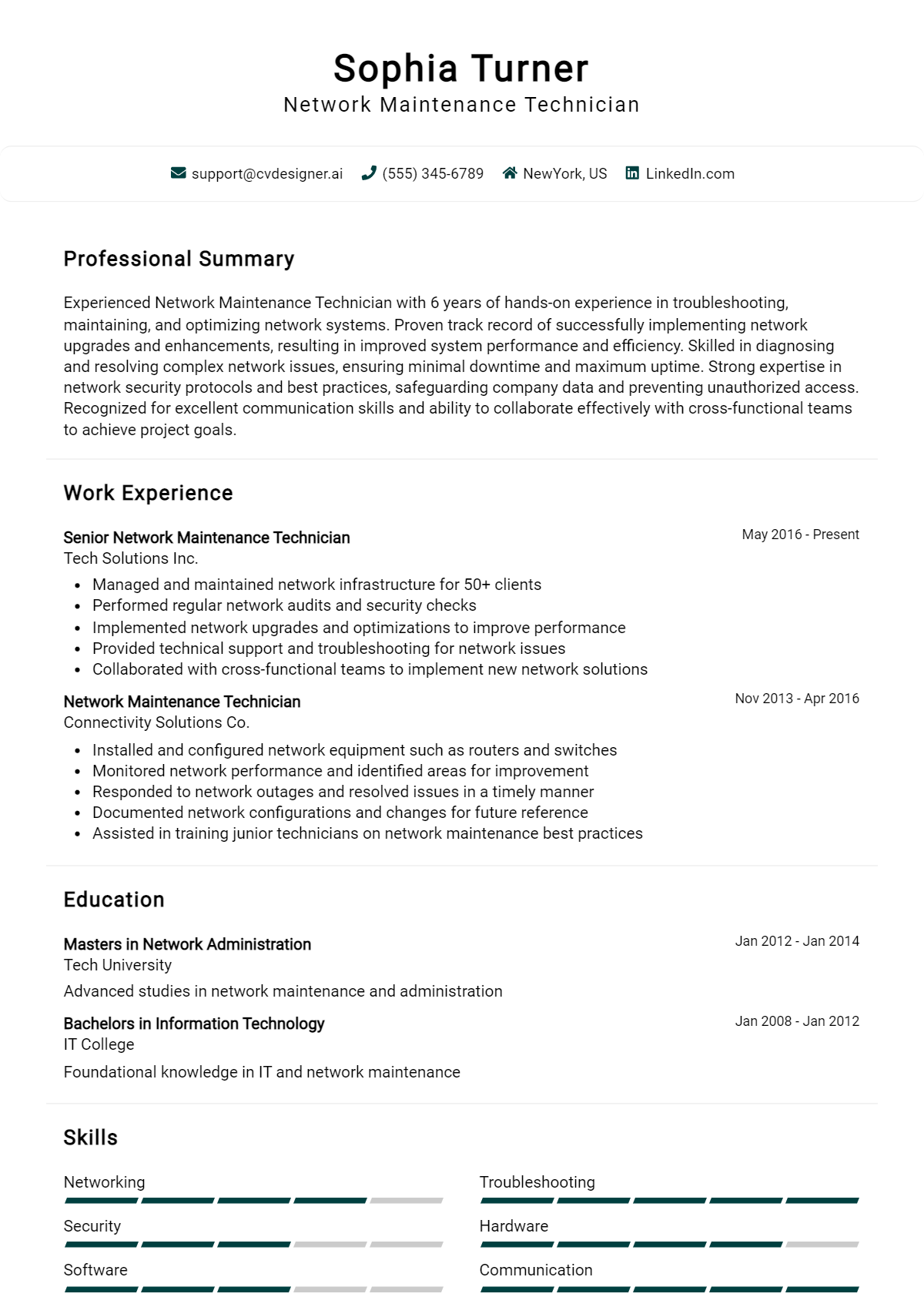
As a Network Maintenance Technician, you play a crucial role in ensuring the reliability and efficiency of an organization's network infrastructure. During interviews for this position, hiring managers will seek to assess your technical skills, problem-solving abilities, and familiarity with network systems. It's important to prepare for a variety of questions that will not only evaluate your expertise but also your approach to teamwork and communication within the IT department.
Here is a list of common job interview questions, with examples of the best answers. These questions cover your work history and experience relevant to network maintenance, what you have to offer the employer in terms of technical proficiency and troubleshooting skills, as well as your goals for the future, such as staying updated with industry trends and technologies.
1. Can you describe your experience with network troubleshooting?
I have over five years of experience troubleshooting network issues, using tools like Wireshark and ping tests. I prioritize identifying root causes and applying effective solutions quickly to minimize downtime, which has improved network performance significantly in my previous roles. Example: In my last position, I resolved a recurring latency issue by analyzing traffic patterns and reconfiguring our switch settings, resulting in a 30% performance improvement.
2. What tools do you commonly use for network maintenance?
I frequently use tools such as Cisco Network Assistant, SolarWinds, and Nagios for monitoring and maintaining network health. These tools help me efficiently identify and resolve issues, ensuring reliable network performance across various environments. Example: For instance, I used SolarWinds to monitor bandwidth usage, which helped prevent bottlenecks during peak hours by optimizing resource allocation.
3. How do you handle network outages?
During a network outage, I follow a structured approach: first, I assess the scope of the issue, then I communicate with affected users, and finally, I work swiftly to diagnose and resolve the problem while keeping everyone informed throughout the process. Example: Once, when our main router failed, I quickly rerouted traffic, notified users, and had a replacement router installed within an hour, restoring connectivity with minimal disruption.
4. What is your experience with network security protocols?
I have worked extensively with security protocols such as VPN, IPSec, and firewalls. I prioritize implementing strong security measures to safeguard network integrity and prevent unauthorized access, ensuring compliance with industry standards and best practices. Example: In my previous job, I implemented a VPN solution that secured remote access, significantly reducing potential vulnerabilities in our network.
5. Can you explain the difference between TCP and UDP?
TCP is a connection-oriented protocol that ensures reliable data transmission, whereas UDP is connectionless and faster, suitable for real-time applications. Understanding these differences helps me choose the right protocol based on application requirements and network performance. Example: For streaming services, I prefer UDP for its speed, while for file transfers, I opt for TCP to ensure data integrity.
6. How do you prioritize tasks when managing a network?
I prioritize tasks based on urgency and impact on network performance. Critical issues affecting multiple users take precedence, followed by routine maintenance and upgrades. This approach ensures that I address the most pressing concerns effectively. Example: For instance, when I encountered a network slowdown, I prioritized troubleshooting the root cause over scheduled updates to minimize user impact.
7. Describe a challenging network problem you have solved.
I once faced a complex network bottleneck affecting multiple departments. After thorough analysis, I identified a misconfigured switch. I reconfigured it and implemented load balancing, which resolved the issue and improved overall network performance. Example: This solution increased throughput by 40%, significantly enhancing productivity across the organization.
8. What steps do you take to stay current with networking technologies?
I actively engage in professional development through online courses, webinars, and industry conferences. I also follow influential blogs and participate in networking forums to exchange knowledge and stay updated on emerging technologies and best practices. Example: Recently, I completed a course on SD-WAN technology, enhancing my skills and understanding of modern networking solutions.
17. Can you describe your experience with network monitoring tools?
I have extensive experience using tools like SolarWinds and Nagios for real-time network monitoring. I regularly analyze network performance metrics to identify issues and optimize configurations, ensuring minimal downtime and efficient operations.
Example:
In my previous role, I used SolarWinds to monitor network traffic, which helped me quickly identify a bottleneck caused by a misconfigured router. This proactive measure reduced downtime significantly.
18. How do you approach troubleshooting a network issue?
I follow a systematic approach: identifying the problem, gathering data, testing potential solutions, and implementing fixes. I prioritize communication with team members and document the process for future reference, ensuring lessons learned are available for similar issues.
Example:
When faced with a connectivity issue, I first confirmed the problem, then checked logs and ran diagnostics. After isolating a faulty switch, I replaced it, restoring network functionality.
19. What steps do you take to secure a network?
To secure a network, I implement firewalls, regularly update security patches, and configure access controls. I also conduct audits and user training to promote best practices, reducing the risk of breaches and ensuring compliance.
Example:
At my last job, I initiated quarterly security assessments and updated our firewall configurations, which resulted in a 30% reduction in unauthorized access attempts.
20. How do you handle network outages?
In the event of a network outage, I quickly assess the situation to identify the cause and prioritize restoring service. I maintain clear communication with users while implementing fixes and document the incident for future reference.
Example:
During a major outage, I used my troubleshooting skills to pinpoint a failed router, replaced it swiftly, and communicated updates to users throughout the process to minimize frustration.
21. Can you explain the importance of documentation in network maintenance?
Documentation is crucial as it provides a reference for troubleshooting, helps maintain consistency in configurations, and assists in onboarding new team members. It ensures knowledge is shared and retained within the team.
Example:
I always document network changes and incidents. For instance, after configuring a new VLAN, I updated our network diagrams and notes, which helped a colleague resolve a similar issue later.
22. Describe a time you improved network performance.
In my previous role, I analyzed traffic patterns and discovered underutilized bandwidth. By reconfiguring load balancing settings, I enhanced overall network performance, resulting in a smoother user experience and increased productivity.
Example:
I reconfigured our load balancer settings after identifying uneven traffic distribution, which significantly improved response times for critical applications and user satisfaction.
23. What experience do you have with troubleshooting specific protocols?
I have experience troubleshooting protocols like TCP/IP, DHCP, and DNS. I use tools like Wireshark to analyze packet flow and identify issues, which allows me to resolve protocol-specific problems efficiently.
Example:
When troubleshooting a DNS issue, I utilized Wireshark to monitor queries and responses. I discovered misconfigured DNS records and corrected them, restoring proper functionality.
24. How do you stay updated on emerging network technologies?
I stay updated by attending webinars, participating in forums, and following industry leaders on platforms like LinkedIn. Continuous learning through certifications and hands-on practice with new technologies is also vital for me.
Example:
Recently, I completed a course on SD-WAN technology, which has enhanced my understanding of modern network solutions and their applications in optimizing performance.
25. Can you explain the process you use to troubleshoot a network connectivity issue?
My troubleshooting process starts with identifying the problem, checking physical connections, and using tools like ping and traceroute to diagnose. I then analyze network configurations and logs to pinpoint the issue before implementing a solution and testing the network again.
Example:
I once resolved a connectivity issue by systematically checking the router settings, discovering a misconfigured IP address. After correcting it, I monitored the network to ensure stability.
26. What tools do you commonly use for network maintenance and why?
I frequently use tools like Wireshark for packet analysis, SolarWinds for network monitoring, and Cisco CLI for configuration management. These tools help in diagnosing issues, monitoring performance, and ensuring network integrity, which are vital for efficient maintenance.
Example:
For instance, I used Wireshark to analyze traffic patterns and identify bandwidth hogs, enabling us to optimize our network performance effectively.
27. Describe a situation where you had to work under pressure to resolve a network issue.
During a critical system outage, I quickly assessed the situation, coordinated with my team, and prioritized tasks. By systematically isolating the problem, I was able to restore services within an hour, minimizing downtime and ensuring client satisfaction.
Example:
In one instance, I managed a major outage affecting multiple clients, and I led the team to resolve it quickly, communicating updates regularly to maintain transparency.
28. How do you ensure network security during maintenance procedures?
I follow strict protocols, including regular updates to firewalls, using VPNs for remote work, and implementing strong password policies. Additionally, I conduct vulnerability assessments to identify and address potential security risks during maintenance.
Example:
I regularly update security patches and conduct audits to ensure compliance, which has significantly reduced vulnerabilities in our network.
29. Can you discuss a time when you improved network performance?
I identified bandwidth issues caused by unnecessary applications running on the network. After implementing traffic shaping and optimizing configurations, I significantly enhanced overall performance, leading to faster response times and improved user satisfaction.
Example:
By analyzing traffic, I found that limiting certain applications improved our network's performance by 30%, benefiting all users.
30. What is your approach to documenting network changes?
I maintain detailed records of all network changes, including configurations, diagrams, and incident reports. This documentation ensures that I can track changes, facilitate troubleshooting, and provide a reference for future maintenance activities.
Example:
For every network change, I update our documentation system, ensuring it's clear and accessible for the entire team.
31. How do you stay updated on the latest networking technologies?
I regularly attend networking seminars, participate in online courses, and follow industry blogs and forums. This continuous learning helps me stay informed about new technologies and best practices, which I can apply to my work.
Example:
Recently, I completed a course on SD-WAN technology, which I applied to enhance our network's flexibility and performance.
32. What strategies do you use for effective communication with non-technical staff?
I focus on using clear, jargon-free language and visual aids to explain technical concepts. I also encourage questions and provide regular updates to ensure everyone understands the network status and any ongoing maintenance efforts.
Example:
I once created simple flowcharts to explain network changes to our sales team, which improved their understanding and reduced confusion.
33. How do you prioritize network maintenance tasks when multiple issues arise?
I assess the impact of each issue on overall operations, prioritizing critical systems and user needs first. I also communicate with stakeholders to understand urgency and allocate resources effectively.
Example:
In a previous role, I addressed a WAN outage affecting remote workers first, while scheduling routine maintenance tasks for later, ensuring minimal disruption.
34. Can you explain the process of troubleshooting a network outage?
I begin by verifying user reports and checking monitoring tools for alerts. Then, I systematically isolate components—like routers, switches, and cables—using diagnostic tools to identify and resolve the issue.
Example:
During a recent outage, I quickly identified a malfunctioning switch, replaced it, and restored connectivity within 30 minutes, minimizing downtime.
35. What tools do you use for network monitoring and maintenance?
I utilize tools such as Wireshark for packet analysis, SolarWinds for network performance monitoring, and Nagios for system alerts. These help me maintain optimal network health and troubleshoot effectively.
Example:
Using SolarWinds, I detected a bandwidth issue, allowing me to adjust configurations and enhance overall network performance.
36. Describe your experience with network security protocols.
I have implemented and maintained security protocols such as VPNs, firewalls, and intrusion detection systems. Understanding these protocols helps me protect the network from unauthorized access and data breaches.
Example:
In my last role, I configured a firewall that reduced unauthorized access attempts by 40%, ensuring a secure network environment.
37. How do you stay updated with the latest networking technologies?
I regularly attend industry webinars, participate in networking forums, and read technical publications. Continuous learning is vital to adapt to evolving technologies and best practices.
Example:
Recently, I completed a course on SD-WAN technology, which I applied to improve our network flexibility and performance.
38. What steps do you take to ensure network documentation is up-to-date?
I prioritize documenting network changes immediately after implementation. Regular audits and reviews also help maintain accuracy and completeness in network documentation.
Example:
By establishing a monthly review process, I ensured our documentation reflected all changes, making troubleshooting faster and more efficient.
39. How do you handle user complaints regarding network performance?
I listen to the user's concerns, gather necessary details, and conduct immediate diagnostics. Clear communication is key as I update them on progress and resolutions.
Example:
When users reported slow speeds, I identified a bandwidth hog and optimized our traffic, resulting in improved satisfaction and performance.
40. Can you discuss your experience with VoIP systems?
I have configured and maintained VoIP systems, ensuring quality of service through proper bandwidth allocation and network configurations, which is crucial for effective communication.
Example:
By optimizing our network for VoIP traffic, I reduced call drops significantly, enhancing overall communication reliability within the company.
How Do I Prepare For A Network Maintenance Technician Job Interview?
Preparing for a job interview is crucial to making a positive impression on the hiring manager. A well-prepared candidate not only showcases their skills and experience but also demonstrates their enthusiasm for the role and the company. Here are some key preparation tips to help you succeed in your interview for a Network Maintenance Technician position:
- Research the company and its values to align your responses with their mission.
- Practice answering common interview questions related to network maintenance and troubleshooting.
- Prepare examples that demonstrate your skills and experience relevant to the Network Maintenance Technician role.
- Review the job description carefully to understand the specific skills and qualifications required.
- Familiarize yourself with the latest networking technologies and tools that may be relevant to the position.
- Dress appropriately for the interview to create a professional impression.
- Prepare thoughtful questions to ask the interviewer that show your interest in the role and the company.
Frequently Asked Questions (FAQ) for Network Maintenance Technician Job Interview
Preparing for an interview can significantly enhance your confidence and performance. Understanding commonly asked questions can help you articulate your skills and experiences effectively, ensuring you leave a positive impression on your potential employer.
What should I bring to a Network Maintenance Technician interview?
When attending a Network Maintenance Technician interview, it's essential to bring several key items. Prepare multiple copies of your resume, a list of references, and any necessary certifications or licenses relevant to the position. Additionally, having a notepad and pen can be useful for taking notes or jotting down questions you may have for the interviewer. Having these materials organized and easily accessible will demonstrate your professionalism and readiness for the interview.
How should I prepare for technical questions in a Network Maintenance Technician interview?
To prepare for technical questions, start by reviewing the fundamental concepts of networking, including protocols, hardware, and troubleshooting techniques. Familiarize yourself with common issues that Network Maintenance Technicians face and think through the procedures you would use to resolve them. Practicing with mock interviews or technical quizzes can also help solidify your knowledge. Additionally, be ready to discuss your past experiences and how they relate to the technical questions posed during the interview.
How can I best present my skills if I have little experience?
If you have limited experience, focus on showcasing your relevant skills and any related coursework or projects. Highlight your problem-solving abilities, willingness to learn, and any internships or volunteer work in the field of network maintenance. You can also emphasize soft skills such as communication and teamwork, as these are valuable in any technical role. Be prepared to discuss how your unique perspective and eagerness to grow can benefit the employer.
What should I wear to a Network Maintenance Technician interview?
Choosing the right outfit for your interview is crucial, as it reflects your professionalism and respect for the opportunity. Aim for business casual attire, which typically includes dress pants and a collared shirt or blouse. Avoid overly casual clothing like jeans or t-shirts unless you are aware that the company culture is more relaxed. Dressing appropriately shows that you take the interview seriously and are ready to represent yourself and the company well.
How should I follow up after the interview?
Following up after the interview is a vital step that can set you apart from other candidates. Send a personalized thank-you email within 24 hours of the interview, expressing gratitude for the opportunity to interview and reiterating your interest in the position. Mention specific points from the conversation that resonated with you to demonstrate your engagement. This follow-up not only shows your appreciation but also reinforces your enthusiasm for the role.
Conclusion
In this interview guide for the Network Maintenance Technician role, we have explored essential strategies for successful interview preparation, including the significance of understanding both technical competencies and behavioral traits. Preparation is key, as it allows candidates to showcase their skills and knowledge effectively, ultimately improving their chances of success in securing the position.
By diligently preparing for both technical and behavioral questions, candidates can present themselves as well-rounded professionals ready to tackle the challenges of a Network Maintenance Technician. Remember, practicing your responses and familiarizing yourself with common interview topics can make a significant difference in your performance.
As you move forward, take advantage of the tips and examples provided in this guide to approach your interviews with confidence and clarity. Embrace the opportunity to demonstrate your expertise and passion for the role, and remember that every interview is a step toward your career goals. For further assistance, check out these helpful resources: resume templates, resume builder, interview preparation tips, and cover letter templates.