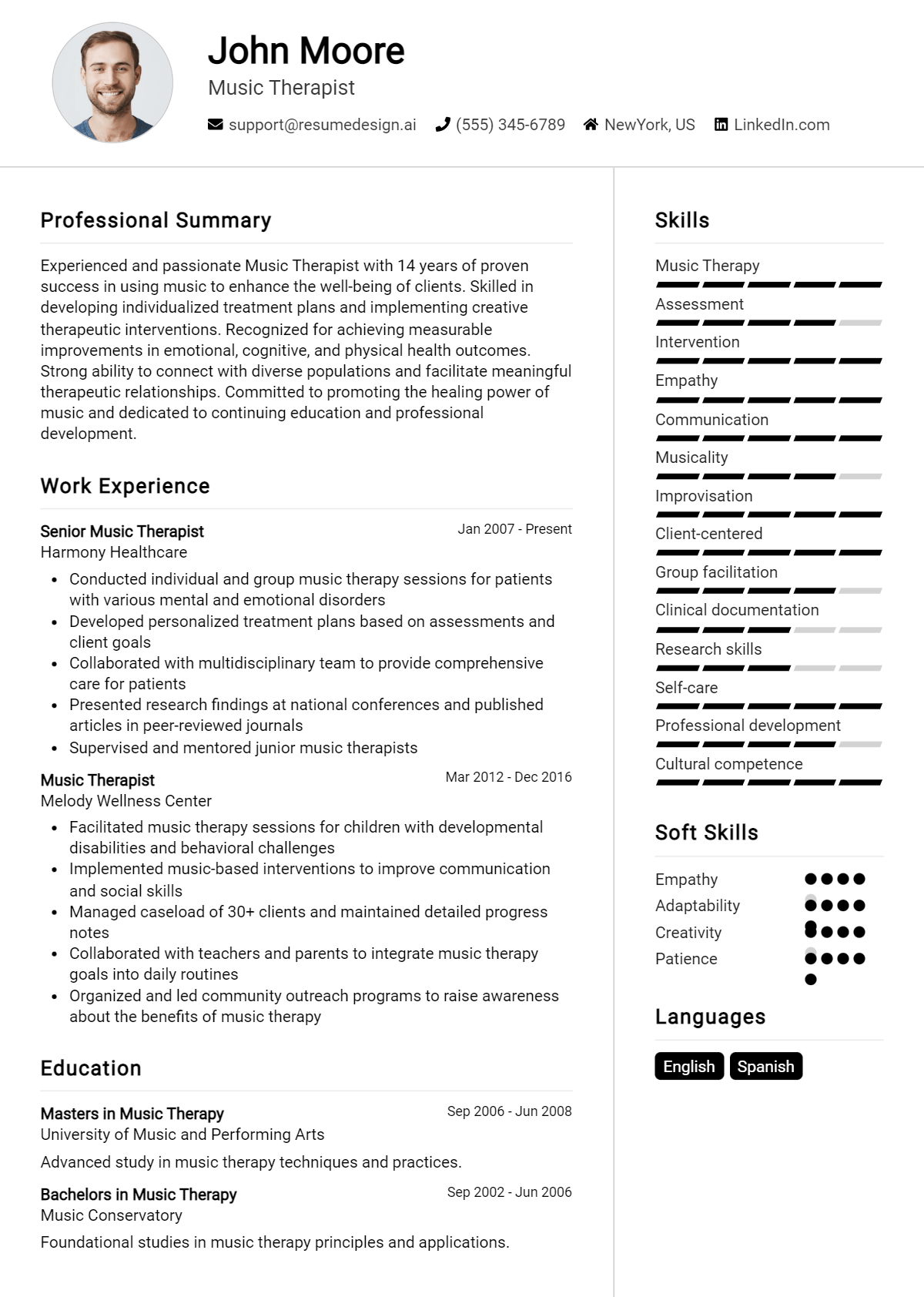
As a Music Therapist, you play a vital role in using music to enhance the emotional, cognitive, and social well-being of individuals across various settings. Whether you're working in hospitals, schools, or private practices, the interview process is crucial for demonstrating your unique skills, experiences, and passion for the field. Preparing for common interview questions will help you articulate your approach to therapy and how you can contribute to the organization’s mission.
Here is a list of common job interview questions for Music Therapists, along with examples of the best answers. These questions cover your work history and experience, what you have to offer the employer, and your goals for the future, allowing you to showcase your qualifications and commitment to improving the lives of those you serve through the therapeutic power of music.
1. What inspired you to become a music therapist?
My passion for music and its therapeutic effects drew me to this field. I witnessed firsthand how music can evoke emotions and facilitate communication in individuals with disabilities, which motivated me to pursue a career that combines my love for music with helping others. Example: I was inspired by my volunteer work at a children's hospital, where I saw how music brought joy and comfort to patients. This experience solidified my desire to use music as a healing tool.
2. How do you assess a client's needs before starting therapy?
I conduct thorough assessments through interviews, observations, and standardized tools to understand the client's emotional, cognitive, and physical needs. This holistic approach helps me tailor interventions that best support their therapeutic goals and personal preferences. Example: In my last role, I used a combination of questionnaires and direct observation to create individualized therapy plans that addressed specific client needs effectively.
3. Can you describe a successful therapy session you've conducted?
In a session with a non-verbal child, we used improvised music-making to promote self-expression. The child began to engage and communicate through musical cues, demonstrating significant emotional release and connection, which was a breakthrough in their therapy journey. Example: One memorable session involved creating a song together, allowing the child to express feelings they struggled to verbalize, showcasing the power of music in communication.
4. What techniques do you find most effective in your practice?
I often use improvisation, songwriting, and guided imagery to facilitate emotional expression and healing. These techniques allow clients to engage creatively and explore their feelings in a safe environment, fostering personal growth and connection. Example: I regularly incorporate improvisational music-making, which encourages clients to express emotions freely without the constraints of structured music, leading to deeper therapeutic insights.
5. How do you handle difficult clients or challenging situations?
I approach challenging situations with empathy and patience, using active listening to understand the client's perspective. By adapting my methods to their needs, I create a supportive environment that encourages trust and safety, allowing for progress at their own pace. Example: In one instance, a client was resistant to participation. I adjusted my approach, introducing familiar songs, which gradually helped them feel more comfortable and engaged in the process.
6. What role does music play in your therapeutic approach?
Music serves as a powerful tool for communication, emotional expression, and healing. It transcends verbal barriers and can evoke memories, feelings, and connections, making it an essential element in my therapeutic interventions to foster growth and well-being. Example: I utilize music to help clients express feelings they might struggle to articulate, allowing them to connect with their emotions and each other in profound ways.
7. Can you discuss your experience working with diverse populations?
I have worked with various populations, including children with autism, elderly patients with dementia, and individuals in rehabilitation. This experience taught me to adapt my approaches to suit different cultural and individual needs, ensuring inclusive and effective therapy. Example: While working with a multicultural group, I incorporated diverse musical styles, facilitating connections and engagement among clients, which enhanced their therapeutic experience significantly.
8. How do you stay current with developments in music therapy?
I stay updated by attending workshops, participating in professional organizations, and subscribing to relevant journals. Networking with other professionals also provides insights into innovative practices and research that can enhance my therapeutic techniques. Example: Recently, I attended a conference focused on neurodiversity in music therapy, expanding my knowledge and introducing new strategies into my practice that benefit my clients.
9. How do you assess the needs of your clients in music therapy?
I conduct thorough assessments using interviews, standardized tools, and observations. I tailor my approach based on the client's age, background, and specific challenges, ensuring a comprehensive understanding of their emotional and cognitive needs.
Example:
I assess clients by interviewing them and their families, reviewing medical histories, and observing their responses to different types of music, which helps me create personalized therapy plans.
10. Can you describe a challenging case you worked on and how you overcame it?
I once worked with a non-verbal child with autism who resisted participation. I introduced familiar songs and gradually integrated interactive instruments. Over time, he began to engage and express himself through music, marking significant progress.
Example:
I dealt with a non-verbal client by using familiar tunes to build trust. Slowly, he started to engage with instruments, showcasing his emotions through music, which was a breakthrough.
11. What techniques do you use to promote emotional expression through music?
I employ improvisation, songwriting, and lyric analysis to encourage clients to express their feelings. By creating a safe space, clients can explore their emotions and communicate in ways that resonate with them, enhancing therapeutic outcomes.
Example:
I use improvisation and songwriting to help clients express emotions. Creating a safe space allows them to explore their feelings and communicate through music effectively.
12. How do you incorporate different music genres into your therapy sessions?
I assess the client's preferences and cultural background to select appropriate genres. Incorporating diverse styles, such as classical, jazz, or pop, keeps sessions engaging and relevant, allowing clients to connect with the music on a personal level.
Example:
I tailor sessions by incorporating genres like classical for relaxation or upbeat pop for motivation, ensuring the music resonates with the client's tastes and backgrounds.
13. How do you track progress in your clients during therapy?
I utilize progress notes, client feedback, and standardized assessments to monitor changes in emotional and behavioral responses. Regular evaluations help adjust therapy plans to meet evolving needs and ensure effectiveness.
Example:
I track progress through regular assessments and feedback from clients. Adjusting therapy plans based on this data ensures that we meet their evolving needs effectively.
14. How do you handle clients who are resistant to music therapy?
I approach resistance with empathy, exploring underlying fears or misconceptions. By introducing music gradually and incorporating their preferences, I build trust and demonstrate the benefits of therapy, encouraging participation over time.
Example:
With resistant clients, I first listen to their concerns and introduce music slowly, focusing on their preferences to build trust and demonstrate the value of therapy.
15. What role does collaboration play in your work as a music therapist?
Collaboration is vital; I work with other healthcare professionals to create holistic treatment plans. Sharing insights and strategies enhances client care, ensuring a comprehensive approach to their overall well-being.
Example:
I collaborate with psychologists and occupational therapists to integrate music therapy into a broader treatment plan, ensuring a well-rounded approach to client care and support.
16. How do you stay current with developments in music therapy?
I attend workshops, conferences, and webinars to learn about new research and techniques in music therapy. Engaging with professional organizations and networking with peers also keeps me informed about best practices and innovative approaches.
Example:
I regularly attend workshops and follow research publications in music therapy. Networking with colleagues also helps me stay updated on best practices and new techniques.
17. Can you describe a time when you had to adapt a session based on a client's needs?
In one session, a client with autism became overwhelmed by loud instruments. I quickly switched to softer sounds and incorporated visual aids to help maintain their engagement. This adaptability ensured a positive experience and fostered a trusting environment.
Example:
I once had to modify a session for a child with sensory sensitivities by introducing calming instruments and reducing the volume. This approach not only suited their needs but also allowed for effective communication and interaction.
18. How do you measure the effectiveness of your music therapy sessions?
I use a combination of observational assessments and client feedback to gauge effectiveness. I track progress towards specific goals set during initial evaluations, making adjustments based on client responses and outcomes to ensure continuous improvement in therapy.
Example:
I routinely evaluate client progress using structured assessments and informal feedback. This dual approach allows me to adapt my methods while ensuring that clients are meeting their established therapeutic goals.
19. What techniques do you use to engage clients who are resistant to therapy?
To engage resistant clients, I often incorporate their musical preferences into sessions. Building rapport through familiar songs and interactive activities helps reduce anxiety and encourages participation, ultimately fostering a more positive therapeutic relationship.
Example:
I once worked with a teenager who was initially resistant. By introducing their favorite genre, I was able to create a comfortable environment that gradually led to openness and willingness to participate in the sessions.
20. How do you handle confidentiality and ethical considerations in your practice?
I prioritize confidentiality by adhering to the ethical guidelines set by the American Music Therapy Association. I ensure all client information is securely stored, discussed only with authorized individuals, and always seek consent before sharing any details.
Example:
I maintain strict confidentiality by regularly reviewing ethical guidelines and ensuring that all documentation is securely managed. Clients are informed about their rights, and I emphasize the importance of trust in our therapeutic relationship.
21. Can you discuss a successful outcome from your music therapy practice?
One particularly successful outcome involved a client with depression who began to express emotions through songwriting. Over several months, we created a collection of songs that helped them articulate their feelings, leading to significant improvement in their overall mood and outlook.
Example:
A client with anxiety wrote a song about their fears. This process not only provided a creative outlet but also helped them confront and manage their emotions, resulting in noticeable progress in their anxiety levels.
22. How do you incorporate family members into your therapy sessions?
I believe family involvement is crucial for holistic healing. I engage family members by including them in sessions, providing them with strategies to support the client at home, and encouraging open communication about the therapeutic process.
Example:
In family sessions, I invite members to participate in musical activities together. This fosters a supportive environment and strengthens the client’s social connections, enhancing the overall effectiveness of the therapy.
23. What role does cultural competence play in your practice?
Cultural competence is vital in music therapy. I strive to understand each client’s background and musical preferences, incorporating their cultural elements into sessions. This approach helps create a more relatable and effective therapeutic experience, fostering deeper connections.
Example:
I often research my clients' cultural backgrounds to ensure that the music and activities resonate with them. This respect for their heritage significantly enhances engagement and trust in the therapeutic relationship.
24. How do you manage your own stress and emotional well-being in this profession?
I prioritize self-care by engaging in regular supervision, attending workshops, and practicing mindfulness techniques. Balancing my emotional well-being allows me to provide the best support to my clients, ensuring I remain effective and empathetic during sessions.
Example:
I make it a point to attend regular peer supervision and engage in personal therapy. This practice not only helps me process my experiences but also enhances my ability to support my clients effectively.
25. How do you measure the effectiveness of your music therapy sessions?
I evaluate effectiveness through client feedback, observable progress, and setting specific therapeutic goals. I use standardized assessments and regular check-ins to adjust the approach as needed. This ensures that the therapy remains relevant and impactful for each individual.
Example: I use pre- and post-session assessments along with client feedback to measure progress, ensuring our goals align throughout the therapy process.
26. Can you describe a challenging case and how you handled it?
In a case with a non-verbal child, I incorporated instruments to facilitate expression. Building trust took time, but gradually, we used music to communicate emotions. The breakthrough came when the child started to mimic rhythms, demonstrating engagement and emotional release.
Example: I worked with a non-verbal child, using instruments to promote expression. Over time, we established trust, leading to significant breakthroughs in communication through music.
27. What role does cultural sensitivity play in your therapy sessions?
Cultural sensitivity is vital, as it fosters trust and engagement. I tailor sessions to honor diverse backgrounds by incorporating culturally relevant music and respecting individual preferences. This approach creates a safe space for clients to express themselves authentically.
Example: I prioritize cultural sensitivity by incorporating clients' musical preferences and backgrounds, ensuring they feel respected and understood during our sessions.
28. How do you handle resistance from clients during therapy?
I approach resistance with empathy, seeking to understand the underlying concerns. By fostering a supportive environment and adapting my methods, I encourage clients to gradually engage with the therapeutic process. Building rapport is crucial in overcoming resistance.
Example: When facing resistance, I listen to clients’ concerns, adapting my approach to ease their discomfort and build a trusting therapeutic relationship.
29. How do you incorporate family involvement in your sessions?
Family involvement is essential for holistic healing. I invite family members to participate in sessions and encourage them to share insights about the client’s preferences and progress. This collaborative approach enhances support outside of therapy.
Example: I involve families by inviting them to sessions and encouraging discussions about the client's progress, ensuring a collaborative support system.
30. What techniques do you use to create a comfortable environment for your clients?
I create a comfortable environment by personalizing the space with familiar instruments and calming decor. Additionally, I establish a warm rapport with clients, allowing them to express themselves freely. This setting promotes safety and encourages open communication.
Example: I personalize the therapy space with familiar instruments and soft lighting, fostering a welcoming atmosphere that encourages clients to express themselves comfortably.
31. How do you stay updated with the latest research and developments in music therapy?
I stay updated through professional journals, attending workshops, and participating in conferences. Networking with other music therapists and engaging in ongoing education keeps my practice informed and effective, ensuring I provide the best possible care to my clients.
Example: I regularly read professional journals and attend workshops, allowing me to stay informed about the latest music therapy research and techniques.
32. How do you adapt your therapy techniques for different age groups?
Adapting techniques involves understanding developmental stages and interests. For children, I use playful activities and songs, while for older adults, I may focus on reminiscence through familiar tunes. This tailored approach enhances engagement and effectiveness across age groups.
Example: I adapt my techniques based on age; for children, I use games and songs, while for older adults, I incorporate familiar music to evoke memories.
33. How do you assess a client's needs before starting therapy?
I conduct thorough assessments through interviews, questionnaires, and observational methods. This helps me understand their emotional, cognitive, and physical needs. I also collaborate with other professionals to gather comprehensive insights.
Example:
I start with a detailed intake interview, followed by standardized assessments and observations during initial sessions to tailor the therapy to each client’s unique needs.
34. Can you give an example of a challenging case and how you handled it?
I once worked with a non-verbal child with autism. I introduced music improvisation and visual aids to facilitate communication. Gradually, the child began expressing emotions through music, which was incredibly rewarding.
Example:
In a challenging case with a non-verbal child, I used music improvisation and visuals to encourage expression, leading to significant progress in communication skills.
35. How do you integrate family members into the therapy process?
I believe in the importance of involving family. I conduct family sessions, educate them about the therapeutic process, and encourage them to participate in activities that reinforce the skills learned in therapy.
Example:
I hold regular family sessions to educate and involve them, ensuring they understand and support the therapeutic goals, which enhances the client's progress.
36. What role does cultural sensitivity play in your therapy sessions?
Cultural sensitivity is crucial in therapy. I respect and incorporate clients' cultural backgrounds into sessions, allowing me to select appropriate musical selections and therapeutic approaches that resonate with them.
Example:
I prioritize cultural sensitivity by researching clients' backgrounds to choose music that resonates with their experiences and beliefs, enhancing the therapeutic relationship.
37. How do you handle resistance from clients during sessions?
I approach resistance with empathy, exploring the underlying reasons through conversation. I adapt my methods to better align with their comfort levels, ensuring they feel safe and understood.
Example:
When faced with resistance, I use open dialogue to understand their feelings, adjusting my approach to create a more comfortable therapeutic environment.
38. What techniques do you use to measure progress in therapy?
I utilize both qualitative and quantitative methods, such as tracking behavioral changes, client feedback, and progress notes. Regular assessments help me adjust goals and techniques as needed.
Example:
I measure progress through structured assessments, client feedback, and regular reviews of treatment goals, ensuring a responsive approach to therapy.
39. Describe a successful group therapy session you conducted.
In a group session for seniors, I facilitated a sing-along that encouraged participation and reminiscence. It fostered connections among participants, improving their mood and social interaction significantly.
Example:
I led a successful sing-along session for seniors, which not only boosted their spirits but also strengthened social bonds among the participants.
40. How do you stay current with developments in music therapy?
I regularly attend workshops, webinars, and conferences to learn about new research and techniques. Networking with fellow professionals also helps me stay informed about best practices in the field.
Example:
I stay current by attending professional workshops and conferences, and I actively participate in online forums to share knowledge and learn from peers.
41. How do you assess a client's musical preferences and needs?
I begin by building rapport and conducting an informal interview to understand their musical background. I observe their responses during sessions and tailor activities accordingly, ensuring that the music resonates with them emotionally and therapeutically.
Example:
I ask clients about their favorite genres and artists. During sessions, I observe how they react to different styles, adjusting our approach based on their feedback to create a personalized therapeutic experience.
42. Describe a challenging case you have handled and how you approached it.
I once worked with a non-verbal child with autism who resisted participation. I used familiar songs to gradually engage them, incorporating movement and visual aids. Over time, they became more comfortable, allowing for meaningful interaction and progress.
Example:
I faced a non-verbal child who was initially unresponsive. By introducing familiar songs and incorporating visuals, I encouraged participation, leading to improved engagement and emotional expression over several sessions.
43. How do you handle resistance from clients during therapy sessions?
I acknowledge their feelings and provide a safe space for expression. I adapt my methods by introducing alternative activities or music styles that may resonate better, ensuring they feel in control while still progressing in therapy.
Example:
When clients resist, I validate their feelings and explore alternative music or activities that may engage them better, ensuring they feel safe and respected while still working towards therapeutic goals.
44. How do you measure the effectiveness of your music therapy interventions?
I use a combination of qualitative feedback from clients and quantitative data, such as behavioral observations and progress notes. Regular evaluations help me adjust interventions and ensure we meet therapeutic goals effectively.
Example:
I track client progress through session notes and feedback, using specific metrics to assess behavioral changes and emotional responses, allowing me to refine our approach effectively.
45. Can you discuss the importance of cultural competency in music therapy?
Cultural competency is crucial as it helps me respect and understand clients' diverse backgrounds. This awareness allows me to select appropriate music and interventions that resonate with their cultural identities, enhancing therapeutic outcomes.
Example:
Understanding a client's cultural background enables me to choose music that resonates with them, fostering trust and engagement, which ultimately enhances the therapeutic process and results.
46. What self-care practices do you engage in to maintain your wellbeing as a therapist?
I prioritize self-care through regular supervision, mindfulness practices, and engaging in my own musical pursuits. These practices help me recharge emotionally and professionally, ensuring I can provide the best support for my clients.
Example:
To maintain my wellbeing, I participate in regular supervision and practice mindfulness. I also play music for enjoyment, which helps me stay connected to my passion and recharge for my clients.
How Do I Prepare For A Music Therapist Job Interview?
Preparing for a music therapist job interview is crucial to making a positive impression on the hiring manager. Effective preparation not only boosts your confidence but also demonstrates your genuine interest in the position and the organization. Here are some key tips to help you get ready:
- Research the company and its values to understand their mission and approach to therapy.
- Practice answering common interview questions, particularly those related to your therapeutic techniques and experiences.
- Prepare examples that demonstrate your skills and experience as a music therapist, focusing on successful case studies or client interactions.
- Familiarize yourself with current trends and practices in music therapy to discuss relevant topics intelligently.
- Dress professionally and consider how your attire reflects your role as a music therapist in a clinical or educational setting.
- Bring any necessary documentation, such as your resume, certifications, and a portfolio of your work, to share during the interview.
- Prepare thoughtful questions to ask the interviewer about the team, the client population, and the therapy programs offered.
Frequently Asked Questions (FAQ) for Music Therapist Job Interview
Being well-prepared for a job interview is crucial, especially in a specialized field like music therapy. Understanding commonly asked questions can help you effectively showcase your skills and experiences, allowing you to make a positive impression on your potential employer. Below are some frequently asked questions that can guide your preparation for a music therapist interview.
What should I bring to a Music Therapist interview?
When attending a music therapist interview, it's essential to bring copies of your resume, a list of references, and any certifications or licenses relevant to your practice. Additionally, consider bringing a portfolio that showcases your work, including session plans, recordings, or any materials that demonstrate your therapeutic approach. Being organized and prepared with these items can show your professionalism and dedication to the field.
How should I prepare for technical questions in a Music Therapist interview?
To prepare for technical questions, review the foundational theories and techniques of music therapy that you have learned during your training. Familiarize yourself with current practices and any specific methodologies used by the organization you're interviewing with. It may also be beneficial to think about how you would apply these techniques in different scenarios, as interviewers often ask hypothetical questions to assess your problem-solving skills and clinical reasoning.
How can I best present my skills if I have little experience?
If you have limited experience, focus on highlighting your education, internships, and any volunteer work relevant to music therapy. Discuss transferable skills from other jobs or experiences, such as communication, empathy, and teamwork. Prepare examples of how you have applied your knowledge in practical settings, and express your willingness to learn and grow in the role. Confidence in your abilities and a positive attitude can help compensate for a lack of extensive experience.
What should I wear to a Music Therapist interview?
Your attire for a music therapist interview should strike a balance between professionalism and comfort. Opt for business casual clothing, such as slacks or a skirt paired with a nice blouse or shirt. Avoid overly formal attire that may come off as stiff, as well as casual wear like jeans and t-shirts. Dressing appropriately shows respect for the interview process while allowing you to feel at ease, which can help you perform better during the interview.
How should I follow up after the interview?
After the interview, it's important to send a thank-you email to your interviewers within 24 to 48 hours. In your message, express gratitude for the opportunity to interview and reiterate your enthusiasm for the position. You can briefly mention something specific from the interview that resonated with you, which demonstrates your attentiveness and genuine interest in the role. Following up not only reflects your professionalism but also keeps you fresh in the interviewers' minds as they make their decision.
Conclusion
In summary, this interview guide for music therapists has highlighted the essential components of preparing for your upcoming job interview. Key points such as the importance of preparation, practicing your responses, and demonstrating your relevant skills have been emphasized throughout. By focusing on both technical and behavioral questions, candidates can significantly enhance their chances of success and present themselves as well-rounded professionals in the field.
As you gear up for your interviews, remember to utilize the tips and examples provided in this guide. Embrace the opportunity to showcase your passion for music therapy and your unique qualifications. With the right preparation, you can approach your interviews with confidence and poise.
For further assistance, check out these helpful resources: resume templates, resume builder, interview preparation tips, and cover letter templates.