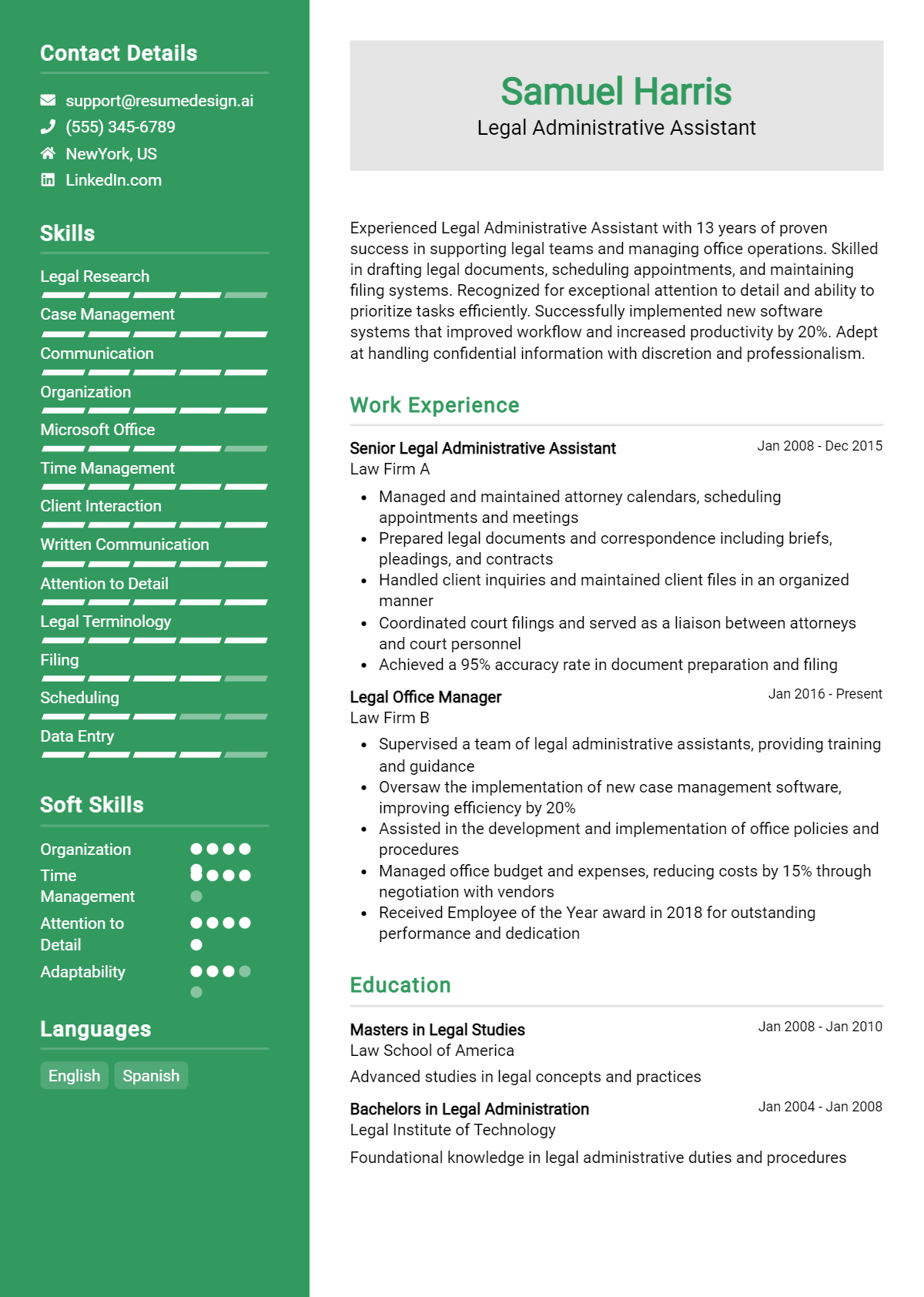
When preparing for a job interview as a Legal Administrative Assistant, it's crucial to anticipate the types of questions you may encounter. This role often requires a blend of organizational skills, legal knowledge, and the ability to communicate effectively. Understanding the common interview questions can help you articulate your qualifications and demonstrate your fit for the position.
Here is a list of common job interview questions for a Legal Administrative Assistant, along with examples of the best answers. These questions cover your work history and experience, what you have to offer the employer, and your goals for the future, allowing you to showcase your skills and enthusiasm for the role while aligning with the expectations of potential employers.
1. What interests you about working as a Legal Administrative Assistant?
I am drawn to the dynamic nature of the legal field and enjoy supporting attorneys with administrative tasks. My strong organizational skills and attention to detail allow me to contribute effectively to case management and client interactions.
Example:
I find the legal environment fascinating and appreciate the opportunity to assist in meaningful work. My organizational skills make me well-suited for this role, ensuring that all documentation and deadlines are meticulously managed.
2. Can you describe your experience with legal document preparation?
I have extensive experience preparing various legal documents, including pleadings and contracts. I am skilled in using legal software and ensuring accuracy in formatting and content, which is crucial for maintaining the integrity of legal proceedings.
Example:
In my previous role, I regularly prepared motions and briefs, ensuring they met court requirements. I take pride in my attention to detail, which helps avoid potential issues in legal documentation.
3. How do you prioritize tasks in a fast-paced environment?
I prioritize tasks by assessing deadlines and the urgency of each assignment. I use a digital calendar and to-do lists to keep track of responsibilities, ensuring that critical tasks are addressed promptly while maintaining flexibility for unexpected changes.
Example:
When faced with multiple deadlines, I evaluate each task's urgency and importance. I use a priority matrix to help focus on what needs immediate attention while keeping a clear view of upcoming deadlines.
4. What software are you proficient in that is relevant to this role?
I am proficient in Microsoft Office Suite, particularly Word and Excel, as well as legal management software like Clio and Westlaw. This knowledge allows me to create documents efficiently and manage case files effectively.
Example:
In my previous position, I used Clio for case management and created detailed spreadsheets in Excel to track billable hours. My tech skills streamline daily administrative tasks and improve overall productivity.
5. How do you handle confidential information?
I treat all client information with the utmost confidentiality, adhering to legal and ethical standards. I ensure secure storage of documents and limit access to sensitive information, reinforcing trust and integrity in my role.
Example:
I have received training in confidentiality protocols and always follow them strictly. For example, I store physical files in locked cabinets and utilize password protection for digital records to safeguard sensitive information.
6. Describe a time when you had to deal with a difficult client or situation.
I once assisted a client who was upset about a delay in their case. I listened actively, empathized with their concerns, and provided updates on the status. This approach helped to alleviate their frustration and build trust.
Example:
In a previous role, a client was frustrated by a missed deadline. I calmly explained the situation, offered a solution, and followed up with them regularly, which turned the situation around and restored their confidence in our services.
7. What skills do you believe are essential for a Legal Administrative Assistant?
Key skills include strong organizational abilities, excellent communication, attention to detail, and proficiency in legal software. These skills ensure that administrative tasks are completed accurately and efficiently, supporting the legal team effectively.
Example:
I believe effective communication and organization are vital. For instance, clear communication helps prevent misunderstandings, while strong organizational skills ensure that deadlines are met and documents are readily accessible.
8. How do you stay updated on changes in laws and regulations?
I stay informed by subscribing to legal newsletters, attending workshops, and participating in relevant online forums. This continuous education helps me remain knowledgeable about any changes that may affect our practice.
Example:
I regularly read legal journals and attend webinars on relevant topics. This proactive approach ensures that I am aware of new regulations and can provide accurate support to the legal team.
9. How do you prioritize your tasks when handling multiple cases?
I prioritize tasks based on deadlines and the complexity of each case. I utilize a task management system to track progress and ensure timely completion. This approach helps me maintain organization and reduces stress during busy periods.
Example:
I assess deadlines and urgency first, then categorize tasks. For instance, I focus on preparing documents for court dates before less urgent filings, ensuring all critical tasks are completed on time.
10. Can you describe your experience with legal software and databases?
I have extensive experience using legal software such as Clio and Westlaw for case management and research. I am comfortable managing databases, ensuring accurate information retrieval and documentation, which enhances efficiency in case preparation.
Example:
In my previous role, I used Clio for case tracking and Westlaw for legal research, allowing me to streamline document preparation and maintain accurate records effectively.
11. How do you handle confidential information?
I understand the importance of confidentiality in the legal field. I always follow established protocols, such as securing documents and limiting access to sensitive information. This commitment ensures client trust and compliance with legal standards.
Example:
I consistently use locked filing cabinets for physical documents and encrypt files on shared drives, ensuring that only authorized personnel can access sensitive client information.
12. Describe a time you had to resolve a conflict in the workplace.
In a previous role, a colleague and I disagreed on document formatting. I suggested a meeting to discuss our perspectives, leading to a compromise that satisfied both parties and maintained team cohesion, demonstrating the importance of effective communication.
Example:
When my colleague and I disagreed on a report layout, I initiated a discussion, allowing us to combine our ideas. This collaborative effort improved our project's presentation.
13. What strategies do you use to ensure accuracy in your work?
I double-check documents and use checklists to ensure accuracy. Additionally, I take breaks between tasks to maintain focus and reduce errors, which is crucial in the legal administrative field.
Example:
I implement a checklist for all documents and review them after a short break. This technique helps me catch errors I might overlook while working continuously.
14. How do you stay updated on legal procedures and regulations?
I subscribe to legal newsletters, attend workshops, and participate in webinars to stay informed about changes in laws and regulations. This ongoing education helps me provide accurate support in my role.
Example:
I regularly read legal journals and participate in online courses, ensuring I stay current with evolving laws, which allows me to assist effectively in case management.
15. Describe your experience with filing and document management.
I have managed both physical and electronic filing systems, ensuring documents are organized, accessible, and up-to-date. My attention to detail helps maintain order, which is crucial for efficient case management.
Example:
In my previous job, I implemented a digital filing system that improved our document retrieval time by 30%, ensuring that our team could access essential files quickly.
16. How do you handle tight deadlines in your work?
I remain calm and focused under pressure by breaking tasks into smaller, manageable parts. I prioritize effectively and communicate with my team to ensure we meet deadlines without compromising quality.
Example:
When facing tight deadlines, I create a prioritized list and tackle the most urgent tasks first, ensuring that I communicate progress to my supervisor regularly.
17. How do you prioritize tasks when handling multiple assignments in a legal office?
I prioritize tasks by assessing deadlines and the importance of each assignment. I use tools like to-do lists and digital calendars to organize my workload effectively. This ensures that urgent matters are addressed promptly while maintaining overall productivity.
Example:
I assess deadlines and categorize tasks by urgency. For example, I handle court filing deadlines first while scheduling other administrative tasks around them to ensure nothing is overlooked.
18. Can you describe a time when you had to deal with a difficult client or colleague?
In a previous role, a client was upset about delays in their case. I listened actively, empathized with their concerns, and provided regular updates. This approach helped rebuild trust and improved our working relationship.
Example:
I once handled an upset client by actively listening and offering frequent updates on their case, which reassured them and improved our communication.
19. What software are you familiar with that is commonly used in legal offices?
I am proficient in legal management software like Clio and practice management tools such as MyCase. Additionally, I have experience with Microsoft Office Suite to create documents and spreadsheets, enhancing efficiency in my administrative tasks.
Example:
I have extensive experience with Clio for case management and Microsoft Office for document creation, which helps streamline my daily tasks.
20. How do you ensure confidentiality when managing sensitive legal documents?
I adhere to strict confidentiality protocols by securely storing documents and limiting access to authorized personnel only. Additionally, I avoid discussing sensitive information in public spaces and ensure all digital files are password-protected.
Example:
I follow strict confidentiality protocols, such as using secure storage and limiting access to sensitive documents, ensuring that information remains protected.
21. Describe your experience with legal research.
I have conducted legal research using resources like Westlaw and LexisNexis. My experience includes gathering case law, statutes, and regulations to assist attorneys in preparing for cases and ensuring compliance with legal standards.
Example:
I regularly use Westlaw for legal research, gathering relevant case law and statutes to support our legal team in case preparations.
22. How do you handle tight deadlines in a fast-paced legal environment?
I manage tight deadlines by staying organized and focused. I break tasks into smaller parts, set mini-deadlines, and communicate proactively with my team to ensure everyone is aligned and aware of priorities.
Example:
I prioritize by breaking tasks into smaller steps and setting mini-deadlines, which helps me stay organized and meet tight deadlines efficiently.
23. What strategies do you use to maintain accuracy in your work?
I maintain accuracy by double-checking my work, using checklists, and employing proofreading techniques. Additionally, I manage my time effectively to avoid rushing through tasks, which can lead to errors.
Example:
I use checklists and double-check my work to ensure accuracy. Taking my time prevents mistakes and improves the quality of my output.
24. How do you stay updated on changes in legal regulations and procedures?
I stay updated by subscribing to legal newsletters, attending webinars, and participating in professional associations. This commitment helps me remain informed about changes in regulations and best practices in the legal field.
Example:
I subscribe to legal newsletters and attend relevant webinars to keep informed about changes in regulations and best practices in the legal field.
25. How do you prioritize tasks when faced with multiple deadlines in a legal environment?
I prioritize tasks by assessing urgency and importance. I create a detailed to-do list and set deadlines for each task, ensuring high-priority items are completed first. Regular communication with my team helps manage expectations and adjust priorities as necessary.
Example:
When faced with multiple deadlines, I evaluate each task's urgency and importance, then create a prioritized list. I regularly check in with my supervisor to ensure alignment on priorities and adjust as needed to meet all deadlines effectively.
26. Can you describe your experience with legal research and how you approach it?
I have experience using legal databases like LexisNexis and Westlaw for research. I start by clearly defining the research question, then gather relevant case law and statutes, ensuring to document sources for citation. I analyze the information to provide comprehensive support for legal documents.
Example:
In my previous role, I used Westlaw to conduct legal research. I defined specific questions, gathered relevant cases, and organized my findings. This ensured that I provided accurate, supported information for our legal documents and arguments.
27. How do you handle sensitive information and maintain confidentiality in your work?
I understand the importance of confidentiality in the legal field. I handle sensitive information by following strict protocols, such as limiting access to authorized personnel, using secure file storage, and ensuring that all communications are encrypted when necessary. Regular training on privacy policies is essential.
Example:
I prioritize confidentiality by following established protocols. I ensure that sensitive documents are stored securely and limit access to authorized team members. Regular training on confidentiality policies keeps me informed and compliant with best practices in handling sensitive information.
28. Describe a time when you had to deal with a difficult client or colleague. How did you handle the situation?
I encountered a difficult client who was frustrated about a delay. I listened actively to their concerns, empathized, and provided a clear explanation of the situation. By maintaining professionalism and suggesting a solution, I was able to restore the client's confidence and resolve the issue.
Example:
I dealt with a frustrated client by actively listening to their concerns and empathizing with their situation. I clearly explained the reasons for the delay and proposed a solution, which helped to ease their frustration and regain their trust.
29. What software and tools are you familiar with that are relevant to a legal administrative assistant role?
I am proficient in Microsoft Office Suite, particularly Word for drafting documents and Excel for managing case databases. Additionally, I have experience with legal management software like Clio and practice management tools that streamline case tracking and billing processes.
Example:
I am experienced in using Microsoft Office, particularly Word for document creation and Excel for case management. I also have familiarity with Clio, which aids in case tracking and billing, enhancing the efficiency of administrative tasks.
30. How do you stay organized in a fast-paced legal environment?
I maintain organization by using digital tools like task management applications and calendars to track deadlines and appointments. I also categorize files and documents systematically, ensuring easy retrieval, and conduct regular reviews to adjust priorities based on changing workloads.
Example:
To stay organized, I utilize task management software and calendar reminders for deadlines. I categorize files logically, making them easily accessible, and regularly review my tasks to adjust priorities, ensuring that I can keep pace with a fast-paced environment.
31. What strategies do you use to ensure accuracy in legal documentation?
I ensure accuracy by double-checking all documents against original sources and using checklists for required elements. I also maintain open communication with attorneys to clarify any ambiguities and utilize proofreading tools to catch errors before submission.
Example:
I prioritize accuracy by cross-referencing documents against original sources and using checklists to ensure all necessary components are included. I also proofread thoroughly and collaborate with attorneys to clarify any questions before finalizing documents.
32. How do you handle tight deadlines and manage stress effectively?
I handle tight deadlines by staying organized and focused on priorities. I break tasks into manageable steps and use time management techniques like the Pomodoro technique. Additionally, I practice stress-relief methods such as deep breathing and regular breaks to maintain my productivity.
<strong>Example:</strong>
<div class='interview-answer'>When facing tight deadlines, I
33. How do you prioritize tasks when facing tight deadlines?
I assess the urgency and importance of each task by creating a prioritized to-do list. I also communicate with my team to ensure alignment on priorities, allowing me to focus on high-impact tasks first.
Example:
For instance, I once had multiple court filings due the same day. I listed them by deadline, tackled the most urgent first, and kept my supervisor informed to manage expectations.
34. Describe your experience with legal research.
I have conducted legal research using various databases such as Westlaw and LexisNexis. I focus on specific case law and statutes that pertain to ongoing cases, ensuring accurate and relevant information for our legal team.
Example:
In my previous role, I researched precedents for a personal injury case, which helped our attorney prepare a stronger argument in court. My thoroughness was noted by the team.
35. How do you ensure confidentiality in your work?
I adhere strictly to client confidentiality protocols, including secure handling of documents and limited access to sensitive information. I also stay updated on privacy laws to ensure compliance.
Example:
For example, I always store sensitive case files in locked cabinets and ensure that electronic files are password-protected to prevent unauthorized access.
36. Can you provide an example of a challenging situation and how you resolved it?
Once, a last-minute client request conflicted with my scheduled tasks. I quickly reassessed priorities, communicated with my supervisor, and delegated less urgent tasks to ensure the client’s needs were met efficiently.
Example:
This proactive approach allowed me to meet the client’s request without compromising other deadlines, showcasing my adaptability and teamwork.
37. What software are you proficient in that is relevant to this role?
I am proficient in Microsoft Office Suite, including Word for document preparation, Excel for tracking case data, and Outlook for scheduling. I also have experience with case management software like Clio.
Example:
Using Clio, I managed case files and deadlines efficiently, which improved our overall case management process significantly.
38. How do you handle difficult clients or colleagues?
I approach difficult interactions with empathy and active listening. Understanding their concerns helps de-escalate situations. I strive to find common ground and solutions that satisfy both parties while remaining professional.
Example:
For instance, I once mediated between a frustrated client and an attorney, which resulted in a clearer understanding of the case and improved client satisfaction.
39. What strategies do you use to stay organized in your work?
I utilize digital tools like calendars and task management apps to track deadlines and appointments. I also keep a tidy physical workspace and maintain organized files for easy access to necessary documents.
Example:
This approach helps me manage my time effectively, ensuring that I meet all deadlines and maintain productivity throughout the day.
40. How do you keep yourself updated with legal changes and regulations?
I subscribe to legal newsletters, participate in webinars, and follow relevant legal blogs and forums. Networking with other legal professionals also provides valuable insights into changes in regulations.
Example:
Recently, I attended a seminar on new privacy laws, which allowed me to understand how they impact our practice and share this knowledge with my team.
41. How do you prioritize tasks when facing tight deadlines?
I assess the urgency and importance of each task, then create a prioritized list. I focus on high-impact tasks first while ensuring that I communicate with my team about deadlines and manage expectations effectively.
Example:
In my previous role, I prioritized filing urgent court documents while managing client communications and scheduling. This approach ensured that all critical tasks were completed on time, maintaining the workflow and meeting deadlines.
42. Describe your experience with legal research and document preparation.
I have assisted attorneys with legal research using online databases and prepared drafts of motions and briefs. I ensure that all documents comply with court requirements and are formatted correctly, which is essential for successful case management.
Example:
In my last position, I regularly conducted legal research for case briefs and drafted various legal documents. I became proficient in using LexisNexis and Westlaw, which significantly improved our team's efficiency.
43. How do you handle confidential information in your role?
I strictly adhere to privacy policies and procedures to ensure that all confidential information is handled securely. I limit access to sensitive materials and always discuss such matters in private settings to maintain client trust.
Example:
At my previous job, I ensured confidentiality by securely filing sensitive documents and using password protection for electronic files. I also conducted regular training sessions on confidentiality protocols for my team.
44. Can you describe a situation where you had to resolve a conflict in the workplace?
When conflicts arose, I facilitated open communication between parties to understand differing perspectives. I encouraged collaboration to find a solution that met everyone's needs, which ultimately strengthened our working relationships and improved team dynamics.
Example:
In one instance, two colleagues disagreed on a case approach. I organized a meeting where we discussed our viewpoints openly, leading to a compromise that satisfied both parties and benefited the case outcome.
45. What software or tools are you familiar with for managing legal documents?
I am proficient in various legal management software, including Clio, MyCase, and Microsoft Office Suite. These tools help me efficiently manage case files, track billable hours, and ensure accurate documentation throughout the legal process.
Example:
I have used Clio for case management and document storage, enabling quick access to files. Additionally, I utilize Microsoft Office for drafting and formatting legal documents, enhancing my productivity in the office.
46. How do you stay updated with changes in laws and regulations?
I regularly read legal publications, attend webinars, and participate in professional organizations to stay informed about changes in laws and regulations. This commitment ensures I can provide accurate support and advice in my role.
Example:
I subscribe to several legal newsletters and take part in local bar association meetings. This not only keeps me informed but also helps me network with other professionals and share insights on recent developments.
How Do I Prepare For A Legal Administrative Assistant Job Interview?
Preparing for a job interview is crucial for making a lasting impression on the hiring manager. A well-prepared candidate not only showcases their qualifications but also demonstrates their enthusiasm for the role and the organization. Here are some essential tips to help you get ready for your interview as a Legal Administrative Assistant:
- Research the company and its values to align your answers with their mission and culture.
- Practice answering common interview questions, such as those related to your experience with legal documents and procedures.
- Prepare examples that demonstrate your skills and experience relevant to the Legal Administrative Assistant role.
- Familiarize yourself with legal terminology and concepts that are pertinent to the firm's area of practice.
- Dress professionally and appropriately, as first impressions are often formed before the interview even begins.
- Bring multiple copies of your resume and any other necessary documents to provide to the interviewers.
- Prepare thoughtful questions to ask the interviewer about the role and the organization, showing your interest and engagement.
Frequently Asked Questions (FAQ) for Legal Administrative Assistant Job Interview
Preparing for an interview is crucial, especially for the role of a Legal Administrative Assistant, where attention to detail and professionalism are paramount. Understanding the types of questions you may encounter can help you present yourself confidently and effectively. Below are some commonly asked questions during interviews for this position, along with practical advice on how to navigate them.
What should I bring to a Legal Administrative Assistant interview?
When attending a Legal Administrative Assistant interview, it's important to come prepared. Bring several copies of your resume, a list of references, and any relevant certifications or documents that showcase your qualifications. Additionally, have a notepad and pen handy for taking notes during the interview. This not only shows your preparedness but also your professionalism and enthusiasm for the position.
How should I prepare for technical questions in a Legal Administrative Assistant interview?
To prepare for technical questions, familiarize yourself with common software used in legal offices, such as Microsoft Office Suite, legal research tools, and case management software. Review basic legal terminology and procedures to demonstrate your understanding of the legal environment. Practicing with mock interviews or seeking out sample questions can also help you feel more confident when faced with these inquiries during the actual interview.
How can I best present my skills if I have little experience?
If you have limited experience, focus on transferable skills that are relevant to the role, such as organization, communication, and time management. Highlight any internships, volunteer work, or relevant coursework that demonstrate your ability to handle administrative tasks. Additionally, be prepared to discuss your willingness to learn and adapt, as well as any specific accomplishments that showcase your capabilities, even if they come from outside the legal field.
What should I wear to a Legal Administrative Assistant interview?
Dressing appropriately for a Legal Administrative Assistant interview is essential to make a positive first impression. Aim for business professional attire, such as a tailored suit, dress shirt, and conservative shoes. Avoid overly casual clothing and ensure that your outfit is neat and polished. This will convey your seriousness about the position and your understanding of the professional environment in which you will be working.
How should I follow up after the interview?
Following up after the interview is a vital step in demonstrating your interest in the position. Send a thank-you email within 24 hours of the interview, expressing your gratitude for the opportunity to interview and reiterating your enthusiasm for the role. Mention any specific points discussed during the interview that resonated with you. This not only shows your professionalism but also keeps you fresh in the interviewer's mind as they make their decision.
Conclusion
In conclusion, this interview guide has highlighted the essential aspects of preparing for a Legal Administrative Assistant role. Emphasizing the significance of preparation, practice, and the demonstration of relevant skills can greatly enhance your performance during interviews. By focusing on both technical and behavioral questions, candidates can significantly improve their chances of success in securing the position.
As you prepare for your upcoming interviews, remember to leverage the tips and examples provided in this guide. Approach your interviews with confidence, knowing that you are equipped with the necessary tools to showcase your qualifications effectively.
For further assistance, check out these helpful resources: resume templates, resume builder, interview preparation tips, and cover letter templates.