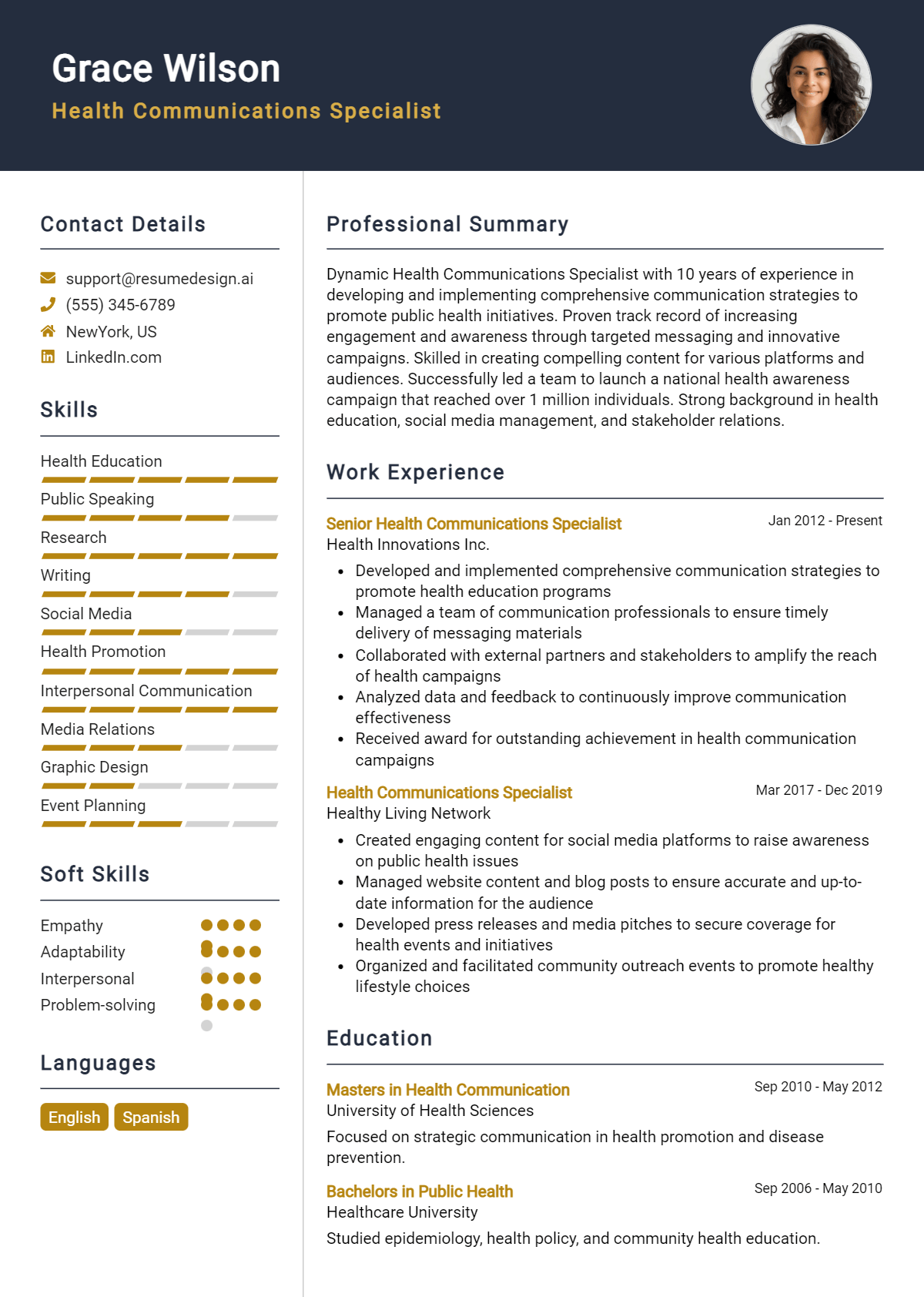
In the competitive field of health communications, preparing for your job interview is crucial to showcasing your expertise and passion for promoting public health initiatives. As a Health Communications Specialist, you will be expected to demonstrate not only your knowledge of health topics but also your ability to effectively convey messages to diverse audiences. Understanding the types of questions you may encounter can help you articulate your experience and vision clearly.
Here is a list of common job interview questions, with examples of the best answers specifically tailored for the Health Communications Specialist role. These questions cover your work history and experience, what you have to offer the employer, and your goals for the future, ensuring you present yourself as a strong candidate capable of enhancing the organization’s communication strategies and health outreach efforts.
1. Can you describe your experience with health communication campaigns?
I have led multiple health communication campaigns focusing on chronic disease prevention. My role involved strategic planning, content creation, and evaluation. I collaborated with healthcare professionals to ensure accurate messaging, which resulted in a 30% increase in community engagement.
Example:
In one campaign, I developed educational materials targeting diabetes prevention, achieving significant outreach through workshops and social media, and improving community awareness by 40%.
2. How do you measure the effectiveness of a health communication strategy?
I utilize various metrics, such as pre- and post-campaign surveys, engagement rates, and social media analytics. Evaluating these data points helps to identify strengths and areas for improvement, ensuring our strategies are effective and aligned with health objectives.
Example:
For a recent campaign, I analyzed survey responses and social media shares, leading to a 25% improvement in public knowledge about vaccination schedules.
3. What strategies do you use to communicate complex health information to the public?
I focus on simplifying language, using visuals, and providing relatable examples. Creating infographics and videos allows me to present complex information clearly, ensuring public understanding and engagement with vital health messages.
Example:
In a campaign about mental health, I used infographics to break down symptoms and resources, enhancing comprehension and engagement across diverse audiences.
4. How do you stay updated on health communication trends?
I regularly attend workshops, webinars, and conferences, and I subscribe to leading health communication journals. Networking with professionals in the field also helps me stay informed about best practices and emerging trends.
Example:
Recently, I attended a national conference where experts shared innovative strategies for digital health communication, which I implemented in my work.
5. Can you provide an example of a challenging health communication issue you faced?
I once faced a backlash over misinformation about vaccine safety. I coordinated with health officials to create accurate, accessible fact sheets and hosted community forums which effectively restored trust and improved understanding among hesitant populations.
Example:
Through these efforts, we decreased misinformation by 50%, leading to increased vaccination rates in the community.
6. What role does social media play in your communication strategy?
Social media is crucial for reaching diverse audiences quickly. I use it for real-time updates, engaging content, and community interaction. It allows for immediate feedback and helps tailor messages based on audience responses.
Example:
In a recent campaign, I leveraged social media polls to gauge public opinion, adjusting our messaging in response to community concerns.
7. How do you ensure cultural sensitivity in your health communications?
I prioritize understanding the cultural contexts of target populations. Collaborating with community leaders and incorporating feedback ensures that our materials respect cultural values and are relevant, which enhances acceptance and effectiveness.
Example:
For a campaign on nutrition, I worked with local cultural groups to develop materials that resonated with their dietary practices, leading to higher engagement.
8. Describe a time when you had to work with a multidisciplinary team.
I collaborated with healthcare professionals, marketers, and community advocates on a mental health awareness campaign. Each member’s expertise contributed to a comprehensive strategy that addressed various community needs, resulting in a successful outreach initiative.
Example:
This collaboration led to a 60% increase in program participation and enhanced community relationships.
9. How do you measure the effectiveness of a health communication campaign?
I measure effectiveness through surveys, engagement metrics, and health outcomes. Analyzing pre- and post-campaign data allows me to assess knowledge changes and behavior shifts in the target audience. This helps refine future strategies and improve communication efforts.
Example:
For instance, after a vaccination campaign, I conducted surveys and tracked social media engagement, leading to a 30% increase in community participation.
10. Can you give an example of a challenging project you worked on?
I once coordinated a campaign addressing mental health stigma. Challenges included misinformation and community resistance. I engaged local influencers and hosted workshops, resulting in increased awareness and reduced stigma in the community.
Example:
For example, we saw a 40% increase in mental health service utilization post-campaign, indicating success.
11. How do you tailor communication strategies to diverse audiences?
I analyze audience demographics, cultural backgrounds, and health literacy levels. Tailoring messages in appropriate languages and using relatable examples ensures clarity and relevance, increasing message effectiveness.
Example:
For instance, I created bilingual materials for a diverse community, resulting in better engagement and understanding.
12. What role does social media play in your health communication strategies?
Social media is crucial for real-time engagement, information dissemination, and community building. I use platforms to share health tips, address concerns, and gather feedback, fostering a dialogue with the audience.
Example:
In a recent campaign, our social media outreach led to a 50% increase in public inquiries about health services.
13. How do you handle misinformation in health communication?
I proactively monitor misinformation through social media and community feedback. When encountered, I respond promptly with accurate information, using clear, concise messaging to correct misconceptions and build trust.
Example:
For instance, during a vaccine misinformation outbreak, I organized a Q&A session with experts, which effectively clarified doubts.
14. Describe your experience with crisis communication in health.
I have managed communications during public health emergencies, ensuring timely and accurate information dissemination. I collaborate with health authorities to develop clear messaging that addresses community concerns and provides guidance.
Example:
For instance, during an outbreak, my team issued daily updates, which helped maintain public trust and compliance with health directives.
15. How do you stay updated with the latest health communication trends?
I regularly attend workshops, webinars, and conferences, and subscribe to relevant journals. Networking with peers in the field also provides insights into emerging trends and best practices.
Example:
For instance, I recently attended a conference that introduced innovative digital strategies, which I plan to implement in upcoming campaigns.
16. What is your experience with health communication technologies?
I have utilized various technologies, including content management systems and data analytics tools. These help in creating targeted content and measuring audience engagement effectively, enhancing the overall communication strategy.
Example:
For example, I used analytics to refine our email campaigns, increasing open rates by 25% through targeted messaging.
17. How do you measure the effectiveness of a health communication campaign?
I measure effectiveness through metrics such as reach, engagement rates, and behavior changes. Surveys and focus groups provide qualitative data, while analytics from social media and websites offer quantitative insights. This combination helps refine strategies for future campaigns.
Example:
For instance, after a recent vaccination campaign, we found a 30% increase in appointment bookings, which we tracked via analytics and follow-up surveys to gauge community awareness and attitudes.
18. Can you describe a time when you had to communicate a complex health issue to a non-expert audience?
I once explained diabetes management to a community group. I used simple analogies and visual aids, avoiding medical jargon. This approach made the information accessible and engaging, encouraging questions and discussions, ultimately enhancing their understanding of the topic.
Example:
By relating diabetes to everyday lifestyle choices, I empowered the audience to make informed decisions, which they appreciated, as indicated by their positive feedback.
19. How do you stay current with health communication trends and strategies?
I regularly read industry publications, participate in webinars, and attend conferences. Networking with professionals and engaging in online forums helps me exchange ideas. Continuous learning ensures I apply the latest evidence-based strategies in my campaigns.
Example:
For instance, I recently attended a conference focused on digital health trends, which inspired new social media strategies that increased engagement in our recent campaign.
20. Describe your experience with social media in health communication.
I've developed and managed social media campaigns to promote public health initiatives. I create tailored content for different platforms, ensuring it's engaging and informative. Analyzing user interactions helps optimize future posts and strategies, enhancing outreach.
Example:
In one campaign, our Instagram stories increased followers by 25%, showcasing the power of targeted health messaging and visual storytelling.
21. What strategies do you use to engage diverse communities in health communication?
I tailor messaging to resonate with the cultural values and languages of diverse communities. Collaborating with local leaders and organizations ensures authenticity. Utilizing community events for direct engagement fosters trust and improves the effectiveness of health messages.
Example:
During a flu vaccination drive, I partnered with community centers, which resulted in a 40% higher turnout among underrepresented groups.
22. How do you handle negative feedback or misinformation regarding health topics?
I address negative feedback by responding promptly and factually. Providing clear, evidence-based information helps dispel misinformation. I also encourage open dialogue to understand concerns, building trust and credibility with the audience.
Example:
For instance, when misinformation about vaccines surfaced, I organized a Q&A session with health experts, which effectively clarified misconceptions and reassured the community.
23. What role does collaboration play in your health communication efforts?
Collaboration is crucial; it enhances resource sharing and builds a unified message. I work closely with healthcare providers, community organizations, and stakeholders to align strategies and ensure the information delivered is accurate and impactful.
Example:
For a recent mental health awareness campaign, partnering with local therapists expanded our reach and credibility, leading to a successful turnout at events.
24. How do you tailor your communication strategies for different demographics?
I assess demographic data to understand the audience's needs and preferences. Developing targeted messages using appropriate language, imagery, and channels ensures the content is relevant and resonates with each group, fostering better engagement.
Example:
For our youth-focused initiatives, using social media and relatable content led to a 50% increase in engagement compared to traditional methods.
25. How do you approach evaluating the effectiveness of health communication campaigns?
I evaluate campaigns through metrics such as engagement rates, surveys, and feedback. I also analyze audience reach and behavior changes to assess impact. Continuous improvement is vital, so I adapt strategies based on data insights for future campaigns.
Example:
I implemented pre- and post-campaign surveys to measure knowledge retention. By analyzing social media engagement, I adjusted messaging to increase reach, resulting in a 20% rise in community participation in health programs.
26. Can you describe a time when you had to manage misinformation in health communication?
I once tackled misinformation about a vaccine in our community. I collaborated with local leaders to disseminate accurate information, used social media to clarify facts, and hosted Q&A sessions, which significantly reduced confusion and built trust.
Example:
When misinformation about vaccine side effects spread, I coordinated a series of informative webinars featuring healthcare professionals, leading to a 30% increase in vaccination rates in the area.
27. What role does cultural competence play in your communication strategies?
Cultural competence is essential in crafting messages that resonate with diverse populations. I ensure to research cultural beliefs and practices, tailoring my communication strategies to be respectful and relevant, thereby enhancing audience engagement and understanding.
Example:
In a campaign targeting a multicultural audience, I collaborated with local cultural groups to ensure our messaging was culturally appropriate, resulting in higher engagement and positive feedback from the community.
28. How do you stay updated on the latest health communication trends and technologies?
I regularly attend health communication conferences, participate in webinars, and subscribe to relevant journals. Networking with professionals in the field also helps me stay informed about emerging trends and technologies that can enhance my strategies.
Example:
By subscribing to industry newsletters and attending annual conferences, I learned about new digital tools that improved our outreach efforts, resulting in more effective campaigns targeting younger audiences.
29. Describe your experience with social media in health communication.
I have extensive experience using social media platforms to disseminate health information effectively. I develop engaging content tailored to each platform, monitor audience interactions, and adjust strategies to enhance reach and impact.
Example:
I created targeted social media campaigns that utilized infographics and videos, leading to a 50% increase in followers and a 40% boost in engagement rates within three months.
30. How would you handle a public health crisis communication situation?
In a crisis, I prioritize clear, accurate communication. My approach includes timely updates, addressing public concerns, and collaborating with health officials to ensure consistent messaging. Transparency is crucial to maintaining public trust during emergencies.
Example:
During a disease outbreak, I coordinated with health authorities for daily updates, ensuring our community received timely and truthful information, which helped mitigate fear and misinformation effectively.
31. What strategies do you use to engage hard-to-reach populations?
I utilize community-based approaches, partnering with local organizations to build trust. Tailoring messages to meet the needs and preferences of these populations, utilizing accessible language and channels, enhances engagement and ensures effective communication.
Example:
By collaborating with local community centers, I developed tailored workshops that addressed specific health concerns, leading to increased participation from populations that traditionally avoid health services.
32. How do you ensure your health communication materials are accessible to everyone?
I focus on using plain language, visual aids, and translations to enhance accessibility. Engaging with diverse community members during the development process ensures that materials are inclusive and easily understood by various audiences.
Example:
For our health campaign, I created materials in multiple languages and formats, including audio and visual content, which improved accessibility and increased understanding in our diverse community.
33. How do you measure the effectiveness of your health communication campaigns?
I utilize a mix of qualitative and quantitative metrics, such as surveys, engagement rates, and social media analytics. By analyzing these data points, I can determine which strategies are resonating with the target audience and make necessary adjustments for improvement.
Example:
For instance, I launched a campaign that increased social media engagement by 30% and followed up with surveys to gather direct feedback, allowing us to refine our messaging further.
34. Can you describe a time when you had to communicate complex health information to a non-expert audience?
I once developed a brochure explaining diabetes management for patients. I simplified medical jargon into everyday language and used visuals to enhance understanding. Feedback indicated that readers found the information accessible and actionable, which ultimately improved their self-management.
Example:
I crafted a brochure on diabetes management that simplified complex terms and included visuals, resulting in positive feedback from patients who felt empowered to manage their health.
35. What strategies do you use to engage with diverse communities in health communication?
I prioritize cultural competency by researching community needs and collaborating with local leaders. Tailoring messages to reflect cultural values and utilizing appropriate languages ensures that the communication resonates and meets the specific needs of different audiences.
Example:
For a vaccination campaign, I partnered with community leaders to create materials in multiple languages, ensuring the messages were culturally relevant and well-received.
36. How do you stay updated on current health communication trends?
I subscribe to industry journals, attend webinars, and participate in professional networks. Engaging with thought leaders on social media also helps me stay informed about emerging trends and best practices in health communication.
Example:
I regularly read journals like the Journal of Health Communication and participate in webinars to keep my skills sharp and stay informed about new trends and research.
37. Describe a situation where you had to manage a crisis in health communications.
During a public health emergency, I quickly developed clear messaging to address community concerns. I coordinated with stakeholders to ensure consistency and transparency, which helped mitigate misinformation and build trust in our response efforts.
Example:
In response to a health crisis, I crafted rapid messaging to clarify misinformation, collaborating with local media to ensure consistent communication and maintain public trust.
38. How do you incorporate feedback from your audience into your health communication strategies?
I actively seek audience feedback through surveys and focus groups after campaigns. Analyzing this feedback allows me to refine messaging and identify areas for improvement, ensuring future strategies resonate more effectively with the target audience.
Example:
After a campaign, I conducted a survey and used the insights to adjust our messaging, resulting in a 25% increase in audience engagement in the next initiative.
39. What role does social media play in your health communication strategies?
Social media is pivotal for reaching diverse audiences quickly. I use it to disseminate information, engage with the community, and gather real-time feedback. Tailoring content to fit each platform's unique audience maximizes impact.
Example:
For a mental health campaign, I created tailored content for Instagram and Twitter, leading to a 40% increase in engagement and fostering community discussions.
40. How do you ensure that your health communication materials are accessible to people with disabilities?
I adhere to accessibility guidelines, such as using alt text for images and ensuring readability. I also consult with individuals with disabilities during the development process to ensure materials meet their needs and preferences.
Example:
In a recent project, I collaborated with accessibility experts to create materials that included braille and easy-to-read formats, ensuring inclusivity for all audiences.
41. Can you describe a time when you had to communicate complex health information to a non-expert audience?
In my previous role, I developed a brochure simplifying vaccination information for parents. I used clear language and visuals, ensuring the content was engaging. Feedback showed increased understanding and attendance at vaccination clinics.
Example:
I once created an infographic that explained diabetes management, focusing on visuals and layman’s terms. This helped community members grasp essential concepts easily, leading to improved health outcomes.
42. How do you evaluate the effectiveness of your communication strategies?
I utilize pre- and post-campaign surveys to measure changes in knowledge and behavior. Additionally, I analyze engagement metrics from social media and website traffic to assess reach and impact, adjusting strategies accordingly for future campaigns.
Example:
After a health campaign, I conducted surveys that indicated a 40% increase in awareness. Based on these results, I refined future messaging to further engage the audience.
43. What role does social media play in your health communication strategies?
Social media is crucial for reaching diverse audiences quickly. I create tailored content for various platforms, focusing on engagement and shareability. It allows for real-time interaction and feedback, making it easier to address health concerns promptly.
Example:
I launched a Twitter campaign that increased our following by 30%. This helped us disseminate health tips effectively and engage directly with our audience.
44. Describe your experience with crisis communication in health contexts.
During a public health crisis, I coordinated messaging with local health authorities, ensuring timely updates. I crafted clear, concise messages that addressed community concerns, ultimately fostering trust and encouraging adherence to health advisories.
Example:
In a recent outbreak, I developed FAQs and updates that were shared through multiple channels, which helped mitigate panic and provided essential health information to the public.
45. How do you ensure cultural competence in your health communications?
I prioritize understanding the target audience's cultural backgrounds by conducting research and involving community leaders in the planning process. This ensures that messages are respectful, relevant, and effective in promoting health equity.
Example:
For a campaign targeting minority groups, I collaborated with cultural consultants to ensure our messaging was appropriate, resulting in increased trust and participation.
46. What methods do you employ to stay updated on health communication trends?
I subscribe to relevant journals, attend webinars, and participate in professional networks. These resources help me stay informed about the latest research, tools, and strategies, ensuring my work remains innovative and effective in health communication.
Example:
I regularly attend health communication conferences and webinars, which allow me to learn about new trends and best practices, integrating them into my work for better outreach.
How Do I Prepare For A Health Communications Specialist Job Interview?
Preparing for a job interview is crucial to making a strong impression on the hiring manager. As a Health Communications Specialist, showcasing your knowledge and skills effectively can set you apart from other candidates. Here are some key tips to help you prepare for your interview:
- Research the company and its values to understand their mission and how you can contribute.
- Practice answering common interview questions, focusing on those related to health communication strategies.
- Prepare examples that demonstrate your skills and experience relevant to the role of a Health Communications Specialist.
- Familiarize yourself with current health communication trends and issues to discuss them intelligently.
- Develop questions to ask the interviewer about the role and the organization, signaling your interest and engagement.
- Dress professionally and appropriately for the interview to convey a sense of professionalism.
- Follow up with a thank-you email after the interview to reiterate your interest and appreciation for the opportunity.
Frequently Asked Questions (FAQ) for Health Communications Specialist Job Interview
Preparing for an interview is crucial, especially for a Health Communications Specialist position where effective communication skills are paramount. Anticipating common questions can help you present yourself confidently and demonstrate your understanding of the role and its responsibilities. Here are some frequently asked questions that can help guide your preparation.
What should I bring to a Health Communications Specialist interview?
When attending a Health Communications Specialist interview, it's essential to come prepared with several key items. Bring multiple copies of your resume, a list of references, and any relevant work samples or portfolios that showcase your communication skills. Additionally, having a notepad and pen can be useful for taking notes during the interview. Being organized and prepared with these materials demonstrates professionalism and a genuine interest in the role.
How should I prepare for technical questions in a Health Communications Specialist interview?
To prepare for technical questions, it's important to review the job description and identify key skills and knowledge areas mentioned, such as public health principles, communication strategies, and digital tools. Brush up on relevant terminology and current trends in health communications. Practice responding to potential technical questions with clear, concise answers that showcase your understanding of the field. Consider conducting mock interviews with a friend or mentor to build confidence in articulating your expertise.
How can I best present my skills if I have little experience?
If you have limited experience, focus on transferable skills that are relevant to the Health Communications Specialist role. Highlight any volunteer work, internships, or academic projects that demonstrate your communication abilities, teamwork, and adaptability. Use the STAR (Situation, Task, Action, Result) method to structure your responses, illustrating how your skills can effectively contribute to the team's objectives. Emphasizing your eagerness to learn and grow in the role can also leave a positive impression.
What should I wear to a Health Communications Specialist interview?
Choosing the right attire for your interview is essential for making a good first impression. Opt for professional, business-casual clothing that reflects your understanding of the workplace culture. For a Health Communications Specialist position, consider wearing a tailored blazer, dress shirt, and dress pants or a modest dress. Ensure that your outfit is clean, pressed, and appropriate for a professional setting. Dressing well demonstrates respect for the interview process and can boost your confidence.
How should I follow up after the interview?
Following up after the interview is an important step in the job application process. Send a personalized thank-you email to each interviewer within 24 hours, expressing gratitude for the opportunity and reiterating your interest in the position. Mention specific topics discussed during the interview to reinforce your engagement and connection. This not only showcases your professionalism but also keeps you on the interviewer's radar as they make their hiring decision.
Conclusion
In summary, this interview guide has outlined the essential components for success as a Health Communications Specialist. Emphasizing the importance of thorough preparation, practice, and the ability to showcase relevant skills will empower candidates to present themselves effectively during interviews. It's crucial to prepare for both technical and behavioral questions, as this dual focus can significantly enhance a candidate’s chances of success in a competitive job market.
As you embark on your interview journey, remember to leverage the tips and examples provided in this guide. With the right preparation and a confident mindset, you can approach your interviews with assurance and poise. Best of luck!
For further assistance, check out these helpful resources: resume templates, resume builder, interview preparation tips, and cover letter templates.