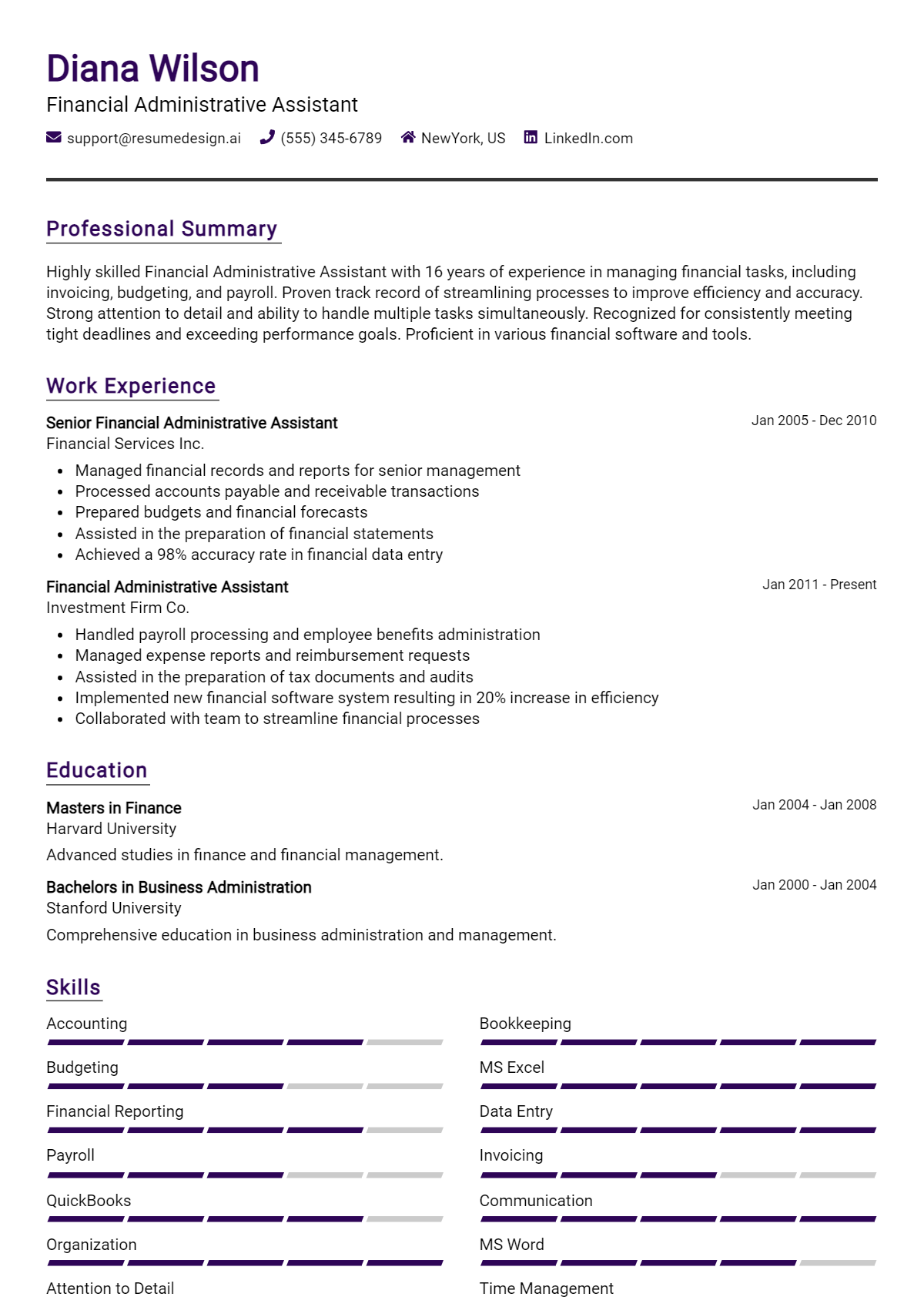
When preparing for a job interview as a Financial Administrative Assistant, it's essential to anticipate the types of questions that may be posed to you. This role requires a unique blend of financial acumen, organizational skills, and administrative expertise, making it crucial to demonstrate your suitability through thoughtful responses. Understanding the common interview questions can help you articulate your qualifications and experiences effectively.
Here is a list of common job interview questions for the Financial Administrative Assistant position, along with examples of the best answers. These questions will delve into your work history and experience, highlighting what you have to offer the employer and how your goals align with the company's objectives for the future. By preparing for these inquiries, you can showcase your strengths and make a lasting impression on potential employers.
1. Can you describe your experience with financial software?
I have extensive experience using financial software like QuickBooks and Excel for budgeting and reporting. My role involved inputting data, generating reports, and ensuring accuracy. This has sharpened my analytical skills and attention to detail, essential for maintaining financial records.
Example:
In my previous position, I regularly used QuickBooks to manage accounts payable and receivable, improving our financial reporting accuracy by 20% through diligent data entry and reconciliation.
2. How do you prioritize your tasks during busy periods?
During busy periods, I prioritize tasks by assessing deadlines and urgency. I utilize tools like to-do lists and project management software to stay organized. By focusing on high-impact tasks first, I ensure that critical deadlines are met without sacrificing quality.
Example:
For instance, during month-end close, I tackle financial reconciliations first, followed by invoicing, allowing me to manage my time effectively and meet all deadlines.
3. How do you handle confidential financial information?
I understand the importance of confidentiality in handling financial information. I ensure that sensitive data is stored securely and only shared with authorized personnel. Additionally, I follow company policies and best practices to maintain confidentiality in all communications.
Example:
In my last job, I implemented a secure filing system for financial records, ensuring compliance with privacy regulations and protecting sensitive information from unauthorized access.
4. Can you explain your experience with budgeting?
I have actively participated in budgeting processes, including preparing budgets, monitoring expenditures, and analyzing variances. My analytical skills have allowed me to identify trends and suggest adjustments, ensuring that financial goals align with organizational objectives.
Example:
At my previous job, I assisted in creating a departmental budget that reduced costs by 15% through careful expense tracking and strategic resource allocation.
5. What steps do you take to ensure accuracy in your work?
To ensure accuracy, I double-check my work, use automated tools for calculations, and maintain a systematic approach to data entry. I also prioritize staying organized, which helps minimize errors and allows for efficient corrections when necessary.
Example:
In my last role, I developed a checklist for monthly reconciliations that reduced errors by 30%, significantly improving our financial reporting process.
6. How do you stay updated on financial regulations and practices?
I stay updated on financial regulations by attending workshops, webinars, and subscribing to industry newsletters. Networking with professionals in the field also provides insights into best practices and changes in regulations that may affect our operations.
Example:
Recently, I participated in a webinar on new tax regulations, which allowed me to implement compliant practices in our financial reporting processes at work.
7. Describe a challenging financial project you managed.
I managed a project to streamline our invoicing process, which was inefficient. I analyzed existing workflows, proposed changes, and collaborated with IT to implement an automated invoicing system, reducing processing time by 50% and improving cash flow.
Example:
This project not only increased efficiency but also enhanced client satisfaction due to timely billing and clearer communication of payment terms.
8. How do you handle discrepancies in financial reports?
When handling discrepancies, I first conduct a thorough review to identify the source of the error. I then collaborate with relevant team members to rectify the issue, ensuring transparency and accuracy in our financial reporting process.
Example:
In a previous role, I discovered a discrepancy during a quarterly review and worked with the accounting team to correct it, ultimately saving the company from potential audit issues.
9. Can you explain your experience with financial software and tools?
I have extensive experience using financial software like QuickBooks and Excel for budgeting and financial reporting. I am adept at data entry and reconciling accounts, ensuring accuracy in financial records, which enhances the overall efficiency of financial operations.
Example:
In my previous role, I used QuickBooks daily for invoicing and expense tracking, ensuring all entries were accurate. I also created Excel spreadsheets for monthly financial reports, which helped streamline our budget reviews.
10. Describe a time when you had to resolve a financial discrepancy.
In my previous position, I found a $500 discrepancy during a monthly audit. I investigated by reviewing transaction records and discovered an error in data entry. I corrected the mistake and implemented a double-check system to prevent future discrepancies, ensuring accuracy in our financial reporting.
Example:
I noticed a mismatch in our bank statement and recorded expenses. After thorough investigation, I identified a misentered transaction. I corrected it and established a protocol for regular audits to avoid similar issues.
11. How do you prioritize tasks in a busy financial environment?
I prioritize tasks by assessing deadlines and the impact on overall financial operations. I often use a task management tool to organize my workload and focus on high-priority items first, ensuring essential tasks are completed on time without compromising quality.
Example:
I use a task list to rank my responsibilities based on urgency and importance. For example, I would tackle month-end reports first, followed by routine data entry, ensuring all critical tasks align with deadlines.
12. What steps do you take to ensure confidentiality in financial matters?
I adhere to strict confidentiality protocols, including limiting access to sensitive financial information and using secure systems for data storage. Additionally, I regularly educate myself on compliance regulations to maintain the integrity of financial data.
Example:
I always ensure that sensitive documents are locked away and only shared with authorized personnel. I also conduct regular training on confidentiality policies to keep the team informed.
13. How do you handle tight deadlines and pressure in your role?
I thrive under pressure by maintaining a clear focus and organizing my tasks effectively. When deadlines are tight, I break down projects into manageable steps and communicate with my team to ensure we stay on track and meet our goals.
Example:
During our quarterly close, I prioritized essential tasks and delegated where appropriate, allowing us to meet our deadline without sacrificing quality. Staying calm and organized helped us manage the pressure effectively.
14. Can you give an example of how you improved a financial process?
I identified inefficiencies in our invoicing process, which resulted in delays. By implementing an automated invoicing system, I reduced manual entry errors and improved our billing cycle, resulting in faster payments and better cash flow management for the company.
Example:
I revamped our expense reimbursement process by creating a standardized form and an online submission system, which cut processing time by 30%. This improvement enhanced employee satisfaction and reduced errors.
15. How do you stay updated on financial regulations and compliance?
I stay updated by subscribing to industry newsletters, attending webinars, and participating in professional organizations. Additionally, I regularly review relevant regulatory websites to ensure compliance and integrate any changes into our financial processes.
Example:
I follow financial news sources and participate in seminars related to compliance. This proactive approach ensures I am informed of any changes and can adjust our practices accordingly.
16. What qualities do you believe are essential for a Financial Administrative Assistant?
Essential qualities include strong organizational skills, attention to detail, and proficiency in financial software. Additionally, effective communication and problem-solving abilities are crucial to manage financial tasks and collaborate with team members efficiently.
Example:
I believe that attention to detail is paramount, as financial errors can be costly. Strong organizational skills and effective communication also help in managing tasks and collaborating with colleagues efficiently.
17. How do you prioritize tasks when managing multiple financial projects?
I prioritize tasks by assessing deadlines and the impact on overall financial goals. I use a task management tool to organize my workload and set reminders, ensuring timely completion. Regularly reviewing my priorities helps me stay on track and adapt as needed.
Example:
I utilize a task management tool to visualize deadlines and dependencies. For instance, I prioritize urgent invoices over routine reports to maintain cash flow, ensuring that critical tasks align with the company's financial objectives.
18. Describe your experience with financial reporting software.
I have extensive experience with financial reporting software like QuickBooks and Excel. I use these tools to generate monthly reports, analyze financial data, and streamline reporting processes. My familiarity allows me to produce accurate reports efficiently.
Example:
In my previous role, I regularly used QuickBooks for financial reporting. I created monthly budget reports that helped management make informed decisions, highlighting areas for cost savings and improving financial performance.
19. How do you ensure accuracy in your financial documents?
I ensure accuracy by double-checking all entries and calculations. Implementing a checklist for financial documents helps me verify data before submission. I also maintain organized records, which simplifies audits and reduces errors in reporting.
Example:
I create checklists for all financial reports, cross-referencing figures against source documents. This meticulous process helped me reduce errors significantly in my previous role, ensuring data integrity and reliability in financial statements.
20. Can you explain how you handle confidential financial information?
I treat confidential financial information with the utmost care, adhering to company policies and legal regulations. I restrict access to sensitive data and regularly update security protocols to protect against unauthorized access, ensuring compliance with data protection standards.
Example:
In my previous position, I ensured confidentiality by limiting access to sensitive financial records. I regularly reviewed security protocols and conducted training for team members on data protection, fostering a culture of confidentiality.
21. What methods do you use for expense tracking?
I use accounting software and spreadsheets to track expenses meticulously. Regularly updating and categorizing expenses helps identify trends and areas for potential savings. Additionally, I reconcile expenses with bank statements to ensure accuracy and transparency.
Example:
I utilize Excel to log and categorize expenses daily, allowing for real-time tracking and analysis. This method not only ensures accuracy but also helps identify areas where we can cut costs effectively.
22. How do you handle discrepancies in financial records?
When discrepancies arise, I investigate promptly by cross-referencing records and communicating with relevant departments. I identify the source of the error and rectify it, ensuring that all adjustments are documented and communicated to maintain transparency.
Example:
In a previous role, I discovered a discrepancy during a monthly reconciliation. I promptly coordinated with the accounting team to identify the source of the error and implemented corrective actions, ensuring records were accurate and up to date.
23. What is your experience with budgeting processes?
I have experience assisting in the budgeting process by gathering data, analyzing trends, and preparing budget reports. Collaborating with various departments helps align budgetary goals with financial objectives, ensuring accountability and effective resource allocation.
Example:
In my last job, I assisted in preparing the annual budget by analyzing previous expenditures and forecasting future needs. This collaboration resulted in a well-structured budget that supported departmental goals and financial sustainability.
24. How do you stay updated on financial regulations and compliance?
I stay updated on financial regulations by subscribing to industry newsletters, attending workshops, and participating in online courses. Engaging with professional organizations also helps me remain informed about compliance changes and best practices in the financial sector.
Example:
I regularly read financial journals and participate in webinars hosted by industry leaders. This commitment to continuous learning ensures I am well-informed about changing regulations and compliance requirements, enabling me to advise my team effectively.
25. How do you prioritize your tasks when working on multiple financial projects?
I assess deadlines and project importance, using a task management tool to organize my workload. This allows me to focus on high-priority tasks first while ensuring all projects progress efficiently. I also communicate with my team to align priorities.
Example:
I prioritize tasks by assessing deadlines and importance, using tools like Trello to stay organized. For example, when handling quarterly reports, I focus on data collection first, ensuring timely completion while keeping my team updated on progress.
26. Describe your experience with financial software and tools.
I have extensive experience with software like QuickBooks and Excel, which I use for budgeting, forecasting, and reporting. I’m comfortable creating complex spreadsheets and utilizing financial software to streamline processes and improve accuracy in financial data management.
Example:
I have used QuickBooks for bookkeeping and Excel for financial analysis. For instance, I created financial forecasts using Excel, which improved our budgeting accuracy by 15%, showing my capability in leveraging these tools for better financial management.
27. How do you ensure accuracy in your financial reports?
I ensure accuracy by double-checking all entries and calculations, using tools for error detection, and adhering to standardized procedures. Regular audits and collaboration with the finance team also help catch discrepancies early, ensuring reliable financial reporting.
Example:
To ensure accuracy, I meticulously review my reports and use Excel functions to check for errors. I also collaborate with colleagues for peer reviews, significantly reducing errors and enhancing the reliability of our financial data.
28. Can you explain a time when you identified an error in financial data?
Once, while reviewing a budget report, I noticed a discrepancy in expense entries. I traced it back to a data entry error and promptly corrected it. This not only saved the company from potential overspending but also improved our financial tracking processes.
Example:
During a monthly review, I found an error in expense reporting. I quickly corrected the data, preventing a potential budget overrun. This experience underscored the importance of thorough reviews and proactive problem-solving in financial management.
29. What steps do you take to maintain confidentiality in financial records?
I maintain confidentiality by following company protocols, using secure systems for financial data, and limiting access to sensitive information. Regular training on data protection also helps me stay informed about best practices for safeguarding financial records.
Example:
I adhere to strict confidentiality protocols, ensuring sensitive information is stored securely and only accessible to authorized personnel. For example, I regularly participate in training sessions on data protection to stay updated on best practices.
30. How do you handle tight deadlines in financial reporting?
I handle tight deadlines by breaking tasks into manageable parts and setting mini-deadlines for each. Effective time management and proactive communication with my team help ensure we meet our financial reporting deadlines without compromising quality.
Example:
When faced with tight deadlines, I break down tasks and set mini-deadlines. For instance, during month-end close, this approach helped my team complete reports ahead of schedule, ensuring accuracy while maintaining quality in our financial reporting.
31. Describe your experience with budgeting and forecasting.
I have experience in creating annual budgets and quarterly forecasts by analyzing historical data and market trends. I collaborate with various departments to gather input, ensuring that our financial plans align with organizational goals and operational capabilities.
Example:
I led the budgeting process by analyzing past expenditures and collaborating with departments for input. This resulted in a comprehensive annual budget that aligned with our strategic goals, improving our financial planning accuracy by 10%.
32. How do you stay updated on financial regulations and compliance?
I stay updated on financial regulations by subscribing to industry newsletters, attending webinars, and participating in professional associations. Continuous learning helps me understand changes in compliance requirements, ensuring our financial practices remain aligned with legal standards.
Example:
I subscribe to financial regulation newsletters and attend workshops to stay informed. Recently, I completed a seminar on tax compliance changes, which helped our team adjust our reporting practices accordingly, ensuring we remained compliant.
33. How do you prioritize tasks when faced with multiple deadlines?
I assess the urgency and importance of each task, focusing on those that impact financial reporting or compliance first. Using tools like to-do lists helps me stay organized and meet deadlines effectively.
Example:
I prioritize tasks by listing them, assessing their deadlines, and determining their impact on our financial goals. For example, I focus on urgent reports first to ensure timely submissions.
34. Can you describe your experience with financial software and tools?
I have extensive experience using financial software like QuickBooks and Excel for budgeting and reporting. My proficiency with these tools allows me to streamline processes and enhance accuracy in financial data management.
Example:
I have worked with QuickBooks for three years, managing invoices and reconciliations. Additionally, I use Excel for complex data analysis and creating financial reports.
35. How do you ensure accuracy in your financial reports?
I double-check calculations and cross-reference data with source documents. Implementing a systematic review process and using spreadsheet functions helps minimize errors, ensuring accuracy in all financial reports.
Example:
I ensure accuracy by cross-referencing figures with source documents and using Excel’s auditing tools to check calculations before finalizing reports.
36. Describe a time when you had to handle a financial discrepancy.
I encountered a discrepancy in a vendor invoice. I investigated by comparing records and communicating with the vendor. After clarifying the error, I adjusted the records, ensuring we maintained good relationships and accurate financials.
Example:
Once, I found a mismatch in an invoice. I contacted the vendor, resolved the issue by correcting our records, and ensured future accuracy through better communication.
37. What strategies do you use to stay updated on financial regulations?
I subscribe to financial newsletters, attend webinars, and participate in relevant training sessions. Networking with professionals in the field also helps me stay informed about changes in regulations.
Example:
I regularly read financial news and participate in workshops to stay updated on regulations. This helps me ensure compliance in my role.
38. How do you handle confidential financial information?
I adhere to strict confidentiality protocols, ensuring that sensitive data is only accessible to authorized personnel. I also use secure systems for data storage and communication.
Example:
I use encrypted systems for storing confidential data and only share financial information with authorized personnel to maintain privacy.
39. Can you explain how you would assist in budgeting processes?
I assist by gathering data on past expenditures, analyzing trends, and preparing reports that highlight key areas for potential savings. Collaboration with different departments ensures a comprehensive budget.
Example:
I analyze historical spending to provide insights for budgeting, preparing comprehensive reports that help in decision-making and resource allocation.
40. Describe a situation where you improved a financial process.
I identified inefficiencies in the invoice approval process, so I proposed a digital solution that streamlined approvals. This reduced processing time by 30% and improved overall accuracy.
Example:
By implementing a digital invoice approval system, I reduced processing time by 30%, enhancing efficiency and accuracy in our financial workflows.
41. How do you prioritize your tasks when handling multiple financial documents?
I prioritize tasks based on deadlines and importance. I use a task management system to track due dates and categorize documents, ensuring that critical reports are completed first. This method helps me stay organized and reduces the risk of errors.
Example:
I assess deadlines and importance, using tools like spreadsheets to organize tasks. For instance, I once prioritized a quarterly report due over routine invoices to ensure timely submissions.
42. Can you describe a time when you identified a financial discrepancy?
In my previous role, I noticed a recurring discrepancy in expense reports. I conducted a detailed audit and discovered a coding error in the accounting software. I reported it to management, which led to corrections and improved accuracy in subsequent reports.
Example:
I found a pattern of discrepancies in expense claims. After investigating, I identified and corrected a data entry error, significantly improving our reporting accuracy.
43. What financial software or tools are you proficient in?
43.
I am proficient in QuickBooks, Excel, and SAP. QuickBooks helps me manage accounts receivable and payable, while Excel is invaluable for data analysis and reporting. My experience with SAP enhances my ability to handle enterprise-level financial tasks efficiently.
Example:
I have extensive experience with QuickBooks for accounting, Excel for financial modeling, and SAP for enterprise resource planning, enabling effective financial management.
44. How do you ensure accuracy in financial reporting?
To ensure accuracy, I implement double-checking procedures, cross-referencing data with source documents. I also maintain a checklist for critical report components. Regular training on updates in financial regulations helps me stay informed and accurate.
Example:
I utilize checklists for reporting and regularly cross-reference figures. This practice, along with continuous education, ensures that my reports maintain high accuracy.
45. Describe your experience with budgeting and forecasting.
I have participated in the annual budgeting process, collaborating with department heads to gather input. My role involved analyzing previous budgets and forecasting future expenses based on trends, which improved our financial planning accuracy.
Example:
In my last position, I assisted in budgeting by analyzing historical data, which helped develop a more accurate financial forecast for the upcoming year.
46. How do you handle confidential financial information?
I handle confidential information with utmost care, following company policies regarding data protection. I ensure that sensitive documents are secured and only shared with authorized personnel. Regular training on confidentiality protocols further reinforces my commitment to maintaining privacy.
Example:
I strictly adhere to confidentiality policies, ensuring sensitive information is secured and shared only with authorized individuals, thereby maintaining trust and compliance.
How Do I Prepare For A Financial Administrative Assistant Job Interview?
Preparing for a job interview is crucial to making a lasting impression on the hiring manager. By taking the time to thoroughly prepare, you demonstrate your enthusiasm for the role and your commitment to excellence. Here are some key preparation tips to help you succeed in your interview for a Financial Administrative Assistant position:
- Research the company and its values to understand its mission and culture.
- Practice answering common interview questions, focusing on those related to finance and administration.
- Prepare examples that demonstrate your skills and experience relevant to the Financial Administrative Assistant role.
- Familiarize yourself with the financial software and tools commonly used in the industry.
- Dress professionally to convey a sense of professionalism and confidence.
- Prepare thoughtful questions to ask the interviewer about the team and the company’s financial goals.
- Review your resume and be ready to discuss any aspect of your background in detail.
Frequently Asked Questions (FAQ) for Financial Administrative Assistant Job Interview
Preparing for an interview can significantly enhance your chances of success, especially when it comes to anticipating commonly asked questions. Understanding what to expect during the interview process and how to articulate your qualifications is essential for making a positive impression. Below are some frequently asked questions that candidates might encounter when applying for a Financial Administrative Assistant position, along with practical advice on how to navigate them.
What should I bring to a Financial Administrative Assistant interview?
When attending a Financial Administrative Assistant interview, it's important to bring a few key items to make a strong impression. You should carry multiple copies of your resume, a list of references, and any relevant certifications or documents that showcase your qualifications. Additionally, consider bringing a notepad and pen to take notes during the interview, as well as any questions you may have for the interviewer. Being organized and prepared demonstrates professionalism and attention to detail, which are crucial traits for this role.
How should I prepare for technical questions in a Financial Administrative Assistant interview?
To effectively prepare for technical questions, familiarize yourself with the specific financial software and tools commonly used in the industry, such as Excel, QuickBooks, or other accounting systems. Review basic financial concepts, such as budgeting, invoicing, and financial reporting, as interviewers may ask you to discuss your understanding of these topics. Practicing with sample technical questions or engaging in mock interviews can also help you feel more confident in articulating your knowledge and skills during the actual interview.
How can I best present my skills if I have little experience?
If you have limited experience, focus on highlighting transferable skills and relevant coursework or internships that showcase your capabilities. Emphasize traits such as attention to detail, organizational skills, and proficiency with software tools. Use specific examples from previous roles, even if they were not directly related to finance, to demonstrate your ability to learn quickly and adapt. Additionally, expressing your enthusiasm for the role and your willingness to grow can leave a positive impression on the interviewer.
What should I wear to a Financial Administrative Assistant interview?
Dressing appropriately for a Financial Administrative Assistant interview is key to making a good first impression. Opt for professional attire that reflects the company's culture; generally, business formal or business casual is recommended. For men, a suit or dress shirt with slacks is ideal, while women may choose a blazer with a blouse and tailored pants or a professional dress. Ensure your clothing is clean, well-fitted, and conservative, as this demonstrates your respect for the interview process and the organization.
How should I follow up after the interview?
Following up after the interview is a crucial step in the process that can set you apart from other candidates. Aim to send a thank-you email within 24 hours of the interview, expressing your appreciation for the opportunity to interview and reiterating your interest in the position. In your message, mention specific points discussed during the interview to personalize your note and highlight your engagement. This not only reflects your professionalism but also keeps you top-of-mind for the hiring committee.
Conclusion
In this interview guide for the Financial Administrative Assistant role, we have covered essential strategies for effective preparation, the significance of practicing responses, and the importance of showcasing relevant skills. Preparing for both technical and behavioral questions is crucial as it can significantly enhance a candidate's chances of success in the competitive job market.
We encourage you to take full advantage of the tips and examples provided in this guide. By doing so, you can confidently approach your interviews and present yourself as a strong candidate for the role. Remember, preparation is key, and with the right mindset, you can excel in your interview.
For further assistance, check out these helpful resources: resume templates, resume builder, interview preparation tips, and cover letter templates.