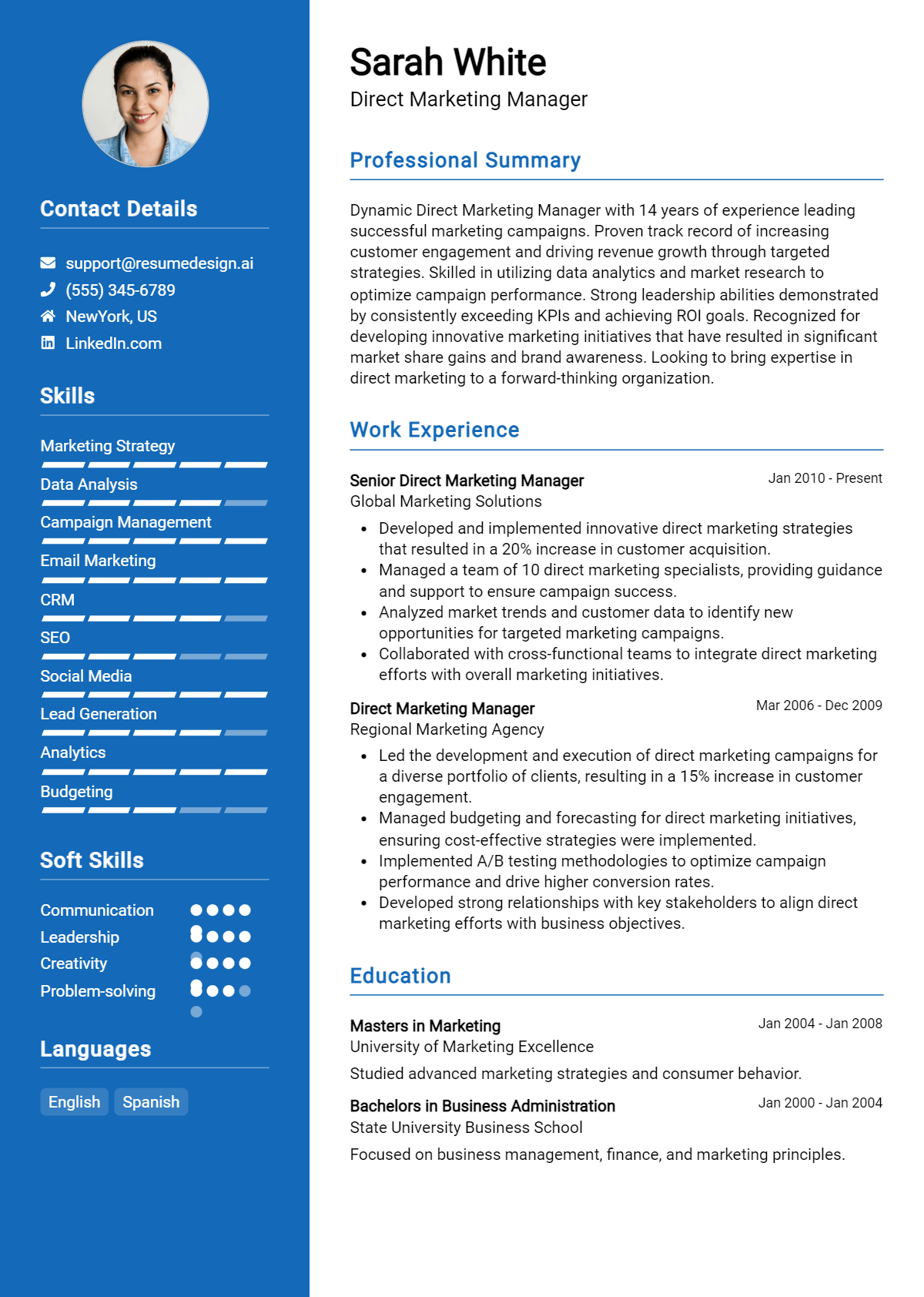
As a Direct Marketing Manager, you play a pivotal role in crafting and executing marketing strategies that drive customer engagement and sales. To excel in this position, it's essential to prepare for the interview process by anticipating questions that assess your skills, experience, and approach to direct marketing. Understanding the nuances of this field will help you articulate your value and demonstrate how you can contribute to the success of the organization.
Here is a list of common job interview questions for the Direct Marketing Manager role, along with examples of the best answers. These questions focus on your work history and experience in direct marketing campaigns, what unique skills you bring to the employer, and how your professional aspirations align with the company's goals for growth and innovation in the marketing space.
1. Can you describe your experience with direct marketing campaigns?
In my previous role, I managed multiple direct marketing campaigns, including email, direct mail, and social media. I utilized data analytics to segment audiences and tailored messages, resulting in a 25% increase in engagement and a significant boost in conversion rates.
Example:
I successfully launched an email campaign that targeted segmented lists based on previous purchase behavior, improving our open rates by 30%. This strategy increased our sales conversion by 15% over three months.
2. What metrics do you consider most important in direct marketing?
I focus on key performance indicators such as response rates, conversion rates, customer acquisition costs, and return on investment. These metrics provide insights into campaign effectiveness and help in adjusting strategies for better outcomes.
Example:
For example, I closely monitored the ROI from our last campaign, which indicated a 200% return, allowing us to allocate more budget towards similar effective strategies.
3. How do you approach audience segmentation for campaigns?
I use demographic, psychographic, and behavioral data to effectively segment audiences. By understanding customer needs and preferences, I create targeted campaigns that resonate, ultimately leading to higher engagement and conversion rates.
Example:
In my last campaign, I segmented audiences based on their purchase history, which led to personalized messaging that increased engagement by 40%.
4. Describe a challenging direct marketing project you managed.
I once managed a direct mail campaign with a tight deadline and limited budget. By leveraging digital tools for design and analytics, we executed it successfully, achieving a 20% response rate while staying within budget.
Example:
Through effective project management and collaboration, we launched the campaign on time, resulting in a notable increase in brand awareness and lead generation.
5. How do you ensure compliance with marketing regulations?
I stay updated on regulations such as GDPR and CAN-SPAM. I ensure all campaigns include necessary opt-out options and adhere to data privacy standards, fostering trust while avoiding legal repercussions.
Example:
In my previous role, I conducted regular training sessions on compliance, ensuring our team understood and implemented best practices in every campaign.
6. What role does data analysis play in your marketing strategy?
Data analysis is crucial for optimizing campaigns. I analyze past campaign performances to identify trends and areas for improvement, ensuring each subsequent campaign is more effective and data-driven.
Example:
By analyzing customer behavior data, I was able to refine our messaging, which resulted in a 35% increase in our next campaign's engagement metrics.
7. How do you handle a campaign that underperforms?
I conduct a thorough analysis to identify issues, such as targeting errors or messaging misalignment. Based on insights, I adjust the strategy and relaunch the campaign, ensuring continuous improvement and learning.
Example:
After an underperforming campaign, I re-evaluated our target audience and adjusted the messaging, resulting in a successful re-launch that exceeded our initial goals.
8. What innovative strategies have you implemented in direct marketing?
I implemented a multi-channel approach integrating social media retargeting with email campaigns. This innovative strategy increased our cross-channel engagement, leading to a higher conversion rate and overall customer retention.
Example:
For instance, combining our email campaigns with social ads resulted in a 50% boost in overall engagement and helped nurture leads effectively.
9. How do you measure the success of a direct marketing campaign?
I measure campaign success using KPIs such as response rate, conversion rate, and ROI. Analyzing these metrics helps refine strategies and optimize future campaigns. Consistent tracking ensures alignment with business goals and enhances overall effectiveness.
Example:
For instance, in my last campaign, we achieved a 15% response rate, which exceeded our goal, and a 300% ROI, confirming our approach was effective. This data was instrumental in planning our next initiatives.
10. Describe a time when a campaign did not go as planned. What did you learn?
In one campaign, we misjudged our audience's preferences, leading to low engagement. I analyzed feedback, adapted our messaging, and refined targeting, resulting in a follow-up campaign that performed significantly better. This taught me the importance of audience research.
Example:
After realizing our error, we conducted surveys and adjusted our strategy, achieving a 25% increase in engagement in the subsequent campaign, demonstrating the value of adaptability.
11. What tools or software do you prefer for direct marketing efforts, and why?
I prefer using tools like HubSpot and Mailchimp for their user-friendly interfaces and robust analytics. These platforms streamline campaign management and provide valuable insights that help refine targeting and improve engagement.
Example:
For instance, HubSpot's automation features allowed me to segment audiences effectively, resulting in higher open rates and conversions across multiple campaigns.
12. How do you stay updated with direct marketing trends?
I regularly follow industry blogs, attend webinars, and participate in professional associations. Networking with peers and attending marketing conferences also helps me stay informed about emerging trends and best practices in direct marketing.
Example:
For instance, attending the DMA annual conference last year introduced me to innovative strategies that I later implemented, improving our campaign effectiveness.
13. Can you explain your approach to customer segmentation?
My approach involves analyzing customer data to identify key demographics, behaviors, and preferences. I utilize segmentation techniques such as RFM analysis to create targeted campaigns that resonate with specific audience segments, enhancing engagement and conversions.
Example:
By segmenting our audience based on purchase history, we tailored our messaging, resulting in a 30% increase in targeted campaign response rates.
14. What role does A/B testing play in your direct marketing strategy?
A/B testing is critical for optimizing campaigns. I conduct tests on subject lines, layouts, and messaging to determine what resonates best with the audience. This data-driven approach ensures continuous improvement and maximizes campaign performance.
Example:
In a recent email campaign, A/B testing revealed that a personalized subject line improved open rates by 20%, demonstrating its effectiveness.
15. How do you handle negative feedback from a campaign?
I view negative feedback as an opportunity for growth. I analyze the feedback comprehensively, engage with customers to understand their concerns, and adjust our approach accordingly. This fosters trust and improves future campaign effectiveness.
Example:
In a previous campaign, negative feedback led us to refine our messaging, resulting in a more favorable perception and improved customer satisfaction in subsequent efforts.
16. How do you integrate online and offline marketing strategies?
I believe in creating a cohesive experience across channels. I integrate online and offline strategies by ensuring consistent messaging and leveraging data from both avenues to inform targeting. This holistic approach enhances brand recognition and customer engagement.
Example:
For instance, I aligned our direct mail campaigns with online ads, resulting in a 40% increase in website traffic and improved overall campaign performance.
17. How do you ensure that your direct marketing campaigns are compliant with regulations?
I stay informed about regulations such as GDPR and CAN-SPAM. I conduct compliance audits and incorporate legal checks into our campaign planning process, ensuring all data collection and communication adheres to legal standards to protect the company and customers.
Example:
I regularly review guidelines and collaborate with legal teams. For example, I implemented a checklist for email campaigns to ensure all messages comply with unsubscribe and consent requirements, which helped avoid potential fines.
18. Describe a time when you had to adjust a campaign mid-execution. What was the outcome?
During a product launch, initial response rates were low. I analyzed real-time data and discovered targeting issues. By adjusting the audience segmentation, we improved engagement significantly, resulting in a 30% increase in conversions within two weeks.
Example:
I noticed low open rates in an email campaign. After identifying the problem, I re-segmented the list and adjusted the messaging. This led to a 50% increase in engagement and exceeded our sales targets.
19. What metrics do you prioritize when evaluating direct marketing campaigns?
I prioritize metrics such as conversion rates, cost per acquisition, and return on investment. These indicators help me assess campaign effectiveness and make informed decisions about future strategies, ensuring we meet our marketing objectives.
Example:
In my last role, I focused on ROI and engagement rates. By tracking these metrics, I identified which campaigns were underperforming and adjusted strategies accordingly, which significantly boosted our overall marketing effectiveness.
20. How do you handle negative feedback from a direct marketing campaign?
I view negative feedback as an opportunity for improvement. I gather insights from the feedback, analyze data to identify trends, and implement changes. This proactive approach often leads to better campaigns that resonate with our audience.
Example:
After receiving complaints about a campaign, I conducted a survey to understand concerns. I then adjusted our messaging and targeting, resulting in improved customer satisfaction and a more successful follow-up campaign.
21. Can you discuss your experience with A/B testing in direct marketing?
I have extensive experience with A/B testing. I frequently test subject lines, call-to-action buttons, and landing pages. This data-driven approach helps optimize our campaigns, leading to improved open and conversion rates based on solid evidence.
Example:
In a recent campaign, I tested two email subject lines. The winning subject increased open rates by 25%. This experience reinforced the importance of A/B testing in refining our direct marketing strategies.
22. What role does customer segmentation play in your marketing strategy?
Customer segmentation is crucial for tailoring our messaging and offers. By understanding different customer demographics and behaviors, I can create personalized campaigns that resonate better, leading to higher engagement and improved conversion rates.
Example:
I segmented our audience based on purchase history and demographics, which allowed us to tailor our messaging. This resulted in a 40% increase in engagement and significantly higher conversion rates for targeted campaigns.
23. How do you integrate digital marketing strategies with direct marketing efforts?
I integrate digital and direct marketing by ensuring consistent messaging across all platforms. Utilizing data from both channels allows for more effective targeting and retargeting strategies, enhancing overall campaign performance and customer experience.
Example:
I aligned our email campaigns with social media promotions, promoting the same offers across channels. This unified approach increased our reach and engagement, effectively driving traffic and sales from multiple touchpoints.
24. What tools or software do you use for managing direct marketing campaigns?
I utilize tools like HubSpot for email campaigns, Google Analytics for tracking performance, and CRM systems for customer data management. These tools streamline our processes, enhance targeting, and improve overall campaign efficiency.
Example:
In my previous role, I leveraged Mailchimp for email campaigns and Salesforce for CRM. This combination allowed for effective tracking and automation, which improved our campaign management and customer engagement significantly.
25. How do you measure the success of a direct marketing campaign?
I measure success through key performance indicators like response rates, conversion rates, and ROI. Analyzing these metrics helps refine future campaigns. I also consider customer feedback and engagement levels to ensure we meet audience expectations effectively.
Example:
I track metrics like response rate and ROI. For instance, my last campaign achieved a 15% response rate, exceeding our target, and generated a 200% return on investment, which we used to enhance future strategies.
26. Can you describe a time you faced challenges in a campaign and how you overcame them?
During a recent campaign, we faced severe budget cuts. I prioritized high-impact channels and leveraged cost-effective digital marketing tools. By optimizing our message and targeting, we achieved our goals while staying within the new budget constraints, demonstrating adaptability and strategic thinking.
Example:
When budget cuts occurred, I focused on digital channels and refined our targeting strategy. This led to a 25% increase in response rates, proving that we could adapt and still achieve our objectives despite financial limitations.
27. How do you ensure compliance with regulations in direct marketing?
Compliance is critical in direct marketing. I stay updated on regulations like GDPR and CAN-SPAM. I implement strict data management processes and ensure our messaging includes necessary disclosures. Training the team on compliance is also a priority to mitigate risks.
Example:
I ensure compliance by regularly reviewing regulations and training my team. For instance, we incorporated opt-out options in all communications, which helped us maintain compliance while enhancing customer trust and satisfaction.
28. What role does customer segmentation play in your marketing strategies?
Customer segmentation is vital for targeting the right audience effectively. I utilize data analytics to create tailored campaigns that resonate with specific demographics. This approach increases engagement and conversion rates, ensuring we deliver relevant messages to each segment.
Example:
In my last campaign, I segmented our audience by purchase history, allowing us to send targeted offers. This strategy improved our conversion rate by 30%, demonstrating the power of segmentation in achieving marketing success.
29. How do you manage and optimize your marketing budget?
I manage the budget by analyzing past campaign performances and allocating funds to high-impact areas. Regular reviews and adjustments are essential. I also leverage forecasting tools to predict outcomes, ensuring we maximize ROI while being flexible to change as needed.
Example:
I prioritize budget allocation based on past performance data. For example, I shifted funds from underperforming channels to digital ads, resulting in a 40% increase in overall campaign effectiveness without exceeding our budget.
30. What strategies do you use to improve customer retention through direct marketing?
I focus on personalized communication and loyalty programs to enhance customer retention. By analyzing customer behavior and preferences, I create targeted offers that resonate. Regular follow-ups and feedback loops also help maintain engagement and build long-term relationships.
Example:
I implemented a loyalty program offering personalized discounts. This strategy increased repeat purchases by 25% and strengthened our relationship with customers, demonstrating the importance of tailored communication in retaining clients.
31. How do you approach A/B testing in your campaigns?
A/B testing is crucial for optimizing campaigns. I create variations of emails or ads, testing one element at a time, such as subject lines or visuals. Analyzing the results helps determine which version performs best, leading to data-driven decisions that enhance effectiveness.
Example:
I recently A/B tested two email subject lines. The winning line increased open rates by 20%, allowing us to refine our messaging approach and improve overall engagement significantly.
32. How do you stay updated with industry trends and innovations in direct marketing?
I stay informed through industry publications, webinars, and networking with peers. Attending conferences allows me to learn about emerging trends and technologies firsthand. Continuous learning is key to adapting strategies and ensuring our campaigns remain competitive and effective.
Example:
I subscribe to leading marketing journals and attend annual conferences. Recently, I adopted new automation tools I learned about at a seminar, streamlining our processes and enhancing campaign efficiency significantly.
33. How do you measure the success of a direct marketing campaign?
I measure success through key performance indicators like response rates, conversion rates, and return on investment. Analyzing these metrics helps me refine future campaigns and ensure alignment with business objectives.
Example:
For instance, in my last campaign, we achieved a 15% response rate, exceeding our target by 5%, which validated our audience segmentation strategy.
34. Can you describe a time when a campaign did not meet expectations? What did you do?
In one campaign, we only achieved a 2% response rate. I conducted a post-mortem analysis to identify issues in targeting and messaging, then adjusted our strategy for future campaigns, which led to a 25% increase in responses.
Example:
I learned the importance of A/B testing and implemented it in our next campaign, significantly improving our results.
35. What tools do you use for direct marketing analytics, and why?
I primarily use tools like Google Analytics and HubSpot for tracking campaign performance. These platforms provide comprehensive insights into audience behavior and campaign effectiveness, allowing for data-driven decision-making.
Example:
Using HubSpot, I analyzed email open rates and adjusted our content strategy, which led to a 20% increase in engagement.
36. How do you ensure compliance with regulations like GDPR in your campaigns?
I prioritize compliance by staying informed about relevant regulations and ensuring our data collection practices are transparent. I also implement opt-in procedures and maintain proper data handling protocols to protect customer privacy.
Example:
In my previous role, I developed a GDPR compliance checklist that our team used to review campaigns before launch.
37. Describe your experience with multichannel marketing.
I have extensive experience integrating direct mail, email, and social media campaigns. This multichannel approach allows me to reach diverse audiences and enhance engagement by reinforcing messages across platforms.
Example:
For a product launch, I coordinated a campaign that used direct mail for brand awareness and followed it up with targeted email promotions, resulting in a 30% sales increase.
38. How do you segment your audience for targeted campaigns?
I segment audiences based on demographics, purchase history, and behavioral data. This strategic segmentation helps tailor messages to specific groups, increasing the relevance and effectiveness of our campaigns.
Example:
In a recent campaign, I targeted high-value customers with personalized offers, resulting in a 40% uplift in conversion rates.
39. What role does customer feedback play in your marketing strategies?
Customer feedback is crucial; it informs my strategies and helps identify areas for improvement. I regularly analyze customer insights to refine our messaging and enhance overall campaign effectiveness.
Example:
After implementing feedback from surveys, we adjusted our product features, leading to higher customer satisfaction ratings in subsequent campaigns.
40. How do you keep up with industry trends in direct marketing?
I regularly read industry publications, attend webinars, and participate in marketing forums. Networking with other professionals also helps me stay informed about emerging trends and best practices in direct marketing.
Example:
Recently, I attended a digital marketing conference where I learned about new automation tools, which I later integrated into our workflow for improved efficiency.
41. How do you measure the success of a direct marketing campaign?
I measure success through key performance indicators such as response rates, conversion rates, and return on investment. Analyzing these metrics helps refine future campaigns and optimize budget allocation.
Example:
For instance, I track response rates and ROI to evaluate campaign effectiveness, adjusting strategies based on data insights to enhance future performance.
42. Can you describe a time when a direct marketing campaign did not go as planned?
In one campaign, unexpected audience feedback indicated misalignment with messaging. I quickly gathered insights, adjusted the content, and relaunched, ultimately improving engagement and achieving our goals.
Example:
For example, a campaign initially targeted the wrong demographic, but after revising our strategy, we significantly increased engagement through targeted messaging.
43. What role does customer segmentation play in your marketing strategy?
Customer segmentation is crucial; it allows for tailored messaging that resonates with specific audience groups. This approach increases engagement and conversion rates significantly.
Example:
For instance, I segment our audience by demographics and behavior, enabling personalized campaigns that yield higher response rates and improved ROI.
44. How do you stay updated with direct marketing trends and technologies?
I stay current by attending industry conferences, subscribing to marketing journals, and participating in webinars. Networking with peers also helps me gain insights into emerging trends and best practices.
Example:
For example, I regularly attend webinars and read industry publications to ensure I’m informed about the latest tools and strategies in direct marketing.
45. How do you integrate digital marketing with direct marketing strategies?
I integrate digital and direct marketing by using data from both channels to create cohesive campaigns. This ensures a seamless customer experience, improving engagement and conversion rates across platforms.
Example:
For example, I utilize email marketing alongside direct mail, targeting audiences based on their interactions with both channels to maximize effectiveness.
46. What strategies do you employ to optimize direct mail campaigns?
I optimize direct mail campaigns by testing different formats, messages, and delivery times. Analyzing results helps refine our approach for better engagement and higher response rates.
Example:
For instance, A/B testing different designs allowed us to identify the most effective approach, increasing our response rates significantly.
How Do I Prepare For A Direct Marketing Manager Job Interview?
Preparing for a Direct Marketing Manager job interview is crucial to making a lasting impression on the hiring manager. A well-prepared candidate not only showcases their qualifications but also demonstrates their genuine interest in the company and the role. Here are some essential tips to help you get ready for your interview:
- Research the company and its values to understand their mission and how you can contribute.
- Practice answering common interview questions related to direct marketing, such as campaign management and data analysis.
- Prepare examples that demonstrate your skills and experience relevant to the Direct Marketing Manager position.
- Familiarize yourself with the latest trends and tools in direct marketing to show your industry knowledge.
- Develop thoughtful questions to ask the interviewer about the company’s marketing strategies and goals.
- Dress professionally and consider the company culture when choosing your outfit.
- Review your resume and be ready to discuss any part of it in detail, highlighting your achievements in direct marketing.
Frequently Asked Questions (FAQ) for Direct Marketing Manager Job Interview
Being well-prepared for commonly asked questions during interviews can significantly enhance your confidence and performance. Understanding what to expect and how to respond can help you effectively showcase your skills and experience, making a strong impression on your potential employer.
What should I bring to a Direct Marketing Manager interview?
It's essential to come prepared with several key items for your interview. Bring multiple copies of your resume, a list of references, and any relevant work samples or portfolios that showcase your marketing campaigns. Additionally, having a notepad and pen can be useful for taking notes during the interview. This preparation demonstrates your professionalism and eagerness for the role.
How should I prepare for technical questions in a Direct Marketing Manager interview?
To prepare for technical questions, research common tools and software used in direct marketing, such as email marketing platforms, CRM systems, and analytics tools. Familiarize yourself with marketing metrics and strategies relevant to the role. Practicing responses to potential technical questions can help you articulate your knowledge clearly. Consider reviewing case studies or recent trends in direct marketing to show your understanding of the industry.
How can I best present my skills if I have little experience?
If you have limited experience, focus on transferable skills and relevant coursework or projects. Highlight internships, volunteer work, or freelance projects that demonstrate your marketing abilities. Discuss your passion for direct marketing and your eagerness to learn. Emphasizing your soft skills, such as communication and problem-solving, can also bolster your candidacy, showing that you have the potential to excel in the role.
What should I wear to a Direct Marketing Manager interview?
Dressing appropriately for an interview is crucial to making a good first impression. For a Direct Marketing Manager position, business casual attire is often suitable. This could include a smart blouse or shirt paired with slacks or a skirt. It's essential to look polished and professional, so choose clothing that makes you feel confident. Research the company culture beforehand to gauge the appropriate dress code.
How should I follow up after the interview?
Following up after the interview demonstrates your continued interest in the position and helps you stand out. Send a thank-you email to your interviewer(s) within 24 hours of the meeting. In the email, express your appreciation for the opportunity to interview, reiterate your enthusiasm for the role, and briefly mention how your skills align with the company's goals. This thoughtful gesture can leave a lasting positive impression.
Conclusion
In summary, this interview guide for the Direct Marketing Manager role has covered essential elements, emphasizing the importance of thorough preparation, consistent practice, and showcasing relevant skills. Candidates should be well-equipped to tackle both technical and behavioral questions, as this dual preparation can significantly enhance their chances of success in the interview process.
As you approach your interviews, remember to leverage the tips and examples provided in this guide to boost your confidence. With the right mindset and preparation, you can effectively demonstrate your expertise and passion for the role. Embrace this opportunity to shine!
For further assistance, check out these helpful resources: resume templates, resume builder, interview preparation tips, and cover letter templates.