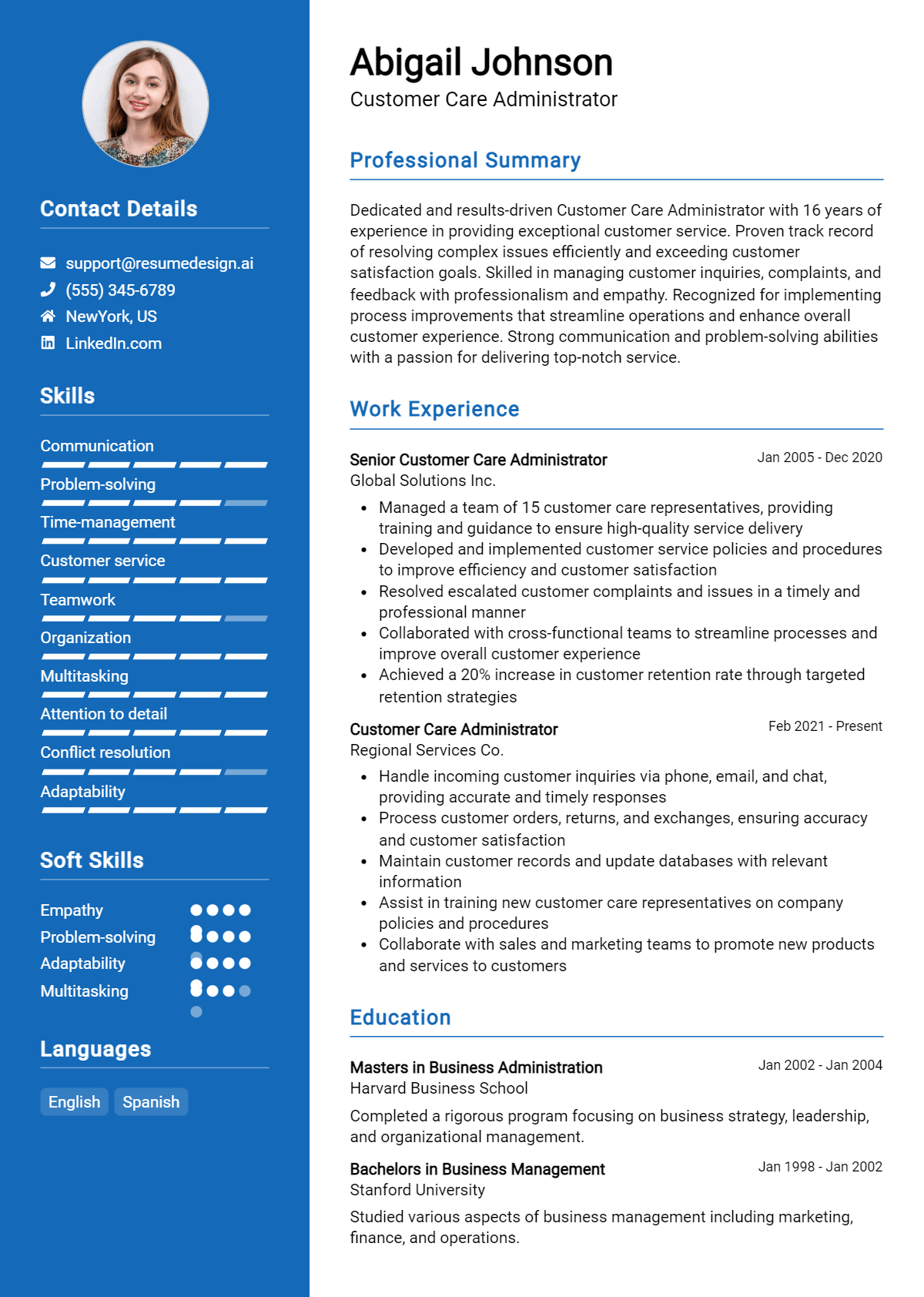
When preparing for a job interview as a Customer Care Administrator, it's essential to anticipate the types of questions you may be asked and to formulate thoughtful responses. This role requires not only a deep understanding of customer service principles but also the ability to communicate effectively, solve problems, and manage administrative tasks efficiently. Being well-prepared can significantly enhance your confidence and performance during the interview process.
Here is a list of common job interview questions for a Customer Care Administrator, along with examples of the best answers. These questions cover your work history and experience, what you have to offer the employer, and your goals for the future. By reviewing these questions and crafting your answers, you can showcase your skills, demonstrate your commitment to customer satisfaction, and align your aspirations with the needs of the organization.
1. Can you describe your experience with customer service?
I have over three years of experience in customer service, where I developed strong communication and problem-solving skills. I’ve handled diverse customer inquiries and resolved complaints efficiently, ensuring customer satisfaction. My focus has always been on building positive relationships and providing exceptional support. Example: I have worked in customer service for three years, primarily in retail, where I resolved complaints and ensured a positive experience for each customer. This experience taught me the importance of empathy and effective communication in supporting customer needs.
2. How do you handle difficult customers?
I approach difficult customers with empathy and patience. First, I listen actively to understand their concerns. Then, I calmly offer solutions and ensure they feel heard. This approach often de-escalates the situation and leads to a positive resolution. Example: When faced with an upset customer, I listened to their concerns without interruption, validated their feelings, and proposed a solution. This not only resolved the issue but also turned their frustration into appreciation for my service.
3. What strategies do you use to prioritize tasks?
I prioritize tasks by assessing urgency and impact. I often use tools like to-do lists or digital planners to track deadlines. This helps me manage my time effectively and ensure that customer inquiries are addressed promptly while balancing other responsibilities. Example: I utilize a digital planner to categorize tasks by urgency and importance. This method allows me to focus on high-priority customer inquiries first, ensuring timely responses while managing ongoing projects efficiently.
4. How do you ensure accuracy in your work?
I ensure accuracy by double-checking my work and cross-referencing information when necessary. I also maintain organized records and follow established procedures. This attention to detail minimizes errors and enhances overall customer satisfaction. Example: I always review customer information before finalizing any transactions. By double-checking details and confirming with the customer, I ensure that the information is accurate, which ultimately boosts their trust in our service.
5. Can you give an example of how you resolved a conflict in the workplace?
During a team project, differing opinions led to conflict. I facilitated a meeting where everyone shared their views and proposed solutions. By promoting open communication, we reached a compromise and successfully completed the project while enhancing team collaboration. Example: In a previous role, I noticed tensions during a project. I organized a meeting where everyone could express their concerns and suggestions. This approach helped us resolve the conflict, leading to a more cohesive team and a successful project outcome.
6. What software or tools are you familiar with for customer support?
I am proficient in using CRM systems like Salesforce and Zendesk, along with Microsoft Office Suite. These tools help me track customer interactions, manage inquiries, and provide efficient support. My familiarity with these tools enhances my ability to deliver exceptional customer service. Example: I have extensive experience with Zendesk for ticket management and Salesforce for customer relationship tracking. These tools have streamlined my workflow, allowing me to respond to customer inquiries swiftly and efficiently.
7. How do you stay updated on product knowledge?
I stay updated through regular training sessions, product updates, and online resources. I also engage with colleagues to share insights and experiences. This continuous learning approach enables me to provide accurate information and support to customers. Example: I regularly participate in training sessions and review product updates on our company website. Additionally, I engage in team discussions to share insights, ensuring I’m well-informed to assist customers effectively.
8. Why do you want to work as a Customer Care Administrator?
I am passionate about helping people and ensuring their needs are met. As a Customer Care Administrator, I can utilize my skills to create positive experiences for customers. I believe this role aligns perfectly with my strengths and career aspirations. Example: I want to work as a Customer Care Administrator because I enjoy helping others and solving problems. This role allows me to combine my communication skills with my passion for customer service, contributing to a positive experience for every client.
9. How do you prioritize multiple customer inquiries?
I prioritize customer inquiries based on urgency and complexity. I assess which issues require immediate attention and which can be resolved more quickly. This ensures efficient handling of cases while maintaining customer satisfaction.
Example:
When faced with multiple inquiries, I first address urgent issues, such as service outages, then tackle simpler queries that can be resolved quickly, ensuring all customers feel valued and supported.
10. Can you describe a time when you turned a dissatisfied customer into a satisfied one?
I once assisted a customer frustrated with a billing error. I listened actively, empathized, and promptly rectified the mistake while providing a discount. The customer appreciated the swift resolution and became a loyal advocate for our service.
Example:
After resolving a billing issue for a frustrated customer, I offered a discount and ensured their future bills were correct. They left our interaction satisfied and even recommended our services to others.
11. How do you handle difficult customers?
I approach difficult customers with patience and empathy. I listen to their concerns without interrupting, validate their feelings, and work collaboratively to find a solution. This helps de-escalate situations and fosters positive relationships.
Example:
When dealing with a difficult customer, I stay calm, listen to their concerns, and reassure them that I’m here to help. This approach often leads to a more productive conversation and resolution.
12. What tools or software are you familiar with for customer support?
I have experience using CRM software like Salesforce and Zendesk, as well as communication tools like Slack and Microsoft Teams. These tools help streamline customer communication and enhance teamwork within the department.
Example:
I regularly use Salesforce for managing customer interactions and Zendesk for ticketing. These tools improve my ability to track issues and maintain clear communication with both customers and team members.
13. How do you ensure accurate documentation of customer interactions?
I maintain detailed notes during customer interactions, ensuring I capture essential details. After each call or chat, I promptly update our CRM system to keep records accurate, which helps with future follow-ups and team coordination.
Example:
After each interaction, I document key points and resolutions in our CRM. This practice ensures that all team members have access to accurate information for future reference, enhancing customer care.
14. What strategies do you use to stay updated on product knowledge?
I regularly review product manuals, attend training sessions, and participate in team meetings. I also engage with colleagues to exchange insights, ensuring I’m well-informed to assist customers effectively.
Example:
I stay updated on products by attending weekly team briefings and reviewing the latest updates in our product knowledge base. This commitment ensures I can answer customer questions accurately and confidently.
15. How do you measure your success in a customer care role?
I measure success through customer satisfaction scores, response times, and resolution rates. Regularly analyzing feedback helps me identify areas for improvement, ensuring I continuously enhance my service delivery.
Example:
I track my performance using customer satisfaction surveys and response metrics. Achieving high scores and positive feedback indicates my effectiveness in the customer care role, motivating me to improve further.
16. How do you handle feedback from customers or supervisors?
I view feedback as an opportunity for growth. I actively listen, ask clarifying questions if needed, and implement changes based on the feedback received. This attitude fosters a culture of continuous improvement.
Example:
When receiving feedback, I take time to reflect on it and adjust my approach as necessary. For instance, I improved my communication style after receiving constructive criticism from a supervisor, enhancing customer interactions.
17. How do you handle a situation where a customer is unhappy with their experience?
I would listen actively to the customer's concerns, empathize with their situation, and assure them I will do my best to resolve the issue. Following this, I would take appropriate actions to rectify the problem, ensuring the customer feels valued and heard.
Example:
For instance, if a customer received a damaged product, I would apologize, offer a replacement, and follow up to ensure their satisfaction.
18. Describe a time when you went above and beyond for a customer.
In a previous role, a customer needed a last-minute order for an event. I coordinated with multiple departments to expedite processing and delivered it personally. This ensured the customer received their order on time, and they expressed their gratitude.
Example:
I once arranged a special gift for a loyal customer celebrating a milestone, which left a lasting impression.
19. How do you prioritize multiple customer requests?
I assess the urgency and impact of each request. By categorizing them based on deadlines and customer needs, I can address critical issues promptly while managing less urgent requests effectively. Good organization and communication are key.
Example:
For example, if a technical issue affects multiple users, I would prioritize that over a single account inquiry.
20. Can you give an example of how you use technology to improve customer service?
I utilize CRM software to track customer interactions, which helps in personalizing service and identifying recurring issues. This data-driven approach allows me to proactively address concerns and improve overall customer satisfaction.
Example:
For instance, using chatbots for common inquiries can free up time for more complex customer issues.
21. What strategies do you employ to stay calm under pressure?
I practice mindfulness and prioritize tasks during high-pressure situations. Staying organized helps me maintain clarity, allowing me to focus on resolving customer issues without feeling overwhelmed. Taking short breaks also helps reset my focus.
Example:
For instance, during peak times, I take brief moments to breathe and collect my thoughts before addressing customer concerns.
22. How do you handle feedback, both positive and negative?
I view feedback as an opportunity for growth. Positive feedback motivates me to continue my efforts, while negative feedback prompts me to reflect, adapt, and improve my approach to better meet customer needs and expectations.
Example:
For instance, I once received constructive criticism on my communication style, which I took seriously and worked to enhance.
23. Describe your experience with conflict resolution.
In my previous role, I often mediated conflicts between customers and the company. I approach these situations by listening to both sides, facilitating a calm discussion, and finding a mutually agreeable solution, ensuring both parties feel respected and satisfied.
Example:
For example, I once resolved a billing dispute by clarifying the charges and offering a fair compromise.
24. What do you think is the most important quality for a Customer Care Administrator?
Empathy is crucial for a Customer Care Administrator. Understanding customers' perspectives helps build trust and rapport, enabling me to provide tailored solutions and foster positive relationships, ultimately enhancing customer loyalty and satisfaction.
Example:
A personal touch can often turn a dissatisfied customer into a loyal advocate for the brand.
25. How do you prioritize tasks when handling multiple customer inquiries?
I prioritize tasks by assessing urgency and impact. I use a triage system to categorize inquiries, addressing urgent issues first while ensuring timely responses to less critical ones. I also maintain a to-do list to stay organized.
Example:
I categorize inquiries into urgent, important, and routine. For instance, if a customer has a billing issue, I address that immediately while scheduling follow-ups for less urgent queries. This ensures efficient time management and customer satisfaction.
26. Can you describe a time when you turned an unhappy customer into a satisfied one?
Once, a customer was frustrated with a delayed order. I listened actively to their concerns, apologized sincerely, and offered a discount on their next purchase. This not only resolved the issue but also restored their trust in our service.
Example:
A customer was upset about a mix-up with their order. I empathized with their situation, provided a quick resolution, and followed up with a courtesy call. They appreciated the attention and became a loyal customer afterward.
27. What tools do you find most effective for managing customer interactions?
I find CRM software invaluable for tracking customer interactions and managing follow-ups. Additionally, communication tools like email and chat systems facilitate quick responses. These tools help me maintain organized and effective communication.
Example:
I utilize Salesforce for tracking customer interactions and Zendesk for managing tickets. These platforms streamline communication and ensure that no inquiry is overlooked, making it easier to provide excellent customer service.
28. How do you handle difficult customers?
I approach difficult customers with empathy and patience. I listen to their concerns without interruption, validate their feelings, and work towards a solution that meets their needs. My goal is to turn their frustration into satisfaction.
Example:
When faced with a difficult customer, I stay calm and listen actively. For instance, I once dealt with a customer who was upset about a service fee. I clarified the charges and offered a resolution, which diffused the situation.
29. Describe your experience with handling customer complaints.
I have extensive experience managing customer complaints by employing active listening and effective resolution strategies. I ensure that each complaint is documented and addressed promptly, turning negative experiences into opportunities for improvement.
Example:
In my previous role, I managed customer complaints by first understanding their concerns, then providing a clear resolution path. I documented the issues, enabling our team to identify recurring problems and improve our services.
30. How do you stay updated with product knowledge to assist customers effectively?
I regularly participate in training sessions and read product manuals to stay informed. Additionally, I collaborate with colleagues to share insights and updates. This knowledge equips me to provide accurate information and guidance to customers.
Example:
I attend monthly training sessions and review product updates regularly. I also engage with our product team to understand new features, ensuring that I can answer customer inquiries accurately and confidently.
31. What do you believe is the key to effective communication in customer care?
Effective communication in customer care involves clarity, empathy, and active listening. It's essential to convey information clearly while understanding the customer's perspective. This approach fosters trust and enhances the overall customer experience.
Example:
I believe the key is to listen actively and respond with empathy. For example, when a customer expresses frustration, acknowledging their feelings and providing clear information helps build rapport and trust.
32. How do you handle a situation where you don’t know the answer to a customer’s question?
If I don’t know the answer, I’m honest with the customer and assure them I’ll find the information. I take detailed notes and follow up promptly with the correct answer, ensuring they feel valued and supported throughout the process.
Example:
In cases where I lack an immediate answer, I tell the customer I’ll research their question. I document their inquiry, consult relevant resources, and ensure I provide a timely follow-up with accurate information.
33. Can you describe a time when you turned a dissatisfied customer into a satisfied one?
I once handled a complaint from a customer who received the wrong product. I listened actively, acknowledged the mistake, and expedited the correct item. I also offered a discount on their next purchase, which restored their trust and satisfaction.
Example:
A customer received an incorrect item. I apologized, arranged for a quick replacement, and provided a discount. The customer appreciated the quick resolution and continued to shop with us, turning their frustration into loyalty.
34. How do you prioritize tasks when managing multiple customer inquiries?
I prioritize tasks based on urgency and impact. I use a ticketing system to categorize inquiries, addressing those that affect customer satisfaction first. This ensures that critical issues are resolved promptly while still managing ongoing requests efficiently.
Example:
I categorize inquiries by urgency using a ticketing system. For instance, urgent issues affecting orders are prioritized over general questions, ensuring that critical customer needs are met first while still maintaining an organized workflow.
35. What techniques do you use to ensure clear communication with customers?
I employ active listening, paraphrasing, and clear language to ensure understanding. I also confirm details with customers, allowing them to clarify any misunderstandings. This approach fosters trust and prevents miscommunication.
Example:
I always practice active listening and paraphrase what the customer says to confirm understanding. This ensures clarity and helps build rapport, making customers feel valued and understood throughout our conversation.
36. How do you handle repetitive questions from customers effectively?
I create a comprehensive FAQ document to address common inquiries and provide it to customers. Additionally, I personalize responses to maintain engagement. This reduces repetitive questions while improving customer experiences.
Example:
I compiled an FAQ document for common questions. When customers ask repetitive questions, I refer them to the document while also addressing their specific concerns, ensuring they feel valued and informed.
37. Describe how you would deal with a customer who is not following your instructions.
I would calmly reiterate the instructions and provide additional clarification if needed. I’d ask if there are any uncertainties and offer to guide them step by step to ensure they understand how to proceed correctly.
Example:
If a customer struggles to follow instructions, I would patiently restate them and ask if they have any questions. Offering to guide them through the process helps clarify any confusion and ensures a smoother experience.
38. What role does empathy play in customer service?
Empathy is crucial in customer service as it helps build connections. By understanding customers' feelings and perspectives, I can tailor my responses and solutions, making them feel heard and valued, which enhances their overall experience.
Example:
Empathy allows me to relate to customers’ feelings. When they express frustration, acknowledging their emotions and providing reassurance shows I care, which often diffuses tension and leads to a positive resolution.
39. How do you stay updated with product knowledge to assist customers effectively?
I regularly participate in training sessions, review product updates, and engage with teams to understand new features. Staying informed allows me to provide accurate information and confidently address customer inquiries.
Example:
I attend regular training sessions and review product updates. I also collaborate with product teams to clarify details, ensuring I have the latest information to assist customers effectively and confidently.
40. What steps do you take to ensure customer feedback is effectively communicated to your team?
I document customer feedback in a shared database and summarize trends during team meetings. This ensures that everyone is aware of customer concerns and can work collaboratively to implement improvements and solutions.
Example:
I compile customer feedback into a report and share it during team meetings. This helps the team identify patterns and areas for improvement, fostering collaboration to enhance our services based on real customer insights.
41. How do you prioritize tasks when handling multiple customer inquiries?
I prioritize tasks based on urgency and impact. I assess which issues could lead to customer dissatisfaction if not addressed promptly and tackle those first. Effective time management and using tools like ticketing systems also help keep everything organized.
Example:
When faced with multiple inquiries, I categorize them by urgency. For instance, if a customer is experiencing a service outage, I address that immediately over general inquiries to ensure customer satisfaction and retention.
42. Describe a time when you turned a dissatisfied customer into a satisfied one.
I once dealt with a customer frustrated by a delayed shipment. I listened to their concerns, apologized sincerely, and offered a discount on their next order. After resolving the issue quickly, they thanked me and expressed their appreciation.
Example:
After a customer complained about a late delivery, I apologized and offered a discount as compensation. I expedited their order, and the customer later thanked me for the swift resolution and promised to continue shopping with us.
43. What techniques do you use to maintain a positive attitude while dealing with difficult customers?
I practice active listening, empathy, and patience. I remind myself that the customer is often frustrated by circumstances. Staying calm and focusing on solutions helps me maintain a positive demeanor, ensuring the customer feels valued and understood.
Example:
When dealing with difficult customers, I listen actively and empathize with their situation. Maintaining a calm demeanor allows me to stay positive and focused on finding solutions, which often helps de-escalate their frustration.
44. How do you ensure that you stay updated with product knowledge and company policies?
I regularly attend training sessions and read internal updates. I also engage with colleagues to share insights and best practices. Staying proactive about learning helps me provide accurate information and enhances customer interactions.
Example:
To stay updated, I participate in weekly training sessions and review product manuals. I also engage with my team to discuss updates, ensuring I’m well-informed and can assist customers confidently and accurately.
45. Can you describe your experience with CRM software?
I have extensive experience using CRM software like Salesforce and Zendesk. I utilize these tools to track customer interactions, manage inquiries, and analyze data to improve service quality. This proficiency enhances my ability to provide efficient customer support.
Example:
I have used Salesforce for over three years, managing customer inquiries and tracking interactions. This experience allows me to streamline processes, ensuring efficient follow-ups and improved customer satisfaction through data-driven insights.
46. How do you handle feedback or criticism from supervisors or customers?
I view feedback as an opportunity for growth. I listen carefully and ask clarifying questions to fully understand the perspective being shared. I then implement the suggestions and thank the individual for their input, demonstrating my commitment to improvement.
Example:
When receiving feedback, I listen attentively and ask questions for clarity. I appreciate constructive criticism, as it helps me improve my performance and better serve customers, ensuring I’m always growing in my role.
How Do I Prepare For A Customer Care Administrator Job Interview?
Preparing for a job interview is crucial to making a positive impression on the hiring manager. As a Customer Care Administrator, showcasing your skills and understanding of the role can set you apart from other candidates. Here are some key preparation tips to help you succeed:
- Research the company and its values to understand its culture and mission.
- Practice answering common interview questions related to customer service and administration.
- Prepare examples that demonstrate your skills and experience relevant to the Customer Care Administrator role.
- Familiarize yourself with the tools and software commonly used in customer care environments.
- Dress professionally to convey your seriousness about the position.
- Prepare questions to ask the interviewer about the team and company to show your interest.
- Review your resume and be ready to discuss your previous work experiences in detail.
Frequently Asked Questions (FAQ) for Customer Care Administrator Job Interview
Preparing for a job interview can significantly enhance your chances of success, especially for a role such as a Customer Care Administrator. Understanding commonly asked questions allows candidates to articulate their thoughts clearly and demonstrate their suitability for the position. Below are some frequently asked questions that you may encounter in your interview process.
What should I bring to a Customer Care Administrator interview?
When attending a Customer Care Administrator interview, it's essential to come prepared. Bring multiple copies of your resume, a list of references, and any supporting documents that demonstrate your qualifications, such as certifications or letters of recommendation. Additionally, consider bringing a notebook and pen to jot down important points or questions that arise during the interview. Being organized and prepared shows your commitment and professionalism.
How should I prepare for technical questions in a Customer Care Administrator interview?
To prepare for technical questions specific to the Customer Care Administrator role, review the job description closely and familiarize yourself with the skills required. Research common software tools used in customer care, such as CRM systems, and understand key customer service principles. Practice articulating your experiences with these tools or principles, as this will help you respond confidently during the interview. It may also be beneficial to review common troubleshooting scenarios and how you would approach them.
How can I best present my skills if I have little experience?
If you have limited experience in a Customer Care Administrator role, focus on transferable skills from previous positions or relevant experiences. Highlight your communication abilities, problem-solving skills, and any customer service experiences, even if they were in different industries. Use the STAR method (Situation, Task, Action, Result) to structure your answers, providing specific examples of how you've successfully managed similar tasks or challenges in the past.
What should I wear to a Customer Care Administrator interview?
Dressing appropriately for a Customer Care Administrator interview is vital as it reflects your professionalism. Opt for business casual attire, such as slacks or a knee-length skirt and a collared shirt or blouse. Ensure that your clothing is clean, pressed, and fits well. While it's important to look polished, comfort is also key, as it will help you feel more at ease during the interview. When in doubt, err on the side of being slightly overdressed rather than underdressed.
How should I follow up after the interview?
Following up after the interview is a crucial step in the process. It demonstrates your enthusiasm for the role and appreciation for the interviewer's time. Within 24 hours of your interview, send a concise thank-you email to each person you interviewed with. Express your gratitude, reiterate your interest in the position, and briefly mention a key point from the interview that highlights your fit for the role. This simple gesture can leave a positive impression and keep you top of mind as they make their decision.
Conclusion
In conclusion, this interview guide for the Customer Care Administrator role has highlighted the essential aspects of preparation, practice, and the importance of showcasing relevant skills. By thoroughly preparing for both technical and behavioral questions, candidates can significantly enhance their chances of success in interviews.
We encourage you to take advantage of the tips and examples provided in this guide. With the right preparation and a confident approach, you can make a strong impression and stand out as a top candidate. Remember, every interview is an opportunity to learn and grow.
For further assistance, check out these helpful resources: resume templates, resume builder, interview preparation tips, and cover letter templates.