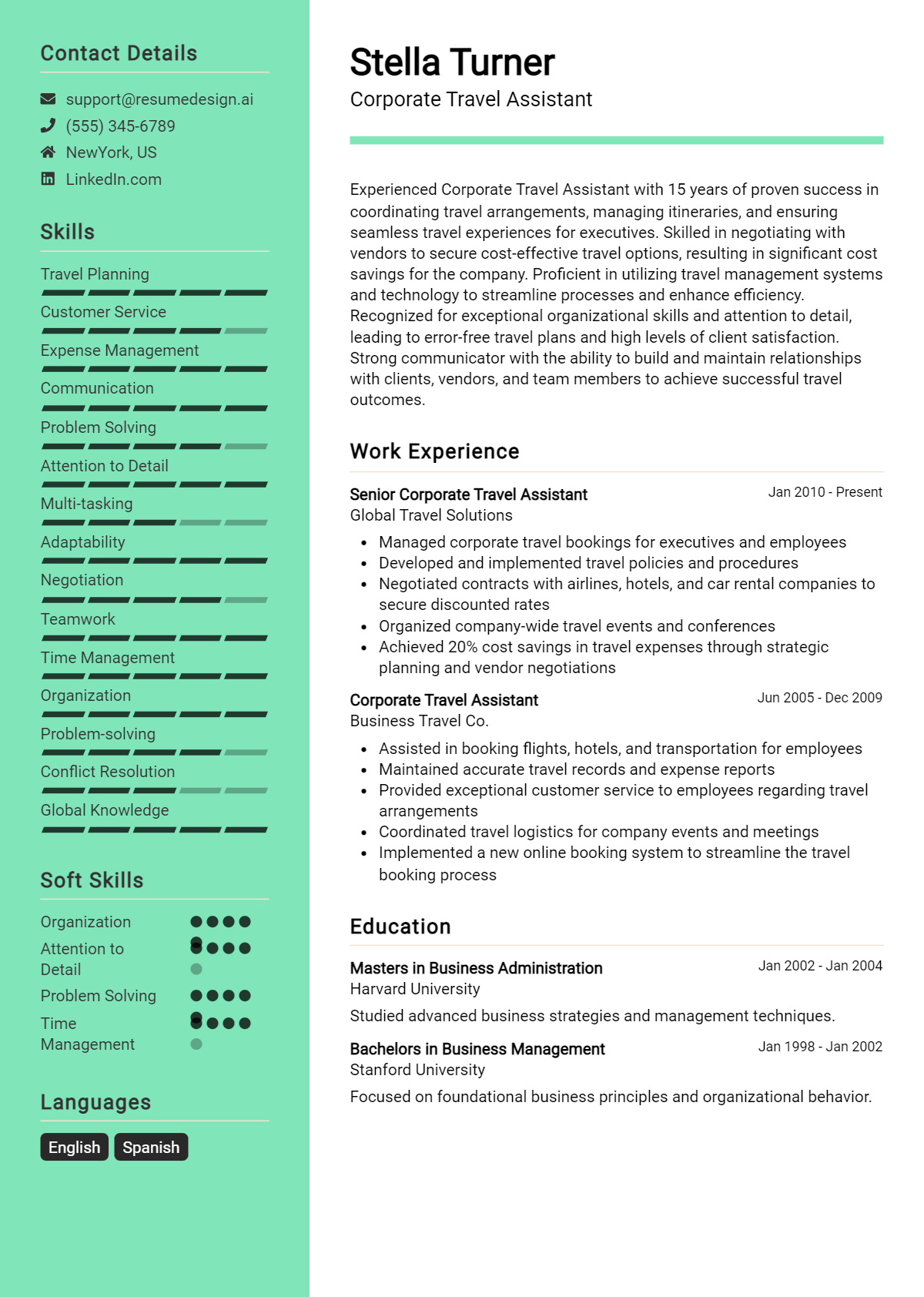
When preparing for a job interview as a Corporate Travel Assistant, it's essential to familiarize yourself with the types of questions you may encounter. These questions will not only assess your skills and experience but also gauge your ability to handle the specific challenges of corporate travel management. Being well-versed in potential questions will help you articulate your qualifications and demonstrate your suitability for the role.
Here is a list of common job interview questions, with examples of the best answers tailored for the Corporate Travel Assistant position. These questions cover your work history and experience in travel coordination, what you have to offer the employer in terms of organizational and communication skills, and your goals for the future in the travel industry.
1. Can you describe your experience with travel booking software?
I have extensive experience using various travel booking software, including Concur and Sabre. I can efficiently manage itineraries, accommodate changes, and ensure compliance with corporate travel policies. My attention to detail helps avoid errors and ensures a smooth travel experience for employees.
Example:
I have used Concur for over three years, managing bookings and handling itinerary changes seamlessly. My familiarity with its features allows me to optimize travel schedules and ensure adherence to company policies.
2. How do you prioritize tasks when managing multiple travel requests?
I prioritize tasks by assessing urgency and importance. I use project management tools to track requests and deadlines, ensuring timely responses. By maintaining open communication with team members, I can effectively manage expectations and provide updates on travel arrangements.
Example:
I categorize requests based on travel dates and urgency, addressing immediate needs first. Using tools like Trello, I keep track of all requests, ensuring none are overlooked while maintaining clear communication with travelers.
3. Describe a time when you had to deal with a travel-related issue.
Once, a last-minute flight cancellation occurred for a key executive. I quickly found an alternate flight and arranged ground transportation. I kept the executive informed throughout the process, ensuring they arrived on time. This experience taught me the importance of quick thinking and effective communication.
Example:
When a flight was canceled, I promptly secured a new booking and arranged alternative transport. Keeping the executive updated was crucial, and they appreciated my proactive approach, which mitigated stress during the situation.
4. What strategies do you use to manage travel budgets effectively?
I utilize budget tracking tools and negotiate with vendors for the best rates. By analyzing past travel data, I identify cost-saving opportunities and plan itineraries that maximize value. Regularly reviewing expenses helps stay within budget while meeting travel needs.
Example:
I regularly analyze travel spending and negotiate better rates with vendors. By implementing budget tracking tools, I ensure we stay within limits while still providing quality travel experiences for employees.
5. How do you ensure compliance with corporate travel policies?
I stay updated on corporate travel policies and communicate them clearly to employees. During the booking process, I verify that all arrangements comply with these guidelines. Regular training sessions also help ensure everyone is informed and adheres to the policies.
Example:
I regularly review corporate travel policies and conduct training sessions for employees. During bookings, I double-check compliance to ensure all arrangements align with company standards, minimizing potential issues.
6. Can you explain how you handle traveler feedback?
I take traveler feedback seriously, using it to improve travel arrangements. I encourage open communication and conduct post-trip surveys to gather insights. This feedback helps identify areas for improvement and enhances future travel experiences.
Example:
I actively seek traveler feedback through surveys and one-on-one discussions. By analyzing this input, I address concerns and refine our travel processes, ensuring better experiences for future trips.
7. What do you consider the most important skills for a Corporate Travel Assistant?
Important skills include attention to detail, strong communication, and problem-solving abilities. Being organized and proficient in travel software is crucial. A proactive approach to managing itineraries and anticipating traveler needs enhances the overall travel experience.
Example:
I believe attention to detail, strong communication, and problem-solving are key skills. Being organized and familiar with travel software allows me to manage itineraries effectively and anticipate traveler needs.
8. How do you stay updated on travel industry trends?
I subscribe to travel industry newsletters, attend webinars, and participate in professional associations. Networking with other travel professionals also helps me stay informed about new technologies, policies, and best practices that can improve our corporate travel program.
Example:
I stay updated by subscribing to travel newsletters and attending industry webinars. Networking with peers also provides insights into emerging trends and best practices, keeping our travel program competitive.
9. How do you prioritize competing travel requests from different departments?
I assess the urgency and importance of each request, consulting with department heads if needed. I also consider the traveler's preferences and overall company goals to ensure efficient resource allocation and timely arrangements.
Example:
I prioritize requests by determining deadlines and impacts on projects. I communicate with department heads to align travel plans with organizational priorities, ensuring that essential travel is arranged first while still addressing other needs as efficiently as possible.
10. Can you describe your experience with travel booking systems?
I have extensive experience using various travel booking systems, including SAP Concur and Travelport. I streamline the booking process by utilizing advanced features, ensuring compliance with company policies while maximizing cost-efficiency and traveler satisfaction.
Example:
In my previous role, I regularly used SAP Concur to book flights and accommodations. I became proficient in leveraging the system's reporting tools to track expenses and analyze travel trends, which helped reduce costs by 15% annually.
11. How do you handle last-minute travel changes or cancellations?
I remain calm and focused, quickly assessing the situation to find alternative arrangements. I communicate promptly with the traveler to maintain transparency and provide updates, ensuring they are supported throughout the process.
Example:
When faced with last-minute changes, I immediately check for available options, such as alternate flights or accommodations. I keep the traveler informed of all options and work efficiently to minimize disruption to their schedule.
12. What steps do you take to ensure compliance with corporate travel policies?
I familiarize myself with company travel policies and guidelines. I ensure that all bookings align with these standards and provide training to travelers, reminding them of policies to facilitate compliance and minimize exceptions.
Example:
I maintain an up-to-date knowledge of our travel policies and regularly communicate key points to staff. I also provide reminders during the booking process, ensuring travelers understand the guidelines and the rationale behind them.
13. How do you manage travel budgets effectively?
I develop comprehensive travel budgets based on historical data and projected needs. I track expenses throughout the travel process, adjusting plans as necessary to adhere to budgetary constraints while ensuring traveler comfort and satisfaction.
Example:
In managing travel budgets, I analyze previous travel expenditures to inform future planning. I use budgeting tools to monitor spending in real-time, allowing me to make adjustments and keep travel costs within approved limits.
14. Describe a time when you resolved a conflict related to travel arrangements.
I encountered a situation where two employees needed the same flight. I facilitated a discussion to understand their needs, ultimately finding a compromise that satisfied both parties. Effective communication led to a resolution without further complications.
Example:
When two employees requested the same flight, I arranged a meeting to clarify their priorities. By understanding their schedules, I was able to book an alternative flight for one, ensuring both could travel comfortably without further issues.
15. What do you think are the most important qualities for a Corporate Travel Assistant?
Key qualities include strong organizational skills, attention to detail, excellent communication, and adaptability. These traits enable me to manage multiple tasks efficiently, ensure traveler satisfaction, and navigate unexpected challenges in a dynamic environment.
Example:
I believe strong communication and organizational skills are essential. They allow me to coordinate effectively with travelers and vendors while ensuring all details are meticulously handled, which is crucial for successful travel management.
16. How do you ensure a positive traveler experience?
I prioritize understanding individual traveler preferences and requirements. I maintain open lines of communication, provide timely updates, and offer personalized support throughout the travel process, ensuring that each traveler feels valued and well-cared-for.
Example:
To ensure a positive experience, I conduct pre-trip consultations to discuss preferences. During travel, I remain available for support, addressing any concerns promptly, which helps travelers feel confident and appreciated throughout their journey.
17. How do you prioritize multiple travel requests from different employees?
I prioritize travel requests based on urgency, budget constraints, and employee seniority. I maintain clear communication with all stakeholders to manage expectations and ensure timely arrangements. Flexibility is key to accommodate last-minute changes and ensure all travelers are satisfied.
Example:
I assess each request's urgency and budget, then organize them accordingly. For instance, I once prioritized a last-minute flight for an executive over a routine trip, ensuring the executive arrived on time while informing other travelers of potential delays.
18. Describe a time you had to solve a last-minute travel issue.
I encountered a situation where a flight was canceled just hours before departure. I quickly researched alternative flights, arranged transportation to the new airport, and communicated updates to the traveler to minimize disruption. Proactive problem-solving is essential in corporate travel.
Example:
When a flight was canceled, I immediately checked for other options and booked a different airline. I also arranged a taxi for the employee to reach the alternate airport on time, ensuring they made their meeting without further issues.
19. How do you stay updated on travel policies and regulations?
I regularly review updates from travel industry sources, attend webinars, and participate in professional associations. Staying informed helps me advise employees accurately and ensures compliance with company travel policies and regulations.
Example:
I subscribe to travel newsletters, follow industry blogs, and attend relevant workshops to keep updated on policies. This continuous learning helps me ensure our travel practices remain compliant and efficient.
20. What software tools do you find most useful for managing travel?
I find tools like Concur and Sabre invaluable for booking and expense management. Additionally, using spreadsheets to track travel itineraries and budgets allows for better organization and streamlined communication with travelers and management.
Example:
I leverage Concur for expense tracking and booking. I also use Google Sheets to manage itineraries, which allows for easy updates and sharing with colleagues, ensuring everyone has the latest information.
21. How do you handle special requests from travelers?
I take special requests seriously, ensuring to note them during the booking process. I communicate with service providers to confirm accommodations and follow up with travelers to ensure their needs are met, enhancing their travel experience.
Example:
When a traveler requested gluten-free meals, I contacted the airline and hotel in advance to ensure their preferences were accommodated. I also checked in with them post-trip to gather feedback on the arrangements.
22. Can you describe your experience with managing travel budgets?
I have experience tracking travel expenses against budgets using reporting tools. I analyze past travel data to forecast future costs and make recommendations for cost-saving measures, ensuring the company stays within budget while meeting travel needs.
Example:
I routinely analyze travel expenditures and compare them to the budget. For instance, I identified a pattern of high hotel costs and negotiated better rates, leading to significant savings for the company over the fiscal year.
23. How do you ensure compliance with company travel policies?
I ensure compliance by familiarizing myself with the company's travel policies and communicating them clearly to employees. I regularly review travel requests to confirm adherence and provide feedback or reminders as necessary to maintain compliance.
Example:
I monitor travel bookings closely and provide a checklist of policies to employees. When I notice non-compliance, I address it directly, explaining the policy implications and reinforcing the importance of adhering to travel guidelines.
24. What steps do you take to manage traveler safety during trips?
I prioritize safety by ensuring travelers are informed about their destinations, including travel advisories and local customs. I also provide emergency contact information and maintain open communication throughout their trip to address any concerns that may arise.
Example:
Before travel, I provide travelers with a safety briefing, including local emergency contacts and travel advisories. I also check in during trips to ensure they are safe and address any potential issues proactively.
25. How do you prioritize travel requests when multiple clients have urgent needs?
I assess the urgency and importance of each request, communicating with clients to understand their needs. Then, I create a priority list, focusing on deadlines and travel implications. This ensures timely arrangements and high client satisfaction.
Example:
I once had three last-minute requests. I quickly contacted each client, gathered details, and prioritized based on travel dates and importance, ensuring that the most urgent request was handled first, which led to positive feedback.
26. Describe a time you faced a travel-related problem and how you resolved it.
When a flight was canceled last minute, I quickly contacted the airline for alternatives while keeping the client informed. I found a suitable reroute, arranged accommodations, and ensured they arrived on time. This proactive approach maintained client trust.
Example:
A client’s flight was canceled due to weather. I immediately found another flight and booked a hotel for the night, providing updates. The client appreciated the prompt handling and was grateful for the supportive service during a stressful situation.
27. How do you stay updated with travel regulations and policies?
I regularly review industry publications, attend webinars, and participate in professional groups. This helps me stay informed about changes in travel regulations, safety protocols, and best practices, ensuring I can provide accurate information and guidance.
Example:
I subscribe to travel industry newsletters and belong to relevant forums. Recently, I learned about new visa requirements for certain countries, which I shared with my team to ensure compliance in our travel arrangements.
28. What tools or software do you find essential for managing corporate travel?
I find travel management software like Concur and Sabre essential for booking and tracking itineraries. Additionally, using communication tools like Slack helps streamline coordination with clients and colleagues, enhancing overall efficiency in travel arrangements.
Example:
I primarily use Concur for tracking expenses and flight bookings. Its reporting features allow me to analyze travel patterns, which helps in optimizing future travel plans and cost management.
29. How would you handle a situation where a client is unhappy with their travel arrangements?
I would listen carefully to the client’s concerns, empathize, and apologize for any inconvenience. Then, I’d offer solutions to rectify the situation, ensuring they feel valued and heard, which is crucial for maintaining strong client relationships.
Example:
When a client was unhappy with hotel accommodations, I listened to their concerns, apologized, and promptly found a better alternative. The client appreciated my quick response and was satisfied with the new arrangements.
30. Can you describe your experience with managing travel budgets?
I have managed travel budgets by tracking expenses closely and comparing costs across different options. I negotiate with vendors to secure the best rates and ensure all bookings align with the budget, providing regular updates to stakeholders.
Example:
In my last role, I managed a $100,000 annual travel budget. I regularly analyzed spending patterns and negotiated with airlines for discounts, which saved us over 15% on travel costs.
31. What strategies do you use to ensure compliance with corporate travel policies?
I ensure compliance by regularly reviewing travel policies and training clients on them. I also utilize booking tools that enforce policy adherence, guiding clients to make choices aligned with the company’s guidelines, thereby minimizing violations.
Example:
I developed a quick reference guide for our travel policy, which I share with clients during the booking process. This has significantly reduced policy violations and streamlined our travel procedures.
32. How do you handle last-minute changes to travel itineraries?
I remain calm and flexible when handling last-minute changes. I quickly assess the new requirements, communicate with relevant parties, and utilize tools to adjust itineraries swiftly, ensuring all stakeholders are informed and satisfied with the outcome.
Example:
When a client’s meeting time changed, I quickly rescheduled their flights and accommodations, informing them at each step. They appreciated my swift actions and seamless adjustments to their plans.
33. How do you prioritize multiple travel requests from different executives?
I assess the urgency and importance of each request, considering factors like travel dates, budget constraints, and personal preferences. I use a scheduling tool to manage timelines effectively and ensure all executives are satisfied with their travel arrangements. Example: I prioritize requests based on travel dates and urgency. For example, if one executive needs to travel next week while another has a trip planned for next month, I focus on the immediate request first.
34. Can you describe a time you had to solve a travel-related issue under pressure?
Once, a flight was canceled just hours before a key meeting. I quickly contacted the airline for alternatives while simultaneously arranging transportation and accommodations. I managed to secure a last-minute flight, ensuring the executive arrived on time, demonstrating my crisis management skills. Example: I faced a last-minute flight cancellation for an executive. I swiftly arranged an alternative flight and transportation, successfully getting them to the meeting on time, thanks to my quick thinking and strong communication with airlines.
35. What tools or software do you use for managing corporate travel bookings?
I’m proficient in various travel management tools like Concur and Egencia. These platforms streamline booking processes, help manage expenses, and provide valuable reporting features. I also utilize spreadsheets for tracking and optimizing travel budgets effectively. Example: I primarily use Concur for managing bookings and expenses, as it integrates well with our financial systems. I also keep a spreadsheet for tracking travel budgets to ensure we stay within limits.
36. How do you handle changes to travel itineraries?
I communicate promptly with all involved parties to discuss the changes and assess the impact. I then modify the itinerary accordingly, ensuring all bookings are updated and confirmed. My proactive approach minimizes disruptions and keeps executives informed. Example: When an itinerary change is needed, I promptly inform the executive and update all bookings. For instance, I once had to rearrange an entire trip due to scheduling conflicts, which I handled efficiently.
37. Describe your experience with managing travel budgets.
I have extensive experience in managing travel budgets by tracking expenses meticulously and finding cost-effective solutions. I regularly review previous trips to identify areas for savings, ensuring that we adhere to the budget while meeting travel needs effectively. Example: I monitor travel expenses closely, comparing them against our budget. In one instance, I identified a more economical hotel option that saved 20% on costs for a series of trips, contributing to our overall budget efficiency.
38. How do you stay updated on travel regulations and industry trends?
I subscribe to industry newsletters and follow relevant travel blogs. I also participate in webinars and attend conferences to network with peers. Staying informed helps me provide the best advice and options to executives regarding travel regulations and changes. Example: I regularly read industry publications and attend webinars to keep up with travel regulations. This knowledge allows me to ensure compliance and provide executives with timely updates about any changes that may affect their travel plans.
39. What steps do you take to ensure a seamless travel experience for executives?
I meticulously plan each trip by confirming all bookings, arranging transportation, and preparing detailed itineraries with essential information. I also provide executives with 24/7 support for any last-minute changes or emergencies, ensuring a smooth travel experience. Example: To ensure a seamless experience, I create a detailed itinerary for each trip, including travel times, contacts, and hotel details. This preparation, along with being available for support, helps executives feel secure while traveling.
40. How do you manage relationships with travel vendors?
I prioritize building strong relationships with travel vendors by maintaining open communication and providing feedback. This approach helps me negotiate better rates and services, ensuring our travel needs are met effectively while fostering collaboration for future bookings. Example: I maintain regular contact with vendors, sharing feedback and addressing concerns. This proactive relationship has enabled me to negotiate favorable rates and secure better services, enhancing our overall travel experience.
41. How do you handle last-minute travel changes or cancellations?
I prioritize communication and flexibility in such situations. I immediately reach out to the traveler to understand their needs, then quickly assess alternative options. Utilizing my strong organizational skills, I ensure a smooth transition, minimizing any disruption to their schedule.
Example:
In a previous role, I successfully rebooked a client’s flight within an hour of their cancellation, ensuring they arrived at their destination on time without missing important meetings.
42. How do you ensure compliance with company travel policies?
I stay updated on the latest company travel policies and communicate them clearly to travelers. By utilizing booking tools that integrate these policies, I can ensure compliance while offering cost-effective options, ultimately maintaining budgetary constraints.
Example:
At my last job, I developed a checklist for travelers to review before booking, which significantly reduced policy violations and helped control travel expenses.
43. Describe a situation where you had to negotiate with a vendor on behalf of a client.
I once negotiated with a hotel to secure a lower group rate for a client’s conference. I researched competitor rates and presented this data, emphasizing our loyalty and potential future bookings, which led to a favorable agreement for my client.
Example:
Through my negotiation, I saved the client 15% on their accommodations, allowing them to allocate more budget towards other conference needs.
44. What strategies do you use to manage travel budgets effectively?
I monitor travel expenses closely and use historical data to predict future costs. By setting clear budgets for each trip and utilizing cost-effective booking options, I ensure that we stay within financial limits while meeting travel needs.
Example:
In my previous role, I implemented a tracking system that reduced overall travel expenses by 20% over six months while maintaining service quality.
45. How do you keep travelers informed about potential travel disruptions?
I proactively monitor travel news and updates using various tools. I maintain open communication with travelers, sending alerts about any disruptions and providing alternative solutions to ensure their travel experience remains smooth and stress-free.
Example:
Once, I alerted a client about a storm affecting their flight, allowing them to adjust their plans ahead of time, which they greatly appreciated.
46. What tools or software are you familiar with for managing corporate travel?
I am proficient in various travel management tools like Concur and Egencia, alongside GDS systems like Sabre. These platforms enable me to efficiently book travel, track expenses, and generate reports to optimize travel management processes.
Example:
Using Concur, I streamlined the booking process for our team, significantly reducing time spent on administrative tasks and improving overall efficiency.
How Do I Prepare For A Corporate Travel Assistant Job Interview?
Preparing for a job interview is crucial in making a lasting impression on the hiring manager. A well-prepared candidate demonstrates professionalism and enhances their chances of securing the position. Here are some key preparation tips to help you succeed in your Corporate Travel Assistant job interview:
- Research the company and its values to understand its culture and mission.
- Practice answering common interview questions related to corporate travel management.
- Prepare examples that demonstrate your skills and experience relevant to the Corporate Travel Assistant role.
- Familiarize yourself with industry trends and changes that could impact corporate travel.
- Dress professionally to convey a polished and competent image.
- Bring multiple copies of your resume and a list of references to the interview.
- Prepare thoughtful questions to ask the interviewer about the company and the role.
Frequently Asked Questions (FAQ) for Corporate Travel Assistant Job Interview
Preparing for a job interview is crucial, especially for a role as dynamic as a Corporate Travel Assistant. Understanding common interview questions can help you feel more confident and articulate during the process. Below are some frequently asked questions that can guide your preparation and give you insight into what interviewers may be looking for.
What should I bring to a Corporate Travel Assistant interview?
When attending an interview for a Corporate Travel Assistant position, it's essential to bring several items to make a positive impression. Prepare a portfolio that includes multiple copies of your resume, a list of references, and any relevant certifications or training documents. Additionally, having a notepad and pen can be helpful for taking notes during the interview. If you have a travel-related project or report you've worked on, consider bringing that as well to showcase your experience and skills.
How should I prepare for technical questions in a Corporate Travel Assistant interview?
Technical questions in a Corporate Travel Assistant interview may cover topics such as travel booking systems, airline policies, and industry terminology. To prepare, familiarize yourself with popular travel management software and tools, as well as current trends in corporate travel. Reviewing common travel-related scenarios and being ready to discuss how you would handle them can also be beneficial. Consider conducting mock interviews with a friend to practice articulating your technical knowledge clearly and confidently.
How can I best present my skills if I have little experience?
If you have limited experience in the corporate travel field, focus on transferable skills from previous roles, such as organization, communication, and customer service. Highlight any relevant coursework, internships, or volunteer experiences that demonstrate your ability to manage tasks effectively. Prepare examples that showcase your problem-solving skills and ability to work under pressure, and express your enthusiasm for learning and growing in the corporate travel industry.
What should I wear to a Corporate Travel Assistant interview?
Dressing appropriately for a Corporate Travel Assistant interview is vital, as it reflects your professionalism and understanding of the corporate environment. Opt for business casual attire, such as dress slacks or a pencil skirt paired with a blazer or a smart blouse. Ensure that your clothes are clean, pressed, and fit well. Pay attention to grooming, and avoid overly casual items like jeans or sneakers, as first impressions are important in the professional world.
How should I follow up after the interview?
Following up after an interview is an essential part of the process as it demonstrates your continued interest in the position. Aim to send a thank-you email within 24 hours of the interview, expressing gratitude for the opportunity and reiterating your enthusiasm for the role. Mention specific points discussed during the interview to personalize your message. If you haven’t heard back within the time frame indicated by the interviewer, a polite follow-up email can show your proactive nature without coming across as pushy.
Conclusion
In this interview guide for the Corporate Travel Assistant role, we've covered essential strategies for effective preparation, the importance of practicing responses, and the need to demonstrate relevant skills that align with the job requirements. A thorough understanding of both technical and behavioral questions can significantly enhance a candidate’s chances of success, as it allows them to present themselves as well-rounded and capable professionals.
We encourage you to utilize the tips and examples provided in this guide to approach your interviews with confidence. Remember, preparation is key to making a lasting impression and securing your desired position in the corporate travel industry.
For further assistance, check out these helpful resources: resume templates, resume builder, interview preparation tips, and cover letter templates.