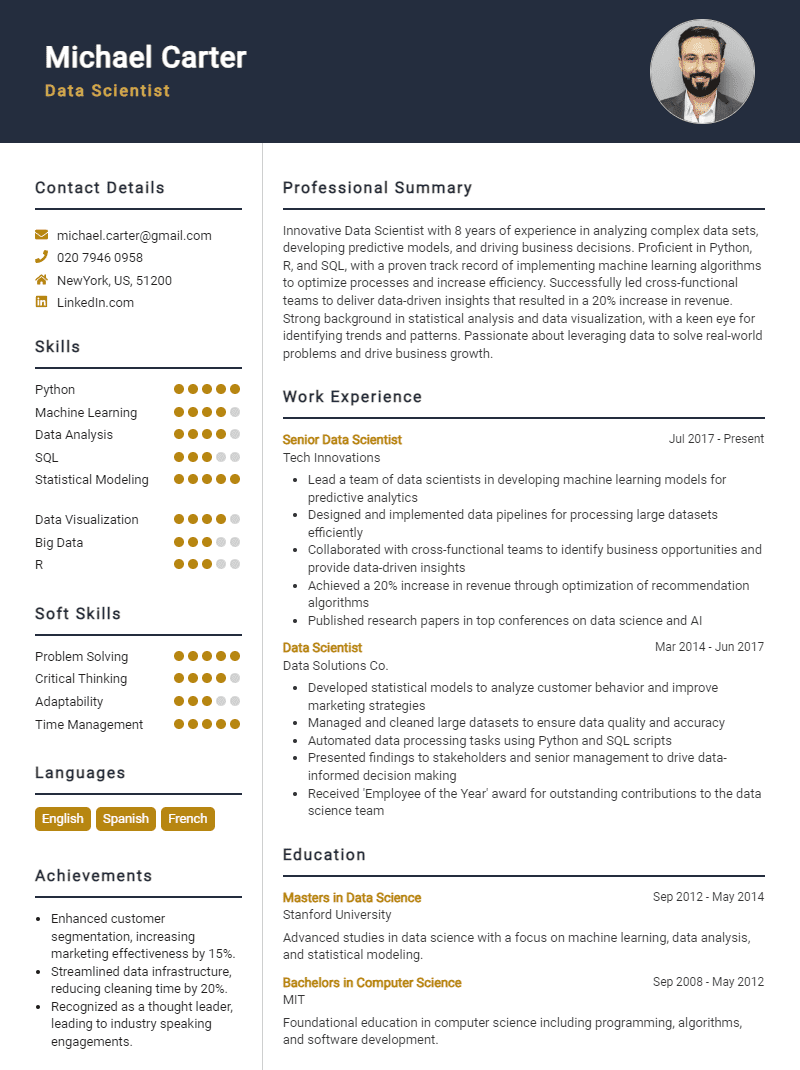
In the competitive field of economics, preparing for job interviews is crucial for showcasing your expertise and potential to prospective employers. Understanding the types of questions you may encounter can help you articulate your knowledge and experiences effectively, allowing you to stand out as a candidate.
Here is a list of common job interview questions for economics roles, along with examples of the best answers. These questions will delve into your work history and experience, your unique contributions to the employer, and your aspirations for future growth in the field of economics, ensuring you are well-prepared to impress your interviewers.
1. What motivated you to pursue a career in Economics?
My passion for understanding how societies allocate resources and make decisions drove me to Economics. I enjoy analyzing data and trends, which allows me to contribute to informed policy-making. This field challenges me to think critically and creatively about real-world problems.
Example:
I chose Economics because it combines my interests in mathematics and social issues. I believe understanding economic principles can lead to impactful changes in society, allowing me to help develop solutions to pressing problems.
2. Can you explain the concept of supply and demand?
Supply and demand are fundamental economic concepts that describe how prices fluctuate based on the availability of goods and consumer desire. When demand exceeds supply, prices rise; conversely, if supply exceeds demand, prices fall. This balance is crucial for market efficiency.
Example:
Supply and demand determine market prices. If a product is in high demand but short supply, prices increase. Conversely, if there's excess supply but low demand, prices drop. This interaction helps allocate resources efficiently in an economy.
3. How do you analyze economic data?
I approach economic data analysis by first defining the research question, then collecting relevant data from reliable sources. I utilize statistical software to interpret the data, identify trends, and generate insights, ensuring my conclusions are data-driven and relevant to the economic context.
Example:
I analyze economic data by using statistical software like R or Excel. I start with data collection, then apply appropriate models to find trends. This approach helps me derive actionable insights relevant to the economic issues at hand.
4. What is the role of government in a market economy?
In a market economy, the government plays a crucial role in regulating markets, providing public goods, and ensuring economic stability. It can intervene to correct market failures, promote competition, and protect consumers while also fostering an environment conducive to economic growth.
Example:
The government ensures market efficiency by regulating monopolies and providing public goods. It intervenes during economic downturns through fiscal policies to stimulate growth, thereby maintaining stability and protecting consumer interests in the economy.
5. Describe a time when you used economic theory to solve a problem.
In my internship, I applied the theory of comparative advantage to help a local business optimize its resource allocation. By advising on efficient production methods, the company improved its profitability while reducing waste, demonstrating the practical application of economic principles.
Example:
During my internship, I identified inefficiencies in production using comparative advantage. I suggested reallocating resources to focus on core competencies, which increased profitability and reduced waste, showcasing the effectiveness of economic theory in real-world scenarios.
6. What are the main indicators of economic health?
Key indicators of economic health include GDP growth, unemployment rates, inflation, and consumer confidence. These metrics provide insight into economic performance, helping to identify trends and inform policy decisions that can stimulate growth and stability.
Example:
Main indicators include GDP growth, unemployment rates, and inflation. Monitoring these helps assess economic health and guide policy-makers in implementing measures that encourage stability and growth, ultimately benefiting society as a whole.
7. Explain the concept of opportunity cost.
Opportunity cost refers to the value of the next best alternative that is forgone when making a decision. It is a crucial concept in Economics, as it highlights the trade-offs involved in allocating resources, enabling individuals and businesses to make more informed choices.
Example:
Opportunity cost is the value of the next best alternative you give up when making a decision. For instance, choosing to invest in stocks instead of bonds means forgoing the potential interest from bonds, highlighting the trade-offs in decision-making.
8. How do you stay updated with economic trends and news?
I stay informed about economic trends by regularly reading reputable financial news sources, academic journals, and economic reports. Additionally, I follow relevant online courses and participate in economic forums to engage with professionals and gain diverse perspectives on current issues.
Example:
To stay updated, I read financial news from sources like The Economist and Bloomberg. I also follow economic journals and participate in online forums, which help me understand emerging trends and engage with current economic discussions.
9. How do you evaluate the effectiveness of a fiscal policy?
To evaluate fiscal policy effectiveness, I analyze economic indicators such as GDP growth, unemployment rates, and inflation. Understanding the context and timeframe of policy implementation helps assess its impact on economic stability and growth. I also consider feedback from businesses and consumers.
Example:
In my previous role, I analyzed GDP growth before and after a tax cut and found a positive correlation with increased consumer spending, indicating the policy's effectiveness in stimulating the economy.
10. Can you explain the concept of opportunity cost?
Opportunity cost refers to the value of the next best alternative foregone when making a decision. It emphasizes the trade-offs involved in resource allocation, helping to assess the true cost of choices in economic analysis and decision-making.
Example:
When deciding between investing in stocks or bonds, the opportunity cost is the potential return lost from the alternative investment that wasn’t chosen, which I always consider in my financial analysis.
11. What role does supply and demand play in pricing?
Supply and demand are fundamental economic concepts that determine prices in a market. When demand exceeds supply, prices rise; conversely, when supply exceeds demand, prices fall. Understanding this relationship helps predict market behavior and consumer responses.
Example:
During my internship, I studied a local market where a shortage of goods led to increased prices, illustrating how supply and demand directly influence market dynamics.
12. How do you approach economic modeling?
I approach economic modeling by first defining the problem and identifying key variables. I then employ quantitative methods and historical data to develop a model, which I validate through statistical analysis. This process helps in making informed predictions and policy recommendations.
Example:
In a recent project, I created a model predicting inflation rates, using past data to validate my assumptions, which provided valuable insights for our policy team.
13. Describe a time when you analyzed a market trend.
I analyzed a market trend in renewable energy adoption. By examining policy changes and consumer behavior data, I identified a significant increase in solar panel installations, influencing my recommendations for investment strategies in sustainable technologies.
Example:
During my research project, I tracked solar energy trends over five years, revealing a 30% increase in installations, prompting our team to shift focus towards green investments.
14. How do external factors influence economic growth?
External factors such as geopolitical events, technological advancements, and global market conditions significantly impact economic growth. These elements can affect trade relations, investment flows, and consumer confidence, ultimately shaping a country's economic trajectory.
Example:
I analyzed how trade tariffs impacted our local economy, discovering a slowdown in growth rates due to increased costs and reduced consumer spending, highlighting the importance of external influences.
15. What is the significance of economic indicators?
Economic indicators are vital for assessing a country's economic performance and health. They provide insights into trends and help policymakers make informed decisions regarding fiscal and monetary policies, ensuring economic stability and growth.
Example:
I regularly monitored unemployment rates and consumer confidence indices to assess economic conditions, allowing our team to adjust our strategies accordingly based on these indicators.
16. How do you handle conflicting data in economic research?
When faced with conflicting data, I conduct a thorough analysis to identify the source of discrepancies. I cross-reference multiple data sets, consult expert opinions, and consider the context to form a balanced conclusion that supports sound decision-making.
Example:
In a recent project, I encountered conflicting GDP growth figures; by cross-referencing sources and consulting with experts, I clarified the discrepancies, ensuring our conclusions were robust and reliable.
17. How do you assess the impact of fiscal policy on economic growth?
To assess the impact of fiscal policy on economic growth, I analyze key indicators such as GDP growth rates, unemployment rates, and inflation. I also consider government spending and tax policies, ensuring to evaluate their long-term effects on investment and consumer confidence.
Example:
I would review historical data to observe how tax cuts or increased spending influenced GDP growth. For instance, after the 2008 stimulus package, I noted a gradual recovery in growth rates, which highlighted fiscal policy's significant role in revitalizing the economy.
18. Can you explain the concept of opportunity cost?
Opportunity cost refers to the value of the next best alternative that is forgone when making a decision. It emphasizes the trade-offs in resource allocation, helping individuals and businesses understand the potential benefits they miss out on when choosing one option over another.
Example:
For instance, if I choose to invest in stocks instead of bonds, my opportunity cost is the potential interest income I could have earned from the bonds. Understanding this helps me make better investment decisions by weighing potential returns against risks.
19. What are the main determinants of demand in economics?
The main determinants of demand include price, consumer income, tastes and preferences, the price of related goods, and consumer expectations. These factors interact to shape consumer behavior and influence the quantity of goods and services demanded in the market.
Example:
For example, during a recession, even if prices drop, demand may not increase significantly due to lower consumer income. Understanding these determinants allows me to predict market trends and consumer behavior effectively.
20. How do you measure inflation, and why is it important?
Inflation is typically measured using the Consumer Price Index (CPI) or the Producer Price Index (PPI). It is crucial because it affects purchasing power, interest rates, and economic policy decisions, influencing overall economic stability and growth.
Example:
For instance, I analyze CPI trends to assess inflation's impact on living costs. By understanding these trends, I can advise policymakers on necessary adjustments to monetary policy to maintain economic stability and consumer confidence.
21. What role do central banks play in an economy?
Central banks regulate monetary policy, control inflation, manage exchange rates, and provide financial stability. They influence interest rates and money supply to foster economic growth while ensuring the financial system's stability through effective oversight and regulation.
Example:
For instance, during economic downturns, central banks often lower interest rates to encourage borrowing and investment. I analyze their decisions to predict market trends and inform my economic strategies effectively.
22. Can you discuss the significance of market structures in economics?
Market structures, including perfect competition, monopolistic competition, oligopoly, and monopoly, significantly influence pricing, output levels, and consumer choice. Understanding these structures helps economists analyze market behavior and predict the effects of policy changes on competition and consumer welfare.
Example:
For instance, in a monopoly, I’d analyze pricing strategies and consumer impact compared to a competitive market. This understanding allows me to recommend regulatory measures to promote competition and protect consumers.
23. How do you use economic indicators in your analysis?
Economic indicators, such as GDP, unemployment rates, and inflation, provide essential insights into economic health. I analyze these indicators to assess trends, make forecasts, and inform policy decisions, ensuring a comprehensive understanding of the economy's performance.
Example:
For instance, by tracking GDP growth alongside unemployment rates, I can evaluate the economy's recovery phase and advise businesses on strategic planning, ensuring they align with economic conditions.
24. What is the role of international trade in economic development?
International trade promotes economic development by allowing countries to specialize, access larger markets, and benefit from comparative advantages. It fosters innovation, increases efficiency, and leads to more competitive pricing, thereby enhancing overall economic growth and improving living standards.
Example:
For example, I would analyze trade agreements to assess how they enhance market access and stimulate growth in emerging economies, ultimately contributing to their development and integration into the global economy.
25. How do you evaluate the impact of government policies on economic growth?
To evaluate government policies, I analyze key economic indicators such as GDP, employment rates, and inflation. I also consider historical data to assess long-term impacts. Engaging in empirical research helps identify correlations between policy changes and economic performance.
Example:
In my previous role, I evaluated a tax incentive policy by comparing GDP growth rates before and after its implementation, finding a significant positive effect on small business expansion.
26. Can you explain the concept of opportunity cost?
Opportunity cost refers to the potential benefit missed when choosing one option over another. Understanding this concept helps in making informed decisions in resource allocation, as it emphasizes the trade-offs involved in economic choices.
Example:
For instance, if a company invests in new machinery instead of employee training, the opportunity cost is the potential productivity gains from a more skilled workforce.
27. What are the key differences between microeconomics and macroeconomics?
Microeconomics focuses on individual consumers and firms, analyzing choices and market mechanisms. In contrast, macroeconomics examines economy-wide phenomena like inflation, unemployment, and national income. Both perspectives are essential for a comprehensive understanding of economic principles.
Example:
In my studies, I utilized microeconomic models to predict consumer behavior while employing macroeconomic analyses to assess national economic policies.
28. How do you approach data analysis in your economic research?
I utilize statistical software to analyze large datasets, applying econometric methods to identify trends and relationships. I focus on ensuring data integrity and applying robust modeling techniques to derive meaningful insights that inform economic policy recommendations.
Example:
In my last project, I used regression analysis to evaluate the impact of education on income levels, yielding actionable insights for policymakers.
29. Describe a time when you had to present complex economic data to a non-technical audience.
I simplify complex data by using visual aids, such as graphs and charts, and relate findings to real-world implications. This approach ensures clarity and engagement, allowing non-technical stakeholders to grasp essential concepts and make informed decisions.
Example:
During a presentation on inflation trends, I used infographics to illustrate key points, which helped non-economists understand the potential impacts on consumer purchasing power.
30. What role do you think behavioral economics plays in traditional economic theories?
Behavioral economics challenges the assumptions of rational decision-making in traditional theories. It incorporates psychological insights to explain why individuals often behave irrationally, providing a more nuanced understanding of economic phenomena and improving policy effectiveness.
Example:
I integrated behavioral economics in my analysis of consumer spending, revealing how biases affect purchasing decisions beyond mere price considerations.
31. How can international trade affect domestic economies?
International trade can enhance domestic economies by providing access to larger markets, increasing competition, and promoting innovation. However, it can also lead to job displacement in certain sectors, making it essential to balance trade benefits with potential social impacts.
Example:
In my research, I analyzed how trade agreements boosted exports while recommending policies to support affected workers through retraining programs.
32. Explain the significance of the Phillips Curve in economic theory.
The Phillips Curve illustrates the inverse relationship between inflation and unemployment, suggesting that lower unemployment can lead to higher inflation. It is significant for policymakers in balancing economic growth and price stability, though its relevance can vary over time.
Example:
In my analysis, I assessed historical data on inflation and unemployment, demonstrating shifts in the Phillips Curve during economic crises, informing policy adjustments.
33. How do you approach data analysis in your economic research?
I utilize statistical software to analyze economic data, focusing on identifying trends and correlations. My approach includes validating data sources and ensuring accuracy before drawing conclusions. This systematic analysis allows me to provide actionable insights that inform policy recommendations.
Example:
In my last project, I used R to analyze labor market data, identifying a significant correlation between education levels and employment rates, which helped shape local workforce development initiatives.
34. Can you explain the concept of opportunity cost?
Opportunity cost refers to the value of the next best alternative that is foregone when making a decision. Understanding this concept is crucial for evaluating choices in resource allocation, helping to optimize decisions in both personal and professional contexts.
Example:
For example, if I choose to invest in stocks rather than bonds, my opportunity cost is the interest I could have earned from bonds, guiding my investment strategy.
35. Describe a time when you had to analyze a complex economic issue.
I analyzed the impact of minimum wage increases on employment levels in a local economy. This involved collecting data, modeling potential scenarios, and assessing stakeholder perspectives to provide a comprehensive analysis for policymakers, demonstrating my analytical skills and ability to communicate complex findings.
Example:
My report highlighted that while some jobs were lost, overall income levels increased, providing a balanced view that aided in decision-making for local lawmakers.
36. What economic indicators do you find most useful, and why?
I find GDP growth rate, unemployment rate, and inflation rate to be the most informative indicators. These metrics provide a clear picture of economic health, allowing me to assess trends and make informed predictions about future economic conditions.
Example:
For instance, during economic downturns, I closely monitor unemployment rates to gauge recovery progress and inform investment decisions.
37. How do you stay updated with current economic trends?
I regularly read economic journals, attend conferences, and follow reputable economic news sources. Engaging with professional networks and participating in discussions helps me stay informed about emerging trends and theories in economics.
Example:
Recently, I attended a webinar on inflation trends which provided insights into policy responses that I applied in my current research project.
38. Discuss a real-world application of a theoretical economic model you've used.
I applied the IS-LM model to assess the impact of fiscal policy on interest rates and output in a recession. This theoretical framework helped me analyze government spending effects, providing valuable insights for local economic recovery strategies.
Example:
Using this model, I recommended targeted investments that stimulated demand without significantly raising interest rates, proving effective in our economic recovery plan.
39. How would you explain the importance of behavioral economics to a layperson?
Behavioral economics studies how psychological factors influence economic decisions. It's essential because it helps us understand why people may not always act rationally, leading to better policies and marketing strategies that align with human behavior.
Example:
For example, understanding that consumers often rely on heuristics can improve product pricing strategies, as seen in successful marketing campaigns.
40. What role do you believe government intervention plays in the economy?
Government intervention is vital for correcting market failures, ensuring fair competition, and providing public goods. However, it must be balanced to avoid inefficiencies. My research emphasizes the importance of targeted interventions that promote economic stability and growth.
Example:
For instance, during the pandemic, swift government support mitigated economic fallout, demonstrating how timely intervention can stabilize markets.
41. Can you explain the concept of price elasticity of demand?
Price elasticity of demand measures how responsive the quantity demanded of a good is to a change in its price. A greater elasticity indicates consumers are more sensitive to price changes. Understanding this concept helps in pricing strategies and forecasting market behavior.
Example:
For instance, luxury goods often have high price elasticity, as consumers can forgo them when prices rise. In my previous internship, I analyzed elasticity for a product line, which helped the company adjust pricing effectively.
42. What is the role of government in a mixed economy?
In a mixed economy, the government plays a crucial role in regulating markets, providing public goods, and addressing market failures. It balances free market benefits with social equity. This ensures economic stability and promotes welfare while maintaining efficiency in resource allocation.
Example:
During my coursework, I studied the government's intervention in healthcare, which illustrated how regulations can help ensure access while maintaining quality. This experience deepened my understanding of mixed economic systems.
43. How do you approach economic forecasting?
My approach to economic forecasting involves analyzing historical data, identifying trends, and utilizing econometric models to predict future outcomes. I consider various factors, including market conditions and economic indicators, to provide accurate and actionable forecasts that inform decision-making.
Example:
In my internship, I used regression analysis to forecast sales for a retail company, which helped them adjust inventory levels and improve profitability based on my predictions.
44. What are the limitations of GDP as an economic indicator?
GDP measures a country's economic output but has limitations, such as excluding informal economies, ignoring income distribution, and not accounting for environmental degradation. These factors can provide a skewed view of overall economic health and societal well-being.
Example:
In my research project, I highlighted these limitations by comparing GDP with the Human Development Index, demonstrating that GDP alone doesn't reflect quality of life or sustainable growth.
45. Describe how inflation impacts purchasing power.
Inflation erodes purchasing power as it leads to higher prices for goods and services. When inflation rises, consumers can buy less with the same amount of money, which can affect their overall standard of living and spending habits.
Example:
In my analysis of historical inflation data, I illustrated how a 3% increase in inflation reduced purchasing power, prompting my team to recommend strategies for consumers to safeguard their finances.
46. How do you evaluate the impact of trade policies on economic growth?
I evaluate trade policies by analyzing their effects on exports, imports, and overall economic performance. This involves reviewing trade balances, tariff impacts, and market access, considering both short-term and long-term growth implications for various sectors.
Example:
In my thesis, I examined trade agreements and found that reduced tariffs often stimulated growth by increasing market access, demonstrating the vital role of trade policies in economic development.
How Do I Prepare For A Economics Job Interview?
Preparing for an economics job interview is crucial to making a positive impression on the hiring manager. A well-prepared candidate not only demonstrates their knowledge and skills but also shows genuine interest in the role and the organization. Here are some key preparation tips to help you stand out during your interview:
- Research the company and its values to understand its mission and how you can contribute.
- Practice answering common interview questions related to economics to build your confidence.
- Prepare examples that demonstrate your skills and experience relevant to the economics field.
- Stay updated on current economic trends and news to discuss relevant topics during the interview.
- Review key economic theories and concepts that may be relevant to the position you are applying for.
- Dress professionally to create a positive first impression and show your seriousness about the role.
- Prepare thoughtful questions to ask the interviewer about the company, team, and expectations for the role.
Frequently Asked Questions (FAQ) for Economics Job Interview
Preparing for an economics job interview is crucial to your success. Understanding common questions can help you articulate your thoughts clearly and demonstrate your knowledge and enthusiasm for the role. Below are some frequently asked questions that candidates may encounter, along with practical advice on how to respond effectively.
What should I bring to an Economics interview?
When attending an economics interview, it's essential to bring several key items that demonstrate your professionalism and preparedness. Bring multiple copies of your resume, a list of references, and any relevant work samples or portfolios that showcase your skills and experience. Additionally, consider having a notepad and pen for taking notes during the interview, as well as a list of questions you may want to ask the interviewer about the position and organization. Being well-prepared signals your seriousness about the opportunity.
How should I prepare for technical questions in an Economics interview?
Technical questions in economics interviews often focus on concepts such as supply and demand, market structures, and economic theories. To prepare, review fundamental economic principles and ensure you can explain them clearly. Familiarize yourself with current economic events and how they relate to the concepts you’ve studied. Practice solving quantitative problems and consider using online resources or textbooks for review. Mock interviews with a friend or mentor can also help you articulate your answers under pressure.
How can I best present my skills if I have little experience?
If you have limited experience in economics, focus on your academic achievements, relevant coursework, internships, and any projects that showcase your analytical skills. Emphasize transferable skills such as critical thinking, problem-solving, and data analysis. Prepare specific examples that demonstrate your ability to apply economic theories or concepts in practical situations. Additionally, expressing enthusiasm for the field and a willingness to learn can help compensate for a lack of experience.
What should I wear to an Economics interview?
Dress code for an economics interview typically leans toward business professional attire. Opt for a tailored suit, dress shirt, and polished shoes to create a polished and professional appearance. Choose conservative colors like navy, black, or gray, and avoid overly flashy accessories. Remember that first impressions matter, so dressing appropriately conveys respect for the interview process and the organization. It's always better to be slightly overdressed than underdressed.
How should I follow up after the interview?
Following up after an interview is a valuable opportunity to reinforce your interest in the position and thank the interviewer for their time. Send a personalized thank-you email within 24 hours of the interview, expressing your gratitude and reiterating your enthusiasm for the role. Mention specific points discussed during the interview that resonated with you, and if applicable, provide any additional information that could help reinforce your candidacy. This thoughtful gesture can leave a positive impression and keep you top of mind as hiring decisions are made.
Conclusion
In this interview guide, we've explored the essential components that can significantly enhance your preparation for an economics job interview. From understanding key economic concepts to practicing behavioral questions, the importance of thorough preparation and practice cannot be overstated. Demonstrating relevant skills and knowledge during your interview is crucial for making a positive impression on potential employers.
By being well-prepared for both technical and behavioral questions, you can improve your chances of success and stand out as a candidate. Remember, interviewing is not just about showcasing your knowledge; it's also about illustrating how your experiences align with the job requirements.
Take advantage of the tips and examples provided in this guide to approach your interviews with confidence. You have the tools necessary to excel, so go forth and make the most of this opportunity!
For further assistance, check out these helpful resources: resume templates, resume builder, interview preparation tips, and cover letter templates.