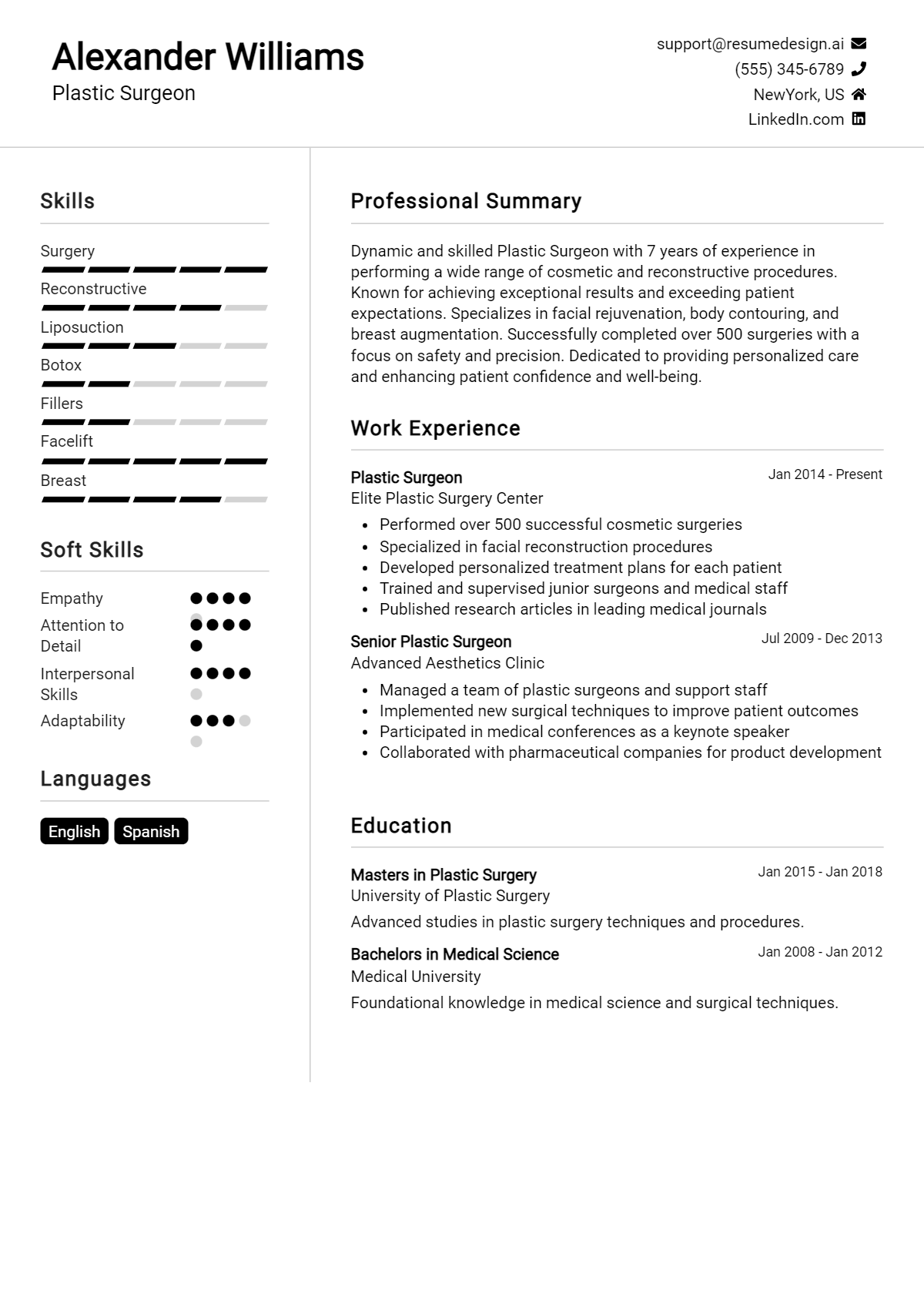
When preparing for a job interview as a plastic surgeon, it's essential to anticipate the questions you may encounter and formulate thoughtful responses. This role demands not only technical expertise and a keen aesthetic sense but also the ability to communicate effectively with patients and colleagues. Understanding the nuances of the interview process can significantly enhance your chances of success.
Here is a list of common job interview questions for a plastic surgeon, along with examples of the best answers. These questions cover your work history and experience, what you have to offer the employer, and your goals for the future. By preparing for these inquiries, you can demonstrate your qualifications, showcase your passion for the field, and align your aspirations with the hospital or clinic's mission.
1. Can you describe your experience with various plastic surgery procedures?
I have extensive experience in both reconstructive and aesthetic plastic surgery. Over the last eight years, I've performed over 1,500 procedures, including breast augmentations, facelifts, and trauma reconstruction. My training included hands-on experience with diverse patient cases, enhancing my skills in both surgical techniques and patient care.
Example:
In my residency, I completed rotations in various subspecialties, performing complex surgeries like cleft palate repairs and reconstructive surgeries after trauma, which prepared me for a wide range of cases I encounter in my practice.
2. How do you ensure patient safety during procedures?
Patient safety is my utmost priority. I adhere to strict protocols, including thorough pre-operative assessments and using advanced surgical techniques. During procedures, I maintain continuous monitoring and always have a skilled team ready to respond to any complications, ensuring a safe environment for my patients.
Example:
I utilize checklists and standardized protocols for each surgery, ensuring all team members are aligned. This practice has significantly reduced any potential risks and improved patient outcomes.
3. How do you handle difficult patient conversations?
I approach difficult conversations with empathy and transparency. I provide clear, honest information about the risks and benefits of procedures, allowing patients to make informed decisions. Active listening is key, as it builds trust and helps address their concerns effectively.
Example:
When discussing a patient's unrealistic expectations, I gently explain the limitations of surgery and suggest alternative options that align better with their goals while ensuring they feel heard and respected.
4. What techniques do you use to manage post-operative care?
Post-operative care is crucial for recovery. I provide detailed post-operative instructions, schedule follow-up appointments, and ensure open communication for any questions. I emphasize the importance of rest, medication adherence, and observing for signs of complications, fostering a supportive environment for healing.
Example:
I follow up with patients through phone calls and digital messaging, allowing them to report any concerns promptly, which helps in managing their recovery effectively.
5. Can you discuss a challenging case you handled?
One challenging case involved a patient with severe scar tissue from prior surgeries. I developed a comprehensive plan, including multiple revisions and non-surgical treatments. Through careful planning and patient collaboration, we achieved significant improvements, which greatly enhanced the patient's quality of life.
Example:
This experience taught me the importance of patience and adaptive strategies, allowing me to deliver optimal results while managing patient expectations.
6. How do you stay updated with advancements in plastic surgery?
I stay updated by attending conferences, participating in workshops, and reading relevant journals. Networking with peers also provides insights into emerging techniques and technologies. Continuous education is vital to providing the best care and staying at the forefront of the field.
Example:
Recently, I attended a workshop on minimally invasive techniques, which I have since integrated into my practice, improving recovery times for my patients.
7. What qualities do you believe are essential for a successful plastic surgeon?
Key qualities include strong technical skills, attention to detail, empathy, and effective communication. The ability to understand patient needs and provide personalized care, alongside a commitment to lifelong learning, are essential for success in this evolving field.
Example:
I believe being approachable and compassionate allows patients to feel comfortable discussing their concerns, which is crucial for building trust and achieving successful outcomes.
8. How do you handle the emotional aspects of plastic surgery?
I recognize that plastic surgery can be emotionally charged. I provide a supportive environment where patients can express their feelings. I focus on understanding their motivations and expectations, which helps me guide them towards realistic outcomes and ensures a positive experience.
Example:
In my practice, I often incorporate pre-operative counseling sessions to address emotional concerns, which fosters a deeper connection and reassures patients throughout their journey.
9. How do you ensure patient safety during surgery?
I prioritize patient safety by adhering to strict protocols, conducting thorough pre-operative assessments, and maintaining open communication with my surgical team. Continuous training and staying updated with the latest techniques also play a crucial role in minimizing risks during procedures.
Example:
Before every surgery, I review the patient’s medical history and conduct a checklist to ensure all safety measures are in place. This has significantly reduced complications in my practice.
10. Can you describe a challenging case and how you handled it?
One challenging case involved a patient with severe scarring after an accident. I developed a comprehensive treatment plan, utilizing advanced reconstructive techniques. Through collaboration with a multidisciplinary team, we achieved significant improvements, enhancing the patient’s function and aesthetic appearance.
Example:
I faced a case with complex scarring; after extensive planning and a series of surgeries, the patient regained confidence and functionality, demonstrating the importance of teamwork and innovative solutions.
11. How do you approach aesthetic consultations with patients?
In aesthetic consultations, I focus on understanding the patient’s goals and expectations while educating them about realistic outcomes. I emphasize the importance of a collaborative decision-making process and provide a safe space for questions and concerns.
Example:
During consultations, I ask open-ended questions to grasp their desires, ensuring they understand the procedure's details and realistic expectations, fostering trust and clarity.
12. What techniques do you use for managing post-operative pain?
I employ a multimodal approach for post-operative pain management, including nerve blocks, oral analgesics, and non-pharmacological methods. Tailoring pain management to each patient’s needs enhances recovery and patient satisfaction.
Example:
I often use regional anesthesia combined with oral pain relief to minimize discomfort. Regular follow-ups ensure that any pain issues are addressed promptly and effectively.
13. How do you handle patient dissatisfaction or complications?
Handling patient dissatisfaction requires empathy and open communication. I listen to their concerns and provide clear explanations. In cases of complications, I ensure transparent discussions about corrective options and work diligently to resolve issues while maintaining trust.
Example:
In a situation with a dissatisfied patient, I arranged a meeting to discuss their concerns thoroughly and proposed a corrective plan, which ultimately restored their trust in my practice.
14. What role does technology play in your practice?
Technology is integral to my practice, enhancing both surgical precision and patient outcomes. I utilize advanced imaging techniques and 3D modeling for planning surgeries, and I stay current with emerging technologies to improve efficiency and effectiveness.
Example:
I frequently use 3D imaging to visualize surgical outcomes before procedures, allowing for better planning and improved patient communication regarding their expected results.
15. Can you discuss your experience with reconstructive surgery?
I have extensive experience in reconstructive surgery, particularly post-trauma and post-oncological procedures. By employing techniques like flap surgery and microsurgery, I aim to restore both function and aesthetics, ensuring comprehensive care for my patients.
Example:
In my career, I have successfully performed numerous reconstructive surgeries, improving patients’ quality of life and functionality while collaborating closely with oncologists and trauma surgeons.
16. How do you stay updated with advancements in plastic surgery?
I stay updated by attending conferences, participating in workshops, and subscribing to leading medical journals. Engaging in professional networks and online forums allows me to exchange knowledge with peers and stay informed about the latest techniques and research.
Example:
I regularly attend national conferences and am an active member of several surgical societies, where I gain insights into innovative practices and emerging trends in plastic surgery.
17. How do you stay updated with the latest techniques and advancements in plastic surgery?
I regularly attend conferences, participate in workshops, and subscribe to leading medical journals. Networking with fellow surgeons also helps me learn about new techniques and innovations, ensuring I provide the best care to my patients.
Example:
I attend an annual plastic surgery conference and subscribe to several journals. I also engage in online forums with peers to discuss advancements and share experiences, which keeps my skills current and enhances my practice.
18. Can you describe a challenging case you handled and the outcome?
I once treated a patient with severe scarring from a burn. The procedure required multiple surgeries and extensive rehabilitation. Through a tailored approach and close collaboration with the patient, we achieved significant improvement in appearance and functionality, which greatly enhanced their quality of life.
Example:
I managed a complex burn case involving multiple surgeries. By customizing the treatment plan and working closely with the rehabilitation team, we saw remarkable improvement in the patient's appearance and mobility, significantly boosting their confidence and satisfaction.
19. How do you approach patient consultations for cosmetic procedures?
I prioritize open communication, allowing patients to express their expectations and concerns. I provide detailed information about the procedures, potential risks, and realistic outcomes, ensuring they are well-informed and comfortable before making a decision.
Example:
During consultations, I encourage patients to share their goals and concerns. I explain the procedures in detail, discuss risks, and provide realistic outcomes to ensure they feel informed and confident in their decision-making process.
20. What measures do you take to ensure patient safety during procedures?
Patient safety is my top priority. I conduct thorough pre-operative assessments, follow strict sterilization protocols, and ensure all team members are well-trained. I also monitor patients closely during and after surgery to quickly address any complications.
Example:
I perform comprehensive pre-operative evaluations, adhere to rigorous sterilization standards, and ensure my team is well-trained. During surgery, I continuously monitor vital signs to promptly address any potential complications, prioritizing patient safety throughout the process.
21. How do you handle complications or unexpected outcomes after surgery?
I assess the situation calmly and promptly, communicating with the patient about the issue and the steps we’ll take to resolve it. I collaborate with my team to implement corrective measures and ensure the patient receives the best possible care.
Example:
In the event of complications, I remain calm and thoroughly assess the issue. I discuss the situation with the patient transparently and work with my team to implement corrective actions, ensuring they receive optimal care and support.
22. What ethical considerations do you keep in mind while performing cosmetic surgeries?
I uphold the highest ethical standards by ensuring that procedures are medically justified and that patients have realistic expectations. I also emphasize informed consent and respect patient autonomy, making sure they fully understand their options before proceeding.
Example:
I prioritize ethical practice by ensuring all procedures are medically warranted and that patients have realistic expectations. I provide comprehensive information, ensuring they understand their choices and the implications of their decisions.
23. How do you manage your work-life balance in a demanding field like plastic surgery?
I prioritize time management and set boundaries to maintain a healthy work-life balance. I allocate specific hours for work and personal time, ensuring I engage in hobbies and activities that help me recharge and stay focused.
Example:
I manage my time effectively by setting clear boundaries between work and personal life. I dedicate time for hobbies and family, which helps me recharge and maintain focus on my professional responsibilities.
24. What techniques do you use for effective pain management post-surgery?
I utilize a multimodal approach to pain management, combining medications, nerve blocks, and non-pharmacological methods. I also educate patients on managing discomfort at home, which enhances their recovery experience and minimizes reliance on opioids.
Example:
I implement a multimodal pain management strategy, including medication, nerve blocks, and patient education on home care. This approach effectively controls pain while reducing the need for opioids, promoting a smoother recovery experience for my patients.
25. How do you stay updated with the latest advancements in plastic surgery?
I regularly attend conferences, subscribe to leading journals, and participate in online forums. Continuous education ensures I am aware of innovative techniques and technologies, which I can apply to enhance patient outcomes and safety in my practice.
Example:
I attend annual plastic surgery conferences and subscribe to journals like the Journal of Plastic and Reconstructive Surgery, which keeps me informed about new techniques and research, ensuring my practice utilizes the latest advancements for optimal patient care.
26. Can you discuss a challenging case and how you handled it?
I once had a patient with complex facial trauma. I collaborated with a multidisciplinary team for reconstruction. I emphasized clear communication and thorough planning, which ultimately led to a successful outcome and high patient satisfaction.
Example:
In a challenging case involving severe facial trauma, I coordinated with an orthopedic surgeon and a maxillofacial specialist. Our teamwork and careful planning resulted in a successful reconstruction, restoring both function and appearance, while ensuring patient comfort throughout the process.
27. How do you ensure patient safety during procedures?
Patient safety is my top priority. I follow strict protocols, perform thorough pre-operative assessments, and maintain open communication with my surgical team. Regular training and simulation drills also help prepare for any potential complications.
Example:
I adhere to established safety protocols, conduct comprehensive pre-operative evaluations, and ensure my surgical team is well-trained. Regular simulations for emergencies help us prepare for complications, maintaining the highest safety standards during procedures.
28. How do you handle patient expectations and concerns?
I prioritize clear communication by discussing potential outcomes and addressing concerns honestly. I encourage questions and provide educational materials to help patients make informed decisions, which fosters trust and aligns their expectations with realistic results.
Example:
When discussing procedures, I ensure patients understand the realistic outcomes by explaining both benefits and risks. I provide supportive resources and encourage them to voice concerns, which helps manage their expectations effectively and builds trust.
29. What techniques do you use for pain management post-surgery?
I employ a multimodal approach to pain management, including nerve blocks, non-opioid medications, and patient education on pain control techniques. This strategy minimizes opioid use and promotes quicker recovery while ensuring patient comfort.
Example:
I utilize a combination of nerve blocks and non-opioid analgesics for effective pain management. Additionally, I educate patients about pain expectations and self-management techniques, resulting in reduced discomfort and improved recovery experiences.
30. How do you approach cosmetic versus reconstructive surgery?
I recognize the distinct goals of cosmetic and reconstructive surgery. I tailor my approach based on patient needs, focusing on aesthetics in cosmetic procedures and restoring function and appearance in reconstructive cases, ensuring each patient receives personalized care.
Example:
In cosmetic surgery, I prioritize enhancing aesthetic features, while in reconstructive surgery, my focus is on restoring function and appearance. I carefully assess each patient's needs to provide tailored, effective solutions for their specific situations.
31. What role does patient education play in your practice?
Patient education is crucial in my practice. I believe informed patients make better decisions and are more likely to adhere to post-operative care. I provide comprehensive information and resources to empower patients throughout their surgical journey.
Example:
I prioritize patient education by providing detailed information about procedures, recovery, and aftercare. This approach empowers patients to make informed decisions and enhances their commitment to post-operative care, leading to better outcomes.
32. How do you manage complications that arise during surgery?
I approach complications with a calm and methodical mindset. I assess the situation, communicate with my team, and take swift action. Post-operative follow-up is also crucial to address any issues promptly and ensure patient safety.
Example:
In the event of complications, I remain calm and quickly assess the situation. I collaborate with my surgical team to implement the necessary interventions, ensuring patient safety and effective management while providing clear updates to the patient and their family.
33. How do you manage patient expectations before and after surgery?
I prioritize clear communication with patients, discussing their goals and the realistic outcomes. I provide detailed information on the procedure, recovery process, and potential complications to ensure they have a comprehensive understanding. This builds trust and reduces anxiety.
Example:
I always discuss the procedure in detail, ensuring patients understand both the benefits and limitations. I often use visual aids to help illustrate potential outcomes, which helps align their expectations with what is realistically achievable.
34. Can you describe a challenging case you handled and how you approached it?
I once treated a patient with severe scarring from an accident. I developed a multi-phase plan involving tissue expansion and subsequent grafting. Continuous follow-up and adjusting the treatment based on the healing process were key to achieving a satisfactory outcome.
Example:
In a challenging case of severe scarring, I planned a comprehensive approach combining surgery and post-operative care. Regular assessments allowed me to modify the treatment, ultimately leading to significant improvement in the patient's appearance and self-esteem.
35. How do you stay updated with the latest advancements in plastic surgery?
I regularly attend conferences, participate in workshops, and subscribe to leading medical journals. Engaging with professional organizations and collaborating with peers also enables me to stay informed about new techniques and technologies in plastic surgery.
Example:
I attend annual plastic surgery conventions and subscribe to several medical journals. Additionally, I'm part of a local network where we share insights on new methods, ensuring I remain at the forefront of advancements in the field.
36. What techniques do you use to minimize scarring after procedures?
I employ techniques such as precise incision placement, layered closure methods, and the use of silicone gels post-surgery. I also educate patients on proper wound care to promote optimal healing and minimize scar visibility.
Example:
To reduce scarring, I focus on strategic incision placement and careful suture techniques. Additionally, I recommend silicone gel applications post-operatively, which have shown effective results in minimizing scar formation and improving overall healing.
37. How do you handle complications that arise during or after surgery?
I follow established protocols to address complications. I remain calm, assess the situation, and implement appropriate measures, whether it's additional surgery or medical intervention. Open communication with the patient is crucial throughout the process.
Example:
In the event of complications, I prioritize immediate assessment and intervention. I ensure the patient is informed at every stage, providing reassurance and clear explanations about the steps I'm taking to resolve the issue effectively.
38. How do you approach post-operative care for your patients?
I emphasize the importance of follow-up appointments and provide detailed aftercare instructions. I also encourage patients to reach out with any concerns, ensuring they feel supported during their recovery and understand the healing process.
Example:
Post-operatively, I schedule regular follow-ups and provide comprehensive care instructions. I encourage patients to contact me with any concerns, fostering an open line of communication, which is essential for a smooth recovery.
39. What role does teamwork play in your surgical practice?
Teamwork is essential in my practice. I collaborate closely with nurses, anesthesiologists, and other specialists to ensure comprehensive care. Effective communication and respect among team members enhance patient safety and improve surgical outcomes.
Example:
In my practice, teamwork is vital. I regularly meet with my surgical team to discuss cases and strategies, ensuring everyone is on the same page. This collaboration enhances patient care and contributes to better surgical outcomes.
40. How do you ensure patient confidentiality and privacy in your practice?
I adhere to HIPAA regulations and implement strict protocols for handling patient information. Staff training on confidentiality is regular, and I ensure that all patient records are securely stored and only accessible to authorized personnel.
Example:
To protect patient confidentiality, I comply with all HIPAA regulations and conduct regular staff training. We maintain secure systems for record-keeping, ensuring that only authorized personnel have access to sensitive patient information.
41. How do you ensure patient safety during surgical procedures?
I prioritize patient safety by following strict protocols, conducting thorough pre-operative assessments, and ensuring a sterile environment. Continuous monitoring during surgery and post-operative care are vital to promptly address any complications that may arise.
Example:
I implement checklists for safety protocols, conduct risk assessments before surgery, and maintain clear communication with my surgical team to ensure every precaution is taken for patient safety throughout the procedure.
42. How do you handle complications that arise during or after surgery?
I remain calm and focused, assessing the situation quickly. I communicate with my team, identify the complication, and take immediate corrective actions. Post-surgery, I ensure the patient receives the necessary care and support for recovery.
Example:
In a previous case, I managed a post-operative infection by promptly administering antibiotics and adjusting the treatment plan while keeping the patient informed and reassured throughout the recovery process.
43. What techniques do you use to manage patient expectations?
I engage in open discussions with patients regarding their goals and the realities of surgical outcomes. Providing detailed explanations and visual aids helps set realistic expectations, ensuring patients understand the potential results and limitations of their procedures.
Example:
I once used 3D imaging to illustrate possible outcomes to a patient. This visual representation helped them grasp realistic expectations and resulted in a more satisfied patient post-surgery.
44. Can you describe your approach to post-operative care?
I believe in a comprehensive post-operative care plan that includes regular follow-ups, clear instructions for recovery, and open lines of communication. I also emphasize the importance of monitoring for any signs of complications and adjusting care as needed.
Example:
After surgery, I schedule follow-up appointments to monitor healing and encourage patients to contact me with any concerns, ensuring they feel supported during their recovery process.
45. How do you stay updated with advancements in plastic surgery?
I attend national and international conferences, subscribe to leading medical journals, and participate in online courses. Networking with fellow surgeons and engaging in workshops also helps me stay current with the latest techniques and technologies in plastic surgery.
Example:
Recently, I attended a workshop on minimally invasive techniques, which has allowed me to incorporate new skills into my practice, enhancing my patients' recovery experiences.
46. How do you approach teamwork in the operating room?
Teamwork is crucial in the operating room. I foster a collaborative environment by respecting each team member’s expertise, encouraging open communication, and ensuring everyone understands their roles. This approach enhances efficiency and promotes patient safety during procedures.
Example:
During surgeries, I lead pre-op briefings to clarify roles, facilitating a cohesive environment where everyone feels valued and empowered to contribute, ultimately improving patient outcomes.
How Do I Prepare For A Plastic Surgeon Job Interview?
Preparing for a plastic surgeon job interview is crucial to making a lasting impression on the hiring manager. A well-prepared candidate demonstrates professionalism, confidence, and a genuine interest in the position, which can significantly influence the outcome of the interview. Here are some key preparation tips to help you succeed:
- Research the company and its values to understand its mission and culture.
- Practice answering common interview questions specific to plastic surgery and patient care.
- Prepare examples that demonstrate your skills and experience relevant to the role of a plastic surgeon.
- Review the latest trends and advancements in plastic surgery to showcase your knowledge.
- Dress professionally and ensure your appearance reflects the standards of the medical field.
- Bring copies of your resume, certifications, and any relevant documents to the interview.
- Prepare thoughtful questions to ask the interviewer about the practice and its approach to patient care.
Frequently Asked Questions (FAQ) for Plastic Surgeon Job Interview
Preparing for a job interview, especially in a specialized field like plastic surgery, is crucial for success. Familiarizing yourself with frequently asked questions can help you articulate your skills, experience, and passion for the role. Below are some common questions you might encounter during your interview, along with practical advice on how to address them effectively.
What should I bring to a Plastic Surgeon interview?
When attending a plastic surgeon interview, it's important to bring several key items that demonstrate your professionalism and preparedness. Make sure to have multiple copies of your resume, a list of references, and any relevant certifications or credentials. Additionally, consider bringing a portfolio that includes before-and-after photos of your work (if applicable) and any publications or research you have contributed to. This will not only showcase your experience but also provide tangible evidence of your skills in the field.
How should I prepare for technical questions in a Plastic Surgeon interview?
Technical questions in a plastic surgeon interview will likely test your knowledge of surgical techniques, patient care, and current advancements in the field. To prepare, review the latest literature on plastic surgery procedures and familiarize yourself with common complications and their management. It may also be helpful to revisit case studies from your training or clinical experience. Practicing your responses to potential technical questions with a mentor or colleague can also enhance your confidence and clarity during the interview.
How can I best present my skills if I have little experience?
If you have limited experience in plastic surgery, focus on highlighting your educational background, relevant rotations, internships, and any hands-on training you've received. Emphasize transferable skills such as teamwork, patient communication, and a strong commitment to learning. You can also discuss any related experiences in other surgical fields or your eagerness to contribute to a team. Expressing a genuine passion for plastic surgery and a willingness to grow in the role can leave a positive impression on your interviewers.
What should I wear to a Plastic Surgeon interview?
Choosing the right attire for a plastic surgeon interview is essential as it reflects your professionalism and respect for the position. Opt for a formal outfit, such as a tailored suit, which conveys confidence and seriousness about the role. Men should consider wearing a dress shirt and tie, while women may choose a blouse with a blazer or a professional dress. Ensure that your clothing is clean, pressed, and conservative. Additionally, pay attention to grooming and personal hygiene, as these factors contribute to your overall presentation.
How should I follow up after the interview?
Following up after your interview is a critical step in expressing gratitude and reiterating your interest in the position. Aim to send a personalized thank-you email to each interviewer within 24 hours of your meeting. In your message, mention specific topics discussed during the interview that you found particularly engaging, and reiterate how your skills align with the needs of the practice. This thoughtful gesture not only showcases your professionalism but also keeps you top-of-mind as they make their hiring decision.
Conclusion
In this interview guide, we have covered essential aspects that a plastic surgeon candidate should consider, emphasizing the importance of thorough preparation, practice, and showcasing relevant skills. Understanding both the technical and behavioral questions can significantly enhance a candidate's chances of standing out in a competitive job market.
By preparing for a diverse range of questions, candidates can effectively articulate their expertise and demonstrate their suitability for the role. We encourage you to leverage the tips and examples provided in this guide to approach your interviews with confidence and poise.
For further assistance, check out these helpful resources: resume templates, resume builder, interview preparation tips, and cover letter templates.