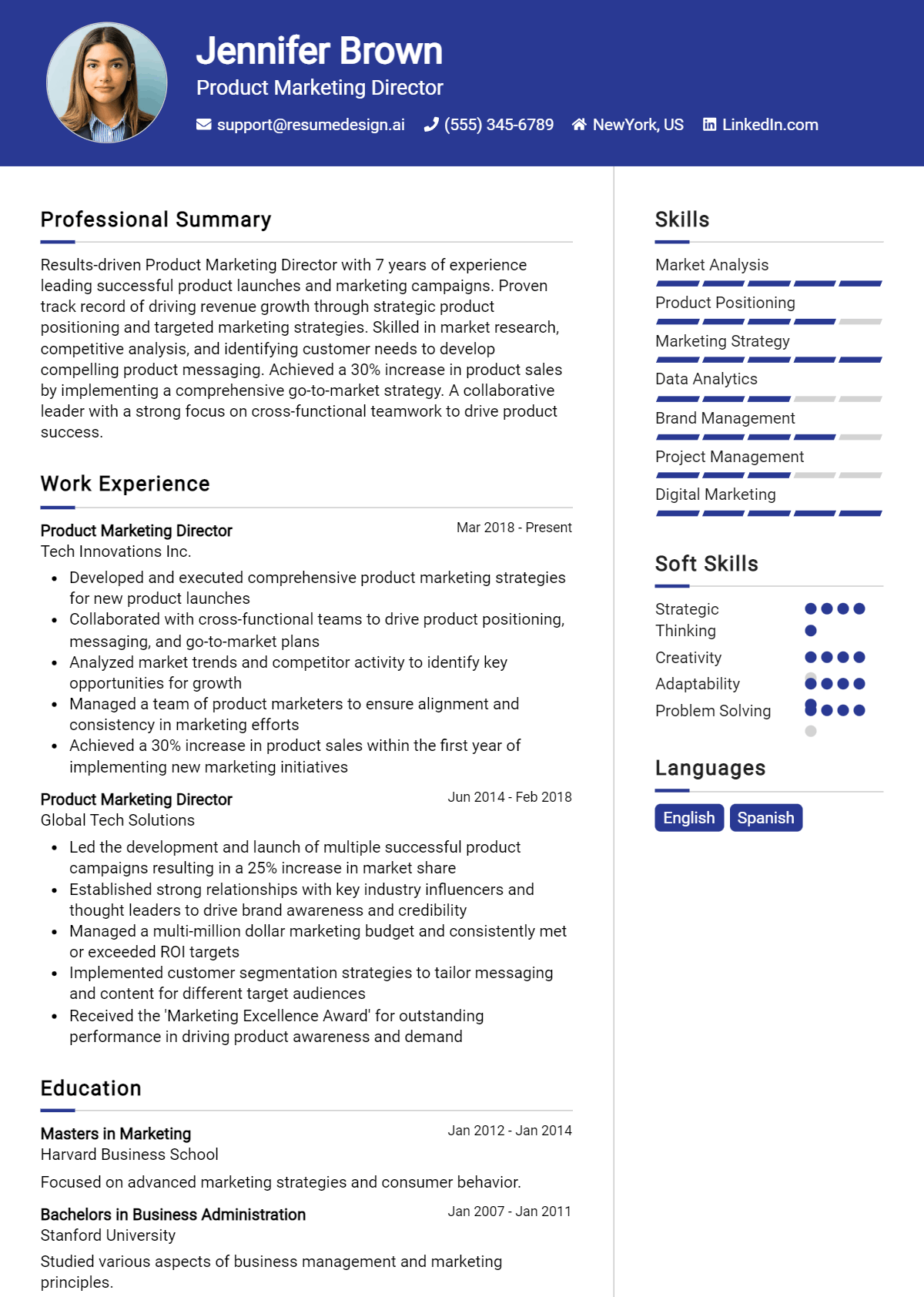
In the competitive landscape of product marketing, securing the role of Product Marketing Director requires a deep understanding of both market dynamics and strategic positioning. During the interview process, candidates can expect to face a series of challenging questions designed to assess their expertise, leadership capabilities, and innovative thinking. Preparing for these inquiries can significantly enhance your chances of making a positive impression and landing the role.
Here is a list of common job interview questions for a Product Marketing Director, along with examples of the best answers. These questions cover your work history and experience, what you have to offer the employer, and your goals for the future. By thoughtfully addressing these inquiries, you can showcase your ability to drive product success and align your vision with the company’s objectives.
1. What is your approach to developing a product marketing strategy?
My approach involves thorough market research, understanding customer needs, and analyzing competitor strategies. I focus on aligning the strategy with the overall business goals while ensuring that messaging resonates with the target audience. Collaboration with cross-functional teams is key to success.
Example:
I start by conducting a SWOT analysis, then define target personas, followed by crafting a unique value proposition. I regularly review performance metrics to adjust the strategy as needed, ensuring alignment with market trends and customer feedback.
2. How do you measure the success of a product launch?
I measure success through KPIs such as sales revenue, market share growth, customer feedback, and engagement metrics. Post-launch surveys and sales data help evaluate if we met our objectives. Continuous assessment allows for timely adjustments to marketing tactics.
Example:
For example, after our last launch, we set a goal of 20% market share increase. We tracked sales data and customer feedback, which showed we exceeded our target by 5%, allowing us to refine our approach and improve future launches.
3. Can you describe a time when you had to pivot a marketing strategy?
In a previous role, initial market research indicated strong demand for a product. However, after launch, feedback showed a misalignment with customer expectations. I led a swift pivot, adjusting messaging and features based on user input, resulting in improved engagement and sales.
Example:
After receiving feedback that our messaging was too technical, we redefined our value proposition to highlight user benefits instead. This swift change led to a 30% increase in conversion rates within a month.
4. How do you collaborate with sales teams to enhance product strategies?
I prioritize regular communication with sales teams to understand their challenges and gather insights from customer interactions. This collaboration ensures our marketing strategies align with sales goals, ultimately leading to more effective campaigns and improved sales performance.
Example:
I hold bi-weekly meetings with sales representatives to discuss feedback and adjust our marketing materials accordingly. This direct line of communication has led to more tailored campaigns that directly address customer pain points.
5. What role does customer feedback play in your product marketing process?
Customer feedback is crucial in shaping our marketing strategies. It informs product development, messaging adjustments, and identifies areas for improvement. I ensure that feedback loops are established to continuously gather insights and integrate them into our decision-making process.
Example:
For instance, we implemented customer surveys post-launch, which revealed key insights. We used this data to refine our messaging, leading to a better alignment with customer expectations and a significant increase in satisfaction ratings.
6. Describe your experience with digital marketing tools and platforms.
I have extensive experience with various digital marketing tools, including CRM systems, email marketing platforms, and analytics tools. These platforms enable me to track customer behaviors, optimize campaigns, and measure performance effectively, driving data-driven decision-making.
Example:
For example, I utilized HubSpot and Google Analytics to track campaign performance, which allowed us to pivot strategies in real-time, resulting in a 40% higher engagement rate in our last campaign.
7. How do you ensure your marketing messages are consistent across channels?
I create a comprehensive messaging framework that outlines key themes and value propositions for each product. Regular training sessions with the marketing and sales teams help ensure everyone understands and adheres to this framework across all channels.
Example:
During our last campaign, I organized workshops to align our messaging and visuals. This effort resulted in a cohesive brand voice across social media, email, and our website, enhancing brand recognition and trust.
8. What strategies do you use to stay ahead of market trends?
I stay ahead of market trends by continuously monitoring industry publications, attending conferences, and networking with industry peers. Additionally, I leverage data analytics to identify emerging trends and shifts in customer behavior, allowing us to adapt proactively.
Example:
For instance, my attendance at industry conferences provided insights into competitive strategies, which we incorporated into our own approach, giving us a competitive edge in our product offerings.
9. How do you prioritize features and initiatives in product marketing?
I prioritize features by analyzing market research, customer feedback, and aligning them with business goals. I utilize a scoring model to evaluate impact vs. effort, ensuring we focus on initiatives that drive the most value for customers and the organization.
Example:
I once prioritized a feature based on customer surveys, leading to a 20% increase in user satisfaction. By using a scoring model, we efficiently aligned our resources with what mattered most to our users.
10. Describe a time when you had to manage a crisis in marketing.
In my previous role, we faced negative feedback after a product launch. I swiftly organized a cross-functional team to address issues, communicated transparently with customers, and implemented changes based on their input, ultimately improving our product and restoring trust.
Example:
After a launch backlash, I led the team in responding quickly to customer concerns, implementing feedback, and communicating improvements, resulting in a 30% increase in positive sentiment in the following month.
11. How do you measure the success of your marketing campaigns?
I measure campaign success through key performance indicators (KPIs) like conversion rates, customer engagement, and ROI. I also conduct post-campaign analyses to understand what worked and what didn't, allowing for continuous improvement in future strategies.
Example:
For a recent campaign, I tracked engagement and conversion rates, ultimately achieving a 25% increase in sales. Post-analysis showed key areas for improvement, which informed our strategy for the next campaign.
12. What strategies do you use to understand customer needs?
I employ a mix of quantitative and qualitative research methods, including surveys, focus groups, and user interviews. This helps to gather insights into customer pain points and preferences, allowing us to tailor our marketing strategies effectively.
Example:
I recently conducted user interviews that uncovered unmet needs in our product, leading to feature enhancements that increased user satisfaction by 15% and significantly improved our market position.
13. How do you approach competitor analysis?
I conduct a thorough analysis of competitor strengths, weaknesses, and strategies by using tools like SWOT analysis and market research. I also monitor their marketing campaigns and customer feedback to identify gaps we can exploit.
Example:
By analyzing a competitor’s weaknesses in customer service, I identified an opportunity to differentiate our offering, which contributed to a 10% increase in market share within six months.
14. Can you discuss your experience with cross-functional collaboration?
I have extensive experience collaborating with product, sales, and customer support teams to align marketing strategies. I facilitate regular meetings to ensure everyone is on the same page, fostering a culture of open communication and shared goals.
Example:
By working closely with sales and product teams, I helped launch a campaign that increased product adoption by 40%, thanks to our aligned strategies and collaborative efforts.
15. What role does digital marketing play in your product marketing strategy?
Digital marketing is central to my strategy, as it allows for targeted outreach and real-time engagement with customers. I leverage SEO, social media, and email marketing to create awareness, generate leads, and drive conversions effectively.
Example:
In my last role, a digital campaign boosted our online presence, leading to a 50% increase in web traffic and a 30% growth in lead generation over three months.
16. How do you stay updated on industry trends?
I stay informed by subscribing to industry publications, attending webinars, and engaging with thought leaders on social media. Additionally, I participate in professional networks to exchange insights and learn about emerging trends that may impact our strategy.
Example:
By regularly reviewing industry reports and attending conferences, I identified trends that shaped our marketing strategy, ensuring we remained competitive and relevant in the market.
17. How do you prioritize product features when developing a marketing strategy?
I analyze customer feedback, market trends, and competitive positioning to prioritize features. Collaborating with product teams ensures alignment on goals, while focusing on high-impact features helps drive engagement and sales. This structured approach leads to effective marketing strategies that resonate with target audiences.
Example:
I prioritize features by gathering customer insights and performance metrics. For instance, I once identified a high-demand feature through surveys, which led to a successful campaign and increased user adoption significantly.
18. Can you describe a time when you had to pivot your marketing strategy?
During a product launch, we discovered competitive features overshadowed ours. I quickly re-evaluated our messaging and shifted focus to unique value propositions. This pivot not only salvaged the launch but also differentiated our product in a crowded market, resulting in increased sales.
Example:
When a competitor launched a similar product, I shifted our campaign to emphasize our unique benefits. This pivot led to a 30% increase in engagement and positive feedback from our audience.
19. How do you measure the success of a product marketing campaign?
I use key performance indicators like conversion rates, customer acquisition costs, and return on investment. Regular analysis of these metrics allows us to adjust strategies in real-time, ensuring that campaigns are effective and aligned with business objectives.
Example:
I measure success through metrics like conversion rates and ROI. After one campaign, we tracked a 25% increase in conversions, confirming its effectiveness and guiding future strategies.
20. What role does customer feedback play in your marketing strategies?
Customer feedback is crucial for refining our marketing strategies. I actively collect insights through surveys and social media, using this information to tailor messaging and product improvements, ensuring that we meet customer needs and enhance satisfaction.
Example:
I prioritize customer feedback by implementing surveys post-launch. One insightful comment led us to enhance a feature, resulting in improved satisfaction scores and user retention.
21. Describe your experience working with cross-functional teams.
I have collaborated closely with sales, product development, and customer support teams. This teamwork fosters a comprehensive understanding of product features and customer needs, allowing us to create cohesive marketing strategies that drive results and enhance the overall customer experience.
Example:
In my last role, I worked with sales and product teams to align our strategies, resulting in a successful product launch and a 40% increase in sales within the first quarter.
22. How do you stay updated on market trends and competitor activities?
I regularly read industry reports, attend webinars, and participate in networking events. Utilizing tools like Google Alerts for competitor news ensures I’m informed about market shifts, allowing me to adapt strategies proactively to maintain a competitive edge.
Example:
I subscribe to industry newsletters and use analytics tools to monitor competitors. This proactive approach helped us anticipate a market shift, allowing us to adjust our strategy ahead of time.
23. What strategies do you use to enhance brand awareness?
I implement multi-channel marketing campaigns, leveraging social media, content marketing, and partnerships. Engaging storytelling and consistent messaging across platforms build brand recognition, while targeted outreach to influencers amplifies our reach, ensuring our brand resonates with the right audience.
Example:
To enhance brand awareness, I launched a content marketing campaign that highlighted our product's unique benefits, resulting in a 50% increase in brand mentions across social media platforms.
24. How do you align your marketing goals with overall business objectives?
I ensure marketing goals are directly tied to business objectives by collaborating with leadership. Regularly reviewing key metrics and aligning our strategies with company goals allows us to contribute effectively to overall growth and success.
Example:
I align marketing goals with business objectives by participating in quarterly planning sessions. This collaboration ensures our campaigns directly support revenue targets and customer acquisition goals.
25. How do you prioritize features for a new product launch?
I prioritize features based on market research, customer feedback, and alignment with business goals. Collaborating with cross-functional teams ensures that we focus on high-impact features that drive user engagement and meet market demands effectively.
Example:
In my last role, I led a feature prioritization workshop, incorporating customer surveys and stakeholder input, which resulted in a 30% increase in user adoption post-launch.
26. Can you describe a time when you had to pivot a marketing strategy?
Certainly! When a competitor launched a similar product, I initiated a market analysis and adjusted our messaging to emphasize unique features. This pivot not only differentiated us but also increased our market share by 15% within three months.
Example:
We shifted our campaign focus from pricing to value, highlighting customer testimonials. This change resonated well and led to a significant uptick in conversions.
27. How do you measure the success of a product marketing campaign?
I measure success through key performance indicators such as conversion rates, customer engagement metrics, and market share growth. Analyzing these metrics helps refine future campaigns and align them with overall business objectives.
Example:
In my previous role, I tracked campaign performance weekly, leading to actionable insights that boosted our ROI by 25% over six months.
28. What role does customer feedback play in your marketing strategy?
Customer feedback is crucial. It informs product improvements and marketing messaging. I regularly analyze feedback through surveys and focus groups to ensure our strategies resonate with our target audience and address their needs effectively.
Example:
For instance, feedback from beta users led to a major product adjustment that improved user satisfaction ratings by 40% post-launch.
29. How do you ensure alignment between product and marketing teams?
I foster alignment through regular meetings and collaborative planning sessions. Establishing shared goals and metrics ensures that both teams work towards a common objective, enhancing communication and reducing silos.
Example:
Implementing bi-weekly cross-team meetings in my last role improved collaboration, resulting in a smoother product launch process.
30. Describe how you approach competitive analysis.
I conduct competitive analysis by evaluating competitors' product offerings, marketing strategies, and customer reviews. This helps identify market gaps and opportunities for differentiation, allowing us to position our products more effectively.
Example:
In my last role, a thorough competitor analysis revealed a unique feature gap that we leveraged to enhance our product positioning.
31. What strategies do you use for market segmentation?
I utilize demographic, psychographic, and behavioral data to segment the market effectively. This enables targeted messaging and personalized marketing efforts, ensuring we reach the right audience with the right message at the right time.
Example:
By segmenting our audience based on purchasing behavior, our targeted campaigns saw a 20% increase in engagement rates.
32. How do you handle budget constraints in marketing initiatives?
I prioritize initiatives based on ROI potential and align spending with strategic goals. I also explore cost-effective marketing channels and tactics, maximizing impact without compromising quality or effectiveness.
Example:
In a previous project, I shifted resources to digital channels, which provided a 50% lower cost per acquisition compared to traditional methods.
33. How do you approach setting pricing strategies for new products?
Setting pricing strategies involves market research, competitor analysis, and understanding customer value perceptions. I collaborate with cross-functional teams to define pricing that aligns with our brand positioning and business objectives, ensuring it reflects the product’s value while remaining competitive. Example: I recently launched a software product by analyzing competitors and conducting customer surveys, which helped us set a price that reflected the unique value proposition while ensuring market competitiveness.
34. Can you describe a time when you had to pivot your marketing strategy?
In my previous role, we noticed a shift in customer preferences midway through a campaign. I convened a team to analyze the data and adjusted our messaging to align better with the new trend, which resulted in a 20% increase in engagement. Example: We initially focused on product features but shifted to emphasizing customer success stories, leading to improved response rates and overall campaign success.
35. How do you measure the success of a product marketing campaign?
Success is measured through a combination of KPIs including sales growth, customer acquisition cost, and engagement metrics. I utilize analytics tools to track performance and gather insights, allowing for ongoing optimization and ensuring alignment with business goals. Example: For a recent campaign, we tracked conversion rates and customer feedback, adjusting our approach in real-time to maximize ROI and engagement outcomes.
36. What role does customer feedback play in your product marketing strategy?
Customer feedback is crucial as it provides insights into market needs and product reception. I prioritize gathering and analyzing feedback to refine strategies, enhance product features, and tailor messaging, ensuring alignment with customer expectations and driving satisfaction. Example: By implementing regular customer surveys, I was able to identify key improvements for our product which directly influenced our marketing messaging and increased customer retention.
37. How do you ensure cross-functional alignment within your team?
I ensure cross-functional alignment through regular meetings and collaborative tools that facilitate communication across departments. By setting clear goals and roles, I foster a culture of transparency, ensuring everyone understands the product vision and their contributions towards it. Example: I implemented bi-weekly syncs with sales and product teams, which improved collaboration and helped align our marketing strategies with product development timelines.
38. Describe your experience with digital marketing tools and platforms.
I have extensive experience using tools like HubSpot, Google Analytics, and Marketo for campaign management and analysis. These platforms allow me to effectively track performance metrics, automate processes, and nurture leads, ensuring a comprehensive approach to digital marketing. Example: Utilizing HubSpot, I successfully executed automated email marketing campaigns that increased lead conversion rates by 30% within three months.
39. What strategies do you use for competitive analysis?
I employ a mix of qualitative and quantitative methods to assess competitors’ strengths and weaknesses. This includes analyzing their marketing campaigns, product features, customer reviews, and pricing strategies to identify opportunities and inform our positioning and messaging. Example: Conducting a SWOT analysis on key competitors helped us pinpoint unique selling propositions, leading to a targeted marketing strategy that set us apart in the market.
40. How do you handle product launches and ensure they are successful?
Successful product launches require meticulous planning and execution. I create comprehensive launch plans involving timelines, marketing collateral, and cross-functional coordination, ensuring that all teams are aligned and prepared to support the launch effectively. Example: For our last product launch, I coordinated with sales and support teams to train them ahead of time, resulting in a seamless launch and exceeding initial sales targets by 25%.
41. How do you prioritize marketing initiatives when resources are limited?
I assess potential impact on revenue and brand visibility, aligning initiatives with strategic goals. Collaborating with cross-functional teams helps identify high-value projects. Regular review cycles ensure we adapt and refocus on priorities based on market response and emerging opportunities.
Example:
In my previous role, I prioritized a product launch that aligned with our core customer needs, ultimately reallocating resources from less impactful campaigns. This resulted in a 30% increase in engagement and significant ROI.
42. Describe your experience with competitive analysis.
Conducting competitive analysis involves gathering market intelligence, evaluating competitors' strengths and weaknesses, and identifying market trends. I use tools like SWOT analysis and customer feedback to inform our positioning and adjust strategy, ensuring we maintain a competitive edge.
Example:
In my last position, I analyzed competitors quarterly, which revealed gaps in their offerings. This insight allowed us to refine our messaging and develop features that attracted new customers, boosting market share by 15%.
43. How do you measure the success of a product marketing campaign?
Success is measured through key performance indicators such as customer acquisition cost, conversion rates, and overall ROI. I also consider qualitative feedback from customers and sales teams, adjusting strategies based on these metrics for continuous improvement.
Example:
After launching a campaign, I tracked metrics like conversion rates and customer feedback. When we saw a 25% increase in engagement, it validated our approach, leading to further investment in similar strategies.
44. Can you discuss a time you had to manage a product crisis?
During a product recall, I coordinated communication across teams and crafted transparent messaging for customers. By addressing concerns promptly and honestly, we maintained trust and minimized damage, while implementing changes to prevent future issues.
Example:
I handled a product recall by leading a cross-functional team to ensure clear communication. We engaged customers directly, which helped us recover our brand reputation and improve product safety protocols.
45. What role does customer feedback play in your marketing strategies?
Customer feedback is invaluable in shaping product features and marketing strategies. I regularly analyze feedback to identify trends and pain points, allowing us to tailor our messaging and offerings to better meet customer needs and enhance satisfaction.
Example:
I implemented a feedback loop where customer insights directly influenced our product roadmap, leading to a 40% increase in customer satisfaction scores and improved retention rates.
46. How do you foster collaboration between teams in a product launch?
I establish clear communication channels and shared goals across teams. Regular joint meetings ensure alignment, and collaborative tools facilitate information sharing. By creating a culture of openness, teams can effectively contribute their expertise, resulting in a successful product launch.
Example:
For a recent launch, I organized bi-weekly cross-team meetings, allowing marketing, sales, and product teams to share updates and insights. This collaborative approach led to a seamless launch and exceeded our sales targets by 20%.
How Do I Prepare For A Product Marketing Director Job Interview?
Preparing for a Product Marketing Director job interview is crucial to making a positive impression on the hiring manager. A well-prepared candidate not only showcases their skills and experience but also demonstrates their genuine interest in the company and its goals. Here are some key preparation tips to help you stand out:
- Research the company and its values to align your responses with their mission and vision.
- Practice answering common interview questions related to product marketing strategies and leadership.
- Prepare examples that demonstrate your skills and experience relevant to the Product Marketing Director role.
- Familiarize yourself with the company's products and recent market developments to discuss intelligently.
- Develop insightful questions to ask the interviewer about the company's challenges and expectations for the role.
- Review the latest trends in product marketing to showcase your industry knowledge during the interview.
- Dress appropriately and ensure you have all necessary materials ready, such as your resume and portfolio, for a professional appearance.
Frequently Asked Questions (FAQ) for Product Marketing Director Job Interview
Preparing for an interview can significantly enhance your confidence and performance. Understanding the commonly asked questions can help you articulate your thoughts clearly and demonstrate your fit for the Product Marketing Director role. Below are some frequently asked questions that you may encounter during the interview process, along with practical advice on how to approach them.
What should I bring to a Product Marketing Director interview?
When attending a Product Marketing Director interview, it's essential to bring multiple copies of your resume, a portfolio showcasing your previous marketing campaigns, and a notepad for taking notes. Additionally, having a list of insightful questions to ask the interviewer can demonstrate your interest in the role and the company. Consider also bringing any relevant data or case studies that illustrate your successes in product marketing to reinforce your qualifications.
How should I prepare for technical questions in a Product Marketing Director interview?
To prepare for technical questions, familiarize yourself with the specific tools and methodologies commonly used in product marketing, such as market research techniques, product positioning strategies, and analytics tools. Review case studies of successful product launches and be ready to discuss your role in similar initiatives. Practicing with a peer or mentor can also help you articulate your thought process and showcase your analytical skills during the interview.
How can I best present my skills if I have little experience?
If you have limited experience, focus on transferable skills and relevant projects you’ve undertaken, even if they were in different roles or industries. Highlight your ability to learn quickly, your passion for product marketing, and any internships or volunteer work that demonstrates your commitment to the field. Use the STAR method (Situation, Task, Action, Result) to structure your responses, showcasing how your skills can benefit the company despite your limited direct experience.
What should I wear to a Product Marketing Director interview?
Your attire should reflect professionalism while also aligning with the company's culture. In a corporate setting, opt for a tailored suit or a smart business outfit. If the company has a more casual environment, business casual attire may be appropriate. Regardless of the setting, ensure your clothing is neat and polished, as first impressions are crucial in an interview scenario. It’s also beneficial to research the company culture beforehand to gauge the appropriate attire.
How should I follow up after the interview?
Following up after the interview is a critical step in demonstrating your enthusiasm for the position. Send a thank-you email within 24 hours, expressing gratitude for the opportunity to interview and reiterating your interest in the role. You can also mention specific points from the interview that resonated with you or clarify any questions you may have had. This not only shows your professionalism but also keeps you top-of-mind for the hiring team.
Conclusion
In this interview guide for the Product Marketing Director role, we've covered essential topics including the importance of thorough preparation, practicing your responses, and showcasing your relevant skills. Preparing for both technical and behavioral questions is crucial, as it can significantly enhance your chances of success in the interview process.
As you move forward, remember to leverage the tips and examples provided in this guide. With confidence and preparation, you can approach your interviews with assurance and clarity. Good luck!
For further assistance, check out these helpful resources: resume templates, resume builder, interview preparation tips, and cover letter templates.