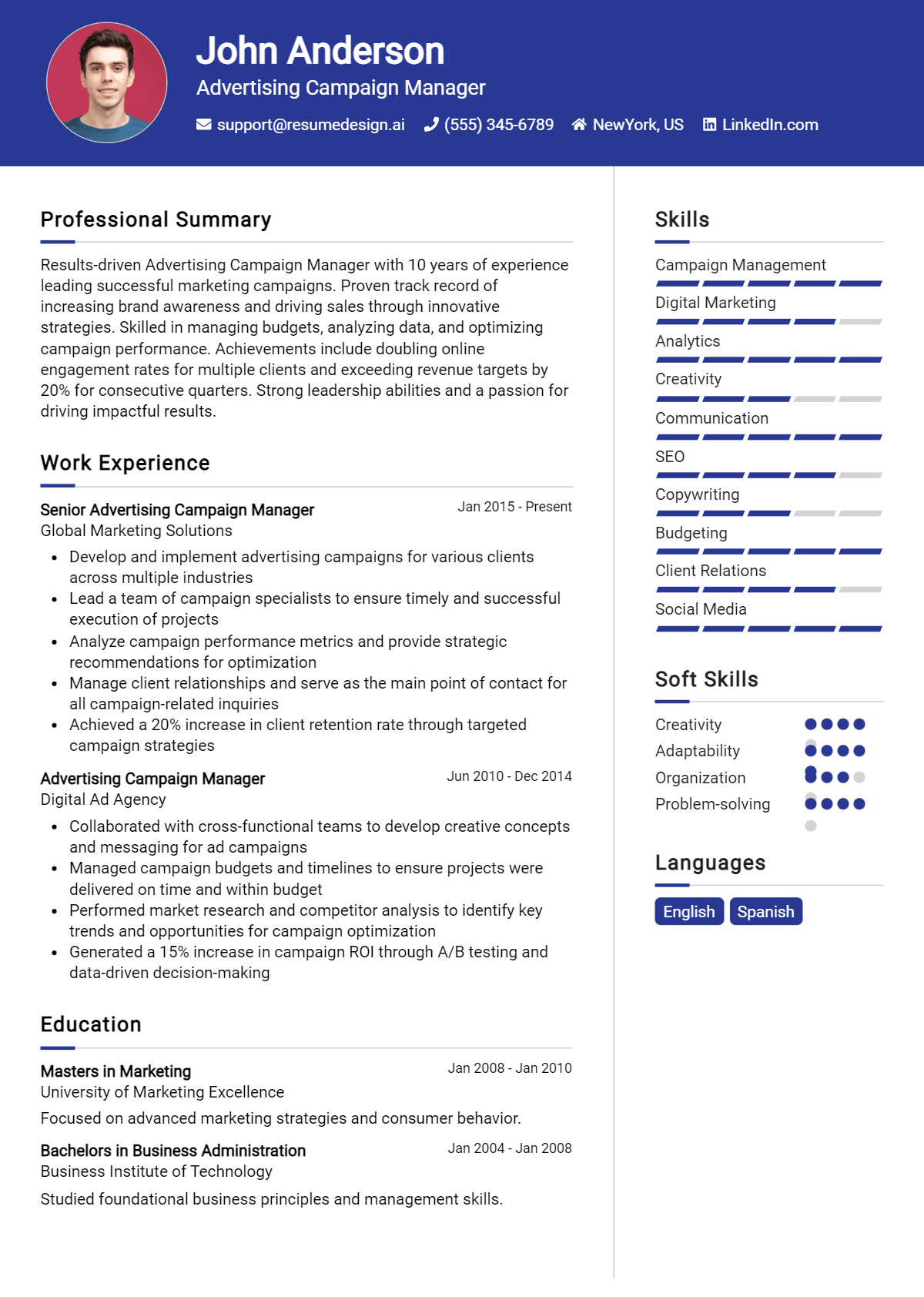
In the fast-paced world of advertising, the role of an Advertising Campaign Manager is crucial for the success of marketing initiatives. As you prepare for an interview in this dynamic field, it's essential to anticipate the questions you may face and formulate compelling responses that highlight your skills and experiences. This section will equip you with the insights needed to present yourself as the ideal candidate for the role.
Here is a list of common job interview questions tailored for an Advertising Campaign Manager, along with examples of the best answers. These questions cover your work history and experience, what you have to offer the employer in terms of creativity and strategic thinking, and your goals for the future, ensuring that you effectively showcase your qualifications and vision for the role.
1. Can you describe your experience with advertising campaign management?
In my previous role, I managed multiple campaigns across various platforms, ensuring alignment with client goals. I coordinated with cross-functional teams to deliver projects on time and within budget, leveraging analytics to optimize performance and ROI.
Example:
In my last position, I led a digital campaign for a product launch, increasing engagement by 30%. I utilized targeted ads and A/B testing, collaborating with designers and copywriters to create compelling content.
2. How do you approach setting campaign goals?
I start by aligning with client objectives and identifying key performance indicators (KPIs). I then analyze market trends and customer insights to set realistic and measurable goals, ensuring they are specific, attainable, and relevant to the overall marketing strategy.
Example:
For a recent campaign, I set goals to increase website traffic by 25% and boost lead conversions by 15%, backed by comprehensive data analysis to track progress and adjust tactics accordingly.
3. Can you explain your process for analyzing campaign performance?
I utilize analytics tools to track key metrics such as engagement, reach, and conversion rates. Regularly reviewing performance allows me to identify trends, optimize strategies, and report insights to stakeholders, ensuring continuous improvement throughout the campaign lifecycle.
Example:
Post-campaign, I analyzed the data through Google Analytics, discovering a 20% drop in bounce rates, which led to refining our audience targeting and enhancing ad creatives for future initiatives.
4. How do you stay updated on advertising trends and technologies?
I regularly attend industry conferences, participate in webinars, and follow leading marketing blogs and podcasts. Networking with peers also provides insights into emerging trends, allowing me to adapt and implement innovative strategies that keep our campaigns competitive.
Example:
I recently attended a digital marketing summit, where I learned about the latest AI tools for audience segmentation, which I am now considering for our upcoming campaigns to enhance targeting precision.
5. How do you handle tight deadlines in advertising campaigns?
I prioritize tasks based on urgency and impact, utilizing project management tools to track progress. Effective communication with my team ensures everyone is aligned, and I remain flexible to adapt strategies as needed to meet deadlines without compromising quality.
Example:
During a recent campaign, we faced a last-minute client change. I quickly reorganized the team, delegating tasks efficiently, which allowed us to deliver high-quality work on time despite the tight timeline.
6. Can you share an example of a successful campaign you managed?
I spearheaded a social media campaign that increased brand visibility for a client, resulting in a 40% increase in followers and a 25% boost in sales within three months. Collaborating with influencers and utilizing engaging content played a key role in its success.
Example:
The campaign featured a series of interactive posts and giveaways, which not only engaged our audience but also encouraged user-generated content, further amplifying our reach and brand loyalty.
7. How do you manage a budget for an advertising campaign?
I create a detailed budget plan that allocates resources based on campaign objectives, monitoring expenses closely. Regular reviews allow for adjustments as needed, ensuring we maximize ROI while staying within financial constraints.
Example:
In my last campaign, I successfully reduced costs by 15% through strategic media buying and negotiating better rates with vendors, which allowed us to reinvest in high-performing channels.
8. How do you ensure collaboration among team members during a campaign?
I foster collaboration by establishing clear roles, setting up regular check-ins, and utilizing collaborative tools for real-time updates. Encouraging open communication allows team members to share ideas and feedback, enhancing the overall campaign quality.
Example:
During a major project, I implemented weekly brainstorming sessions, which led to innovative ideas and a more cohesive approach, ultimately improving our campaign outcomes and team morale.
9. How do you measure the success of an advertising campaign?
I measure success through key performance indicators (KPIs) like return on investment (ROI), conversion rates, and customer engagement metrics. Regular analysis helps refine strategies and ensures alignment with business objectives, ultimately enhancing future campaigns.
Example:
For instance, I track ROI and engagement metrics to evaluate campaign performance. Adjusting our approach based on data insights led to a 30% increase in conversions in our recent campaign.
10. Can you describe a challenging campaign you managed? How did you overcome obstacles?
A challenging campaign faced budget cuts midway. I reallocated resources, prioritized high-impact channels, and renegotiated with vendors. This strategic shift maintained campaign effectiveness, resulting in a successful launch despite constraints.
Example:
In one campaign, budget cuts threatened our reach. I focused on digital ads and influencer partnerships, which minimized costs while maximizing visibility, achieving our goals despite the limitations.
11. How do you stay updated with industry trends and changes?
I stay updated through industry publications, webinars, and networking with professionals. Engaging in online communities and attending conferences also helps me learn about new tools and strategies to implement in my campaigns.
Example:
I subscribe to industry newsletters and attend annual marketing conferences. Recently, I learned about emerging digital tools that enhanced my campaign strategies, keeping my work innovative and effective.
12. How do you handle tight deadlines and multiple campaigns simultaneously?
I prioritize tasks based on urgency and impact, utilize project management tools, and delegate when necessary. Maintaining clear communication with my team ensures everyone is aligned and deadlines are met without compromising quality.
Example:
During a busy season, I prioritized campaigns by deadlines and assigned tasks using Trello. This approach ensured timely execution while maintaining high-quality standards across all projects.
13. What strategies do you employ to target specific audiences in your campaigns?
I employ demographic analysis, customer segmentation, and behavior tracking to identify and target specific audiences. Tailoring messages and selecting appropriate channels ensures higher engagement and conversion rates for each group.
Example:
For a recent campaign, I analyzed customer demographics and created targeted ads for each segment. This tailored approach resulted in a significant increase in audience engagement and conversions.
14. How do you integrate feedback into your campaign strategies?
I actively seek feedback from stakeholders, analyze audience reactions, and review campaign performance data. Incorporating this feedback allows me to adjust strategies in real time, ensuring campaigns resonate better with the target audience.
Example:
After receiving audience feedback on a campaign, I adjusted our messaging and visuals. This change improved engagement significantly, demonstrating how valuable client input is for refining strategies.
15. What role does creativity play in your campaign planning?
Creativity is essential in campaign planning as it drives unique concepts that capture audience attention. I encourage brainstorming sessions that foster innovative ideas and ensure our campaigns stand out in a competitive market.
Example:
In one campaign, we brainstormed creative content ideas that broke traditional norms. This innovative approach resulted in a viral campaign, significantly boosting brand visibility and engagement.
16. Describe a time when you had to pivot your strategy mid-campaign. What was the outcome?
During a campaign, we noticed low engagement early on. I quickly shifted our strategy, incorporating interactive content and influencer partnerships. This pivot significantly increased audience involvement and ultimately exceeded our original engagement targets.
Example:
When initial engagement was low, I introduced interactive polls and partnered with influencers. This pivot improved our reach and engagement by over 40%, achieving our campaign goals.
17. Can you describe a time when a campaign did not meet its objectives? What did you learn?
Absolutely. In a previous role, a campaign underperformed due to misaligned targeting. I learned the importance of thorough audience analysis and adjusted strategies to enhance targeting in future campaigns. This experience taught me to emphasize data-driven decisions and continuous performance evaluation throughout the campaign lifecycle.
Example:
Once, a campaign targeting millennials failed to resonate. We realized our messaging was off. I learned to prioritize audience insights, which helped refine future campaigns, ensuring they met objectives and engaged the right demographic effectively.
18. How do you stay updated with the latest trends in advertising?
I regularly attend industry conferences, subscribe to leading marketing journals, and participate in webinars. Networking with other professionals also helps me gain insights. Staying informed allows me to adapt strategies, ensuring our campaigns remain innovative and relevant to current market dynamics.
Example:
I subscribe to marketing newsletters, follow thought leaders on social media, and attend workshops. This proactive approach ensures I’m aware of new trends and technologies, enabling me to implement contemporary tactics in our campaigns effectively.
19. Describe a successful advertising campaign you managed. What made it successful?
One successful campaign I led increased brand awareness by 40%. Key factors included targeted messaging, strategic partnerships, and comprehensive analytics tracking. Collaborating with creative teams ensured our vision was executed flawlessly, while ongoing adjustments based on real-time data kept us on track to meet our goals.
Example:
I managed a product launch campaign that exceeded sales targets by 30%. Success stemmed from precise audience targeting, engaging content, and leveraging influencers. Regular performance reviews allowed us to adapt quickly and optimize our strategy for maximum impact.
20. How do you measure the success of an advertising campaign?
I measure success through KPIs such as conversion rates, engagement metrics, and ROI. Analyzing data helps identify which aspects excelled and which need improvement. Regular reporting and feedback loops ensure we continually refine our strategies and maintain alignment with business objectives.
Example:
I assess campaign success using metrics like click-through rates, audience reach, and sales conversions. By analyzing these KPIs, I can determine effectiveness and make data-driven decisions for future campaigns.
21. How do you handle tight deadlines in campaign management?
I prioritize tasks using project management tools, ensuring transparency and communication among team members. Breaking projects into manageable milestones allows us to maintain focus and efficiency. When needed, I’m open to reallocating resources to meet deadlines without sacrificing quality.
Example:
During a recent campaign, we faced a tight deadline. I organized daily check-ins to track progress, delegated tasks effectively, and focused on critical deliverables, which enabled us to launch on time while maintaining quality.
22. What role does data analytics play in your campaign strategy?
Data analytics is crucial in informing my campaign strategy. It helps identify target audiences, track performance, and optimize messaging. By analyzing trends and consumer behavior, I can make informed decisions that enhance campaign effectiveness and drive better results.
Example:
In my previous campaigns, I utilized data analytics to assess audience preferences and track engagement. This information guided my strategy, allowing for real-time adjustments that significantly improved overall campaign performance.
23. How do you ensure that your team stays motivated during a long campaign?
I foster motivation by maintaining open communication, celebrating small wins, and encouraging collaboration. Regular check-ins allow for feedback, while providing opportunities for professional development keeps the team engaged. A positive work environment is essential for sustaining energy through long campaigns.
Example:
I keep my team motivated by recognizing achievements, providing constructive feedback, and hosting team-building activities. This approach helps maintain enthusiasm and collaboration, even during extended campaign periods.
24. Can you give an example of how you adapted a campaign mid-execution?
During a campaign, we noticed lower engagement than expected. I immediately organized a brainstorming session to revise our messaging and visuals based on audience feedback. This adaptability led to a 20% increase in engagement within a week, proving the importance of being responsive to real-time data.
<strong>Example:</strong>
<div class='interview-answer'>In a recent campaign, engagement dropped significantly. I quickly gathered the team, analyzed feedback, and adjusted our approach. This swift action resulted in a
25. How do you measure the success of an advertising campaign?
I measure success through KPIs like conversion rates, ROI, and customer engagement metrics. I also analyze audience feedback and sales growth post-campaign. Regular data reviews help refine future strategies and ensure alignment with business objectives.
Example:
For instance, in my last campaign, we focused on a 20% increase in conversions and achieved a 25% rise, confirming the effectiveness of our targeted messaging and ad placements.
26. Can you describe a time when a campaign did not meet its goals? What did you learn?
In a previous campaign, we underestimated audience interest, resulting in lower engagement. I learned the importance of market research and audience segmentation. This experience taught me to adapt strategies based on real-time data and insights.
Example:
For example, we pivoted our approach mid-campaign, refining our messaging, which ultimately improved engagement by 15%.
27. How do you approach budget management for advertising campaigns?
I prioritize budget allocation based on channel performance and campaign goals. Regular monitoring ensures that funds are optimally spent, and I adjust allocations as necessary to maximize ROI and effectiveness.
Example:
In a recent campaign, reallocating funds from underperforming channels to high-performing ones resulted in a 30% increase in overall campaign effectiveness.
28. How do you ensure that your team stays motivated during a lengthy campaign?
I maintain motivation by fostering open communication, recognizing individual contributions, and setting achievable milestones. Celebrating small wins keeps the team engaged and focused on the larger goal.
Example:
In my last project, weekly check-ins allowed us to celebrate progress and address concerns, which boosted team morale significantly.
29. What strategies do you use to stay updated with advertising trends?
I stay updated by attending industry conferences, subscribing to marketing journals, and participating in online forums. Networking with other professionals also provides insights into emerging trends and best practices.
Example:
For instance, I recently attended a digital marketing conference that introduced me to innovative targeting techniques, which I later implemented in our campaigns.
30. How do you handle negative feedback from a campaign?
I view negative feedback as a valuable opportunity for growth. I analyze the concerns, engage with stakeholders for clarity, and adjust the strategy accordingly to better meet audience expectations while maintaining open communication.
Example:
After receiving criticism on ad content, I organized a focus group to gather insights, leading to a revised message that resonated better with our target audience.
31. Describe your experience with digital advertising platforms.
I have extensive experience with platforms like Google Ads and Facebook Ads. I utilize their analytics tools to optimize campaigns, targeting specific demographics effectively and adjusting bids based on performance metrics.
Example:
In my previous role, I increased our click-through rate by 40% by refining our targeting and using A/B testing for ad formats.
32. How do you integrate social media into your campaigns?
I integrate social media by aligning content with campaign themes and leveraging platforms for targeted reach. Engaging interactive posts and paid ads enhance visibility and foster community engagement, driving traffic to the main campaign.
Example:
For a recent campaign, we used Instagram Stories to create buzz, resulting in a 50% increase in web traffic and engagement.
33. How do you prioritize tasks when managing multiple campaigns simultaneously?
I prioritize tasks based on deadlines, campaign impact, and resource availability. I utilize project management tools to track progress and ensure timely execution. Regular team check-ins help to adjust priorities as needed, ensuring all campaigns receive the attention they require.
Example:
I use a project management tool to visualize deadlines and allocate resources effectively. Daily stand-ups with my team also help in adjusting priorities based on immediate needs and campaign performance.
34. Can you discuss a time when a campaign did not perform as expected? What did you learn?
During a product launch, our ad underperformed due to misaligned target audience insights. I analyzed the data, identified the gaps, and adjusted our targeting strategy. This experience taught me the importance of thorough market research before launching campaigns.
Example:
We launched a campaign targeting the wrong demographic, resulting in low engagement. After analyzing the data, I realized the oversight. We refined our audience and improved subsequent campaigns significantly.
35. How do you measure the success of an advertising campaign?
I measure success through KPIs such as ROI, conversion rates, and engagement metrics. I also consider brand awareness and customer feedback to assess overall impact. Regular reporting helps to analyze results and inform future strategies.
Example:
Success is measured through analytics tools tracking ROI, conversion rates, and customer feedback. I compile reports to evaluate performance and guide future campaigns based on insights.
36. What strategies do you employ to stay updated with industry trends?
I subscribe to industry newsletters, attend webinars, and participate in networking events. Engaging with peers and following thought leaders on social media keeps me informed about emerging trends and technologies that can enhance my campaigns.
Example:
I regularly read marketing blogs, attend industry conferences, and follow experts on social media to stay updated on the latest trends and technologies impacting advertising.
37. Describe your experience with digital advertising platforms.
I have extensive experience with platforms like Google Ads, Facebook Ads, and LinkedIn Ads. I manage campaigns, optimize bids, and analyze performance metrics to drive successful outcomes. This hands-on experience allows me to leverage each platform's unique features effectively.
Example:
I have managed campaigns on Google Ads and Facebook Ads, optimizing targeting and budget allocation based on performance metrics to achieve our marketing goals successfully.
38. How do you handle feedback from clients or stakeholders regarding campaign performance?
I view feedback as a valuable opportunity for growth. I actively listen to concerns, analyze the underlying issues, and present data-driven insights to address them. Constructive discussions help to refine strategies and strengthen client relationships.
Example:
I embrace feedback by carefully analyzing client concerns and presenting data to address issues. This approach fosters constructive discussions and helps refine our strategies effectively.
39. What role does creativity play in your campaign management process?
Creativity is essential for developing unique and engaging campaigns that capture audience attention. I encourage brainstorming sessions with my team to generate innovative ideas that align with our objectives and resonate with our target market.
Example:
Creativity drives our campaign concepts. I facilitate brainstorming sessions to encourage innovative ideas, ensuring our strategies remain fresh and engaging for our audience.
40. How do you ensure brand consistency across multiple campaigns?
I maintain brand consistency by developing clear guidelines and ensuring all team members understand them. Regular audits of campaign materials and constant communication help to align messaging and visuals across all platforms.
Example:
I create comprehensive brand guidelines and conduct regular reviews of campaign materials to ensure messaging and visuals remain consistent across all channels.
41. How do you measure the success of an advertising campaign?
To measure success, I analyze key performance indicators (KPIs) like ROI, engagement rates, and conversion metrics. I also use tools like Google Analytics and social media insights to track performance and adjust strategies accordingly for continuous improvement.
Example:
I focus on KPIs such as CTR and ROI. For instance, in my last campaign, we achieved a 30% increase in engagement and a 25% boost in sales, which demonstrated the campaign's effectiveness and informed future strategies.
42. Can you describe a time when you had to handle a difficult client?
Yes, I once managed a client who was unhappy with initial results. I scheduled a meeting to discuss their concerns, reassured them of our commitment, and revised the campaign strategy to better align with their goals, ultimately leading to improved outcomes.
Example:
In one instance, a client was dissatisfied with low engagement. I listened to their feedback, adapted our approach, and by implementing targeted content, we saw a 40% increase in interactions, turning the relationship positive.
43. What strategies do you use to stay current with advertising trends?
I stay current by subscribing to industry publications, attending webinars, and participating in professional networks. Engaging with thought leaders on social media also helps me stay informed about emerging trends and innovative advertising techniques.
Example:
I regularly read AdWeek and attend digital marketing conferences. Recently, I implemented insights from a webinar on influencer marketing, which significantly boosted our campaign reach and engagement.
44. How do you prioritize multiple campaigns with tight deadlines?
I prioritize campaigns based on deadlines, budget, and potential impact. I use project management tools to allocate resources effectively and ensure clear communication within the team, allowing us to meet tight deadlines without sacrificing quality.
Example:
I use a priority matrix to assess urgency and impact. For instance, when managing simultaneous launches, I focused on high-impact campaigns first, ensuring timely delivery and successful outcomes across the board.
45. Describe a successful advertising campaign you managed.
I managed a campaign for a new product launch that utilized a mix of digital ads and influencer partnerships. This approach resulted in a 50% increase in sales within the first month and garnered significant social media engagement.
Example:
The launch of our eco-friendly product led to a 50% sales increase in a month. By leveraging social media influencers, we built substantial engagement, creating a buzz that resonated with our target audience.
46. How do you ensure your campaigns align with brand values?
I ensure campaigns align with brand values by conducting thorough research and collaborating with stakeholders. I create messaging and visuals that reflect the brand’s mission and values, ensuring authenticity in every campaign element.
Example:
For a campaign promoting sustainability, I worked closely with the brand team to ensure our messaging highlighted eco-friendly practices, reinforcing the brand's commitment to environmental responsibility and resonating well with our audience.
How Do I Prepare For A Advertising Campaign Manager Job Interview?
Preparing for an interview is crucial in making a positive impression on the hiring manager and showcasing your suitability for the Advertising Campaign Manager role. A well-prepared candidate is more likely to articulate their experience and skills effectively, making them stand out from the competition.
- Research the company and its values to align your answers with their mission and vision.
- Practice answering common interview questions specific to advertising and campaign management.
- Prepare examples that demonstrate your skills and experience relevant to the Advertising Campaign Manager role.
- Familiarize yourself with the latest advertising trends and tools to discuss them intelligently.
- Prepare thoughtful questions to ask the interviewer about the company and the role.
- Review your resume and be ready to discuss any part of it in detail.
- Dress professionally and arrive on time to convey your seriousness about the opportunity.
Frequently Asked Questions (FAQ) for Advertising Campaign Manager Job Interview
Preparing for an interview can be daunting, especially when it comes to anticipating the questions you may face. Understanding the common queries can help you articulate your thoughts clearly, demonstrate your suitability for the role, and ultimately increase your chances of success. Here are some frequently asked questions that can guide you in your preparation for an Advertising Campaign Manager position.
What should I bring to an Advertising Campaign Manager interview?
When attending an interview for an Advertising Campaign Manager position, it's essential to bring several key items. First, prepare multiple copies of your resume, as you'll want to provide one to each interviewer. Additionally, bring a portfolio showcasing your previous campaigns, including metrics and outcomes to demonstrate your effectiveness. A notepad and pen can be useful for taking notes during the interview, and having a list of questions ready to ask shows your interest in the role and the company.
How should I prepare for technical questions in an Advertising Campaign Manager interview?
To prepare for technical questions, review the specific tools and platforms commonly used in advertising, such as Google Ads, Facebook Ads Manager, and analytics software. Familiarize yourself with industry terminology and concepts like A/B testing, ROI, and audience segmentation. Additionally, consider discussing previous campaigns you've managed, focusing on the strategies you employed and the results achieved. This will help you articulate your technical skills and practical experience during the interview.
How can I best present my skills if I have little experience?
If you have limited experience in advertising, focus on transferable skills from previous roles or projects that highlight your strengths. Discuss any internships, volunteer work, or personal projects that involved campaign management, marketing, or teamwork. Emphasize your enthusiasm for learning and adapting quickly, and illustrate your understanding of advertising principles through research and case studies. Showing a proactive attitude can make a strong impression, even with less experience.
What should I wear to an Advertising Campaign Manager interview?
Your attire for an Advertising Campaign Manager interview should reflect the company's culture while maintaining a professional appearance. Generally, business casual is a safe choice; for men, this might include dress pants and a button-up shirt, while women might opt for a blouse with tailored pants or a professional dress. If you know the company's dress code is more formal or creative, adjust accordingly. Regardless, ensure your clothing is clean, well-fitted, and appropriate for the setting to convey professionalism.
How should I follow up after the interview?
Following up after an interview is a critical step that demonstrates your interest in the position. Send a thank-you email within 24 hours, expressing gratitude for the opportunity to interview and reiterating your enthusiasm for the role. Personalize your message by mentioning specific topics discussed during the interview to reinforce your connection with the interviewers. A well-crafted follow-up can leave a positive impression and keep you top of mind as they make their decision.
Conclusion
In this interview guide for the Advertising Campaign Manager position, we've covered essential strategies for success, emphasizing the importance of thorough preparation, consistent practice, and the need to showcase relevant skills. By understanding both the technical and behavioral aspects of the interview process, candidates can significantly enhance their chances of making a positive impression.
Preparing for a diverse range of questions not only equips candidates to handle various interview scenarios but also boosts their confidence. We encourage you to utilize the tips and examples provided in this guide to approach your interviews with assurance and readiness.
For further assistance, check out these helpful resources: resume templates, resume builder, interview preparation tips, and cover letter templates.