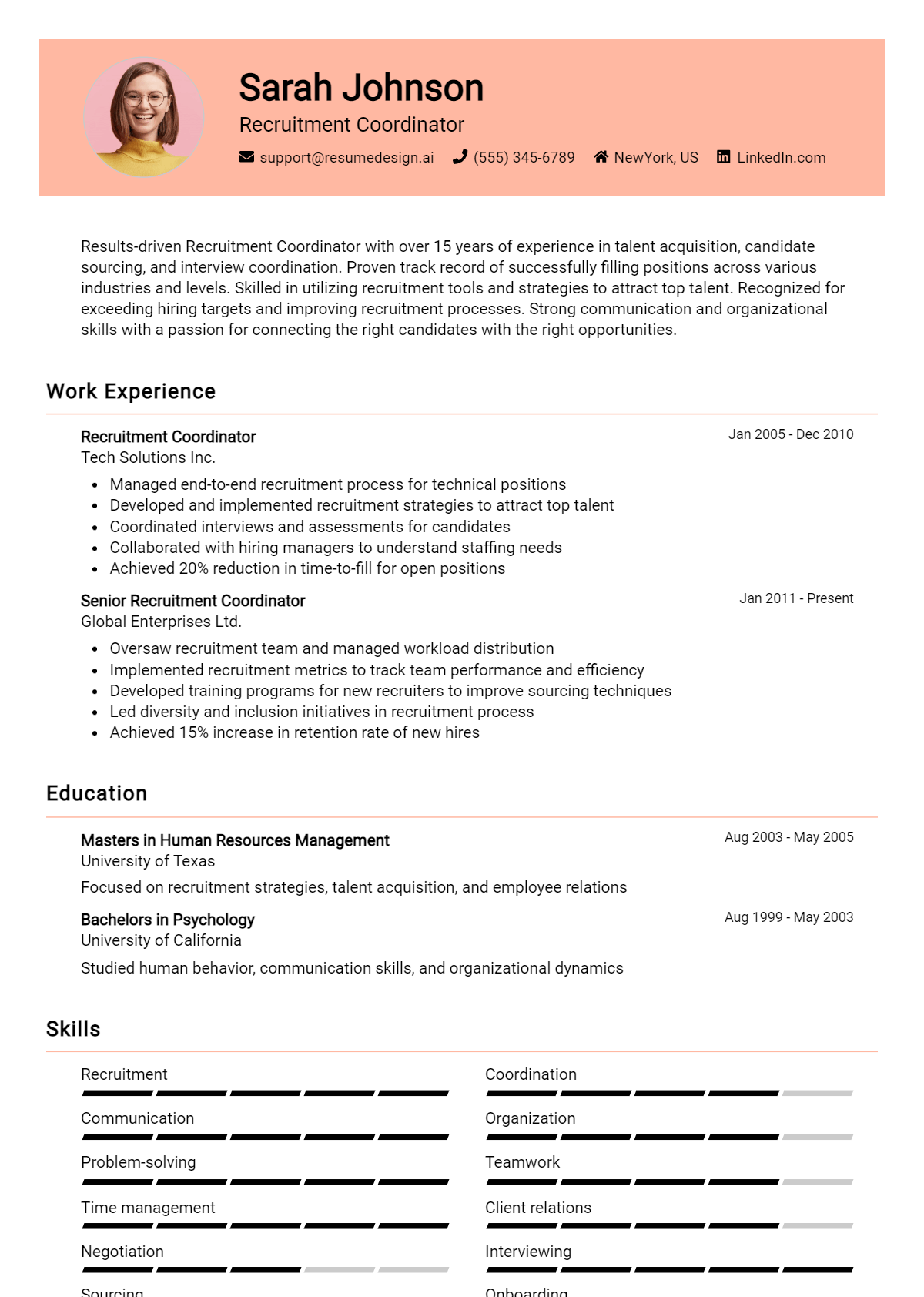
In the competitive field of recruitment, the role of a Recruitment Coordinator is vital in streamlining the hiring process and ensuring the right candidates are matched with the right positions. As you prepare for interviews in this dynamic role, it's essential to anticipate the types of questions you may encounter. Understanding these questions can help you articulate your experience and skills effectively, showcasing your ability to excel in recruitment.
Here is a list of common job interview questions for a Recruitment Coordinator, along with examples of the best answers. These questions will explore your work history and experience in recruitment, highlight what you can bring to the employer, and discuss your future career aspirations, ensuring you present yourself as a strong candidate for the role.
9. How do you handle a high volume of applications?
I prioritize applications based on key qualifications and create a streamlined process to track progress. Utilizing applicant tracking systems helps ensure no candidates are overlooked, allowing me to maintain communication throughout the hiring process.
Example:
By implementing an applicant tracking system, I effectively managed over 200 applications last quarter, ensuring timely responses and feedback, which ultimately improved candidate experience and reduced time-to-hire.
10. Describe your experience with job boards and recruitment platforms.
I have extensive experience using platforms like LinkedIn, Indeed, and Glassdoor to source candidates. I regularly analyze platform metrics to optimize job postings and identify the best channels for attracting qualified applicants.
Example:
While managing recruitment for a tech startup, I utilized LinkedIn to fill niche roles, resulting in a 30% increase in qualified candidates within three months.
11. How do you ensure a positive candidate experience?
I believe communication is key. I keep candidates informed at each stage of the hiring process and provide constructive feedback. This approach fosters a positive relationship and enhances the company's reputation as an employer.
Example:
By initiating regular updates and personalized feedback for candidates, I received positive responses, significantly boosting our candidate satisfaction ratings during my tenure.
12. What strategies do you use to attract diverse candidates?
I collaborate with organizations focused on diversity and utilize inclusive language in job postings. Additionally, I participate in diversity job fairs and leverage social media to reach underrepresented groups.
Example:
I successfully increased the diversity of our applicant pool by 25% in one year by partnering with local minority organizations and revamping our outreach strategy.
13. How do you manage conflicts between hiring managers and candidates?
I act as a mediator, ensuring open lines of communication between both parties. Understanding each perspective allows me to facilitate discussions that lead to mutually beneficial outcomes, maintaining a positive hiring atmosphere.
Example:
When a hiring manager had concerns about a candidate's qualifications, I organized a meeting to clarify expectations, resulting in a successful hire that met both parties' needs.
14. Can you describe a time you improved the recruitment process?
I identified a bottleneck in our interview scheduling, then implemented an automated scheduling tool. This reduced scheduling time by 50%, allowing for a smoother process and faster candidate engagement.
Example:
By introducing an automated scheduling system, I decreased our interview scheduling time from five days to two, which significantly improved our overall recruitment efficiency.
15. How do you keep up with recruitment trends?
I regularly read industry-related articles, attend webinars, and network with other professionals. Staying informed about trends allows me to adapt our strategies to attract top talent effectively.
Example:
By subscribing to recruitment newsletters and joining professional groups, I stay updated on trends, which I recently applied to enhance our social media recruiting efforts.
16. What role does data play in your recruitment strategy?
Data is crucial in evaluating recruitment effectiveness. I analyze metrics like time-to-fill, source effectiveness, and candidate feedback to refine our approach and align our strategy with hiring goals.
Example:
Using data analytics, I identified that referrals yielded the best candidates, leading to a strategic focus on enhancing our employee referral program, resulting in a quicker time-to-hire.
17. How do you prioritize tasks when managing multiple recruitment processes simultaneously?
I prioritize tasks by assessing deadlines, the urgency of roles, and the complexity of each position. I utilize project management tools to track progress and coordinate with hiring managers to ensure alignment on priorities, which helps streamline the recruitment process.
Example:
I use a prioritization matrix to categorize tasks based on urgency and importance. This allows me to focus on roles that need immediate attention while maintaining steady progress on ongoing searches.
18. Describe a time when you had to manage a difficult hiring manager. How did you handle the situation?
I encountered a hiring manager who was unclear about their needs, causing delays. I scheduled a meeting to clarify expectations and collaborated on a detailed job description. This approach facilitated better communication and led to a more effective recruitment process.
Example:
In one instance, I arranged a face-to-face meeting to discuss their requirements thoroughly. This helped us establish a clearer understanding, which resulted in quicker decision-making and successful hires.
19. What strategies do you use to attract diverse candidates?
To attract diverse candidates, I implement targeted outreach campaigns, utilize diverse job boards, and ensure our job descriptions are inclusive. Additionally, I collaborate with organizations focused on promoting diversity in the workforce.
Example:
I actively partner with local organizations that support underrepresented groups and ensure our hiring practices are equitable by reviewing our language and outreach methods for inclusivity.
20. How do you ensure compliance with labor laws and recruitment regulations?
I stay updated on labor laws and recruitment regulations through continuous education and training. I implement checklists and standard operating procedures to ensure every step of the recruitment process is compliant with legal standards.
Example:
I regularly review and update our recruitment policies and procedures, ensuring they align with current laws. I also conduct training sessions for the team to raise awareness.
21. Can you give an example of how you improved a recruitment process?
I identified a bottleneck in our candidate screening process due to manual reviews. I introduced an applicant tracking system (ATS) that automated initial screenings, reducing time-to-hire by 30% and allowing us to focus on high-quality candidates.
Example:
By implementing an ATS, I streamlined our workflow, which significantly improved our response time and candidate experience, leading to higher acceptance rates.
22. How do you handle a situation where a candidate is not a good fit after the interview?
When a candidate isn’t a good fit post-interview, I provide constructive feedback, maintaining professionalism and respect. I communicate the decision promptly and encourage them to apply for future opportunities that may align better with their skills.
Example:
I always ensure to deliver feedback kindly and clearly, explaining the reasons. I also suggest skill development resources to help the candidate for future applications.
23. What role does technology play in your recruitment process?
Technology plays a crucial role in enhancing efficiency and reach in recruitment. I leverage tools for applicant tracking, video interviews, and data analytics to track recruitment metrics, improve communication, and streamline the overall process.
Example:
I use an ATS to manage applications and analytics tools to evaluate the effectiveness of our recruitment campaigns, ensuring we continually improve our strategies.
24. How do you measure the success of your recruitment efforts?
I measure recruitment success through various metrics such as time-to-fill, quality of hire, and candidate satisfaction scores. Regularly reviewing these metrics helps identify areas for improvement and ensures alignment with organizational goals.
Example:
I analyze recruitment metrics quarterly, focusing on the retention rates of new hires and feedback from hiring managers to assess overall effectiveness.
25. How do you prioritize multiple recruitment projects with competing deadlines?
I assess the urgency of each role by discussing with hiring managers and evaluating the impact on the team. I then create a timeline, allocating resources effectively to ensure timely completions without sacrificing quality. This approach has consistently yielded positive results.
Example:
For example, I once managed three openings simultaneously. By prioritizing based on urgency and collaborating closely with managers, I successfully filled all positions on time, maintaining quality throughout the process.
26. Can you describe a time when you had to deal with a difficult hiring manager?
I encountered a hiring manager resistant to feedback on candidate profiles. I initiated a conversation to understand their concerns, aligning our goals. By fostering open communication, we reached a consensus on candidate requirements, improving collaboration and reducing tension.
Example:
In one instance, I scheduled a meeting to clarify expectations. This not only resolved misunderstandings but also strengthened our partnership, resulting in a successful hire.
27. What strategies do you use to source diverse candidates?
I utilize various sourcing platforms targeting underrepresented groups, such as diversity job boards and community organizations. Additionally, I actively attend networking events to build relationships and promote our commitment to diversity, ensuring a broader candidate pool.
Example:
For example, I partnered with local organizations focused on diversity, which significantly increased our outreach and led to a more diverse slate of candidates for our roles.
28. How do you measure the success of your recruitment efforts?
I track metrics such as time-to-fill, quality of hire, and candidate satisfaction. Regularly reviewing these metrics helps identify areas for improvement and ensures our recruitment strategies align with organizational goals, ultimately enhancing our hiring process.
Example:
By analyzing these metrics quarterly, I identified bottlenecks in our process, allowing us to streamline our approach and improve the candidate experience.
29. Describe your experience with applicant tracking systems (ATS).
I have extensive experience using various ATS platforms, including Greenhouse and Workable. I utilize these systems to streamline candidate workflows, improve collaboration, and maintain organized records, ensuring compliance and enhancing the overall recruitment experience.
Example:
For instance, I implemented an ATS to automate scheduling, resulting in a 30% reduction in administrative time for our team.
30. How do you ensure a positive candidate experience throughout the recruitment process?
I prioritize clear communication, timely feedback, and providing resources to candidates. By being transparent about the process and addressing their concerns, I create a welcoming environment that enhances their experience and reflects positively on our company.
Example:
For example, I send personalized updates after interviews, ensuring candidates feel valued and informed, regardless of the outcome.
31. What role does employer branding play in your recruitment strategy?
Employer branding is crucial for attracting top talent. I focus on showcasing our company culture through social media, employee testimonials, and participation in job fairs. This strategy not only draws candidates but also reinforces our values and mission.
Example:
By enhancing our online presence, I saw a 40% increase in qualified applicants, demonstrating the effectiveness of a strong employer brand.
32. How do you handle feedback from candidates regarding the recruitment process?
I view candidate feedback as an opportunity for improvement. I actively solicit input post-interview and analyze trends to identify areas needing enhancement. Implementing changes based on this feedback demonstrates our commitment to a positive experience.
Example:
For instance, after receiving feedback on lengthy interview processes, I worked to streamline them, which improved candidate satisfaction scores significantly.
33. How do you prioritize your tasks in a busy recruitment environment?
I prioritize tasks by assessing urgency and importance, often using a matrix to categorize them. This allows me to focus on high-impact activities first, ensuring timely hiring while maintaining quality standards.
Example:
For instance, I tackle urgent candidate follow-ups first, then organize interviews, and finally handle administrative tasks, ensuring smooth operations.
34. Can you describe a time when you had to manage multiple recruitment campaigns simultaneously?
In my previous role, I managed three campaigns at once by creating a detailed timeline for each position. I communicated regularly with hiring managers and used tracking software to stay organized and meet deadlines.
Example:
I successfully filled all three positions within the set timelines, demonstrating my ability to juggle competing priorities effectively.
35. How do you ensure a positive candidate experience during the recruitment process?
I ensure a positive candidate experience by maintaining clear communication, providing timely updates, and offering constructive feedback. I also strive to create a welcoming atmosphere during interviews to make candidates feel valued.
Example:
I follow up promptly after interviews, thanking candidates for their time and informing them of next steps, which fosters a positive impression of the company.
36. What strategies do you use to source passive candidates?
To source passive candidates, I leverage LinkedIn and industry-specific forums, engage in networking events, and use employee referrals. Building relationships with potential candidates over time is key to attracting them to our company.
Example:
Once, I connected with a talented professional at a conference, later leading to their successful recruitment through a personal approach.
37. How do you handle candidate rejections and provide feedback?
I handle rejections with empathy, ensuring I provide constructive feedback. I use a personal approach, often scheduling a call to discuss areas of improvement, which helps maintain a positive relationship for future opportunities.
Example:
This approach not only softens the disappointment but also reflects positively on our company’s culture.
38. Describe a time you improved a recruitment process.
I improved our recruitment process by implementing an applicant tracking system that streamlined communication and documentation. This reduced time-to-fill by 20% and improved the overall candidate experience.
Example:
The system allowed us to track applicants more efficiently, leading to better collaboration among team members.
39. How do you ensure compliance with employment laws in recruitment?
I stay updated on employment laws by attending workshops and subscribing to relevant publications. I also implement standardized processes that ensure fair hiring practices and protect candidate information.
Example:
This diligence ensures our recruitment processes are compliant, minimizing legal risks for the organization.
40. What role does technology play in your recruitment strategy?
Technology plays a crucial role in my recruitment strategy. I utilize tools for applicant tracking, video interviewing, and data analytics to enhance efficiency, improve candidate engagement, and make data-driven hiring decisions.
Example:
For example, implementing video interviews saved time and allowed us to reach a broader candidate pool.
41. How do you prioritize multiple recruitment tasks with tight deadlines?
I prioritize tasks by assessing urgency and impact, using tools like to-do lists and project management software. I focus on high-priority positions and maintain open communication with hiring managers to adjust timelines as needed.
Example:
In my previous role, I utilized a project management tool to track deadlines and prioritize roles. I communicated regularly with managers to ensure alignment and adjust focus based on immediate hiring needs.
42. Describe a time when you had to resolve a conflict between a hiring manager and a candidate.
I once mediated a situation where a candidate felt undervalued after an interview. I spoke to both parties, clarified expectations, and facilitated a constructive feedback session, ultimately leading to a better understanding and a successful hire.
Example:
In a previous role, a candidate was upset about feedback. I arranged a call with the hiring manager to clarify the evaluation process, ensuring both sides were heard and leading to a positive resolution.
43. What strategies do you use for sourcing passive candidates?
I leverage LinkedIn, industry events, and networking to connect with passive candidates. Building relationships and showcasing the company culture helps attract talent that may not be actively seeking new opportunities.
Example:
I often attend industry conferences and engage on LinkedIn to identify passive candidates, sharing insights about our company culture and opportunities to pique their interest in potential roles.
44. How do you ensure a positive candidate experience throughout the recruitment process?
I prioritize clear communication, timely feedback, and a welcoming interview environment. Regularly checking in with candidates fosters trust and keeps them informed, enhancing their overall experience.
Example:
I maintain communication by sending updates and feedback promptly. After interviews, I personally thank candidates for their time, ensuring they feel valued, regardless of the outcome.
45. How do you measure the effectiveness of your recruitment efforts?
I use metrics such as time-to-fill, quality of hire, and candidate satisfaction surveys. Analyzing these figures helps refine strategies, ensuring we continuously improve our recruitment processes and outcomes.
Example:
I review metrics like time-to-hire and conduct post-hire surveys with employees to assess satisfaction, allowing adjustments in strategy to enhance our recruitment effectiveness.
46. Can you provide an example of how you utilized technology in recruitment?
I implemented an applicant tracking system (ATS) to streamline our hiring process. This allowed us to manage candidate applications efficiently, track progress, and improve collaboration among hiring teams, resulting in faster placements.
Example:
I introduced an ATS that automated resume screening and scheduling, significantly reducing our time-to-hire by allowing us to focus on more strategic aspects of recruitment.
How Do I Prepare For A Recruitment Coordinator Job Interview?
Preparing for a job interview is crucial for making a positive impression on the hiring manager. A well-prepared candidate demonstrates professionalism and a genuine interest in the position. Here are some key tips to help you get ready for your recruitment coordinator interview:
- Research the company and its values to understand their culture and how you can contribute.
- Practice answering common interview questions specific to recruitment and coordination roles.
- Prepare examples that demonstrate your skills and experience relevant to the Recruitment Coordinator position.
- Familiarize yourself with the latest recruitment trends and tools to show your industry knowledge.
- Dress professionally and choose an outfit that reflects the company's culture.
- Bring copies of your resume and any other materials that might support your candidacy.
- Prepare thoughtful questions to ask the interviewer about the role and the company.
Frequently Asked Questions (FAQ) for Recruitment Coordinator Job Interview
Preparation is key to a successful interview, especially for a role as dynamic as a Recruitment Coordinator. Understanding commonly asked questions can help candidates feel more confident and articulate their thoughts clearly. Below are some frequently asked questions that candidates may encounter during their interview process, along with practical advice for each.
What should I bring to a Recruitment Coordinator interview?
When attending a Recruitment Coordinator interview, it’s essential to bring several key items to make a positive impression. Start with multiple copies of your resume, as well as a list of references. Additionally, consider bringing a notepad and pen for taking notes and jotting down any important points during the conversation. If applicable, include any relevant certifications or portfolios that showcase your skills or past work experiences. Having these items on hand demonstrates your preparedness and professionalism.
How should I prepare for technical questions in a Recruitment Coordinator interview?
To effectively prepare for technical questions during a Recruitment Coordinator interview, familiarize yourself with the tools and software commonly used in the recruitment process, such as Applicant Tracking Systems (ATS) and HR management software. Review the job description thoroughly to identify key skills and competencies that may be assessed. Practice answering questions about your experience with these technologies, and be ready to discuss metrics you may have used to measure recruitment success. Staying current on industry trends and best practices can also give you an edge in technical discussions.
How can I best present my skills if I have little experience?
If you have limited experience in recruitment, focus on highlighting transferable skills that are relevant to the Recruitment Coordinator role. Discuss any relevant coursework, internships, or volunteer experiences that demonstrate your understanding of recruitment processes. Emphasize skills such as communication, organization, and problem-solving, which are crucial for a Recruitment Coordinator. Use the STAR (Situation, Task, Action, Result) method to frame your responses, showcasing how your past experiences, even if not directly related to recruitment, have prepared you for this position.
What should I wear to a Recruitment Coordinator interview?
Choosing the right attire for a Recruitment Coordinator interview is important to create a professional first impression. Opt for business professional clothing, such as a tailored suit or a smart dress, that reflects the company's culture. If you are unsure about the dress code, it’s better to err on the side of being slightly overdressed than underdressed. Pay attention to grooming and ensure that your outfit is clean and pressed. A polished appearance can convey your seriousness about the position and your respect for the interview process.
How should I follow up after the interview?
Following up after an interview is a critical step in demonstrating your interest in the position. Send a personalized thank-you email to your interviewer(s) within 24 hours, expressing gratitude for the opportunity to interview and reiterating your enthusiasm for the role. Mention specific topics discussed during the interview to add a personal touch. This follow-up not only shows your professionalism but also keeps you top of mind as the hiring decision is made. If you haven’t heard back within the timeframe indicated during the interview, consider sending a polite follow-up email to inquire about the status of your application.
Conclusion
In this interview guide, we have covered essential strategies and insights for aspiring Recruitment Coordinators to excel in their interviews. The emphasis on preparation and practice cannot be overstated, as it plays a crucial role in showcasing your relevant skills and experiences effectively. By taking the time to prepare for both technical and behavioral questions, candidates can significantly enhance their chances of success and make a lasting impression on their interviewers.
Remember, the insights and examples provided in this guide are designed to empower you as you approach your interviews. Embrace these tips, and approach your upcoming interviews with confidence and enthusiasm. You have the skills and knowledge to succeed!
For further assistance, check out these helpful resources: resume templates, resume builder, interview preparation tips, and cover letter templates.