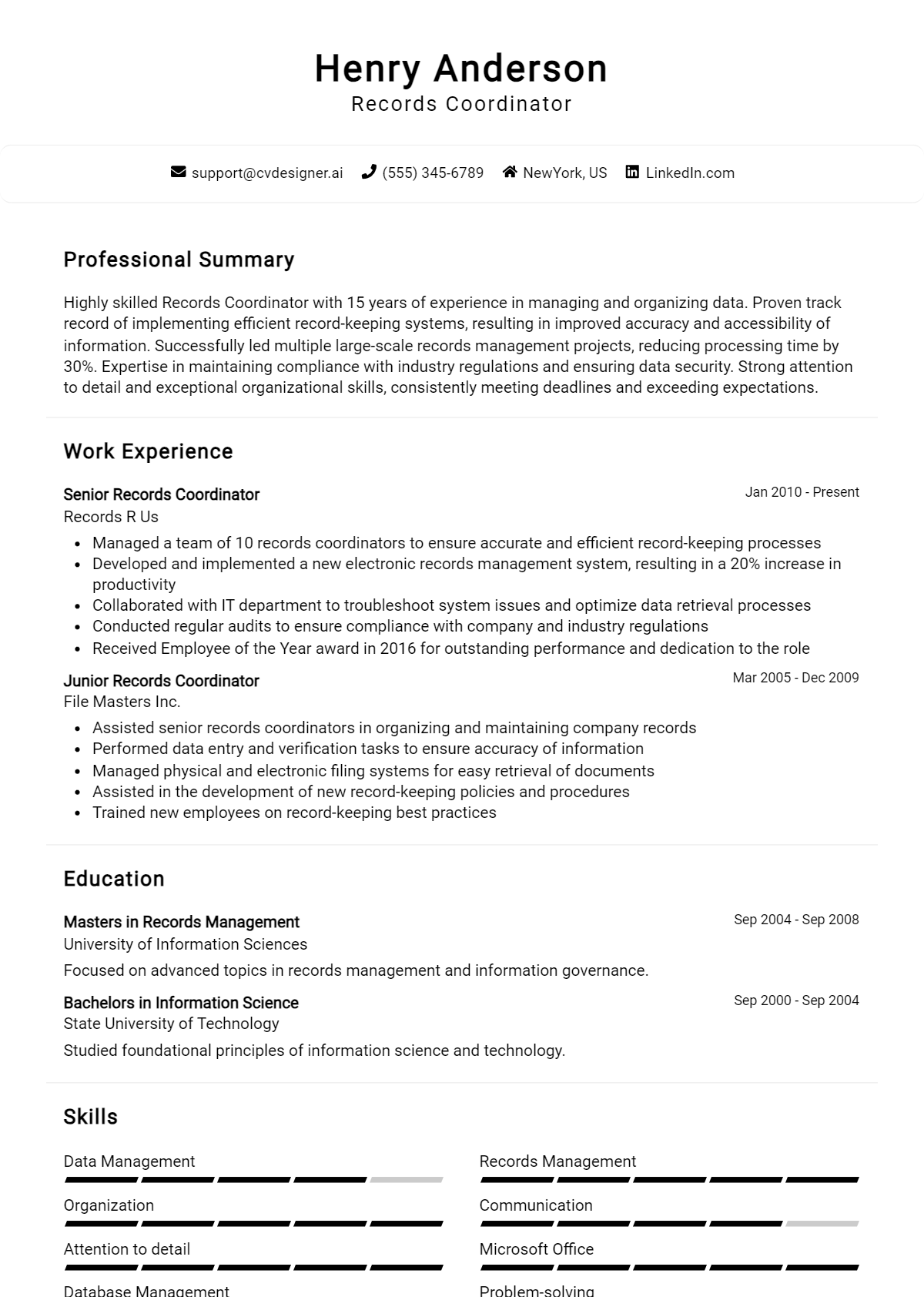
When preparing for a job interview as a Records Coordinator, it's essential to understand the types of questions you may encounter. This role typically involves managing, organizing, and safeguarding an organization's records, which can include anything from electronic documents to physical files. Interviewers will look for candidates who not only possess the necessary technical skills but also demonstrate attention to detail, strong organizational abilities, and a commitment to confidentiality.
Here is a list of common job interview questions, with examples of the best answers tailored for the Records Coordinator position. These questions cover your work history and experience, what you have to offer the employer, and your goals for the future, allowing you to showcase your qualifications and enthusiasm for the role effectively.
1. Can you describe your experience with record management systems?
I have over five years of experience using various record management systems, including electronic databases and paper filing. I am adept at organizing, storing, and retrieving records efficiently, ensuring compliance with regulations and improving accessibility for staff.
Example:
In my previous role, I implemented a new electronic records system, which reduced retrieval time by 30%. This experience honed my skills in managing both physical and digital records effectively.
2. How do you ensure the confidentiality of sensitive records?
I prioritize confidentiality by implementing strict access controls, conducting regular audits, and training staff on privacy policies. I also ensure that sensitive records are encrypted or securely stored to prevent unauthorized access or data breaches.
Example:
In my last position, I developed a protocol for handling confidential documents, which included limited access and regular staff training sessions on data protection, significantly minimizing risks.
3. Describe a time you resolved a records-related issue.
I once discovered a discrepancy in our filing system that led to missing documents. I investigated the issue, retraced the steps, and implemented a new tracking system that reduced errors and improved overall accuracy in our records management.
Example:
After identifying the root cause, I collaborated with IT to develop a digital tracking solution, which decreased document retrieval times and minimized future discrepancies.
4. What strategies do you use for organizing records?
I utilize a systematic approach, implementing categorization based on departments or functions. Additionally, I apply consistent naming conventions and regularly review and purge outdated records to maintain an organized, efficient filing system.
Example:
In my previous job, I reorganized the filing system by creating a standardized format, which improved record retrieval times and enhanced collaboration among team members.
5. How do you handle records retention and disposal?
I follow established retention schedules and legal requirements to determine how long to keep records. For disposal, I ensure that documents are securely shredded or permanently deleted to maintain confidentiality and compliance with regulations.
Example:
In my last role, I initiated a records audit that streamlined our retention policy, ensuring compliance and reducing unnecessary storage costs.
6. What tools do you find most effective for records management?
I find electronic records management software, such as Document Management Systems (DMS), particularly effective. Tools like these enhance organization, facilitate collaboration, and allow for efficient tracking and retrieval of documents.
Example:
At my previous job, I successfully integrated a DMS that improved our document sharing capabilities and reduced physical storage needs by 40%.
7. How do you stay updated on records management regulations?
I stay updated by subscribing to relevant industry journals, attending conferences, and participating in professional organizations. Regular training and networking with peers also help me keep abreast of changes in regulations and best practices.
Example:
I recently attended a workshop on data privacy laws, which provided valuable insights that I applied to our records management practices, ensuring compliance.
8. How do you prioritize tasks in a busy records department?
I prioritize tasks based on urgency and importance, using project management tools to track deadlines. I also communicate regularly with team members to ensure alignment and address any bottlenecks that may arise in our workflows.
Example:
During peak periods, I implemented a daily stand-up meeting, which improved our team's efficiency and allowed us to tackle urgent tasks promptly.
9. How do you prioritize tasks when managing multiple records requests?
I prioritize tasks by assessing urgency and impact. I use a task management system to log requests and deadlines, allowing me to allocate time effectively. Regular communication with stakeholders ensures alignment on priorities and deadlines, enhancing overall efficiency.
Example:
I categorize requests by urgency and importance, then tackle the most critical ones first. For instance, if a legal request is due soon, I address that promptly while keeping others informed of timelines.
10. Can you describe a time when you had to handle a difficult record retrieval issue?
Once, I encountered a missing document during an audit. I quickly traced the issue to a filing error. I collaborated with IT to recover the file from backups and implemented a more rigorous tracking system to prevent future occurrences, ensuring compliance.
Example:
During an audit, I discovered a missing file. I worked with IT to retrieve it from backups and established a clear tracking process, which greatly improved our retrieval efficiency and accuracy.
11. How do you ensure compliance with data protection regulations?
I stay informed about relevant data protection laws by attending workshops and reviewing guidelines. I ensure all records are securely stored and only accessible to authorized personnel. Regular audits help identify and mitigate compliance risks.
Example:
I regularly update our data practices based on the latest regulations. For instance, I conducted training sessions on data handling to ensure all staff understand compliance protocols and the importance of data security.
12. What software tools are you familiar with for managing records?
I have extensive experience with record management systems like SharePoint and Documentum. I also use Excel for tracking and reporting. My adaptability allows me to quickly learn new tools based on the organization's needs.
Example:
I have used SharePoint for document management and Excel for tracking records. I enjoy learning new software, which helps improve efficiency and team collaboration in managing records.
13. Describe your experience with digitizing paper records.
I led a project to digitize our paper records, which involved scanning, indexing, and organizing files in a digital repository. This transition improved accessibility and reduced physical storage needs, saving the company time and resources.
Example:
I managed a digitization project, converting thousands of paper documents into digital format, which streamlined access and significantly reduced our physical storage requirements, enhancing overall efficiency.
14. How do you handle confidential information?
I treat all confidential information with the utmost care, adhering to strict protocols for access and sharing. Regular training for myself and the team reinforces the importance of confidentiality and compliance with data protection regulations.
Example:
I ensure that all confidential records are stored securely and only shared with authorized personnel. Regular training sessions help reinforce the importance of handling sensitive information responsibly.
15. What steps do you take to maintain accuracy in record-keeping?
I implement regular audits and checks to ensure data accuracy. Utilizing automated tools for data entry minimizes human error, while a thorough review process for new records helps maintain the integrity of our database.
Example:
I conduct monthly audits to verify data accuracy and use automated data entry systems to reduce errors. This approach has greatly improved the reliability of our records.
16. How do you stay organized in a fast-paced environment?
I rely on digital tools for organization, such as task management software and calendar reminders. I prioritize clear communication with my team, ensuring everyone is aligned, which enhances our collective organizational efforts in a fast-paced setting.
Example:
I use project management tools to keep track of tasks and deadlines. Clear communication within the team ensures we stay organized and responsive to the fast-paced demands of our work environment.
17. How do you prioritize tasks when managing multiple records requests?
I prioritize tasks by assessing urgency and importance, creating a list based on deadlines and impact. I leverage digital tools to track progress and ensure timely responses. Regular communication with stakeholders is crucial for clarity and managing expectations.
Example:
I use a task management system to sort requests by urgency. For example, I prioritize urgent compliance-related requests while scheduling routine updates for later in the week, ensuring all stakeholders remain informed throughout the process.
18. Can you describe a time when you improved a records management process?
Certainly! At my previous job, I identified inefficiencies in our filing system. By implementing a digital records management software, we increased retrieval speed and reduced physical storage needs, resulting in a 30% time savings for the team.
Example:
I introduced a cloud-based system that allowed for easier access and sharing of records. This change reduced retrieval times significantly and improved collaboration among departments, leading to enhanced overall efficiency.
19. How do you ensure compliance with data protection regulations?
I stay updated on data protection laws and implement necessary policies. Regular training for staff on compliance procedures and conducting audits helps maintain adherence. I also ensure secure storage and restricted access to sensitive information.
Example:
I conduct quarterly training sessions on data protection regulations for the team and perform biannual audits to ensure compliance. This proactive approach minimizes risks and reinforces the importance of data security within the organization.
20. What methods do you use for archiving records?
I utilize a systematic approach for archiving, including categorizing records by type and date. I ensure that digital records are backed up, and physical records are stored in a secure environment, following established retention schedules.
Example:
I categorize records by department and retention period, using cloud storage for digital files and climate-controlled storage for physical documents. This method not only protects records but also facilitates easy access when needed.
21. How do you handle discrepancies in records?
When faced with discrepancies, I first investigate thoroughly to determine the source of the issue. I communicate with relevant parties to clarify details and take corrective action, updating records to ensure accuracy and prevent future occurrences.
Example:
Upon discovering a discrepancy in a client file, I consulted with the team and traced the error back to a data entry mistake. I corrected the record and implemented a double-check system to prevent similar issues.
22. Describe your experience with electronic records management systems.
I have extensive experience using electronic records management systems, including EHR and document management software. I am adept at data entry, retrieval, and maintaining system integrity, ensuring that all records are accurately documented and easily accessible.
Example:
In my previous role, I managed an EHR system where I trained staff on proper data entry techniques and ensured regular updates, which enhanced our overall record-keeping accuracy and efficiency.
23. How do you stay organized in your role as a Records Coordinator?
I maintain organization through a combination of digital tools and physical filing systems. I use calendars and task lists to manage deadlines and ensure all documents are labeled clearly, making retrieval straightforward and efficient.
Example:
I rely on project management software to track my tasks and deadlines. Additionally, I implement a color-coding system for physical files to quickly identify and access the necessary documents when required.
24. What steps do you take to train new staff on records management?
I develop a structured training plan that includes both theoretical and practical components. New staff receive hands-on experience with our systems and documentation practices, along with ongoing support to ensure they are comfortable in their roles.
Example:
I conduct orientation sessions for new hires, providing them with manuals and practical demonstrations. I also assign a mentor for the first month to help them acclimate to our records management protocols.
25. How do you prioritize tasks when managing a large volume of records?
I prioritize tasks by assessing deadlines, importance, and urgency. I use tools like to-do lists and project management software to track progress and ensure timely completion. Regularly reviewing priorities helps me adapt to shifting demands effectively.
Example:
In my previous role, I categorized records by due dates and importance, allowing me to manage tasks efficiently. This approach enabled me to meet tight deadlines while maintaining accuracy in document management.
26. What strategies do you use to ensure compliance with record-keeping regulations?
I stay updated on relevant regulations and implement regular training for staff. I conduct audits to ensure compliance and develop clear procedures for record creation, retention, and disposal. This proactive approach minimizes risks and ensures adherence to legal standards.
Example:
I regularly review regulatory updates and hold quarterly training sessions for my team. By conducting compliance audits, I ensure our records meet all necessary legal standards, which has significantly reduced compliance issues in my previous position.
27. Can you describe your experience with electronic record management systems?
I have extensive experience with various electronic record management systems, including implementing new software and training staff. My focus has been on optimizing data retrieval processes and ensuring data integrity, which enhances overall organizational efficiency.
Example:
In my last position, I implemented a new electronic record management system that improved retrieval time by 30%. I trained my colleagues on its features, ensuring everyone was comfortable with the transition and its functionalities.
28. How do you handle confidential or sensitive information?
I handle confidential information by following strict protocols, including access controls and secure storage. I train staff on confidentiality best practices and regularly review security measures to protect sensitive data from unauthorized access.
Example:
In my previous role, I established a policy for handling sensitive documents, including encryption and limited access. This ensured that confidential information was protected, and staff understood the importance of maintaining privacy.
29. Describe a time when you had to correct an error in the records.
I once discovered a significant error in a financial record. I quickly investigated the issue, identified the source, and collaborated with the team to correct it. I then implemented a verification process to prevent future errors, ensuring accuracy in our records.
Example:
After finding a misfiled document, I traced the error back to a manual entry mistake. I corrected the document and introduced a double-check system for entries, which significantly reduced similar errors in the future.
30. What tools or software do you use for record management?
I utilize various tools, including Microsoft Excel for tracking, document management systems like SharePoint, and compliance software. These tools enhance organization, retrieval, and sharing of records while ensuring compliance and data security.
Example:
I primarily use SharePoint for document management and Microsoft Excel for tracking records. These tools have streamlined our processes and improved collaboration across departments, making information easily accessible.
31. How do you ensure the accuracy of records you manage?
I ensure accuracy through meticulous attention to detail and regular audits. I cross-check records against source documents and encourage team collaboration to verify information. Continuous training on best practices also helps maintain high accuracy standards.
Example:
In my last job, I instituted a bi-monthly audit process where we reviewed records systematically. This not only improved accuracy but also fostered a culture of accountability among team members.
32. What steps do you take when implementing a new record-keeping system?
I start by assessing organizational needs and planning the implementation carefully. I involve key stakeholders, provide training, and establish a timeline for the transition. Regular feedback sessions ensure any issues are promptly addressed, leading to smooth adoption.
Example:
When implementing a new record-keeping system, I conducted a needs assessment, engaged stakeholders, and developed a detailed training plan. This structured approach facilitated a successful transition and increased user adoption rates significantly.
33. How do you prioritize tasks when managing multiple records requests?
I prioritize tasks by assessing urgency, deadlines, and the impact on the organization. I utilize a task management system to track requests and ensure timely responses. This organized approach helps avoid bottlenecks and ensures compliance with regulations.
Example:
I use a priority matrix to categorize requests. For instance, I address urgent legal requests immediately, while less critical requests are scheduled based on their deadlines.
34. Can you describe a time when you had to handle a difficult records retrieval challenge?
In a previous role, I encountered incomplete records due to a system migration. I coordinated with IT to recover data and communicated transparently with stakeholders, ensuring they were informed throughout the process, which ultimately built trust.
Example:
I faced a situation with missing records; I organized a team to locate backups and successfully retrieved the data within a week, keeping everyone updated along the way.
35. What steps do you take to ensure data accuracy in records management?
I implement regular audits and cross-check records against source documents. Training staff on data entry protocols and using validation tools also play a crucial role in maintaining data integrity and reducing errors.
Example:
I conduct quarterly audits and provide staff training on best practices, which helped reduce our error rate by 30% in the last year.
36. How do you stay updated on records management regulations and best practices?
I stay updated by subscribing to industry newsletters, attending workshops, and participating in professional organizations. Networking with other records management professionals also provides valuable insights into emerging trends and regulatory changes.
Example:
I regularly attend webinars from ARMA and follow relevant blogs to keep my knowledge current, ensuring compliance with the latest regulations.
37. Describe a situation where you improved a records management process.
I identified inefficiencies in our filing system causing delays. I proposed a digital archiving solution, implemented it, and trained staff on the new process, which reduced retrieval times by 40% and improved overall efficiency.
Example:
By shifting to a digital system, I streamlined access to records, cutting retrieval time significantly, which was well-received by the team.
38. How do you handle confidential or sensitive information in records management?
I follow strict protocols for handling sensitive information, including access controls and encryption. Regular training ensures that all team members understand the importance of confidentiality and compliance with data protection laws.
Example:
I ensure that sensitive records are only accessed by authorized personnel and conduct regular training sessions to emphasize the importance of confidentiality.
39. What tools or software do you find most effective for managing records?
I find document management systems like SharePoint and electronic records management software effective for organizing and retrieving records. They enhance collaboration and improve access control, making it easier to manage large volumes of data.
Example:
Using SharePoint in my last job enabled better collaboration and streamlined access to records, significantly improving our workflow.
40. How do you ensure compliance with legal and regulatory requirements in records management?
I keep informed about relevant laws and regulations, conduct regular compliance audits, and develop policies that align with legal standards. Training staff on compliance protocols is essential to ensure everyone understands their responsibilities.
Example:
I implemented a compliance checklist and conducted workshops, which resulted in improved adherence to regulations across the department.
41. How do you ensure the confidentiality and security of sensitive records?
I implement strict access controls, use encryption for digital records, and regularly train staff on confidentiality protocols. Regular audits help identify potential vulnerabilities. Maintaining an organized filing system also helps ensure sensitive information is appropriately handled and stored.
Example:
To ensure confidentiality, I restrict access to sensitive records, utilize encryption, and conduct staff training on data protection policies. Regular audits help maintain security and compliance.
42. Describe your experience with electronic record management systems.
I have extensive experience with various electronic record management systems, including Document Management Systems (DMS) and Electronic Health Records (EHR). I am proficient in data entry, retrieval, and training staff on system use, ensuring smooth operations and compliance.
Example:
I have worked with several electronic record management systems, including DMS and EHR. I excel in data entry and retrieval, and I often train staff, ensuring efficient and compliant use of these systems.
43. How do you handle discrepancies or errors in records?
When discrepancies arise, I promptly investigate the issue by cross-referencing records. I communicate with relevant parties to gather accurate information and then correct the records as needed, ensuring all changes are documented for future reference and compliance.
Example:
I address discrepancies by investigating thoroughly, cross-referencing records, and communicating with relevant stakeholders. After correcting errors, I document changes to maintain an accurate and compliant record-keeping system.
44. Can you describe a time when you had to manage a large volume of records? How did you handle it?
In my previous role, I managed a project involving the digitization of thousands of records. I developed a systematic approach, prioritized tasks, and utilized a team for efficient processing. This ensured timely completion while maintaining accuracy and organization.
Example:
I once oversaw a digitization project for thousands of records. I created a detailed plan, prioritized tasks, and collaborated with a team to ensure accuracy and timely project completion.
45. What strategies do you use to stay organized in your records management tasks?
I use a combination of digital tools and physical organization methods. I maintain a detailed calendar for deadlines, utilize task management software, and implement a consistent filing system. Regular reviews help me stay on track and adapt to changing priorities.
Example:
I stay organized by using digital tools for task management, maintaining a detailed calendar, and implementing a consistent filing system. Regular reviews help me adjust to changing priorities.
46. How do you stay updated with changes in records management regulations and best practices?
I stay informed by subscribing to industry newsletters, attending workshops, and participating in online forums. Networking with other professionals also provides insights into emerging trends and best practices, ensuring my knowledge remains current and applicable.
Example:
I keep updated by subscribing to industry newsletters and attending workshops. Networking with professionals in the field also helps me learn about emerging trends and regulations in records management.
How Do I Prepare For A Records Coordinator Job Interview?
Preparing for a Records Coordinator job interview is essential to making a positive impression on the hiring manager. A well-prepared candidate not only showcases their qualifications but also demonstrates their commitment to the role and the organization. Here are some key preparation tips to help you succeed:
- Research the company and its values to understand its culture and mission.
- Practice answering common interview questions, focusing on those relevant to records management and coordination.
- Prepare examples that demonstrate your skills and experience for the Records Coordinator role.
- Familiarize yourself with relevant regulations and best practices in records management.
- Dress professionally to convey a polished and respectful image during the interview.
- Bring copies of your resume and any relevant certifications to share with the interview panel.
- Prepare thoughtful questions to ask the interviewer about the team and expectations for the role.
Frequently Asked Questions (FAQ) for Records Coordinator Job Interview
Preparing for an interview is crucial, especially for a role like Records Coordinator, where attention to detail and organization are paramount. Familiarity with commonly asked questions can help you feel more confident and articulate your qualifications effectively. Here are some frequently asked questions that you might encounter during your interview process.
What should I bring to a Records Coordinator interview?
When attending a Records Coordinator interview, it's essential to bring multiple copies of your resume, a list of references, and any relevant certifications or training documentation. Additionally, consider bringing a notebook and a pen for taking notes during the interview. This demonstrates your preparedness and professionalism, and it allows you to jot down important information that may come up during the discussion.
How should I prepare for technical questions in a Records Coordinator interview?
To prepare for technical questions, familiarize yourself with the specific software and tools commonly used in records management, such as document management systems, database software, and data entry techniques. Review the job description to understand the technical skills required, and be ready to discuss any relevant experience you have with these tools. Practicing common technical scenarios or problems related to records management can also help you articulate your thought process during the interview.
How can I best present my skills if I have little experience?
If you have limited experience as a Records Coordinator, focus on transferable skills from previous roles or experiences. Highlight your organizational abilities, attention to detail, and any relevant coursework or projects that showcase your aptitude for managing records. Additionally, be prepared to discuss your willingness to learn and adapt, which can reassure interviewers of your potential to succeed in the role despite your lack of direct experience.
What should I wear to a Records Coordinator interview?
Dressing appropriately for your interview is important to make a positive first impression. Aim for business professional attire, such as a tailored suit or a smart dress, depending on the company culture. Neutral colors and conservative styles are generally safe choices. Dressing well not only shows respect for the interview process, but it also boosts your confidence as you present yourself as a qualified candidate.
How should I follow up after the interview?
Following up after the interview is a key step in the process. Send a thank-you email within 24 hours of your interview, expressing your appreciation for the opportunity to interview and reiterating your interest in the position. In your message, you can mention something specific that was discussed during the interview, which personalizes your follow-up. This not only shows your enthusiasm for the role but also reinforces your communication skills, a crucial aspect for a Records Coordinator.
Conclusion
In summary, this interview guide for the Records Coordinator position has emphasized the importance of thorough preparation and practice in order to effectively demonstrate your relevant skills. Candidates should be well-equipped to tackle both technical and behavioral questions, as this comprehensive approach can significantly enhance your chances of success in the interview process.
We encourage you to utilize the tips and examples provided in this guide to confidently approach your interviews. Remember, preparation is key to portraying your capabilities and fit for the role. Embrace this opportunity to showcase your skills and stand out to potential employers!
For further assistance, check out these helpful resources: resume templates, resume builder, interview preparation tips, and cover letter templates.