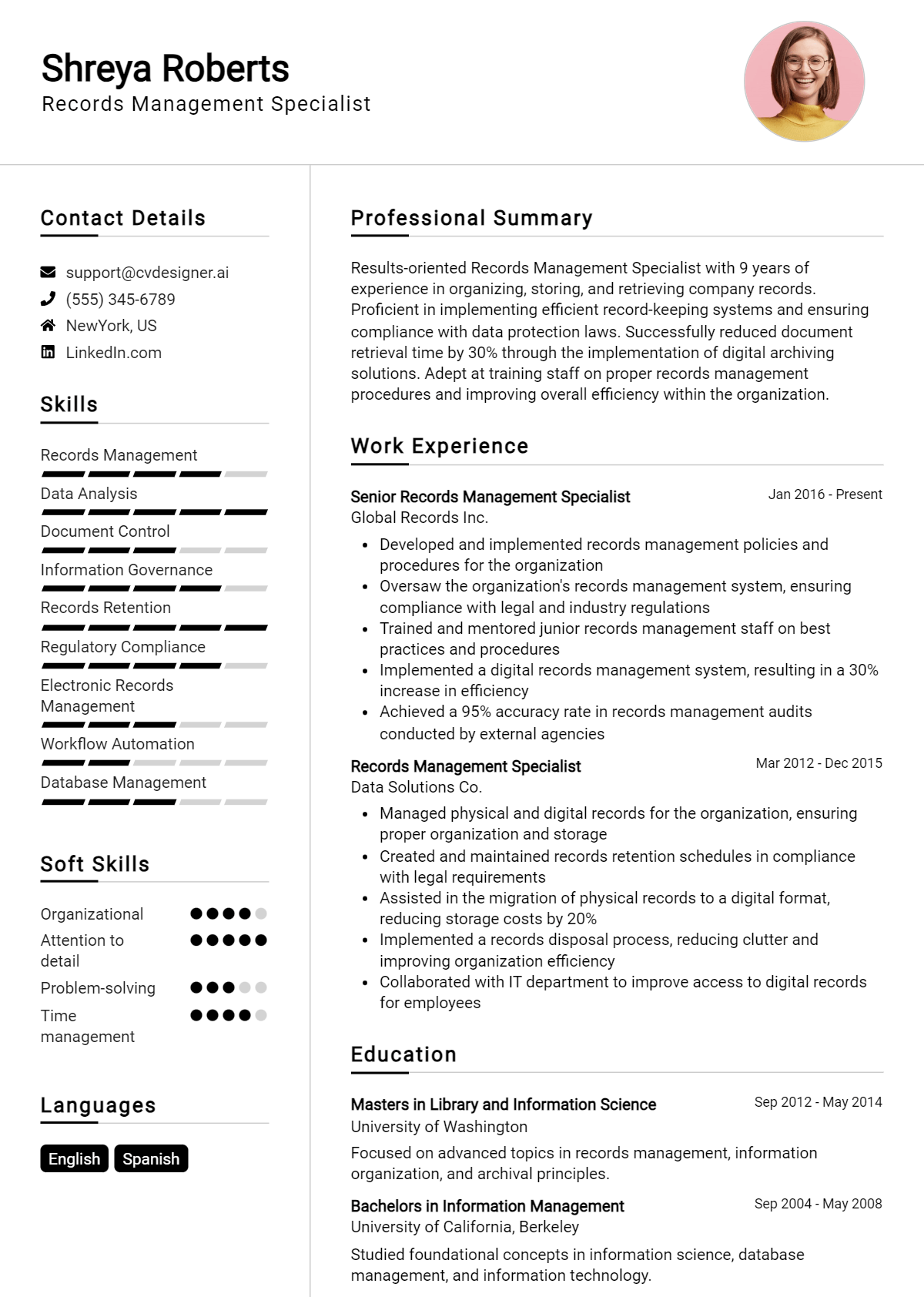
When preparing for a job interview as a Records Management Specialist, it's essential to understand the key questions that may arise and how to effectively communicate your qualifications and experience. This role demands a meticulous approach to organizing, storing, and retrieving information, making it critical for candidates to demonstrate their expertise in records management practices and relevant technologies.
Here is a list of common job interview questions for Records Management Specialists, along with examples of the best answers. These questions will cover your work history and experience, delve into what you have to offer the employer regarding your skills and knowledge, and explore your goals for the future in the field of records management.
1. Can you explain the importance of records management?
Records management is crucial for ensuring compliance, improving efficiency, and protecting sensitive information. It allows organizations to maintain accurate records, streamline processes, and mitigate risks associated with data loss or breaches. Effective records management supports informed decision-making and enhances organizational integrity.
Example:
Records management is vital for compliance and operational efficiency. It helps organizations protect sensitive information, mitigate risks, and ensure informed decision-making by maintaining accurate records and streamlining processes.
2. What experience do you have with records retention policies?
I have developed and implemented records retention policies that comply with legal and regulatory requirements. My experience includes training staff on these policies, conducting audits to ensure adherence, and regularly reviewing and updating policies to meet changing organizational needs and compliance standards.
Example:
I have created records retention policies that align with regulatory requirements. My role involved training staff, conducting compliance audits, and regularly updating policies to address evolving organizational needs and legal standards.
3. How do you handle sensitive information in records management?
Handling sensitive information requires strict adherence to confidentiality protocols. I ensure that access is limited to authorized personnel, implement encryption for digital records, and conduct regular training on data protection practices to minimize the risk of unauthorized access or breaches.
Example:
I prioritize confidentiality by restricting access to sensitive information, using encryption for digital records, and providing regular training on data protection to prevent unauthorized access and breaches.
4. Describe your experience with electronic records management systems.
I have extensive experience with various electronic records management systems, including implementation, migration, and user training. I focus on optimizing workflows, ensuring data integrity, and utilizing system features to enhance retrieval processes, thereby improving overall efficiency in records management.
Example:
I have implemented and migrated to various electronic records management systems, focusing on optimizing workflows, ensuring data integrity, and training users to enhance retrieval processes for improved efficiency.
5. How do you ensure compliance with legal and regulatory requirements?
I stay updated on relevant laws and regulations, conducting regular compliance audits to identify gaps. I work closely with legal teams to ensure all records management practices comply with requirements, and I develop training programs to educate staff on compliance measures and best practices.
Example:
I ensure compliance by staying informed on regulations, conducting audits, and collaborating with legal teams. I also create training programs for staff to educate them on compliance measures and best practices.
6. Can you describe a challenging records management project you completed?
I led a project to digitize and organize a large volume of historical records. This involved assessing existing records, developing a classification system, and training staff on the new electronic system. The project improved access to information and preserved valuable historical data.
Example:
I managed a project to digitize historical records, which included assessing existing files, creating a classification system, and training staff. This improved access to information and preserved valuable historical data effectively.
7. How do you prioritize tasks in records management?
I prioritize tasks based on urgency and impact on organizational goals. I utilize project management tools to track deadlines and workflows, ensuring that critical records are processed promptly while maintaining a balance between day-to-day tasks and long-term projects.
Example:
I prioritize tasks by assessing urgency and impact on goals. Using project management tools, I track deadlines and workflows, balancing daily tasks with long-term projects effectively.
8. What tools or software are you familiar with in records management?
I am proficient in various records management software, such as SharePoint, Documentum, and M-Files. My experience includes using these tools for document tracking, version control, and workflow automation, which significantly enhances efficiency and organization in records management processes.
Example:
I am skilled in using records management software like SharePoint and M-Files for document tracking, version control, and workflow automation, which greatly improves efficiency in records management.
9. Can you explain how you prioritize records management tasks?
I prioritize records management tasks by assessing urgency and compliance requirements. I use a matrix to categorize tasks based on deadlines, importance, and potential impact on operations. This method ensures that critical records are managed promptly, minimizing risks and maintaining operational efficiency.
Example:
I focus on urgent requests first, especially those linked to regulatory compliance. For instance, I once prioritized a records audit that directly impacted a compliance deadline, ensuring that our department met all requirements without delay.
10. How do you ensure compliance with records management policies?
I ensure compliance by regularly reviewing and updating records management policies, conducting training sessions for staff, and performing audits. My proactive approach helps identify gaps and reinforce adherence to established guidelines, thereby maintaining compliance with legal and organizational standards.
Example:
I conduct quarterly audits and provide training workshops to ensure all team members understand the policies. For instance, I identified a compliance gap during an audit and implemented a training session that improved adherence significantly.
11. Describe a challenging records management project you managed.
I managed a project to digitize thousands of physical records, which involved careful planning and collaboration with IT. Despite initial resistance, I communicated the benefits effectively, leading to a successful transition that enhanced access to information and improved overall efficiency.
Example:
In digitizing our archives, I faced resistance from staff. I organized a presentation demonstrating how digital records improve efficiency, which ultimately garnered support and facilitated a smooth transition to a digital format.
12. How do you handle confidential records?
Handling confidential records is critical; I implement strict access controls, use secure storage solutions, and conduct regular training to ensure all staff understand the importance of confidentiality. This approach safeguards sensitive information and complies with privacy regulations.
Example:
I enforce access controls and regularly train staff on confidentiality. For instance, I introduced a log system for accessing confidential records, which significantly reduced unauthorized access incidents.
13. What records management software are you familiar with?
I am proficient in several records management software solutions, including SharePoint, Documentum, and M-Files. My experience includes utilizing these platforms for organizing, storing, and retrieving records efficiently, which enhances productivity and compliance with records management policies.
Example:
I have used M-Files extensively for organizing records. It allowed me to automate workflows, resulting in a 30% increase in retrieval efficiency for our department's records management process.
14. How do you stay updated on records management best practices?
I stay updated on records management best practices by attending industry conferences, participating in webinars, and reading relevant publications. Networking with other professionals also provides insights into emerging trends and technologies that can enhance our records management processes.
Example:
I regularly attend webinars and read journals like the ARMA International publications. This keeps me informed about new technologies and best practices, which I share with my team to enhance our processes.
15. Can you discuss your experience with records retention schedules?
I have developed and implemented records retention schedules that comply with legal requirements. This involved assessing the types of records we maintained and determining appropriate retention periods, ensuring organized disposal and reducing unnecessary storage costs while maintaining compliance.
Example:
I created a retention schedule that aligned with legal requirements. By assessing records, I established clear timelines for retention and disposal, which minimized our storage costs significantly over time.
16. How do you handle record retrieval requests efficiently?
I handle record retrieval requests efficiently by implementing a tracking system that prioritizes requests based on urgency and ensures clear communication with requestors. This system allows for timely responses and helps maintain a high level of service within the organization.
Example:
I developed a tracking system that categorizes requests by urgency. One time, this allowed us to fulfill a high-priority request within hours, greatly improving our responsiveness and service quality.
17. How do you prioritize records management tasks?
I prioritize tasks based on urgency, compliance deadlines, and the impact on business operations. I assess the importance of each task and organize my workload accordingly, ensuring that essential records are managed first while maintaining an efficient workflow.
Example:
For example, I prioritize compliance-related tasks to avoid penalties, followed by requests for access to records, ensuring that critical functions are supported while also maintaining organized records management.
18. Describe your experience with electronic records management systems.
I have extensive experience with electronic records management systems, including implementing and maintaining systems like SharePoint and Documentum. I ensure that all records are digitized, organized, and easily retrievable, which increases efficiency and compliance.
Example:
In my previous role, I successfully transitioned our paper records to SharePoint, resulting in a 30% reduction in retrieval time and improved team collaboration on project documentation.
19. How do you ensure compliance with records retention schedules?
I ensure compliance by regularly reviewing retention schedules and conducting audits. I train staff on the importance of retention policies and use automated reminders to alert teams before records are due for disposal.
Example:
In my last position, I implemented quarterly audits that revealed areas needing improvement, leading to a 25% increase in compliance with retention schedules across the organization.
20. Can you explain a time you handled a records management crisis?
In a prior role, a server failure threatened critical records. I quickly coordinated with IT to recover data and implemented a backup protocol. This experience emphasized the need for robust disaster recovery plans within records management.
Example:
I led a team to restore lost data within 48 hours, ensuring our compliance reporting was not impacted. This incident reinforced the importance of having a well-documented disaster recovery strategy.
21. How do you handle confidential records?
Handling confidential records requires strict adherence to privacy laws and organizational policies. I enforce access controls, conduct regular training, and ensure that all confidential materials are stored securely, both physically and digitally.
Example:
I developed a training program for staff on handling confidential information, which resulted in zero breaches during my tenure and reinforced our commitment to data security.
22. What strategies do you use to train staff on records management?
I develop tailored training sessions emphasizing practical skills and compliance. I use hands-on workshops and e-learning modules to engage staff, ensuring they understand the records management process and its importance to the organization.
Example:
I initiated a quarterly training program that increased staff knowledge and compliance by 40%, enhancing our overall records management effectiveness and culture.
23. How do you stay updated on records management best practices?
I stay updated by attending workshops, joining professional organizations, and regularly reviewing industry publications. Networking with peers and participating in online forums also helps me learn about emerging trends and technologies in records management.
Example:
For instance, I recently attended a conference where I learned about new compliance tools that I later proposed for our organization, improving our records management processes significantly.
24. Describe your approach to digitizing paper records.
My approach involves assessing the volume and type of records, selecting appropriate scanning technologies, and creating a clear plan for organization and indexing. I ensure that the digital records are easily retrievable and comply with retention policies.
Example:
In a previous project, I led the digitization of over 10,000 records, which improved access time by 50% and allowed for better compliance with retention schedules.
25. How do you ensure compliance with records management regulations?
I stay updated on relevant laws and standards, such as GDPR and HIPAA. I conduct regular audits to ensure compliance and provide training to staff on policies and procedures. This proactive approach minimizes risks and promotes a culture of compliance within the organization.
Example:
I regularly review changes in legislation and organize training sessions for employees. By conducting annual audits, I identify areas of non-compliance and implement corrective actions to ensure adherence to all applicable records management regulations.
26. Describe your experience with electronic document management systems.
I have extensive experience using electronic document management systems (EDMS) like SharePoint and DocuWare. I’ve implemented these systems to streamline document retrieval, enhance collaboration, and improve overall efficiency. My focus has always been on user training and support to maximize system utilization.
Example:
In my previous role, I spearheaded the transition to an EDMS, training over 100 staff members. I ensured seamless integration and created user guides, which resulted in a 30% improvement in document retrieval times within the first quarter.
27. How do you handle sensitive or confidential information?
I prioritize confidentiality by implementing strict access controls and secure storage measures. Regularly educating staff on the importance of protecting sensitive information ensures compliance. I also establish protocols for the proper disposal of records to mitigate risks associated with data breaches.
Example:
I’ve developed a confidentiality training module for my team, ensuring everyone understands proper handling procedures. Additionally, I conduct biannual audits to confirm compliance with our data protection policies concerning sensitive information management.
28. Can you describe a challenge you faced in records management and how you overcame it?
I once inherited a disorganized records system that hampered productivity. I conducted a thorough analysis, developed a new classification scheme, and led a team to digitize and reorganize records. This effort significantly improved retrieval times and overall efficiency.
Example:
Faced with a chaotic filing system, I implemented a phased digitization project. By engaging team members in the process and monitoring progress, we achieved a 50% reduction in retrieval times within six months, transforming our workflow.
29. What strategies do you use for training staff on records management practices?
I employ a combination of hands-on workshops, e-learning modules, and regular refresher courses tailored to different departments. This varied approach accommodates different learning styles and ensures staff are well-versed in current records management practices.
Example:
I recently developed an interactive training program that included scenario-based learning. Feedback indicated a 40% increase in staff confidence regarding records management procedures, highlighting the program's effectiveness in enhancing understanding and compliance.
30. How do you manage the retention and disposal of records?
I adhere to established retention schedules and ensure that records are retained only as long as necessary. For disposal, I implement secure methods such as shredding physical documents and permanent deletion for electronic records, ensuring compliance with regulations.
Example:
I maintain a detailed retention schedule and schedule regular reviews. For secure disposal, I partnered with a certified vendor to ensure all confidential records were shredded, resulting in zero compliance issues during our last audit.
31. How do you assess the effectiveness of your records management program?
I utilize metrics such as retrieval times, user satisfaction surveys, and compliance audit results to gauge effectiveness. Regular feedback sessions with staff allow for continuous improvement and adaptation of the records management program to meet organizational needs.
Example:
I implemented quarterly reviews of our records management program, analyzing retrieval times and staff feedback. The data indicated a 20% improvement in user satisfaction, prompting us to refine our processes further.
32. What role does technology play in your approach to records management?
Technology is pivotal in streamlining processes and enhancing efficiency. I leverage tools like cloud storage for accessibility and automation software for data entry and organization. This integration reduces manual errors and optimizes record management workflows.
Example:
In my last position, I introduced cloud-based solutions, which improved collaboration and access. By automating data entry, we reduced processing time by 35%, allowing staff to focus on higher-level tasks rather than administrative duties.
33. How do you ensure compliance with records management policies?
To ensure compliance, I regularly review and update records management policies and conduct training sessions for staff. I also perform audits to assess adherence and identify areas for improvement, ensuring all practices align with relevant regulations and organizational standards.
Example:
I conduct quarterly audits and provide training sessions for staff to ensure they understand the policies, allowing us to maintain compliance with regulations effectively.
34. Can you describe a challenging records management project you have handled?
I once managed the digitization of a vast paper archive, which involved assessing the quality of records, selecting appropriate technology, and training staff. The project enhanced access while ensuring the integrity and security of sensitive information throughout the transition.
Example:
I led a project to digitize a 10,000-page archive, coordinating with IT and training staff, resulting in faster access and improved security for sensitive records.
35. How do you handle records retention schedules?
I develop and manage records retention schedules by collaborating with various departments to identify their needs. Regular reviews ensure schedules are updated in compliance with legal requirements, and I provide guidance on retention and destruction processes to all employees.
Example:
I create retention schedules with input from departments, ensuring compliance. I also provide ongoing training to staff about retention and destruction processes.
36. What software or tools are you proficient in for records management?
I am proficient in several records management software tools, including SharePoint, M-Files, and Documentum. These tools help streamline the management process and enhance collaboration, enabling efficient access, tracking, and storage of records across departments.
Example:
I have extensive experience with SharePoint and M-Files, which I use to manage records efficiently and facilitate collaboration among teams.
37. How would you address a situation where a colleague is not following records management procedures?
I would first discuss the issue directly with the colleague to understand their perspective. Then, I would provide guidance and reinforce the importance of following procedures. If necessary, I would escalate the matter to management to ensure compliance across the organization.
Example:
I would have a one-on-one conversation to address the issue and provide additional training, emphasizing the importance of compliance for the team.
38. What role does data security play in records management?
Data security is critical in records management as it protects sensitive information from unauthorized access and breaches. I implement security measures, such as encryption and access controls, while also ensuring compliance with legal regulations to safeguard our records effectively.
Example:
I prioritize data security by using encryption and strict access controls, ensuring sensitive records are protected and compliant with regulations.
39. How do you stay updated with changes in records management regulations?
I stay updated by attending industry conferences, participating in professional organizations, and subscribing to relevant publications. Networking with other professionals also helps me gain insights into best practices and regulatory changes affecting records management.
Example:
I regularly attend conferences and subscribe to industry journals to stay informed about the latest regulations and best practices in records management.
40. Describe how you would train staff on records management best practices.
I would create a comprehensive training program that includes workshops, hands-on sessions, and easy-to-follow materials. I emphasize real-world scenarios and encourage questions, ensuring staff understand the importance of proper records management in their daily tasks.
Example:
I develop interactive training sessions with real-case scenarios and provide clear materials, ensuring staff grasp the importance of records management in their roles.
41. How do you ensure compliance with records management policies and regulations?
I consistently review and update our records management policies to align with legal requirements. Training staff on compliance is crucial, and I conduct audits to ensure adherence. By fostering an organizational culture that values compliance, I mitigate risks effectively.
Example:
I regularly update our records policies based on new regulations, conduct training sessions for staff, and perform audits to ensure compliance. This proactive approach has significantly reduced compliance-related issues within our organization.
42. Can you describe a time when you had to handle a records management crisis?
During a system outage, our records became inaccessible. I quickly coordinated with IT to restore access and communicated transparently with stakeholders. Post-crisis, I implemented a backup strategy to enhance data security and prevent future occurrences.
Example:
When our database crashed, I immediately worked with IT to recover records. I informed all departments of the situation and later introduced a robust backup system, ensuring our data's integrity and accessibility in future emergencies.
43. What strategies do you use for training staff on records management practices?
I develop interactive training sessions that include real-life scenarios and hands-on activities. I also create accessible resources and conduct follow-up sessions to reinforce knowledge. This ensures staff understands and retains crucial records management practices.
Example:
I implement engaging training sessions using case studies and practical exercises. Additionally, I provide reference materials and conduct periodic refreshers to ensure staff remain well-versed in records management practices.
44. How do you handle the destruction of records that are no longer needed?
I follow established retention schedules and legal guidelines for record destruction. I ensure that all destroyed records are documented, and I use secure methods to protect sensitive information. This process ensures compliance and minimizes risks associated with data breaches.
Example:
I review retention schedules, document the destruction process, and ensure secure disposal methods for sensitive records. This approach ensures compliance with regulations while protecting our organization from potential data breaches.
45. How do you assess the effectiveness of a records management program?
I evaluate effectiveness through regular audits, staff feedback, and compliance metrics. Analyzing these data points helps identify improvement areas. I also benchmark against industry standards to ensure our program remains competitive and effective in achieving its goals.
Example:
I conduct annual audits and gather staff feedback to gauge our program's success. Additionally, I compare our processes against industry standards, ensuring continuous improvement and effectiveness in records management practices.
46. What role does technology play in your records management strategy?
Technology is essential for efficient records management. I utilize document management systems for organization and retrieval, ensuring secure access and compliance. Regularly assessing emerging technologies allows me to innovate and improve our processes continuously.
Example:
I leverage document management systems to streamline record organization and retrieval. By staying updated on emerging technologies, I can enhance our records management processes, ensuring efficiency and security.
How Do I Prepare For A Records Management Specialist Job Interview?
Preparing for a job interview as a Records Management Specialist is crucial to making a positive impression on the hiring manager. A well-prepared candidate demonstrates professionalism, a strong understanding of the role, and an eagerness to contribute to the organization. Here are some key tips to help you prepare effectively:
- Research the company and its values to understand its mission and how you can contribute to its goals.
- Practice answering common interview questions related to records management, such as data organization, compliance, and retention policies.
- Prepare examples that demonstrate your skills and experience specific to records management, including any relevant software or systems you have used.
- Familiarize yourself with current regulations and best practices in records management, such as data privacy laws and industry standards.
- Review your resume and be ready to discuss your previous roles, emphasizing achievements that align with the job description.
- Dress professionally and arrive on time to convey your seriousness about the position.
- Prepare thoughtful questions to ask the interviewer about the organization's records management processes and future initiatives.
Frequently Asked Questions (FAQ) for Records Management Specialist Job Interview
Preparing for a job interview is essential, especially for a specialized role like a Records Management Specialist. Understanding common questions can help candidates present themselves effectively and demonstrate their expertise. Below are some frequently asked questions and answers that can guide you through the interview process.
What should I bring to a Records Management Specialist interview?
When attending a Records Management Specialist interview, it’s important to come prepared with several key items. Bring multiple copies of your resume, a list of references, and any relevant certifications or documents that showcase your qualifications. Additionally, consider carrying a notebook and pen for taking notes during the interview. Having a portfolio that includes examples of past records management projects can also be beneficial to visually demonstrate your experience.
How should I prepare for technical questions in a Records Management Specialist interview?
To prepare for technical questions, review the specific skills and knowledge relevant to records management, such as data organization, compliance requirements, and records retention policies. Familiarize yourself with industry standards and software commonly used in records management, like electronic document management systems. Practicing responses to potential technical scenarios can also help you articulate your thought process and problem-solving abilities during the interview.
How can I best present my skills if I have little experience?
If you have limited experience in records management, focus on transferable skills from previous roles, such as attention to detail, organizational abilities, and proficiency in software tools. Highlight any relevant coursework, internships, or volunteer experiences that demonstrate your commitment to the field. Be honest about your experience level while expressing enthusiasm for learning and adapting to new challenges in the records management domain.
What should I wear to a Records Management Specialist interview?
Dressing appropriately for an interview is crucial as it reflects your professionalism. For a Records Management Specialist position, business casual attire is typically suitable. This might include dress slacks or a skirt, a collared shirt or blouse, and closed-toe shoes. Avoid overly casual clothing such as jeans or sneakers. Dressing slightly more formally can also show your respect for the interview process and the organization you are applying to.
How should I follow up after the interview?
Following up after an interview is a key step in the job application process. Send a thank-you email to your interviewer(s) within 24 hours, expressing appreciation for the opportunity to interview and reiterating your interest in the position. Mention specific points discussed during the interview to personalize your message. This not only shows professionalism but also keeps you on the interviewer's radar as they make their decision.
Conclusion
In summary, this interview guide has emphasized the significance of thorough preparation and practice for the Records Management Specialist role. Understanding the nuances of records management, combined with the ability to articulate relevant skills, is crucial for making a lasting impression during interviews. By preparing for both technical and behavioral questions, candidates can significantly enhance their chances of success in this competitive field.
We encourage you to leverage the tips and examples provided in this guide as you confidently approach your interviews. Remember, preparation is key, and with the right mindset and resources, you can excel in showcasing your capabilities.
For further assistance, check out these helpful resources: resume templates, resume builder, interview preparation tips, and cover letter templates.