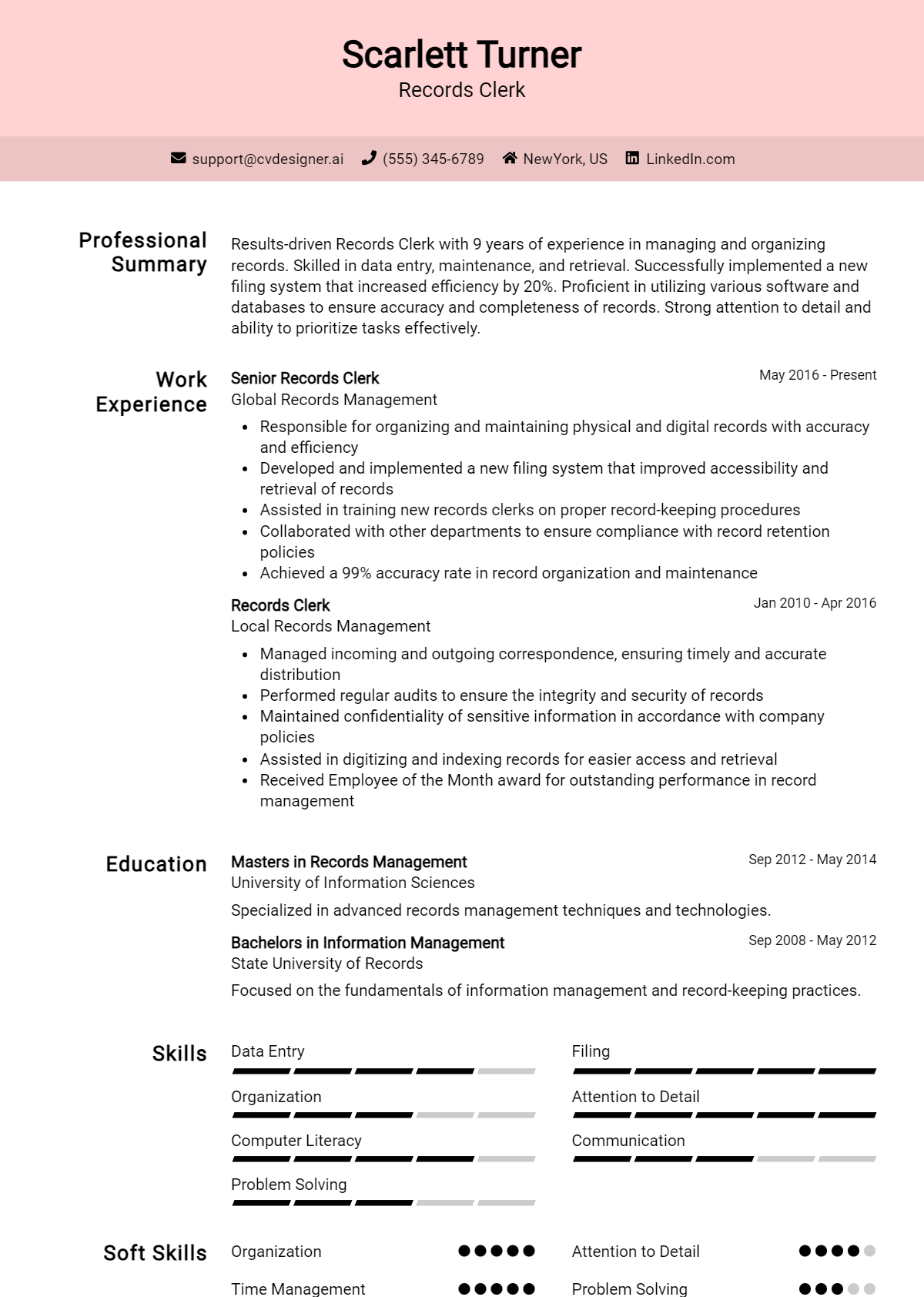
When preparing for a job interview as a Records Clerk, it's essential to anticipate the types of questions you may encounter. The role requires a keen eye for detail, strong organizational skills, and a solid understanding of record management practices. Being well-prepared can help you articulate your qualifications and demonstrate your fit for the position.
Here is a list of common job interview questions, with examples of the best answers tailored for the Records Clerk role. These questions cover your work history and experience in managing documents, your skills in using recordkeeping software, what you have to offer the employer in terms of efficiency and accuracy, and your goals for the future in the field of records management.
1. Can you describe your experience with record-keeping systems?
I have over three years of experience using electronic record-keeping systems, particularly in medical and education settings. I am proficient in data entry, retrieval, and archiving. I also ensure compliance with data protection regulations while maintaining accuracy and confidentiality in all records management tasks.
Example:
In my previous role at a healthcare facility, I managed patient records using an electronic system, ensuring accuracy and timely updates while adhering to HIPAA regulations.
2. How do you prioritize tasks when managing multiple records requests?
I prioritize tasks based on urgency and deadlines, using a checklist to track requests. I communicate with requesters to clarify their needs and ensure that I allocate sufficient time for each task. This method helps me maintain efficiency and meet all expectations without compromising quality.
Example:
When faced with multiple requests, I assess their urgency and due dates, then create a prioritized list to tackle the most critical tasks first, ensuring timely completion.
3. What steps do you take to ensure data accuracy in records management?
To ensure data accuracy, I double-check entries and use validation features in our software. Regular audits are part of my routine, and I encourage team feedback to identify discrepancies. This proactive approach helps maintain high standards in record-keeping and minimizes errors.
Example:
I implement regular audits and cross-check records against source documents, which has significantly reduced errors and improved data integrity in my previous role.
4. How do you handle confidential information?
Handling confidential information is crucial in my role. I adhere strictly to privacy policies and regulations, ensuring that sensitive data is only accessible to authorized personnel. I also participate in training sessions to stay updated on best practices for confidentiality and data protection.
Example:
I follow strict protocols for handling confidential information, including secure storage and limited access, ensuring compliance with regulations such as HIPAA in my previous job.
5. Describe a challenge you faced in records management and how you resolved it.
A significant challenge was the transition from paper to electronic records. I led training sessions to help staff adapt, created user-friendly guides, and established a support system for ongoing questions. This initiative not only eased the transition but also improved overall efficiency in managing records.
Example:
During a system transition, I organized training sessions and developed easy-to-follow guides, which significantly reduced staff confusion and improved our records management efficiency.
6. What software or tools are you familiar with for managing records?
I am proficient in several record management software systems, including Microsoft Access and specialized platforms like Epic and Salesforce. My experience allows me to efficiently input, retrieve, and manage data while also training colleagues on effective usage of these tools.
Example:
I have extensive experience with Microsoft Access and Epic, using these tools to streamline data entry and retrieval processes in my previous roles.
7. How do you stay organized in your work?
I utilize digital organization tools and establish a systematic filing system, both physical and electronic. I also set reminders for deadlines and regularly review my task list to ensure nothing is overlooked. This disciplined approach keeps my workflow efficient and organized.
Example:
I use a combination of digital calendars and task management apps to keep track of deadlines and prioritize my daily activities, ensuring a structured workflow.
8. What do you consider the most important skills for a Records Clerk?
I believe the most important skills for a Records Clerk include attention to detail, organizational abilities, and proficiency with record management software. Additionally, strong communication skills are essential for collaborating with team members and addressing requests efficiently while maintaining confidentiality.
Example:
Attention to detail, organization, and strong communication skills are crucial for effectively managing records and ensuring accuracy in my work.
9. How do you prioritize tasks when managing a large volume of records?
I prioritize tasks by assessing deadlines and importance. I use a task management system to keep track of urgent requests while maintaining a consistent workflow for routine tasks, ensuring all records are processed accurately and timely.
Example:
I usually create a list of tasks, categorize them by urgency, and allocate my time accordingly. For instance, I handle time-sensitive requests first while keeping an eye on daily responsibilities to maintain accuracy.
10. Can you describe a time when you had to resolve a records discrepancy?
Once, I found a discrepancy between two databases. I meticulously compared records and discovered a data entry error. I corrected it and implemented a double-check system to prevent future errors, ensuring data integrity.
Example:
I once noticed a mismatch in patient records. After thorough investigation, I found a clerical error. I corrected it and educated my team on the importance of accurate data entry to avoid future discrepancies.
11. What software or tools are you proficient in for managing records?
I am proficient in Microsoft Excel, Access, and various electronic records management systems. I use these tools to organize, track, and retrieve records efficiently, ensuring quick access to information when needed.
Example:
I regularly use Microsoft Excel for data management and have experience with electronic filing systems like DocuWare. These tools help me maintain organized and easily retrievable records.
12. How do you handle sensitive information in records management?
I handle sensitive information with the utmost care, adhering to privacy regulations. I ensure that records are securely stored and only accessible to authorized personnel, following established protocols to maintain confidentiality.
Example:
I ensure all sensitive records are password-protected and only shared with authorized staff. Additionally, I regularly attend training on data protection to stay updated on best practices.
13. Describe your experience with filing systems.
I have extensive experience with both physical and digital filing systems. I organize documents alphabetically and chronologically, ensuring easy retrieval. I also implement regular audits to maintain organization and accuracy in records management.
Example:
I have managed both paper and electronic filing systems, categorizing documents for easy access. Regular audits help me keep the system organized, ensuring that records are always up to date.
14. What steps do you take to ensure accurate data entry?
I ensure accuracy by double-checking entries and using validation tools. I also establish a routine of cross-referencing data against original documents to minimize errors and maintain high standards in recordkeeping.
Example:
I always double-check my entries and use software tools that flag inconsistencies. This process helps me maintain accuracy and reduces the likelihood of errors in the records.
15. How do you stay organized while managing multiple records requests?
I stay organized by using a priority list and a calendar to track deadlines. I allocate specific times for processing requests and maintain detailed notes for each, which helps me manage multiple tasks effectively without losing track.
Example:
I utilize a combination of digital tools and physical checklists to manage requests. This approach allows me to prioritize tasks and ensure timely responses to all requests.
16. What do you consider the most challenging aspect of being a Records Clerk?
The most challenging aspect is managing high volumes of records while ensuring accuracy. I tackle this by staying organized, prioritizing tasks, and maintaining a keen eye for detail, which helps me manage stress and workload effectively.
Example:
The high volume of records can be overwhelming, but I manage it by staying organized and focused. Prioritizing tasks helps me maintain accuracy while ensuring timely completion of my responsibilities.
17. How do you prioritize tasks when you have multiple deadlines to meet?
I assess the urgency and importance of each task, then create a prioritized list. I also communicate with team members to ensure alignment on deadlines. This structured approach helps me manage time effectively and meet all requirements without compromising quality. Example: I often use a priority matrix to evaluate tasks based on deadlines and impact. This allows me to focus on high-impact tasks first, ensuring that I meet all deadlines efficiently while maintaining accuracy in records management.
18. Can you describe a time when you encountered a significant error in records? How did you handle it?
I discovered an error during a routine audit, where a document was incorrectly filed. I immediately informed my supervisor, corrected the filing mistake, and implemented a double-check system for future audits. This proactive approach minimized disruptions and improved our accuracy. Example: Once, I found a misfiled document during a review. I promptly notified my supervisor, corrected the error, and suggested a new filing protocol, which helped reduce similar issues in the future and enhanced our department's efficiency.
19. What software and tools are you familiar with for managing records?
I have experience using document management systems like SharePoint and electronic health record systems. Additionally, I am proficient in Microsoft Office Suite, particularly Excel for data entry and analysis, which enhances my ability to organize and retrieve records efficiently. Example: I have extensively used SharePoint for document management and have created custom Excel spreadsheets to track records. My familiarity with these tools allows me to streamline processes and ensure accurate, accessible records management.
20. How do you ensure confidentiality and security of records?
I adhere to strict confidentiality protocols and regularly undergo training on data protection laws. I also ensure that sensitive information is only accessible to authorized personnel and use encryption when necessary to safeguard electronic records. Example: I follow established guidelines to handle confidential information, ensuring that physical records are locked away and electronic files are password protected. Regular training ensures I stay updated on best practices for maintaining data confidentiality.
21. Describe your experience with filing systems. Which do you prefer and why?
I have experience with both alphabetical and numerical filing systems. I prefer numerical systems for their efficiency in large databases, as they streamline retrieval and reduce the potential for misfiling. However, I adapt based on the organization’s needs. Example: In my previous role, I managed a numerical filing system that improved retrieval time by 30%. I appreciate its efficiency, but I am flexible and can easily transition to an alphabetical system if required by the organization.
22. How do you handle a situation where a colleague requests information that is confidential?
I would politely remind the colleague of the confidentiality policies in place and explain the importance of protecting sensitive information. If necessary, I would offer to assist them with alternative solutions that comply with our privacy regulations. Example: If a colleague requests confidential information, I would explain our confidentiality policy and offer to help by providing non-sensitive data that meets their needs. It's essential to maintain trust while adhering to privacy protocols.
23. What techniques do you use to maintain accuracy in your work?
I use a combination of double-checking my work and keeping organized notes. I also employ checklists to ensure all steps in a process are followed meticulously. Regular audits help maintain a high standard of accuracy in record-keeping. Example: I maintain accuracy by using checklists for every task and conducting regular audits of my work. This practice ensures that I catch any discrepancies early and maintain the integrity of our records management system.
24. Can you explain how you stay organized in a fast-paced environment?
I prioritize organization by using digital tools like calendars and project management software to track tasks and deadlines. I also maintain a tidy workspace, which helps me quickly locate essential documents, even under pressure. Example: In fast-paced environments, I rely on project management tools to organize tasks and deadlines. Keeping my workspace organized allows me to quickly access necessary documents, ensuring that I remain efficient and focused amid high demands.
25. How do you prioritize your tasks when managing multiple records requests?
I prioritize tasks based on urgency and complexity. I assess deadlines and the potential impact of each request, often using a checklist to manage my workflow efficiently. This ensures timely responses while maintaining accuracy and organization.
Example:
I use a priority matrix to categorize requests by urgency and importance, which helps me focus on tasks that require immediate attention while scheduling others appropriately. This approach has consistently improved my efficiency in meeting deadlines.
26. Can you describe a time when you found an error in a record? How did you handle it?
Upon discovering a data entry error, I immediately notified my supervisor and corrected the mistake in the system. I documented the incident and implemented a double-check process to prevent future errors, maintaining the integrity of our records.
Example:
I once found a discrepancy in a patient record. After verifying the details, I corrected it and informed my supervisor. We implemented a review process that reduced similar errors by 30%, ensuring accuracy in our records management.
27. What software or tools are you familiar with for managing records?
I am proficient in various records management software, including Microsoft Excel, Access, and specialized tools like Document Management Systems. These tools help me efficiently organize, retrieve, and archive records while ensuring compliance with regulations.
Example:
I have extensive experience with Microsoft Access for database management and DocuWare for document storage. These tools have allowed me to streamline my workflow and improve access to records for my team.
28. How do you ensure the confidentiality of sensitive information?
I follow strict confidentiality protocols, including limiting access to sensitive records and using encryption for electronic files. Regular training on data protection policies is essential to ensure that all team members understand the importance of confidentiality.
Example:
I ensure confidentiality by using secure passwords, limiting access to sensitive files, and training staff on privacy policies. This approach reinforces the importance of protecting sensitive information across the organization.
29. Describe your experience with filing systems. Which do you prefer and why?
I have experience with both manual and digital filing systems. I prefer digital systems for their efficiency and ease of access, allowing for quick retrieval and reducing physical storage needs. However, I understand the importance of maintaining a reliable manual system as backup.
Example:
I prefer digital filing systems like SharePoint because they enhance collaboration and streamline access. However, I ensure our manual filing is organized and up-to-date as a reliable backup for crucial records.
30. How do you handle a high volume of records requests during peak times?
During peak times, I remain organized and focused, often implementing batch processing for similar requests. I communicate clearly with requestors about potential delays and work overtime if necessary to ensure timely responses without compromising quality.
Example:
In high-demand periods, I prioritize requests and batch similar tasks to streamline processing. I also inform requestors of timelines, which helps manage expectations and maintain service quality under pressure.
31. How do you keep yourself updated on records management best practices?
I stay updated on records management best practices through professional organizations, attending workshops, and participating in online courses. Networking with other professionals also provides valuable insights into emerging trends and technologies in the field.
Example:
I regularly attend workshops and webinars hosted by records management associations. This continuous learning helps me implement the latest best practices and technologies in my daily work.
32. What steps do you take when you need to archive old records?
When archiving old records, I first assess their relevance and compliance with retention policies. I then categorize and label them appropriately for easy retrieval, ensuring proper documentation of the archiving process to maintain an organized system.
Example:
I begin by reviewing retention policies to determine which records are eligible for archiving. I then categorize and label them clearly, ensuring that all information is documented for future reference and compliance.
33. How do you prioritize tasks when managing multiple records requests?
I prioritize tasks by assessing urgency and importance. I use a checklist to organize requests based on deadlines and complexity, ensuring that critical requests are handled first while keeping communication open with stakeholders about timelines and updates.
Example:
I always start with urgent requests, then tackle those that require more time. For example, I once had to manage multiple requests simultaneously, so I created a priority list and communicated the expected timelines to ensure smooth processing.
34. Can you describe a situation where you identified an error in records management?
In a previous job, I discovered that several client records had incorrect contact information. I promptly reported the issue and initiated a review process to update the records, ensuring data accuracy and preventing future communication problems.
Example:
I found discrepancies in a client's contact details during a routine audit. I flagged the issue, collaborated with my team to verify the correct information, and implemented a new system for double-checking data before entry to enhance accuracy.
35. What software or tools are you familiar with for managing records?
I have extensive experience with database management systems like Microsoft Access and document management software such as FileMaker. I am also proficient in using Excel for data organization and reporting, enhancing efficiency in records management.
Example:
I regularly use Microsoft Access for database management and Excel for data analysis. In my last position, I utilized these tools to streamline record-keeping processes, resulting in improved retrieval times and higher accuracy in reporting.
36. How do you ensure confidentiality when handling sensitive information?
I strictly adhere to confidentiality protocols by limiting access to sensitive records, using secure systems for data storage, and ensuring that all staff are trained on privacy policies. Regular audits help maintain compliance with regulations.
Example:
I ensure confidentiality by using password-protected files and limiting access to sensitive information. In my previous role, I conducted workshops on data privacy to educate colleagues on handling sensitive records properly, which significantly improved our compliance.
37. Describe your experience with data entry and accuracy.
I have significant experience with data entry, emphasizing accuracy and attention to detail. I regularly double-check entries and use validation tools to minimize errors, ensuring the integrity of the records I manage.
Example:
In my last role, I entered data into our system daily. I developed a habit of reviewing entries immediately after inputting them, which helped maintain a 99% accuracy rate for our records, significantly reducing errors.
38. How do you handle a high volume of records during peak periods?
During peak periods, I implement a systematic approach by breaking down tasks into manageable chunks and using time management techniques. I prioritize critical records while maintaining quality to handle the increased workload effectively.
Example:
During a peak season, I created a daily schedule to tackle records in batches. By prioritizing urgent requests and setting aside specific times for routine tasks, I efficiently managed the workload without compromising quality.
39. Can you give an example of how you improved a records management process?
I identified inefficiencies in our filing system and proposed a new digital organization structure. By implementing a standardized naming convention, we reduced retrieval times by 30%, improving overall efficiency in records management.
Example:
I revamped our paper filing system into a digital format, introducing a clear categorization method. This change not only enhanced retrieval speed but also allowed for better tracking of documents, significantly improving our workflow.
40. How do you stay updated with the latest trends in records management?
I stay updated by attending industry conferences, participating in webinars, and subscribing to professional journals. Networking with peers also helps me gain insights into best practices and new technologies in records management.
Example:
I regularly attend webinars and read industry publications to keep up with changes in records management. Recently, I learned about new data management software that I plan to suggest to my team for improved efficiency.
41. How do you ensure accuracy when entering data into records?
I double-check the information against the original documents and use software tools that highlight discrepancies. Maintaining attention to detail is crucial, and I often take breaks to refresh my focus, which helps prevent errors in data entry.
Example:
I cross-reference data with original documents and employ software that flags inconsistencies. By taking regular breaks to maintain focus, I ensure high levels of accuracy in data entry, which is essential for effective record-keeping.
42. Can you describe a time when you had to handle a difficult request from a supervisor?
Once, my supervisor needed urgent access to archived records. I prioritized the request by swiftly locating the files and organizing them for easy access. This experience taught me the importance of flexibility and clear communication in meeting urgent needs.
Example:
My supervisor urgently requested archived records. I quickly located and organized the files, ensuring prompt access. This experience highlighted the importance of being adaptable and communicating effectively to meet urgent requests.
43. What methods do you use to maintain confidentiality of records?
I adhere to strict confidentiality protocols, such as limiting access to sensitive information and using password protection for electronic files. Regular training on privacy laws ensures I stay updated on best practices for handling confidential records.
Example:
I follow strict confidentiality protocols, ensuring only authorized personnel access sensitive information. I also utilize password protection for electronic files and regularly attend training on privacy laws to stay informed about best practices in confidentiality.
44. How do you prioritize your tasks when managing multiple records requests?
I prioritize tasks based on urgency and deadlines. I use a task list to organize requests and communicate with colleagues if I need assistance. This method ensures timely responses and maintains the workflow of our records department.
Example:
I prioritize tasks by assessing urgency and deadlines. Utilizing a task list helps me stay organized, and I communicate with colleagues for assistance when needed, ensuring timely responses and a smooth workflow in the records department.
45. How do you handle outdated or obsolete records?
I follow established protocols for archiving or disposing of outdated records, ensuring compliance with legal requirements. Regular audits help identify records that can be safely removed, maintaining an organized and efficient filing system.
Example:
I adhere to protocols for archiving or disposing of obsolete records while ensuring compliance with legal standards. Conducting regular audits helps identify records eligible for removal, keeping our filing system organized and efficient.
46. What software or tools are you familiar with for managing records?
I am proficient in various record management software, including Microsoft Excel, Access, and specialized database systems. These tools enable me to efficiently organize, retrieve, and analyze data, improving overall record management processes.
Example:
I have experience with Microsoft Excel, Access, and specialized record management software. These tools enhance my ability to organize, retrieve, and analyze data effectively, streamlining the record management process and improving efficiency.
How Do I Prepare For A Records Clerk Job Interview?
Preparing for a Records Clerk job interview is crucial to making a positive impression on the hiring manager. Proper preparation helps you articulate your skills and experiences effectively, demonstrating your suitability for the role. Here are some key tips to help you get ready:
- Research the company and its values to understand their mission and how you can contribute.
- Practice answering common interview questions specific to record-keeping and clerical duties.
- Prepare examples that demonstrate your skills and experience relevant to the Records Clerk position.
- Familiarize yourself with the tools and software commonly used in records management.
- Dress professionally to convey a sense of seriousness and respect for the interview process.
- Bring copies of your resume and any relevant certifications to share with the interviewers.
- Prepare thoughtful questions to ask the interviewer about the role and the company culture.
Frequently Asked Questions (FAQ) for Records Clerk Job Interview
Preparing for a job interview as a Records Clerk involves understanding the common questions that may arise. Being ready to answer these questions can not only boost your confidence but also help you present yourself as a strong candidate. Below are some frequently asked questions along with practical advice on how to approach them.
What should I bring to a Records Clerk interview?
When attending a Records Clerk interview, it's essential to bring several key items. Start with multiple copies of your resume, as well as a list of references. Additionally, bring any certifications or transcripts that may support your qualifications. A notepad and pen can be useful for taking notes during the interview. Finally, consider having a portfolio showcasing relevant work samples, if applicable, to demonstrate your skills and experience in record management.
How should I prepare for technical questions in a Records Clerk interview?
To prepare for technical questions, familiarize yourself with the specific software and systems used in record management, such as electronic document management systems (EDMS) or databases. Review common procedures related to data entry, retrieval, and archiving. Practicing with sample technical questions can also help. Be ready to explain any relevant experience you have, even if it was gained through coursework or internships, and consider how you can relate your past experiences to the role.
How can I best present my skills if I have little experience?
If you have limited experience, focus on transferable skills that are relevant to the Records Clerk position. Discuss your attention to detail, organizational abilities, and familiarity with data management. Highlight any internships, volunteer work, or coursework that involved record-keeping or administrative tasks. Demonstrating a willingness to learn and adapt can also make a positive impression on interviewers.
What should I wear to a Records Clerk interview?
For a Records Clerk interview, it is generally advisable to dress in business casual attire. This could include slacks or a skirt, a button-up shirt or blouse, and closed-toe shoes. Avoid overly casual clothing such as jeans or t-shirts. Your goal is to present a professional image that reflects your seriousness about the position. Ensure that your outfit is neat and tidy, as this will help you make a positive first impression.
How should I follow up after the interview?
Following up after the interview is a crucial step in the job application process. Send a thank-you email within 24 to 48 hours, expressing your gratitude for the opportunity to interview and reiterating your interest in the position. Mention specific topics discussed during the interview to personalize your message. If you haven't heard back within the timeframe they provided, it’s appropriate to send a polite follow-up email inquiring about the hiring decision. This demonstrates your continued interest and professionalism.
Conclusion
In summary, this interview guide has highlighted the essential aspects of preparing for the Records Clerk position. Emphasizing the importance of thorough preparation, practice, and showcasing relevant skills is crucial for candidates aiming to excel in their interviews. By focusing on both technical and behavioral questions, candidates can significantly enhance their chances of success.
We encourage you to leverage the tips and examples provided in this guide to approach your interviews with confidence. Remember, preparation is the key to unlocking your potential and securing the job you desire.
For further assistance, check out these helpful resources: resume templates, resume builder, interview preparation tips, and cover letter templates.