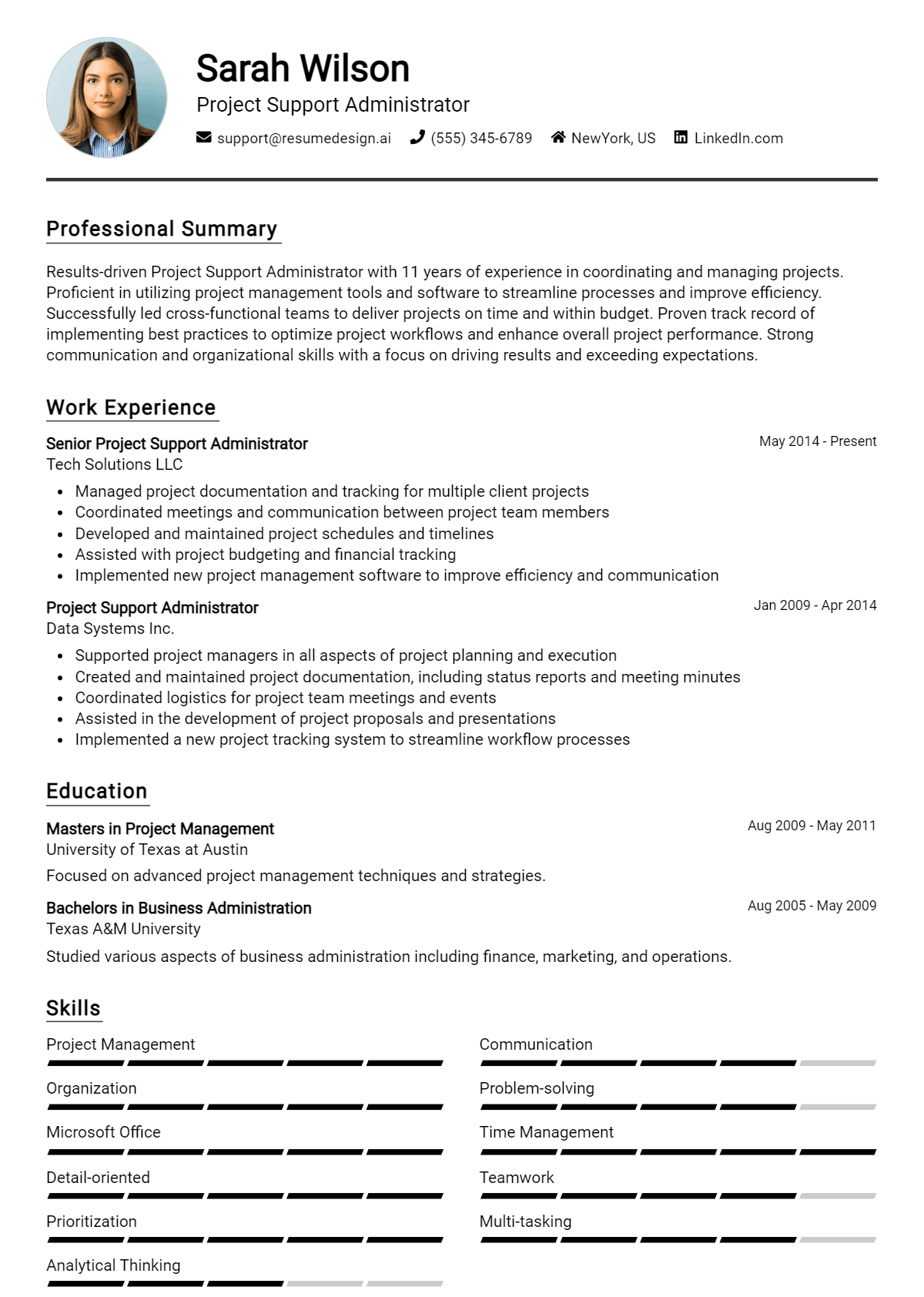
In preparing for a job interview for the role of Project Support Administrator, it's essential to anticipate the types of questions you may face. This position often requires a blend of organizational skills, communication abilities, and a strong understanding of project management principles. Being well-prepared can help you demonstrate your suitability for the role and set you apart from other candidates.
Here is a list of common job interview questions for Project Support Administrators, along with examples of the best answers. These questions cover your work history and experience, what you have to offer the employer, and your goals for the future, allowing you to showcase your skills and align them with the specific needs of the organization.
1. Can you describe your experience with project management software?
I have extensive experience with project management software like Asana and Trello. I utilize these tools to track project progress, assign tasks, and ensure team collaboration. This experience has enhanced my organizational skills and allowed me to streamline project workflows effectively.
Example:
In my previous role, I managed multiple projects using Asana, which helped me keep all stakeholders updated and ensured deadlines were met without delays.
2. How do you prioritize tasks in a busy project environment?
I prioritize tasks based on urgency and project deadlines. I assess the impact of each task on project milestones and use tools like priority matrices to help me and the team stay focused on high-impact activities while remaining flexible to changes.
Example:
For instance, in my last project, I used a priority matrix to identify critical tasks, allowing the team to address high-priority items first and maintain project momentum.
3. How do you handle changes in project scope?
When project scope changes, I first assess the impact on timelines and resources. I then communicate these changes to stakeholders and collaborate with the team to adjust our plans accordingly, ensuring that all parties are aligned and informed throughout the process.
Example:
In a recent project, a scope change required additional features; I organized a meeting to discuss impacts, allowing us to reallocate resources efficiently and meet the new deadlines.
4. Can you provide an example of how you manage project documentation?
I maintain project documentation by utilizing cloud-based tools for version control and easy access. I ensure that all project documents are organized, regularly updated, and shared with stakeholders, which fosters transparency and keeps everyone informed throughout the project lifecycle.
Example:
In my last project, I created a shared drive where all documentation was stored, making it easy for the team to access and update files in real-time.
5. How do you ensure effective communication within a project team?
I ensure effective communication by scheduling regular check-ins and utilizing collaborative tools like Slack or Microsoft Teams. I encourage open dialogue among team members and actively seek feedback to address concerns promptly and maintain a cohesive team environment.
Example:
In a past project, I implemented weekly stand-up meetings, which significantly improved transparency and team cohesion, allowing us to address issues quickly.
6. What strategies do you use for risk management in projects?
I use proactive risk management strategies by identifying potential risks early through brainstorming sessions and SWOT analyses. I develop mitigation plans for high-risk areas, ensuring the team is prepared to respond effectively should issues arise.
Example:
In a recent project, I identified resource shortages as a risk and created a plan to secure backup resources, which ultimately avoided delays in the project timeline.
7. How do you track project progress and performance?
I track project progress using key performance indicators (KPIs) and Gantt charts to visualize timelines. Regular status reports and team meetings help ensure everyone is aligned and enable me to identify any areas that require additional attention.
Example:
In my last role, I implemented a dashboard displaying KPIs, which provided real-time insights into project performance and helped us stay on track.
8. How do you support project managers in their roles?
I support project managers by handling administrative tasks such as scheduling meetings, preparing reports, and facilitating communication. This allows them to focus on high-level project management while I ensure that the operational side runs smoothly and efficiently.
Example:
For example, I regularly prepared project status reports for our manager, enabling them to focus on strategic decision-making without getting bogged down in details.
9. How do you prioritize tasks when managing multiple projects?
I prioritize tasks by assessing deadlines, project importance, and resource availability. I use project management tools to visualize tasks and set reminders. This method ensures timely completion and helps maintain high-quality standards across all projects.
'Example:'
In my previous role, I used Trello to manage task priorities effectively, allowing me to focus on high-impact tasks first while ensuring deadlines were met across multiple projects.
10. Can you describe a time when you had to deal with a difficult stakeholder?
I encountered a difficult stakeholder who was unhappy with project updates. I scheduled a meeting to listen to their concerns, provided clarity, and adjusted communication methods. This proactive approach improved our relationship and ensured project alignment.
'Example:'
By addressing their concerns directly and regularly updating them, I turned a challenging situation into a collaborative partnership, leading to smoother project execution.
11. What tools or software have you used for project management?
I have experience with tools like Microsoft Project, Asana, and Jira. These platforms help me track project progress, allocate resources, and ensure team collaboration, ultimately leading to successful project outcomes.
'Example:'
In my last position, I utilized Asana to improve task tracking, which enhanced transparency and accountability within the team.
12. How do you ensure effective communication within a project team?
I ensure effective communication by establishing regular check-ins, using collaborative tools, and encouraging open dialogue. This fosters a positive environment where team members feel comfortable sharing updates and challenges.
'Example:'
By implementing weekly team meetings and using Slack for daily updates, I maintained clear communication channels that facilitated project success.
13. Describe how you handle tight deadlines.
I handle tight deadlines by breaking tasks into smaller, manageable steps and focusing on the most critical elements first. Effective time management and prioritization ensure that I meet deadlines without compromising quality.
'Example:'
During a recent project, I created a timeline that prioritized key deliverables, allowing me to meet a tight deadline successfully.
14. What steps do you take to manage project risks?
I manage project risks by identifying potential issues early, conducting a risk assessment, and developing mitigation strategies. Regular monitoring and adjustment of plans help minimize risks throughout the project lifecycle.
'Example:'
In a previous project, I identified a resource shortage risk early and coordinated with HR to secure additional support, ensuring project continuity.
15. How do you keep track of project budgets?
I keep track of project budgets by maintaining detailed records of expenses, using budget tracking software, and conducting regular financial reviews. This approach helps ensure we stay within budget and can identify any discrepancies early.
'Example:'
In my last role, I implemented a monthly budget review process, which significantly reduced overspending and improved financial oversight.
16. Can you give an example of how you improved a project process?
I improved a project process by introducing a standardized reporting template, which streamlined updates and reduced confusion. This change enhanced clarity and efficiency, ultimately leading to better project tracking and stakeholder satisfaction.
'Example:'
After implementing the new template, team members reported a 30% reduction in time spent on status updates.
17. How do you prioritize tasks in a project support role?
I prioritize tasks based on deadlines, importance, and project goals. By using project management tools, I can assess what needs immediate attention and allocate my time effectively to ensure all tasks align with project timelines and objectives.
Example:
I use a digital task manager to list tasks by urgency. Daily, I review this list to adjust priorities, ensuring that critical deadlines are met while supporting team needs efficiently.
18. Describe your experience with project documentation.
I have extensive experience in maintaining project documentation, including meeting minutes, project plans, and status reports. I ensure that all documents are accurate and accessible, which helps the team stay informed and aligned throughout the project lifecycle.
Example:
In my last role, I organized all project documentation in a shared drive, which improved team collaboration and made it easier to locate important files quickly.
19. How do you handle communication between team members?
I facilitate open communication by scheduling regular check-ins and using collaboration tools. I encourage team members to share updates and concerns, ensuring that everyone stays informed and engaged throughout the project.
Example:
I set up weekly team meetings and utilize platforms like Slack for real-time updates, fostering transparency and collaboration among team members.
20. Can you describe a time when you had to resolve a conflict within the team?
In a previous project, two team members disagreed on a task approach. I mediated a discussion, allowing each to express their viewpoints. We then collaboratively identified a solution that combined their ideas, strengthening teamwork and improving project outcomes.
Example:
I facilitated a meeting where both members shared their concerns, leading to a compromise that satisfied both parties and kept the project on track.
21. What tools do you use for project tracking and reporting?
I regularly use tools like Microsoft Project, Trello, and Asana for tracking project progress and reporting. These tools help visualize tasks, deadlines, and resource allocation, making it easier to communicate updates to stakeholders.
Example:
In my last position, I used Trello to track tasks and generate weekly status reports, which improved visibility and accountability for the entire team.
22. How do you ensure compliance with project deadlines?
I ensure compliance with deadlines by regularly monitoring progress against the project timeline. I also set reminders and check in with team members to address any potential delays before they impact the overall project delivery.
Example:
I implement a tracking system to monitor deadlines and hold weekly status meetings to keep everyone accountable, allowing us to adjust workloads proactively.
23. Explain how you support project managers in their roles.
I support project managers by organizing project schedules, preparing reports, and coordinating meetings. By handling administrative tasks, I allow project managers to focus on strategic decision-making and maintaining team morale.
Example:
In my last role, I prepared all meeting agendas and documentation, enabling the project manager to concentrate on high-level project strategies and stakeholder engagement.
24. What strategies do you use to track project risks?
I track project risks by maintaining a risk register and regularly reviewing it with the team. I also encourage open communication about potential risks, helping the team to be proactive in identifying and mitigating issues before they escalate.
Example:
I facilitated a bi-weekly review of our risk register, discussing any new risks and brainstorming mitigation strategies, which helped us stay ahead of potential challenges.
25. How do you prioritize tasks when supporting multiple projects?
I prioritize tasks by assessing deadlines, project importance, and resource availability. I use tools like to-do lists and project management software to stay organized. Regular communication with the project team helps me adjust priorities as needed to meet goals efficiently. Example: I prioritize using a matrix to evaluate urgency versus importance, ensuring I focus on tasks that align with project timelines and stakeholder expectations.
26. Describe a time when you faced a significant challenge in a project. How did you handle it?
In a previous role, we faced a budget cut mid-project. I organized a meeting with stakeholders to reassess priorities and find cost-saving measures. By reallocating resources and adjusting timelines, we successfully completed the project within the new constraints. Example: I facilitated a brainstorming session to explore alternatives, which led to innovative solutions that kept the project on track despite the budget cut.
27. What tools or software do you find most helpful in project support roles?
I find project management tools like Microsoft Project and Trello invaluable for tracking progress and deadlines. Additionally, I use Excel for data analysis and reporting. Collaboration tools like Slack enhance communication among team members, keeping everyone aligned on project goals. Example: I regularly use Trello for task management and communication, ensuring transparency and accountability throughout the project lifecycle.
28. How do you ensure effective communication among project stakeholders?
I ensure effective communication by establishing clear channels for updates, feedback, and discussions. Regular meetings and status reports keep stakeholders informed. I tailor my communication style to suit different audiences, ensuring that everyone understands the project's progress and challenges. Example: I schedule bi-weekly updates and use visual aids in presentations to cater to different stakeholder preferences, promoting clarity and understanding.
29. Can you provide an example of how you handled a project deadline that was moved up?
When a project deadline was moved up unexpectedly, I gathered the team to reassess our workload and identify critical tasks. We created an adjusted timeline, prioritized essential deliverables, and increased our communication frequency to ensure everyone was aligned and focused on meeting the new deadline. Example: I led a quick planning session to realign tasks, which enabled us to deliver key components ahead of the revised deadline without compromising quality.
30. How do you handle conflicts within a project team?
I handle conflicts by encouraging open dialogue among team members to understand different perspectives. I mediate discussions to find common ground and promote a collaborative resolution. Fostering a positive team environment is key to reducing conflicts and enhancing productivity. Example: I facilitated a team meeting where each member shared their concerns, leading to a mutual agreement on roles and responsibilities that satisfied everyone involved.
31. How do you track project progress and report it to stakeholders?
I track project progress using Gantt charts and status reports. I regularly update these tools based on team input and conduct weekly review meetings. Stakeholders receive concise reports highlighting key metrics, risks, and accomplishments, ensuring they remain informed and engaged throughout the project. Example: I send out a weekly summary email detailing project milestones and any potential risks, which keeps stakeholders informed and supportive of our progress.
32. What do you consider to be the key skills for a Project Support Administrator?
Key skills include strong organizational abilities, effective communication, and proficiency in project management tools. Additionally, analytical skills for data interpretation and problem-solving are crucial. A proactive attitude and adaptability to changing project needs also contribute significantly to success in this role. Example: I believe strong organizational skills, attention to detail, and effective communication are essential to coordinating tasks and supporting project teams efficiently.
33. How do you prioritize tasks when managing multiple projects?
I prioritize tasks based on urgency and project deadlines, using tools like Gantt charts and task lists. I always communicate with team members to ensure alignment and adjust priorities as needed to meet project goals efficiently.
Example:
I use a priority matrix to assess tasks based on deadlines and importance, ensuring that critical tasks align with project milestones. Regular check-ins with my team help adapt priorities effectively.
34. Can you describe a time when you had to handle a project setback?
In a previous project, we faced a delay due to a vendor issue. I quickly gathered the team to identify alternative solutions and communicated transparently with stakeholders, allowing us to adjust timelines and maintain project momentum.
Example:
We encountered a delay from a supplier, but I facilitated a team meeting to brainstorm alternatives. We secured a backup vendor, which helped us stay on track and informed stakeholders about the updated timeline.
35. What tools or software do you use for project management?
I frequently use tools like Asana and Microsoft Project for task tracking, along with Excel for budgeting. These tools enhance collaboration, streamline communication, and keep the project organized and on schedule.
Example:
I rely on Trello for task assignment and progress tracking, while Microsoft Teams aids in communication. This combination allows for real-time updates and efficient collaboration across project teams.
36. How do you ensure effective communication among project team members?
I establish clear communication channels and regular meetings to discuss progress and challenges. I also encourage open feedback and utilize collaborative tools to ensure everyone is informed and engaged throughout the project lifecycle.
Example:
I set up weekly check-ins and utilize Slack for day-to-day communication, ensuring everyone is aligned. This approach fosters transparency and encourages team members to share updates and concerns promptly.
37. Describe a situation where you had to manage conflicting priorities.
When two projects overlapped, I assessed their urgency and impact, then communicated with stakeholders to realign priorities. I delegated tasks to team members, ensuring that both projects progressed without compromising quality or deadlines.
Example:
I faced conflicting deadlines and organized a meeting to discuss priorities. By reallocating resources and adjusting timelines, both projects were completed successfully, meeting stakeholder expectations.
38. How do you track project progress and report it to stakeholders?
I track progress using project management tools and create regular status reports that highlight key metrics and milestones. I ensure stakeholders receive updates through concise presentations, keeping them informed and engaged.
Example:
I utilize dashboards in project management software to monitor progress. I then compile weekly reports summarizing achievements and next steps, ensuring stakeholders are always up-to-date.
39. What strategies do you use to manage project documentation?
I implement a systematic approach for managing documentation, including version control and centralized storage. This ensures that all team members have access to the latest documents and can easily track changes throughout the project lifecycle.
Example:
I use Google Drive to organize project documents with clear naming conventions. Regular audits ensure that outdated files are archived, keeping our documentation streamlined and accessible.
40. How do you handle feedback or criticism on your project management style?
I view feedback as an opportunity for growth. I actively solicit input from team members and stakeholders, reflecting on their suggestions to enhance my project management approach and foster a more collaborative environment.
Example:
When receiving criticism, I take time to reflect on the feedback and discuss it with my team. This process helps me adjust my methods and improve how I support the project and the team.
41. How do you prioritize tasks when supporting multiple projects?
I prioritize tasks by assessing deadlines, project impact, and urgency. I use tools like task lists and project management software to organize my workload effectively. Regular communication with project leads helps me ensure that I focus on the most critical tasks at any given time.
Example:
I use a priority matrix to categorize tasks by urgency and importance, which allows me to focus on high-impact activities first. For example, I recently prioritized resource allocation for a critical project over routine administrative tasks.
42. Can you describe a time you faced a challenge in a project?
During a project, a key team member unexpectedly left. This created a gap in our timeline. I quickly coordinated with the remaining team members to redistribute tasks and adjusted the project schedule while maintaining open communication with stakeholders to manage expectations.
Example:
I faced a challenge when a team member left mid-project. I organized a meeting to redistribute their tasks and updated the project plan accordingly, ensuring the team stayed on track while keeping stakeholders informed about the changes.
43. What software tools are you proficient in for project support?
I am proficient in Microsoft Project, Trello, and Asana for project management, along with Excel for data analysis. These tools enable me to effectively track progress, manage resources, and collaborate with team members, ensuring projects run smoothly and efficiently.
Example:
I regularly use Microsoft Project for scheduling, Trello for task management, and Excel for tracking budgets. These tools enhance my ability to monitor project milestones and facilitate communication among team members.
44. How do you handle conflicts within a project team?
I address conflicts by facilitating open communication among team members. I encourage a collaborative approach to resolve issues and ensure everyone’s perspective is heard. By focusing on common goals, we can find solutions that satisfy all parties involved.
Example:
In a previous project, I noticed tension between two team members. I organized a mediation meeting where both could express their concerns, leading to a clearer understanding and a resolution that benefited the project.
45. What is your approach to documenting project progress?
I maintain comprehensive documentation by regularly updating project logs, meeting minutes, and status reports. I use a standardized format to ensure consistency and clarity, making it easier for all stakeholders to track progress and understand project developments.
Example:
I use a centralized project management tool to document progress and updates, ensuring all information is easily accessible. After each meeting, I distribute minutes and a summary of action items to keep everyone informed.
46. How do you ensure compliance with project requirements?
I ensure compliance by regularly reviewing project requirements and aligning team actions with these standards. I conduct periodic audits of project processes and work closely with team members to address any discrepancies, fostering a culture of accountability and adherence to guidelines.
Example:
I establish a checklist based on project requirements and conduct regular reviews with the team. This proactive approach helps identify potential compliance issues early, allowing us to address them promptly and maintain project integrity.
How Do I Prepare For A Project Support Administrator Job Interview?
Preparing for a Project Support Administrator job interview is crucial to making a positive impression on the hiring manager. By taking the time to prepare effectively, you can showcase your skills, experience, and enthusiasm for the role, increasing your chances of landing the job.
- Research the company and its values to understand its culture and goals.
- Practice answering common interview questions related to project management and administrative support.
- Prepare examples that demonstrate your skills and experience relevant to the Project Support Administrator position.
- Familiarize yourself with project management tools and software commonly used in the industry.
- Dress professionally to convey your seriousness about the role.
- Prepare thoughtful questions to ask the interviewer about the team and the projects you would be involved in.
- Review your resume and be ready to discuss your background and how it aligns with the job requirements.
Frequently Asked Questions (FAQ) for Project Support Administrator Job Interview
Being well-prepared for an interview is crucial, especially for a role as dynamic as a Project Support Administrator. Understanding the common questions asked during interviews can help candidates articulate their skills, experiences, and fit for the job more effectively. Below are some frequently asked questions to help you prepare for your upcoming interview.
What should I bring to a Project Support Administrator interview?
When attending a Project Support Administrator interview, it’s essential to come prepared with several key items. Bring multiple copies of your resume, a list of references, and any relevant certifications or documents that showcase your skills and experience. Additionally, having a notepad and pen can be helpful for taking notes or jotting down questions you may want to ask the interviewer. Being organized and professional in your presentation will create a positive first impression.
How should I prepare for technical questions in a Project Support Administrator interview?
To prepare for technical questions, review the job description thoroughly and identify the specific skills and tools mentioned, such as project management software or methodologies. Brush up on your knowledge of these tools and be ready to discuss how you have used them in past experiences. Additionally, consider practicing common technical questions that relate to project support tasks, such as scheduling, resource allocation, and reporting. Online resources and mock interviews can be beneficial for gaining confidence in your responses.
How can I best present my skills if I have little experience?
If you have limited experience, focus on transferable skills and relevant coursework or internships that align with the Project Support Administrator role. Highlight your organizational abilities, attention to detail, and any experience working in team settings, even if it was in a different context. Use the STAR (Situation, Task, Action, Result) method to structure your responses, illustrating how your skills can apply to the responsibilities of the position. Employers often value potential and attitude alongside experience.
What should I wear to a Project Support Administrator interview?
Your attire for the interview should convey professionalism and confidence. Generally, business casual is a safe choice for a Project Support Administrator role, unless otherwise specified. This may include dress slacks or a skirt paired with a collared shirt or blouse. Ensure your clothes are clean, well-fitted, and free of wrinkles. It’s also wise to avoid overly flashy accessories or strong fragrances to maintain a polished appearance. Dressing appropriately can help set the tone for a positive interview experience.
How should I follow up after the interview?
Following up after an interview is an important step that shows your continued interest in the position. Aim to send a thank-you email within 24 hours of your interview. In your message, express gratitude for the opportunity to interview, briefly reiterate your enthusiasm for the role, and mention any key points discussed during the interview that reinforce your qualifications. This simple gesture can leave a lasting impression and may help keep you top-of-mind as the hiring decision is made.
Conclusion
In summary, this interview guide has highlighted the essential components for success as a Project Support Administrator, emphasizing the significance of thorough preparation, consistent practice, and showcasing relevant skills during the interview process. By focusing on both technical and behavioral questions, candidates can greatly enhance their likelihood of impressing interviewers and securing the position.
We encourage you to leverage the tips and examples provided in this guide as you prepare for your upcoming interviews. Approach your preparations with confidence, and remember that each interview is an opportunity to learn and grow.
For further assistance, check out these helpful resources: resume templates, resume builder, interview preparation tips, and cover letter templates.