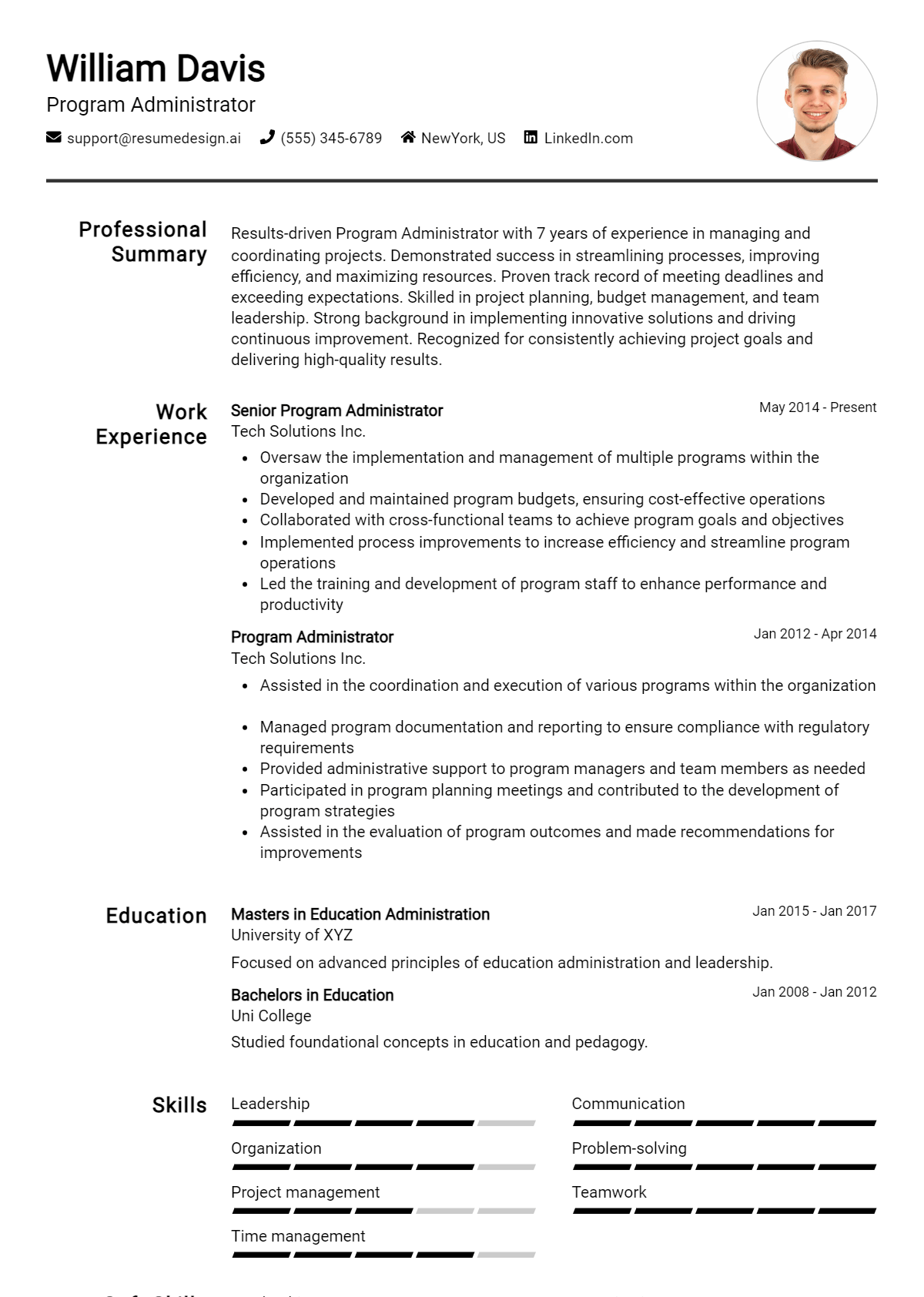
In preparation for a role as a Program Administrator, it's essential to anticipate the types of questions you may encounter during the interview process. Understanding these questions will not only help you articulate your qualifications but also demonstrate your readiness to manage and oversee various programs effectively.
Here is a list of common job interview questions for a Program Administrator, along with examples of the best answers. These questions cover your work history and experience, your skills in program management, what you have to offer the employer, and your goals for the future, ensuring you can present yourself as a strong candidate for the position.
1. Can you describe your experience with program management?
In my previous role, I successfully managed a community outreach program, coordinating logistics, budgets, and team communications. This experience honed my organizational skills, enabling me to oversee multiple projects simultaneously while ensuring timely completion and adherence to objectives.
Example:
I managed a youth mentorship program, overseeing budget allocations and volunteer coordination. This involved planning events and workshops, which improved my ability to multitask and prioritize tasks effectively while ensuring all program goals were met.
2. How do you handle conflicts within a team?
I address conflicts by encouraging open communication among team members. I facilitate discussions to understand differing perspectives, aiming for collaborative solutions. This approach fosters a positive team environment and helps maintain focus on our program goals.
Example:
In one instance, two team members disagreed on a project approach. I mediated a meeting where both shared their viewpoints, leading to a compromise that satisfied both parties while keeping our project on track.
3. What strategies do you use to ensure program objectives are met?
I set clear, measurable objectives and regularly track progress against them. I utilize project management tools to monitor timelines and budgets, ensuring accountability. Regular team meetings also help to address any challenges promptly.
Example:
I implement SMART goals for my programs, allowing us to track progress effectively. Regular check-ins ensure that we adapt strategies if we encounter roadblocks, keeping the team aligned and focused on our objectives.
4. How do you prioritize your workload?
I prioritize tasks based on urgency and impact. I frequently assess deadlines and objectives, using tools like to-do lists and digital calendars to stay organized. This helps me manage my time effectively and meet program requirements.
Example:
I categorize tasks into urgent, important, and less critical. For instance, I focus on immediate deadlines first while ensuring long-term projects progress steadily, which helps maintain an efficient workflow and ensures all responsibilities are managed.
5. Can you give an example of a successful program you managed?
I managed a volunteer program that connected high school students with local nonprofits. We exceeded our target participation by 30% through effective marketing and engagement strategies, fostering community involvement and providing students with valuable experiences.
Example:
I led a summer internship program that matched students with local businesses. We successfully placed over 50 interns, enhancing their skills while benefiting our partners, demonstrating strong collaboration and program impact within the community.
6. How do you measure the success of a program?
I measure program success using predefined metrics, such as participant feedback, achievement of goals, and overall impact. Post-program evaluations and surveys provide insights into areas of improvement and highlight successes.
Example:
For a recent program, I analyzed participant surveys and success stories, revealing a 90% satisfaction rate. This data, combined with our goal achievements, confirmed the program’s effectiveness and guided future enhancements.
7. What is your experience with budgeting and financial management?
I have experience preparing budgets for various programs, ensuring resource allocation aligns with objectives. I regularly track expenditures and adjust budgets as necessary to avoid overspending while achieving program goals.
Example:
I managed a program budget of $50,000, closely monitoring expenses and providing quarterly financial reports. By identifying cost-saving opportunities, I was able to reallocate funds to enhance program activities without exceeding the budget.
8. How do you stay updated with trends in program administration?
I regularly attend workshops and webinars related to program management. Additionally, I follow industry publications and participate in professional networks to stay informed about emerging trends and best practices in program administration.
Example:
I subscribe to relevant journals and attend annual conferences. Networking with other professionals also allows me to share insights and learn about innovative practices that can be applied to my programs.
9. How do you prioritize tasks in a fast-paced environment?
In a fast-paced environment, I prioritize tasks by assessing deadlines and the impact of each task on overall program goals. I utilize a task management tool to keep track of priorities, allowing me to adjust as necessary while ensuring all critical tasks are completed on time.
Example:
I often use a priority matrix to categorize tasks by urgency and importance, ensuring urgent matters are addressed first while keeping long-term goals in focus. This approach has helped me meet tight deadlines consistently.
10. Can you describe a challenging situation you faced and how you resolved it?
I once faced a budget shortfall that threatened a project’s success. I organized a meeting with stakeholders to discuss alternatives and proposed reallocating resources. By fostering collaboration and transparency, we found a solution that kept the project on track while ensuring all parties were satisfied.
Example:
In a previous role, I encountered a similar budget issue. After consulting with my team and management, we outlined a phased approach that allowed us to continue the project within budget constraints, ensuring essential elements were completed first.
11. How do you ensure effective communication among team members?
I ensure effective communication by establishing regular check-ins and using collaborative tools like Slack or Microsoft Teams. I encourage open dialogue and feedback, which fosters a supportive environment where team members feel comfortable sharing ideas and updates.
Example:
In my previous position, I implemented weekly status meetings that allowed our team to discuss progress and challenges, leading to improved collaboration and timely issue resolution.
12. Explain how you handle conflicts within a team.
When conflicts arise, I address them promptly by facilitating a discussion between the involved parties. I encourage each person to share their perspective and work towards a mutually agreeable solution, promoting understanding and teamwork to resolve the issue effectively.
Example:
For instance, I mediated a disagreement between two team members by organizing a one-on-one meeting where they could express their concerns, ultimately leading to a collaborative resolution that strengthened their working relationship.
13. What strategies do you use for program evaluation?
I utilize quantitative and qualitative methods for program evaluation, including surveys, interviews, and performance metrics. I analyze the data to assess effectiveness and identify areas for improvement, ensuring the program meets its objectives and stakeholder expectations.
Example:
In my last project, I developed a feedback survey that provided valuable insights into participant satisfaction, enabling us to refine our approach and enhance overall program effectiveness.
14. How do you stay organized when managing multiple programs?
I stay organized by using project management software to track timelines, tasks, and resources across multiple programs. I maintain a detailed calendar and regularly review priorities, ensuring I meet deadlines and provide updates to stakeholders.
Example:
By employing tools like Trello, I can visualize tasks and deadlines for various programs, allowing me to allocate my time effectively and ensure nothing falls through the cracks.
15. Describe your experience with budget management.
I have extensive experience in budget management, including creating, monitoring, and reconciling budgets for various programs. I utilize financial software to track expenditures and ensure compliance, conducting regular reviews to identify variances and adjust forecasts as needed.
Example:
In my previous role, I successfully managed a $500,000 budget, consistently delivering programs within financial constraints while maintaining high-quality outcomes through careful planning and resource allocation.
16. How do you ensure compliance with regulations and policies?
I ensure compliance by staying updated on relevant regulations and policies through regular training and resources. I implement checklists and protocols within the team, conducting periodic audits to verify adherence and address any issues promptly.
Example:
In my last position, I developed a compliance handbook tailored to our program, which significantly reduced the number of non-compliance incidents and improved overall program integrity.
17. How do you prioritize tasks when managing multiple programs?
I prioritize tasks by assessing deadlines, urgency, and impact. I utilize tools like Gantt charts to visualize timelines and allocate resources effectively. Regular check-ins with my team help ensure we stay on track and adjust priorities as needed.
Example:
I use project management software to organize tasks based on deadlines and team capacity, allowing me to focus on high-impact activities first while ensuring that nothing falls through the cracks.
18. Can you describe a time when you had to manage a budget for a program?
In my previous role, I managed a $50,000 budget for a training program. I tracked expenses meticulously and identified cost-saving opportunities, which allowed us to allocate funds towards additional resources while still staying under budget.
Example:
I implemented a new tracking system that improved budget oversight, ensuring all expenditures were justified and aligned with program goals, ultimately saving 10% of the budget.
19. How do you handle conflicts within a team?
I address conflicts by facilitating open communication among team members. I encourage them to express their viewpoints and mediate discussions to find common ground, ensuring everyone feels heard and respected.
Example:
In a previous project, I organized a team meeting where everyone could voice their concerns, leading to a collaborative resolution that strengthened our working relationships and improved project outcomes.
20. What strategies do you use to ensure program compliance with regulations?
I stay updated on relevant regulations and integrate compliance checks into our program processes. Regular training sessions for the team also help ensure everyone understands compliance requirements and their importance.
Example:
By conducting quarterly audits and providing staff with compliance training, I ensured our programs consistently adhered to regulations, minimizing risks of violations.
21. Describe a successful program you have managed. What made it successful?
I managed a mentorship program that paired 100 participants. Success stemmed from strong partnerships, clear goals, and continuous feedback loops, which allowed us to adapt and improve the program based on participant needs.
Example:
The program's success was evident in the positive feedback and a 90% satisfaction rate, largely due to our robust matching process and ongoing support for mentors and mentees.
22. How do you measure the success of a program?
I measure success through key performance indicators (KPIs) such as participant satisfaction, outcomes achieved, and cost-effectiveness. Regular feedback surveys also provide insights into areas for improvement.
Example:
For a recent program, I utilized pre- and post-surveys to assess participant growth, resulting in a clear metric of success that informed future programming decisions.
23. What role does communication play in your position as a Program Administrator?
Communication is vital in my role. It ensures alignment among stakeholders, facilitates effective teamwork, and provides clarity on program objectives and updates, ultimately leading to smoother operations and enhanced collaboration.
Example:
I schedule regular updates with team members and stakeholders, fostering an environment of transparency that enhances trust and keeps everyone informed on progress and changes.
24. How do you keep yourself organized and manage your time effectively?
I utilize digital tools like calendars and task management apps to keep track of deadlines and prioritize my tasks. Setting specific daily goals helps me stay focused and organized throughout the week.
Example:
By blocking time for specific activities and regularly reviewing my progress, I ensure I stay organized and meet all my deadlines efficiently.
25. How do you prioritize tasks when managing multiple programs?
I utilize a combination of urgency and importance to prioritize tasks. By creating a detailed schedule and using project management tools, I ensure that I meet deadlines while maintaining the quality of each program. This systematic approach helps me effectively balance competing priorities.
Example:
I assess each task's impact on overall program goals, then use tools like Trello to organize and prioritize them. This method allows me to stay on track and address urgent issues without sacrificing long-term objectives.
26. Can you describe a time when you had to manage a budget? What challenges did you face?
In my previous role, I managed a program budget of $500,000. A challenge was unexpected costs arising from vendor price increases. I addressed this by negotiating with vendors for discounts and reallocating funds from underutilized areas, ensuring program continuity without compromising quality.
Example:
I once faced a budget shortfall due to unexpected expenses. By reviewing all line items and adjusting allocations, I managed to cover essential costs while still delivering the program objectives on time and within budget.
27. How do you ensure compliance with organizational policies and regulations?
I maintain compliance by regularly reviewing policies and implementing training sessions for staff. I also work closely with compliance officers to ensure all programs adhere to regulations, which helps prevent violations and promotes a culture of accountability within the organization.
Example:
By conducting regular audits and training sessions, I ensure that my team understands relevant policies. I maintain open communication with compliance officers to stay updated on changes and address any potential issues proactively.
28. Describe a situation where you had to resolve a conflict among team members.
In one instance, two team members disagreed on project direction. I facilitated a meeting where each could express their views. By focusing on common goals and encouraging collaboration, we reached a consensus that satisfied both parties and strengthened team dynamics.
Example:
I once mediated a conflict between two staff members by providing a neutral space for them to share their concerns. After discussing their perspectives, they collaboratively developed a solution that benefited the project and improved their working relationship.
29. What strategies do you use to monitor and evaluate program effectiveness?
I implement key performance indicators (KPIs) aligned with program goals to monitor effectiveness. Regular feedback loops from participants and stakeholders provide insights for continuous improvement. Post-program evaluations help identify areas for enhancement, ensuring we meet objectives efficiently.
Example:
I utilize surveys and performance metrics to assess program outcomes. After each program, I analyze feedback to identify strengths and areas for improvement, allowing me to refine future initiatives based on participant experiences and data.
30. How do you handle changes in program scope or objectives?
When faced with changes in program scope, I assess the implications on resources and timelines. I communicate transparently with stakeholders about the changes and collaboratively develop a revised plan that aligns with new objectives while minimizing disruption to the program.
Example:
In the past, when program goals shifted, I organized a meeting with stakeholders to discuss adjustments needed. By creating a revised timeline and reallocating resources, we successfully adapted without compromising quality or outcomes.
31. What role do you think technology plays in program administration?
Technology is vital for program administration as it enhances efficiency and communication. I leverage project management software to streamline tasks, data analytics for program evaluation, and communication tools to ensure all stakeholders are engaged, ultimately leading to improved program outcomes.
Example:
I use tools like Asana for project tracking and Zoom for team meetings. This technology facilitates real-time collaboration, enhances productivity, and allows for quick adjustments based on team feedback and project developments.
32. How do you foster a positive team environment?
I promote a positive team environment by encouraging open communication, recognizing individual contributions, and providing opportunities for professional development. Team-building activities help strengthen relationships, fostering collaboration and trust, which ultimately enhances program success.
Example:
I regularly celebrate team achievements, both big and small. By organizing team-building events and providing feedback, I create an inclusive atmosphere where everyone feels valued and motivated to contribute their best work.
33. How do you prioritize tasks when managing multiple programs simultaneously?
I prioritize tasks by assessing deadlines, program impact, and available resources. I utilize project management tools to track progress and regularly communicate with team members to ensure alignment on priorities. This systematic approach helps me effectively manage competing demands.
Example:
I use a priority matrix to categorize tasks by urgency and importance, allowing me to focus on high-impact activities. This ensures that I meet deadlines while maintaining quality across all programs.
34. Describe a time when you had to resolve a conflict within your team.
In a previous role, two team members disagreed on project direction. I facilitated a meeting where each could present their views. By encouraging open communication, we found a compromise that leveraged both ideas, enhancing team cohesion and project success.
Example:
I mediated a conflict by setting up a discussion forum where everyone could express their concerns. Through active listening, we identified shared goals, leading to a collaborative solution and improved team dynamics.
35. How do you handle feedback from stakeholders that may not align with your vision?
I value stakeholder feedback as it provides insights into different perspectives. I assess the feedback critically, discussing it with my team. If it aligns with program goals, I adapt; otherwise, I communicate my rationale for maintaining our vision clearly.
Example:
When faced with conflicting feedback, I engage stakeholders in dialogue to understand their concerns. If their suggestions enhance our objectives, I incorporate them; otherwise, I provide a clear explanation of our strategy and its benefits.
36. What strategies do you use to ensure effective communication within your team?
I utilize regular check-ins, collaborative tools, and an open-door policy to foster communication. By encouraging team members to share updates and challenges, I create a transparent environment that enhances collaboration and keeps everyone informed.
Example:
I implement weekly team meetings and use platforms like Slack for real-time communication. This ensures everyone is aligned and feels comfortable sharing ideas and concerns, which strengthens our teamwork.
37. Can you give an example of how you have improved a program?
At my last job, I noticed low participant engagement in a training program. I gathered feedback, revamped the curriculum to be more interactive, and introduced follow-up sessions. This led to a 40% increase in satisfaction scores and improved outcomes.
Example:
I conducted surveys to identify engagement issues, then redesigned the program to incorporate hands-on activities. The result was a significant uptick in attendance and participant satisfaction.
38. What software and tools do you find most effective for program management?
I find tools like Asana for task management, Google Workspace for collaboration, and Excel for data analysis essential. These tools streamline workflows, enhance communication, and help in tracking progress efficiently across multiple programs.
Example:
I frequently use Trello for project tracking and Zoom for virtual meetings. These tools help keep our team organized and ensure seamless communication, regardless of location.
39. How do you measure the success of a program?
I measure program success through predefined KPIs, feedback surveys, and outcome assessments. Analyzing these metrics allows me to gauge effectiveness, identify areas for improvement, and demonstrate value to stakeholders.
Example:
I track participant satisfaction rates and program completion metrics. Regularly reviewing these indicators helps adjust our strategies to ensure outcomes align with our goals.
40. How do you ensure compliance with organizational policies in your programs?
I ensure compliance by staying informed about relevant policies and incorporating them into program planning. Regular training sessions for the team and audits help maintain adherence, while open communication encourages reporting of concerns.
Example:
I conduct quarterly reviews of all program processes against organizational policies and provide training to the team to reinforce compliance, ensuring we meet all regulatory requirements.
41. How do you prioritize tasks when managing multiple programs?
I prioritize tasks by assessing deadlines, impact, and resource availability. I utilize project management tools to track progress and ensure transparent communication with team members, enabling effective delegation and timely completion of high-priority tasks.
Example:
I use a priority matrix to categorize tasks. For example, I focus on urgent deadlines first while ensuring ongoing projects are not neglected, which helps maintain balance and efficiency across all programs.
42. Can you describe a situation where you had to handle conflict within a team?
I once mediated a conflict between team members over resource allocation. I facilitated a meeting where each party voiced concerns, leading to a collaborative solution. This improved team dynamics and reinforced open communication, fostering a more cohesive work environment.
Example:
During a project, two team members disagreed on priorities. I organized a meeting to discuss their viewpoints, which led to a compromise that satisfied both sides and improved our workflow.
43. How do you ensure compliance with program regulations and standards?
I stay updated on relevant regulations and implement compliance checks within our processes. Regular training sessions are conducted for the team to ensure everyone is aware of compliance requirements, reducing risks and improving overall program integrity.
Example:
I regularly review compliance guidelines and conduct quarterly training. For instance, I implemented a checklist that helps the team adhere to regulations, ensuring smooth audits and operations.
44. What strategies do you use to engage stakeholders in a program?
I engage stakeholders through regular updates, feedback sessions, and inclusive decision-making. By fostering open communication and addressing their concerns, I create a sense of ownership, which enhances collaboration and commitment to the program's success.
Example:
I hold monthly stakeholder meetings to discuss progress and gather input. This approach not only keeps them informed but also encourages active participation in decision-making processes.
45. Describe your experience with budget management for programs.
I have managed program budgets by closely monitoring expenses and forecasting future financial needs. By utilizing budgeting software, I track spending patterns and ensure adherence to financial guidelines, allowing for timely adjustments to stay within budget.
Example:
In my last role, I created a detailed budget plan and monitored it weekly, which helped identify cost-saving opportunities and ensured we stayed on track financially throughout the program.
46. How do you measure the success of a program?
I measure program success through predefined KPIs, participant feedback, and outcomes analysis. Regular assessments allow me to identify strengths and areas for improvement, ensuring continuous enhancement of program effectiveness and alignment with organizational goals.
Example:
I establish KPIs at the program's outset. For instance, I evaluate participant satisfaction surveys and completion rates to assess overall success and adjust future programs accordingly.
How Do I Prepare For A Program Administrator Job Interview?
Preparing for a job interview is crucial for making a positive impression on the hiring manager. A well-prepared candidate not only demonstrates their interest in the position but also showcases their qualifications and fit for the role. Here are some key tips to help you get ready for your Program Administrator interview:
- Research the company and its values to understand its mission and culture.
- Practice answering common interview questions related to program administration.
- Prepare examples that demonstrate your skills and experience relevant to the Program Administrator role.
- Familiarize yourself with the specific programs the organization manages and any challenges they may face.
- Dress professionally to convey confidence and respect for the interview process.
- Prepare thoughtful questions to ask the interviewer about the role and the organization.
- Review your resume and be ready to discuss your previous experiences in detail.
Frequently Asked Questions (FAQ) for Program Administrator Job Interview
Being well-prepared for an interview is crucial, especially for a role like Program Administrator, where organizational and communication skills are key. Candidates should anticipate common questions to demonstrate their readiness and suitability for the role. Below are some frequently asked questions that can help you prepare effectively for your interview.
What should I bring to a Program Administrator interview?
When attending a Program Administrator interview, it's essential to bring several key items to make a positive impression. Bring multiple copies of your resume, a list of references, and any relevant certifications or documents that showcase your qualifications. Additionally, having a notebook and pen can be helpful for taking notes during the interview. This preparation demonstrates your organization and attention to detail, which are crucial skills for a Program Administrator.
How should I prepare for technical questions in a Program Administrator interview?
To prepare for technical questions, first, review the job description thoroughly to identify any specific software or tools mentioned. Brush up on your knowledge of project management methodologies, data analysis techniques, and any relevant technology platforms. Practice answering common technical questions, possibly with a friend or through mock interviews. Being well-versed in these areas will not only help you answer questions confidently but also allow you to ask informed questions about the organization's processes.
How can I best present my skills if I have little experience?
If you have limited experience, focus on highlighting transferable skills and relevant coursework or volunteer work. Prepare examples that showcase your problem-solving abilities, teamwork, and adaptability. Use the STAR method (Situation, Task, Action, Result) to structure your responses, allowing you to present your skills effectively. Additionally, express your eagerness to learn and grow within the role, showing that you are committed to developing your capabilities as a Program Administrator.
What should I wear to a Program Administrator interview?
Dressing appropriately for a Program Administrator interview is important to make a positive first impression. Aim for business professional attire, such as a tailored suit or a conservative dress. Choose neutral colors and ensure your outfit is clean and pressed. Additionally, pay attention to your grooming and personal hygiene. Dressing well will help convey your professionalism and seriousness about the role, aligning with the expectations of the organization.
How should I follow up after the interview?
Following up after your interview is a vital step in the process. Send a thank-you email to your interviewers within 24 hours, expressing your gratitude for the opportunity to interview and reiterating your interest in the position. Personalize your message by referencing specific topics discussed during the interview. This follow-up not only shows your appreciation but also reinforces your enthusiasm for the role and helps you stay top of mind as the hiring decision is made.
Conclusion
In summary, this interview guide has covered essential aspects of preparing for a Program Administrator position, emphasizing the significance of thorough preparation, consistent practice, and showcasing relevant skills. Mastering both technical and behavioral questions is crucial, as it can significantly enhance your chances of success during the interview process.
As you gear up for your interviews, remember to leverage the tips and examples provided in this guide. Approach your interviews with confidence, knowing that you are well-prepared to demonstrate your qualifications and fit for the role.
For further assistance, check out these helpful resources: resume templates, resume builder, interview preparation tips, and cover letter templates.