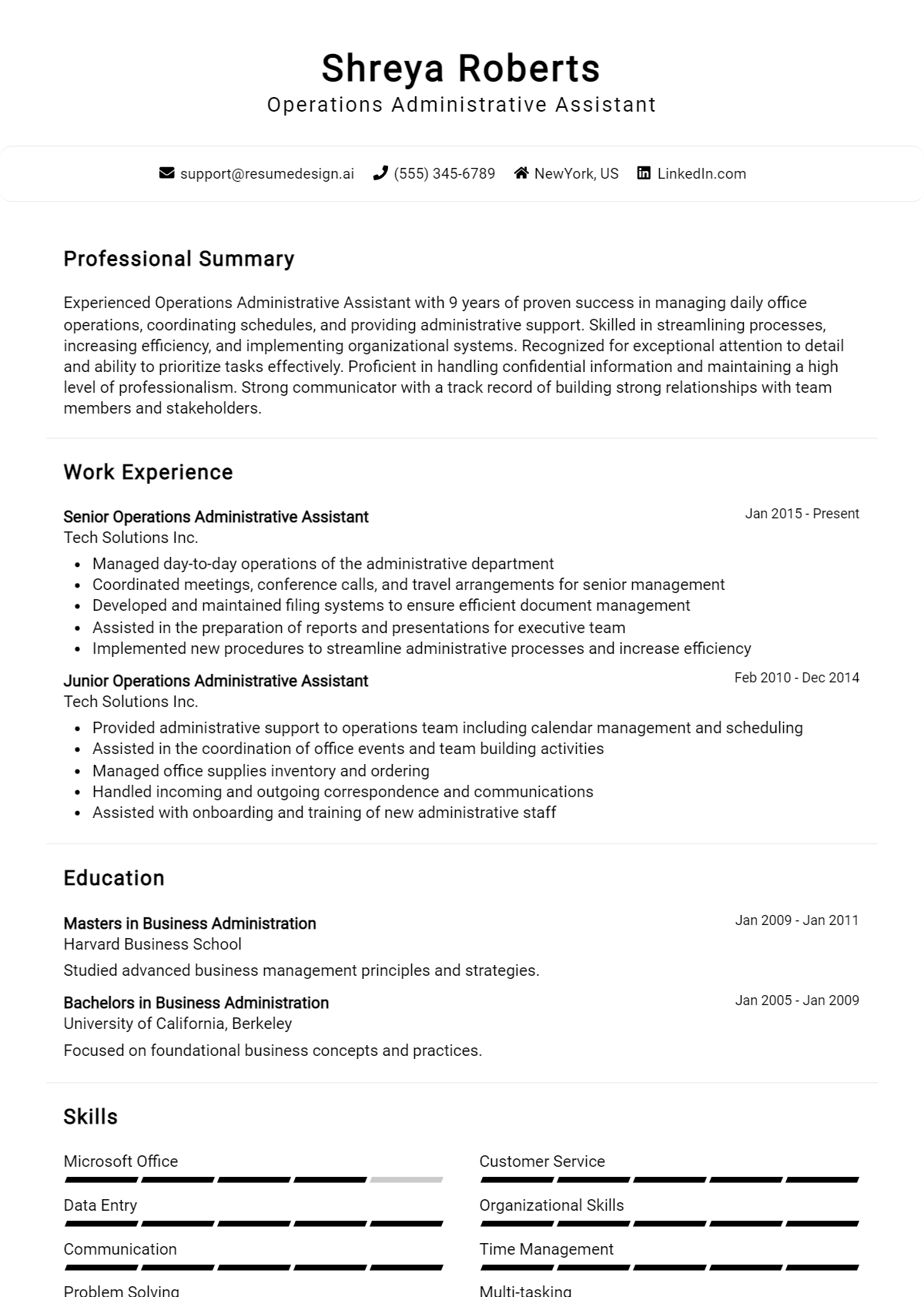
When preparing for an interview as an Operations Administrative Assistant, it's essential to anticipate the types of questions that may be asked. This role often requires a blend of organizational skills, attention to detail, and the ability to communicate effectively across various departments. Understanding the core competencies and challenges of the position can help you articulate your experiences and showcase your strengths during the interview.
Here is a list of common job interview questions for the Operations Administrative Assistant position, along with examples of the best answers. These questions cover your work history and experience, what you have to offer the employer, and your goals for the future. Familiarizing yourself with these inquiries will help you present a compelling case for why you are the right fit for the role.
1. Can you describe your experience with administrative tasks in an operations environment?
I have over three years of experience in administrative roles within operations, where I managed schedules, coordinated meetings, and maintained filing systems. This experience honed my organizational and multitasking skills, essential for ensuring smooth operations within a team.
Example:
In my previous role, I managed daily schedules and coordinated logistics for team meetings, which improved communication and efficiency by 20%.
2. How do you prioritize tasks when you have multiple deadlines to meet?
I use a combination of digital tools and a priority matrix to assess task urgency and importance. By organizing tasks into categories, I can focus on high-impact activities first while ensuring nothing falls through the cracks, maintaining overall productivity.
Example:
For instance, I prioritize tasks based on their deadlines and impact, ensuring critical items are addressed first while managing my time effectively.
3. What software tools are you proficient in that assist with operations administration?
I am proficient in Microsoft Office Suite, particularly Excel for data management and PowerPoint for presentations. Additionally, I have experience with project management tools like Asana and Trello, which help streamline workflows and improve team collaboration.
Example:
I regularly used Excel for budget tracking and Asana for project management, which enhanced our team's workflow and accountability.
4. Describe a time when you had to handle a difficult situation in the workplace.
In a previous role, I mediated a conflict between two team members that was affecting productivity. I facilitated a meeting, encouraging open communication and collaboration, which resulted in a resolution and improved team dynamics.
Example:
By addressing the issue promptly, I helped restore harmony within the team, leading to a more cooperative work environment.
5. How do you ensure accuracy in your work, especially with data entry?
I implement a systematic approach when handling data entry, including double-checking entries and utilizing validation tools. Additionally, I maintain organized records to minimize errors, which is crucial for operational efficiency.
Example:
I routinely perform cross-checks on data entries and use software that flags discrepancies, ensuring high accuracy.
6. What strategies do you use to enhance team communication?
I promote open communication through regular check-ins and collaborative tools like Slack or Microsoft Teams. Creating an inclusive environment encourages team members to share updates and concerns, which enhances overall productivity and morale.
Example:
In my last position, I initiated weekly team updates via Teams, which significantly increased transparency and collaboration.
7. How do you handle confidential information in your role?
I adhere strictly to company policies regarding confidentiality, ensuring sensitive information is stored securely and only shared with authorized personnel. Regular training also helps me stay informed about best practices in handling confidential data.
Example:
In my previous job, I managed sensitive client data, implementing secure storage solutions to maintain confidentiality.
8. Can you give an example of how you improved a process in your previous job?
I identified inefficiencies in our filing system and proposed a digital solution. By transitioning to a cloud-based document management system, we reduced retrieval time by 50% and improved overall accessibility for the team.
Example:
This change not only streamlined our workflow but also enhanced collaboration among team members.
9. How do you prioritize tasks when you have multiple deadlines to meet?
I prioritize tasks by assessing urgency and importance. I create a to-do list and categorize tasks, focusing on high-impact items first. Regularly communicating with my team helps ensure alignment. This method keeps me organized and efficient, enabling me to meet deadlines consistently. Example: I once had three projects due simultaneously. I listed them by deadline, tackled the most urgent first, and updated my team on my progress, ensuring no tasks fell through the cracks.
10. Can you describe a challenging situation you faced in your previous role and how you handled it?
In my previous role, I faced a last-minute schedule change for an important meeting. I quickly coordinated with all participants, rearranged logistics, and communicated updates. This proactive approach minimized disruptions and ensured the meeting's success, demonstrating my adaptability and problem-solving skills under pressure. Example: I once had to reschedule a major presentation due to a venue conflict. I contacted everyone involved, secured a new location, and ensured all materials were ready on time, resulting in a smooth transition and positive feedback.
11. What software tools are you experienced with that you think are essential for this role?
I am proficient in Microsoft Office Suite, particularly Excel for data analysis and Word for documentation. Additionally, I have experience with project management tools like Trello and communication platforms like Slack, which streamline collaboration and increase productivity within teams. Example: At my last job, I used Excel to manage inventory data effectively, while Trello helped our team stay on track with project deadlines, improving our overall workflow significantly.
12. How do you handle confidential information?
I handle confidential information with the utmost care by adhering to company policies and data protection regulations. I ensure that sensitive documents are securely stored, limit access to authorized personnel, and maintain discretion in all communications, protecting both the company and its clients. Example: In my previous position, I managed payroll data, implementing strict access controls and ensuring information was only shared with authorized personnel to maintain confidentiality and compliance with regulations.
13. Describe how you would assist in improving operational efficiency.
To improve operational efficiency, I would conduct a thorough assessment of existing processes, identify bottlenecks, and gather feedback from team members. Implementing streamlined procedures and utilizing automation tools can significantly enhance productivity while reducing time and resource wastage in daily operations. Example: I initiated a review of our filing system, transitioning to a digital format that reduced retrieval time by 50%, ultimately boosting overall office efficiency and employee satisfaction.
14. How do you ensure effective communication within a team?
Effective communication is achieved through regular check-ins, updates, and fostering an open-door policy for feedback. I utilize various tools, such as emails and team meetings, to ensure everyone is informed and engaged, promoting collaboration and transparency across all levels of the organization. Example: I organized weekly team meetings to discuss ongoing projects, encouraging open dialogue that allowed team members to voice concerns and share ideas, enhancing our overall communication and collaboration.
15. What methods do you use to manage office supplies and inventory?
I manage office supplies by maintaining an organized inventory system, tracking usage, and setting reorder points. Regular audits ensure stock levels are adequate, preventing shortages. I also prioritize bulk purchasing for frequently used items to reduce costs and streamline the ordering process. Example: I implemented a digital inventory tracking system that alerted me when supplies were low, which helped maintain consistent stock levels and reduced unnecessary purchasing costs significantly.
16. Can you describe your experience with scheduling and calendar management?
I have extensive experience managing calendars for executives, scheduling meetings, and coordinating travel arrangements. I prioritize appointments based on urgency and ensure that all relevant materials are prepared in advance. This meticulous attention to detail keeps schedules organized and maximizes productivity. Example: In my last role, I managed my manager’s calendar, coordinating multiple schedules, which significantly improved our meeting efficiency and reduced conflicts, ensuring optimal use of our time.
17. How do you prioritize your tasks when working under tight deadlines?
I assess the urgency and importance of each task, often using a priority matrix. I tackle high-impact tasks first while keeping communication open with my team to ensure alignment on priorities and deadlines.
Example:
When facing tight deadlines, I create a list of tasks, prioritize them based on deadlines and impact, and focus on completing high-priority items first while keeping my team informed of my progress.
18. Can you describe a time when you had to handle a difficult situation with a coworker?
I once had a disagreement with a coworker about project responsibilities. I initiated a candid conversation, listened to their perspective, and together we found a compromise that satisfied both parties, ultimately improving our collaboration.
Example:
I addressed a conflict with a coworker by setting up a meeting. We discussed our viewpoints openly, leading to a mutual understanding and a more efficient way to collaborate on the project moving forward.
19. What software tools are you proficient in that you believe are essential for this role?
I am proficient in Microsoft Office Suite, especially Excel for data analysis and reporting. Additionally, I have experience with project management tools like Trello and Asana, which help in task tracking and team collaboration.
Example:
I excel in Microsoft Office, particularly Excel for managing data and generating reports. I also use tools like Trello for project management, ensuring tasks are tracked effectively and deadlines are met.
20. How do you handle confidential information?
I treat all confidential information with the utmost care, adhering to company policies. I ensure that sensitive documents are stored securely and only shared with authorized personnel, maintaining discretion in all communications.
Example:
I follow strict protocols for handling confidential information, ensuring documents are securely stored and only accessible to those with the necessary clearance, thus maintaining the integrity of sensitive data.
21. Describe a time you improved a process in your previous role.
In my last position, I identified inefficiencies in our scheduling process. I proposed and implemented an automated system, which reduced scheduling conflicts and saved the team approximately five hours weekly.
Example:
I improved our meeting scheduling by introducing an automated calendar system, which streamlined the process and significantly reduced the time spent on coordinating meetings, enhancing overall productivity.
22. How do you ensure effective communication within a team?
I promote transparency by encouraging open dialogue and regular check-ins. Utilizing collaborative tools, I keep everyone informed and ensure that team members feel comfortable sharing updates or concerns.
Example:
I facilitate effective communication by organizing weekly team meetings and utilizing collaboration tools like Slack, allowing everyone to share updates and address issues in real-time.
23. What steps do you take to ensure accuracy in your work?
I double-check my work and utilize checklists to minimize errors. Additionally, I prioritize attention to detail and seek feedback from peers to ensure that all outputs meet high standards of accuracy.
Example:
To ensure accuracy, I review my work multiple times and use checklists for tasks. I also ask colleagues to proofread important documents, which helps catch errors I might overlook.
24. How do you handle repetitive tasks to maintain efficiency?
I streamline repetitive tasks by creating templates and checklists. I also leverage automation tools where possible, which increases my efficiency and allows me to focus on more strategic activities.
Example:
To manage repetitive tasks efficiently, I develop templates for frequent documents and utilize automation tools, freeing up time to focus on higher-value tasks that require critical thinking.
25. How do you prioritize multiple tasks in a fast-paced environment?
I prioritize tasks by assessing deadlines, importance, and urgency. I often create a daily to-do list, categorizing tasks based on their impact on operations. This helps me focus on high-priority items while managing my time effectively.
Example:
For instance, during a product launch, I prioritized tasks by aligning them with team goals and deadlines, ensuring critical tasks were completed first to support the overall timeline.
26. Can you describe a time when you improved a process in your previous role?
In my last role, I streamlined the document filing system by transitioning to a digital format, which reduced retrieval time by 40%. This change improved efficiency and minimized errors associated with paper documents.
Example:
I initiated a digital filing system that organized documents by category, which significantly enhanced our team's productivity and reduced the time spent on locating files.
27. How do you handle confidential information in your work?
I handle confidential information with extreme care by following established protocols, such as limiting access to sensitive data and securely storing documents. I understand the importance of discretion and compliance with privacy regulations.
Example:
In my previous position, I ensured that financial documents were locked away and only shared with authorized personnel, thus maintaining confidentiality and trust within the organization.
28. What software programs do you have experience with for operations support?
I have extensive experience with Microsoft Office Suite, particularly Excel for data analysis, and project management tools like Trello and Asana. These programs help me manage tasks efficiently and collaborate effectively with team members.
Example:
I regularly used Excel for budgeting and reporting, and Trello to track project progress, which enhanced my organizational skills and ensured timely completion of tasks.
29. Describe a situation where you had to deal with a difficult colleague.
I encountered a colleague who was resistant to feedback. I approached them privately, discussing our goals and emphasizing collaboration. This open communication led to a better understanding, improving our working relationship and project outcomes.
Example:
After addressing our differences directly, we established a mutual respect that allowed us to work more effectively together, ultimately benefiting the team's overall performance.
30. How do you ensure accuracy in your work?
I ensure accuracy by double-checking my work, utilizing checklists, and employing software tools for error detection. Additionally, I maintain a systematic approach that helps reduce mistakes and increases overall productivity.
Example:
For example, I implemented a checklist system for data entry tasks, which significantly reduced errors and improved the quality of our reports.
31. What steps do you take when you encounter a problem that you cannot solve immediately?
When faced with an unsolvable problem, I first gather all relevant information, consult with colleagues or supervisors for insights, and explore alternative solutions. This collaborative approach often leads to effective resolutions.
Example:
For instance, when a system outage occurred, I communicated with IT and kept the team informed while exploring manual processes to maintain operation continuity.
32. How do you stay organized in your daily tasks?
I utilize digital tools and calendars to keep track of my tasks and deadlines. Additionally, I regularly review and adjust my priorities to align with team goals, ensuring nothing falls through the cracks.
Example:
I use Google Calendar for scheduling and set reminders for important tasks, which helps me manage my workload and stay organized throughout the day.
33. How do you prioritize tasks when managing multiple projects?
I assess the urgency and importance of each task, creating a list that ranks them accordingly. Utilizing project management tools helps keep everything organized, ensuring deadlines are met without compromising quality.
Example:
I use a priority matrix to categorize tasks. For instance, I prioritize urgent requests from management while ensuring ongoing projects stay on track, which helps me manage time effectively.
34. Can you describe a time when you had to handle a difficult colleague?
I approached the situation with empathy and open communication, seeking to understand their perspective. By finding common ground, we resolved misunderstandings and improved our collaboration, enhancing overall team dynamics.
Example:
Once, I had a colleague resistant to feedback. After discussing our goals, we established clearer communication, leading to improved collaboration and a better working relationship.
35. What tools do you find most effective for project management?
I find tools like Trello and Asana effective for tracking project progress and deadlines. They offer visual project boards, which enhance team collaboration and ensure accountability for tasks.
Example:
I regularly use Asana for managing tasks and deadlines. It helps me set priorities and allows team members to track project status efficiently.
36. How do you ensure accuracy in your work?
I double-check my work and utilize checklists to minimize errors. Additionally, I seek peer reviews for critical documents to ensure accuracy and maintain high-quality standards in all tasks.
Example:
I always review my work multiple times and use checklists. For important reports, I ask a colleague to review them for a fresh perspective on accuracy.
37. Describe a situation where you had to adapt to a significant change in the workplace.
When our team shifted to remote work, I quickly adapted by setting up digital communication channels and organizing virtual meetings, ensuring that team collaboration continued without interruption.
Example:
During the transition to remote work, I organized daily check-ins via Zoom, which kept the team connected and maintained productivity during the change.
38. How do you handle confidential information?
I adhere strictly to company policies and procedures regarding confidentiality. I ensure sensitive documents are stored securely and share information only with authorized personnel to maintain trust and integrity.
Example:
I always follow our confidentiality protocols, ensuring sensitive files are password-protected and only shared with relevant team members when necessary.
39. What strategies do you employ to improve team communication?
I encourage open dialogue and regular check-ins. Implementing collaborative tools like Slack helps facilitate quick communication, ensuring everyone stays informed and engaged in team activities.
Example:
I promote the use of Slack for quick updates and organize weekly meetings to discuss ongoing projects, which fosters transparency and effective communication.
40. How do you handle tight deadlines?
I remain calm under pressure, prioritize tasks based on urgency, and focus on delivering quality work. Effective time management and a proactive approach enable me to meet tight deadlines consistently.
Example:
When faced with tight deadlines, I prioritize tasks and break them into manageable steps, allowing me to maintain quality while ensuring timely completion.
41. How do you prioritize tasks when you have multiple deadlines to meet?
I prioritize tasks by assessing their urgency and importance, using tools like to-do lists and project management software. I allocate time based on deadlines and communicate with my team to ensure alignment on priorities.
Example:
For instance, I tackle urgent requests first, then focus on high-impact tasks to meet upcoming deadlines, ensuring I keep stakeholders informed throughout the process.
42. Can you describe your experience with office software and tools?
I have extensive experience with office software like Microsoft Office Suite and Google Workspace. I utilize Excel for data analysis, Word for documentation, and Google Drive for collaboration, enhancing productivity and communication across teams.
Example:
In my previous role, I streamlined reporting processes by creating Excel templates, which saved our team hours of work each month.
43. How do you handle confidential information?
I handle confidential information with the utmost care, following company policies and protocols. I ensure documents are securely stored and only share sensitive information with authorized personnel, maintaining discretion at all times.
Example:
For example, I regularly conduct audits on file access to ensure compliance with our confidentiality agreements and protect sensitive data.
44. Describe a time when you had to assist with a team project.
I assisted with a team project by coordinating schedules, organizing meetings, and compiling progress reports. My proactive communication ensured everyone was aligned and deadlines were met, contributing to the project's overall success.
Example:
For instance, I organized bi-weekly meetings and created a shared document to track tasks, which kept the team focused and accountable.
45. What techniques do you use to ensure effective communication among team members?
I utilize various techniques such as regular check-ins, maintaining open channels for feedback, and using collaborative tools. This approach fosters transparency and ensures that everyone stays informed and engaged in ongoing projects.
Example:
For instance, I initiated weekly updates via email and created a shared chat group that improved our communication significantly.
46. How do you deal with difficult personalities in the workplace?
I approach difficult personalities with empathy and open communication. I strive to understand their viewpoints and find common ground, promoting a collaborative atmosphere. If needed, I involve mediation to resolve conflicts constructively.
Example:
In one instance, I facilitated a meeting between two colleagues, allowing them to express their concerns, which ultimately led to a better working relationship.
How Do I Prepare For A Operations Administrative Assistant Job Interview?
Preparing for an interview is crucial for making a positive impression on the hiring manager. A well-prepared candidate not only showcases their skills but also demonstrates their enthusiasm for the position and the company. Here are some key preparation tips to help you stand out during your interview for the Operations Administrative Assistant role:
- Research the company and its values to understand its mission and culture.
- Practice answering common interview questions, such as your strengths and weaknesses.
- Prepare examples that demonstrate your skills and experience relevant to the Operations Administrative Assistant role.
- Familiarize yourself with the job description and note how your background aligns with the required qualifications.
- Dress appropriately for the interview to convey professionalism.
- Bring multiple copies of your resume and any supporting documents to share with the interviewers.
- Prepare thoughtful questions to ask the interviewer, showing your interest in the position and the company.
Conclusion
In this interview guide, we have covered essential strategies for preparing for the Operations Administrative Assistant role, emphasizing the importance of thorough preparation, consistent practice, and showcasing relevant skills. Understanding both technical and behavioral questions can significantly enhance your chances of success, as it allows you to present a well-rounded image to potential employers.
Remember, each interview is an opportunity to demonstrate your qualifications and fit for the position. We encourage you to utilize the tips and examples provided in this guide to approach your interviews with confidence and assurance.
For further assistance, check out these helpful resources: resume templates, resume builder, interview preparation tips, and cover letter templates.