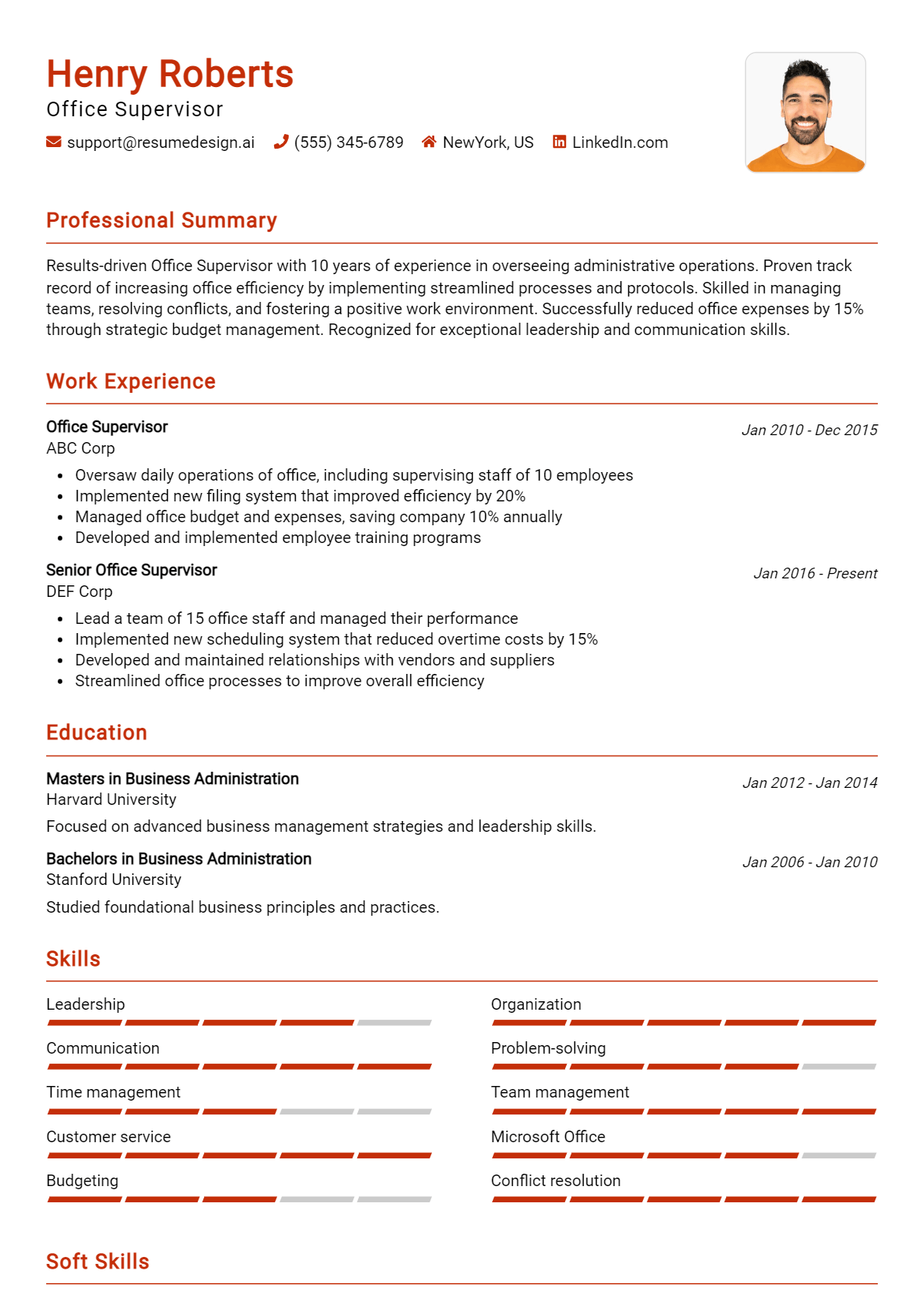
When preparing for an interview as an Office Supervisor, it's essential to anticipate the questions you may be asked and formulate thoughtful responses. This role requires a blend of leadership, organizational skills, and effective communication, making it crucial to demonstrate your qualifications and approach to managing office operations. By familiarizing yourself with common interview questions, you can present yourself confidently and clearly convey your fit for the position.
Here is a list of common job interview questions for an Office Supervisor, along with examples of the best answers. These questions will address your work history and experience, showcasing what you bring to the table for the employer, as well as exploring your future goals and aspirations within the company. By preparing for these questions, you can effectively highlight your strengths and relevant experiences that align with the responsibilities of an Office Supervisor.
1. Can you describe your experience in office management?
I have over five years of experience in office management, where I've overseen daily operations, coordinated schedules, and managed a team of administrative staff. My role involved implementing efficient processes that improved productivity and maintained a positive work environment.
Example:
In my previous role, I successfully managed a team of five, streamlined our workflow, and reduced project turnaround time by 20%, demonstrating my capability in effective office management.
2. How do you prioritize tasks in a busy office setting?
I prioritize tasks by assessing their urgency and importance, often using a task management tool. I ensure that critical deadlines are met while delegating responsibilities to team members, allowing for efficient workflow and effective task completion.
Example:
In my last position, I implemented a priority matrix that helped the team focus on high-impact tasks, resulting in improved productivity and quicker project deliveries.
3. How do you handle conflicts within your team?
I approach conflicts by facilitating open communication between the parties involved. I encourage them to express their viewpoints and work collaboratively to find a resolution, fostering a supportive environment that promotes teamwork and understanding.
Example:
Once, I mediated a dispute between two team members, leading to a discussion that improved their collaboration and resulted in a successful project outcome.
4. What software or tools do you use for office management?
I am proficient in various office management tools, including Microsoft Office Suite, Google Workspace, and project management software like Asana and Trello. These tools help streamline communication and task management, enhancing team collaboration and efficiency.
Example:
In my previous job, I utilized Trello to manage projects, which improved transparency and accountability among team members.
5. How do you ensure effective communication within your team?
I promote effective communication by holding regular team meetings and using collaboration tools for updates. I also encourage an open-door policy, allowing team members to voice concerns or suggestions freely, fostering a cohesive team environment.
Example:
By implementing weekly check-ins, I facilitated better communication, resulting in a more connected and informed team.
6. How do you manage deadlines and ensure projects are completed on time?
I manage deadlines by developing clear timelines and assigning roles based on team members' strengths. I monitor progress closely and adjust plans as necessary to mitigate any risks, ensuring timely project completion.
Example:
In my last role, I created Gantt charts to track deadlines, which helped keep the team accountable and ensured timely delivery of projects.
7. What strategies do you use for team motivation?
I motivate my team by recognizing individual contributions and celebrating successes. I also provide development opportunities through training and mentorship, ensuring that team members feel valued and engaged in their work.
Example:
By implementing a monthly recognition program, I boosted team morale, leading to increased productivity and job satisfaction.
8. How do you handle administrative tasks efficiently?
I handle administrative tasks efficiently by organizing my workload and using digital tools for document management. I also delegate appropriately, ensuring that tasks are completed by the right team members, which optimizes our overall efficiency.
Example:
Utilizing cloud storage for document sharing streamlined our processes, reducing time spent searching for files by 30%.
9. How do you prioritize tasks in a busy office environment?
I prioritize tasks by evaluating deadlines, urgency, and overall impact on team goals. I use tools like to-do lists and digital project management software to stay organized. Regularly communicating with my team helps ensure we are aligned on priorities.
Example:
I assess tasks based on deadlines and importance. For instance, I utilize a project management tool to track progress and communicate priorities, ensuring my team stays focused on critical projects while still addressing urgent requests.
10. Describe a time when you had to manage a conflict between team members.
I once facilitated a discussion between two team members who disagreed on project direction. I encouraged open communication and guided them to find common ground. This resolved the conflict and improved collaboration, resulting in a successful project completion.
Example:
In a previous role, two team members had differing views on project execution. I organized a meeting, allowing each to express their perspective. This dialogue led to a compromise that enhanced teamwork and project outcomes.
11. What strategies do you use to motivate your team?
I motivate my team by setting clear goals, recognizing achievements, and fostering a positive work environment. I also encourage professional development opportunities, ensuring that each member feels valued and invested in their growth within the organization.
Example:
I hold regular one-on-one check-ins to discuss career aspirations and provide recognition for hard work. Additionally, I promote team-building activities that enhance morale and create a stronger, more cohesive team dynamic.
12. How do you handle tight deadlines?
I handle tight deadlines by breaking tasks into manageable parts and prioritizing effectively. I communicate openly with my team about the urgency and delegate responsibilities. Staying organized and focused helps me meet deadlines without compromising quality.
Example:
During a major project, I divided tasks among team members based on strengths and regularly checked in on progress. This collaborative approach helped us meet the deadline while maintaining high-quality work.
13. Can you give an example of how you improved an office process?
I identified inefficiencies in our document management system and proposed a digital solution. Implementing this system reduced retrieval time by 50% and enhanced collaboration. Continuous feedback from the team ensured the solution met everyone’s needs.
Example:
By transitioning to a cloud-based document storage system, I streamlined access to files, significantly cutting down on time spent searching for documents and boosting overall productivity in our office.
14. How do you ensure compliance with company policies?
I ensure compliance by regularly reviewing company policies with the team and providing training sessions. I also implement checklists for key processes to help team members stay informed and adhere to regulations consistently.
Example:
I schedule quarterly training sessions to review policies and procedures. Additionally, I create quick-reference guides to help team members understand compliance requirements and encourage questions to clarify any uncertainties.
15. What is your approach to managing budgets?
I approach budget management by carefully tracking expenses and comparing them against forecasts. I involve the team in budget discussions to ensure transparency and gather their insights, allowing us to make informed decisions that align with our goals.
Example:
In my previous role, I utilized budgeting software to monitor expenses regularly. By discussing budgetary limits with the team, we identified opportunities for cost savings while maintaining operational efficiency.
16. How do you handle employee performance reviews?
I conduct performance reviews through structured feedback sessions that focus on individual achievements and areas for growth. I encourage a two-way dialogue, allowing employees to share their goals and concerns, fostering a supportive environment for development.
Example:
During performance reviews, I provide specific examples of employee contributions and discuss future objectives. This approach helps employees feel valued and motivated, and encourages them to take ownership of their performance.
17. How do you prioritize tasks in a busy office environment?
I use a combination of urgency and impact to prioritize tasks. I assess deadlines, team dependencies, and project importance, creating a daily to-do list. Regularly communicating with my team ensures we remain aligned on priorities.
Example:
I prioritize tasks by categorizing them into urgent and important. For instance, I tackle immediate client requests before addressing long-term projects, ensuring team productivity while meeting deadlines.
18. Describe a time when you had to resolve a conflict between team members.
In my previous role, two team members disagreed on project direction. I facilitated a meeting to allow each to voice concerns, encouraging open dialogue. By focusing on shared goals, we agreed on a compromise, strengthening team cohesion.
Example:
I once mediated a disagreement over task ownership by encouraging both parties to express their viewpoints. We collaboratively defined roles, which not only resolved the conflict but also improved teamwork.
19. What strategies do you use for effective communication within your team?
I prioritize clarity and consistency in communication. Regular team meetings and updates via collaborative tools foster transparency. I also encourage feedback, ensuring everyone feels heard, which enhances team dynamics and project execution.
Example:
I hold weekly check-ins and use project management software to keep everyone in the loop. This approach promotes transparency and ensures all voices are valued.
20. How do you handle tight deadlines while maintaining quality?
I break tasks into manageable segments and set realistic deadlines. By delegating appropriately and maintaining open communication with the team, we ensure quality remains high despite time constraints.
Example:
When faced with tight deadlines, I prioritize tasks, delegate effectively, and monitor progress closely to ensure we meet quality standards without sacrificing efficiency.
21. Can you give an example of how you have improved office processes?
I identified inefficiencies in our document management system and implemented a digital filing system. This reduced retrieval time by 50%, improved organization, and increased overall productivity across the team.
Example:
I streamlined our reporting process by automating data collection, which reduced report preparation time significantly and allowed for more accurate analysis.
22. How do you ensure compliance with company policies and procedures?
I prioritize regular training sessions and updates for the team on company policies. By fostering a culture of accountability, I ensure everyone understands and adheres to procedures, minimizing compliance risks.
Example:
I conduct monthly compliance training and regularly review policies with the team to ensure everyone stays informed and engaged with company standards.
23. How do you manage your team’s performance effectively?
I set clear performance goals and provide regular feedback. I conduct quarterly evaluations and encourage open discussions about career development, ensuring team members feel supported and motivated to excel.
Example:
I implement SMART goals for each team member and hold regular one-on-one sessions to discuss progress, challenges, and areas for improvement to enhance performance.
24. What would you do if you noticed a drop in employee morale?
I would first assess the root cause through informal discussions and surveys. Then, I’d implement team-building activities and open forums to address concerns, fostering a supportive environment to boost morale.
Example:
If morale drops, I’d initiate one-on-one check-ins to understand concerns, then implement team-building exercises to rebuild trust and camaraderie.
25. How do you prioritize tasks when managing multiple projects?
I assess the urgency and importance of each task, creating a priority matrix. I also communicate with my team to understand their workloads, ensuring deadlines are met efficiently. This approach allows me to allocate resources effectively and adapt to changing priorities.
Example:
I prioritize tasks by using tools like a priority matrix. For instance, I once balanced three projects by categorizing them based on deadlines and team capacity, ensuring timely completion without compromising quality.
26. Can you describe a time when you had to resolve a conflict within your team?
Yes, I encountered a conflict arising from miscommunication. I facilitated a meeting where team members expressed their concerns, leading to a mutual understanding. By addressing the issue openly, we restored harmony and improved collaboration moving forward.
Example:
When two team members disagreed on project direction, I organized a meeting to mediate. Through open dialogue, we resolved misunderstandings and agreed on a common goal, which enhanced team dynamics significantly.
27. What strategies do you use to motivate your team?
I believe in recognizing individual contributions and providing opportunities for growth. I regularly check in with team members to understand their aspirations and ensure they feel valued. Celebrating small wins also fosters a positive environment.
Example:
I motivate my team by celebrating achievements and offering professional development opportunities. For example, I initiated a monthly recognition program, which boosted morale and encouraged everyone to strive for excellence.
28. How do you ensure compliance with office policies and procedures?
I ensure compliance by regularly reviewing policies with the team and providing training sessions. I also promote an open-door policy, encouraging employees to voice concerns or seek clarification on procedures, fostering a culture of accountability.
Example:
To ensure compliance, I conduct quarterly training sessions on office policies. Additionally, I maintain an open-door policy, allowing team members to discuss any uncertainties regarding procedures, which promotes adherence and transparency.
29. Describe your approach to performance evaluations.
I approach performance evaluations as a two-way conversation. I provide constructive feedback while also encouraging employees to share their self-assessments. This collaborative approach fosters growth and helps set clear goals for the future.
Example:
During evaluations, I focus on constructive feedback and encourage self-assessment. For instance, I once guided a team member through their goals, allowing them to reflect on progress and set future objectives collaboratively.
30. How do you handle tight deadlines?
I handle tight deadlines by breaking projects into smaller, manageable tasks and prioritizing effectively. I also communicate with my team to ensure everyone is aligned and focused on the key objectives, maintaining open lines for support.
Example:
When faced with tight deadlines, I break down tasks and prioritize them. For example, during a recent project, I delegated specific responsibilities, ensuring everyone was focused and we met the deadline successfully.
31. What tools or software do you use to manage office operations?
I utilize project management tools like Asana and Trello for task tracking and team collaboration. Additionally, I rely on communication software like Slack and Microsoft Teams to streamline communication and enhance workflow efficiency across the office.
Example:
I use tools like Asana for project management and Slack for team communication. This combination allows for effective task tracking and facilitates quick updates, keeping everyone informed and engaged.
32. How do you adapt to changes in office policies or procedures?
I adapt by staying informed about policy changes and actively communicating updates to my team. I encourage feedback and discussions to ensure everyone understands the changes, helping to facilitate a smooth transition and minimal disruption.
Example:
When our office updated its remote work policy, I held a team meeting to discuss the changes. I encouraged questions and provided clarifications, ensuring everyone felt comfortable with the new procedures.
33. How do you prioritize tasks when supervising a team?
I prioritize tasks by assessing deadlines and the impact on overall team goals. I use tools like to-do lists and project management software to keep track. Regular team check-ins help me adjust priorities based on workload and urgency.
Example:
I typically start each week by listing tasks and categorizing them by urgency and importance, ensuring that my team is aligned and focused on high-impact activities first.
34. Can you describe your experience with conflict resolution in the workplace?
In my previous role, I handled conflicts by facilitating open communication between the parties involved. I encouraged them to express their concerns and worked to find common ground, ensuring a collaborative resolution that maintained team harmony.
Example:
Once, two team members disagreed on a project direction. I organized a meeting where both could share their perspectives, leading to a compromise that satisfied both and improved their working relationship.
35. What strategies do you implement for team motivation?
I motivate my team by recognizing individual and group achievements, providing opportunities for professional development, and encouraging a positive work environment. Regular feedback and team-building activities also help maintain high morale.
Example:
I initiated a monthly recognition program where team members highlight each other’s successes, which significantly boosted motivation and collaboration among the staff.
36. How do you handle underperforming team members?
I address underperformance through one-on-one discussions to understand any challenges they face. I then set clear expectations and provide the necessary support, including training or mentoring, to help them improve.
Example:
In the past, I worked with an underperforming employee by developing a performance improvement plan, which included specific goals and regular check-ins, resulting in significant progress.
37. Describe a time when you had to implement a change in office procedures.
When our company adopted a new software system, I led the training sessions to ensure a smooth transition. I gathered feedback, addressed concerns, and adjusted the implementation plan based on team input, resulting in high adoption rates.
Example:
I coordinated weekly training workshops for the new software, which not only eased the transition but also empowered team members to use the tools effectively.
38. How do you ensure effective communication within your team?
I promote open communication by holding regular team meetings and utilizing various communication tools. I encourage feedback and ensure everyone feels comfortable sharing ideas or concerns, thus fostering a collaborative environment.
Example:
I introduced a shared platform for updates and feedback, which allowed team members to stay informed and engaged with ongoing projects.
39. What role does feedback play in your supervisory style?
Feedback is crucial in my supervisory style; I believe it drives performance improvement and team development. I provide constructive feedback regularly and encourage my team to share their thoughts on my leadership as well.
Example:
I schedule quarterly feedback sessions where we discuss performance and areas for growth, fostering an environment of continuous improvement.
40. How do you handle tight deadlines?
When facing tight deadlines, I assess the situation to prioritize critical tasks and delegate responsibilities effectively. I maintain open communication with the team to ensure everyone is aligned and motivated to meet the deadline.
Example:
In a previous project, I quickly reallocated resources and set interim deadlines to keep the team focused, ensuring we delivered on time without compromising quality.
41. How do you prioritize tasks when managing multiple projects?
I prioritize tasks by assessing deadlines, project impact, and team dependencies. I develop a clear action plan, communicate with team members, and adjust as necessary to ensure everything is on track. This method helps maintain workflow efficiency and team morale.
Example:
In my previous role, I used a task management tool to prioritize urgent projects, setting daily goals for my team. This approach ensured we met deadlines and effectively managed our workload.
42. Describe a time when you had to resolve a conflict within your team.
When a conflict arose between two team members, I facilitated a meeting to discuss their concerns. By encouraging open communication and active listening, we reached a mutual understanding, allowing them to collaborate effectively and restore a positive work environment.
Example:
I mediated a disagreement about project responsibilities by creating a platform for both parties to voice their opinions. This led to a compromise that improved teamwork and project outcomes.
43. How do you ensure that your team stays motivated and productive?
I keep my team motivated by recognizing their achievements, providing constructive feedback, and setting clear goals. I also encourage professional development through training opportunities, fostering a sense of ownership and commitment to our projects.
Example:
In my last position, I introduced a recognition program that celebrated monthly achievements, which significantly boosted team morale and productivity.
44. What strategies do you use to manage time effectively in the office?
I manage time effectively by creating daily schedules, setting priorities, and utilizing productivity tools. I also encourage team members to take breaks to recharge, which ultimately enhances focus and efficiency during work hours.
Example:
I implemented time-blocking techniques in our team meetings, allowing us to allocate specific periods for tasks and ensuring we stay on track throughout the day.
45. How do you handle underperforming employees?
I address underperformance by having one-on-one discussions to identify challenges. I provide support through training and set clear expectations. Regular follow-ups help track progress and motivate improvement, ensuring the employee feels valued and supported.
Example:
After noticing a team member struggling, I scheduled a meeting to discuss their goals and offered mentorship, which led to noticeable improvement in their performance.
46. Can you provide an example of a process improvement you've implemented?
I identified inefficiencies in our document management system. By introducing a cloud-based solution, we streamlined collaboration, reduced retrieval time, and enhanced security. This change improved productivity and allowed the team to focus on higher-priority tasks.
Example:
I led a project to transition our filing system to digital, which cut down document retrieval time by 50%, significantly improving our team's efficiency.
How Do I Prepare For A Office Supervisor Job Interview?
Preparing for an interview is crucial to making a positive impression on the hiring manager. A well-prepared candidate not only demonstrates their interest in the position but also shows their commitment to the role and the organization. Here are some key preparation tips to help you succeed in your Office Supervisor job interview:
- Research the company and its values to align your responses with their mission.
- Practice answering common interview questions, especially those specific to office management and supervision.
- Prepare examples that demonstrate your skills and experience relevant to the Office Supervisor role.
- Review the job description thoroughly to understand the requirements and responsibilities.
- Dress professionally to convey your seriousness about the position.
- Prepare thoughtful questions to ask the interviewer about the team and company culture.
- Follow up with a thank-you email after the interview to express your appreciation for the opportunity.
Frequently Asked Questions (FAQ) for Office Supervisor Job Interview
Preparing for an interview is crucial, especially for a role as significant as an Office Supervisor. Understanding the common questions that may arise during the interview can help you feel more confident and articulate your skills and experiences effectively. Below are some frequently asked questions that candidates might encounter in an Office Supervisor job interview.
What should I bring to an Office Supervisor interview?
When attending an Office Supervisor interview, it's essential to come prepared with several items that can help you make a good impression. Bring multiple copies of your resume, a list of references, and any letters of recommendation you may have. Additionally, consider having a notepad and pen for jotting down important notes or questions you may have for the interviewer. If you have a portfolio showcasing your previous work or relevant projects, include that as well, as it can demonstrate your capabilities and achievements.
How should I prepare for technical questions in an Office Supervisor interview?
To prepare for technical questions, it's vital to review the specific skills and knowledge required for the Office Supervisor role. Familiarize yourself with common software and tools used in office management, such as project management software, spreadsheets, and communication platforms. Additionally, brush up on industry-specific regulations and best practices. Practice answering potential technical questions by using the STAR method (Situation, Task, Action, Result), which will help you articulate your thought process and problem-solving abilities effectively during the interview.
How can I best present my skills if I have little experience?
If you have limited experience in an Office Supervisor role, focus on highlighting transferable skills from previous jobs or experiences. Emphasize qualities such as leadership, communication, organizational skills, and adaptability. Use examples from internships, volunteer work, or part-time positions where you demonstrated these skills. Additionally, express your eagerness to learn and your commitment to professional development, as this can demonstrate your potential value as a candidate.
What should I wear to an Office Supervisor interview?
Dressing appropriately for an Office Supervisor interview is essential, as it reflects your professionalism and understanding of the company culture. Opt for business attire that is polished and conservative, such as a suit or dress pants with a blazer for men, and a professional dress or suit for women. Make sure your clothing is clean, well-fitted, and free of distractions. When in doubt, it's better to be slightly overdressed than underdressed, as this showcases your seriousness about the position.
How should I follow up after the interview?
Following up after an interview is a crucial step that demonstrates your interest in the position and appreciation for the interviewer's time. Send a thank-you email within 24 hours of the interview, expressing gratitude for the opportunity and reiterating your enthusiasm for the role. In your message, reference specific points discussed during the interview to personalize it further. If you haven't heard back within the timeframe provided by the interviewer, it's acceptable to send a polite follow-up email after a week or so to inquire about the status of your application.