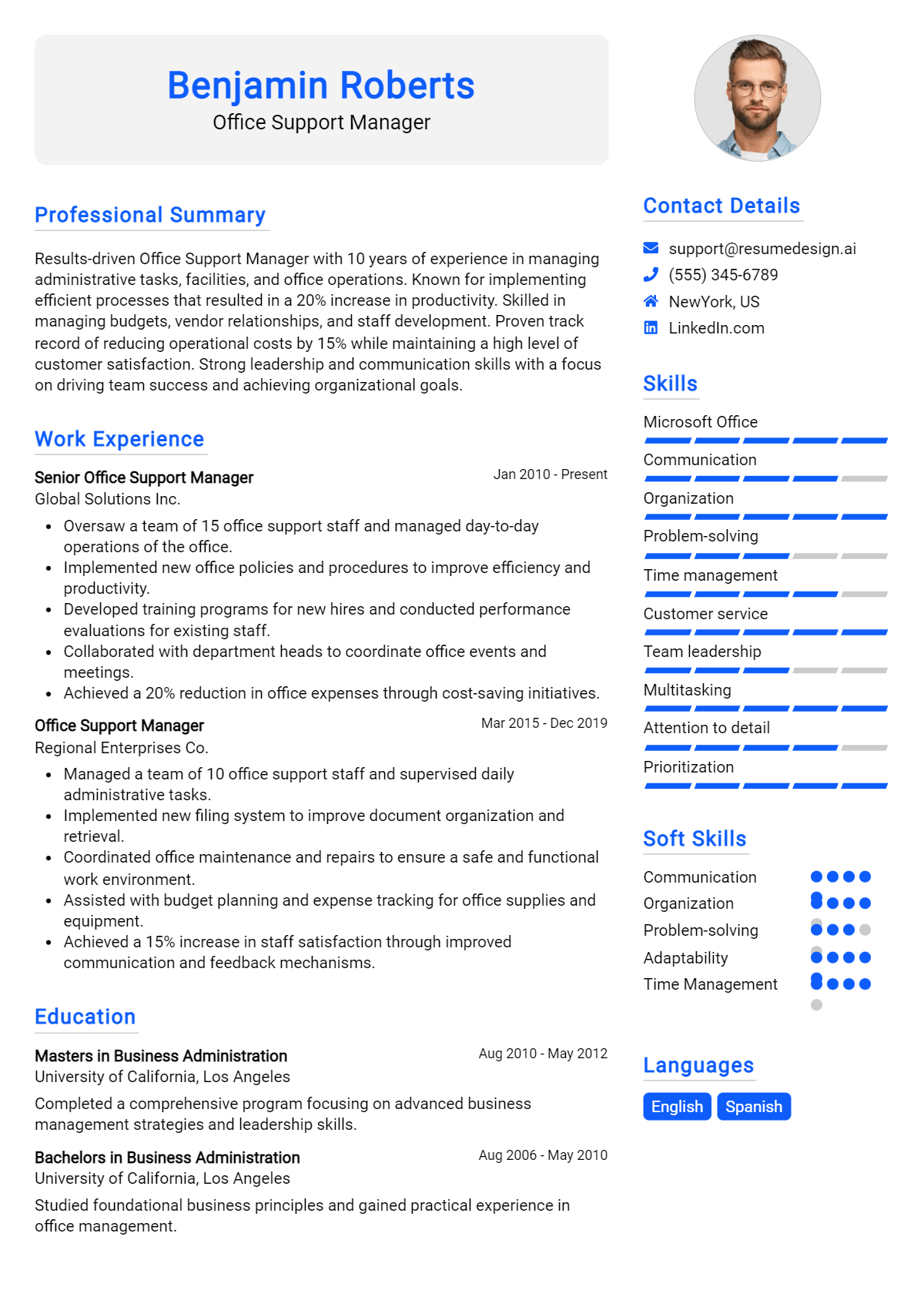
When preparing for an interview as an Office Support Manager, it's essential to anticipate the types of questions you may be asked. This role requires a blend of administrative skills, leadership qualities, and the ability to manage day-to-day operations effectively. Understanding the key areas that interviewers focus on will help you present your qualifications and experiences in the best light, demonstrating why you are the ideal candidate for the position.
Here is a list of common job interview questions for the Office Support Manager role, along with examples of the best answers. These questions cover your work history and experience, what you have to offer the employer, and your goals for the future. Being prepared with thoughtful responses will not only showcase your expertise but also your commitment to contributing positively to the organization.
1. Can you describe your experience with office management?
I have over five years of experience managing office operations, including coordinating schedules, overseeing administrative staff, and ensuring smooth communication between departments. My organizational skills and attention to detail have helped improve overall efficiency in my previous roles.
Example:
In my last position, I managed a team of four administrative assistants, streamlined processes, and implemented a new scheduling system that reduced appointment overlaps by 30%.
2. How do you handle conflicting priorities?
I prioritize tasks by assessing their urgency and impact on the team. I communicate with stakeholders to understand their needs and adjust timelines where necessary. This approach ensures that critical tasks are completed while maintaining team morale and productivity.
Example:
For instance, when faced with overlapping deadlines, I held a brief meeting to realign priorities and delegated tasks effectively, resulting in successful project completion.
3. What strategies do you use to ensure effective communication in the office?
I promote open communication by implementing regular team meetings and using collaborative tools. Encouraging feedback helps address concerns early and fosters a positive work environment, which is vital for a productive office.
Example:
In my previous role, I introduced a weekly check-in, which significantly improved team transparency and reduced misunderstandings.
4. Describe a time you improved office efficiency.
In my last position, I analyzed our filing system and implemented a digital document management system. This reduced retrieval time by 50% and allowed team members to access necessary documents from anywhere, significantly enhancing workflow.
Example:
As a result, the team could focus more on their tasks rather than searching for documents, increasing overall productivity.
5. How do you approach training new staff?
I create a structured onboarding plan that includes a mix of shadowing, hands-on training, and regular check-ins. This comprehensive approach helps new employees feel supported while ensuring they quickly become effective contributors to the team.
Example:
In my last job, I developed an onboarding guide that reduced training time by 25% while enhancing new hire satisfaction.
6. What role does technology play in your office management?
Technology is essential in streamlining operations. I utilize project management tools, communication platforms, and scheduling software to enhance productivity and collaboration. Staying updated on new technologies helps me implement the best solutions for our office.
Example:
For instance, I introduced a task management app that improved project tracking and accountability among team members.
7. How do you manage office budgets and expenses?
I carefully monitor expenses and compare them against budget forecasts. By analyzing spending trends, I can identify areas for cost savings. Regular reports help ensure financial accountability and support informed decision-making.
Example:
In my previous role, I identified unnecessary software subscriptions and saved the company 15% on annual expenses.
8. What is your experience with vendor management?
I have managed vendor relationships by negotiating contracts, assessing performance, and ensuring compliance with service agreements. Building strong partnerships helps secure favorable terms and ensures we receive the best services for the office.
Example:
In my last position, I renegotiated our cleaning contract, resulting in a 20% cost reduction while maintaining service quality.
9. How do you prioritize tasks when managing multiple projects?
I utilize a combination of urgency and importance to prioritize tasks. By creating a daily task list and leveraging project management tools, I ensure deadlines are met while maintaining quality. Regular check-ins with my team also help align priorities and address any issues promptly. Example: I prioritize tasks using a matrix to distinguish between urgent and important. For instance, when managing simultaneous projects, I focus on deadlines and resource availability to allocate time effectively, ensuring that critical tasks are completed first.
10. Describe a time when you had to deal with a difficult colleague.
In a previous role, I encountered a colleague resistant to feedback. I approached the situation by scheduling a one-on-one conversation to understand their perspective. This open dialogue fostered collaboration and improved our working relationship, ultimately enhancing team productivity. Example: I once worked with a colleague who was uncooperative. I arranged a meeting to discuss our differences, which allowed us to establish common goals and improve our communication, resulting in a more harmonious work environment.
11. How do you ensure excellent customer service in your office?
I prioritize training staff on customer interaction best practices and maintaining a responsive communication channel. Regular feedback sessions help identify areas for improvement. I also emphasize the importance of empathy and active listening in resolving customer issues effectively. Example: I implement training workshops for my team focused on customer service skills. Additionally, I monitor customer feedback and encourage staff to share experiences for continuous improvement, ensuring our clients receive exceptional service consistently.
12. What tools do you use to optimize office operations?
I leverage various tools such as Microsoft Office Suite for documentation, project management software like Trello for task tracking, and communication platforms like Slack for team collaboration. These tools streamline operations, enhance productivity, and facilitate effective communication within the team. Example: I commonly use Asana for project management, alongside Google Workspace for document sharing and collaboration. This combination allows my team to stay organized, track progress, and communicate efficiently, resulting in smoother office operations.
13. How do you handle tight deadlines?
I thrive under tight deadlines by maintaining a structured approach. I break tasks into smaller, manageable parts and prioritize them based on urgency. Effective communication with my team ensures everyone is aligned, allowing us to meet deadlines without compromising quality. Example: During a critical project with a tight deadline, I created a detailed timeline and delegated tasks based on team strengths. This organized approach enabled us to complete the project on time while maintaining high standards of quality.
14. Can you describe your experience with budget management?
In my previous role, I managed the office budget, tracking expenses and identifying areas for cost savings. I regularly prepared financial reports to monitor spending against the budget, ensuring financial accountability while supporting operational needs effectively. Example: I oversaw a budget of $200,000, implementing cost-saving measures that reduced expenses by 15%. I utilized financial software for tracking and reporting, which helped me recognize trends and adjust the budget proactively.
15. How do you foster a positive work environment?
I believe in open communication and recognition of team efforts. I organize team-building activities and encourage feedback to create an inclusive atmosphere. Celebrating achievements, both big and small, helps boost morale and fosters a sense of belonging within the team. Example: I regularly host team lunches and recognition events to celebrate achievements. By promoting open communication and encouraging feedback, I ensure that everyone feels valued and contributes to a positive work atmosphere.
16. What strategies do you use for effective team communication?
I implement regular meetings and utilize collaboration tools to enhance transparency and information flow. By establishing clear communication channels and encouraging feedback, my team remains aligned on goals and feels empowered to raise concerns or suggestions. Example: I hold weekly team meetings to discuss progress and challenges. Additionally, I use platforms like Microsoft Teams for daily updates, ensuring that everyone stays informed and engaged in our projects and decisions.
17. How do you prioritize tasks when multiple requests come in simultaneously?
I assess the urgency and impact of each request, then organize them accordingly. I often use a task management tool to track priorities and deadlines, ensuring that I communicate effectively with my team to manage expectations and workload.
Example:
When faced with multiple tasks, I list them by deadline and importance, often using a priority matrix to visualize urgency. This helps me focus on high-impact tasks while maintaining transparency with stakeholders about timelines.
18. Can you describe a time when you implemented a new process to improve office efficiency?
I introduced a digital filing system that streamlined document retrieval, reducing our search time by 40%. I trained the staff on its use, which enhanced collaboration and ensured everyone was on the same page, ultimately improving productivity.
Example:
In my previous role, I created a central digital folder for all project documents, which cut down on the time spent searching for files. This allowed the team to focus more on their work, boosting overall efficiency.
19. How do you handle conflicts between team members?
I encourage open communication between the parties involved and facilitate a meeting to discuss their perspectives. My goal is to foster understanding and find a mutually acceptable solution while ensuring a positive working environment.
Example:
When two team members disagreed on a project approach, I organized a mediation session where each could express their views. This led to a collaborative solution and improved their working relationship moving forward.
20. What strategies do you use to manage your team effectively?
I prioritize clear communication, set realistic goals, and provide regular feedback. I also empower team members by delegating tasks according to their strengths, which increases motivation and accountability within the group.
Example:
I hold weekly check-ins to discuss progress and challenges, ensuring everyone feels supported. Empowering team members by assigning them ownership of specific tasks has led to increased productivity and job satisfaction.
21. How do you ensure your team stays motivated?
I create an inclusive environment that recognizes individual contributions. I regularly celebrate achievements, provide professional development opportunities, and encourage feedback to make team members feel valued and engaged in their work.
Example:
I implemented a monthly recognition program that highlights team members' efforts. This not only motivates individuals but also fosters a supportive team culture that encourages collaboration and shared success.
22. How do you manage tight deadlines and high-pressure situations?
I remain calm and focused, breaking tasks into manageable parts. I prioritize communication with my team to ensure everyone is aligned, allowing us to tackle challenges collaboratively while maintaining quality standards even under pressure.
Example:
During a recent product launch, I organized daily stand-up meetings to address any issues promptly. This proactive approach helped us meet our tight deadline without compromising on the quality of our deliverables.
23. Can you give an example of how you handle confidential information?
I adhere strictly to company policies regarding confidentiality. I ensure sensitive information is stored securely, limit access to authorized personnel, and conduct regular training sessions to reinforce the importance of data protection among my team.
Example:
In my previous role, I developed a protocol for handling confidential documents and ensured team members understood their responsibilities, significantly reducing the risk of unintentional breaches of confidentiality.
24. What tools or technologies do you find essential for office management?
I rely on project management tools like Trello and communication platforms like Slack to enhance collaboration. Additionally, I use spreadsheets for tracking budgets and schedules, ensuring our operations run smoothly and efficiently.
Example:
Tools such as Asana for task management and Google Drive for document sharing have been invaluable in streamlining workflows and enhancing team collaboration, which is crucial for effective office management.
25. How do you prioritize tasks when everything seems urgent?
I assess each task's impact on the team's goals and deadlines. I use a matrix to categorize tasks by urgency and importance, ensuring I focus on high-impact activities first. This method helps me manage my time effectively and support my team efficiently.
Example:
For instance, I prioritize client requests and deadlines over internal meetings to ensure we meet our commitments while keeping the team aligned.
26. Can you describe your experience with managing office budgets?
I have successfully managed office budgets by monitoring expenses, negotiating with vendors, and implementing cost-saving measures. I regularly conduct audits to ensure we stay within budget while meeting operational needs, which has led to a 15% reduction in expenses over the past year.
Example:
For instance, I identified unnecessary subscriptions and negotiated better deals with suppliers, resulting in significant savings.
27. How do you handle conflict between team members?
I address conflicts by facilitating open communication. I encourage team members to express their viewpoints and guide them toward finding common ground. This approach helps maintain a positive work environment and fosters collaboration and respect among team members.
Example:
In one case, I mediated a disagreement over project responsibilities, leading to a clear resolution and improved team dynamics.
28. What tools or software do you find essential for office management?
I find tools like project management software, cloud storage, and communication platforms essential for smooth office operations. These tools enhance collaboration, streamline workflows, and ensure everyone stays informed and organized, ultimately improving efficiency.
Example:
For instance, I use Trello for task management and Google Drive for document sharing, which keeps the team aligned and productive.
29. Describe a time you implemented a significant change in the office.
I led the transition to a digital filing system, which reduced paper usage by 40%. By training staff on the new system and highlighting its benefits, I ensured a smooth transition and increased efficiency, allowing easier access to important documents.
Example:
The change not only saved time but also improved our environmental footprint, which was well received by the team.
30. How do you ensure effective communication within your team?
I promote open communication by scheduling regular check-ins and creating a culture where team members feel comfortable sharing ideas and feedback. Utilizing collaborative tools also helps keep everyone informed and engaged, fostering a supportive team environment.
Example:
For example, I implemented weekly team meetings and used Slack for quick updates, which improved overall communication.
31. What strategies do you use for training new staff members?
I use a structured onboarding process that includes comprehensive training sessions, mentorship, and access to resources. This approach ensures new hires feel supported and understand their roles, leading to quicker integration and higher retention rates.
Example:
I pair new employees with experienced team members for hands-on training, which enhances learning and fosters relationships.
32. How do you handle tight deadlines?
I remain calm under pressure and prioritize tasks effectively. I break down larger projects into manageable steps and delegate responsibilities as needed. This ensures that we meet tight deadlines while maintaining quality work and reducing stress for the team.
Example:
For instance, during a recent project, I created a timeline and delegated tasks, allowing us to finish ahead of schedule.
41. How do you prioritize tasks when managing multiple projects?
I utilize a task management system to categorize and prioritize projects based on deadlines and impact. Regular check-ins with team members ensure alignment on priorities, allowing me to adjust as needed to meet objectives efficiently.
Example:
I assess tasks by urgency and importance, then use a digital tool to visualize priorities. For instance, I tackled a critical report before preparing for an upcoming meeting, ensuring all deadlines were met without compromising quality.
42. How do you handle conflicts between team members?
I believe in addressing conflicts directly and promptly. I facilitate open discussions, allowing each party to express their perspectives. Then, I guide them toward finding common ground and a collaborative solution that aligns with our team goals.
Example:
When two team members disagreed on project direction, I arranged a mediation meeting. By encouraging open dialogue, they identified a compromise that incorporated both viewpoints, enhancing team cohesion and productivity.
43. What strategies do you use to improve team productivity?
I implement regular performance reviews and feedback sessions to identify areas for improvement. Additionally, I promote skill development through training and encourage a culture of collaboration to enhance overall team efficiency and morale.
Example:
In my previous role, I introduced bi-weekly feedback sessions that fostered accountability and motivation. This resulted in a 20% increase in project completion rates, as team members felt more supported and engaged.
44. How do you ensure compliance with office policies and procedures?
I ensure compliance by regularly reviewing policies and conducting training sessions for the team. I create an open environment where employees can discuss concerns and seek clarification, reinforcing the importance of adhering to established guidelines.
Example:
I organized quarterly workshops to review our compliance policies, ensuring everyone understood their responsibilities. This proactive approach led to a notable decrease in policy violations and increased confidence among staff.
45. Can you provide an example of how you improved office efficiency?
I identified bottlenecks in our document processing workflow and introduced an electronic filing system. This reduced retrieval time and minimized errors, resulting in a smoother operation and higher staff satisfaction, as well as improved client service.
Example:
By analyzing our document handling, I implemented a cloud-based solution that cut retrieval time by 50%. This change not only streamlined operations but also enhanced team collaboration and responsiveness to client needs.
46. How do you keep your team motivated during challenging times?
I maintain open communication and provide support during tough periods. Recognizing individual contributions and celebrating small wins fosters a positive atmosphere. I also encourage team members to share their challenges, allowing us to find collective solutions together.
Example:
During a project deadline crunch, I organized daily check-ins to address concerns and celebrate progress. This visibility kept team spirits high, and we successfully completed the project on time, demonstrating resilience and unity.
How Do I Prepare For A Office Support Manager Job Interview?
Preparing for an interview is crucial to making a positive impression on the hiring manager. A well-prepared candidate not only showcases their qualifications but also demonstrates their enthusiasm for the role. Below are key preparation tips that can help you stand out during your interview for the Office Support Manager position.
- Research the company and its values to align your responses with their mission and culture.
- Practice answering common interview questions, such as those related to team management, conflict resolution, and organizational skills.
- Prepare examples that demonstrate your skills and experience relevant to the Office Support Manager role, highlighting your achievements and contributions in previous positions.
- Familiarize yourself with the tools and software commonly used in office support roles, as this may come up during the discussion.
- Dress appropriately for the interview to convey professionalism and confidence.
- Prepare thoughtful questions to ask the interviewer about the team dynamics, expectations, and company culture.
- Review your resume thoroughly and be ready to discuss any aspect of your work history in detail.
Frequently Asked Questions (FAQ) for Office Support Manager Job Interview
Preparing for an interview can significantly enhance your confidence and performance. Understanding common questions and expectations can help you articulate your qualifications effectively. Below are some frequently asked questions that candidates for the Office Support Manager position may encounter during the interview process.
What should I bring to an Office Support Manager interview?
It's essential to be well-prepared for your interview by bringing several important items. Start with multiple copies of your resume, as interviewers may want to reference it during the discussion. Additionally, bring a list of references, a notebook, and a pen for taking notes. If applicable, consider having a portfolio that showcases your skills or previous work. Being organized and prepared will demonstrate your professionalism and attention to detail.
How should I prepare for technical questions in an Office Support Manager interview?
To effectively prepare for technical questions, review the job description and identify the key skills required for the role. Brush up on relevant software and tools commonly used in office management, such as project management software, spreadsheets, and communication platforms. Consider practicing common technical scenarios you might encounter in the role, and if possible, seek out sample interview questions specific to office support management. This preparation will help you articulate your technical proficiency confidently during the interview.
How can I best present my skills if I have little experience?
If you have limited experience, focus on transferable skills and relevant coursework or volunteer work that highlights your capabilities. Emphasize your problem-solving abilities, organizational skills, and willingness to learn. Use specific examples from past experiences, even if they are not directly related to office support, to illustrate your competencies. Highlighting your enthusiasm for the role and your commitment to developing your skills can make a positive impression on interviewers.
What should I wear to an Office Support Manager interview?
Choosing the right attire for your interview is crucial, as it reflects your professionalism and understanding of workplace culture. Opt for business casual or formal attire, depending on the company’s culture. A well-fitted blazer, dress shirt, or blouse paired with slacks or a knee-length skirt generally works well for office support positions. Ensure that your clothes are clean, pressed, and appropriate for the environment. Dressing appropriately can help you feel more confident and leave a positive impression.
How should I follow up after the interview?
Following up after an interview is an important step in demonstrating your interest in the position. Within 24 hours, send a thank-you email to the interviewer, expressing your gratitude for the opportunity to interview and reiterating your enthusiasm for the role. Mention specific points discussed during the interview to personalize your message. A thoughtful follow-up can reinforce your candidacy and keep you at the forefront of the interviewer’s mind as they make their decision.
Conclusion
In summary, this interview guide for the Office Support Manager position has covered essential aspects to help you prepare effectively. The significance of preparation and practice cannot be overstated, as these elements are crucial to demonstrating your relevant skills and qualifications during the interview process. By focusing on both technical and behavioral questions, you can significantly enhance your chances of success.
We encourage you to take full advantage of the tips and examples provided in this guide. With determination and the right preparation, you can approach your interviews with confidence and poise.
For further assistance, check out these helpful resources: resume templates, resume builder, interview preparation tips, and cover letter templates.