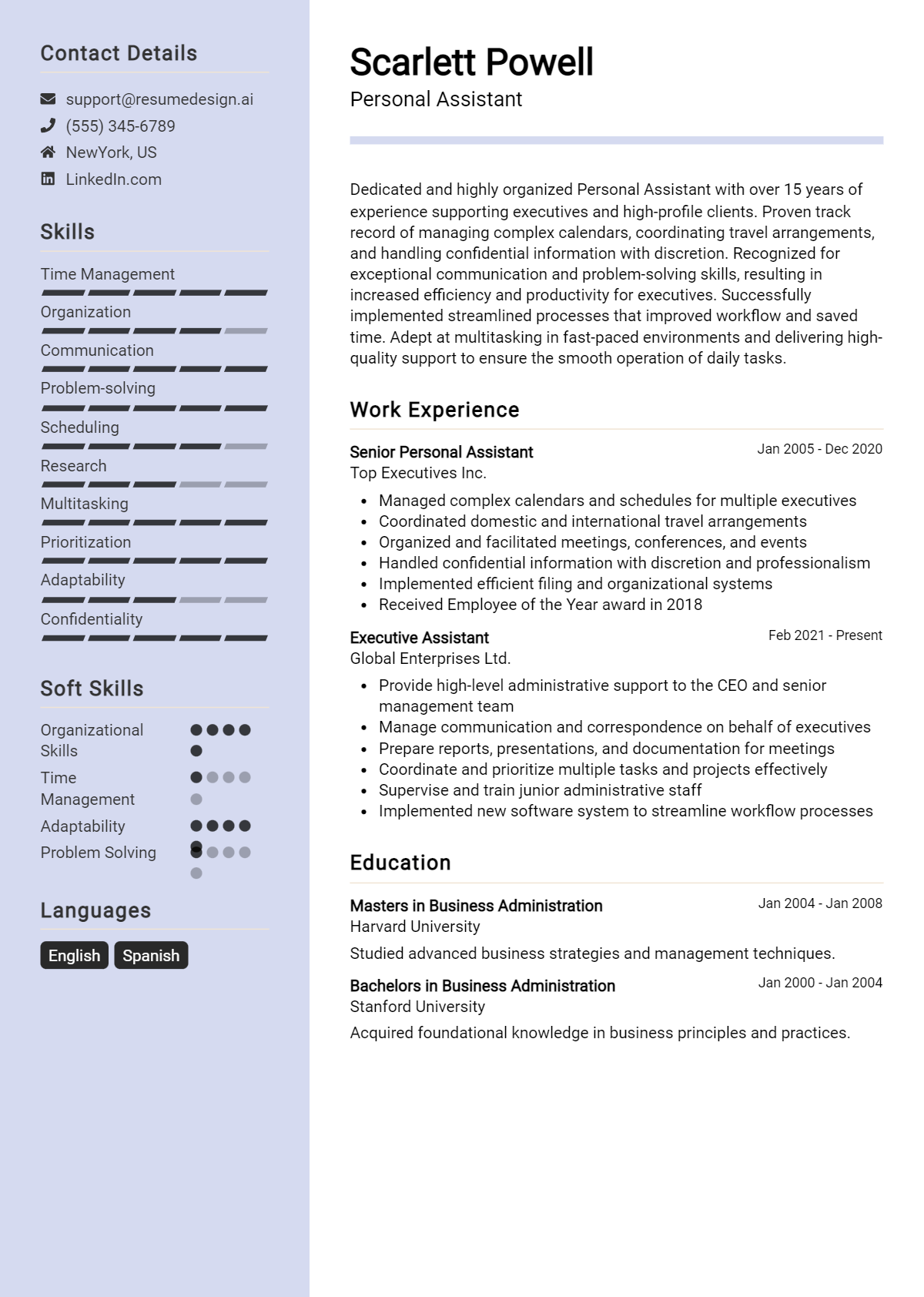
When preparing for a personal assistant job interview, it's essential to anticipate the questions that may arise and formulate thoughtful responses. The role of a personal assistant often demands exceptional organizational skills, attention to detail, and the ability to manage multiple tasks efficiently. Understanding the types of questions interviewers typically ask can help you present yourself as the ideal candidate for this dynamic position.
Here is a list of common job interview questions for a personal assistant, along with examples of the best answers. These questions will delve into your work history and experience, assess what unique skills you bring to the table, and explore your career aspirations. By preparing your responses, you can demonstrate not only your competence but also your enthusiasm for supporting the employer’s objectives.
1. Can you describe your experience as a Personal Assistant?
I have over three years of experience supporting executives by managing their schedules, handling correspondence, and coordinating travel arrangements. My organizational skills and attention to detail ensure that tasks are completed efficiently and accurately.
Example:
In my previous role, I managed a busy executive's calendar, ensuring all appointments were prioritized and conflicts resolved. This experience taught me the importance of clear communication and effective time management.
2. How do you prioritize tasks when you have multiple deadlines?
I prioritize tasks by assessing their urgency and importance, often using a task management system. I communicate with my supervisor to align on priorities and adjust as needed, ensuring critical deadlines are met without compromising quality.
Example:
In my last position, I used a priority matrix to categorize tasks. This helped me focus on high-impact projects while still meeting all deadlines, leading to successful project completions.
3. How do you handle confidential information?
I treat all confidential information with the utmost respect and adhere to company policies regarding data protection. I ensure that sensitive documents are securely stored and only shared with authorized individuals when necessary.
Example:
In a previous role, I managed sensitive client data and always used encrypted emails for correspondence. I also maintained strict physical security protocols for hard copies of documents.
4. Can you give an example of a challenging situation you faced and how you resolved it?
Once, a last-minute meeting was scheduled with a VIP client. I quickly rearranged my executive's calendar, notified all stakeholders, and ensured the meeting space was prepared. This proactive approach led to a successful engagement.
Example:
When faced with a scheduling conflict, I organized a quick team meeting to delegate tasks, allowing us to accommodate the client while maintaining productivity on other projects.
5. What tools or software do you use to stay organized?
I utilize tools like Google Calendar for scheduling, Trello for task management, and Slack for communication. These platforms enhance collaboration and streamline my daily tasks, enabling me to manage my workload efficiently.
Example:
In my previous job, I used Asana for project tracking, which improved team collaboration and ensured that deadlines were consistently met.
6. How do you ensure effective communication with your manager?
I schedule regular check-ins to discuss priorities and updates. I also prefer to use clear, concise emails and summaries to keep my manager informed without overwhelming them with information.
Example:
In my last role, I sent weekly summaries of key tasks and upcoming deadlines, which facilitated smooth communication and allowed my manager to provide input easily.
7. How do you deal with difficult clients or stakeholders?
I approach difficult situations with empathy and professionalism. I listen to their concerns, acknowledge their feelings, and work collaboratively to find solutions. This approach often diffuses tension and leads to a positive outcome.
Example:
When a client was unhappy with a service, I arranged a follow-up call to address their concerns directly, which helped restore their trust and satisfaction.
8. What motivates you in your role as a Personal Assistant?
I am motivated by the opportunity to support others and make their jobs easier. Seeing my efforts lead to successful outcomes for my team drives me to excel and continuously improve my skills.
Example:
I find satisfaction in organizing events successfully and ensuring everything runs smoothly, which motivates me to keep enhancing my organizational skills.
9. How do you prioritize your tasks when managing multiple responsibilities?
I prioritize my tasks by assessing urgency and importance, often using a task management tool. I create a daily list, focusing on deadlines and project goals, ensuring that my supervisor's needs are met promptly while maintaining high-quality output.
Example:
I start each day by listing tasks and categorizing them by urgency. For example, if a report is due soon, I tackle it first, ensuring deadlines are met without compromising the quality of my work.
10. Can you describe a time when you had to handle a difficult situation?
In a previous role, I managed a scheduling conflict for my executive. I calmly communicated with both parties, negotiated a new meeting time, and ensured everyone was informed, which maintained relationships and allowed for effective communication.
Example:
There was a time when two important meetings overlapped. I quickly contacted both parties, rescheduled one, and kept everyone updated to ensure smooth communication and maintained professionalism throughout the process.
11. What tools or software do you use to stay organized?
I utilize various tools like Microsoft Outlook for email management, Trello for task tracking, and Google Calendar for scheduling. These tools help me maintain organization and efficiency in managing multiple tasks and deadlines seamlessly.
Example:
I primarily use Google Calendar for scheduling, Evernote for note-taking, and Asana for task management. This combination allows me to keep everything organized and accessible, enhancing my productivity significantly.
12. How do you maintain confidentiality in your role?
I maintain confidentiality by adhering to company policies, limiting information access, and securely handling sensitive documents. I understand the importance of discretion in a Personal Assistant role and always prioritize the privacy of my employer and their clients.
Example:
I always lock sensitive documents in a secure location and discuss confidential matters in private settings. For instance, I ensure no sensitive information is shared via unsecured emails or in public places.
13. Describe your experience with travel arrangements.
I have extensive experience organizing travel itineraries, including booking flights, accommodations, and transportation. I ensure all details are confirmed well in advance, providing my executive with a comprehensive itinerary for smooth travel experiences.
Example:
For a recent business trip, I coordinated flight bookings, hotel accommodations, and transportation, providing a detailed itinerary. Everything was confirmed a week prior to ensure no last-minute issues arose during travel.
14. How do you handle feedback or criticism from your supervisor?
I view feedback as an opportunity for growth. When receiving criticism, I listen attentively, ask clarifying questions if needed, and implement the suggestions to improve my performance, ensuring I meet my supervisor's expectations effectively.
Example:
When my supervisor provided constructive feedback on my report formatting, I took notes, applied the changes, and ensured to double-check formatting in future documents to enhance my attention to detail.
15. What strategies do you use to manage stress in a fast-paced environment?
I manage stress by staying organized, taking short breaks to recharge, and practicing mindfulness techniques. I prioritize tasks to avoid last-minute rushes, which significantly reduces stress and enhances my productivity in a fast-paced setting.
Example:
In busy periods, I take short breaks to refocus and use tools like to-do lists to prioritize tasks. This approach helps me stay calm and effectively manage my workload without feeling overwhelmed.
16. How do you ensure effective communication with your team and supervisor?
I prioritize clear and concise communication by regularly updating my supervisor on progress and challenges. I also utilize collaborative tools like Slack or Microsoft Teams to facilitate open dialogue and ensure everyone is on the same page.
Example:
I provide weekly updates to my supervisor via email and encourage team meetings to discuss ongoing projects. This ensures transparency and fosters a collaborative environment for all team members.
17. How do you prioritize tasks when managing multiple schedules?
I use a combination of digital tools and to-do lists to prioritize tasks based on deadlines and importance. I assess urgent tasks first, ensuring that my executive’s agenda remains efficient and effective, while also being adaptable to changes that may arise throughout the day.
Example:
In my previous role, I utilized a task management app to organize priorities, ensuring urgent meetings were scheduled first while allowing flexibility for last-minute changes, which kept the executive focused on critical tasks without overlooking anything essential.
18. Can you describe a time when you had to handle a difficult client or stakeholder?
In my last position, a client was unhappy with our service delivery. I listened to their concerns, ensured they felt heard, and proposed a solution that addressed their issues. This proactive approach not only salvaged the relationship but also led to a long-term partnership.
Example:
I once worked with a challenging client who was upset about delays. After acknowledging their frustrations, I arranged a meeting to discuss solutions, which resolved the issue and improved our communication moving forward, enhancing the overall relationship.
19. How do you ensure confidentiality while handling sensitive information?
I always adhere to strict confidentiality protocols by securely storing documents and limiting access to sensitive information to authorized personnel only. Additionally, I remain vigilant about verbal communications in public settings to protect our organization’s interests.
Example:
In my previous role, I implemented a secure filing system and regularly trained my team on confidentiality practices, ensuring that sensitive information was handled discreetly, thereby maintaining the trust of our clients and stakeholders.
20. How do you handle tight deadlines?
When faced with tight deadlines, I focus on clear communication and prioritization. I break down tasks into manageable parts, delegate when possible, and remain organized. Maintaining composure under pressure allows me to deliver quality work efficiently.
Example:
In a previous role, I faced a last-minute project request. I organized a quick team meeting, delegated tasks, and we completed the project ahead of schedule, demonstrating our capacity to effectively manage tight deadlines without compromising quality.
21. What strategies do you use to manage your time effectively?
I implement the Eisenhower Matrix to categorize tasks by urgency and importance, which helps me focus on what truly matters. Additionally, I allocate specific time blocks for tasks and regularly review my progress to adjust priorities as needed.
Example:
For example, I set aside morning hours for high-priority tasks while using afternoons for meetings. This structured approach enhances my productivity, allowing me to adapt as new tasks arise without losing sight of overall goals.
22. Describe a situation where you had to learn a new skill quickly.
When our company adopted a new CRM system, I dedicated extra hours to online tutorials and sought help from colleagues. Within a week, I became proficient, enabling me to assist others and streamline our client management process effectively.
Example:
I quickly learned a new scheduling software during a transition period. I enrolled in training sessions and practiced daily, which allowed me to train my team within two weeks, ensuring a seamless transition for everyone involved.
23. How do you maintain a positive working relationship with your executive?
I maintain open communication by regularly seeking feedback and clarifying expectations. I also make an effort to understand their working style and preferences, which helps in anticipating needs and building trust over time.
Example:
By scheduling regular check-ins with my executive, I ensure we’re aligned on priorities. I also share updates on projects and ask for feedback, fostering a collaborative environment that strengthens our working relationship.
24. What do you consider your greatest strength as a Personal Assistant?
My greatest strength is my organizational skills. I can manage multiple tasks efficiently and keep everything on track, ensuring that deadlines are met and that my executive’s time is optimized, which is crucial for effective support.
Example:
For example, my ability to create detailed itineraries and manage schedules allows me to anticipate needs and prevent potential conflicts, which has consistently improved overall productivity in my previous roles.
25. How do you prioritize tasks when faced with multiple deadlines?
I assess the urgency and importance of each task, using a prioritization matrix. This allows me to focus on high-impact tasks first, ensuring that I meet deadlines efficiently while communicating any potential delays to my supervisor.
Example:
I prioritize tasks by setting clear deadlines, then ranking them based on urgency. For instance, I once handled urgent travel arrangements while preparing a report, ensuring both were completed on time.
26. Can you describe a time when you had to handle a difficult client or colleague?
I once assisted a client who was upset about a scheduling error. I listened actively to their concerns, apologized for the inconvenience, and quickly rescheduled their appointment, ensuring they felt valued and supported throughout the process.
Example:
A client was upset about a missed meeting. I calmly listened, acknowledged their frustration, and promptly arranged a new meeting at their convenience, which restored their trust in our services.
27. How do you ensure confidentiality in your role as a Personal Assistant?
I practice discretion by following company policies on information sharing. I limit discussions about sensitive topics to trusted colleagues and avoid leaving confidential documents in accessible places, ensuring data security is always a priority.
Example:
I ensure confidentiality by securely storing sensitive information and discussing it only with authorized personnel. For example, I use encrypted files for payroll data to prevent unauthorized access.
28. What tools or software do you find essential in managing your workload?
I rely heavily on tools like Microsoft Office for document creation, Google Calendar for scheduling, and project management software like Trello for task tracking. These tools enhance my efficiency and organization, keeping my workload manageable.
Example:
I use tools like Microsoft Excel for data organization, and Asana for task management. They help streamline my workflow and ensure I meet deadlines without missing any critical tasks.
29. How do you handle last-minute changes to schedules or plans?
I remain adaptable and composed when faced with last-minute changes. I quickly reassess priorities and communicate with all parties involved to ensure everyone is informed, maintaining a proactive approach to minimize disruption.
Example:
When a meeting changed at the last minute, I promptly updated the calendar and notified all attendees via email, ensuring everyone had the new details to avoid confusion.
30. Can you give an example of how you managed a project from start to finish?
I managed an office event by creating a timeline, delegating tasks, and overseeing the budget. I coordinated with vendors and ensured everything was in place, resulting in a successful event that received positive feedback from attendees.
Example:
I organized an annual company retreat, coordinating logistics, catering, and activities. The event was well-received, leading to increased team morale and collaboration.
31. How do you approach learning new skills that are relevant to your role?
I actively seek out opportunities for professional development, such as online courses or workshops. I also learn from colleagues and apply new skills to my day-to-day tasks, ensuring I stay updated with industry trends and best practices.
Example:
I recently took an online course in advanced Excel functions to improve my data management skills, which I now utilize regularly in my work to enhance productivity.
32. How do you maintain a work-life balance in a demanding role?
I prioritize time management and set clear boundaries between work and personal time. I ensure to take breaks throughout the day and allocate time for family and hobbies, which helps me recharge and remain productive at work.
Example:
I maintain work-life balance by scheduling breaks and setting specific work hours, ensuring I dedicate evenings to family and personal interests, which enhances my overall well-being.
33. How do you prioritize tasks when you have multiple deadlines?
I prioritize tasks by assessing their urgency and importance, often using a task management tool. I break down larger projects into smaller tasks and set clear deadlines for each, ensuring I stay on track and communicate any potential delays.
Example:
I use a combination of digital tools and lists to rank tasks daily, focusing on deadlines and impact. For instance, I prioritized a presentation over routine emails when a senior manager requested immediate assistance.
34. Can you give an example of how you handled a difficult situation with a colleague or client?
In a previous role, a client was unhappy with our service. I listened to their concerns, empathized, and proposed a plan to address the issues. This approach not only resolved the situation but also strengthened our relationship.
Example:
Once, a client expressed frustration over missed deadlines. I scheduled a call to discuss their issues, offered solutions, and assured them of my commitment. This transparency led to renewed trust and a successful project completion.
35. How do you ensure confidentiality in your role?
I maintain confidentiality by adhering to company policies and protocols regarding sensitive information. I only share details with authorized individuals and utilize secure communication methods to protect private data.
Example:
In my last position, I handled confidential documents regularly. I ensured they were stored securely and only discussed sensitive matters in private meetings, reinforcing my commitment to maintaining confidentiality at all times.
36. Describe a time when you had to adapt to a significant change at work.
When our company underwent a merger, I had to adjust to new organizational structures and processes. I embraced the change by learning new software quickly and fostering collaboration between teams, which eased the transition for everyone.
Example:
During a merger, I took the initiative to learn the new operating procedures and helped colleagues adapt by creating a shared resource guide, which facilitated a smoother transition and improved team morale.
37. What strategies do you use to manage your time effectively?
I employ techniques like the Pomodoro Technique and time blocking to stay productive. By allocating specific time slots for tasks and taking regular breaks, I maintain focus and ensure I meet deadlines without burnout.
Example:
I often set a timer for 25 minutes to focus on a single task, followed by a 5-minute break. This method keeps my productivity high and allows me to tackle multiple projects without losing concentration.
38. How do you handle repetitive tasks that may become monotonous?
To manage repetitive tasks, I find ways to automate processes using software tools. I also set personal goals or challenges to keep myself engaged and maintain a positive attitude while completing these tasks.
Example:
When faced with data entry tasks, I created templates and macros to speed up the process. This not only saved time but also kept my work interesting, allowing me to focus on more complex projects.
39. What role does communication play in your duties as a Personal Assistant?
Communication is crucial in my role, as I act as a liaison between my manager and other stakeholders. I ensure clear and concise information flow to avoid misunderstandings and foster collaboration within the team.
Example:
I regularly update my manager on project statuses and relay important messages to team members. This proactive communication helps everyone stay aligned and contributes to the overall efficiency of our operations.
40. How do you approach learning new software or tools?
I approach learning new software by first utilizing available tutorials and training resources. I also practice hands-on to familiarize myself with features and functionalities, ensuring I become proficient quickly to support my duties effectively.
Example:
When I had to learn a new project management tool, I dedicated time each day to explore its features, completed online courses, and reached out to colleagues for tips, which enabled me to use it efficiently within a week.
41. How do you prioritize tasks when faced with multiple deadlines?
I assess deadlines and importance, using tools like to-do lists and digital calendars. I communicate with my supervisor to clarify priorities and adjust as needed. Flexibility is key in managing my time effectively while ensuring all tasks are completed on schedule.
Example:
I use a priority matrix to categorize tasks. For instance, if two deadlines coincide, I discuss with my supervisor to determine which task aligns more with our immediate goals, ensuring I focus my efforts where they matter most.
42. Can you describe a time when you had to handle a difficult client or colleague?
In a previous role, a client was unhappy with a service. I listened actively to their concerns, empathized, and proposed solutions. By maintaining professionalism and clear communication, I turned the situation around, resulting in a positive outcome and strengthened relationship.
Example:
I once dealt with a frustrated client by scheduling a call to understand their issues better. After addressing their concerns and offering a tailored solution, they expressed gratitude and renewed their contract with us, showing the importance of communication.
43. What tools or software do you use to stay organized?
I utilize various tools such as Microsoft Outlook for emails and scheduling, Trello for task management, and Google Drive for document sharing. These applications help me stay organized and facilitate collaboration with my team and supervisor, ensuring seamless workflow.
Example:
I regularly use Asana for project management and Google Calendar to keep track of meetings. This combination helps me prioritize tasks effectively and ensures that I don’t overlook important deadlines or appointments.
44. How do you handle confidential information?
Handling confidential information is crucial in my role. I adhere strictly to company policies and protocols, ensuring that sensitive data is only shared with authorized personnel. I also utilize password protection and secure storage to maintain confidentiality.
Example:
In my last position, I managed sensitive financial documents by encrypting files and only sharing them through secure channels. This practice ensured that our client’s information remained protected and maintained their trust in our services.
45. What steps do you take to ensure effective communication with your supervisor?
I prioritize clear, consistent communication by scheduling regular check-ins and providing updates on ongoing tasks. I also encourage feedback to ensure alignment on priorities and expectations, fostering a collaborative working relationship that enhances productivity.
Example:
I set up weekly meetings with my supervisor to discuss project statuses and address any concerns. This proactive approach allows us to stay aligned and ensures that I am meeting their expectations effectively.
46. How do you stay motivated during repetitive tasks?
To stay motivated during repetitive tasks, I break them into smaller segments and set mini-goals. I also listen to music or podcasts to keep my mind engaged. Celebrating small achievements helps maintain my productivity and enthusiasm throughout the workday.
Example:
When faced with data entry tasks, I challenge myself to complete them within a certain timeframe. I reward myself with short breaks, which keeps my energy up and maintains my focus on the task at hand.
How Do I Prepare For A Personal Assistant Job Interview?
Preparing for a Personal Assistant job interview is crucial to making a lasting impression on the hiring manager. A well-prepared candidate demonstrates professionalism, confidence, and a genuine interest in the role, which can significantly enhance your chances of securing the position.
- Research the company and its values to understand its culture and goals.
- Practice answering common interview questions related to Personal Assistant roles.
- Prepare examples that demonstrate your skills and experience relevant to the position.
- Organize your resume and any supporting documents to present them neatly during the interview.
- Dress appropriately for the interview to convey professionalism and respect.
- Prepare thoughtful questions to ask the interviewer about the role and the company.
- Review the job description thoroughly to align your experiences with the key responsibilities.
Conclusion
In this interview guide, we've covered the essential aspects of preparing for a Personal Assistant role, highlighting the importance of thorough preparation, practice, and showcasing relevant skills. Understanding both the technical and behavioral questions that may arise during the interview process is crucial, as this can significantly enhance a candidate's chances of success.
Remember, each interview is an opportunity to demonstrate your capabilities and fit for the role. By leveraging the tips and examples provided in this guide, you can approach your interviews with confidence and poise.
For further assistance, check out these helpful resources: resume templates, resume builder, interview preparation tips, and cover letter templates.