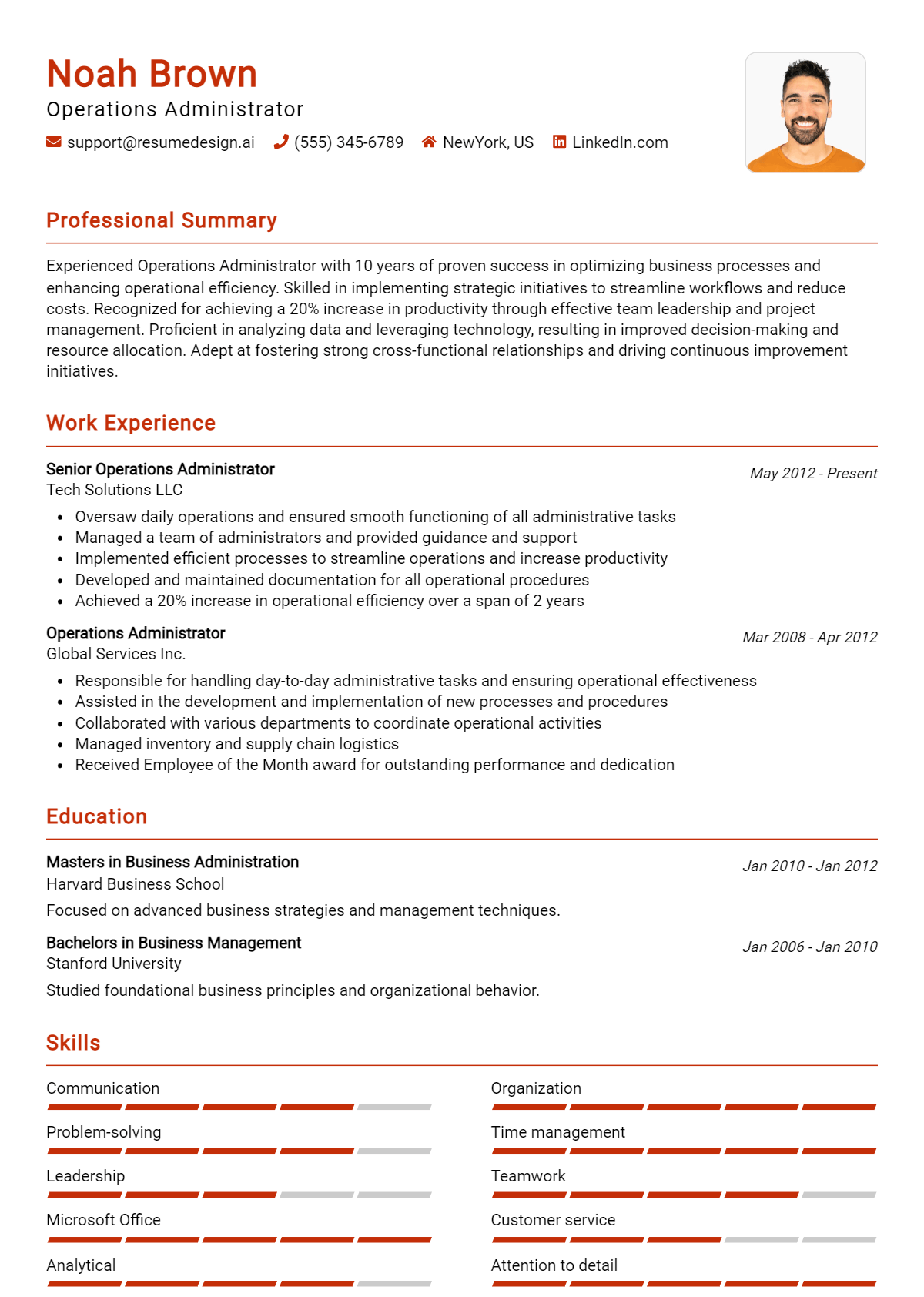
When preparing for an interview as an Operations Administrator, it's essential to understand the types of questions you may encounter. This role requires a blend of organizational skills, attention to detail, and a strong understanding of operational processes. Employers will be looking for candidates who can effectively manage tasks, streamline procedures, and contribute positively to the team's overall efficiency.
Here is a list of common job interview questions, with examples of the best answers. These questions cover your work history and experience, what you have to offer the employer, and your goals for the future. Be prepared to discuss your previous roles, how you've handled challenges in operations, and how your skills can benefit the organization moving forward.
1. Can you describe your experience with operations management?
I have over five years of experience in operations management, focusing on streamlining processes and improving efficiency. At my last job, I implemented a new inventory system that reduced errors by 30% and improved order fulfillment time significantly.
Example:
In my previous role, I managed daily operations, optimizing workflows and cutting costs by 15% through strategic vendor negotiations and process improvements.
2. How do you prioritize tasks in a busy environment?
I prioritize tasks based on urgency and impact. I use a task management tool to categorize daily responsibilities and ensure that critical deadlines are met. Communication with my team helps align priorities and adjust as needed.
Example:
I utilize a combination of task lists and digital tools to identify high-impact tasks, ensuring that critical deadlines are addressed promptly while maintaining flexibility for unexpected challenges.
3. What strategies do you use to improve operational efficiency?
I focus on continuous improvement by analyzing workflows and soliciting feedback from team members. Implementing technology solutions, such as automation tools, has also helped streamline processes and reduce manual errors.
Example:
In my last position, I introduced automation software that eliminated repetitive tasks, leading to a 20% increase in overall efficiency across various departments.
4. Describe a challenging project you managed.
I once led a project to integrate a new software system across departments. The challenge was resistance from staff. I organized training sessions and regular updates, ultimately achieving a smooth transition with increased user satisfaction and productivity.
Example:
I managed a system upgrade that faced initial pushback. Through targeted training and open communication, I successfully facilitated adoption, resulting in improved interdepartmental collaboration.
5. How do you handle conflicts within your team?
I address conflicts by encouraging open dialogue and understanding each party's perspective. By facilitating a discussion, I help the team find common ground and work towards a resolution that aligns with our goals.
Example:
When conflicts arise, I facilitate a meeting to allow team members to express their views. This often leads to a collaborative solution that strengthens relationships and enhances productivity.
6. What tools do you use for data analysis in operations?
I regularly use Excel and data visualization tools like Tableau for analysis. These tools help me track key performance indicators, identify trends, and make informed decisions to optimize operations.
Example:
In previous roles, I relied on Excel for detailed data analysis and Tableau for presenting insights visually, making it easier to communicate findings to stakeholders.
7. How do you ensure compliance with company policies and regulations?
I maintain compliance by regularly reviewing policies and conducting training sessions for staff. I also implement checks and audits to ensure adherence and address any issues promptly.
Example:
I conduct quarterly reviews of compliance procedures and engage the team in training, ensuring everyone understands the importance of adhering to company policies and regulations.
8. What role does communication play in your job?
Effective communication is vital in operations. It ensures that all team members are aligned on goals and processes. I prioritize transparent communication through meetings, updates, and collaborative platforms to foster a cohesive work environment.
Example:
I emphasize regular team meetings and updates to maintain alignment and address any concerns promptly, fostering a culture of open communication and collaboration.
9. How do you prioritize tasks when faced with multiple deadlines?
I prioritize tasks by assessing their urgency and impact. I create a to-do list, categorizing tasks into high, medium, and low priority. This allows me to focus on critical deadlines first while ensuring all tasks are completed efficiently.
Example:
When I had overlapping project deadlines, I created a priority matrix, focusing on tasks that directly impacted the team’s goals. This approach ensured timely completion without compromising quality.
10. Can you describe a time you improved an operational process?
I identified inefficiencies in our reporting process and implemented a new software tool that automated data collection. This reduced the reporting time by 50% and improved accuracy, allowing my team to focus on more strategic tasks.
Example:
By introducing an automated reporting system, I decreased the time spent on manual data entry from hours to minutes, significantly enhancing our productivity and accuracy.
11. How do you handle conflicts within a team?
I address conflicts by facilitating open communication between the parties involved. I encourage them to express their viewpoints and work collaboratively towards a resolution, focusing on common goals to restore harmony within the team.
Example:
In a recent situation, I mediated a conflict by organizing a meeting where each team member expressed their concerns. This led to a mutual understanding and improved collaboration.
12. What tools or software are you familiar with for operations management?
I am proficient in using tools such as Microsoft Excel for data analysis, Asana for project management, and ERP systems like SAP. These tools streamline operations and enhance productivity.
Example:
In my previous role, I utilized Asana to track project timelines, ensuring transparency and accountability within my team, which improved overall project delivery.
13. Describe your experience with budget management.
I have experience managing departmental budgets, monitoring expenditures, and identifying cost-saving opportunities. I regularly analyze financial reports to ensure we stay within budget while achieving operational goals.
Example:
By analyzing monthly spending patterns, I identified areas where we could cut costs by 15%, which contributed significantly to our overall budget efficiency.
14. How do you ensure compliance with company policies and regulations?
I ensure compliance by staying informed about relevant policies and regulations. I conduct regular training sessions, create checklists, and perform audits to ensure all team members adhere to established guidelines.
Example:
I implemented a quarterly compliance training program that improved understanding of policies across the team, resulting in a 20% decrease in compliance-related issues.
15. How do you handle tight deadlines?
When faced with tight deadlines, I remain calm and focused. I break tasks into manageable parts, delegate when necessary, and maintain constant communication with my team to ensure everyone is aligned and aware of progress.
Example:
During a recent project, I broke down tasks and assigned roles based on strengths, which allowed us to meet the deadline without sacrificing quality.
16. What strategies do you use to maintain effective communication?
I prioritize clear and concise communication by using various channels like emails, meetings, and collaborative tools. I also encourage feedback to ensure everyone is on the same page and feels included in discussions.
Example:
I implemented weekly check-ins with our team, fostering open dialogue that improved transparency and collaboration, helping us address issues promptly.
17. How do you prioritize tasks in a busy work environment?
I assess tasks by urgency and impact, creating a to-do list. I utilize tools like Trello to track progress and deadlines, ensuring critical tasks are addressed first. Regularly communicating with my team helps align priorities and manage workload effectively.
Example:
I prioritize tasks using a combination of urgency and deadlines. For instance, I use a digital task manager to visualize my workload and ensure high-impact tasks are completed first while keeping my team informed.
18. Can you describe your experience with data management systems?
I have extensive experience with CRM and ERP systems, ensuring data accuracy and integrity. I regularly generate reports to analyze operational performance and streamline processes. My proficiency in Excel also aids in data manipulation and visualization for informed decision-making.
Example:
In my previous role, I managed our CRM system, ensuring data accuracy. I regularly generated reports to analyze trends and improve operations, utilizing Excel for detailed data analysis whenever necessary.
19. Describe a time when you identified a process improvement.
At my last job, I noticed our invoicing process was slow. I proposed an automated system that reduced processing time by 50%. I collaborated with the finance team to implement this change, leading to faster payments and improved cash flow.
Example:
I identified inefficiencies in our invoicing process and suggested automation. After collaborating with finance, we reduced the processing time by 50%, which greatly improved our cash flow and client satisfaction.
20. How do you handle conflicts within a team?
I address conflicts by facilitating open communication, allowing team members to express their concerns. I aim to find common ground and propose solutions that benefit everyone. My focus is on maintaining a positive team dynamic and ensuring project goals are met.
Example:
When conflicts arise, I encourage open dialogue among team members. I help them express their perspectives and seek a compromise that satisfies all parties, ensuring we stay focused on our shared objectives.
21. What strategies do you use to manage time effectively?
I utilize the Eisenhower Matrix to categorize tasks by urgency and importance. I set specific goals for each day and allocate time blocks for focused work. Regular breaks help maintain productivity without burnout, ensuring I stay on track.
Example:
I manage my time by prioritizing tasks using the Eisenhower Matrix. Setting daily goals and taking regular breaks allows me to maintain focus and productivity throughout the day.
22. How do you ensure compliance with company policies?
I stay updated on company policies and regularly train staff on compliance requirements. I conduct audits to ensure adherence and address discrepancies immediately. Clear communication helps reinforce the importance of compliance across the organization.
Example:
I ensure compliance by staying informed about company policies and conducting regular training sessions. I also perform audits to monitor adherence and address any issues promptly.
23. Tell us about your experience with budgeting and financial planning.
I have worked closely with finance teams to develop and manage budgets. My role involved analyzing expenditure, forecasting future needs, and identifying cost-saving opportunities. I utilize financial software to ensure accuracy in reporting and tracking.
Example:
I collaborated with the finance team on budgeting, analyzing expenses, and identifying savings. I used financial tools to track budgets and ensure accurate reporting.
24. How do you adapt to changes in the workplace?
I embrace change by remaining flexible and open-minded. I assess the situation, seek feedback from colleagues, and adapt my strategies accordingly. Continuous learning helps me stay ahead, ensuring I can effectively manage new challenges as they arise.
Example:
I adapt to workplace changes by staying flexible and open to feedback. By assessing new situations and learning continuously, I can effectively manage transitions and challenges.
25. How do you prioritize tasks in a fast-paced environment?
In a fast-paced environment, I prioritize tasks by assessing urgency and importance. I use tools like to-do lists and project management software to keep track, ensuring that critical deadlines are met while remaining flexible to adapt to new priorities as they arise. Example: I once handled multiple projects simultaneously by categorizing them based on deadlines and impact, allowing me to address the most pressing tasks first while ensuring I stayed on track with longer-term goals.
26. Can you describe a time when you improved a process?
In my previous role, I identified inefficiencies in our invoice processing system. By implementing automation software, I reduced processing time by 30%. This not only improved accuracy but also allowed the team to focus on more strategic tasks, enhancing overall productivity. Example: I introduced an automated invoicing tool, which streamlined our workflow, cut down on errors, and saved the team several hours each week, allowing us to dedicate more time to customer service and support.
27. How do you handle conflicts within a team?
When conflicts arise, I first listen to each party's perspective to understand their viewpoints. I then facilitate a discussion to encourage open communication and find common ground. My goal is to foster a collaborative environment where solutions can be reached amicably. Example: In a previous experience, I mediated a disagreement between team members by organizing a meeting where everyone could voice their concerns, leading to a resolution that strengthened team dynamics and improved collaboration.
28. What software tools are you proficient in for operations management?
I am proficient in various operations management software, including Microsoft Excel, Trello, and Asana. These tools allow me to track project progress, manage timelines, and analyze data effectively, contributing to efficient operations and informed decision-making. Example: I regularly use Excel for data analysis and reporting, while Trello helps me manage projects visually, ensuring that all team members are aligned and aware of their responsibilities and deadlines.
29. Describe your experience with budget management.
In my previous roles, I have been responsible for monitoring departmental budgets, forecasting expenses, and analyzing variances. By keeping a close eye on financial metrics, I effectively managed resources, ensuring that we stayed within budget while meeting operational goals. Example: I successfully managed a departmental budget of $500,000, using tracking tools to identify cost-saving opportunities, which led to a 15% reduction in expenses without compromising project quality or team performance.
30. How do you ensure compliance with company policies?
I ensure compliance by staying updated on company policies and regulations. I regularly conduct training sessions for team members, monitor adherence, and implement checklists for operational procedures, fostering a culture of accountability and continuous improvement within the team. Example: I initiated quarterly compliance reviews, which helped reinforce policy understanding among staff, resulting in a significant decrease in compliance-related issues and fostering a culture of accountability.
31. What strategies do you use to motivate your team?
I motivate my team by recognizing individual contributions and providing opportunities for professional development. Encouraging open communication and creating a supportive environment fosters collaboration, while celebrating successes boosts morale and keeps everyone engaged and focused on our goals. Example: I implemented a monthly recognition program to highlight team achievements, which not only motivated my colleagues but also fostered a sense of unity and shared purpose within the team.
32. How do you adapt to changing priorities in your work?
Adapting to changing priorities requires flexibility and effective communication. I regularly reassess my workload and adjust my plans accordingly. By maintaining a positive attitude and being proactive in discussing changes with my team, I ensure that we can pivot effectively while maintaining productivity. Example: When a critical project was moved up in priority, I quickly reorganized my schedule and collaborated with my team to redistribute tasks, ensuring we met the new deadline without compromising the quality of our work.
33. How do you prioritize tasks when managing multiple deadlines?
I utilize a combination of task management tools and prioritization techniques, such as the Eisenhower Matrix, to assess urgency and importance. This helps me focus on high-impact tasks while still ensuring deadlines are met efficiently. Example: I typically list tasks by deadline and importance, then tackle the most critical ones first, ensuring that I allocate time effectively to each project.
34. Can you describe a time when you improved an operational process?
In my previous role, I streamlined the reporting process by implementing automated data collection tools. This reduced reporting time by 40%, allowing the team to focus on analysis rather than data gathering, ultimately enhancing our decision-making process. Example: I introduced a new software tool that automated our monthly reporting, cutting down the time spent on manual data entry and significantly improving accuracy and efficiency.
35. How do you handle conflicts within a team?
I approach conflicts by promoting open communication and understanding differing perspectives. I facilitate discussions to identify the root cause and work collaboratively towards a resolution that aligns with our team goals and values. Example: I once mediated a disagreement by encouraging both parties to express their views, which led to a mutually beneficial solution and improved team dynamics.
36. What tools or software are you familiar with that assist in operations management?
I am proficient in several tools, including Microsoft Excel for data analysis, Trello for project management, and ERP systems like SAP. These tools help streamline operations and enhance team collaboration effectively. Example: I regularly use Excel for data analysis and reporting, while Trello helps me track project statuses and ensure all team members are aligned on tasks and deadlines.
37. Describe a situation where you had to adapt to a significant change at work.
When our company shifted to remote work, I quickly adapted by establishing clear communication channels and setting up virtual collaboration tools. This ensured that our team remained productive and connected despite the changes. Example: I embraced the shift to remote work by organizing regular virtual check-ins and utilizing tools like Zoom and Slack to maintain team engagement and productivity.
38. How do you ensure accuracy in your work?
I ensure accuracy through meticulous attention to detail and by establishing a systematic review process. I often double-check my work and encourage peer reviews for critical tasks to catch any potential errors before final submission. Example: I implement a checklist for all tasks and encourage team members to review each other’s work, which has significantly reduced errors and improved overall accuracy.
39. What strategies do you use for effective communication in a team?
I prioritize transparency and regular updates, using tools like email, team meetings, and collaborative platforms. This ensures everyone is informed and fosters an environment where team members feel comfortable sharing their ideas and concerns. Example: I schedule weekly team meetings and utilize shared documents to keep everyone updated on project progress and encourage open dialogue among team members.
40. Can you give an example of how you handled a tight deadline?
During a product launch, I organized a focused team meeting to delegate tasks effectively. By prioritizing key actions and maintaining open lines of communication, we successfully met the deadline while ensuring quality and meeting our objectives. Example: I coordinated a last-minute project by breaking down tasks, setting clear expectations, and checking in regularly, allowing us to deliver on time without compromising quality.
41. How do you prioritize tasks when managing multiple projects?
I utilize a priority matrix to evaluate the urgency and importance of tasks. This helps me focus on high-impact activities first while ensuring deadlines are met. Regular check-ins with stakeholders also keep projects aligned and on track.
Example:
By assessing deadlines and project goals, I prioritize tasks effectively. For instance, I once had to coordinate a major event while handling routine reporting, so I delegated routine tasks to focus on the event's success.
42. Can you describe a time when you improved a process?
In my previous role, I identified a bottleneck in our reporting process that caused delays. I implemented a new software tool that automated data collection, reducing reporting time by 30% and allowing the team to focus on analysis instead of data entry.
Example:
I revamped our inventory tracking system by introducing a digital solution, which decreased errors and streamlined reordering processes. This initiative not only saved time but also improved accuracy, leading to better stock management.
43. How do you handle difficult team members or conflicts within the team?
I address conflicts directly by facilitating open communication. I encourage team members to express their concerns and work collaboratively towards a resolution. This approach not only resolves the issue but also fosters a more cohesive team environment.
Example:
When faced with a conflict between two team members, I arranged a mediation session where both could voice their perspectives. This helped them understand each other better and ultimately improved their collaboration on future projects.
44. What strategies do you use for effective time management?
I implement the Pomodoro Technique, breaking work into focused intervals followed by short breaks. This enhances my productivity while preventing burnout. I also set clear daily goals and use digital tools to track my tasks and deadlines.
Example:
I plan my day the night before, prioritizing tasks based on urgency. Using tools like Trello helps me visualize my workload, ensuring that I stay organized and focused on completing my highest priority tasks first.
45. Describe your experience with budget management.
I have managed departmental budgets, tracking expenses against allocated funds. I regularly analyze spending patterns and identify areas for cost savings. This proactive approach ensured that we stayed within budget while still achieving our operational goals.
Example:
In my last role, I oversaw a $500,000 budget, carefully monitoring expenses. By renegotiating contracts with vendors, I saved the department 15%, which we redirected to enhance our service offerings.
46. What tools or software are you familiar with for operations management?
I have extensive experience with project management tools like Asana and Microsoft Project, along with data analysis software such as Excel and Tableau. These tools help streamline operations, improve collaboration, and enhance data-driven decision-making.
Example:
I frequently use Slack for team communication, coupled with Google Workspace for document collaboration. Additionally, I utilize Smartsheet for tracking project timelines, which greatly improves visibility and accountability among team members.
How Do I Prepare For A Operations Administrator Job Interview?
Preparing for an interview is crucial to making a positive impression on the hiring manager and demonstrating your suitability for the Operations Administrator role. A well-prepared candidate not only feels more confident but also stands a better chance of articulating their skills and experiences effectively.
- Research the company and its values to understand its culture and mission.
- Practice answering common interview questions related to operations management and administration.
- Prepare examples that demonstrate your skills and experience relevant to the Operations Administrator position.
- Familiarize yourself with the tools and software commonly used in operations management.
- Review the job description thoroughly to align your qualifications with the requirements.
- Dress appropriately to convey professionalism and fit within the company's culture.
- Prepare thoughtful questions to ask the interviewer about the company and team dynamics.
Frequently Asked Questions (FAQ) for Operations Administrator Job Interview
Preparing for an interview can be daunting, especially for a role as pivotal as an Operations Administrator. Understanding commonly asked questions can help candidates feel more confident and articulate their qualifications effectively. Below are some frequently asked questions that may arise during the interview process, along with practical advice on how to approach them.
What should I bring to an Operations Administrator interview?
When attending an Operations Administrator interview, it’s essential to bring several key items to demonstrate your professionalism and preparedness. Start with multiple copies of your resume, as interviewers may want to refer to them during the discussion. Additionally, bring a notebook and pen for taking notes or jotting down important information. If you have any certifications or relevant documents, consider bringing those as well. Finally, ensure you have a list of references ready in case the topic arises.
How should I prepare for technical questions in an Operations Administrator interview?
Preparing for technical questions requires a solid understanding of the tools and processes used in operations management. Review the job description to identify specific software or methodologies mentioned. Consider practicing common technical scenarios or case studies that you might encounter, and be ready to discuss how you would approach these situations. Make sure to familiarize yourself with industry standards and best practices to showcase your knowledge. If possible, seek out sample interview questions or mock interviews to refine your responses.
How can I best present my skills if I have little experience?
If you have limited experience, focus on transferable skills that are relevant to the Operations Administrator role. Highlight any experience in organization, communication, problem-solving, and teamwork from previous jobs or educational experiences. Discuss specific examples where you successfully applied these skills, even in unrelated positions. Additionally, express your eagerness to learn and adapt, emphasizing a proactive attitude towards developing your skills in the operations field.
What should I wear to an Operations Administrator interview?
Your attire for an Operations Administrator interview should reflect professionalism and a good understanding of the company culture. Generally, business casual is a safe choice; for men, this could mean dress slacks and a collared shirt, while women might opt for a blouse paired with dress pants or a conservative dress. If you’re unsure about the company culture, it’s better to be slightly overdressed than underdressed. Ensure your clothing is clean, pressed, and comfortable, allowing you to focus on the interview rather than your outfit.
How should I follow up after the interview?
Following up after your interview is a critical step that can reinforce your interest in the position and help you stand out. Send a personalized thank-you email to each interviewer within 24 hours of the interview. In your message, express gratitude for the opportunity to interview, mention specific topics discussed that you found engaging, and reiterate your enthusiasm for the role. This not only shows your professionalism but also keeps you fresh in their minds as they make their hiring decision.
Conclusion
In summary, this interview guide has covered essential aspects that every Operations Administrator candidate should focus on for a successful interview. The importance of preparation and practice cannot be overstated, as they play a crucial role in demonstrating your relevant skills and experiences effectively. By familiarizing yourself with both technical and behavioral questions, you can significantly enhance your chances of making a positive impression on your interviewers.
As you prepare, remember that the insights and examples provided in this guide are designed to empower you. Approach your interviews with confidence, knowing that you have equipped yourself with the tools necessary to succeed. Embrace the opportunity to showcase your abilities and passion for the role.
For further assistance, check out these helpful resources: resume templates, resume builder, interview preparation tips, and cover letter templates.