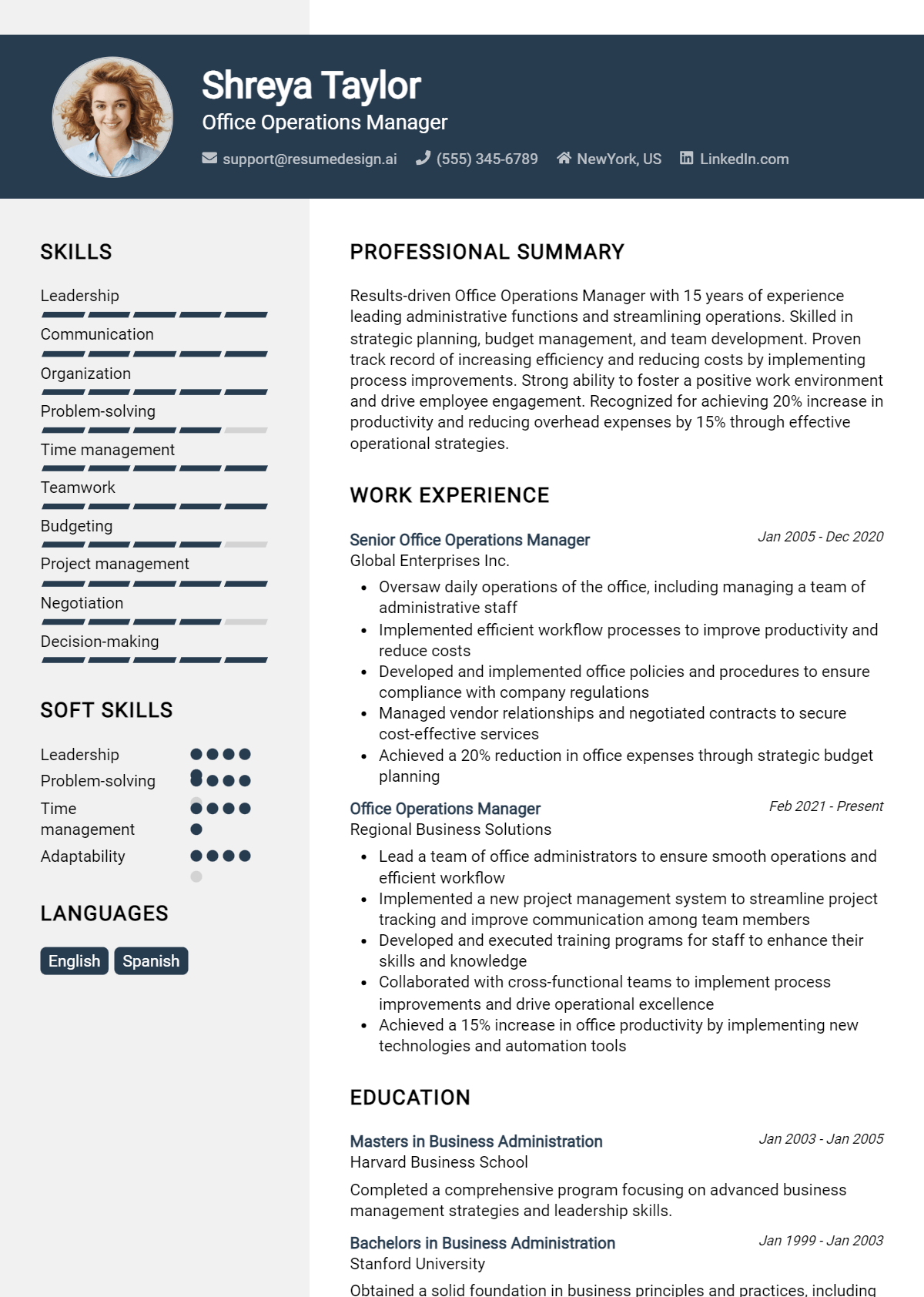
When preparing for an interview as an Office Operations Manager, it's essential to understand the types of questions you may encounter. This role is critical in ensuring the smooth functioning of office activities, so interviewers will often focus on your leadership skills, problem-solving abilities, and experience in managing operational processes. Being well-prepared with thoughtful responses can significantly enhance your chances of impressing potential employers.
Here is a list of common job interview questions for the Office Operations Manager position, along with examples of the best answers. These questions will delve into your work history and experience, what you can bring to the organization, and your aspirations for the future, allowing you to showcase your suitability for this pivotal role.
9. How do you prioritize tasks in a busy office environment?
I prioritize tasks by assessing urgency and impact. I utilize tools like to-do lists and project management software to keep track of deadlines and delegation. This helps ensure that critical tasks are completed first while maintaining overall productivity.
Example:
I use a task matrix to categorize tasks by urgency and importance, focusing on high-impact activities first. For instance, during a busy quarter-end, I prioritize financial reports over routine meetings to meet deadlines effectively.
10. Can you describe a time when you improved an office process?
At my previous job, I noticed our document management system was inefficient. I implemented a digital filing system, reducing retrieval times by 50%. This streamlined workflow allowed staff to focus more on their core responsibilities and improved productivity significantly.
Example:
I revamped our inventory tracking system, transitioning from spreadsheets to a centralized database. This change cut down errors and improved order accuracy, resulting in a 30% reduction in processing time and enhanced overall efficiency.
11. How do you handle conflicts within your team?
When conflicts arise, I facilitate open communication between the parties involved. I encourage them to express their concerns while guiding the discussion towards finding a mutually beneficial resolution. This approach fosters collaboration and strengthens team dynamics.
Example:
In a previous role, I mediated a disagreement between two team members by holding a structured discussion. This not only resolved their issues but also strengthened their working relationship, leading to improved collaboration in future projects.
12. What strategies do you use to manage office budgets?
I manage office budgets by regularly reviewing expenses and comparing them to planned budgets. I identify areas for potential savings and ensure accountability through detailed reporting, which helps in making informed financial decisions and maximizing resources.
Example:
I conduct monthly budget reviews and adjust predictions based on trends. Last year, I identified over-budget areas in supplies and negotiated with vendors, resulting in a 15% reduction in costs without sacrificing quality.
13. How do you ensure compliance with company policies and procedures?
To ensure compliance, I conduct regular training sessions and audits. I keep the team informed about updates to policies and encourage an open-door policy for questions. This promotes a culture of accountability and adherence to procedures.
Example:
I implement quarterly compliance training and maintain an easily accessible digital policy manual. This has led to a noticeable decrease in policy violations, as staff feel more confident in understanding and following the procedures.
14. Describe your experience with vendor management.
I have extensive experience managing vendor relationships, including contract negotiations and performance evaluations. I ensure that vendors meet our quality standards and remain within budget, which has resulted in long-term partnerships and cost-effective solutions.
Example:
In my last position, I renegotiated contracts with key suppliers, saving the company 20% annually. I also established regular performance reviews to ensure they consistently met service expectations, enhancing our partnership's overall value.
15. How do you measure the success of office operations?
I measure success through key performance indicators (KPIs) like efficiency rates, employee satisfaction, and cost savings. Regular feedback from staff and monitoring project timelines also help assess overall performance and identify areas for improvement.
Example:
I track metrics such as task completion rates and employee feedback scores. After implementing changes, I saw a 25% increase in task efficiency, indicating that our operational strategies were successful and embraced by the team.
16. What role does technology play in your operations management?
Technology is crucial in streamlining operations. I leverage software for project management, communication, and data analysis to enhance efficiency. Adopting new tools also helps in automating repetitive tasks, allowing the team to focus on strategic initiatives.
Example:
I integrated a project management tool that automated task assignments and tracking. This reduced email overload and improved transparency, leading to a 30% increase in team productivity and better project outcomes.
17. How do you prioritize tasks in a high-pressure environment?
I prioritize tasks by analyzing deadlines and the impact of each task on overall operations. I also communicate with my team to understand their workloads and ensure we meet critical deadlines without compromising quality.
Example:
In a previous role, I used a matrix to categorize tasks by urgency and importance, allowing me to focus on high-impact activities while delegating less critical ones to my team.
18. Can you describe a time when you implemented a new process to improve efficiency?
I identified redundancies in our document approval process and introduced a digital workflow system. This change reduced approval times by 30% and improved interdepartmental communication, ultimately enhancing productivity.
Example:
By implementing a project management tool, I streamlined task assignments, which led to a significant reduction in project completion times while maintaining quality standards.
19. How do you handle conflicts within the team?
I approach conflicts by facilitating open dialogue between team members to ensure everyone’s perspective is heard. I aim to find common ground and encourage collaboration to resolve issues, fostering a positive work environment.
Example:
When two team members clashed over project roles, I organized a mediation meeting, which helped them communicate their concerns and ultimately led to a mutual agreement and strengthened their working relationship.
20. What tools do you use to manage office operations?
I utilize various tools such as project management software (e.g., Trello, Asana) for task tracking and communication, along with financial software for budgeting and reporting. These tools help streamline operations and improve team collaboration.
Example:
For instance, I implemented Slack for team communication and QuickBooks for financial management, which significantly improved our operational efficiency and transparency.
21. How do you ensure compliance with company policies and regulations?
I conduct regular audits and training sessions to keep the team updated on policies and regulations. I also encourage open communication, allowing team members to discuss compliance-related questions or concerns proactively.
Example:
In my last position, I established a quarterly training program that reviewed compliance regulations, resulting in a 100% compliance rate during our audits.
22. Describe your experience with budget management.
I have managed budgets by analyzing expenses, forecasting needs, and making adjustments as necessary. I prioritize spending based on strategic goals and regularly review budget performance with the team to ensure accountability.
Example:
In my previous role, I reduced operational costs by 15% by identifying unnecessary expenses and reallocating funds to key projects, ensuring optimal use of our budget.
23. How do you measure the success of office operations?
I measure success through key performance indicators (KPIs) such as project completion rates, employee satisfaction, and operational cost savings. Regular feedback from the team helps me adjust strategies to continuously improve our processes.
Example:
By implementing KPIs, we saw a 20% increase in project efficiency and a notable improvement in team morale, indicating successful operational management.
24. What strategies do you use to foster a positive office culture?
I promote a positive office culture by encouraging open communication, recognizing achievements, and organizing team-building activities. I believe that a supportive environment enhances collaboration and productivity.
Example:
I initiated monthly team lunches to celebrate milestones and foster relationships, which significantly improved team cohesion and morale.
25. How do you prioritize tasks when managing multiple projects?
I assess the urgency and impact of each task, categorizing them based on deadlines and team dependencies. I also communicate with team members to ensure alignment and adjust priorities as necessary to meet overall business objectives.
Example:
I prioritize tasks by using a matrix to evaluate deadlines and impacts, ensuring critical projects are addressed first while maintaining flexibility for urgent requests from the team.
26. Describe a time you improved office efficiency.
I implemented a centralized digital filing system that reduced document retrieval time by 40%. By training staff on this system, we enhanced collaboration and information sharing, leading to smoother operations and increased productivity across departments.
Example:
I introduced a project management tool that streamlined communication and task management, resulting in a 30% reduction in project completion time and better team collaboration.
27. How do you handle conflicts between team members?
I address conflicts by facilitating a discussion where each party can express their concerns. I encourage open communication and focus on finding common ground, aiming for a resolution that fosters teamwork and maintains a positive work atmosphere.
Example:
I once mediated a disagreement between two team members by guiding them through a structured conversation, which led to mutual understanding and a collaborative solution.
28. What tools or software do you prefer for managing office operations?
I prefer using project management tools like Asana or Trello for task tracking and communication, along with Google Workspace for document collaboration. These tools enhance transparency and streamline workflows, making it easier to manage office operations effectively.
Example:
I utilize tools like Microsoft Teams for communication and Monday.com for project tracking, which greatly improve team coordination and task management.
29. How do you ensure compliance with company policies?
I regularly review policies with the team and provide training sessions to ensure everyone understands compliance requirements. I also conduct periodic audits to identify areas for improvement and reinforce adherence to policies across all operations.
Example:
I initiated quarterly training sessions on compliance policies, followed by audits that helped us maintain a 100% compliance rate over the last year.
30. How do you manage office budgets?
I monitor expenses closely, utilizing budget tracking software to ensure spending aligns with our financial goals. I also analyze historical data to forecast needs and identify areas for cost savings without compromising quality.
Example:
I developed a budget tracking system that allowed for real-time monitoring of expenses, helping us reduce costs by 15% without impacting operations.
31. Can you give an example of a successful vendor negotiation?
I successfully negotiated a contract renewal with our office supply vendor, securing a 20% discount. By researching market rates and demonstrating our loyalty, I was able to achieve better terms that benefited our budget without sacrificing quality.
Example:
I negotiated with a vendor to lower our supply costs by 15% by leveraging our long-term partnership and exploring bulk purchasing options.
32. What strategies do you use to foster a positive office culture?
I encourage open communication and team-building activities, recognizing individual contributions and promoting inclusivity. Regular feedback sessions create a supportive environment where employees feel valued, leading to higher morale and productivity.
Example:
I organize monthly team lunches and feedback sessions, which promote a positive atmosphere and strengthen relationships among team members.
33. How do you prioritize tasks in a fast-paced office environment?
I prioritize tasks by assessing their urgency and importance, using tools like to-do lists and project management software. Regular check-ins with my team also help ensure critical tasks are completed first, maintaining productivity and efficiency.
Example:
I use a priority matrix to differentiate between urgent and important tasks, allowing me to focus on high-impact activities while delegating less critical ones.
34. Describe a time you implemented a new process that improved office efficiency.
At my previous job, I introduced a digital filing system that reduced document retrieval time by 50%. This change streamlined operations, minimized paper usage, and enhanced collaboration among team members.
Example:
I led the transition to a cloud-based storage system, which significantly improved our document management process and increased overall productivity.
35. How do you handle budget management for office operations?
I develop and monitor budgets by analyzing past expenses and forecasting future needs. Regularly reviewing financial reports helps me identify areas for cost savings while ensuring we stay within budget.
Example:
I track expenses through spreadsheets and adjust our budget quarterly to account for any discrepancies, ensuring financial health in office operations.
36. Can you give an example of how you manage vendor relationships?
I maintain strong vendor relationships by communicating regularly, negotiating contracts, and ensuring timely payments. This approach fosters trust and often results in better pricing and service quality for the office.
Example:
I schedule quarterly meetings with vendors to discuss performance and address any concerns, which strengthens our partnership and improves service delivery.
37. What strategies do you use to motivate your team?
I motivate my team by setting clear goals, providing regular feedback, and recognizing individual achievements. Creating a positive work environment with opportunities for professional development also boosts morale.
Example:
I implement team-building activities and celebrate milestones, which fosters a sense of belonging and motivates everyone to perform at their best.
38. How do you approach conflict resolution within your team?
I address conflicts promptly by facilitating open discussions between the parties involved. I encourage active listening and problem-solving to reach a resolution that everyone is satisfied with.
Example:
I mediate conflicts by creating a safe space for dialogue, allowing team members to express their concerns and collaboratively find a solution.
39. Describe a time when you had to adapt to a significant change in the workplace.
When our office transitioned to remote work, I quickly adapted by implementing new communication tools and setting clear expectations. This ensured team cohesion and maintained productivity during the transition.
Example:
I organized virtual meetings and provided resources for remote work, which helped the team adjust smoothly and stay connected.
40. What role does technology play in your management style?
Technology is vital in my management style. I use project management software, communication tools, and data analytics to streamline operations and enhance collaboration, ensuring that the team is efficient and informed.
Example:
I leverage tools like Slack and Asana to enhance team communication and project tracking, which keeps everyone aligned and accountable.
41. How do you prioritize tasks in a busy office environment?
I prioritize tasks by assessing urgency and importance, often using a matrix to categorize them. I communicate with my team to understand their workloads and deadlines, ensuring that high-impact tasks are addressed promptly while delegating appropriately to maintain efficiency.
Example:
I use the Eisenhower Matrix to classify tasks. For instance, when multiple projects overlap, I focus on deadlines and team input, ensuring urgent tasks get completed first while still supporting ongoing projects effectively.
42. Can you give an example of how you improved office efficiency?
In my previous role, I identified bottlenecks in our document approval process. I introduced a digital workflow system that automated approvals, reducing processing time by 30% and allowing staff to focus on more strategic tasks, thereby enhancing overall productivity.
Example:
By implementing a digital approval system, I streamlined our workflow, cutting down on paper use and approval times. This change boosted productivity as my team could allocate time to more critical projects.
43. How do you handle conflicts within your team?
I approach conflicts by first listening to all parties involved to understand their perspectives. I facilitate open discussions to address concerns and encourage collaboration. My goal is to find a mutually beneficial resolution that fosters a positive team environment.
Example:
When two team members disagreed on project priorities, I arranged a meeting to discuss their viewpoints. By mediating the conversation, we reached a compromise that satisfied both parties and strengthened their professional relationship.
44. What strategies do you use for effective team communication?
I promote open communication by implementing regular check-ins, utilizing project management tools, and encouraging feedback. This ensures that everyone is aligned on goals, can share updates, and feel comfortable discussing challenges or suggestions for improvement.
Example:
I hold weekly team meetings where everyone shares updates. I also use tools like Slack for daily communication, which fosters transparency and allows for quick feedback and idea sharing.
45. How do you ensure compliance with company policies and procedures?
I ensure compliance by conducting regular training sessions and audits. I also develop and distribute clear documentation on policies and procedures. Encouraging an open-door policy allows employees to ask questions and report concerns, fostering a culture of accountability.
Example:
I implemented quarterly training for all staff on compliance issues, paired with accessible resources on our intranet. This proactive approach helped reduce policy violations and increased awareness across the team.
46. How do you measure the success of office operations?
I measure success using key performance indicators (KPIs) such as project turnaround times, employee satisfaction surveys, and cost savings. Regularly reviewing these metrics allows me to identify areas for improvement and celebrate team achievements.
Example:
I track KPIs like project completion rates and employee feedback scores. For example, after implementing a new system, I noticed a 20% increase in project efficiency, which was a clear indicator of success.
How Do I Prepare For A Office Operations Manager Job Interview?
Preparing for an interview is crucial to making a positive impression on the hiring manager. A well-prepared candidate not only showcases their qualifications but also demonstrates their genuine interest in the role and the company. Here are some essential tips to help you gear up for your Office Operations Manager interview:
- Research the company and its values to align your responses with their mission and culture.
- Practice answering common interview questions, particularly those related to operations management and leadership.
- Prepare examples that demonstrate your skills and experience relevant to the Office Operations Manager role.
- Familiarize yourself with key performance indicators (KPIs) and metrics used in office operations management.
- Dress professionally and ensure your appearance reflects the company's culture.
- Prepare thoughtful questions to ask the interviewer about the company's operations and challenges.
- Review your resume and be ready to discuss any aspect of your work history in detail.
Frequently Asked Questions (FAQ) for Office Operations Manager Job Interview
Preparing for an interview can be a daunting task, especially for a role as critical as an Office Operations Manager. Anticipating common questions can help candidates feel more confident and articulate their qualifications effectively. Below are some frequently asked questions that candidates might encounter during their interview process.
What should I bring to an Office Operations Manager interview?
When attending an interview for the Office Operations Manager position, it’s essential to come prepared. Bring multiple copies of your resume, a list of references, and any supporting documents that highlight your achievements, such as performance reviews or certifications. Additionally, having a notepad and pen can be helpful for taking notes during the interview. This preparation shows your professionalism and readiness for the role.
How should I prepare for technical questions in an Office Operations Manager interview?
Technical questions may focus on software or tools commonly used in office management, such as project management software, budgeting tools, or data analysis programs. To prepare, review the job description to identify required technical skills and familiarize yourself with them. Practice explaining your experience with these tools and consider preparing examples of how you've used them to solve problems or improve operations in past roles. This will demonstrate your capability and readiness for the position.
How can I best present my skills if I have little experience?
If you have limited experience in office operations, focus on transferable skills that apply to the role. Highlight your organizational abilities, communication skills, and any relevant coursework or volunteer experiences. Use the STAR method (Situation, Task, Action, Result) to structure your responses and showcase how you've successfully managed projects or collaborated with teams, even in non-professional settings. This approach helps you convey your potential to excel in the role despite a lack of direct experience.
What should I wear to an Office Operations Manager interview?
Dressing appropriately for an interview is crucial as it creates a strong first impression. For an Office Operations Manager position, business professional attire is typically recommended. This could include a tailored suit, dress shirt, and dress shoes for men, or a professional dress or suit for women. Ensure your outfit is clean and well-fitted, as this reflects your seriousness about the role and respect for the interview process.
How should I follow up after the interview?
Following up after an interview is an important step that can reinforce your interest in the position. Aim to send a thank-you email within 24 hours of the interview, expressing gratitude for the opportunity and reiterating your enthusiasm for the role. Mention specific points from the interview that you found engaging and relevant. This not only shows your appreciation but also helps keep you top-of-mind for the interviewers as they make their decision.
Conclusion
In conclusion, this interview guide for the Office Operations Manager role has highlighted the essential elements necessary for a successful interview. Emphasizing the importance of thorough preparation, practice, and showcasing relevant skills is crucial to making a positive impression. By focusing on both technical and behavioral questions, candidates can significantly enhance their chances of success in securing the job.
We encourage you to leverage the tips and examples provided in this guide to approach your interviews with confidence and clarity. Remember, your preparation will be the key differentiator in your interview journey.
For further assistance, check out these helpful resources: resume templates, resume builder, interview preparation tips, and cover letter templates.