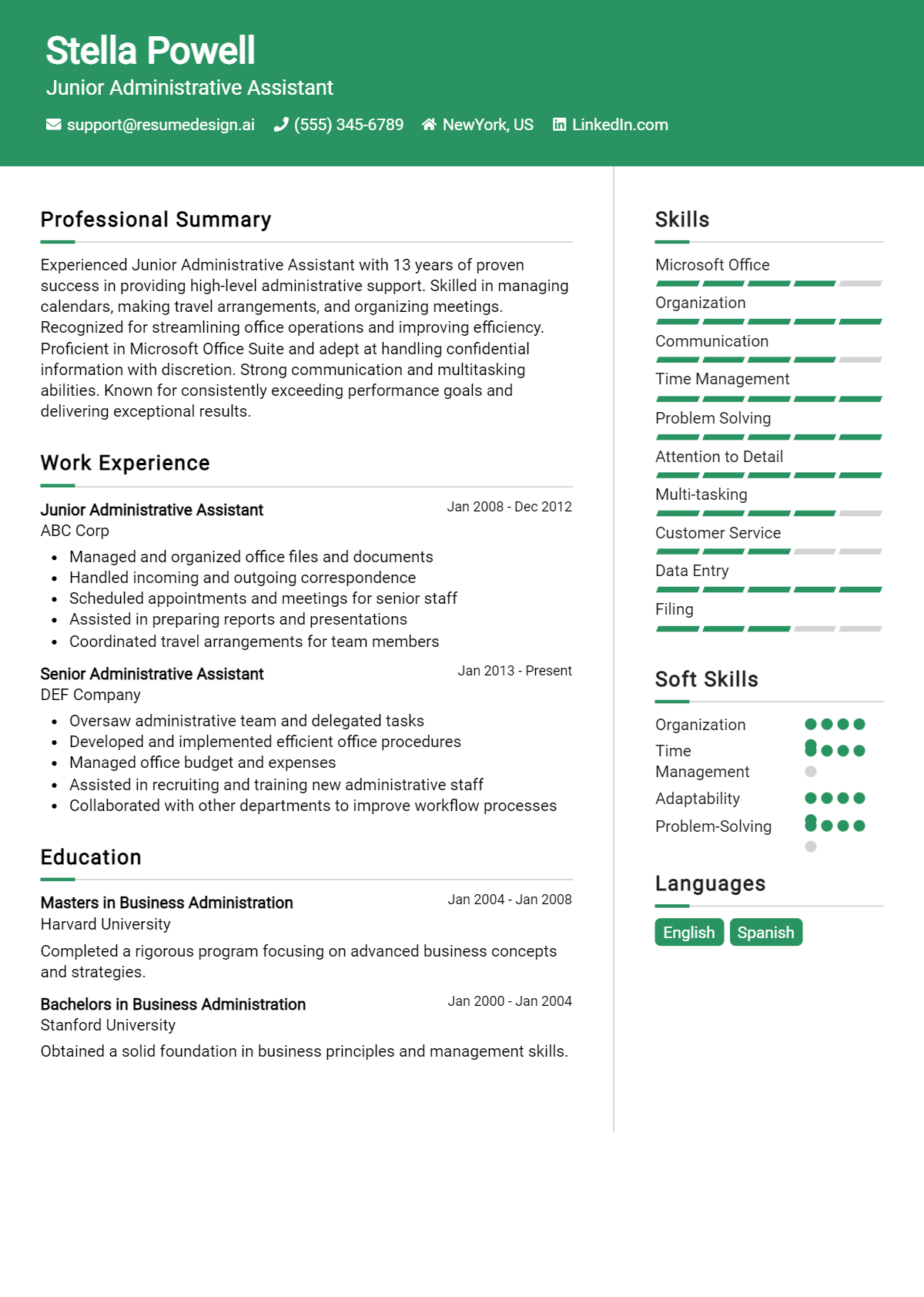
When preparing for a job interview as a Junior Administrative Assistant, it's essential to anticipate the types of questions that may arise and to formulate strong responses. This role often requires a blend of organizational skills, communication abilities, and a proactive attitude, all of which interviewers will be keen to assess. By familiarizing yourself with common interview questions, you can confidently showcase your qualifications and readiness for the position.
Here is a list of common job interview questions for a Junior Administrative Assistant, along with examples of the best answers. These questions cover your work history and experience, what you have to offer the employer, and your goals for the future. By preparing thoughtful responses, you can effectively demonstrate your suitability for the role and your eagerness to contribute to the team's success.
1. Can you describe your experience with office software and tools?
I have extensive experience with Microsoft Office Suite, including Excel for data management and Word for document preparation. I also use Google Workspace for collaboration and scheduling. My ability to adapt to new software quickly has always helped streamline office operations.
Example:
In my previous role, I frequently used Excel for tracking expenses and creating reports, which improved our budgeting process significantly. I also trained my colleagues on using Google Docs for better collaboration.
2. How do you prioritize tasks when you have multiple deadlines?
I prioritize tasks by assessing their urgency and importance. I often use a to-do list and digital calendar to keep track of deadlines. This method allows me to allocate time efficiently and ensure that critical tasks are completed first.
Example:
When faced with multiple deadlines, I list tasks by priority, focusing on those due soonest. This approach helped me manage my workload during a peak season effectively while meeting all deadlines.
3. How do you handle difficult clients or coworkers?
I handle difficult situations by remaining calm and professional. I listen actively to their concerns, empathize with their feelings, and work towards finding a solution. My goal is to maintain positive relationships while addressing issues constructively.
Example:
In a previous job, I diffused a tense situation by listening to a frustrated client, acknowledging their concerns, and proposing a solution. This approach not only resolved the issue but also strengthened our relationship.
4. What strategies do you use to stay organized?
I employ a combination of digital tools and traditional methods to stay organized. I use task management apps for tracking projects and maintain a physical planner for daily tasks. This dual approach helps me stay focused and efficient.
Example:
I use Trello to manage ongoing projects while keeping a daily planner for immediate tasks. This system allows me to visualize my workload and stay on top of my responsibilities effectively.
5. Can you provide an example of how you handled a challenging project?
During a team event planning, we faced budget constraints. I researched cost-effective options and negotiated with vendors, which helped us stay within budget while delivering a successful event. My proactive approach and communication skills were key to overcoming challenges.
Example:
For our annual team retreat, I sourced affordable venues and negotiated discounts with caterers. This effort saved us 20% of the budget while ensuring a great experience for all attendees.
6. How do you ensure confidentiality in your work?
I prioritize confidentiality by adhering to company policies and handling sensitive information with care. I ensure that documents are securely stored and only shared with authorized personnel. Regular training on data protection is also vital in maintaining confidentiality.
Example:
In my last role, I managed confidential employee records and followed strict protocols for access. I used password protection for digital files and locked cabinets for physical documents to ensure security.
7. What do you consider to be your greatest strength as an administrative assistant?
My greatest strength is my attention to detail, which is crucial in administrative tasks. I consistently review my work to ensure accuracy, whether it’s data entry or preparing reports. This quality helps prevent errors and maintains high-quality standards.
Example:
In my previous position, I implemented a double-check system for data entry, reducing errors by 30%. This improvement enhanced our reporting accuracy and boosted team productivity.
8. Why do you want to work as a Junior Administrative Assistant?
I am passionate about supporting teams and enhancing operational efficiency. Working as a Junior Administrative Assistant aligns with my skills in organization and communication. I am eager to contribute to your team and grow my career in administration.
Example:
I admire your company’s commitment to excellence and believe my organizational skills would be an asset. I look forward to learning from experienced colleagues while contributing to a productive work environment.
9. How do you handle conflicting priorities and tight deadlines?
I prioritize tasks by assessing their urgency and importance. I create a to-do list and communicate with my supervisor if I need guidance on prioritization. Staying organized helps me meet deadlines without compromising quality.
Example:
When faced with multiple deadlines, I list tasks by urgency. For instance, I once had an urgent report and a meeting to prepare for simultaneously; I completed the report first and then focused on the meeting materials.
10. Can you describe your experience with office software and tools?
I am proficient in Microsoft Office Suite, especially Word, Excel, and PowerPoint. Additionally, I have experience using project management tools like Trello and communication platforms such as Slack, which help streamline tasks and enhance collaboration.
Example:
In my previous internship, I used Excel for data entry and analysis, creating charts for presentations, which improved my team’s understanding of the project’s progress and performance metrics.
11. Describe a situation where you had to work as part of a team.
In my last position, I collaborated with colleagues on a project. We divided tasks according to our strengths and held regular check-ins to ensure progress. This teamwork led to successful project completion ahead of schedule.
Example:
During a group project, I coordinated with my team, assigning roles based on each member’s strengths, which helped us complete the project efficiently and exceed our initial expectations.
12. How do you ensure accuracy in your work?
To maintain accuracy, I double-check all documents and data entries before submission. I also utilize checklists to ensure all steps are completed. If unsure, I ask for clarification to avoid errors.
Example:
While preparing reports, I always review my work multiple times. For instance, I once identified a data entry error just before submission, which I corrected, ensuring the report’s accuracy and reliability.
13. How do you manage sensitive information?
I handle sensitive information by adhering to confidentiality policies and regulations. I ensure that documents are securely stored and only share information with authorized personnel. I also delete sensitive data when it's no longer needed.
Example:
In my previous job, I managed confidential client information by following strict protocols, ensuring all files were password-protected and only accessible to authorized users, maintaining the integrity of our data management system.
14. What steps do you take to improve your organizational skills?
I regularly assess my organizational methods and look for new tools or techniques to enhance efficiency. Implementing digital calendars and task management apps has helped me stay organized and prioritize effectively.
Example:
I attended a workshop on time management, which introduced me to various organizational tools. Since then, I’ve adopted techniques that help me manage my workload and deadlines more effectively.
15. How do you handle feedback and criticism?
I view feedback as an opportunity for growth. I listen actively, ask clarifying questions if needed, and implement suggestions to improve my performance. Constructive criticism helps me refine my skills and work more effectively.
Example:
After receiving feedback on my report formatting, I revised it accordingly and sought additional input. This process improved my skills and resulted in a more professional final product.
16. Can you provide an example of a time you solved a problem creatively?
In a previous role, we faced a scheduling conflict for a crucial meeting. I proposed a virtual meeting option, allowing participants to join remotely. This solution ensured everyone could attend without delay.
Example:
When our conference room was double-booked, I suggested a video call instead. This creative solution allowed us to proceed with our meeting without disruption, saving time for all involved.
17. How do you prioritize your tasks when you have multiple deadlines?
I prioritize tasks by assessing their deadlines and impacts. I use a to-do list and categorize tasks by urgency. This helps me focus on critical assignments while ensuring that nothing falls through the cracks.
Example:
I usually list tasks by deadline and importance. For instance, if I have reports due soon and a project that’s ongoing, I will complete the reports first, then allocate my time to the project.
18. Can you describe a time when you had to manage a difficult situation?
In a previous role, I dealt with a scheduling conflict for a crucial meeting. I calmly communicated with both parties to find a new time that worked for everyone, ensuring all stakeholders were satisfied and the meeting was productive.
Example:
There was a time when two important meetings overlapped. I reached out to both parties, discussed alternatives, and successfully rescheduled one meeting, which kept the workflow smooth and everyone informed.
19. What software tools are you familiar with for administrative tasks?
I am proficient in Microsoft Office Suite, especially Word, Excel, and Outlook. I also have experience with project management tools like Trello and Asana, which help in organizing tasks and tracking progress efficiently.
Example:
I have used Microsoft Office extensively for document creation and data analysis in Excel. Additionally, I am familiar with Trello for project management and communication tools like Slack for team coordination.
20. How do you handle feedback and criticism?
I view feedback as an opportunity for growth. When I receive criticism, I listen actively, ask clarifying questions if needed, and reflect on how I can improve. This approach has enhanced my skills and work performance over time.
Example:
When I received feedback about my report formatting, I took notes, sought suggestions, and applied them to future tasks. It helped me enhance my attention to detail and improved my overall work quality.
21. Describe a time when you went above and beyond in your role.
In my last position, I took the initiative to streamline our filing system. By reorganizing files digitally and physically, I improved retrieval times and enhanced team productivity, demonstrating my commitment to efficiency and teamwork.
Example:
I noticed the filing system was outdated, so I reorganized it, creating an easy-to-navigate digital structure. This reduced retrieval time significantly and was appreciated by my team, showing my willingness to enhance workflows.
22. What do you believe is the most important skill for an administrative assistant?
I believe strong organizational skills are crucial for an administrative assistant. The ability to manage time effectively, prioritize tasks, and maintain order is essential in ensuring smooth operations within the office environment.
Example:
I think organization is key. By keeping my desk and digital files orderly, I can quickly locate documents, manage my time effectively, and ensure that my responsibilities are handled efficiently.
23. How do you ensure confidentiality in your work?
I ensure confidentiality by adhering to company policies regarding sensitive information. I limit access to confidential documents and discuss sensitive topics only with authorized personnel, maintaining professionalism and trust within the workplace.
Example:
I always follow company protocols for handling confidential information, such as locking files and discussing sensitive matters only in private. This practice ensures that I respect privacy and maintain trust in my role.
24. What motivates you to perform well in your job?
I am motivated by a sense of accomplishment and the positive impact my work has on the team. Meeting deadlines and contributing to team goals gives me satisfaction and drives me to continuously improve my skills.
Example:
I find motivation in completing tasks efficiently and knowing that my contributions help the team succeed. Seeing projects come together and receiving positive feedback energizes me to maintain high performance.
25. How do you prioritize your tasks when you have multiple deadlines?
I prioritize tasks by assessing their urgency and importance, often using a to-do list or digital planner. I evaluate deadlines and communicate with my team to ensure alignment on priorities. This approach helps me manage time effectively and meet all deadlines consistently.
Example:
I assess tasks based on deadlines and impact. For instance, I had three projects due simultaneously and focused on the one critical for a client meeting, ensuring its completion first while keeping the others on track.
26. Can you describe a time you had to handle a difficult coworker?
When dealing with a difficult coworker, I focused on active listening to understand their concerns. I maintained professionalism and sought common ground, which ultimately led to improved collaboration. This experience taught me the value of patience and open communication in resolving conflicts.
Example:
In a previous role, I encountered a coworker resistant to feedback. I invited them for a discussion, listened to their perspective, and we found a compromise that improved our working relationship significantly.
27. What tools or software are you familiar with for administrative tasks?
I am proficient in Microsoft Office Suite, Google Workspace, and project management tools like Trello and Asana. These tools help streamline my work, enhance collaboration, and improve efficiency, enabling me to perform administrative functions effectively.
Example:
I regularly use Microsoft Excel for data management and Google Calendar for scheduling. I also have experience using project management software like Asana to track team tasks and deadlines.
28. How do you handle confidential information?
I treat confidential information with the utmost care, adhering to company policies and protocols. I ensure that sensitive documents are securely stored and only shared with authorized individuals, maintaining professionalism and trust in my role.
Example:
In my previous position, I managed confidential HR records by storing them in a secure system and only accessing them when necessary, ensuring compliance with data protection regulations.
29. Describe a situation where you went above and beyond your job duties.
In my last role, I initiated a filing system overhaul to enhance office organization. This project required additional time and effort, but it significantly improved our team's efficiency. My proactive approach was recognized and appreciated by my supervisor.
Example:
I noticed our filing system was chaotic, so I proposed a new organization method. After implementing it, the team could locate documents 50% faster, which improved our overall productivity.
30. How do you ensure accuracy in your work?
I ensure accuracy by double-checking my work and using checklists for tasks. I also maintain a focus on details and take the time to review documents before submission. This practice has helped me minimize errors and maintain high standards.
Example:
Before submitting reports, I review them for errors and inconsistencies. I also ask a colleague to proofread when possible, which has significantly reduced my mistakes and improved my work's quality.
31. How do you handle feedback and criticism?
I view feedback as an opportunity for growth. When receiving criticism, I listen carefully, ask clarifying questions, and reflect on the suggestions. This constructive approach allows me to improve my performance and adapt to the team's needs.
Example:
In my last job, I received feedback on my report formatting. I took notes, applied the suggestions, and improved my reports. This led to positive comments from my supervisor on my next submission.
32. What do you believe is the most important quality for an administrative assistant?
I believe the most important quality for an administrative assistant is adaptability. The ability to adjust to changing priorities, take on new tasks, and learn new technologies is essential for supporting a dynamic work environment effectively.
Example:
In a fast-paced office, I often shifted between tasks. My adaptability allowed me to manage urgent requests while ensuring ongoing projects stayed on track, which received positive feedback from my manager.
33. How do you prioritize your tasks when you have multiple deadlines to meet?
I prioritize tasks by assessing their urgency and importance. I create a to-do list and use tools like calendars to set reminders. This helps me manage my time effectively and ensure that all deadlines are met without compromising quality.
Example:
I once had to manage multiple reports due on the same day. I listed them by priority, tackled the most critical one first, and used a timer to stay focused, ensuring I met all deadlines successfully.
34. Can you describe a time when you had to handle a difficult situation or a conflict in the workplace?
In a previous role, a team member was unhappy about a shared project. I listened to their concerns and facilitated a discussion between us to address the issues. This open communication helped us resolve the matter and strengthen our collaboration.
Example:
I once mediated a disagreement between colleagues over task responsibilities. By encouraging them to express their viewpoints, we reached a compromise that improved our workflow and enhanced team dynamics.
35. What software or tools are you familiar with that assist in administrative tasks?
I am proficient in Microsoft Office Suite, Google Workspace, and project management tools like Trello and Asana. These tools help me organize tasks, manage schedules, and collaborate efficiently with team members.
Example:
In my last job, I used Excel for data tracking and Google Calendar for scheduling meetings, which streamlined processes and improved communication across the team.
36. How do you ensure confidentiality when handling sensitive information?
I prioritize confidentiality by following company policies and guidelines for data protection. I ensure that sensitive information is only shared with authorized personnel and that physical and digital data is securely stored.
Example:
In my previous role, I handled confidential client files and ensured they were locked in a cabinet. I also used password protection for electronic documents to safeguard sensitive information.
37. Describe your experience with scheduling meetings and managing calendars.
I have experience scheduling meetings for multiple team members, coordinating their availability, and sending calendar invites. I use tools like Outlook and Google Calendar to manage schedules efficiently, avoiding conflicts.
Example:
I successfully managed my department's calendar, scheduling weekly team meetings and ensuring all participants received reminders, which improved attendance and communication among team members.
38. How do you handle repetitive tasks and maintain your motivation?
To handle repetitive tasks, I find ways to streamline processes and set small goals to stay motivated. I also take short breaks to recharge and maintain productivity while keeping a positive mindset.
Example:
When dealing with data entry tasks, I set a timer to work for 25 minutes, then take a 5-minute break. This technique helps me stay focused and maintain my energy throughout the day.
39. What techniques do you use to ensure accuracy in your work?
I ensure accuracy by double-checking my work, using checklists, and following established procedures. I also take my time to review documents before submission to minimize errors and maintain high-quality standards.
Example:
In my last position, I implemented a peer review system for important reports, which greatly reduced errors and improved the overall quality of our documentation.
40. Can you give an example of how you managed a project from start to finish?
I coordinated a small office event, starting with budget planning and venue selection. I communicated with vendors, managed RSVPs, and ensured everything was set up on the day of the event, resulting in a successful gathering.
Example:
I successfully organized a team-building workshop, from planning the agenda to arranging logistics, which led to positive feedback from participants and strengthened team cohesion.
41. How do you prioritize tasks when faced with multiple deadlines?
I prioritize tasks by assessing their urgency and importance. I create a to-do list and use tools like calendars to visualize deadlines. This helps me stay organized and ensures that critical tasks are completed on time without compromising quality.
Example:
When multiple deadlines arise, I list tasks by urgency and importance, then allocate time slots for each. This method ensures I meet all deadlines effectively, such as managing travel arrangements and scheduling meetings simultaneously.
42. Can you describe a time when you had to handle a difficult situation with a coworker?
In a previous role, a coworker and I disagreed on a project approach. I initiated a calm discussion to understand their perspective and shared mine. This openness led to a collaborative solution that improved the project's outcome and strengthened our working relationship.
Example:
I once disagreed with a coworker's approach to a project. I suggested a meeting where we could discuss our viewpoints openly, which led us to a better solution and improved our teamwork.
43. How do you ensure confidentiality in your work?
I understand the importance of confidentiality in an administrative role. I manage sensitive information by following company policies, securing documents, and only sharing information with authorized personnel. This practice protects both the organization and its clients.
Example:
To maintain confidentiality, I strictly adhere to company policies and ensure that sensitive documents are stored securely. I only discuss confidential matters with authorized personnel to protect the integrity of the information.
44. What software tools are you proficient in that are relevant for this role?
I am proficient in Microsoft Office Suite, including Word, Excel, and PowerPoint, as well as Google Workspace tools. Additionally, I have experience with project management software like Trello and communication platforms like Slack, which enhance productivity and collaboration.
Example:
I am well-versed in Microsoft Office and Google Workspace. I also have experience with Trello for project management and Slack for team communication, which improve my efficiency in administrative tasks.
45. How do you handle repetitive tasks to maintain efficiency?
I handle repetitive tasks by creating templates and checklists, which streamline my workflow. Automating certain tasks where possible also helps maintain efficiency. Additionally, I regularly review my processes to identify areas for improvement, ensuring I remain productive.
Example:
I create templates for repetitive tasks and use checklists to ensure consistency. Automating processes when possible helps minimize time spent on these tasks, allowing me to focus on more complex responsibilities.
46. Describe how you would handle scheduling conflicts.
When faced with scheduling conflicts, I communicate promptly with all parties involved to find a resolution. I assess priorities and propose alternative times that work for everyone. Flexibility and transparency are key to managing such situations effectively.
Example:
If I encounter a scheduling conflict, I quickly communicate with everyone involved to propose alternative times. Flexibility and clear communication help ensure that all parties are satisfied with the final arrangements.
How Do I Prepare For A Junior Administrative Assistant Job Interview?
Preparing for a job interview is crucial to making a positive impression on the hiring manager. By taking the time to adequately prepare, you can showcase your skills, demonstrate your enthusiasm for the role, and increase your chances of landing the position.
- Research the company and its values to understand its culture and mission.
- Practice answering common interview questions, such as "What are your strengths and weaknesses?" or "Why do you want to work here?"
- Prepare examples that demonstrate your skills and experience relevant to the Junior Administrative Assistant role.
- Dress appropriately for the interview to convey professionalism and respect for the opportunity.
- Bring multiple copies of your resume and any other relevant documents to the interview.
- Prepare questions to ask the interviewer to show your interest in the role and the company.
- Arrive early to the interview location to allow yourself time to relax and mentally prepare.
Frequently Asked Questions (FAQ) for Junior Administrative Assistant Job Interview
Preparing for a job interview is crucial, especially for a Junior Administrative Assistant position where the role demands both organizational skills and adaptability. Understanding common interview questions can help you present yourself confidently and effectively. Here are some frequently asked questions that can guide you in your preparation.
What should I bring to a Junior Administrative Assistant interview?
When attending a Junior Administrative Assistant interview, it’s important to bring several key items. Ensure you have multiple copies of your resume, a list of references, and any certifications relevant to the position. Additionally, consider bringing a notepad and pen for taking notes, as well as a portfolio showcasing your work or relevant projects. Arriving well-prepared demonstrates your organizational skills and enthusiasm for the role.
How should I prepare for technical questions in a Junior Administrative Assistant interview?
To effectively prepare for technical questions in a Junior Administrative Assistant interview, familiarize yourself with common office software and tools, such as Microsoft Office Suite, Google Workspace, or any specific software mentioned in the job description. Brush up on skills like data entry, scheduling, and basic accounting principles. Practicing with sample technical questions can also help you articulate your knowledge and experience confidently during the interview.
How can I best present my skills if I have little experience?
If you have limited experience, focus on transferable skills that are relevant to the Junior Administrative Assistant role. Highlight your organizational abilities, attention to detail, and any relevant coursework or volunteer experiences that showcase your skills. Use the STAR method (Situation, Task, Action, Result) to structure your responses and provide specific examples of how you've successfully completed tasks or projects in the past, even if they were not in a formal job setting.
What should I wear to a Junior Administrative Assistant interview?
Dressing appropriately for a Junior Administrative Assistant interview is essential for making a good first impression. Aim for business casual attire, which typically includes dress slacks or a skirt paired with a blazer or a smart blouse. Ensure your clothes are clean, pressed, and fit well. Avoid overly casual items like jeans or sneakers. Your appearance should convey professionalism and respect for the company’s culture.
How should I follow up after the interview?
Following up after your interview is a great way to express gratitude and reiterate your interest in the position. Send a concise thank-you email within 24 hours, addressed to the interviewer. In your message, thank them for the opportunity, mention a specific point from the interview that resonated with you, and reaffirm your enthusiasm for the role. This not only shows your professionalism but also keeps you fresh in their minds as they make their decision.
Conclusion
In this interview guide for the Junior Administrative Assistant role, we have covered essential aspects of preparation, including the importance of practicing both technical and behavioral questions. Demonstrating relevant skills and experiences will significantly enhance your chances of success in the interview process.
By preparing thoroughly for the various types of questions you may encounter, you can present yourself as a well-rounded candidate, ready to take on the responsibilities of the role. Remember, practice makes perfect, and confidence is key.
We encourage you to take advantage of the tips and examples provided in this guide to approach your interviews with assurance and poise. For further assistance, check out these helpful resources: resume templates, resume builder, interview preparation tips, and cover letter templates.