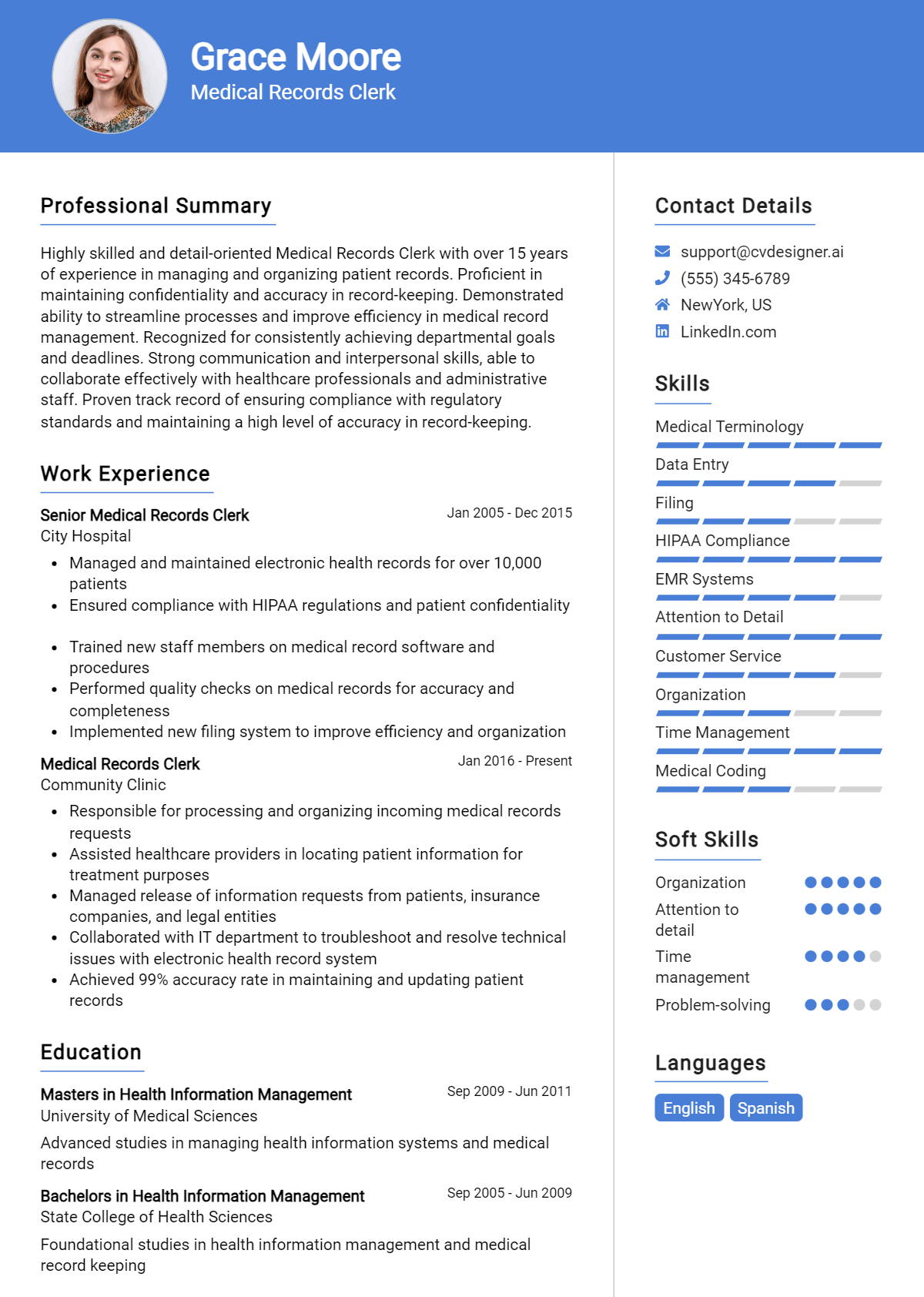
As a Medical Records Clerk, you play a vital role in managing patient information and ensuring the accuracy and confidentiality of medical records. During the interview process, you can expect a range of questions that assess your organizational skills, attention to detail, and understanding of healthcare regulations. Preparing for these questions is crucial in demonstrating your qualifications and fit for the role.
Here is a list of common job interview questions, with examples of the best answers. These questions cover your work history and experience, what you have to offer the employer, and your goals for the future. By effectively addressing these inquiries, you can showcase your proficiency in medical record management, your ability to navigate electronic health record systems, and your commitment to maintaining patient confidentiality.
1. What experience do you have with medical records management?
I have over three years of experience in medical records management, including organizing files, ensuring compliance with HIPAA regulations, and using electronic health record systems. My attention to detail and organizational skills help maintain accurate records efficiently.
Example:
In my previous role, I managed patient files, digitized records, and ensured they met HIPAA standards, improving retrieval speed by 30%.
2. How do you handle confidentiality in your work?
I prioritize patient confidentiality by following HIPAA guidelines rigorously. I limit access to sensitive information, regularly train on privacy policies, and ensure that all electronic and physical records are securely stored and disposed of when necessary.
Example:
I ensure confidentiality by restricting access to medical records, using locked storage, and disposing of documents securely. Regular training keeps me updated on privacy practices.
3. Can you describe your experience with electronic health records (EHR)?
I have extensive experience using EHR systems, including data entry, record retrieval, and updating patient information. I am proficient in managing patient flows and ensuring data accuracy, which enhances operational efficiency.
Example:
In my last position, I utilized EHR software to enter and update patient data, improving access to information for healthcare providers and reducing paperwork errors.
4. How do you prioritize tasks when managing medical records?
I prioritize tasks by assessing deadlines, urgency, and the impact on patient care. I use a task list and digital reminders to ensure timely completion of records management duties, which keeps the workflow efficient.
Example:
I assess tasks based on urgency, often using a priority matrix. This allows me to manage daily responsibilities effectively while ensuring critical records are updated promptly.
5. Describe a situation where you had to deal with a difficult records request.
In a previous role, I received a complex records request under tight deadlines. I communicated with the requestor for clarity, coordinated with relevant departments, and ensured compliance with legal standards while meeting the deadline.
Example:
I once handled a last-minute records request by clarifying details with the physician and collaborating with the billing department to ensure accuracy, completing it on time.
6. What steps do you take to ensure accuracy in medical records?
To ensure accuracy, I double-check data entries, cross-verify information with source documents, and regularly audit records. I also encourage feedback from colleagues to identify any discrepancies early.
Example:
I implement a double-check system for data entry and conduct regular audits. This minimizes errors and maintains the integrity of medical records.
7. How do you stay updated on changes in healthcare regulations?
I stay updated on healthcare regulations by subscribing to industry newsletters, attending webinars, and participating in professional organizations. This helps me adapt to changes and implement necessary procedures in my role.
Example:
I follow healthcare news, attend workshops, and am a member of a professional association, which keeps me informed on regulatory changes affecting medical records management.
8. Can you explain how you manage stress in a busy work environment?
I manage stress by staying organized, taking short breaks, and practicing time management. Prioritizing tasks helps me maintain focus, and I communicate with my team to ensure support during busy periods.
Example:
I stay organized and take breaks to recharge. During busy times, I communicate with my team to share the workload and maintain a supportive environment.
9. How do you handle discrepancies in medical records?
I approach discrepancies by first verifying the information against original documents. If inconsistencies persist, I collaborate with healthcare providers to clarify and correct the records, ensuring accuracy and compliance with regulations.
Example:
I once noticed a medication error in a patient’s record. I immediately contacted the prescribing physician, confirmed the correct medication, and updated the records, ensuring patient safety and compliance with all protocols.
10. Can you explain the importance of confidentiality in medical records management?
Confidentiality is crucial in medical records management as it protects patient privacy and builds trust. I strictly adhere to HIPAA regulations, ensuring that sensitive information is only accessible to authorized personnel and that all records are securely stored.
Example:
In my previous role, I implemented a training program on HIPAA compliance for staff, which significantly reduced unauthorized access incidents and reinforced the importance of confidentiality among team members.
11. Describe a time when you had to manage a large volume of records.
I once managed a transition to electronic records, which involved digitizing thousands of paper files. I organized tasks by priority, collaborated with a team, and implemented a timeline to ensure completion within the deadline while maintaining accuracy.
Example:
During the transition, I scheduled daily check-ins with the team to address challenges and kept track of progress using a shared document, which helped us stay organized and on schedule.
12. How do you ensure accuracy in data entry?
I ensure accuracy in data entry by double-checking my work and using validation tools. Additionally, I follow established protocols and guidelines, allowing me to minimize errors and maintain the integrity of medical records.
Example:
In my previous job, I developed a checklist for data entry tasks, which improved accuracy rates by 15% and helped the team identify common errors, leading to better training practices.
13. What software programs are you familiar with for managing medical records?
I have experience with various Electronic Health Record (EHR) systems, including Epic and Cerner. I am also proficient in MS Office Suite, particularly Excel for data analysis and reporting, which aids in efficient records management.
Example:
At my last job, I trained new hires on using Epic, which streamlined our record-keeping process and improved overall team efficiency in managing patient information.
14. How do you prioritize your tasks when faced with multiple deadlines?
I prioritize tasks by assessing deadlines and the urgency of each task. I create a to-do list, focusing first on high-priority items and allocating time blocks for completion, ensuring I meet all deadlines effectively.
Example:
When faced with multiple deadlines, I use a project management tool to track progress and adjust priorities as needed, which helps me stay organized and meet all my commitments.
15. Describe how you handle difficult interactions with patients or staff.
I remain calm and professional during difficult interactions, actively listening to concerns and empathizing with their situation. I aim to resolve issues promptly, providing clear information and support to ensure a positive experience.
Example:
Once, a patient was upset about a record delay. I listened to their concerns, provided updates, and expedited their request, turning a negative experience into a positive outcome.
16. How do you stay updated on changes in healthcare regulations?
I stay updated on healthcare regulations by subscribing to industry newsletters, participating in webinars, and attending professional development workshops. This continuous learning helps me remain compliant and informed about best practices in medical records management.
Example:
Recently, I attended a workshop on the latest HIPAA updates, which allowed me to implement new compliance measures in my department, ensuring our practices aligned with current regulations.
17. How do you prioritize tasks when dealing with multiple requests for medical records?
I prioritize tasks by assessing urgency and compliance with legal timelines. I maintain a checklist to ensure all requests are processed efficiently while communicating with requesters to manage expectations. This systematic approach helps me deliver timely and accurate records without compromising quality.
Example:
I utilize a priority system where urgent requests are handled first, followed by routine requests. I also keep stakeholders informed about progress, ensuring transparency and timely deliveries.
18. Can you describe a time when you had to handle a difficult situation involving a patient’s medical records?
I once encountered a situation where a patient was distressed about a missing record. I listened empathetically, assured them I would investigate, and promptly resolved the issue by locating the document. This experience reinforced the importance of communication and compassion in my role.
Example:
A patient was anxious about a missing record for a scheduled appointment. I calmly assured them I’d find it, which I did, and ensured it was sent to the doctor on time, alleviating their concerns.
19. What software or systems are you familiar with for managing medical records?
I am proficient in electronic health record systems such as Epic and Cerner, along with experience in using Microsoft Office Suite for documentation and reporting. My familiarity with these tools helps streamline the record-keeping process and improve efficiency.
Example:
I have used Epic extensively for data entry and retrieval, ensuring accuracy and compliance. Additionally, I’m comfortable working with Excel for tracking requests and generating reports.
20. How do you ensure compliance with HIPAA regulations in your work?
I ensure HIPAA compliance by regularly reviewing policies, utilizing secure methods for handling patient data, and limiting access to authorized personnel only. I also stay updated on any changes in regulations to maintain the highest standards of confidentiality.
Example:
I follow protocols for data access and storage, ensuring that all communications are secure. Regular training sessions help me stay informed about HIPAA updates and best practices.
21. How do you handle repetitive tasks while maintaining attention to detail?
To manage repetitive tasks effectively, I implement checklists and automated reminders. I take short breaks to refresh my focus, which helps maintain accuracy and reduces the likelihood of errors. Consistent processes also allow me to stay organized and efficient.
Example:
I break tasks into smaller segments and use checklists to track progress. Taking brief pauses helps me reset my focus, ensuring I remain attentive to details, even during repetitive work.
22. Describe how you would train a new employee on medical records procedures.
I would create a structured training program that includes an overview of our systems, procedures, and compliance requirements. I’d provide hands-on demonstrations and encourage shadowing opportunities to reinforce learning, along with regular feedback to support their development.
Example:
I would start with an orientation session, then guide them through our systems with practical exercises. Shadowing experienced staff would enhance their understanding, followed by feedback sessions to address questions.
23. What steps do you take to ensure the accuracy of medical records?
I ensure accuracy by double-checking data entries against source documents, utilizing automated validation processes, and conducting regular audits. Collaborating with healthcare providers for clarifications also helps maintain the integrity of the records.
Example:
I cross-reference entries with original documents and use software tools for error detection. Regular audits help identify discrepancies, which I promptly resolve with the healthcare team.
24. How do you stay updated on changes in healthcare regulations and technology?
I stay informed by subscribing to healthcare journals, attending workshops, and participating in online webinars. Networking with professionals in the field also provides insights into best practices and recent advancements in medical records management.
Example:
I regularly read industry publications and attend relevant training sessions. I also engage in online forums to exchange knowledge with peers about regulatory changes and technology trends.
25. How do you prioritize tasks when managing multiple requests for medical records?
I prioritize tasks by assessing urgency and compliance deadlines. I use a checklist to keep track of requests, ensuring that I address those needed for patient care first while adhering to privacy regulations. This systematic approach helps maintain efficiency and accuracy in record handling.
Example:
When faced with multiple requests, I assess which ones are urgent for patient treatment. I then create a priority list, ensuring compliance and timely responses while maintaining confidentiality throughout the process.
26. Can you describe a time when you had to handle a difficult situation with a patient or staff member?
In a previous role, a patient became frustrated over a delay in receiving records. I listened to their concerns, apologized for the inconvenience, and provided a clear timeline for resolution. This approach diffused tension and improved trust between the patient and the facility.
Example:
I once dealt with an upset patient regarding a records delay. I calmly listened, expressed understanding, and ensured they received timely updates, which helped restore their confidence in our service.
27. What experience do you have with electronic health record (EHR) systems?
I have extensive experience using EHR systems, specifically in data entry, retrieval, and ensuring accurate documentation. I am comfortable navigating different software, and I have participated in training sessions to help others adapt to new systems effectively.
Example:
I have worked with various EHR systems, focusing on data entry and retrieval. My familiarity with these tools enables me to ensure accuracy and assist colleagues in navigating updates and new features.
28. How do you ensure confidentiality when handling medical records?
I strictly adhere to HIPAA regulations and facility policies regarding the handling of medical records. This includes secure storage, limited access, and ensuring that all communications about patient information are conducted through safe channels.
Example:
I maintain confidentiality by following HIPAA guidelines, securing records, and ensuring only authorized personnel have access. I also train staff on the importance of confidentiality to foster a culture of privacy.
29. Describe your experience with data entry and managing databases.
I have a solid background in data entry, focusing on accuracy and efficiency. My experience includes maintaining databases, ensuring data integrity, and performing regular audits to identify discrepancies. I also have strong attention to detail, which is crucial in this role.
Example:
In my previous job, I handled data entry for patient records, maintaining accuracy and conducting audits. This experience has strengthened my ability to manage databases effectively and ensure data integrity.
30. How do you handle discrepancies in medical records?
When I encounter discrepancies, I first verify the information by cross-referencing with original documents. I then notify the appropriate personnel to address the issue and document the discrepancy resolution process, ensuring compliance and maintaining the integrity of the records.
Example:
Upon discovering discrepancies, I verify details against original documents, then collaborate with relevant staff to resolve the issue. I document the process to maintain compliance and ensure transparency.
31. What steps do you take to stay updated on changes in healthcare regulations?
I regularly attend workshops and webinars focused on healthcare regulations. Additionally, I subscribe to industry newsletters and participate in professional organizations, which provide updates on compliance changes and best practices in medical record management.
Example:
To stay informed about healthcare regulations, I attend relevant workshops and subscribe to industry newsletters. This proactive approach helps me remain compliant and knowledgeable about best practices.
32. How do you manage stress during busy periods?
During busy periods, I prioritize self-care and time management. I take short breaks to recharge, use organizational tools to keep track of tasks, and focus on one task at a time. This helps me maintain composure and efficiency under pressure.
Example:
I manage stress by prioritizing tasks and taking short breaks to clear my mind. This helps me stay focused and efficient, even during peak times.
33. How do you prioritize your tasks when managing medical records?
I prioritize tasks by assessing their urgency and importance. I use a checklist to ensure that critical requests are handled first, while routine updates follow. This approach keeps the workflow efficient and ensures compliance with deadlines.
Example:
I start my day by reviewing pending requests, focusing on urgent ones first, and then addressing routine updates. This method helps me maintain accuracy and ensures timely access to essential records.
34. Can you describe your experience with electronic health record (EHR) systems?
I have extensive experience using EHR systems, including inputting patient data, retrieving information, and ensuring data accuracy. I am also familiar with various software, which enables me to adapt quickly to new systems.
Example:
In my previous role, I utilized an EHR system daily, managing patient records and ensuring data integrity. I also trained new staff on its features, improving overall efficiency.
35. How do you handle confidential information in your role?
I strictly adhere to HIPAA regulations and facility policies to protect patient confidentiality. I ensure that sensitive information is only accessible to authorized personnel and properly dispose of documents when necessary.
Example:
I always lock files away and use password protection for digital records. Additionally, I conduct regular training sessions to keep staff updated on confidentiality policies.
36. How would you deal with a discrepancy in a patient’s medical record?
I would investigate the discrepancy by cross-referencing the data with original sources and consulting with the healthcare providers involved. Once verified, I would correct the record following the established protocols.
Example:
If I found a discrepancy, I would first check the original documents and discuss the issue with the relevant healthcare provider. After confirming the correct information, I would update the records promptly.
37. What steps do you take to ensure the accuracy of data entry?
I follow a systematic approach, including double-checking entries, using validation tools within the EHR system, and staying organized. I also prioritize ongoing training to stay updated on best practices.
Example:
To ensure accuracy, I always review my entries against source documents and use software alerts. Continuous training also helps me maintain high standards in data entry.
38. How do you stay organized when handling multiple requests for records?
I utilize task management tools and maintain a clear filing system. By categorizing requests by urgency and type, I can efficiently track and fulfill them without missing deadlines.
Example:
I prioritize requests using a digital task manager, which helps me stay on top of deadlines and ensure I efficiently address each request based on its urgency.
39. Have you ever trained new staff on record management? How did you approach it?
Yes, I have trained new staff by providing hands-on demonstrations and creating user-friendly manuals. I focus on practical scenarios to ensure they understand the importance of accuracy and confidentiality.
Example:
In training new hires, I developed a comprehensive guide and conducted sessions where they could practice. This approach helped them gain confidence and skills in record management.
40. What strategies do you use to keep up with changes in healthcare regulations?
I regularly attend workshops and webinars, subscribe to relevant newsletters, and participate in professional organizations to stay informed about updates in healthcare regulations and best practices.
Example:
I make it a point to attend annual training sessions and follow industry news. This proactive approach ensures that I remain compliant with the latest regulations in healthcare.
41. How do you prioritize tasks when dealing with multiple requests for medical records?
I prioritize tasks by assessing the urgency and importance of each request. I ensure compliance with legal guidelines and focus on requests that impact patient care first, while also managing my time efficiently to maintain workflow balance.
Example:
In a previous role, I used a priority matrix to categorize requests, ensuring urgent cases were handled first while keeping track of non-urgent requests to address them promptly.
42. Can you describe your experience with electronic health record (EHR) systems?
I have extensive experience using EHR systems, including data entry, retrieval, and maintenance. I am adept at navigating various software platforms, ensuring accurate documentation, and training staff on best practices for using these systems to enhance patient care.
Example:
At my previous job, I implemented training sessions for new EHR features, which improved data accuracy and increased efficiency in our department's workflow.
43. How do you handle discrepancies in medical records?
When I encounter discrepancies, I investigate promptly by cross-referencing data with original documents and consulting with relevant staff. I follow protocols to resolve issues, ensuring that corrections are documented and communicated to maintain the integrity of patient records.
Example:
In one case, I discovered a medication error in the records. I collaborated with the prescribing physician to verify and correct the information, ensuring patient safety and compliance.
44. What steps do you take to ensure patient confidentiality?
I prioritize patient confidentiality by adhering strictly to HIPAA regulations. I limit access to records to authorized personnel, use secure methods for data transmission, and regularly participate in training to stay updated on best practices for protecting sensitive information.
Example:
I routinely conduct audits in my department to ensure compliance with confidentiality policies and address any potential security risks immediately.
45. How do you stay organized in a fast-paced work environment?
I employ effective organizational strategies, such as using digital task management tools and maintaining a clear filing system. I prioritize daily tasks and set deadlines, allowing me to manage my workload efficiently while adapting to sudden changes in priorities.
Example:
Using software like Trello, I track my tasks and deadlines, which helps me stay organized and ensures that I can accommodate urgent requests without falling behind.
46. Describe a time when you had to communicate difficult information.
In a previous role, I had to inform a patient about delays in their records processing. I approached the situation with empathy, clearly explaining the reasons for the delay and providing an estimated timeline to help manage their expectations.
Example:
I reassured the patient that their care was a priority and offered alternative solutions to address their immediate needs while we resolved the issue.
How Do I Prepare For A Medical Records Clerk Job Interview?
Preparing for a job interview is crucial to making a positive impression on the hiring manager. A well-prepared candidate not only showcases their qualifications but also demonstrates their enthusiasm for the role. Here are some essential tips to help you prepare for your medical records clerk job interview:
- Research the company and its values to understand its mission and culture.
- Review the job description thoroughly to align your skills with the required qualifications.
- Practice answering common interview questions related to medical records management and confidentiality.
- Prepare examples that demonstrate your skills and experience relevant to the Medical Records Clerk position.
- Familiarize yourself with medical terminology and record-keeping practices to showcase your knowledge.
- Dress professionally to make a strong first impression during the interview.
- Plan your route to the interview location to ensure you arrive on time and reduce stress.
Frequently Asked Questions (FAQ) for Medical Records Clerk Job Interview
Preparing for a job interview can significantly boost your confidence and performance. Understanding commonly asked questions allows you to articulate your thoughts clearly and present your qualifications effectively. Below are some frequently asked questions that candidates may encounter during a Medical Records Clerk interview, along with practical advice for addressing them.
What should I bring to a Medical Records Clerk interview?
When attending a Medical Records Clerk interview, it's essential to come prepared. Bring multiple copies of your resume, a list of references, and any certifications or relevant documents that demonstrate your qualifications. Additionally, consider bringing a notepad and pen for taking notes during the interview. This shows your interest and allows you to jot down important points or questions that arise during the discussion.
How should I prepare for technical questions in a Medical Records Clerk interview?
To prepare for technical questions, familiarize yourself with the specific software and systems used in medical records management, such as Electronic Health Records (EHR) systems. Review common terminology related to medical records, privacy laws like HIPAA, and data entry procedures. Practicing answers to potential technical scenarios can also help you feel more confident in demonstrating your knowledge and skills during the interview.
How can I best present my skills if I have little experience?
If you have limited experience, focus on transferable skills that are relevant to the Medical Records Clerk role. Highlight your organizational abilities, attention to detail, and proficiency with computers or data entry. Discuss any volunteer work, internships, or related coursework that demonstrates your commitment and capability. Emphasizing your willingness to learn and adapt can also make a positive impression on interviewers.
What should I wear to a Medical Records Clerk interview?
Dressing appropriately for the interview is crucial, as it conveys professionalism and respect for the position. Opt for business casual attire, such as dress slacks or a skirt paired with a collared shirt. Ensure that your clothing is clean and well-fitted. Remember that first impressions matter, so choose an outfit that makes you feel confident and comfortable while aligning with the workplace culture of the healthcare facility.
How should I follow up after the interview?
Following up after an interview demonstrates your continued interest in the position and helps you stand out. Send a thank-you email to the interviewers within 24 hours, expressing gratitude for the opportunity and reiterating your enthusiasm for the role. In your message, you can also mention a specific topic discussed during the interview to personalize your note. This thoughtful gesture can leave a lasting impression and may positively influence their decision-making process.
Conclusion
In summary, this interview guide for the Medical Records Clerk position has highlighted the essential elements of preparation, practice, and the demonstration of relevant skills that are crucial for success. Being well-prepared for both technical and behavioral questions can significantly enhance a candidate's chances of making a positive impression during the interview process.
We encourage you to utilize the tips and examples provided in this guide to approach your interviews with confidence and poise. Remember, thorough preparation is key to unlocking your potential and achieving your career goals.
For further assistance, check out these helpful resources: resume templates, resume builder, interview preparation tips, and cover letter templates.