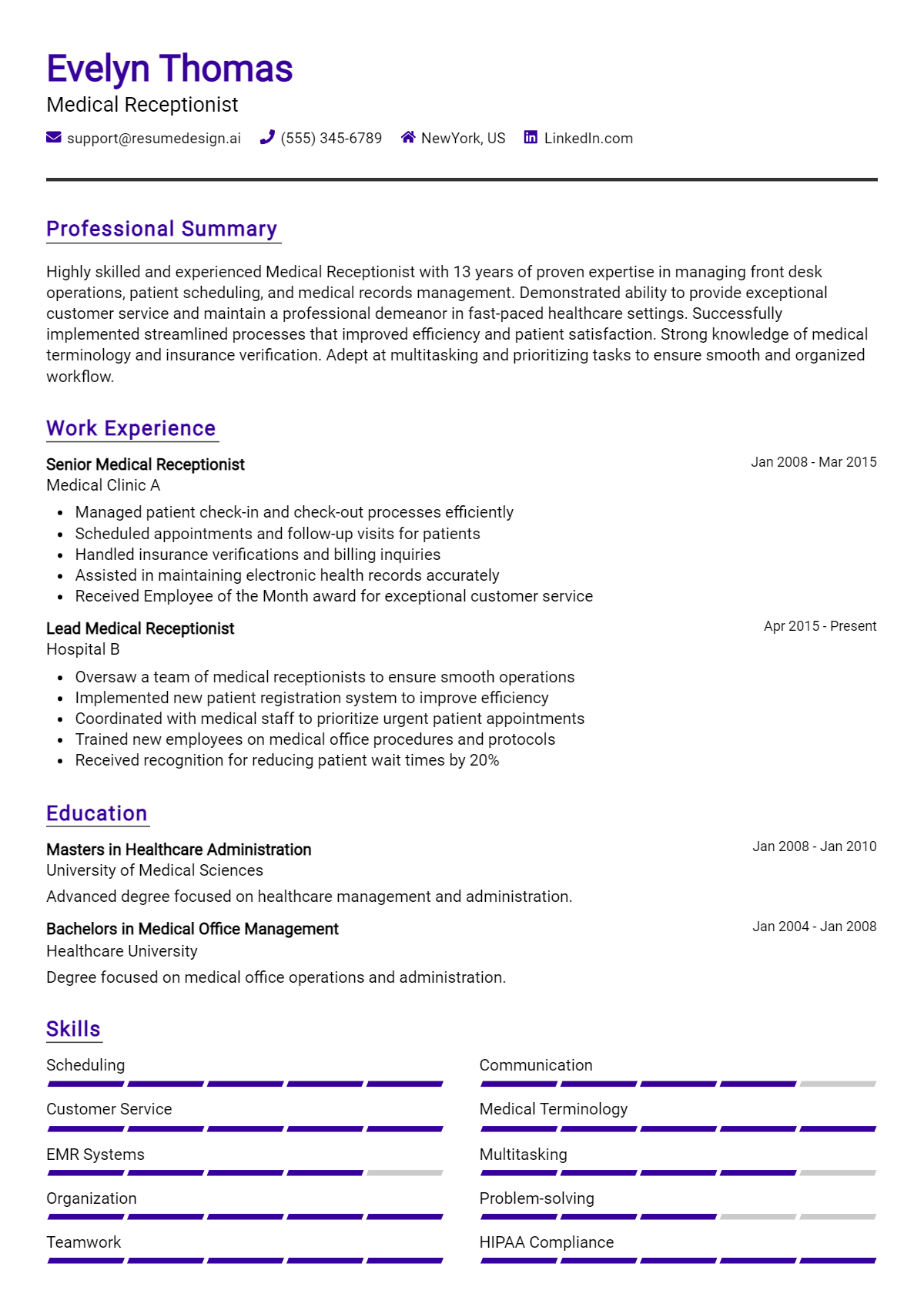
As a Medical Receptionist, your role is pivotal in ensuring the smooth operation of a healthcare facility. During the interview process, potential employers will assess not only your administrative skills but also your ability to interact with patients and manage sensitive information. Preparing for common interview questions can significantly enhance your chances of making a positive impression.
Here is a list of common job interview questions for the Medical Receptionist position, along with examples of the best answers. These questions cover your work history and experience, what you have to offer the employer, and your goals for the future. By understanding the expectations and requirements of the role, you can tailor your responses to demonstrate your qualifications and enthusiasm for contributing to the healthcare team.
9. How do you handle difficult patients or situations?
I remain calm and empathetic, actively listening to their concerns. I try to validate their feelings while providing solutions to their issues. If needed, I involve a supervisor to ensure the situation is addressed properly and promptly.
Example:
When faced with a frustrated patient, I listened to their concerns, acknowledged their frustration, and offered to resolve the issue. This approach often diffuses tension and fosters a positive interaction.
10. Can you describe your experience with medical software and scheduling systems?
I have extensive experience with electronic health record systems, including scheduling appointments, managing patient files, and processing insurance claims. Familiarity with these systems enhances my efficiency and accuracy in managing patient care.
Example:
In my previous role, I utilized Epic and Practice Fusion for scheduling and documentation, improving appointment management and patient flow significantly.
11. How do you prioritize tasks during busy periods?
I assess tasks based on urgency and impact on patient care. I focus on immediate patient needs, such as check-ins and urgent calls, while delegating less critical tasks to maintain workflow efficiency.
Example:
During peak hours, I prioritize patient check-ins and urgent inquiries first, ensuring that everyone is attended to while managing follow-up tasks as time allows.
12. What steps do you take to ensure patient confidentiality?
I adhere strictly to HIPAA regulations, ensuring that patient information is only shared with authorized personnel. I also maintain secure filing systems and use discretion in conversations regarding patient details.
Example:
I consistently review HIPAA guidelines and ensure all patient records are locked and passwords secured, safeguarding sensitive information at all times.
13. How do you manage multiple phone lines and in-person patients simultaneously?
I prioritize tasks by assessing urgency, using a polite and efficient communication style. I ensure to greet in-person patients promptly while taking brief calls, asking them to hold if necessary.
Example:
When managing multiple lines, I utilize a quick greeting and ask patients to hold briefly, ensuring I’m attentive to both phone calls and walk-in patients.
14. What do you think is the most important quality for a medical receptionist?
Empathy is crucial in this role, as it helps build rapport with patients. Additionally, strong organizational skills and effective communication are vital to ensure smooth operations and patient satisfaction.
Example:
I believe empathy fosters trust, while organization ensures efficient patient flow. These qualities are essential for a medical receptionist's effectiveness.
15. How do you ensure accurate patient information is collected?
I implement a thorough check-in process where I verify and confirm patient details. I encourage patients to double-check their insurance and contact information to minimize errors.
Example:
During check-ins, I guide patients through a checklist, confirming their information to ensure everything is accurate before their appointment.
16. Describe a time you went above and beyond for a patient.
I once took extra time to assist a patient in understanding their insurance coverage for a procedure. I researched options and provided them with necessary documentation to ease their financial concerns.
Example:
A patient was confused about their coverage, so I spent additional time explaining their benefits and provided them with a detailed breakdown to alleviate their worries.
17. How do you handle a difficult patient who is upset about their wait time?
I remain calm and empathetic, listening to their concerns. I apologize for the inconvenience and explain the situation, assuring them I will do my best to minimize their wait. I aim to de-escalate the situation and maintain a positive environment.
Example:
"I would listen to the patient’s concerns, apologize for the wait, and provide updates on their estimated wait time. This helps them feel heard and valued, often easing their frustration."
18. Can you describe your experience with medical billing and coding?
I have experience handling patient billing queries and understanding basic coding systems. I ensure that billing is accurate and up-to-date, which helps streamline the payment process and minimize discrepancies. I continuously seek to improve my knowledge in this area.
Example:
"In my previous role, I assisted with coding procedures and managed patient billing inquiries, ensuring accuracy and timely payments. I also took a coding course to enhance my skills."
19. How do you prioritize tasks during a busy day?
I assess the urgency of each task and use a checklist to prioritize effectively. Patient needs come first, followed by administrative duties. Staying organized and communicating with the team helps ensure that critical tasks are managed efficiently.
Example:
“I prioritize by identifying urgent patient requests and addressing them first, while using a checklist to track administrative tasks. This approach ensures that nothing important is overlooked.”
20. How do you maintain patient confidentiality?
I strictly follow HIPAA guidelines, ensuring that patient information is accessed only by authorized personnel. I avoid discussing sensitive information in public areas and secure all records. This commitment is crucial in building trust and ensuring compliance.
Example:
“I always keep patient records locked and limit discussions about sensitive information to private areas. This practice ensures compliance with HIPAA regulations and protects patient privacy.”
21. Describe how you would handle a scheduling conflict.
I would first assess the situation and communicate with both parties involved to understand their needs. I would then offer alternatives, such as rescheduling or finding a compromise that works for everyone, ensuring that patient care remains the priority.
Example:
“If a scheduling conflict arises, I would speak with both patients involved to understand their needs and offer options, aiming to find a solution that works for everyone without compromising care.”
22. What steps do you take to ensure accuracy in patient records?
I double-check all entries for accuracy and completeness before finalizing patient records. I also regularly review and update information to ensure it reflects any changes. This diligence helps maintain the integrity of the data and improves patient care.
Example:
“I ensure accuracy by cross-referencing patient information before entry and regularly reviewing records for updates. This practice helps prevent errors and supports effective patient care.”
23. How do you keep up with changes in the healthcare industry?
I stay updated by attending workshops, reading healthcare journals, and participating in online courses. Networking with colleagues also provides insights into industry changes. This commitment to ongoing education helps me stay informed and enhance my skills.
Example:
“I subscribe to healthcare newsletters, attend professional workshops, and engage in online forums to stay current with industry trends and best practices.”
24. What qualities do you think are essential for a successful medical receptionist?
Key qualities include strong communication skills, empathy, attention to detail, and the ability to multitask efficiently. Being organized and maintaining a positive attitude are also crucial for providing excellent patient service in a busy environment.
Example:
“Empathy, communication, and organization are essential. A successful medical receptionist must effectively manage patient interactions and administrative tasks while creating a welcoming atmosphere.”
25. How do you handle a situation where a patient is unhappy with their wait time?
I empathize with the patient's frustration, explain the reason for the delay, and offer updates on their expected wait time. I ensure they feel heard and valued, which can help diffuse tension and improve their overall experience.
Example:
"I would apologize for the inconvenience, explain any unforeseen delays, and assure the patient that their time is important to us. Keeping them informed can help ease their frustration."
26. Describe your experience with medical billing and coding.
I have worked with basic medical billing software and understand coding processes. I ensure accurate patient information is entered and verify claims for timely processing, which reduces errors and improves revenue flow for the practice.
Example:
"In my previous role, I was responsible for verifying insurance information and coding visits correctly, which improved our claim acceptance rate significantly."
27. How do you prioritize tasks in a busy environment?
I prioritize tasks based on urgency and importance. I use a checklist to manage daily responsibilities and remain flexible to accommodate unexpected situations, ensuring that patients receive timely care and attention.
Example:
"I often assess urgent patient needs first, such as managing check-ins, while also handling phone inquiries to ensure everyone is attended to promptly."
28. Can you describe a time when you had to deal with confidential information?
I always adhere to HIPAA regulations when handling patient information. In a previous role, I ensured that sensitive documents were securely stored and only shared with authorized personnel, maintaining patient trust and confidentiality.
Example:
"I once encountered a situation where I had to ensure a patient's records were only accessed by their physician, which I handled by implementing strict access protocols."
29. How do you manage electronic health records (EHR) systems?
I am proficient in EHR systems, ensuring accurate data entry and maintenance of patient records. I regularly update information and assist with training new staff to improve overall efficiency and workflow.
Example:
"In my last position, I managed our EHR system daily, ensuring patient data was up-to-date, which significantly improved our data retrieval times."
30. What strategies do you use to communicate effectively with patients?
I use clear, concise language and active listening to ensure patients understand their appointments and any necessary procedures. I also adapt my communication style to fit each patient's needs, fostering a welcoming environment.
Example:
"I often encourage patients to ask questions, ensuring they feel comfortable discussing their concerns and understanding their treatment plans."
31. How do you handle multiple phone lines and patient inquiries simultaneously?
I stay organized and focused by prioritizing urgent calls. I use a notepad to jot down important details while attending to each caller, ensuring that I maintain professionalism and provide quality service to all patients.
Example:
"I utilize a triage approach, quickly assessing the urgency of each call, allowing me to manage multiple inquiries without compromising service quality."
32. What do you believe is the most important quality for a medical receptionist to possess?
I believe empathy is crucial for a medical receptionist. It allows us to connect with patients on a personal level, fostering a supportive environment that enhances their experience and satisfaction with our healthcare services.
Example:
"Being empathetic helps me understand patients' concerns better, ensuring they feel cared for and respected during their visits."
41. How do you prioritize tasks when dealing with multiple patients at the same time?
In a busy medical office, I assess urgency by checking appointment schedules and patient needs. I prioritize tasks like checking in patients, answering urgent phone calls, and addressing any immediate concerns first, ensuring efficient workflow and patient satisfaction.
Example:
I usually tackle the tasks based on urgency. For instance, I check in patients arriving for appointments promptly while answering the phone and addressing any urgent requests as they arise to maintain smooth operations.
42. Can you describe a time when you had to handle a difficult patient or situation?
Once, a patient was upset due to a scheduling error. I listened to their concerns empathetically, apologized for the inconvenience, and quickly worked to reschedule their appointment. This approach calmed them and reinforced trust in our practice.
Example:
A patient was frustrated over a missed appointment. I listened carefully, apologized, and quickly arranged a new appointment time, which helped to resolve the issue and left the patient feeling valued.
43. What strategies do you use to ensure patient confidentiality?
I adhere strictly to HIPAA regulations by ensuring patient records are securely stored, discussing sensitive information discreetly, and only sharing details with authorized personnel. Regular training helps keep confidentiality practices at the forefront of my responsibilities.
Example:
I always follow HIPAA guidelines by keeping patient files secure, discussing sensitive matters in private, and ensuring that only authorized staff access patient information to maintain confidentiality.
44. How do you handle scheduling conflicts?
When scheduling conflicts arise, I communicate with the patients involved to identify their preferences, then work to find a suitable solution. If needed, I consult with the healthcare provider to accommodate urgent cases while maintaining an organized schedule.
Example:
In case of a scheduling conflict, I promptly contact the affected patients to discuss alternatives and work with the provider to resolve urgent needs while ensuring overall schedule efficiency.
45. What software or tools are you familiar with for managing patient records?
I have experience using Electronic Health Record (EHR) systems such as Epic and Cerner, as well as practice management software like Medisoft. These tools help streamline patient data management, appointment scheduling, and billing processes efficiently.
Example:
I am proficient in using EHR systems like Epic and Meditech, which I utilize for managing patient records, scheduling appointments, and tracking billing information effectively.
46. Why do you want to work as a Medical Receptionist?
I am passionate about healthcare and enjoy being the first point of contact for patients. Working as a Medical Receptionist allows me to utilize my organizational skills and customer service experience while making a positive impact on patients’ healthcare experiences.
Example:
I want to be a Medical Receptionist because I love helping others and believe I can positively influence patients' experiences while utilizing my organizational and communication skills effectively.
How Do I Prepare For A Medical Receptionist Job Interview?
Preparing for a medical receptionist job interview is crucial to making a positive impression on the hiring manager. A well-prepared candidate not only demonstrates their interest in the position but also showcases their professionalism and readiness to contribute to the healthcare team. Here are some essential tips to help you prepare effectively:
- Research the company and its values to understand its mission and how you can contribute.
- Practice answering common interview questions specific to the medical receptionist role.
- Prepare examples that demonstrate your skills and experience relevant to the position.
- Familiarize yourself with medical terminology and office procedures to show your competence.
- Dress professionally to convey a sense of respect for the role and the interview process.
- Bring copies of your resume and any necessary documentation, such as certifications or references.
- Prepare thoughtful questions to ask the interviewer about the team and work environment.
Frequently Asked Questions (FAQ) for Medical Receptionist Job Interview
Preparing for a job interview is crucial, especially for a role like a Medical Receptionist where first impressions matter. Understanding the common questions that may arise can help you present yourself more confidently and effectively. Below are some frequently asked questions and practical advice on how to navigate your interview.
What should I bring to a Medical Receptionist interview?
When attending a Medical Receptionist interview, it is essential to come prepared. Bring multiple copies of your resume, a list of references, and any certifications relevant to the position. Additionally, consider bringing a notebook and pen to take notes during the interview, as well as a portfolio with any commendations or previous work samples that demonstrate your skills and experience in administrative roles.
How should I prepare for technical questions in a Medical Receptionist interview?
To prepare for technical questions, familiarize yourself with common medical terminology, electronic health record (EHR) systems, and billing procedures. Review the job description carefully to identify specific skills and knowledge expected for the role. Practicing answers to common technical questions, such as your experience with scheduling software or handling patient data, can also give you a significant advantage during the interview.
How can I best present my skills if I have little experience?
If you have limited experience, focus on transferable skills that are relevant to the role of a Medical Receptionist, such as customer service, communication, and organizational abilities. Highlight any volunteer work, internships, or related coursework that demonstrates your commitment and capability. Be honest about your experience, but emphasize your eagerness to learn and adapt in a medical environment.
What should I wear to a Medical Receptionist interview?
Choosing the right attire for your interview is important as it reflects your professionalism. Opt for business casual attire, such as slacks or a skirt paired with a blouse or button-up shirt. Avoid overly casual clothing like jeans or t-shirts. Additionally, ensure your clothing is clean, pressed, and comfortable, as this will help you feel more confident during the interview.
How should I follow up after the interview?
Following up after your interview is a great way to express your appreciation and reinforce your interest in the position. Send a thank-you email within 24 hours to the interviewer, thanking them for the opportunity and mentioning specific points discussed during the interview that you found particularly engaging. This not only shows your enthusiasm for the role but also keeps you fresh in their minds as they make their decision.
Conclusion
In summary, this interview guide for the Medical Receptionist role has highlighted the essential aspects of preparation and practice that can significantly enhance your interview performance. Understanding the importance of both technical and behavioral questions will enable you to showcase your relevant skills effectively, making a lasting impression on your potential employer.
By dedicating time to prepare for these questions, you can boost your confidence and improve your chances of success. Remember, the more you practice, the more comfortable you will feel during the actual interview.
We encourage you to take advantage of the tips and examples provided in this guide to approach your interviews with confidence and poise. Good luck!
For further assistance, check out these helpful resources: resume templates, resume builder, interview preparation tips, and cover letter templates.