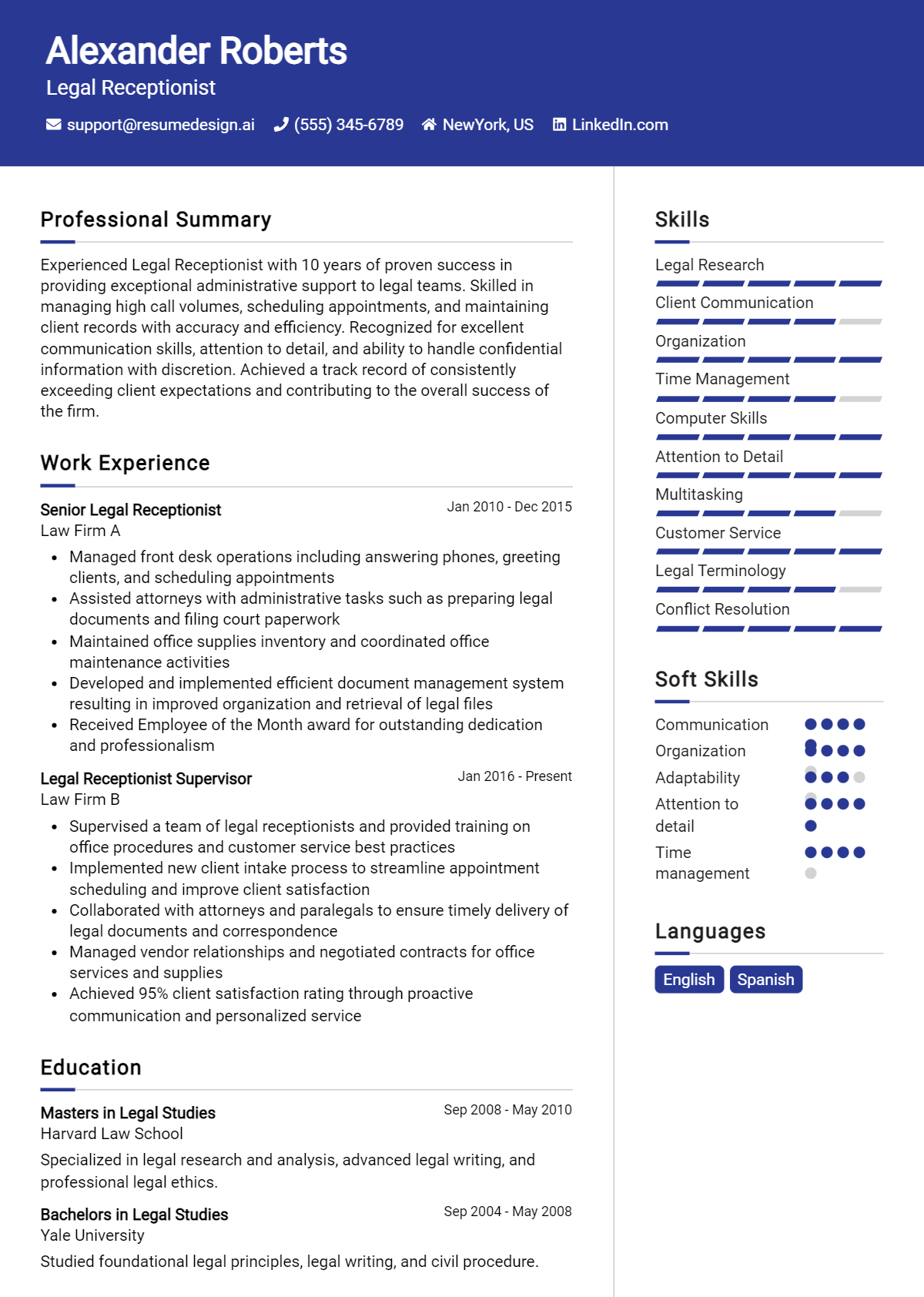
When preparing for a job interview as a Legal Receptionist, it's essential to anticipate the types of questions that may arise. This role requires not only strong administrative skills but also an understanding of legal terminology and procedures. As the first point of contact for clients and visitors, a Legal Receptionist plays a vital role in creating a positive impression of the law firm. Therefore, being equipped with well-thought-out responses to potential interview questions can significantly enhance your chances of success.
Here is a list of common job interview questions for a Legal Receptionist, along with examples of the best answers. These questions will touch upon your work history and experience, what you can bring to the firm, and your career aspirations. By reflecting on these topics and formulating clear, concise responses, you can effectively demonstrate your qualifications and fit for the position.
1. Can you describe your experience with handling confidential information?
In my previous role, I managed sensitive client files and communications daily. I ensured that all documents were securely stored and only shared with authorized personnel, following legal protocols. This experience taught me the importance of discretion and maintaining trust in a legal setting.
Example:
I previously worked in a law firm where I regularly handled client intake forms and legal documents, always ensuring they were kept secure and accessed only by relevant staff, reinforcing my commitment to confidentiality in legal matters.
2. How do you prioritize tasks when the reception area is busy?
In a busy environment, I assess tasks based on urgency and importance. I prioritize client interactions and immediate phone inquiries while managing paperwork. I’ve learned to stay organized and calm, ensuring that all tasks receive attention without compromising service quality.
Example:
When faced with multiple phone calls and clients, I quickly greet visitors, take messages, and return to calls when I can, ensuring that urgent matters are prioritized without neglecting any client waiting for assistance.
3. What skills do you believe are essential for a Legal Receptionist?
Essential skills include strong communication, organization, and multitasking abilities. Additionally, familiarity with legal terminology and software is crucial. These skills help ensure efficient operations and excellent client service, both of which are vital in a legal environment.
Example:
I believe strong communication skills are essential, as they facilitate effective interactions with clients and colleagues. Organizational skills also help in managing schedules and documents efficiently, ensuring everything runs smoothly in a busy legal office.
4. How do you handle difficult clients or situations?
I remain calm and empathetic when faced with difficult clients. I listen actively to their concerns and seek to resolve issues promptly by offering solutions or escalating them to a lawyer if necessary. My goal is to ensure the client feels heard and valued.
Example:
In one instance, a client was upset about a delay in their case. I listened to their concerns, acknowledged their frustration, and promised to follow up with the attorney, which helped to alleviate their anxiety and restore their trust.
5. Describe your familiarity with legal software and office systems.
I am proficient in legal management software such as Clio and MyCase, along with standard office applications like Microsoft Office. My experience includes scheduling, document preparation, and billing tasks, which are essential for efficient legal office operations.
Example:
I have used Clio for case management and scheduling, which streamlined my workflow. Additionally, I am skilled in Microsoft Office, allowing me to create professional documents and manage appointments effectively.
6. What methods do you use to stay organized in your work?
I use digital tools like calendars and task management apps to keep track of appointments and deadlines. I also maintain a tidy workspace and file documents systematically, making it easier to locate important information when needed.
Example:
I rely on Google Calendar to manage appointments and reminders. I also use folders and labels to organize physical files, ensuring quick access to important documents during busy periods.
7. Can you explain how you handle phone calls in a professional setting?
I answer calls promptly and greet callers warmly. I listen carefully to their needs, provide information when possible, or take accurate messages to relay to the appropriate staff. Professionalism and clarity are my priorities in every interaction.
Example:
When answering calls, I introduce myself and the firm, then inquire how I can assist. If I can’t help immediately, I assure the caller I’ll take their message and ensure they receive a prompt response.
8. Why do you want to work as a Legal Receptionist?
I am drawn to the Legal Receptionist role because it combines my passion for helping others with my interest in the legal field. I enjoy being the first point of contact, ensuring a positive experience for clients while supporting the legal team’s work.
Example:
I want to work as a Legal Receptionist because I thrive in environments where I can assist people. The legal field fascinates me, and I appreciate the opportunity to contribute positively to clients' experiences while supporting the team.
9. How do you prioritize tasks in a busy legal office?
I use a combination of urgency and importance to prioritize tasks. I assess deadlines, the impact on clients, and the needs of attorneys. By creating a structured to-do list, I ensure that critical tasks are addressed first, maintaining office efficiency.
Example:
I prioritize urgent client calls and document preparation before less time-sensitive tasks. This helps me manage the workflow effectively, ensuring that clients receive timely responses while supporting the legal team efficiently.
10. Describe a time when you had to handle a difficult client.
In a previous role, a client was upset about a delayed response. I listened actively to their concerns and assured them I would expedite their case. By providing updates, I turned their frustration into satisfaction, demonstrating my commitment to client care.
Example:
I once handled an upset client by validating their feelings and promising to follow up. I coordinated with the attorney to provide timely updates, which calmed the client and reinforced our dedication to their case.
11. What software tools are you familiar with that are relevant to this position?
I am proficient in case management software like Clio and document management systems such as iManage. Additionally, I have experience with Microsoft Office Suite for scheduling and communication, which enhances my efficiency in a legal environment.
Example:
I have worked extensively with Clio for case management, ensuring all client information is organized and accessible. My experience with Microsoft Office enables me to create professional documents and manage calendars effectively.
12. How do you ensure confidentiality in a legal office?
I adhere strictly to confidentiality protocols by securely handling client files and discussing sensitive information only on a need-to-know basis. Regular training and awareness of privacy regulations are essential to maintaining trust and compliance.
Example:
I always lock physical files and use secure passwords for electronic documents. I also ensure that conversations about cases are held in private areas to protect client confidentiality.
13. Can you describe your experience with scheduling and calendar management?
I have extensive experience managing multiple calendars for attorneys, coordinating appointments, and ensuring no conflicts arise. I prioritize scheduling based on urgency and attorney preferences, which helps maintain an organized workflow in the office.
Example:
In my previous role, I managed a busy calendar by blocking time for client meetings and court appearances while allowing buffer periods for unexpected tasks. This approach minimized scheduling conflicts and enhanced productivity.
14. How do you handle stress in a fast-paced legal environment?
I manage stress by staying organized and maintaining a positive attitude. When pressure increases, I take short breaks to regroup, prioritize my tasks, and focus on solutions rather than problems, which helps me stay productive and calm.
Example:
During peak times, I take brief moments to breathe and refocus. By keeping a structured to-do list, I tackle tasks systematically, reducing stress while ensuring all responsibilities are met efficiently.
15. What do you believe is the most important quality for a Legal Receptionist?
I believe the most important quality is excellent communication skills. A Legal Receptionist must convey information clearly and professionally, both in person and over the phone, to ensure smooth interactions between clients and the legal team.
Example:
Effective communication is crucial. It allows me to understand clients' needs and relay pertinent information to attorneys. This ensures that everyone is informed and that clients feel valued and understood.
16. How do you stay updated with legal procedures and terminology?
I stay updated by attending relevant training sessions, subscribing to legal publications, and participating in online forums with legal professionals. Continuous learning helps me effectively support attorneys and serve clients with current knowledge.
Example:
I regularly read legal newsletters and attend workshops to familiarize myself with new laws and procedures. This commitment to learning ensures that I remain a valuable resource in the office.
17. How do you prioritize tasks when managing a busy reception area?
I prioritize tasks by assessing urgency and importance. I use a checklist to ensure essential duties are completed first, such as answering calls and managing appointments, while remaining flexible to handle unexpected requests efficiently.
Example:
I prioritize tasks by creating a daily checklist. For example, I ensure that urgent calls are answered immediately while managing walk-ins based on appointment schedules to maintain an organized and efficient reception area.
18. How do you handle confidential information?
Handling confidential information is crucial in a legal environment. I ensure that sensitive documents are stored securely and only shared with authorized personnel. I also follow strict protocols to maintain client confidentiality at all times.
Example:
I handle confidential information by adhering to strict confidentiality protocols, such as locking physical files and using secure electronic systems. I also ensure that discussions about sensitive matters occur in private settings only.
19. Can you describe a situation where you had to deal with a difficult client?
In a previous role, I encountered a frustrated client. I listened actively to their concerns, empathized, and assured them I'd escalate the issue. By remaining calm and professional, I was able to resolve the situation and restore their confidence.
Example:
I once dealt with a difficult client who was upset about a delay. I listened carefully, acknowledged their frustration, and assured them I would communicate their concerns to the attorney, which helped to calm them down and build rapport.
20. What software or tools are you familiar with that assist in legal reception tasks?
I am proficient in legal management software, such as Clio and MyCase, as well as Microsoft Office Suite. These tools help me schedule appointments, manage client communications, and maintain organized records effectively.
Example:
I am familiar with Clio for managing client files and scheduling, along with Microsoft Office for documentation. These tools enhance my efficiency in organizing appointments and maintaining communication with clients and attorneys.
21. How do you ensure excellent customer service in a legal setting?
I provide excellent customer service by being attentive and respectful to clients. I ensure clear communication, respond promptly to inquiries, and create a welcoming environment that instills trust and comfort in clients during their legal proceedings.
Example:
I focus on maintaining a welcoming atmosphere and being attentive to clients' needs. For instance, I greet everyone warmly, provide clear information about processes, and follow up to ensure their concerns are addressed promptly.
22. What steps do you take to stay organized in a fast-paced environment?
To stay organized, I implement a systematic approach that includes prioritizing tasks, using digital calendars for scheduling, and maintaining a clean workspace. Regularly reviewing my to-do list helps me stay focused and efficient.
Example:
I use digital tools like Google Calendar for scheduling and maintain a prioritized task list. Regularly reviewing my tasks ensures I stay organized and ready to adapt in a fast-paced reception environment.
23. How do you handle phone calls while managing in-person clients?
I prioritize effective multitasking. When answering calls, I ensure that in-person clients are acknowledged first, then manage the call efficiently while keeping an eye on the reception area, ensuring everyone feels attended to.
Example:
I greet in-person clients first, then politely answer calls, assuring both parties that their needs are important. I keep the conversation brief to maintain focus on the client in front of me while providing quality service to both.
24. Why do you want to work as a legal receptionist specifically?
I am drawn to the legal field because I appreciate the importance of justice and helping clients navigate complex situations. As a legal receptionist, I can be the first point of contact, providing essential support and a positive experience for clients.
Example:
I want to work as a legal receptionist because I value the legal profession and enjoy supporting clients. I believe my skills in communication and organization can significantly contribute to a law firm's success and client satisfaction.
25. How do you prioritize tasks when managing multiple responsibilities?
I prioritize tasks by urgency and importance. I use a planner to outline daily responsibilities, ensuring critical tasks are completed first while remaining adaptable to unforeseen demands. This approach helps maintain efficiency and organization in a busy legal environment.
Example:
I create a daily to-do list, ranking tasks by deadlines. For instance, if a client needs immediate assistance, I will address that first while scheduling other tasks for later in the day.
26. Describe a time you handled a difficult client or situation.
When a client was upset about a delay in their case, I listened attentively and assured them I would find answers. I contacted the attorney and provided a timely update, which calmed the client and reinforced their trust in our firm.
Example:
Once, an anxious client demanded immediate answers. I patiently listened, reassured them I’d follow up with their attorney, and provided regular updates, which alleviated their concerns and maintained a positive rapport.
27. What software or tools do you use in your work?
I am proficient in legal management software such as Clio and MyCase. I also use Microsoft Office Suite for documentation and communication. Familiarity with these tools enhances my efficiency in managing schedules, documents, and client communications effectively.
Example:
I regularly use Clio for case management and Microsoft Outlook to handle correspondence. My experience with these platforms allows me to streamline administrative tasks and improve overall office productivity.
28. How do you maintain confidentiality in your role?
I prioritize confidentiality by following strict protocols, such as securing documents and limiting access to sensitive information. Additionally, I train regularly on privacy regulations to ensure compliance with legal standards and maintain client trust at all times.
Example:
I always ensure physical files are locked and digital files password-protected. I also avoid discussing sensitive information in public spaces, understanding that confidentiality is crucial in the legal profession.
29. Can you explain how you handle scheduling conflicts?
When faced with scheduling conflicts, I assess priorities and communicate with the involved parties. I propose alternative times and ensure all relevant stakeholders are informed. This proactive approach minimizes disruptions and keeps operations running smoothly.
Example:
In case of overlapping appointments, I quickly consult with both clients and suggest alternative times. For example, I once rescheduled a meeting to accommodate a last-minute court appearance, keeping everyone informed throughout the process.
30. What do you believe are the key qualities of a successful legal receptionist?
Key qualities include strong communication skills, organizational ability, and professionalism. A successful legal receptionist must be detail-oriented and possess a calm demeanor to effectively manage the fast-paced environment and diverse client needs while upholding the firm’s reputation.
Example:
I believe the most important qualities are excellent communication skills and the ability to multitask. These traits help in managing client interactions and administrative tasks efficiently, ensuring the office runs smoothly.
31. How do you ensure effective communication within a legal team?
I facilitate effective communication by maintaining clear and concise correspondence, utilizing shared platforms for updates, and regularly checking in with team members. This proactive approach fosters collaboration and ensures everyone is on the same page regarding case progress.
Example:
I use tools like Slack for quick updates and hold weekly briefings to discuss ongoing cases, ensuring everyone is aligned and informed about their responsibilities and deadlines.
32. What steps do you take to stay organized in a busy environment?
I utilize tools like digital calendars, task management apps, and filing systems to stay organized. Regularly reviewing my workload and adjusting priorities as needed helps me manage my time effectively in a busy legal office.
Example:
I rely on tools like Trello for task management and Google Calendar for scheduling. Daily reviews of my tasks help me adjust priorities and stay on top of deadlines amidst a busy workload.
33. How do you prioritize tasks when multiple deadlines are approaching?
I prioritize tasks by assessing their urgency and importance, using a checklist to stay organized. I communicate with team members to understand their needs and ensure critical tasks are completed first, allowing for effective time management in a fast-paced environment.
Example:
When facing multiple deadlines, I list tasks in order of urgency, delegate where possible, and communicate with my team to ensure everyone is aligned on priorities to meet our goals.
34. Describe a situation where you had to deal with a difficult client or colleague.
In a previous role, a client was upset about a delay. I listened actively, empathized with their frustration, and provided updates on their case. This approach eased their concerns and strengthened our working relationship through transparent communication.
Example:
I once handled a frustrated client by listening to their concerns, offering solutions, and assuring them of my commitment to resolving the issue promptly, which ultimately led to their satisfaction.
35. What is your experience with legal terminology and documents?
I have experience working with legal documents such as contracts, pleadings, and briefs. My familiarity with legal terminology has been enhanced through my previous roles, where I assisted attorneys in preparing and organizing important case files.
Example:
I have worked extensively with contracts and legal briefs, which has familiarized me with legal terminology and procedures, ensuring accuracy in document management and communication.
36. How do you handle sensitive information in the legal field?
I handle sensitive information with utmost confidentiality by adhering to ethical guidelines and office policies. I ensure that documents are securely stored and only shared with authorized personnel, maintaining trust and compliance with legal standards.
Example:
I prioritize confidentiality by securely storing sensitive documents and only discussing them in private settings, ensuring compliance with legal standards and maintaining client trust.
37. Can you explain how you would manage a high volume of calls in a busy law office?
I manage high call volumes by using a phone system that allows for call routing and holding. I stay organized by prioritizing calls based on urgency and keeping detailed notes to ensure effective follow-up and communication.
Example:
I use call management tools to prioritize urgent calls, while maintaining a detailed log to ensure that all client inquiries are addressed promptly and accurately.
38. What software or technologies are you proficient in that are relevant to this role?
I am proficient in legal management software like Clio and document management systems. Additionally, I am skilled in using Microsoft Office Suite and communication tools, which enhance my efficiency in managing tasks and client interactions.
Example:
I have experience with Clio for case management and am proficient in Microsoft Office, which helps streamline my administrative tasks and improve productivity.
39. How do you stay organized in a fast-paced legal environment?
I stay organized by using digital tools and calendars to track deadlines and appointments. I also maintain detailed filing systems for both physical and electronic documents, ensuring I can easily access crucial information when needed.
Example:
I utilize a combination of digital calendars and task management software to keep track of deadlines and appointments, ensuring I remain organized and efficient.
40. What strategies do you use to ensure effective communication with attorneys and clients?
I ensure effective communication by actively listening and confirming understanding during conversations. I also provide clear updates to clients and attorneys, maintaining a professional demeanor to foster trust and collaboration.
Example:
I practice active listening and regularly summarize key points during conversations, ensuring clarity and fostering strong communication with both clients and attorneys.
41. How do you prioritize tasks when handling multiple responsibilities as a Legal Receptionist?
In a busy legal environment, I prioritize tasks based on urgency and importance. I use a checklist to manage daily responsibilities and ensure that critical client interactions and document handling are addressed promptly. This helps maintain workflow efficiency and client satisfaction.
Example:
I prioritize tasks by assessing deadlines and client needs, ensuring urgent matters are handled first. For example, I regularly check for upcoming court dates to ensure all necessary documents are prepared in advance.
42. Can you describe a challenging situation you faced at a previous job and how you resolved it?
Once, a client arrived upset about a scheduling error. I listened attentively, apologized for the inconvenience, and quickly worked with the attorney to reschedule their appointment. By remaining calm and providing a solution, I turned a negative experience into a positive one.
Example:
I encountered an upset client due to a double-booked appointment. I listened, apologized, and promptly rescheduled their meeting, ensuring they felt valued and supported throughout the process, which helped restore their trust in our services.
43. How do you ensure confidentiality and security of sensitive information?
I adhere to strict confidentiality protocols, including secure document handling and limited access to sensitive files. I ensure that all client communications are documented appropriately and that physical and digital records are stored securely to protect client privacy.
Example:
I maintain confidentiality by ensuring sensitive documents are locked away and that conversations are held in private. Additionally, I follow established protocols for electronic records to prevent unauthorized access, safeguarding client information effectively.
44. What tools or software are you familiar with that assist in legal office management?
I'm proficient in various legal management software, including Clio and MyCase, which help manage case files, scheduling, and billing. Additionally, I have experience with Microsoft Office Suite for documentation and communication, enhancing overall office efficiency.
Example:
I am experienced with Clio for case management and Microsoft Office for document preparation. These tools help streamline processes and improve communication within the office, ensuring efficient management of case-related tasks.
45. How do you handle stress and maintain professionalism during busy periods?
I manage stress by staying organized and maintaining a positive attitude. During busy periods, I take short breaks to regroup and focus on one task at a time, ensuring I remain professional and effective, despite the high demands of the role.
Example:
During peak times, I prioritize tasks and take brief moments to breathe and refocus. This approach helps me maintain professionalism and ensures that I deliver quality service, even under pressure.
46. Why do you want to work as a Legal Receptionist in our firm?
I am drawn to your firm because of its strong reputation in the community and commitment to client service. I believe my skills in communication and organization align well with your values, and I'm eager to contribute positively to your team.
Example:
I admire your firm's dedication to client advocacy and its reputation for excellence. I believe my background in legal reception aligns with your values, and I'm excited about the opportunity to support your team in delivering exceptional service.
How Do I Prepare For A Legal Receptionist Job Interview?
Preparing for a legal receptionist job interview is crucial for making a positive impression on the hiring manager. A well-prepared candidate can demonstrate their professionalism, attention to detail, and understanding of the legal field, all of which are essential traits for this role.
- Research the company and its values to understand its culture and mission.
- Review the job description carefully and align your skills and experiences with the requirements listed.
- Practice answering common interview questions, particularly those related to customer service and legal terminology.
- Prepare examples that demonstrate your skills and experience relevant to the legal receptionist position.
- Dress professionally to reflect the formality of the legal environment.
- Bring copies of your resume, a list of references, and any other relevant documents to the interview.
- Prepare thoughtful questions to ask the interviewer about the firm and the role to show your interest and engagement.
Frequently Asked Questions (FAQ) for Legal Receptionist Job Interview
Preparing for a job interview can significantly enhance your chances of success, especially when it comes to understanding commonly asked questions. Being ready to tackle these queries not only boosts your confidence but also demonstrates your professionalism. Below are some frequently asked questions that can help you prepare for a Legal Receptionist interview.
What should I bring to a Legal Receptionist interview?
When attending a Legal Receptionist interview, it's essential to come prepared. Bring several copies of your resume, a list of references, and any supporting documents that highlight your qualifications, such as certifications or transcripts. Additionally, consider carrying a notepad and pen to take notes during the interview, as well as a portfolio that includes examples of your work, if applicable. This preparation shows your organizational skills and can set a positive tone for the interview.
How should I prepare for technical questions in a Legal Receptionist interview?
Technical questions in a Legal Receptionist interview may include inquiries about legal terminology, office software proficiency, or specific legal procedures. To prepare, review the job description and identify the key skills required. Brush up on common legal terms and familiarize yourself with the software tools commonly used in legal offices, such as case management systems or document management software. Practicing answers to potential technical questions can also help you feel more equipped during the interview.
How can I best present my skills if I have little experience?
If you have limited experience as a Legal Receptionist, focus on transferable skills that are relevant to the role, such as communication, organization, and customer service. Highlight any related experiences, such as internships or volunteer work, and emphasize your willingness to learn and adapt. Consider using the STAR method (Situation, Task, Action, Result) to structure your responses, showcasing how your skills have been applied in different contexts, even if they are not directly in a legal setting.
What should I wear to a Legal Receptionist interview?
Dressing appropriately for a Legal Receptionist interview is crucial, as it reflects your professionalism and respect for the legal workplace. Opt for business attire, such as a tailored suit, dress, or blouse and slacks, in neutral or subdued colors. Ensure your clothing is clean and well-fitted, and pay attention to grooming and personal hygiene. A polished appearance can help create a positive first impression and demonstrate that you take the opportunity seriously.
How should I follow up after the interview?
Following up after a Legal Receptionist interview is a key step that can reiterate your interest in the position and keep you top of mind with the hiring team. Send a thank-you email within 24 hours of the interview, expressing gratitude for the opportunity and reiterating your enthusiasm for the role. Mention any specific points discussed during the interview that resonated with you. This simple gesture can help strengthen your candidacy and show your proactive nature.
Conclusion
In this interview guide for the Legal Receptionist role, we have covered essential strategies to help you prepare effectively. Understanding the significance of preparation, practicing your responses, and showcasing your relevant skills are paramount to making a strong impression during your interview. A well-rounded preparation that includes both technical and behavioral questions can significantly enhance your chances of success in securing the position.
As you approach your interviews, remember to utilize the tips and examples provided in this guide. With confidence and thorough preparation, you can present yourself as a capable candidate ready to excel in the legal field.
For further assistance, check out these helpful resources: resume templates, resume builder, interview preparation tips, and cover letter templates.