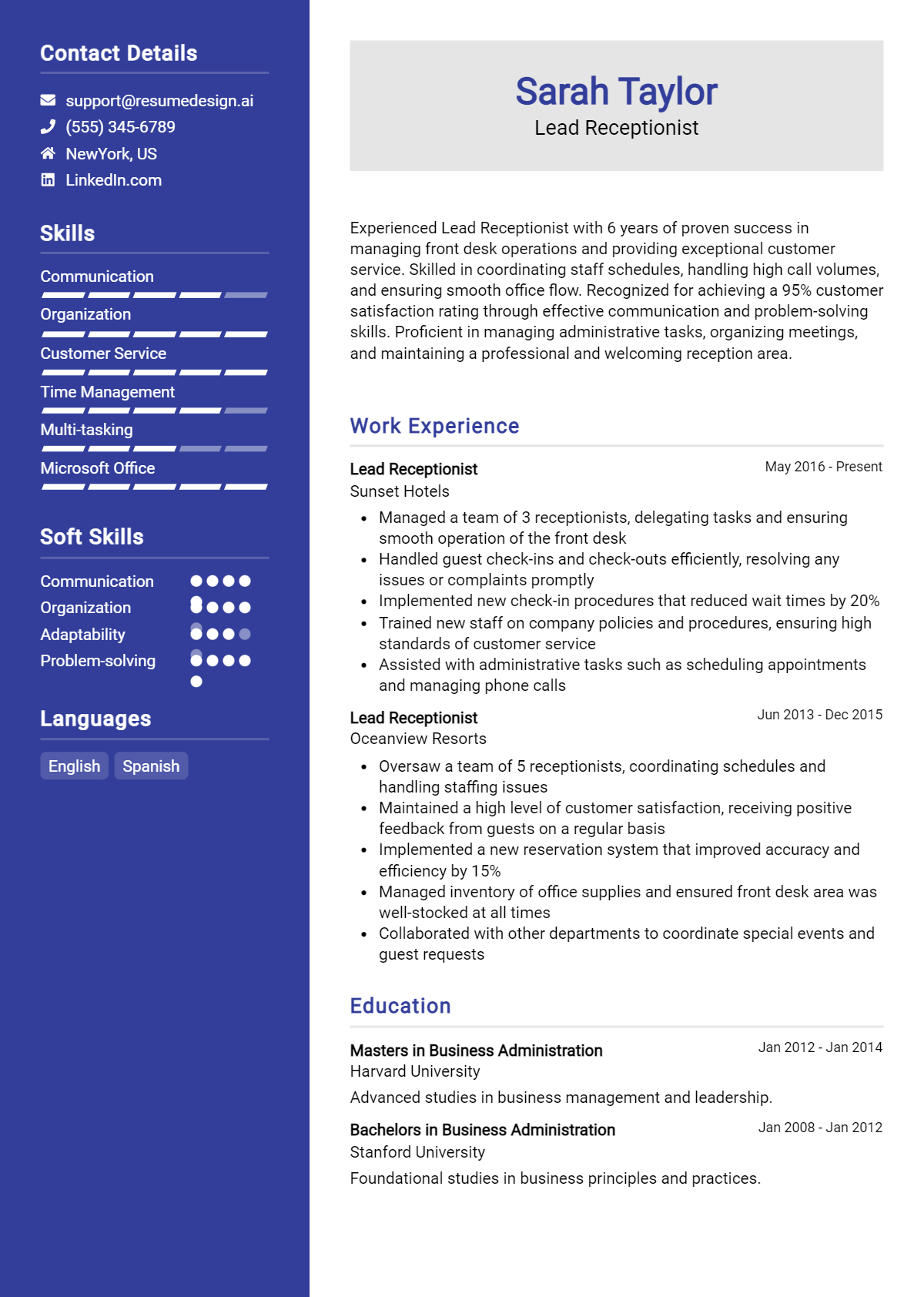
In the competitive field of administrative support, the role of a Lead Receptionist is pivotal in creating a positive first impression for clients and managing front-of-house operations effectively. During the interview process, candidates must demonstrate their organizational skills, customer service expertise, and ability to handle multiple tasks simultaneously. Being prepared to answer key questions can set you apart from other applicants and highlight your suitability for this vital role.
Here is a list of common job interview questions for the Lead Receptionist position, along with examples of the best answers. These questions cover your work history and experience, what you have to offer the employer, and your goals for the future, ensuring that you can effectively showcase your qualifications and align them with the expectations of the organization.
1. Can you describe your experience as a receptionist?
I have over five years of experience as a receptionist in various environments. My roles included managing front desk operations, handling multi-line phone systems, and providing excellent customer service. I’m adept at scheduling appointments and maintaining office organization, ensuring smooth daily operations.
Example:
In my previous role, I managed a busy reception desk, answering calls, greeting clients, and scheduling appointments. I streamlined our booking system, which improved our efficiency by 20% and enhanced the client experience significantly.
2. How do you prioritize your tasks during a busy shift?
During a busy shift, I prioritize tasks by assessing urgency and importance. I focus on immediate client needs first, then manage administrative duties. I use a checklist to ensure nothing is overlooked, allowing me to stay organized and efficient even during peak times.
Example:
When faced with multiple tasks, I address urgent client inquiries first, then follow up on appointments and emails. This method keeps operations running smoothly, ensuring clients receive timely assistance while I manage administrative responsibilities effectively.
3. How do you handle difficult clients?
I approach difficult clients with empathy and patience, actively listening to their concerns. I strive to understand their issues and provide solutions, maintaining professionalism throughout. If needed, I escalate the situation to a supervisor, ensuring the client feels heard and valued.
Example:
In a previous role, I encountered an upset client regarding a scheduling error. I listened carefully, apologized sincerely, and quickly found a solution that met their needs, turning a negative experience into a positive outcome.
4. What software or tools are you familiar with?
I am proficient in various office software, including Microsoft Office Suite, scheduling tools like Calendly, and customer relationship management systems like Salesforce. I quickly adapt to new technologies, ensuring I can effectively support the office’s administrative needs.
Example:
I have extensive experience with Microsoft Office for documentation, and I have used Salesforce for managing client interactions. I also adapt quickly to new tools, having learned several scheduling applications in previous roles to streamline operations.
5. How do you ensure confidentiality in your role?
I prioritize confidentiality by adhering to company policies and procedures regarding sensitive information. I avoid discussing client details in public areas and ensure that documents are securely stored and disposed of. Trust is essential in my role, and I strive to maintain it.
Example:
In my previous position, I received training on data protection policies. I consistently followed these guidelines, ensuring that client files were locked when not in use and discussing sensitive information only in private settings.
6. Can you describe a time when you went above and beyond for a client?
Once, a client needed urgent assistance with a last-minute appointment. I coordinated with our team to accommodate them, even adjusting schedules. This effort not only resolved their issue but also reinforced our commitment to client satisfaction, earning their gratitude and loyalty.
Example:
A client arrived with an urgent request for a service. I quickly consulted my team, rearranged schedules, and ensured they received assistance that day, resulting in their appreciation and positive feedback about our service quality.
7. How do you keep yourself organized?
I maintain organization through a combination of digital tools and traditional methods. I use calendars for scheduling and task management apps to track responsibilities. I also keep a physical to-do list for daily tasks, allowing me to visualize my priorities and deadlines effectively.
Example:
I utilize digital calendars for appointments and reminders, while keeping a to-do list on my desk. This combination helps me stay on top of tasks and manage my time efficiently, enabling smooth reception operations.
8. What do you believe is the most important skill for a lead receptionist?
The most important skill for a lead receptionist is excellent communication. This role requires clear interaction with clients and team members, both verbally and in writing. Strong communication fosters positive relationships, mitigates misunderstandings, and enhances overall office efficiency.
Example:
I believe strong communication skills are vital for a lead receptionist. They ensure that I effectively convey information, address client needs, and collaborate with my team, creating a positive experience for everyone involved.
9. How do you prioritize tasks in a fast-paced environment?
In a busy setting, I prioritize tasks by assessing urgency and impact. I use a to-do list to track and categorize tasks, ensuring critical duties are addressed first while keeping communication open with the team to adjust priorities as needed. Example: I typically start my day by reviewing urgent messages and emails, then tackle high-priority tasks while keeping less urgent ones on my radar for later attention.
10. Can you describe a time when you resolved a conflict between colleagues?
I encountered a situation where two colleagues disagreed over a project. I facilitated a meeting where each could express their views. By encouraging open communication, we found common ground, leading to a collaborative solution that benefited the project. Example: I stepped in during a heated discussion, allowing each person to voice their concerns, which helped clarify misunderstandings and foster a more productive atmosphere.
11. What strategies do you use to maintain a positive front desk atmosphere?
To create a welcoming environment, I greet every visitor warmly and maintain a tidy, organized space. I also encourage team spirit through positive interactions, ensuring everyone feels valued and respected, which enhances overall client experience and satisfaction. Example: I always greet clients with a smile and personalize interactions by remembering their names, which helps create a friendly and inviting atmosphere at the front desk.
12. How do you handle sensitive information?
I adhere strictly to confidentiality protocols when managing sensitive information. I limit access to authorized personnel and ensure that documents are securely stored and disposed of. Regular training helps keep me updated on best practices in data protection. Example: I regularly review confidentiality policies and ensure that all sensitive information is locked away, discussing best practices with colleagues to reinforce our commitment to data security.
13. Describe your experience with multi-line phone systems.
I have extensive experience managing multi-line phone systems, efficiently directing calls while maintaining professionalism. I prioritize calls based on urgency and ensure messages are accurately taken, fostering effective communication within the organization and with clients. Example: In my previous role, I managed up to five incoming lines, ensuring each call was answered promptly and directed to the appropriate department or individual without delay.
14. How do you deal with difficult clients or visitors?
I approach difficult clients with empathy and patience, actively listening to their concerns. I aim to resolve issues calmly by offering solutions or escalating matters to the appropriate staff, ensuring their experience is handled professionally and respectfully. Example: When faced with an upset client, I listened to their concerns and assured them I would find a solution, which helped de-escalate the situation and restore their confidence in our service.
15. What role does teamwork play in your position as Lead Receptionist?
Teamwork is essential in my role; it ensures that all front desk operations run smoothly. I collaborate closely with colleagues to share information, support each other during busy periods, and maintain a unified approach in delivering excellent service to clients. Example: I regularly hold brief team huddles to discuss upcoming events and challenges, fostering a collaborative spirit and ensuring everyone is aligned and informed about daily operations.
16. How do you ensure you remain organized in your role?
I utilize digital tools and physical systems to stay organized, including calendars, checklists, and filing systems. Regularly reviewing my tasks and prioritizing them helps me manage my time effectively, ensuring I meet deadlines and maintain office efficiency. Example: I use a digital calendar to schedule appointments and set reminders for important tasks, which helps me stay on top of my responsibilities and avoid missing any deadlines.
17. How do you prioritize your tasks during busy periods at the reception?
I prioritize tasks by assessing urgency and importance. I maintain a clear list and focus on high-impact duties first, ensuring that guest inquiries are addressed promptly while delegating less critical tasks. This approach keeps operations smooth and clients satisfied.
Example:
During peak hours, I prioritize guest check-ins and urgent calls, while scheduling follow-ups for less critical tasks. This method ensures that guests feel attended to and operations remain efficient.
18. Describe a situation where you had to handle a difficult customer. What was the outcome?
I encountered an upset guest due to a booking error. I listened attentively, apologized sincerely, and offered a complimentary upgrade. This approach calmed the guest, resolved the issue, and resulted in positive feedback about our service, enhancing client loyalty.
Example:
A guest was frustrated over a reservation mix-up. I empathized, offered a sincere apology, and upgraded their room. They left satisfied and praised our customer service online, turning a negative into a positive.
19. What software or tools are you familiar with that assist in reception duties?
I am proficient in front desk software like Opera and Microsoft Office Suite. These tools help manage bookings, track guest information, and streamline communication, ensuring efficient operations and excellent customer service at the reception.
Example:
I have extensive experience with Opera for managing reservations and Microsoft Office for documentation. These tools facilitate smooth operations and enhance my productivity at the reception desk.
20. How do you ensure confidentiality when handling guest information?
I adhere to strict confidentiality protocols, ensuring that sensitive information is only accessed by authorized personnel. I also educate staff on data protection policies and utilize secure systems to safeguard guest information from unauthorized access.
Example:
I follow established protocols for handling guest data and ensure that all team members are trained on confidentiality policies to protect sensitive information effectively.
21. Can you describe a time when you improved a process at the reception?
I noticed long wait times during check-in. I implemented a pre-check-in system, allowing guests to complete paperwork online. This streamlined the process, reduced wait times, and enhanced overall guest satisfaction during busy periods.
Example:
I introduced an online pre-check-in procedure that reduced wait times significantly, allowing guests to enjoy a smoother arrival experience and increasing efficiency at the reception.
22. How do you handle multiple phone calls while managing guests at the front desk?
I utilize a systematic approach to handle multiple calls. I quickly assess urgency, place callers on hold respectfully, and alternate between calls and guests at the desk efficiently, ensuring that each caller and guest feels valued and attended to.
Example:
When managing multiple calls, I prioritize urgent inquiries and politely place others on hold, ensuring all guests receive attention and feel valued despite a busy atmosphere.
23. What steps do you take to create a welcoming environment for guests?
I emphasize a friendly demeanor and a clean, organized reception area. Greeting guests warmly, maintaining eye contact, and providing helpful information contribute to a welcoming atmosphere, making guests feel valued and at ease upon their arrival.
Example:
I always greet guests with a smile and ensure the reception area is tidy. A welcoming atmosphere encourages positive interactions and sets the tone for their stay.
24. How do you stay updated on company policies and procedures?
I regularly review internal communications, attend training sessions, and engage with my team to discuss updates. Staying informed allows me to provide accurate information to guests and ensures compliance with company standards.
Example:
I stay current on policies by attending workshops and reviewing newsletters. This proactive approach ensures I can assist guests effectively and uphold company standards.
25. How do you prioritize tasks when the reception area is busy?
I assess urgent needs and categorize tasks accordingly. I focus on immediate guest needs first, followed by phone calls and administrative tasks. I also delegate when possible to ensure efficiency and maintain a smooth workflow.
Example:
In a busy period, I prioritize guests waiting in line, then handle phone inquiries while managing emails. I also ensure team members are briefed on their tasks to optimize our collective efficiency.
26. Can you describe a time when you had to handle a difficult customer?
I once dealt with an irate customer who had a booking issue. I listened attentively, empathized with their frustration, and quickly offered a solution. This calm approach diffused the situation and resulted in a satisfied customer.
Example:
A customer was upset about a delayed appointment. I listened to their concerns, assured them I would resolve the issue, and offered a complimentary service. This turned their frustration into appreciation and loyalty.
27. What software or tools do you have experience with in managing reception tasks?
I have extensive experience with various scheduling and CRM software, including Microsoft Outlook and Salesforce. These tools help me manage appointments, track customer interactions, and improve overall efficiency at the front desk.
Example:
I've used tools like Zocdoc for appointment scheduling and HubSpot for customer relationship management. These platforms streamline my tasks and enhance customer service efficiency, allowing for better organization and communication.
28. How do you maintain professionalism in a fast-paced environment?
I stay organized and focused, even in high-pressure situations. I practice deep breathing techniques to remain calm and approach challenges with a positive attitude. This professionalism helps set a welcoming tone for guests and staff.
Example:
In a busy environment, I prioritize staying calm and composed. I greet guests with a smile, maintain clear communication, and manage stress through organization, ensuring a professional atmosphere is always upheld.
29. How would you handle a situation where a staff member is not following procedures?
I would address the issue directly and privately, discussing the importance of the procedures. I would provide support or training if needed, ensuring they understand the impact of following protocols on overall operations and customer satisfaction.
Example:
If a colleague neglects procedures, I would speak to them privately, outlining the importance of compliance. I’d offer help or additional training to ensure they feel confident and supported in their role.
30. What strategies do you use to create a welcoming atmosphere at the reception?
I focus on greeting guests warmly, maintaining an inviting environment, and ensuring the reception area is tidy and organized. Small gestures, like offering refreshments, also contribute to a positive first impression.
Example:
I create a welcoming atmosphere by greeting every guest with a smile, maintaining cleanliness, and offering refreshments. These small touches make guests feel valued and enhance their overall experience.
31. How do you handle confidential information at the reception desk?
I adhere strictly to confidentiality policies and ensure sensitive information is only shared with authorized personnel. I also maintain secure filing systems and ensure conversations about confidential matters are held discreetly.
Example:
I always follow confidentiality protocols, ensuring sensitive information is securely stored and only accessible to authorized team members. I also engage in discreet conversations to protect guests' privacy at all times.
32. Describe how you would train a new receptionist.
I would create a structured training plan covering key responsibilities, software use, and customer service techniques. I’d pair them with an experienced team member for hands-on training, ensuring they feel supported and confident in their new role.
Example:
I would develop a training schedule that includes shadowing experienced staff, hands-on practice with tools, and role-playing customer interactions. This approach ensures the new receptionist is well-prepared and supported throughout their onboarding.
33. How do you prioritize tasks when multiple visitors arrive at the same time?
I assess the urgency of each visitor's needs, prioritize based on their appointments or inquiries, and manage the waiting area to ensure everyone feels acknowledged. Communication is key in these situations.
Example:
If three visitors arrive simultaneously, I would quickly greet each, determine their needs, and prioritize based on scheduled appointments, ensuring everyone is informed of their wait time.
34. Can you describe a time when you had to handle a difficult customer? What was your approach?
I encountered an upset customer regarding a scheduling issue. I listened actively, empathized with their situation, and offered a solution by rescheduling their appointment promptly, which diffused the tension effectively.
Example:
When a customer was frustrated about a missed appointment, I calmly listened, apologized for the inconvenience, and offered to reschedule immediately, which they appreciated.
35. What strategies do you use to maintain a positive atmosphere at the reception?
I create a welcoming environment by greeting everyone warmly, maintaining a clean and organized space, and ensuring positive interactions among staff and visitors. Positive energy is contagious!
Example:
I ensure that our reception area is tidy and inviting, greet everyone with a smile, and encourage staff to engage positively with visitors to foster a friendly atmosphere.
36. How do you handle confidential information in your role?
I understand the importance of confidentiality and ensure that sensitive information is secured, only discussing details with authorized personnel. I follow company protocols strictly to protect privacy.
Example:
I adhere to confidentiality agreements, ensuring that personal information is only shared with authorized individuals and stored securely to prevent unauthorized access.
37. Describe how you would train a new receptionist.
I would start with an overview of reception duties, followed by hands-on training in our systems, role-playing scenarios for customer interactions, and providing ongoing feedback to ensure they feel confident.
Example:
I would guide the new hire through our procedures, conduct role-playing for real-life scenarios, and provide constructive feedback to help them acclimate quickly and effectively.
38. What tools or software are you familiar with that assist in reception duties?
I am experienced in using scheduling software, customer relationship management (CRM) systems, and communication tools like email and phone systems to streamline reception tasks and improve efficiency.
Example:
I have worked with various scheduling and CRM software, which helped streamline appointment bookings and manage visitor information efficiently, enhancing overall productivity.
39. How do you manage stress during busy periods?
I maintain composure by prioritizing tasks, focusing on one visitor at a time, and practicing deep-breathing techniques when needed. Staying organized and calm helps reduce stress effectively.
Example:
During peak times, I remain organized by prioritizing tasks, focusing on the most urgent needs, and using deep-breathing exercises to keep stress levels low.
40. How do you stay updated on company policies and changes that affect your role?
I regularly review company communications, attend staff meetings, and participate in training sessions. Staying engaged with management helps me remain informed and adaptable to changes.
Example:
I make it a habit to read all company memos, attend training sessions, and engage with management to ensure I am always updated on policies that affect my role.
41. How do you prioritize tasks during a busy shift?
I prioritize tasks by assessing urgency and importance. I focus on immediate guest needs first, then tackle administrative tasks. I also communicate with my team to ensure nothing is overlooked, maintaining a smooth workflow.
Example:
During peak hours, I prioritize guest check-ins and urgent calls, followed by organizing the reception area and managing emails to ensure all tasks are addressed efficiently.
42. Describe a time when you resolved a conflict with a guest.
Once, a guest was unhappy with their room. I listened to their concerns, empathized, and promptly offered a room upgrade while ensuring they received complimentary services. The guest left satisfied, and I ensured we followed up post-stay.
Example:
A guest complained about noise from a neighboring room. I addressed their issue, offered a quieter room, and provided a complimentary breakfast, which turned their experience around.
43. How do you handle sensitive information or confidentiality?
I strictly adhere to company policies regarding confidentiality. I ensure that sensitive information, such as guest data, is stored securely and only shared with authorized personnel. Regular training helps me stay updated on best practices.
Example:
I always lock my computer when stepping away and ensure that physical documents are securely stored. I am trained to handle sensitive information discreetly to protect guest privacy.
44. What strategies do you use to maintain a positive work environment?
I promote open communication and teamwork by encouraging feedback and recognizing team members’ achievements. Regular team meetings help keep morale high, and I always strive to create a supportive atmosphere.
Example:
I organize team-building activities and celebrate birthdays or achievements, which fosters a sense of community and keeps the reception team motivated and engaged.
45. How do you stay organized in your role?
I utilize digital tools and checklists to manage daily tasks. I categorize responsibilities by urgency and maintain a tidy workspace. Regular reviews of my schedule help ensure I stay on top of everything and meet deadlines.
Example:
I use a digital calendar to set reminders for important tasks, and I make daily to-do lists that I prioritize. This method helps me stay organized and efficient.
46. How do you handle feedback from supervisors or guests?
I view feedback as an opportunity for growth. I listen actively, ask clarifying questions, and implement suggestions to improve my performance. I also thank the person providing feedback for their input.
Example:
When receiving feedback, I reflect on it, apply constructive criticism to my work, and follow up to show improvement. This helps build trust with my supervisors and guests.
How Do I Prepare For A Lead Receptionist Job Interview?
Preparing for a job interview is crucial to making a positive impression on the hiring manager. As a Lead Receptionist, you will be the first point of contact for visitors and clients, so demonstrating your professionalism and preparedness is essential. Here are some key preparation tips to help you succeed:
- Research the company and its values to align your answers with their mission.
- Practice answering common interview questions specific to the receptionist role.
- Prepare examples that demonstrate your skills and experience for the Lead Receptionist position.
- Dress appropriately to reflect the company culture and maintain a professional appearance.
- Bring copies of your resume and any relevant documents to share with the interviewer.
- Prepare thoughtful questions to ask the interviewer about the company and the role.
- Review the job description thoroughly to understand the key responsibilities and qualifications expected.
Frequently Asked Questions (FAQ) for Lead Receptionist Job Interview
Preparing for a job interview is crucial, especially for a role as pivotal as a Lead Receptionist. Understanding the common questions that may arise can significantly boost your confidence and help you present yourself in the best light. Here are some frequently asked questions to consider as you prepare for your interview.
What should I bring to a Lead Receptionist interview?
When attending a Lead Receptionist interview, it's essential to come prepared. Bring multiple copies of your resume, a list of references, a notepad, and a pen to take notes. Additionally, consider carrying any certifications or relevant documents that showcase your qualifications. It's also a good idea to prepare a portfolio that includes examples of your previous work, if applicable, to give the interviewer a tangible sense of your skills and experience.
How should I prepare for technical questions in a Lead Receptionist interview?
To prepare for technical questions during your Lead Receptionist interview, familiarize yourself with the software and tools commonly used in the role, such as scheduling systems or communication platforms. Review the job description to identify specific skills mentioned, and think about how your experience aligns with those requirements. Practicing common scenarios you might encounter in the role can also help you feel more comfortable discussing your technical competencies during the interview.
How can I best present my skills if I have little experience?
If you have limited experience, focus on transferable skills and relevant qualities that make you a suitable candidate for the Lead Receptionist role. Highlight your customer service abilities, organizational skills, and any relevant volunteer work or internships. Prepare examples of how you've successfully handled similar responsibilities in other settings, emphasizing your willingness to learn and adapt. Show enthusiasm for the position and a commitment to growing within the role.
What should I wear to a Lead Receptionist interview?
Choosing the right outfit for your Lead Receptionist interview is important, as it reflects your professionalism and understanding of workplace culture. Opt for business casual attire, such as dress pants or a skirt paired with a blouse or a tailored shirt. Ensure that your clothing is clean, well-fitted, and appropriate for the organization’s atmosphere. Avoid overly casual items like jeans or sneakers to make a positive impression.
How should I follow up after the interview?
Following up after your Lead Receptionist interview is a vital step in the process. Send a thank-you email within 24 hours, expressing appreciation for the opportunity to interview. In your message, reiterate your enthusiasm for the position and briefly highlight how your skills align with the role. This not only reinforces your interest but also keeps you on the interviewer's radar as they make their decision.
Conclusion
In summary, this interview guide has emphasized the critical elements necessary for a successful interview as a Lead Receptionist. We’ve highlighted the importance of thorough preparation, consistent practice, and showcasing relevant skills that align with the role. By being well-prepared for both technical and behavioral questions, candidates can significantly enhance their chances of making a positive impression.
We encourage you to utilize the tips and examples provided in this guide to approach your interviews with confidence and clarity. Remember, every interview is an opportunity to demonstrate your capability and enthusiasm for the role.
For further assistance, check out these helpful resources: resume templates, resume builder, interview preparation tips, and cover letter templates.