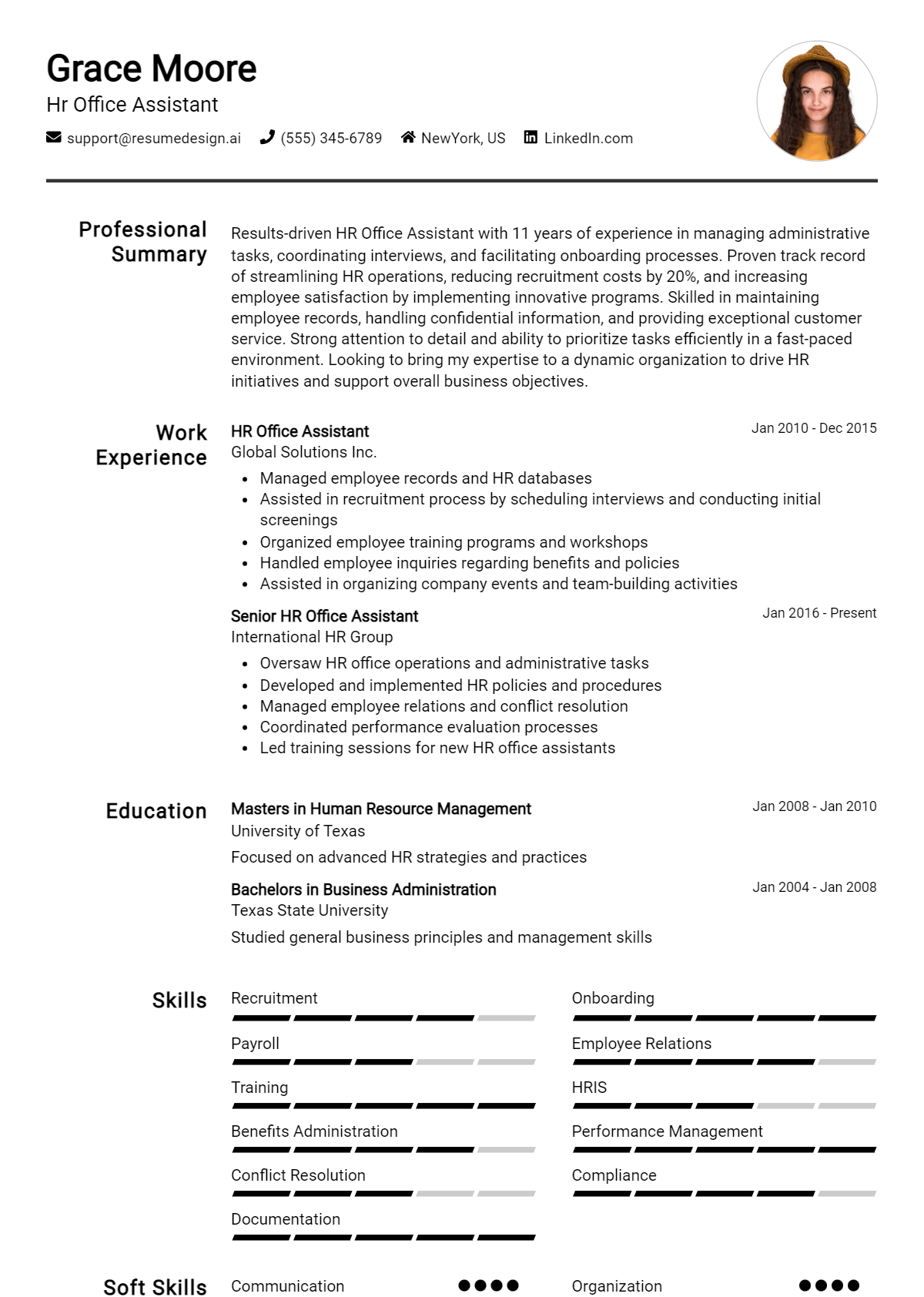
When preparing for an interview as an HR Office Assistant, it's essential to familiarize yourself with the types of questions you might encounter. This role requires a blend of administrative skills, interpersonal communication, and a solid understanding of HR practices. As you gear up for your interview, being able to articulate your experiences and how they relate to the position will set you apart from other candidates.
Here is a list of common job interview questions for the HR Office Assistant role, along with examples of the best answers. These questions will cover your work history and experience, what you have to offer the employer in terms of skills and competencies, as well as your goals for the future within the HR field. By preparing thoughtful responses, you can demonstrate your suitability for the role and your enthusiasm for contributing to the HR team.
1. Can you describe your experience with HR software and tools?
I have experience using various HR software, including Applicant Tracking Systems (ATS) and Human Resource Information Systems (HRIS). My familiarity with these tools allows me to streamline recruitment processes and maintain accurate employee records efficiently.
Example:
I have worked with BambooHR and Workday for managing records and facilitating recruitment, enabling me to efficiently track candidates and organize employee data.
2. How do you handle confidential information?
Handling confidential information is crucial in HR. I ensure all sensitive data is stored securely and access is limited to authorized personnel. I also adhere to company policies and legal guidelines to maintain confidentiality and trust.
Example:
I follow strict protocols for data management, using encrypted systems and training to ensure that sensitive employee information remains confidential and secure.
3. What strategies do you use to stay organized in a busy office?
I prioritize tasks using a digital calendar and to-do list, ensuring deadlines are met. Regularly updating my task list helps me stay focused on urgent matters while maintaining a clear overview of ongoing projects.
Example:
I utilize tools like Trello and Google Calendar to manage tasks and appointments, allowing me to stay organized and responsive in a dynamic office environment.
4. How do you approach resolving conflicts in the workplace?
I believe in addressing conflicts promptly and diplomatically. I listen to both sides, facilitate open communication, and work towards a mutually beneficial resolution, ensuring that everyone feels heard and understood.
Example:
In a previous role, I mediated a dispute by organizing a meeting between the parties, allowing them to express their concerns and collaboratively find a solution that satisfied both sides.
5. Can you give an example of a time you improved a process?
At my last job, I identified inefficiencies in the onboarding process. I proposed a new checklist and timeline that streamlined training and paperwork, reducing onboarding time by 30% and improving the new hires' experience.
Example:
By creating a digital onboarding checklist, I was able to cut down the time it took for new hires to complete their paperwork, enhancing their initial experience.
6. What do you think is the most important quality for an HR Office Assistant?
The most important quality is strong communication skills. An HR Office Assistant must effectively convey information, listen to employee concerns, and foster a positive workplace culture through clear dialogue and support.
Example:
In my experience, clear communication fosters trust and transparency between HR and employees, making it essential for an HR Office Assistant to excel in this area.
7. How do you prioritize multiple tasks with competing deadlines?
I assess the urgency and importance of each task, creating a prioritized list. I focus on high-impact projects first while remaining flexible to adjust based on new developments and deadlines.
Example:
I use a prioritization matrix to identify urgent tasks and allocate my time effectively, ensuring that critical deadlines are consistently met without compromising quality.
8. Describe an experience where you had to handle a difficult employee.
I encountered a difficult employee who was struggling with team dynamics. I scheduled a one-on-one discussion to listen to their concerns and worked together to establish clearer expectations and support strategies for improvement.
Example:
By actively listening to the employee's concerns and collaborating on a solution, I was able to help improve their productivity and team relationships.
9. How do you prioritize tasks in a busy HR office environment?
I prioritize tasks by assessing deadlines and the impact on the team. I use a task management tool to organize my workload, ensuring that urgent tasks are completed first while keeping track of long-term projects to maintain a steady workflow.
Example:
For instance, I would address employee inquiries first, then focus on processing applications, ensuring both immediate needs and ongoing projects are managed effectively.
10. Can you describe your experience with HR software?
I have experience using HR software like BambooHR and Gusto for managing employee data and payroll. I am comfortable navigating these systems for data entry, generating reports, and ensuring compliance with company policies and regulations.
Example:
At my previous job, I utilized BambooHR to streamline the onboarding process, which significantly reduced the time taken to set up new hires.
11. How do you handle confidential information?
Handling confidential information is paramount in HR. I adhere to strict confidentiality policies and secure all sensitive documents. I ensure information is only shared with authorized personnel to maintain employee trust and compliance with legal standards.
Example:
For example, I regularly conducted training sessions on data protection and confidentiality for staff to reinforce the importance of safeguarding employee information.
12. Describe a time when you resolved a conflict in the workplace.
In a previous role, I mediated a conflict between two team members by facilitating a private discussion. I encouraged open communication, allowing each party to express their concerns. This approach helped them find common ground and improve their working relationship.
Example:
As a result, not only did their communication improve, but the overall team morale also increased significantly.
13. What strategies do you use to maintain employee engagement?
I maintain employee engagement through regular check-ins, feedback sessions, and recognition programs. Additionally, I advocate for team-building activities that encourage collaboration and strengthen relationships among colleagues, fostering a positive work environment.
Example:
For instance, I organized monthly team lunches, allowing employees to connect and share ideas outside of their regular work environment.
14. How do you ensure compliance with labor laws?
I stay updated on labor laws by attending workshops and subscribing to HR newsletters. I ensure our policies align with current regulations and conduct regular audits to identify any compliance gaps, implementing corrective measures as needed.
Example:
In my last position, I led a compliance review that resulted in updating our employee handbook to reflect new labor regulations.
15. How would you handle a situation where an employee is consistently late?
I would address the issue directly by scheduling a private meeting with the employee to understand the reasons behind their tardiness. I would then discuss potential solutions or accommodations to help them arrive on time, focusing on open communication.
Example:
In a previous situation, I discovered that the employee had transportation issues, so we adjusted their start time to accommodate their circumstances.
16. What role does communication play in HR?
Communication is crucial in HR as it fosters transparency and trust between employees and management. It allows for clear dissemination of policies, addresses concerns, and ensures everyone is aligned with company goals, enhancing overall workplace culture.
Example:
I prioritize clear communication by holding regular meetings and sending out newsletters to keep everyone informed about important updates and initiatives.
17. How do you prioritize your tasks when you have multiple deadlines?
I prioritize tasks by assessing their urgency and importance. I create a to-do list and use tools like calendars to manage deadlines. This helps me stay organized and ensures that I meet all deadlines efficiently without compromising quality.
Example:
I once managed three projects with overlapping deadlines by listing them by priority. I focused on urgent tasks first while allocating time for each project, ensuring all were completed on time and met quality standards.
18. Can you describe a time when you had to handle confidential information?
In my previous role, I handled sensitive employee records daily. I ensured that all documents were stored securely and shared only with authorized personnel. Maintaining confidentiality is essential in HR, and I take it very seriously to build trust.
Example:
I regularly managed employee files and ensured they were locked away. When requested, I verified the identity of individuals before disclosing any information, which helped maintain confidentiality and trust within the team.
19. How do you handle difficult employees or conflict in the office?
I approach conflicts by listening to both sides and remaining neutral. I facilitate open communication and seek a resolution that benefits everyone. My goal is to foster a collaborative environment while addressing any issues professionally.
Example:
When two colleagues had a disagreement, I arranged a meeting for them to express their concerns. By guiding the conversation, they came to an understanding, which improved their working relationship significantly.
20. What software tools or HR systems are you familiar with?
I am proficient in various HR software, including ADP, BambooHR, and Excel. I use these tools for payroll processing, tracking employee performance, and maintaining records. Familiarity with technology helps streamline HR processes effectively.
Example:
In my last job, I utilized BambooHR for managing employee records and ADP for payroll. This experience improved my efficiency and allowed me to assist colleagues with software-related inquiries.
21. How do you ensure effective communication within the HR department?
I promote effective communication by holding regular meetings, using collaborative tools, and encouraging feedback. Clear channels of communication help us stay aligned on goals and address any issues promptly, fostering a supportive work environment.
Example:
To enhance communication, I initiated weekly check-ins. This allowed team members to share updates and address challenges, leading to a more cohesive and informed department.
22. How do you handle repetitive tasks and maintain motivation?
I approach repetitive tasks with a positive mindset, focusing on their importance. To maintain motivation, I set small goals and take breaks to refresh my mind, which enhances my productivity and keeps me engaged.
Example:
While processing payroll, I set daily targets to complete different batches. This method kept me motivated and allowed me to deliver accurate results consistently.
23. What strategies do you use for onboarding new employees?
I ensure a smooth onboarding process by creating a structured orientation program. This includes training sessions, introductions to team members, and providing resources. A well-planned onboarding helps new hires acclimate quickly and feel welcomed.
Example:
I developed an onboarding checklist that included meetings with key team members and training on our systems. New hires appreciated the structure, which eased their transition into the company.
24. How would you handle a situation where an employee is consistently late to work?
I would address the issue by having a private conversation with the employee to understand any underlying reasons. Based on the discussion, I would explore potential solutions and emphasize the importance of attendance for team morale and productivity.
Example:
When I noticed an employee was often late, I scheduled a one-on-one meeting. I learned they had transportation issues, and together, we found a flexible solution that improved their punctuality.
25. How do you prioritize your tasks when you have multiple deadlines?
I prioritize tasks by assessing urgency and importance. I create a to-do list, categorize tasks, and allocate time slots for each. This approach allows me to remain organized and ensure that high-priority tasks are completed first without compromising quality.
Example:
I use a priority matrix. For example, if I have payroll processing, employee onboarding, and filing updates, I tackle payroll first due to its deadline, followed by onboarding, and then filing updates.
26. Can you provide an example of a time you resolved a conflict in the workplace?
Yes, I once mediated a disagreement between two employees regarding project responsibilities. I facilitated a meeting, allowing each to express concerns, and guided them towards a compromise that satisfied both. This not only resolved the conflict but improved their collaboration moving forward.
Example:
In a previous role, two team members disagreed on project contributions. I organized a discussion, allowing them to express their views, which helped them find common ground and enhance their teamwork.
27. What strategies do you use to maintain confidentiality in HR?
Maintaining confidentiality is paramount in HR. I ensure sensitive information is stored securely, limit access to authorized personnel, and am cautious in discussions about employee matters. Regular training on confidentiality also reinforces the importance of discretion among team members.
Example:
I keep all confidential documents locked and only discuss sensitive information in private settings. I also remind colleagues of confidentiality policies during training sessions to ensure everyone understands their responsibilities.
28. How do you handle feedback and criticism?
I view feedback as an opportunity for growth. When receiving criticism, I listen actively, ask clarifying questions, and take notes to understand better. I then reflect on the feedback and develop a plan to improve my performance accordingly.
Example:
When I receive feedback, I remain open-minded. For instance, after a performance review, I took notes on areas for improvement and actively worked on them, resulting in better results in subsequent projects.
29. Describe your experience with HR software and tools.
I have experience using various HR software, including applicant tracking systems and payroll management tools. I am proficient in using software like Workday and BambooHR for managing employee records, tracking applications, and processing payroll efficiently, which enhances productivity.
Example:
I've worked extensively with BambooHR for managing employee data and tracking time off. Additionally, I'm familiar with using applicant tracking systems to streamline the recruitment process and improve candidate experience.
30. How would you ensure a positive candidate experience during the hiring process?
To ensure a positive candidate experience, I maintain clear communication throughout the hiring process, set realistic expectations, and provide timely updates. I also value feedback from candidates post-interview to identify areas for improvement in our recruitment practices.
Example:
I prioritize communication by sending confirmation emails and timely updates after interviews. After the process, I ask candidates for feedback to continually enhance their experience and our hiring procedures.
31. What role does teamwork play in your approach to HR tasks?
Teamwork is crucial in HR as it fosters collaboration and innovation. I actively engage with colleagues on projects, share insights, and seek input. This collective approach ensures that we meet our goals efficiently and address employee concerns comprehensively.
Example:
In my previous role, I collaborated with the recruitment team to streamline the onboarding process, bringing in diverse perspectives that improved efficiency and created a welcoming environment for new hires.
32. How do you stay updated on HR trends and regulations?
I regularly read HR publications, attend webinars, and participate in professional networks. Staying informed about industry trends and legal regulations ensures that our HR practices remain compliant and aligned with best practices, ultimately benefiting our organization.
Example:
I subscribe to HR newsletters and attend local workshops. This continuous learning helps me stay current with changes in labor laws and emerging HR trends, which I can apply in our processes.
33. How do you prioritize your tasks when there are multiple deadlines?
I assess the urgency and importance of each task, using a priority matrix. I focus on high-impact activities first and communicate with my team to ensure alignment. This method helps me manage time efficiently while meeting deadlines.
Example:
I prioritize by listing tasks in order of deadlines and impact. For instance, I completed a time-sensitive recruitment task first, then addressed administrative duties, ensuring that urgent needs were met without compromising quality.
34. Can you give an example of how you handled a difficult situation with a colleague?
I once mediated a disagreement between two colleagues. I facilitated a meeting to ensure both parties expressed their concerns. By fostering open communication, we reached a resolution that satisfied everyone, strengthening team cohesion.
Example:
When two colleagues disagreed on a project approach, I organized a meeting. I encouraged them to listen to each other’s perspectives, which led to a compromise that improved both the project and their working relationship.
35. What strategies do you use to maintain confidentiality in HR?
I adhere to strict protocols, ensuring sensitive information is only shared with authorized personnel. I also use password-protected files and regularly remind colleagues of confidentiality policies to foster a culture of trust.
Example:
I maintain confidentiality by securing documents and limiting access to sensitive information. For example, all employee files are stored in locked cabinets, and I only discuss personal matters in private settings.
36. How do you handle repetitive tasks in your role?
I approach repetitive tasks with a positive mindset, recognizing their importance. I also seek ways to automate processes or improve efficiency, which helps keep my work engaging and allows me to focus on more complex responsibilities.
Example:
To handle repetitive tasks, I often set specific goals for completion and take short breaks to maintain focus. Additionally, I look for automation tools to streamline processes, which enhances my productivity.
37. Describe a time you contributed to improving an HR process.
I noticed the onboarding process was lengthy and cumbersome. I proposed a digital onboarding checklist that streamlined paperwork and training, reducing onboarding time by 30% and enhancing new employee experience.
Example:
In my previous role, I created a digital onboarding checklist, which improved efficiency. This change cut onboarding time by nearly a third and received positive feedback from new hires for its clarity and ease of use.
38. How do you ensure compliance with HR laws and regulations?
I stay updated on HR regulations through continuous education and training. I also regularly review company policies to ensure they align with current laws, and I collaborate with legal advisors when necessary.
Example:
I subscribe to HR newsletters and participate in workshops to stay informed about legal changes. Additionally, I conduct quarterly policy reviews to ensure our practices remain compliant with labor laws.
39. What role do you think communication plays in HR?
Effective communication is critical in HR for building trust and transparency. It ensures that employees feel heard and informed. I foster open dialogue through regular updates and feedback sessions, creating a positive workplace culture.
Example:
Communication is vital in HR; it connects employees and management. I prioritize regular check-ins and feedback sessions, which help address concerns promptly and build a more engaged workforce.
40. How do you handle feedback from supervisors and colleagues?
I view feedback as an opportunity for growth. I actively listen, ask clarifying questions, and reflect on the input. This approach helps me improve my performance and strengthens my relationships with my colleagues and supervisors.
Example:
When receiving feedback, I remain open and appreciative. For instance, after a performance review, I sought specific examples to understand better how I could improve and applied that feedback in my daily tasks.
41. How do you prioritize tasks when you have multiple deadlines?
I prioritize tasks by assessing their urgency and importance. I create a to-do list, focusing on deadlines and any dependencies. I also communicate with my team to ensure alignment and adjust priorities as needed to meet expectations efficiently.
Example:
I typically use a priority matrix to categorize tasks. For instance, if I have onboarding paperwork due alongside scheduling interviews, I tackle the paperwork first to ensure compliance, then move to scheduling, which is more flexible.
42. Can you describe a time when you had to handle confidential information?
In my previous role, I regularly managed sensitive employee records. I ensured confidentiality by following strict protocols, such as password-protecting files and limiting access to authorized personnel only. I understand the importance of trust in HR.
Example:
Once, I was tasked with updating payroll data. I ensured all documents were securely stored and only discussed sensitive information in private settings to maintain confidentiality and trust.
43. What software or tools are you familiar with for HR tasks?
I am proficient in HR software like BambooHR and Workday, as well as Microsoft Office Suite. These tools help streamline processes such as employee management, reporting, and data analysis, enhancing overall productivity in HR operations.
Example:
In my last position, I used BambooHR daily for tracking employee attendance and performance reviews, which improved our reporting efficiency significantly.
44. How do you handle conflicts between employees?
When conflicts arise, I first listen to both parties to understand their perspectives. I facilitate a meeting to encourage open communication and find common ground. My goal is to mediate and resolve issues amicably while maintaining a positive work environment.
Example:
Once, two team members disagreed on project responsibilities. I organized a meeting where they could express their views, leading to a mutual understanding and a revised plan that satisfied both.
45. What do you think is the most important quality for an HR Office Assistant?
I believe that adaptability is crucial for an HR Office Assistant. The HR landscape can change rapidly due to new policies, technologies, or employee needs. Being flexible allows me to respond effectively and support the team in various situations.
Example:
During a sudden shift to remote work, I adapted by quickly learning new collaboration tools and assisting my team in transitioning smoothly, ensuring continuity in our HR functions.
46. How do you ensure effective communication within the HR team?
I ensure effective communication by scheduling regular team meetings and utilizing collaboration tools like Slack. I encourage open dialogue and feedback to foster a transparent environment, which helps us stay aligned and address issues promptly.
Example:
In my previous role, I set up weekly check-ins and used shared documents for updates, keeping everyone informed and engaged in our ongoing projects.
How Do I Prepare For A HR Office Assistant Job Interview?
Preparing for an interview is crucial to making a positive impression on the hiring manager. A well-prepared candidate not only showcases their qualifications but also demonstrates enthusiasm and commitment to the role. Here are some key preparation tips to help you stand out during your HR Office Assistant interview:
- Research the company and its values to understand their culture and mission.
- Practice answering common interview questions related to HR and office administration.
- Prepare examples that demonstrate your skills and experience relevant to the HR Office Assistant role.
- Review the job description thoroughly to align your qualifications with the responsibilities outlined.
- Dress appropriately and professionally to make a strong first impression.
- Bring copies of your resume and any necessary documents to the interview.
- Prepare thoughtful questions to ask the interviewer about the company and team dynamics.
Frequently Asked Questions (FAQ) for HR Office Assistant Job Interview
Preparing for an interview can significantly impact your performance and confidence. Familiarizing yourself with commonly asked questions can help you articulate your thoughts clearly and demonstrate your suitability for the HR Office Assistant role. Here are some frequently asked questions to consider as you prepare for your interview.
What should I bring to a HR Office Assistant interview?
When attending an HR Office Assistant interview, it's essential to come prepared. Bring multiple copies of your resume, a list of references, and any certifications or relevant documents that showcase your qualifications. Additionally, consider carrying a notepad and pen to take notes during the interview. This not only demonstrates your professionalism but also helps you remember important details discussed during the conversation.
How should I prepare for technical questions in a HR Office Assistant interview?
To prepare for technical questions related to the HR Office Assistant role, review common HR software and tools that are commonly used in the industry, such as applicant tracking systems (ATS) or payroll software. Familiarize yourself with HR-related terminology and processes. It may also be helpful to practice situational questions that require you to apply your knowledge of HR policies or to resolve hypothetical scenarios. This preparation will equip you to respond confidently and accurately during your interview.
How can I best present my skills if I have little experience?
If you have limited experience, focus on highlighting transferable skills that are relevant to the HR Office Assistant position. Discuss any internships, volunteer work, or relevant coursework that demonstrates your organizational, communication, and interpersonal skills. Emphasize your willingness to learn and adapt, and provide examples of how you've successfully handled responsibilities in other roles, showcasing your potential to excel in this position despite a lack of direct experience.
What should I wear to a HR Office Assistant interview?
Dressing appropriately for an HR Office Assistant interview is crucial, as it reflects your professionalism and understanding of workplace norms. Opt for business casual attire, such as slacks or a skirt paired with a blouse or a collared shirt. Ensure that your clothing is clean, pressed, and fits well. Avoid overly casual items like jeans or sneakers, and consider wearing neutral colors that convey a polished appearance. First impressions matter, so dressing thoughtfully can set a positive tone for the interview.
How should I follow up after the interview?
Following up after the interview is a vital step in demonstrating your interest in the position. Send a thank-you email within 24 hours of the interview, expressing your gratitude for the opportunity to interview and reiterating your enthusiasm for the role. You can also mention a specific aspect of the conversation that resonated with you. If you haven't heard back within the timeframe given during the interview, consider sending a polite follow-up email to inquire about the status of your application. This shows your proactive attitude and genuine interest in the position.
Conclusion
In summary, this interview guide for the HR Office Assistant role has covered essential strategies to help you prepare effectively. Emphasizing the importance of preparation and practice, we have highlighted how demonstrating relevant skills can significantly enhance your performance during the interview process. Understanding and preparing for both technical and behavioral questions are crucial steps that can improve your chances of success.
As you approach your upcoming interviews, we encourage you to utilize the tips and examples provided in this guide. Remember, confidence is key. By taking advantage of these resources, you can present yourself as a strong candidate ready to excel in the HR field.
For further assistance, check out these helpful resources: resume templates, resume builder, interview preparation tips, and cover letter templates.