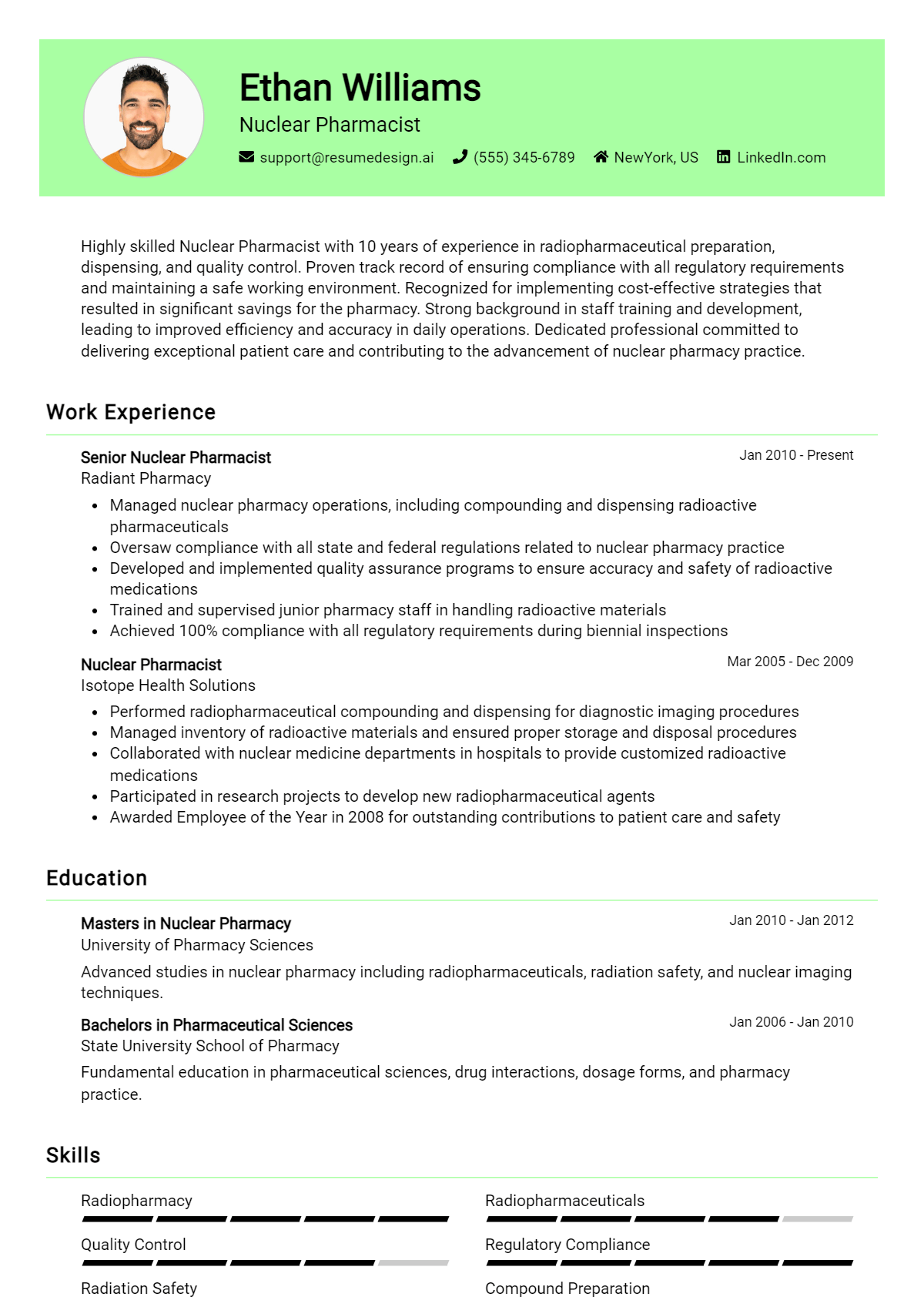
In the highly specialized field of nuclear pharmacy, preparing for a job interview requires a solid understanding of both pharmaceutical practices and the unique challenges associated with radioactive materials. As a nuclear pharmacist, you will be responsible for compounding and dispensing radiopharmaceuticals, ensuring patient safety, and adhering to strict regulatory guidelines. Mastering the interview process is essential to showcase your expertise and commitment to this critical role in healthcare.
Here is a list of common job interview questions for nuclear pharmacists, along with examples of the best answers. These questions cover your work history and experience in nuclear pharmacy, what you have to offer the employer in terms of skills and knowledge, and your goals for the future, ensuring you present yourself as an ideal candidate for the position.
1. What inspired you to become a Nuclear Pharmacist?
My fascination with radiopharmaceuticals and their critical role in patient diagnostics drove me to this field. I wanted to blend my passion for chemistry with a desire to contribute to healthcare, ensuring safe and effective medication for patients undergoing nuclear imaging.
Example:
I was captivated by the intersection of chemistry and medicine, particularly how radiopharmaceuticals enhance diagnostic accuracy. My internship in a nuclear pharmacy during college solidified my commitment to this specialized field.
2. Can you explain the process of preparing radiopharmaceuticals?
Preparing radiopharmaceuticals involves several critical steps: ensuring compliance with regulatory standards, conducting quality control tests, and safely handling radioactive materials. I meticulously follow protocols to guarantee the medications are both effective and safe for patient use.
Example:
I begin by reviewing the prescription, preparing the radiopharmaceutical in a controlled environment, and performing rigorous quality control tests to confirm its potency and purity before the final dispensation.
3. How do you ensure safety when handling radioactive materials?
Safety is paramount in nuclear pharmacy. I adhere to strict protocols, use protective equipment, and maintain a sterile environment. Regular training keeps me updated on best practices, ensuring both my safety and that of my colleagues and patients.
Example:
I consistently use lead shields, dosimeters, and follow proper disposal methods for waste. Regular safety drills and compliance checks are part of my routine to ensure a safe working environment.
4. Describe a challenging situation you faced in your previous role.
Once, we encountered a supply chain disruption for a crucial radiopharmaceutical. I proactively collaborated with suppliers and coordinated with the medical team to find alternatives, ensuring patient care was not compromised and minimizing delays.
Example:
During a radiopharmaceutical shortage, I quickly identified substitute agents, communicated with the healthcare team, and ensured patients continued receiving necessary imaging without significant delay.
5. What role does quality control play in your work?
Quality control is essential in nuclear pharmacy. I conduct thorough testing to verify the integrity, potency, and safety of each batch of radiopharmaceuticals, ensuring compliance with established guidelines to protect patient health.
Example:
I implement rigorous quality control measures, including radioactivity checks and sterility tests, to confirm that every product meets regulatory standards before administration to patients.
6. How do you stay current with advancements in nuclear pharmacy?
I regularly attend seminars, read industry journals, and participate in professional organizations. Networking with peers and engaging in continuous education helps me stay informed about emerging technologies and best practices in nuclear pharmacy.
Example:
I subscribe to relevant journals and attend conferences annually to learn about the latest research and innovations in radiopharmaceuticals and nuclear medicine.
7. Can you discuss your experience with patient counseling?
Patient counseling is vital. I explain the purpose and administration of radiopharmaceuticals, addressing concerns and ensuring patients understand the procedure. Clear communication helps alleviate anxiety and promotes adherence to treatment protocols.
Example:
I take the time to inform patients about what to expect during the procedure, emphasizing safety and answering any questions they may have to enhance their comfort and cooperation.
8. What do you consider the biggest challenge in nuclear pharmacy today?
One major challenge is navigating regulatory changes and ensuring compliance while maintaining high standards of patient care. Staying informed and adaptable is crucial to meet these evolving demands in our field.
Example:
The rapid pace of technological advancements and regulatory requirements can be daunting. I focus on continuous education and proactive compliance strategies to meet these challenges effectively.
9. How do you ensure the safe handling and disposal of radioactive materials?
I prioritize safety by adhering to strict protocols, using protective equipment, and conducting regular training sessions. I also maintain clear documentation of disposal methods to comply with regulatory standards, ensuring minimal environmental impact.
Example:
I conduct regular training on safety protocols and ensure all staff follow them. Additionally, I maintain a detailed log for disposal processes to ensure compliance and minimize risks associated with radioactive waste management.
10. Can you explain the importance of quality control in nuclear pharmacy?
Quality control is essential in nuclear pharmacy to ensure the safety and efficacy of radiopharmaceuticals. Regular testing and calibration of equipment help prevent errors, ensuring that patients receive accurate dosages and reducing the risk of adverse effects.
Example:
Quality control is crucial to assure the accuracy of dosages and the safety of radiopharmaceuticals. I implement strict testing protocols to monitor equipment and products, thus minimizing the chances of errors and enhancing patient care.
11. Describe a challenging situation you faced in your role and how you managed it.
I once encountered a discrepancy in a radiopharmaceutical’s dosage during preparation. I immediately halted the process, reassessed the calculations, and confirmed with my team. This proactive approach ensured patient safety and reinforced our commitment to quality.
Example:
I discovered a dosage discrepancy while preparing a radiopharmaceutical. I paused the process, reviewed the calculations, and consulted my team. This ensured we corrected the error promptly, prioritizing patient safety and reinforcing our quality control measures.
12. How do you stay current with the latest advancements in nuclear pharmacy?
I regularly attend workshops, subscribe to professional journals, and participate in online forums. Networking with colleagues and attending conferences also helps me stay informed about emerging technologies and practices within the field of nuclear pharmacy.
Example:
I stay updated by attending relevant workshops and reading professional journals. Engaging with peers through conferences and online forums also allows me to share insights and learn about the latest advancements in nuclear pharmacy.
13. What steps do you take to ensure compliance with regulatory standards?
I ensure compliance by regularly reviewing regulations and guidelines from bodies like the NRC and FDA. Additionally, I conduct internal audits, provide staff training, and maintain accurate documentation to align our practices with legal requirements.
Example:
To ensure compliance, I stay informed about regulations and conduct regular audits. I also provide staff training on compliance issues and maintain meticulous records to adhere to standards set by regulatory bodies like the NRC and FDA.
14. How do you handle potential contamination incidents in the pharmacy?
In the event of contamination, I follow established protocols, immediately isolating the area and using appropriate decontamination procedures. I also notify the relevant authorities and conduct a thorough investigation to prevent future occurrences and ensure staff safety.
Example:
If contamination occurs, I quickly isolate the affected area and follow decontamination protocols. I then report the incident to management and investigate to enhance our practices and prevent similar situations in the future.
15. How do you prioritize tasks when working in a fast-paced environment?
I prioritize tasks by assessing urgency and impact on patient care. I utilize checklists and collaborate with my team to ensure efficient workflow while maintaining quality standards. This approach helps me manage time effectively and meet deadlines.
Example:
In a fast-paced environment, I assess tasks based on urgency and patient impact. I use checklists and communicate with my team to ensure we remain focused and efficient while maintaining quality in our work.
16. What role does patient consultation play in your responsibilities as a nuclear pharmacist?
Patient consultation is crucial to ensure proper understanding of radiopharmaceuticals. I provide information on dosage, side effects, and safety measures to empower patients, enhancing their treatment experience and ensuring adherence to therapy.
Example:
Patient consultation is vital to explain the use and safety of radiopharmaceuticals. I ensure patients understand their treatment, including dosages and potential side effects, which helps improve their compliance and overall experience with therapy.
17. How do you ensure the safe handling and disposal of radioactive materials?
I follow strict protocols and regulations, utilizing shielding, containment, and designated disposal methods for radioactive waste. Regular training and audits help maintain compliance and safety standards within the pharmacy.
Example:
I ensure safety by using appropriate PPE, following waste disposal protocols, and conducting regular safety audits to confirm compliance with regulatory standards.
18. Can you describe your experience with quality control in radiopharmaceuticals?
Quality control involves verifying the integrity and potency of radiopharmaceuticals through testing and documentation. I have experience implementing standard operating procedures to ensure consistent quality and compliance with regulatory requirements.
Example:
I routinely conduct potency tests and maintain meticulous documentation to ensure each batch of radiopharmaceuticals meets our quality standards and regulatory requirements.
19. How do you stay updated on advancements in nuclear pharmacy?
I subscribe to relevant journals, attend conferences, and engage in professional organizations to stay informed about the latest research, technologies, and regulations in nuclear pharmacy.
Example:
I regularly read industry journals and participate in webinars to keep abreast of new developments and best practices in nuclear pharmacy.
20. What steps do you take to educate healthcare professionals about nuclear medicine?
I conduct training sessions, provide informational materials, and engage in one-on-one discussions to educate healthcare professionals about the benefits, risks, and administration of nuclear medicine.
Example:
I organize workshops and create easy-to-understand guides to help healthcare professionals better understand nuclear medicine applications and safety protocols.
21. Describe a time when you had to troubleshoot a problem with a radiopharmaceutical.
I encountered a quality issue with a batch of radiopharmaceuticals. By analyzing the manufacturing process and conducting tests, I identified the problem and implemented corrective actions, ensuring patient safety and compliance.
Example:
Once, I noticed a discrepancy in purity results. I reviewed the process and discovered a calibration error, which I promptly corrected to ensure safety and compliance.
22. How do you prioritize tasks in a busy pharmacy environment?
I prioritize tasks based on urgency and patient needs, utilizing a task management system to ensure timely and effective service. Communication with the team helps to delegate and manage workload efficiently.
Example:
I categorize tasks by urgency and importance, focusing on patient-critical tasks first while keeping team members informed to streamline operations.
23. What role does teamwork play in nuclear pharmacy?
Teamwork is crucial in nuclear pharmacy for ensuring patient safety and compliance. Effective collaboration with colleagues optimizes workflow, enhances communication, and fosters a culture of shared responsibility for quality care.
Example:
Teamwork is essential; we regularly collaborate to share knowledge and ensure every aspect of patient care and safety is addressed.
24. How do you handle stress during high-pressure situations?
I manage stress by staying organized, focusing on tasks at hand, and utilizing stress-relief techniques such as deep breathing. Effective communication with my team is also key to maintaining a calm work environment.
Example:
In high-pressure situations, I prioritize tasks and use deep breathing techniques to stay focused, ensuring I deliver safe and effective care.
25. What safety protocols do you follow when handling radioactive materials?
I adhere to strict safety protocols, including wearing personal protective equipment, using shielded containers, and following established procedures for waste disposal. Regular training ensures I stay updated on safety regulations and best practices to minimize exposure to radiation.
Example:
I always wear lead aprons and gloves when handling radioactive materials, and I conduct regular audits of my work area to ensure compliance with safety standards, protecting both myself and my colleagues from unnecessary exposure.
26. How do you manage the inventory of radioactive drugs?
I utilize a comprehensive inventory management system to track the quantities, expiration dates, and storage conditions of radioactive drugs. This allows me to ensure timely reordering and minimize waste while maintaining compliance with regulatory requirements.
Example:
I implement a digital inventory system that alerts me when drug stocks are low or nearing expiration, ensuring that we always have the necessary supplies while adhering to safety protocols and regulatory guidelines.
27. Can you describe a challenging situation you faced in your role and how you resolved it?
Once, I encountered a discrepancy in a radioactive drug’s dosage. I immediately halted its use, investigated the issue, and corrected the dosage based on manufacturer guidelines. I also updated our protocols to prevent similar occurrences in the future.
Example:
I discovered a dosage error during a routine check. I quickly communicated with the medical team, resolved the issue, and implemented additional checks to enhance our processes, ensuring patient safety was never compromised.
28. How do you ensure compliance with federal and state regulations?
I stay informed about evolving regulations by attending workshops and reviewing updates from regulatory agencies. I also conduct regular audits to ensure our practices align with federal and state guidelines, fostering a culture of compliance within the pharmacy.
Example:
By subscribing to relevant newsletters and attending compliance training, I ensure my knowledge of regulations is current. Additionally, I perform routine audits to verify that our operations meet all necessary legal requirements.
29. What role does quality control play in nuclear pharmacy?
Quality control is essential in nuclear pharmacy to ensure the safety and efficacy of radioactive drugs. I perform rigorous testing and validation processes, including checking for contamination and potency, to guarantee that all products meet the highest standards before distribution.
Example:
I regularly conduct quality control tests on our radioactive compounds, ensuring they meet safety standards. This involves evaluating samples for contamination and potency, thus safeguarding patient health and maintaining our pharmacy's reputation.
30. How do you educate healthcare professionals about the use of nuclear medicine?
I conduct regular training sessions and workshops for healthcare professionals, covering the benefits and risks of nuclear medicine. I also provide detailed information about dosage and administration, ensuring they feel confident in incorporating these therapies into patient care.
Example:
I organize quarterly workshops for clinicians, focusing on the applications of nuclear medicine. This helps them understand the protocols and improves their confidence when discussing treatment options with patients.
31. Describe your experience with radiation safety training.
I have conducted and participated in multiple radiation safety training programs, focusing on best practices for handling radioactive materials. This experience has equipped me with the knowledge to train others effectively, ensuring a safe work environment for all staff.
Example:
I have led annual radiation safety training sessions, covering the latest safety protocols and emergency procedures, ensuring all team members are well-equipped to handle radioactive materials safely.
32. What strategies do you use to stay updated on advancements in nuclear pharmacy?
I engage in continuous education through online courses, attend industry conferences, and subscribe to professional journals. Networking with peers also helps me stay informed about the latest research and innovations in nuclear pharmacy.
Example:
I regularly attend webinars and industry conferences, and I’m a member of professional organizations, which provide valuable insights into the latest advancements and research in nuclear pharmacy.
33. How do you ensure the accuracy of your radiopharmaceutical preparations?
I follow strict protocols, including double-checking calculations and using calibrated equipment. I also implement quality assurance measures such as regular equipment maintenance and participate in peer reviews to ensure adherence to standards.
Example:
I always double-check my calculations and utilize standardized procedures. Additionally, I conduct routine quality control tests to verify the integrity of the radiopharmaceuticals before they are dispensed.
34. Describe your experience with radiation safety protocols.
I have extensive experience in implementing radiation safety protocols, including personal protective equipment usage, monitoring radiation exposure, and maintaining secure storage for radioactive materials. I conduct training sessions for staff to ensure compliance and safety.
Example:
In my previous role, I developed safety training programs that emphasized proper handling and disposal of radioactive materials, significantly reducing incidents of exposure among staff.
35. How do you stay updated on advancements in nuclear pharmacy?
I regularly attend professional conferences, participate in continuing education courses, and read relevant journals. Networking with colleagues also helps me stay informed about the latest research and technological advancements in the field.
Example:
I subscribe to several industry publications and engage in online forums. I also attend annual conferences to learn about new developments and share insights with other professionals.
36. Can you explain the importance of quality assurance in nuclear pharmacy?
Quality assurance is critical in nuclear pharmacy to ensure patient safety and efficacy of treatments. It involves systematic processes that verify the quality of radiopharmaceuticals, preventing errors and ensuring compliance with regulations and standards.
Example:
Quality assurance helps prevent adverse events by ensuring the integrity of our products. It’s essential for maintaining compliance with regulatory agencies like the FDA and ensuring patient safety.
37. What challenges have you faced in nuclear pharmacy, and how did you overcome them?
One challenge was managing hazardous waste disposal. I developed a streamlined protocol that ensured compliance with regulations while minimizing costs. This involved staff training and collaboration with waste management services.
Example:
I faced difficulties in waste management compliance. By creating a clear protocol and training my team, we improved our disposal processes and maintained regulatory compliance.
38. How do you handle discrepancies in radiopharmaceutical inventory?
I investigate discrepancies promptly by reviewing inventory logs and conducting a physical count. I also implement corrective measures to prevent future discrepancies, such as enhancing the tracking system and staff training.
Example:
When discrepancies arise, I conduct an immediate audit of inventory records and physical counts, and implement improved tracking protocols to minimize future issues.
39. What role does teamwork play in your daily responsibilities as a Nuclear Pharmacist?
Teamwork is essential in nuclear pharmacy; it facilitates communication and collaboration among pharmacists, technicians, and healthcare providers. I ensure all team members are informed about protocols and any changes to improve workflow and safety.
Example:
Collaboration with my team ensures that we all adhere to safety protocols and share knowledge, which ultimately enhances patient care and operational efficiency.
40. How do you manage stress in a fast-paced nuclear pharmacy environment?
I prioritize tasks and maintain a well-organized workspace to manage stress effectively. I also practice mindfulness techniques and encourage open communication among team members to support one another during high-pressure situations.
Example:
By staying organized and practicing mindfulness, I effectively manage stress. I also foster a supportive team environment where we can share challenges and solutions.
41. Can you describe your experience with radiation safety protocols?
I have extensive training in radiation safety, implementing protocols to minimize exposure. In my previous role, I regularly conducted safety audits and trained staff, ensuring compliance with regulations while maintaining a safe environment for both patients and healthcare professionals.
Example:
In my last position, I revised our radiation safety procedures, resulting in a 20% reduction in exposure incidents. I conducted training sessions that enhanced staff awareness and compliance, which was crucial for maintaining a safe practice.
42. How do you ensure the accuracy of radiopharmaceutical dosages?
I utilize precise measurement techniques and double-check calculations using established protocols. Regular calibrations of equipment and peer reviews are essential practices I follow to ensure dosages are accurate, ultimately ensuring patient safety and treatment efficacy.
Example:
In my role, I implemented a double-check system for dosage calculations. This reduced our error rates significantly, ensuring patients received the correct amount for their treatments, which was crucial for their health outcomes.
43. What challenges have you faced in nuclear pharmacy, and how did you overcome them?
One significant challenge was managing the supply chain for radioactive materials. I established strong relationships with suppliers and implemented a tracking system, which improved communication and ensured timely delivery, reducing disruptions in patient care.
Example:
When faced with supply shortages, I coordinated with multiple suppliers and optimized our inventory management, ensuring we maintained critical stock levels. This proactive approach minimized delays in patient treatment.
44. Can you discuss your experience with patient education regarding radiopharmaceuticals?
I prioritize patient education by providing clear, concise information about their treatments. I’ve developed educational materials and conduct one-on-one sessions to address concerns, ensuring patients understand the benefits and side effects of radiopharmaceuticals for informed decision-making.
Example:
I created an informative brochure about radiopharmaceuticals, which I review with patients. This resource has improved their understanding and comfort level, reducing anxiety and enhancing compliance with treatment plans.
45. How do you stay updated with the latest developments in nuclear pharmacy?
I actively participate in professional organizations and attend conferences to stay current with advancements in nuclear pharmacy. Additionally, I subscribe to relevant journals and engage in online forums to share insights and learn from colleagues in the field.
Example:
By attending annual nuclear pharmacy conferences and participating in webinars, I stay informed of industry trends. This continuous learning helps me implement best practices and improve patient care in my role.
46. Describe a situation where you had to work collaboratively with a medical team.
In a multidisciplinary team setting, I collaborated closely with radiologists and oncologists to develop treatment plans. Open communication and sharing expertise resulted in tailored therapeutic approaches, maximizing treatment efficacy while ensuring patient safety and satisfaction.
Example:
During a complex case, I worked with oncologists to adjust radiopharmaceutical dosages based on patient response. Our collaborative approach led to a successful treatment outcome and improved patient quality of life.
How Do I Prepare For A Nuclear Pharmacist Job Interview?
Preparing for a job interview is crucial in making a positive impression on the hiring manager and showcasing your qualifications for the Nuclear Pharmacist role. Being well-prepared not only boosts your confidence but also demonstrates your commitment to the position. Here are some key preparation tips to help you succeed:
- Research the company and its values to understand its mission and how you can contribute.
- Practice answering common interview questions specific to the Nuclear Pharmacist role.
- Prepare examples that demonstrate your skills and experience relevant to nuclear pharmacy.
- Review current regulations and advancements in nuclear pharmacy to discuss during the interview.
- Familiarize yourself with the equipment and technology commonly used in nuclear pharmacy practice.
- Dress professionally and ensure you have all necessary documents, such as your resume and certifications, ready for the interview.
- Plan questions to ask the interviewer about the role and the organization to show your genuine interest.
Frequently Asked Questions (FAQ) for Nuclear Pharmacist Job Interview
Preparing for a job interview can be a daunting task, especially in specialized fields like nuclear pharmacy. Understanding the common questions that may arise can help you feel more confident and ready to present your qualifications effectively. Below are frequently asked questions that you may encounter during a Nuclear Pharmacist job interview, along with practical advice for each.
What should I bring to a Nuclear Pharmacist interview?
When attending a Nuclear Pharmacist interview, it's essential to bring several key items. Start with multiple copies of your resume, a list of references, and any relevant certifications or licenses. Having a notepad and pen can also be helpful for taking notes during the interview. Additionally, consider bringing questions you have about the position or the company, as this demonstrates your interest and engagement in the opportunity.
How should I prepare for technical questions in a Nuclear Pharmacist interview?
Technical questions in a Nuclear Pharmacist interview will likely focus on your understanding of radiopharmaceuticals, safety protocols, and regulatory compliance. To prepare, review your coursework and any relevant clinical experiences. Familiarize yourself with current trends and advancements in nuclear pharmacy. It may also be beneficial to practice with colleagues or mentors, as discussing these topics can help reinforce your knowledge and boost your confidence.
How can I best present my skills if I have little experience?
If you have limited experience, focus on showcasing your education, internships, or any relevant volunteer work. Highlight transferable skills such as attention to detail, strong communication, and teamwork. Use specific examples from your academic projects or training that demonstrate your ability to learn quickly and adapt to new situations. Conveying a positive attitude and a willingness to learn can also leave a strong impression on interviewers.
What should I wear to a Nuclear Pharmacist interview?
Dress professionally for your Nuclear Pharmacist interview to create a positive first impression. A business suit or professional attire is generally appropriate. Opt for neutral colors and ensure your clothing is clean and well-fitted. Pay attention to grooming and accessories, as a polished appearance reflects your seriousness about the position. When in doubt, it's better to be slightly overdressed than underdressed.
How should I follow up after the interview?
Following up after your interview is an important step to demonstrate your interest in the position. Send a thank-you email within 24 hours, expressing gratitude for the opportunity to interview and reiterating your enthusiasm for the role. Mention specific points discussed during the interview to personalize your message. This follow-up not only shows your professionalism but also keeps you top-of-mind for the hiring team.
Conclusion
In summary, this interview guide for the Nuclear Pharmacist role has covered essential aspects such as key competencies, common interview questions, and effective preparation strategies. Emphasizing the importance of preparation and practice, candidates can significantly enhance their ability to demonstrate relevant skills and knowledge during the interview process. Additionally, being well-prepared for both technical and behavioral questions can greatly improve a candidate's chances of success.
As you move forward, take advantage of the tips and examples provided in this guide to confidently approach your interviews. Remember, every bit of preparation counts, and with dedication, you can make a lasting impression.
For further assistance, check out these helpful resources: resume templates, resume builder, interview preparation tips, and cover letter templates.