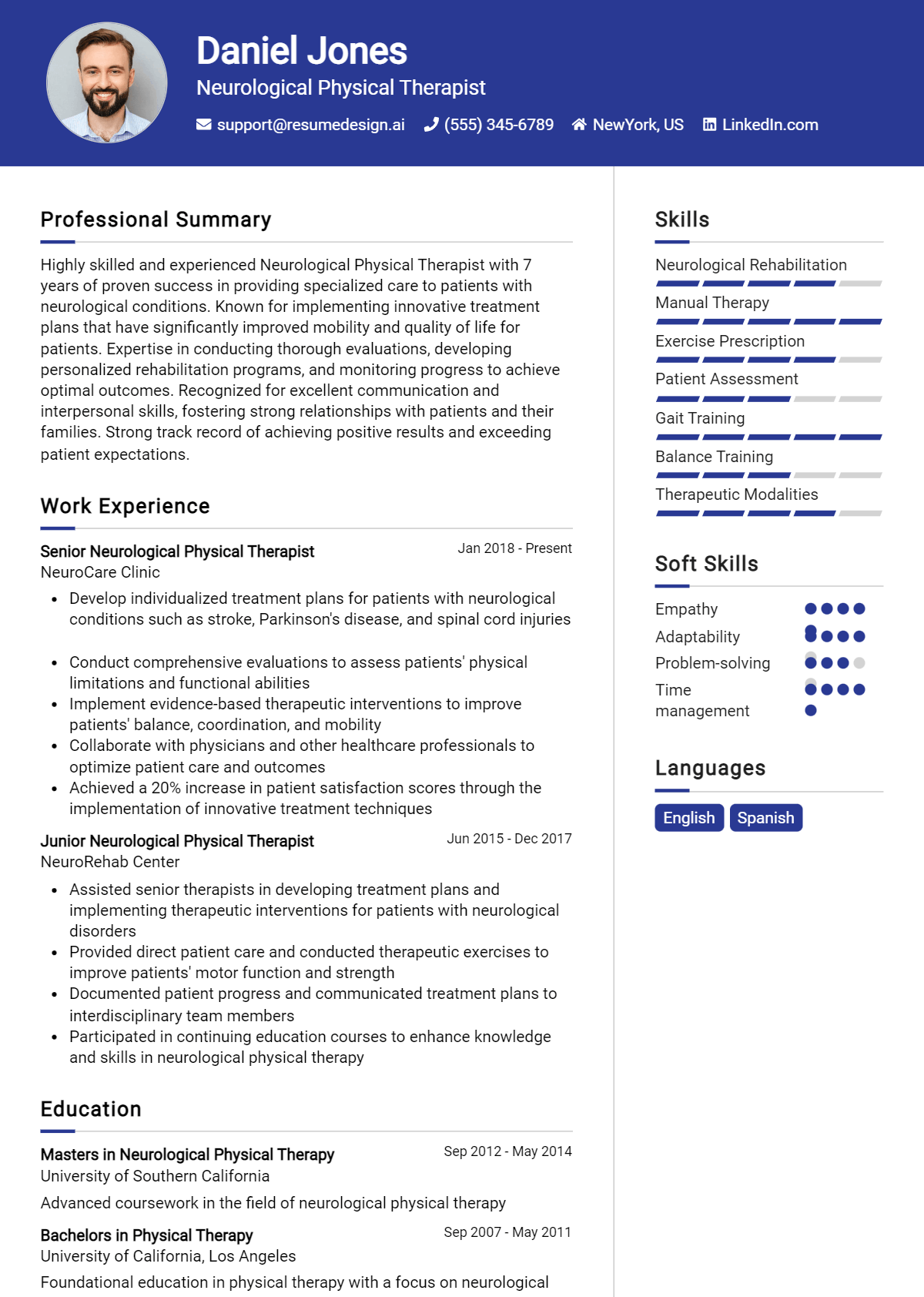
Top Job Interview Questions for Neurological Physical Therapist
Preparing for a job interview as a Neurological Physical Therapist requires a solid understanding of both clinical expertise and the specific demands of the role. Being well-versed in the common questions you may encounter can help you articulate your experience and demonstrate your passion for helping patients with neurological conditions. This section aims to equip you with insight into the types of questions that may arise during your interview, along with effective strategies for answering them.
Here is a list of common job interview questions, with examples of the best answers. These questions cover your work history and experience, what you have to offer the employer, and your goals for the future. For instance, you might be asked about your most challenging case involving a neurological patient, how you approach treatment planning, or your familiarity with the latest rehabilitation techniques. Being prepared with thoughtful responses will not only highlight your qualifications but also showcase your commitment to the field of neurological therapy.
1. Can you describe your experience working with neurological patients?
I have over five years of experience treating patients with various neurological conditions, including stroke and spinal cord injuries. My roles included assessing motor function, designing personalized therapy plans, and collaborating with multidisciplinary teams to achieve optimal recovery outcomes.
Example:
I worked in a rehabilitation center where I specialized in stroke recovery, utilizing techniques like Neuro-Developmental Treatment and functional training to help patients regain independence.
2. How do you approach the assessment of a new neurological patient?
I start with a comprehensive evaluation that includes a thorough medical history, physical examination, and standardized assessment tools. This helps me identify the patient’s strengths, weaknesses, and specific goals, allowing me to tailor an effective treatment plan.
Example:
For example, I use the Berg Balance Scale to assess balance and mobility, which guides my therapy interventions for patients with Parkinson's disease.
3. What treatment techniques do you find most effective for neurological rehabilitation?
I often utilize task-oriented training and motor learning principles, focusing on repetitive practice of functional tasks. Techniques such as constraint-induced movement therapy and electrical stimulation can also enhance recovery, depending on the patient's specific needs and condition.
Example:
For instance, I implemented constraint-induced movement therapy for a stroke patient, which significantly improved their hand function and overall quality of life.
4. How do you stay current with advancements in neurological rehabilitation?
I regularly attend workshops, participate in continuing education courses, and subscribe to relevant journals. Networking with other professionals and engaging in online forums also helps me stay updated on the latest research and treatment modalities in neurological rehabilitation.
Example:
Recently, I attended a conference on neuroplasticity, which provided valuable insights into innovative therapy techniques that I now incorporate into my practice.
5. Can you discuss a challenging case and how you handled it?
I once treated a patient with severe spasticity post-stroke, which limited mobility. I collaborated with occupational therapists and adjusted the treatment plan, incorporating stretching, positioning, and assistive devices to improve their functionality and comfort effectively.
Example:
By utilizing a combination of manual therapy and adaptive equipment, the patient was able to regain some independence in daily activities.
6. How do you educate patients and their families about their conditions?
I prioritize clear communication, using visual aids and straightforward language to explain diagnoses and treatment plans. I also encourage questions and involve family members in the rehabilitation process to ensure they understand how to support the patient at home.
Example:
For a patient with multiple sclerosis, I provided educational materials and held a family meeting to discuss strategies for managing symptoms effectively.
7. What role does goal setting play in your treatment approach?
Goal setting is crucial in my approach, as it aligns the therapy with the patient's personal aspirations. I ensure that goals are specific, measurable, attainable, relevant, and time-bound (SMART), which helps track progress and maintain motivation throughout the rehabilitation process.
Example:
For instance, I set a goal for a stroke patient to walk independently within three months, adjusting the plan as needed to keep them engaged and progressing.
8. How do you handle emotional and psychological challenges faced by patients?
I recognize that neurological conditions can lead to emotional distress. I actively listen to patients, provide emotional support, and refer them to counseling when necessary. Building a trusting relationship fosters open communication and helps address these challenges effectively.
Example:
For a patient struggling with depression post-injury, I worked closely with a psychologist to integrate emotional support into their physical therapy sessions.
9. How do you approach developing a treatment plan for a patient with a neurological condition?
I start by conducting a thorough assessment of the patient’s condition, including their medical history and current capabilities. I then collaborate with them to set realistic goals and integrate evidence-based interventions tailored to their individual needs and progress.Example: I focus on patient-centered care, ensuring the plan is adaptable and regularly reviewed to meet evolving goals.
10. Can you describe a challenging case you managed and how you approached it?
I once worked with a patient who had severe spasticity following a stroke. I implemented a combination of stretching techniques and functional mobility training, adjusting the approach based on their feedback and progress to enhance their independence.Example: This tailored approach resulted in significant functional gains and improved their quality of life.
11. What techniques do you utilize to motivate patients during therapy?
I use positive reinforcement, setting achievable short-term goals, and celebrating small successes. Building a rapport and understanding their personal motivations allows me to tailor my approach and keep them engaged throughout their rehabilitation journey.Example: To maintain motivation, I incorporate activities that align with their interests, making therapy enjoyable.
12. How do you stay current with advancements in neurological rehabilitation?
I regularly attend professional workshops, participate in webinars, and read the latest research journals. Networking with colleagues and specialists also provides insights into innovative practices and techniques in neurological rehabilitation.Example: Staying informed allows me to integrate new evidence-based methods into my treatment plans effectively.
13. Describe your experience with assistive technology in therapy.
I have utilized various assistive devices, such as gait trainers and adaptive tools, to enhance patient mobility and functional independence. I assess each patient’s needs to determine the appropriate technology that can support their rehabilitation goals.Example: Using these technologies has significantly increased patient engagement and outcomes during therapy.
14. How do you handle conflicts or disagreements with patients or their families?
I prioritize open communication and active listening. When disagreements arise, I calmly discuss concerns and provide evidence-based information while considering their preferences. My goal is to collaboratively find a resolution that aligns with the patient’s best interests.Example: This approach fosters trust and enhances the therapeutic relationship.
15. What role does interdisciplinary collaboration play in your practice?
Interdisciplinary collaboration is essential for comprehensive patient care. I regularly communicate with physicians, occupational therapists, and speech therapists to ensure a holistic approach. This teamwork enhances treatment efficacy and promotes better patient outcomes.Example: Collaborative efforts lead to more cohesive care plans that address all aspects of the patient’s rehabilitation.
16. How do you track and measure patient progress?
I utilize standardized assessments, personal goal setting, and regular progress reviews to track patient improvements. Documenting outcomes and adjusting treatment plans accordingly ensures that therapy remains effective and aligned with rehabilitation goals.Example: This systematic approach helps me identify areas needing further focus, enhancing overall treatment effectiveness.
17. How do you approach goal setting for your patients?
I prioritize patient-centered goals by collaborating with patients to understand their motivations and capabilities. I utilize SMART criteria to ensure that goals are Specific, Measurable, Achievable, Relevant, and Time-bound, which fosters motivation and tracks progress effectively.
Example:
For instance, when working with a stroke patient, I set a goal for them to regain the ability to walk 50 feet independently within 8 weeks, adjusting as needed based on their progress.
18. Can you describe a challenging case you handled?
I once worked with a patient who experienced severe spasticity post-stroke. I collaborated with the interdisciplinary team to implement a tailored stretching and strengthening program, which gradually improved their range of motion and function, showcasing the importance of teamwork and adaptability.
Example:
This approach helped the patient achieve significant mobility improvements, ultimately enhancing their daily living activities and quality of life.
19. What techniques do you use to educate patients and their families?
I use visual aids, demonstrations, and hands-on practice to effectively educate patients and their families. I encourage questions and provide clear, concise explanations to ensure understanding, fostering a supportive learning environment that empowers them in their recovery.
Example:
For instance, I demonstrate exercises while explaining their benefits, allowing family members to assist in the rehabilitation process, which enhances patient engagement.
20. How do you stay current with advancements in neurological rehabilitation?
I regularly attend workshops, webinars, and conferences focused on neurological rehabilitation. Additionally, I subscribe to relevant journals and participate in professional networks, ensuring I remain informed about the latest evidence-based practices and innovative treatment techniques.
Example:
This commitment to continuous learning enables me to integrate new strategies into my practice and improve patient outcomes effectively.
21. How do you assess a patient’s progress?
I assess progress through regular evaluations using standardized assessment tools and by observing functional improvements during therapy sessions. I also gather feedback from patients about their perceived progress, which helps tailor ongoing treatment strategies.
Example:
For instance, I might use the Fugl-Meyer Assessment to quantify motor recovery in stroke patients and adjust therapy goals accordingly.
22. What is your approach to working with patients with cognitive impairments?
I utilize simplified instructions, visual cues, and repetition to engage patients with cognitive impairments. Incorporating familiar tasks and functional activities helps reinforce learning and promotes independence, creating a supportive environment tailored to their unique needs.
Example:
For example, I might use real-life tasks like reaching for objects to practice cognitive and physical skills simultaneously.
23. How do you handle a non-compliant patient?
I first seek to understand the reasons behind the non-compliance, whether they are emotional, cognitive, or physical barriers. Open communication and building rapport are essential to motivate the patient, and I adjust the treatment plan to better align with their needs and preferences.
Example:
For instance, I once worked with a patient who feared pain during exercises; addressing their concerns led to increased participation and progress.
24. Describe your experience with assistive devices.
I have extensive experience assessing and recommending assistive devices, such as walkers, splints, and adaptive equipment. I ensure patients are properly trained in their use to maximize independence and safety, tailoring recommendations to fit each individual’s unique needs.
Example:
For example, I guided a Parkinson's patient in using a walker to improve stability and confidence while walking, which significantly enhanced their mobility.
25. How do you assess a patient's progress during therapy sessions?
I utilize various assessment tools, including standardized tests and functional evaluations. Regularly tracking metrics such as range of motion and strength helps me adjust treatment plans effectively. I also engage patients in discussions about their perceived progress to ensure a holistic approach.
Example:
I assess progress using tools like the Fugl-Meyer Assessment and track improvements in strength and mobility. Regular feedback sessions with patients also help gauge their feelings about progress, allowing me to tailor interventions accordingly.
26. Can you describe a challenging case you managed and the outcome?
I once treated a stroke patient with severe spasticity. I implemented a combination of manual therapy, stretching, and functional tasks. Through perseverance and regular reassessment, the patient regained significant mobility and independence, which was incredibly rewarding for both of us.
Example:
A stroke patient faced severe spasticity, hindering mobility. I integrated manual therapy and tailored exercise regimens. Over time, the patient regained mobility and improved independence, demonstrating the effectiveness of a personalized therapy approach in neurological rehabilitation.
27. What strategies do you use to motivate patients in their therapy?
I build rapport with my patients, setting achievable goals and celebrating small victories. I also incorporate their interests into therapy activities, making sessions enjoyable. Regularly revisiting their progress helps keep them motivated and engaged in their rehabilitation journey.
Example:
To motivate patients, I set short-term, achievable goals and celebrate their progress. I personalize therapy by incorporating their hobbies into sessions, making the process enjoyable and relevant, which enhances their commitment to rehabilitation.
28. How do you stay current with advancements in neurological rehabilitation?
I regularly attend professional workshops, webinars, and conferences. I also subscribe to relevant journals and participate in online forums. Networking with colleagues helps me exchange insights and stay informed about the latest evidence-based practices in neurological rehabilitation.
Example:
I keep updated by attending conferences and subscribing to journals related to neurological rehabilitation. Joining professional networks also allows me to share insights and learn about the latest evidence-based practices in the field.
29. Describe your experience with assistive technologies in therapy.
I have utilized various assistive technologies such as gait trainers and adaptive devices to enhance patient mobility and independence. I assess each patient’s needs to select appropriate tools that facilitate their rehabilitation and improve their quality of life.
Example:
I’ve used gait trainers and adaptive devices to support patients in their mobility goals. By carefully assessing individual needs, I ensure that the chosen technologies effectively assist in their rehabilitation process and enhance independence.
30. How do you handle communication with patients who have cognitive impairments?
I simplify my language and use visual aids to enhance understanding. Patience is key; I allow extra time for responses and encourage family involvement in communication. Ensuring a supportive environment fosters better relationships and facilitates effective therapy.
Example:
I adapt my communication by using simple language and visual aids. I also encourage family involvement and give patients ample time to respond, creating a supportive atmosphere that enhances their understanding and engagement during therapy.
31. What role does family involvement play in your therapy sessions?
Family involvement is crucial in my therapy sessions. I educate family members about the rehabilitation process and encourage their participation in exercises. This support system fosters motivation, continuity in home exercises, and a comprehensive understanding of the patient's needs.
Example:
I actively involve family members by educating them about the therapy process and encouraging their participation in exercises. This collaboration not only motivates the patient but also ensures consistency in rehabilitation efforts at home.
32. How do you approach interdisciplinary collaboration in patient care?
I prioritize communication with other healthcare professionals, sharing updates and insights about patient progress. Regular team meetings allow us to align our goals and create cohesive care plans. This interdisciplinary approach enhances patient outcomes and ensures comprehensive support.
Example:
I foster interdisciplinary collaboration by maintaining open communication with other healthcare providers. Regular meetings facilitate sharing patient insights and aligning goals, which ultimately enhances patient outcomes and ensures a holistic approach to care.
33. How do you approach goal-setting with your patients?
I believe in collaborative goal-setting, where I involve the patient in the process. This ensures that their personal aspirations are met, while also aligning with clinical objectives. I regularly assess and adjust these goals based on progress and feedback.
Example:
For instance, I collaborated with a stroke patient to set realistic mobility goals, which motivated her to engage actively in therapy and achieve milestones faster.
34. Can you describe a challenging case you managed?
One challenging case involved a patient with Parkinson's disease experiencing severe rigidity. I used a combination of stretching techniques and functional exercises tailored to his abilities. This approach improved his mobility and confidence, demonstrating the importance of individualized care.
Example:
By closely monitoring his progress, I adapted the treatment plan weekly, which played a crucial role in his rehabilitation journey.
35. How do you stay updated with the latest research and techniques in neurological therapy?
I regularly attend workshops, subscribe to relevant journals, and participate in online forums. Networking with other professionals in my field also provides insights into new methodologies and best practices that I can incorporate into my own practice.
Example:
Recently, I attended a conference on advanced neurorehabilitation techniques that inspired me to integrate new strategies into my therapy sessions.
36. How do you handle emotional challenges that patients may face during therapy?
I emphasize open communication, allowing patients to express their feelings. I provide reassurance and support while encouraging resilience through small, achievable goals. This approach helps in building trust and fostering a positive therapeutic relationship.
Example:
For instance, I worked with a patient who was discouraged by slow progress. I celebrated small victories, which helped him regain motivation and hope.
37. What role does family involvement play in your treatment plans?
Family involvement is crucial in neurological rehabilitation. I educate family members about the patient's condition and involve them in therapy sessions. This support system enhances the patient's motivation and compliance with the treatment plan.
Example:
In one case, involving the family allowed them to reinforce exercises at home, significantly improving the patient's progress.
38. How do you assess the progress of your patients?
I use a combination of standardized assessment tools and subjective measures to evaluate progress. Regularly scheduled evaluations help me adjust treatment plans based on the patient's evolving needs and capabilities.
Example:
For instance, I utilized the Fugl-Meyer Assessment to track a stroke patient's recovery, enabling targeted adjustments in therapy.
39. How do you handle conflicts with patients regarding their treatment?
I address conflicts by fostering open dialogue and actively listening to the patient’s concerns. Understanding their perspective helps in collaboratively finding a solution that respects their wishes while ensuring optimal care.
Example:
Once, a patient disagreed with a proposed treatment; after discussing his concerns, we adjusted the plan to include his preferences, which improved cooperation.
40. What strategies do you use to ensure patient safety during therapy?
I prioritize patient safety by conducting thorough evaluations before each session and utilizing assistive devices as necessary. Continuous monitoring during therapy allows me to respond quickly to any safety concerns that arise.
Example:
For example, I always ensure that fall prevention measures are in place, especially for patients with balance issues.
41. How do you approach goal setting with your patients?
I prioritize collaborative goal setting by involving patients in the process. I assess their needs and preferences, ensuring goals are realistic, measurable, and tailored to their conditions. This personalized approach fosters motivation and engagement throughout their rehabilitation journey.
Example:
I always involve my patients in setting their goals, ensuring they are SMART: specific, measurable, achievable, relevant, and time-bound. This helps them stay motivated and feel empowered during their recovery.
42. Can you describe a challenging case you've worked on?
I once treated a stroke patient with significant mobility limitations. By utilizing advanced therapeutic techniques and adaptive equipment, I gradually helped them regain independence. This case taught me the importance of patience and creativity in rehabilitation strategies.
Example:
I worked with a stroke patient who struggled with mobility. Through tailored exercises and assistive devices, we made significant progress, ultimately restoring their ability to walk independently, showcasing the power of persistence and adaptive strategies.
43. How do you stay updated with the latest advancements in neurological rehabilitation?
I regularly attend workshops, webinars, and conferences focused on neurological rehabilitation. Additionally, I subscribe to leading journals and participate in professional networks to exchange knowledge with peers and stay informed about emerging treatments and techniques.
Example:
I attend annual conferences and subscribe to journals related to neurological rehabilitation to stay current. Networking with colleagues also helps me learn about new approaches and evidence-based practices in our field.
44. How do you handle communication with patients who have cognitive impairments?
I use clear, simple language and visual aids to enhance understanding. Patience is key, as I ensure to give patients ample time to process information and respond. Building rapport helps create a comfortable environment for effective communication.
Example:
With cognitively impaired patients, I simplify my language and often use visual aids. I ensure they have enough time to process information, which fosters better communication and comfort during therapy sessions.
45. What strategies do you use to encourage patient adherence to therapy?
I build strong therapeutic relationships by setting realistic expectations and celebrating small victories. I also provide education on the importance of adherence, ensuring patients understand how their efforts directly impact their recovery and overall quality of life.
Example:
I emphasize the importance of adherence by setting achievable goals and celebrating progress. I also explain how their commitment directly influences recovery, which helps motivate them to stay engaged in their therapy.
46. How do you incorporate family support into your treatment plans?
I actively involve family members in the treatment process by educating them on their loved one's condition and therapy goals. I provide guidance on how they can offer support at home, which enhances the overall effectiveness of the rehabilitation program.
Example:
I include family members in discussions about therapy goals and provide them with strategies to support their loved one at home, which significantly enhances patient motivation and success in rehabilitation.
How Do I Prepare For A Neurological Physical Therapist Job Interview?
Preparing for a job interview as a Neurological Physical Therapist is crucial for making a positive impression on the hiring manager. By taking the time to prepare, you can showcase your skills and knowledge effectively, demonstrating your suitability for the role.
- Research the company and its values to understand its mission and goals.
- Review common interview questions specific to physical therapy and neurological rehabilitation.
- Practice answering questions with a focus on your clinical experiences and patient outcomes.
- Prepare examples that demonstrate your skills and experience in treating neurological conditions.
- Familiarize yourself with current trends and advancements in neurological physical therapy.
- Dress professionally and arrive on time to reflect your seriousness about the position.
- Prepare thoughtful questions to ask the interviewer about the team, work environment, and patient care approaches.
Frequently Asked Questions (FAQ) for Neurological Physical Therapist Job Interview
Preparing for a job interview can be a daunting task, especially in a specialized field like neurological physical therapy. Familiarizing yourself with commonly asked questions can help you feel more confident and articulate during your interview. Below are some frequently asked questions that candidates may encounter, along with practical tips on how to approach them.
What should I bring to a Neurological Physical Therapist interview?
When attending an interview for a neurological physical therapist position, it's essential to bring several key items. Prepare a professional portfolio that includes multiple copies of your resume, a list of references, and any relevant certifications or licenses. Additionally, consider bringing a notepad and pen to take notes during the conversation. This preparation not only shows your professionalism but also allows you to actively engage with the interviewer.
How should I prepare for technical questions in a Neurological Physical Therapist interview?
To effectively prepare for technical questions, review the key concepts and practices related to neurological physical therapy. Familiarize yourself with common conditions and treatment techniques, as well as the latest research in the field. Practicing with a mentor or colleague can also help you articulate your knowledge and demonstrate your problem-solving skills. Being able to discuss real-life scenarios or case studies can provide a solid foundation for your responses.
How can I best present my skills if I have little experience?
If you have limited experience, focus on showcasing your transferable skills and relevant education. Highlight any internships, volunteer work, or clinical rotations that demonstrate your commitment and ability to learn. Emphasize your passion for helping patients and your eagerness to grow in the field. Use specific examples from your training to illustrate how you can apply theoretical knowledge to practical situations.
What should I wear to a Neurological Physical Therapist interview?
Choosing the right attire for your interview is crucial as it sets the tone for your professionalism. Opt for business casual or professional clothing that reflects the environment of the facility you are interviewing at. A collared shirt or blouse paired with slacks or a knee-length skirt is generally appropriate. Ensure your clothing is neat and well-fitted, as this demonstrates respect for the interviewers and the position you are applying for.
How should I follow up after the interview?
Following up after your interview is an important step that can reinforce your interest in the position. Send a thank-you email within 24 hours, expressing gratitude for the opportunity to interview and reiterating your enthusiasm for the role. Mention specific points discussed during the interview to personalize your message. This follow-up not only shows your professionalism but also keeps you fresh in the interviewer's mind as they make their decision.
Conclusion
In this interview guide for Neurological Physical Therapists, we have covered essential topics that emphasize the importance of thorough preparation and practice. Demonstrating relevant skills, both in technical and behavioral aspects, is crucial for standing out as a candidate in this specialized field. By preparing for a range of potential questions, candidates can significantly enhance their chances of success during the interview process.
As you approach your upcoming interviews, remember to take advantage of the tips and examples provided in this guide. With the right preparation, you can confidently showcase your expertise and passion for neurological physical therapy. Stay motivated and embrace the opportunity to demonstrate how you can make a positive impact in this rewarding profession.
For further assistance, check out these helpful resources: resume templates, resume builder, interview preparation tips, and cover letter templates.