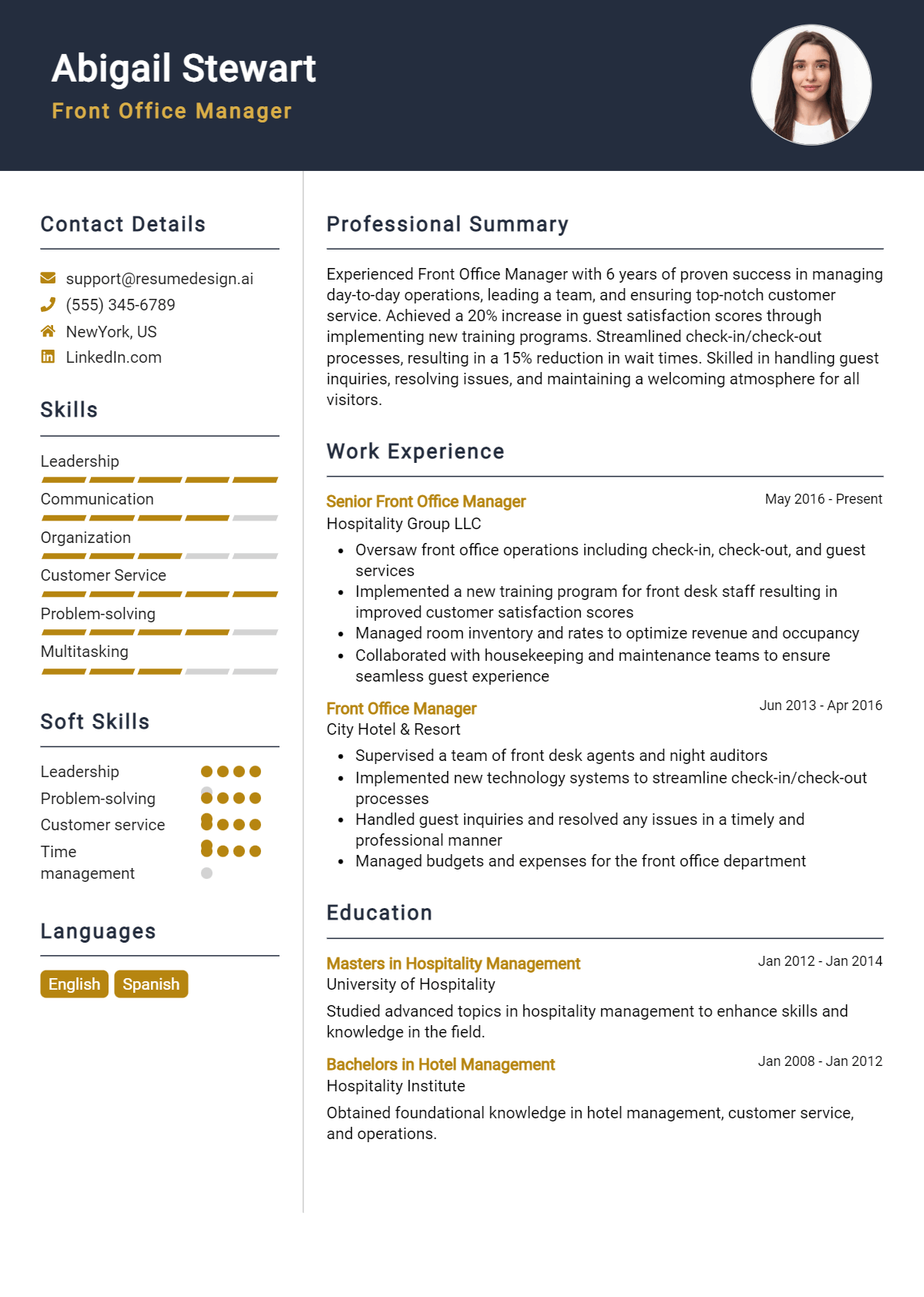
As a Front Office Manager, you play a pivotal role in ensuring the smooth operation of the front desk and overall guest experience in a hospitality setting. During the interview process, it's essential to demonstrate your leadership skills, customer service expertise, and ability to handle various situations that may arise in a busy front office environment. Preparing for common interview questions will not only help you showcase your qualifications but also allow you to convey your passion for the role and commitment to excellence.
Here is a list of common job interview questions for the Front Office Manager position, along with examples of the best answers. These questions cover your work history and experience, what you have to offer the employer, and your goals for the future, providing you with an opportunity to highlight your skills in managing staff, resolving guest issues, and enhancing operational efficiency.
1. Can you describe your experience in managing a front office team?
I have over five years of experience managing front office teams in high-paced hotels. My role involved training staff, overseeing daily operations, and ensuring exceptional guest services. I excel in fostering a positive work environment that enhances team performance and guest satisfaction.
Example:
In my previous position, I led a team of 15 front desk agents, focusing on training and development, which resulted in a 20% increase in guest satisfaction scores over a year.
2. How do you handle difficult guests or customer complaints?
Handling difficult guests requires patience and empathy. I listen actively to their concerns, apologize for any inconvenience, and offer solutions that meet their needs. This approach not only resolves issues but often turns dissatisfied guests into loyal customers.
Example:
Once, a guest was unhappy with their room. I listened to their concerns, promptly offered a room upgrade, and arranged complimentary services, which delighted them and improved their overall experience.
3. What strategies do you use to ensure exceptional customer service?
I focus on staff training and empowerment, encouraging team members to take ownership of guest experiences. I also implement regular feedback sessions to identify areas for improvement and celebrate successes, ensuring our service consistently exceeds guest expectations.
Example:
By introducing a monthly service training workshop, we improved our response times to guest inquiries, resulting in a notable increase in positive reviews on major travel sites.
4. How do you prioritize tasks during busy periods?
I prioritize tasks by assessing urgency and impact on guest satisfaction. During peak times, I delegate responsibilities effectively, maintain open communication with my team, and ensure that critical tasks, like check-ins and addressing guest queries, are handled promptly.
Example:
During a recent event, I organized a quick team briefing to delegate tasks based on urgency, which allowed us to manage the influx of guests smoothly and efficiently.
5. Can you give an example of how you improved front office operations?
I identified inefficiencies in our check-in process and implemented a digital check-in system. This reduced wait times by 30% and improved guest satisfaction. Regularly reviewing operations allows us to adapt and enhance our service continuously.
Example:
After introducing the digital check-in, guest feedback showed a significant decrease in complaints about wait times, allowing us to focus on personalized services instead.
6. How do you ensure that your team stays motivated?
I keep my team motivated through recognition, clear communication, and opportunities for growth. Regular team meetings and feedback sessions help me understand their needs and provide support, fostering a collaborative and enthusiastic work environment.
Example:
I initiated a 'Team Member of the Month' program, which boosted morale and encouraged friendly competition, resulting in improved team performance and engagement.
7. What is your approach to training new staff?
I believe in a structured yet flexible approach to training. I pair new staff with experienced team members for hands-on learning while providing comprehensive resources. Regular check-ins ensure they feel supported and confident in their roles.
Example:
During my last training cycle, I used a mentorship approach, which helped new hires feel more comfortable and reduced their onboarding time by 20%.
8. How do you handle staff conflicts?
I address staff conflicts immediately by facilitating open communication between the involved parties. I encourage them to express their concerns and work collaboratively towards a resolution. This approach fosters a respectful environment and minimizes disruptions to team dynamics.
Example:
When two staff members had a disagreement, I organized a mediation session, which helped them clear misunderstandings and rebuild their professional relationship, enhancing team cohesion.
9. How do you handle difficult guests or complaints?
I believe in active listening and empathy. I address concerns promptly, ensuring guests feel heard. I then provide solutions, whether it's a room change or a complimentary service, prioritizing their satisfaction to maintain a positive experience.
Example:
When a guest complained about noise, I listened and offered a room upgrade. They appreciated the swift response and left positive feedback, highlighting our commitment to guest satisfaction.
10. What strategies do you use for staff training and development?
I use a combination of hands-on training, mentorship, and regular feedback sessions. I encourage staff to attend workshops and seminars to enhance their skills, fostering a culture of continuous learning and improvement within the team.
Example:
I implemented a mentorship program where seasoned staff guide new hires. This approach resulted in quicker onboarding and improved service standards, benefiting both employees and guests.
11. How do you ensure a seamless check-in and check-out process?
I prioritize efficiency by streamlining processes and using technology for reservations. Regular staff training ensures everyone is knowledgeable, and I encourage feedback to identify areas for improvement, ultimately enhancing guest satisfaction.
Example:
By implementing a mobile check-in system, we reduced wait times significantly, leading to a smoother experience for guests and positive reviews on our service.
12. Can you describe a time you improved the front office operations?
I noticed check-in delays during peak hours. I introduced a staggered staffing schedule, optimizing resources during busy times, which reduced wait times and improved guest feedback regarding our efficiency.
Example:
After implementing the new schedule, our guest satisfaction scores improved by 20%, showcasing the impact of better resource management on operational efficiency.
13. What role does technology play in your management style?
Technology enhances communication and efficiency. I utilize property management systems for real-time data access, enabling informed decision-making. Regularly updating systems ensures we provide the best service and stay competitive.
Example:
Through data analytics, I identified trends in guest preferences, which informed our marketing strategies and improved our occupancy rates significantly.
14. How do you handle staff conflicts within your team?
I address conflicts promptly through open dialogue. I facilitate discussions to understand differing perspectives and mediate solutions that align with our values, promoting teamwork and a harmonious work environment.
Example:
When two staff members clashed, I organized a meeting where they expressed their concerns. This led to a better understanding and improved collaboration moving forward.
15. How do you prioritize tasks in a fast-paced environment?
I prioritize by assessing urgency and impact on guest experience. I use checklists to ensure nothing is overlooked and delegate tasks effectively, allowing my team to maintain high standards even during busy periods.
Example:
During peak seasons, I created a task matrix that helped the team focus on essential duties, leading to a smoother operation and satisfied guests.
16. What are your methods for ensuring guest satisfaction?
I believe in proactive service. Regularly checking in with guests and gathering feedback helps me address their needs promptly. Implementing guest suggestions creates a personalized experience, making them feel valued and appreciated.
Example:
By introducing a post-stay survey, I gathered valuable insights that led to several service improvements, ultimately increasing our return guest rate by 15%.
17. How do you manage guest complaints effectively?
I handle guest complaints by actively listening and empathizing with their concerns. I then take swift action to resolve the issue, ensuring the guest feels valued. It's crucial to follow up to guarantee satisfaction and improve our services.
Example:
When a guest was unhappy with their room, I listened carefully, offered a suite upgrade, and followed up later to ensure they were satisfied, resulting in positive feedback.
18. Can you describe your experience with budgeting and financial management?
In my previous role, I was responsible for preparing the annual budget, monitoring expenses, and optimizing resource allocation. My efforts led to a 15% reduction in operational costs while maintaining service quality by implementing efficient processes.
Example:
I successfully implemented cost-saving measures in staffing and supplies, which contributed to a significant reduction in overall expenses while enhancing guest experience.
19. What strategies do you use to motivate your front office team?
I motivate my team by fostering a positive work environment, recognizing individual achievements, and encouraging professional development. Regular team meetings and open communication also help to align our goals and keep morale high.
Example:
I introduced a “Employee of the Month” program, which boosted morale and encouraged staff to provide exceptional service through friendly competition.
20. How do you ensure consistency in guest service standards?
I ensure consistency by providing comprehensive training, developing clear service protocols, and conducting regular performance evaluations. Regular feedback sessions help reinforce standards and allow for continuous improvement in guest service.
Example:
By implementing a standardized onboarding process and regular refresher training, I maintained high service standards across all shifts, resulting in increased guest satisfaction scores.
21. How do you handle scheduling and staffing challenges?
I approach scheduling by analyzing peak times and adjusting shifts accordingly. I maintain a flexible approach, ensuring adequate coverage while considering staff preferences, which minimizes burnout and maintains high service levels.
Example:
During a peak season, I adjusted shifts and cross-trained staff to cover for absences, ensuring seamless operations and consistent guest service.
22. Can you share an experience where you improved a process in the front office?
While managing the front office, I noticed check-in times were lengthy. I introduced a digital check-in system, reducing wait times by 30% and enhancing the guest experience significantly, leading to positive reviews.
Example:
I implemented a mobile check-in option, which streamlined the process and improved operational efficiency, resulting in higher guest satisfaction ratings.
23. How do you handle training new staff members?
I prioritize personalized training for new hires by pairing them with experienced team members. I provide comprehensive resources and encourage hands-on experience, fostering a supportive environment to build their confidence and skills quickly.
Example:
I created a mentorship program where new staff shadow experienced employees, which significantly reduced the learning curve and improved service delivery.
24. What role does technology play in your management approach?
Technology is crucial in enhancing efficiency and guest experience. I utilize property management systems for reservations and guest interactions and actively seek new tools that streamline operations and provide valuable insights into guest preferences.
Example:
By implementing a new PMS, I improved data tracking and guest communications, which led to a more personalized service approach and increased guest loyalty.
25. How do you handle overbooking situations?
In overbooking situations, I prioritize customer service. I communicate with guests promptly, offering alternatives like room upgrades or compensation. My goal is to ensure the guests feel valued and to minimize dissatisfaction while maintaining the hotel's reputation.
Example:
If we have overbooked, I immediately reach out to affected guests, offering complimentary upgrades or a future discount. Transparency and prompt communication help maintain trust, ensuring that even in difficult situations, guests leave with a positive impression.
26. Describe a time when you resolved a guest complaint.
I once dealt with a guest upset over a noisy room. I listened actively, expressed empathy, and offered a room change and a complimentary breakfast. This proactive approach turned their experience around and they left a positive review.
Example:
A guest complained about noise from a nearby event. I quickly moved them to a quieter room and offered a complimentary meal. They appreciated the swift action and even expressed gratitude in a review, highlighting our commitment to customer satisfaction.
27. How do you prioritize tasks in a busy front office?
I use a combination of urgency and importance to prioritize tasks. I delegate responsibilities to my team when necessary and ensure clear communication. This approach helps maintain efficiency and provides excellent service even during peak times.
Example:
During high check-in times, I prioritize guest arrivals and delegate administrative tasks to my team. This ensures quick service while maintaining quality, allowing us to handle busy periods effectively without sacrificing guest experience.
28. What strategies do you use to motivate your front office staff?
I believe in recognizing achievements, providing regular feedback, and creating a positive work environment. Implementing incentives for exceeding targets and fostering teamwork motivates staff to perform at their best and enhances overall guest experience.
Example:
I hold monthly recognition meetings to celebrate top performers and offer small rewards for outstanding service. This fosters a competitive yet supportive atmosphere, ensuring staff remain motivated and engaged in delivering exceptional guest experiences.
29. How do you ensure effective communication within your team?
I promote open communication through regular team meetings and feedback sessions. I also utilize technology, like group messaging apps, to facilitate quick updates and ensure everyone is informed. This approach creates a collaborative atmosphere and enhances team cohesion.
Example:
I schedule weekly briefings to discuss goals and challenges, encouraging team members to share ideas. Additionally, I implement a messaging platform for real-time updates, ensuring everyone stays informed and connected, which significantly improves service delivery.
30. What role does technology play in managing the front office?
Technology is crucial for streamlining operations, from reservation systems to communication tools. I leverage software for efficiency in check-ins, guest management, and reporting, which enhances the guest experience and allows us to focus on personalized service.
Example:
Using a modern property management system has revolutionized our check-in process, reducing wait times significantly. This technology allows us to track guest preferences, enabling personalized service that enhances guest satisfaction and loyalty.
31. How do you handle staff conflicts in the front office?
I address conflicts promptly by encouraging open dialogue between involved parties. I mediate discussions to ensure each voice is heard and work towards a resolution that aligns with our team's goals and maintains a positive work atmosphere.
Example:
When two staff members had a disagreement, I facilitated a meeting to allow them to discuss their concerns. Through active listening and mediation, we reached a resolution that improved their working relationship, fostering a more harmonious environment.
32. What is your approach to training new front office staff?
My approach involves a structured orientation program, combining hands-on training with shadowing experienced staff. I emphasize the importance of customer service and operational procedures, ensuring new hires feel confident and integrated into the team.
Example:
I implement a comprehensive training program that includes shadowing and role-playing scenarios. This method allows new staff to gain practical experience while receiving feedback, ensuring they are well-prepared to provide exceptional service from day one.
33. How do you prioritize tasks during a busy shift?
I assess the urgency and importance of each task, delegating responsibilities to staff when necessary. I also ensure effective communication to keep everyone informed and focused on high-priority tasks, which enhances overall efficiency.
Example:
During peak hours, I first address guest check-ins and urgent inquiries while assigning routine tasks to my team, ensuring a smooth workflow and maintaining high service standards.
34. Describe a time you dealt with a difficult guest.
I listened actively to the guest's concerns, empathizing with their situation and assuring them I would find a solution. By offering a complimentary room upgrade, I turned a negative experience into a positive one, fostering loyalty.
Example:
A guest was unhappy with their room. I listened to their issues and upgraded them to a better room, which turned their experience around and they left satisfied.
35. How do you ensure your team is motivated?
I focus on open communication, regular feedback, and recognition of achievements. I also provide opportunities for training and development, fostering an environment where team members feel valued and engaged in their roles.
Example:
I regularly hold team meetings to celebrate successes and provide constructive feedback, which keeps everyone motivated and focused on our goals.
36. What strategies do you use for effective communication with guests and staff?
I practice active listening and encourage open dialogue, ensuring clarity in all communications. I also utilize technology, like messaging apps, to keep my team informed, which helps us provide consistent service to guests.
Example:
I encourage my staff to share updates through a group chat, which helps us address guest needs promptly and maintain seamless communication.
37. How do you handle staff conflicts?
I address conflicts promptly by facilitating a meeting between the involved parties to understand each perspective. I promote a collaborative approach to find a resolution, ensuring a harmonious work environment.
Example:
When two staff members disagreed, I mediated a discussion to help them express their views, which led to a mutual understanding and improved their working relationship.
38. Can you explain your experience with budgeting and cost control?
I have managed departmental budgets by tracking expenses and identifying areas for cost savings. I regularly analyze financial reports to ensure we stay within budget while maintaining high service levels.
Example:
By reviewing our supplies regularly, I identified excess spending on amenities and renegotiated contracts, saving the department 15% annually.
39. What is your approach to guest feedback?
I view guest feedback as a valuable tool for improvement. I actively encourage reviews, address any negative comments promptly, and implement changes based on constructive criticism to enhance the guest experience.
Example:
After receiving feedback about our breakfast options, I collaborated with the kitchen team to diversify the menu, which significantly improved guest satisfaction.
40. How do you keep up with industry trends?
I stay informed by reading industry publications, attending conferences, and networking with other professionals. This helps me implement best practices and adapt to changing guest expectations effectively.
Example:
I subscribe to several hospitality journals and participate in webinars, which keeps me updated on trends like sustainable practices and technology integration.
41. How do you handle overbookings at a hotel?
I prioritize guest satisfaction by first apologizing for the inconvenience. I then offer alternative accommodations, possibly at a nearby hotel, while providing complimentary services for their trouble. Effective communication and quick decision-making are essential in these situations.
Example:
If faced with overbooking, I would immediately contact the guest to apologize, offer a complimentary upgrade, and arrange transportation to an alternative hotel, maintaining a positive experience despite the situation.
42. Can you describe a time when you had to resolve a conflict between staff members?
I facilitated a meeting between the conflicting staff members, encouraging open communication. I helped them understand each other's perspectives and guided them to find a mutually acceptable solution. This improved their working relationship and fostered teamwork.
Example:
I once mediated a disagreement between two front desk agents by organizing a discussion, allowing each to express their concerns. This led to them understanding each other's views and developing a collaborative approach.
43. What strategies do you use to ensure excellent customer service?
I implement regular training sessions, encourage staff to personalize guest interactions, and gather feedback. Recognizing and rewarding exceptional service also motivates the team to maintain high standards consistently.
Example:
To ensure excellent service, I conduct monthly training, emphasize the importance of personalizing guest interactions, and implement a recognition program to celebrate outstanding performance among staff.
44. How do you stay updated with industry trends and technologies?
I subscribe to industry publications, attend webinars, and participate in networking events. Engaging with peers and following influential hospitality blogs helps me stay informed about new technologies and best practices.
Example:
I regularly read hospitality magazines, attend industry conferences, and engage with online forums to stay updated on the latest trends and technologies affecting the hospitality sector.
45. How do you prioritize tasks in a fast-paced environment?
I use a combination of time management tools and prioritization techniques, such as the Eisenhower Matrix. This helps me focus on urgent tasks while ensuring long-term goals are not neglected, maintaining operational efficiency.
Example:
In a busy environment, I prioritize tasks by urgency and impact, using a to-do list and the Eisenhower Matrix to ensure that critical issues are addressed promptly while keeping an eye on long-term goals.
46. How do you manage guest feedback and complaints?
I actively encourage guest feedback through surveys and direct communication. When complaints arise, I address them promptly, listen to the guest, and offer solutions to resolve the issue, ensuring they feel valued and heard.
Example:
To manage feedback, I regularly review guest surveys and address complaints immediately, listening carefully to their concerns and providing appropriate solutions to ensure they're satisfied with their experience.
How Do I Prepare For A Front Office Manager Job Interview?
Preparing for a Front Office Manager job interview is crucial to making a positive impression on the hiring manager. A well-prepared candidate not only demonstrates professionalism but also showcases their commitment to the role and understanding of the hospitality industry. Here are some key preparation tips to help you succeed:
- Research the company and its values to understand its culture and how you can align with it.
- Practice answering common interview questions specific to front office management and hospitality scenarios.
- Prepare examples that demonstrate your skills and experience relevant to the Front Office Manager role.
- Familiarize yourself with the latest trends in the hospitality industry to discuss during the interview.
- Dress professionally and appropriately for the interview to convey a polished image.
- Prepare thoughtful questions to ask the interviewer about the company and its expectations for the role.
- Review your resume and be ready to discuss any experiences or qualifications that stand out.
Frequently Asked Questions (FAQ) for Front Office Manager Job Interview
Preparing for a job interview can be a daunting task, especially for a role as dynamic as a Front Office Manager. Understanding the common questions that may arise during the interview process can help candidates feel more confident and articulate their qualifications effectively. Below are some frequently asked questions that can provide guidance for aspiring Front Office Managers.
What should I bring to a Front Office Manager interview?
When attending a Front Office Manager interview, it is essential to come prepared with several key items. Bring multiple copies of your resume, a list of references, and any certifications relevant to hotel management. Additionally, consider carrying a notepad and pen for taking notes during the interview. Having a portfolio showcasing your accomplishments or previous work can also demonstrate your professionalism and preparedness, leaving a positive impression on the interviewer.
How should I prepare for technical questions in a Front Office Manager interview?
To effectively prepare for technical questions in a Front Office Manager interview, familiarize yourself with the specific systems and software commonly used in the hospitality industry, such as property management systems (PMS) and customer relationship management (CRM) tools. Review your past experiences and think of scenarios where you successfully managed front office operations, resolved guest complaints, or implemented new procedures. Practicing responses to potential technical questions can help you articulate your expertise clearly and confidently during the interview.
How can I best present my skills if I have little experience?
If you have limited experience in the field, focus on transferable skills and relevant qualities that make you a strong candidate for the Front Office Manager position. Highlight your customer service skills, ability to multitask, and experience in team collaboration. Discuss any internships, volunteer work, or related coursework that demonstrate your commitment to the hospitality industry. Emphasizing your eagerness to learn and grow in the role can also resonate positively with interviewers.
What should I wear to a Front Office Manager interview?
Choosing the right attire for a Front Office Manager interview is crucial, as it reflects your professionalism and understanding of the hospitality industry. Opt for business formal attire, such as a tailored suit or professional dress, to convey a polished image. Pay attention to grooming and personal hygiene, as these factors contribute to the overall impression you make. Dressing appropriately not only boosts your confidence but also signals to the interviewer that you take the opportunity seriously.
How should I follow up after the interview?
Following up after an interview is an important step that can reinforce your interest in the Front Office Manager position. Within 24 hours, send a thank-you email to the interviewer expressing your appreciation for the opportunity to discuss your qualifications. In your message, briefly reiterate your enthusiasm for the role and mention a key point discussed during the interview to personalize the communication. This follow-up demonstrates professionalism and can help keep you top of mind as the hiring decision is made.
Conclusion
In summary, this interview guide for the Front Office Manager position has covered essential aspects of the interview process, emphasizing the importance of thorough preparation, consistent practice, and the demonstration of relevant skills that align with the role. Candidates should be well-equipped to tackle both technical and behavioral questions, as this dual preparation can significantly enhance their chances of success.
As you gear up for your interview, remember that utilizing the tips and examples provided in this guide can empower you to approach your interview with confidence. Embrace the opportunity to showcase your abilities and make a lasting impression.
For further assistance, check out these helpful resources: resume templates, resume builder, interview preparation tips, and cover letter templates.