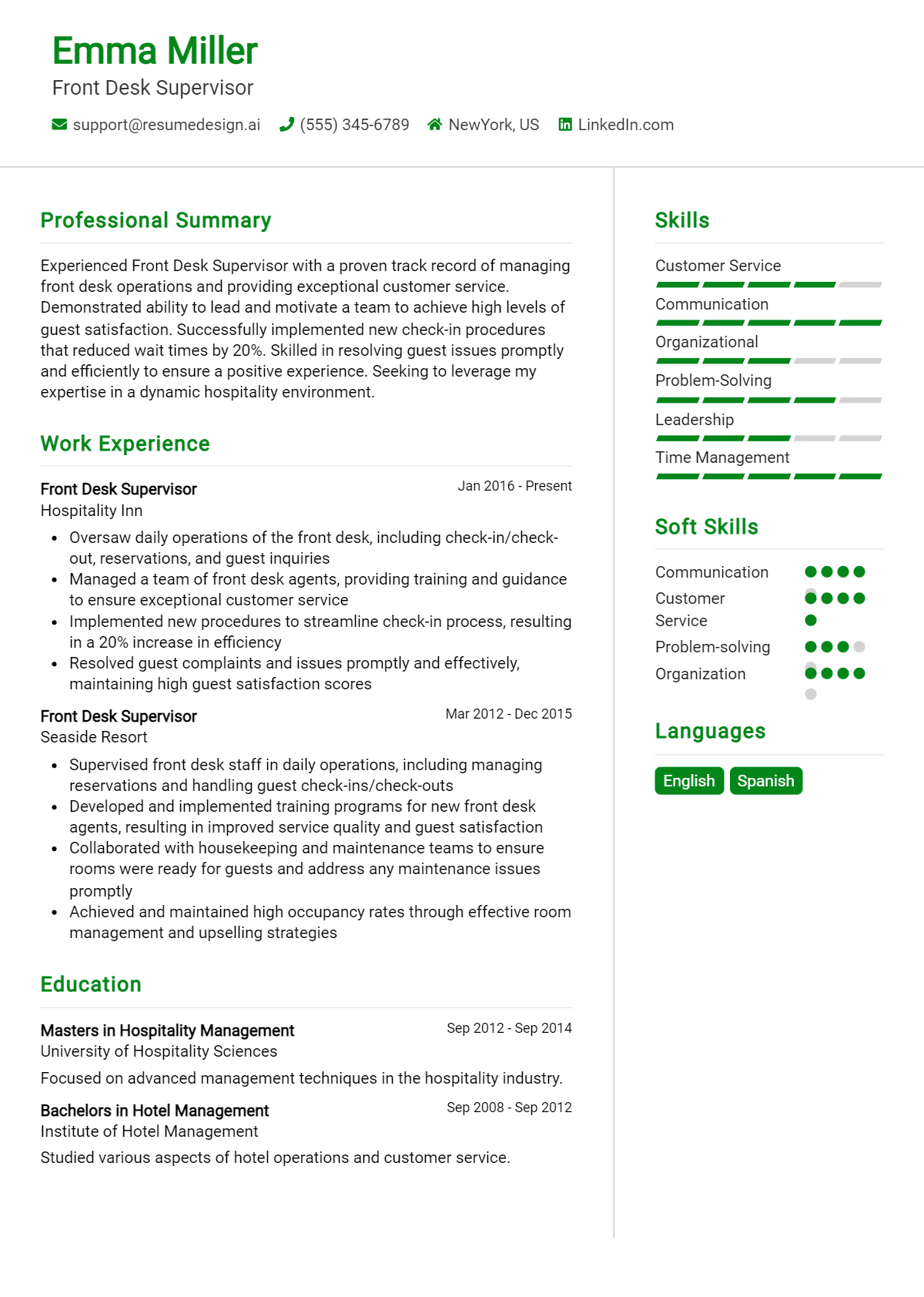
When preparing for a job interview as a Front Desk Supervisor, it's essential to anticipate the types of questions you might be asked. This role not only requires strong customer service skills but also the ability to manage and lead a team effectively. Understanding the nuances of front desk operations, handling guest inquiries, and resolving conflicts are critical aspects that interviewers will likely focus on.
Here is a list of common job interview questions for the Front Desk Supervisor position, along with examples of the best answers. These questions will cover your work history and experience in the hospitality industry, what unique skills and qualities you bring to the table, and your future career aspirations within the field. Preparing thoughtful responses will help you demonstrate your qualifications and enthusiasm for the role.
1. Can you describe your experience in managing front desk operations?
In my previous role, I managed a team of five staff, overseeing daily operations, guest check-ins, and resolving issues. I implemented a new scheduling system, enhancing efficiency and guest satisfaction. My experience has honed my leadership and multitasking skills significantly.
Example:
I have over three years of experience managing front desk operations, where I improved team productivity by 20% through effective training and communication. I thrive in fast-paced environments and ensure that all guests receive exceptional service.
2. How do you handle difficult guests or complaints?
I approach difficult guests with empathy and active listening, aiming to understand their concerns fully. I remain calm and professional, offering solutions or alternatives. My goal is to turn their negative experience into a positive one, ensuring they leave satisfied.
Example:
When faced with a complaint, I actively listen to the guest’s concerns, express understanding, and propose a solution. For instance, I once resolved a billing issue that turned an upset guest into a loyal customer through prompt action.
3. What strategies do you use to train new front desk staff?
I utilize a combination of shadowing, hands-on practice, and structured training manuals. I believe in fostering a supportive environment, encouraging new staff to ask questions and learn at their own pace while ensuring they grasp essential procedures and policies.
Example:
During training, I pair new hires with experienced staff for shadowing and hands-on practice. I also provide regular feedback and encourage open communication to ensure they feel comfortable and confident in their roles.
4. How do you prioritize tasks during busy periods?
I prioritize tasks by assessing urgency and impact on guest satisfaction. I delegate responsibilities when necessary and ensure clear communication among staff. This systematic approach helps maintain efficiency and service quality, even during peak times.
Example:
In busy periods, I prioritize guest check-ins and urgent inquiries first. I create a checklist and delegate tasks to my team, ensuring that we remain organized and efficient while maintaining high service standards.
5. Can you give an example of how you've improved front desk service?
I initiated a feedback program where guests could share their experiences. This data helped us identify areas for improvement, leading to enhanced check-in processes and personalized guest services. Our guest satisfaction scores increased significantly as a result.
Example:
I implemented a guest feedback system that allowed us to identify service gaps. By addressing these issues, we improved our check-in process and tailored services to guest preferences, resulting in a noticeable increase in positive reviews.
6. What role does teamwork play in your position?
Teamwork is essential in my role as it fosters collaboration and enhances service delivery. I believe in creating a supportive environment where each team member contributes their strengths, ensuring smooth operations and a cohesive guest experience.
Example:
Teamwork is crucial at the front desk. I encourage open communication and collaboration, allowing us to handle challenges effectively and provide a seamless experience for guests, enhancing both morale and service quality.
7. How do you ensure compliance with hotel policies and procedures?
I ensure compliance by regularly reviewing policies with my team and providing training sessions. I also maintain open lines of communication, encouraging staff to ask questions and clarify doubts to ensure everyone adheres to established procedures.
Example:
I conduct regular training sessions to review hotel policies and encourage my team to seek clarification on any issues. This proactive approach ensures everyone is aware of and complies with all procedures.
8. How do you handle the changing needs of guests?
I stay adaptable and attentive to guests’ needs by actively listening and communicating. I regularly check in with guests during their stay, allowing me to anticipate changes and provide tailored solutions that enhance their overall experience.
Example:
I keep an open line of communication with guests, often checking in to understand their needs. For instance, when a guest required a room change for accessibility reasons, I quickly facilitated the transition, ensuring their comfort.
9. How do you ensure a high level of guest satisfaction at the front desk?
To ensure high guest satisfaction, I focus on active listening and personalized service. I regularly train my team on communication skills and encourage them to anticipate guest needs, ensuring every guest feels valued and heard.
Example:
By actively listening to guests and training my team in personalized service, I ensure that every guest feels valued. Regular feedback collection helps us improve service continuously.
10. Can you describe a time when you handled a difficult guest situation?
In a challenging situation with an upset guest, I calmly listened to their concerns, empathized, and offered a solution that exceeded their expectations, turning their negative experience into a positive one and ensuring their loyalty.
Example:
I once dealt with an irate guest by listening attentively. I empathized with their frustration and offered a complimentary upgrade, which turned their experience around and retained their business.
11. How do you prioritize tasks during busy check-in and check-out times?
During peak times, I prioritize tasks by assessing urgency and guest needs. I delegate responsibilities to my team and ensure that communication remains clear, allowing us to maintain efficiency and service quality.
Example:
I assess urgent tasks and delegate effectively to my team during busy times. Clear communication is key, ensuring we handle guest needs promptly and efficiently.
12. What strategies do you use for training new front desk staff?
I use a combination of hands-on training, role-playing scenarios, and shadowing experienced staff. This approach builds confidence and ensures new employees understand our service standards and protocols quickly.
Example:
I train new staff through hands-on sessions, role-playing, and shadowing. This mix helps them grasp our service standards effectively and builds their confidence.
13. How do you handle discrepancies in billing or reservations?
I address billing discrepancies by first listening to the guest's concern. I thoroughly investigate the issue, communicate openly, and resolve it promptly, ensuring the guest feels valued throughout the process.
Example:
When handling billing discrepancies, I listen to the guest's concerns, investigate thoroughly, and resolve the issue quickly while keeping the guest informed to maintain their trust.
14. What role does teamwork play in your position as a Front Desk Supervisor?
Teamwork is essential. I foster an environment where team members support each other, share knowledge, and work collaboratively. This synergy ensures smooth operations and enhances guest satisfaction.
Example:
I encourage teamwork by promoting open communication and collaboration. This approach ensures that we deliver a seamless experience to our guests and support each other effectively.
15. How do you stay updated with industry trends and standards?
I stay updated through continuous education, attending industry workshops, and subscribing to hospitality publications. Networking with other professionals also helps me gain insights into emerging trends and best practices.
Example:
I attend workshops, subscribe to hospitality journals, and network with industry peers to stay informed about the latest trends and best practices in the hospitality field.
16. How do you handle feedback from guests, both positive and negative?
I view feedback as an opportunity for improvement. I acknowledge positive feedback to motivate my team and address negative feedback constructively, ensuring we learn and improve our service continuously.
Example:
I celebrate positive feedback with my team to boost morale and address negative comments promptly, using them as learning opportunities to enhance our service quality.
17. How do you handle difficult guests or complaints at the front desk?
I remain calm and listen actively to the guest's concerns. I empathize with their situation and offer solutions that meet their needs while adhering to hotel policies. This approach often turns a negative experience into a positive one.
Example:
When a guest complained about noise, I listened empathetically, offered to move them to a quieter room, and provided complimentary earplugs, which resolved the issue and left the guest satisfied.
18. Can you describe a time when you had to train new staff?
I developed a structured training program that included hands-on practice and shadowing experienced staff. I ensured new hires felt supported and encouraged questions, which helped them integrate smoothly into the team and improve their confidence.
Example:
I recently trained a new front desk agent by walking them through our systems and protocols, followed by a shadowing session. They quickly adapted and received positive feedback from guests.
19. How do you ensure your team meets service standards?
I conduct regular performance evaluations and provide ongoing feedback. I lead by example and foster a culture of accountability, encouraging team members to share best practices and support each other in achieving our service goals.
Example:
I implemented weekly team meetings to discuss standards and recognize achievements, which motivated the team to consistently meet and exceed our service expectations.
20. What strategies do you use to manage a busy front desk?
I prioritize tasks effectively, delegate responsibilities, and maintain a positive atmosphere. During peak times, I ensure team members communicate openly and support each other, allowing us to serve guests efficiently without compromising service quality.
Example:
During a sudden influx of guests, I delegated check-in tasks and assisted with inquiries, which kept wait times minimal and guests satisfied.
21. How do you handle scheduling conflicts among staff?
I approach scheduling conflicts with open communication, discussing the issue with involved staff to find a compromise. I maintain a flexible approach while considering operational needs, ensuring both the staff’s and guests' satisfaction.
Example:
When two staff members requested the same day off, I facilitated a discussion, allowing them to negotiate a solution while I arranged backup coverage to ensure operations ran smoothly.
22. What role does technology play in your daily duties?
Technology streamlines operations and enhances guest experiences. I utilize property management systems for efficient check-ins and upselling, while also leveraging communication tools to ensure smooth coordination with other departments.
Example:
I use our PMS to track guest preferences, allowing me to personalize their experience, which significantly increases satisfaction and loyalty.
23. How do you stay updated with industry trends?
I regularly attend industry conferences, subscribe to hospitality publications, and participate in online forums. Networking with peers also provides valuable insights into best practices and emerging trends that can enhance our service offerings.
Example:
By attending annual hospitality expos and joining online industry groups, I’ve implemented innovative practices that keep our services competitive and relevant.
24. How would you handle a situation where you disagree with management?
I approach disagreements professionally, presenting my perspective with supporting data. I believe in open dialogue and collaboration to reach a resolution that aligns with both management's objectives and team effectiveness.
Example:
When I disagreed with a policy change, I scheduled a meeting to discuss my concerns, providing data on potential impacts, which led to a constructive conversation and a revised approach.
25. How do you prioritize tasks during a busy shift?
I prioritize tasks by assessing urgency and impact. I delegate responsibilities among team members based on their strengths, ensuring guests are attended to promptly while maintaining operational efficiency. This approach minimizes stress and ensures that all tasks are completed efficiently.
Example:
During peak check-in hours, I focus on guest arrivals first, then address phone inquiries. I assign team members to handle specific tasks, ensuring we maintain service quality and efficiency even during busy times.
26. How would you handle a guest complaint about their room?
I would listen attentively to the guest's concerns, empathize with their situation, and assure them that I will resolve the issue promptly. I would then take immediate action, whether it involves offering a room change or providing additional amenities to enhance their experience.
Example:
If a guest complains about cleanliness, I would apologize sincerely, offer to change their room, and ensure the new one meets their expectations. I’d follow up to confirm their satisfaction after the resolution.
27. Can you describe a time when you had to handle a scheduling conflict?
I once faced a scheduling conflict due to unexpected staff absence. I quickly assessed our needs, shifted staff duties based on availability, and communicated transparently with the team. This ensured operations ran smoothly without compromising service quality.
Example:
When a key staff member called in sick, I promptly rearranged shifts, contacted available staff to cover, and adjusted our workflow to maintain service levels. It worked seamlessly, and guests remained satisfied.
28. What strategies do you use to motivate your front desk team?
I motivate my team through recognition, regular feedback, and fostering a supportive atmosphere. Organizing team-building activities and providing professional development opportunities also boosts morale, encouraging employees to perform at their best.
Example:
I celebrate achievements, both big and small, during team meetings. I also encourage team members to share ideas for improving our processes, making them feel valued and engaged in their roles.
29. How do you ensure compliance with hotel policies and procedures?
I ensure compliance by conducting regular training sessions and providing clear documentation of policies. I also lead by example, encouraging open communication where team members feel comfortable discussing any uncertainties regarding procedures.
Example:
I hold monthly training sessions to review our policies and update the team on any changes. This proactive approach helps everyone stay informed and compliant with hotel standards.
30. How would you deal with an overbooked situation?
In an overbooked situation, I would first apologize to the guests affected and offer alternative accommodations, such as nearby hotels. I would also provide compensation or incentives, ensuring they feel valued despite the inconvenience.
Example:
I would immediately inform the guests, offer complimentary upgrades or a free night’s stay, and assist with finding alternative lodging. This approach helps maintain their trust and satisfaction.
31. What role does customer feedback play in your management style?
Customer feedback is vital; it guides my decisions and improvements. I regularly review guest comments, addressing any concerns promptly and implementing their suggestions to enhance the guest experience, which ultimately drives our success.
Example:
I analyze guest feedback weekly, identifying trends and areas for improvement. When guests suggest changes, I prioritize those that align with our service goals to enhance their overall experience.
32. How do you handle a situation where a team member is not performing well?
I would address performance issues directly and privately, discussing specific concerns and offering support for improvement. Setting clear goals and providing additional training can help them succeed while maintaining team morale.
Example:
If a team member struggles with customer service, I’d meet with them to understand their challenges, provide coaching, and set measurable goals to track their progress. This supportive approach fosters improvement.
33. How do you handle difficult guests?
I believe in listening actively to the guest's concerns and empathizing with their situation. I remain calm and professional while offering a solution or alternative that meets their needs, ensuring they feel valued and heard.
Example: I had a guest upset about a booking error. I listened to their concerns, apologized, and offered a complimentary upgrade, which turned their experience around and they left happy.
34. Describe a time when you improved a process at the front desk.
I noticed check-in times were lengthy, so I implemented a pre-registration system. Guests could fill out forms online before arrival, which streamlined the process and reduced wait times significantly, enhancing guest satisfaction.
Example: By introducing a pre-registration form on our website, we reduced check-in time by 30%, allowing guests to enjoy their stay more quickly and efficiently.
35. How do you prioritize tasks during busy periods?
I prioritize tasks based on urgency and impact on guest experience. I delegate responsibilities to my team while ensuring communication remains open. This approach helps maintain smooth operations during peak hours.
Example: During a busy weekend, I prioritized check-ins and check-outs while delegating phone inquiries to my team, ensuring all guests received timely service without feeling overwhelmed.
36. What strategies do you use to train new front desk staff?
I develop a structured training program that includes shadowing experienced staff, hands-on practice, and regular feedback sessions. This approach helps new hires gain confidence and understand our service standards quickly.
Example: I created a training checklist for new hires that covers essential tasks, and I pair them with experienced staff for the first week to ensure they feel supported and knowledgeable.
37. How do you handle a situation where a team member is underperforming?
I address the issue privately, discussing specific concerns and listening to their perspective. I then collaborate to create an improvement plan, offering support and resources to help them succeed.
Example: I had a team member struggling with guest interactions. After a private discussion, we set clear goals and I provided coaching, which led to noticeable improvement in their performance.
38. Can you describe how you manage front desk technology?
I ensure my team is trained on all front desk technology and troubleshooting procedures. Regular maintenance checks and updates are scheduled to minimize downtime, ensuring we provide seamless service to our guests.
Example: I implemented a training session on our new property management system, which improved staff efficiency and reduced errors during check-in and check-out processes.
39. How do you ensure a positive guest experience?
I focus on proactive service by anticipating guest needs and responding promptly to requests. I also encourage my team to personalize interactions, making each guest feel important and appreciated during their stay.
Example: I trained my team to recognize returning guests and offer personalized greetings, which significantly enhanced their overall experience and encouraged repeat visits.
40. What do you consider the most important quality for a Front Desk Supervisor?
I believe effective communication is the most crucial quality. A Front Desk Supervisor must convey information clearly to staff and guests, ensuring everyone is informed and satisfied with their experience at the hotel.
Example: By fostering open communication within my team, we were able to resolve guest issues more efficiently, creating a positive atmosphere and improving overall guest satisfaction.
41. How do you handle difficult guests at the front desk?
I approach difficult guests with patience and empathy, actively listening to their concerns. I reassure them that I will do my best to resolve their issues, utilizing my problem-solving skills to provide solutions that meet their needs while maintaining a calm environment.
Example:
When a guest expressed dissatisfaction with their room, I listened attentively and offered to change their room immediately, ensuring their comfort. This not only resolved their issue but also turned a negative experience into a positive one.
42. Describe a time you had to manage a team conflict.
I once noticed two front desk agents had a disagreement affecting their performance. I facilitated a private meeting where both could express their views. By encouraging open communication, we reached a compromise that improved their teamwork and overall service delivery.
Example:
In one situation, I organized a team meeting, allowing each member to voice their concerns. This helped clear misunderstandings and fostered a collaborative atmosphere, leading to a more cohesive front desk team.
43. How do you prioritize tasks during busy periods?
During busy periods, I prioritize tasks based on urgency and impact on guest satisfaction. I delegate responsibilities to team members while keeping communication open, ensuring everyone understands their roles, which helps maintain efficiency and service quality during peak times.
Example:
When check-in times peak, I focus on managing the front desk operations while delegating administrative tasks to other staff. This allows us to handle guest needs promptly while maintaining high service standards.
44. What strategies do you use to train new front desk staff?
I utilize a combination of hands-on training, shadowing experienced staff, and structured orientation sessions. I ensure new employees understand our service standards and company policies while providing constructive feedback to help them grow and build confidence in their roles.
Example:
I developed a comprehensive training manual and paired new hires with seasoned staff for mentorship. This approach helps new employees learn effectively while fostering a supportive team environment.
45. How do you ensure excellent customer service at the front desk?
I promote a culture of exceptional service by training staff on communication skills and encouraging proactive guest engagement. Regular team meetings to discuss service challenges and successes also help us continuously improve our guest interactions and satisfaction levels.
Example:
I implemented a guest feedback system that allows us to identify areas for improvement. Recognizing team members who excelled in service motivated everyone to enhance their customer interactions.
46. How do you keep up with industry trends and changes?
I stay informed about industry trends through professional development, attending conferences, and subscribing to hospitality publications. Networking with other professionals also provides insights into best practices and innovations that can improve our front desk operations.
Example:
I regularly attend hospitality webinars and participate in local hotel association meetings to share knowledge and learn about new technologies and customer service trends that can enhance our operations.
How Do I Prepare For A Front Desk Supervisor Job Interview?
Preparing for a job interview is crucial to making a positive impression on the hiring manager. A well-prepared candidate demonstrates professionalism and a genuine interest in the position. Here are some key preparation tips to help you succeed in your Front Desk Supervisor interview:
- Research the company and its values to understand its culture and expectations.
- Practice answering common interview questions related to customer service and team management.
- Prepare examples that demonstrate your skills and experience for the Front Desk Supervisor role.
- Dress professionally and arrive early to show punctuality and respect for the interviewer's time.
- Bring copies of your resume, a list of references, and any certifications relevant to the position.
- Prepare thoughtful questions to ask the interviewer about the team dynamics and company goals.
- Review the job description thoroughly to align your responses with the desired qualifications and responsibilities.
Frequently Asked Questions (FAQ) for Front Desk Supervisor Job Interview
Preparing for a job interview is crucial, especially for a Front Desk Supervisor position where first impressions and communication skills play a significant role. Understanding common questions can help candidates articulate their qualifications effectively and present themselves confidently to potential employers.
What should I bring to a Front Desk Supervisor interview?
When attending a Front Desk Supervisor interview, it's essential to come prepared with several key items. Bring multiple copies of your resume, a list of references, and a notebook with questions you may want to ask the interviewer. Additionally, having a pen handy shows professionalism and readiness. If applicable, consider bringing a portfolio that highlights your achievements or previous work experiences relevant to the role.
How should I prepare for technical questions in a Front Desk Supervisor interview?
To prepare for technical questions, familiarize yourself with common software applications and systems used in hotel management and customer service, such as property management systems (PMS). Reviewing the job description can also provide insights into the specific skills and knowledge the employer is looking for. Practice articulating your experience with these tools and be ready to discuss scenarios where you've successfully utilized them to improve operations or guest satisfaction.
How can I best present my skills if I have little experience?
If you have limited experience, focus on transferable skills that are relevant to the Front Desk Supervisor role. Highlight your customer service abilities, problem-solving skills, and any leadership experiences, even if they were in different contexts. Use specific examples from previous jobs, volunteer work, or academic projects that demonstrate your capability to handle responsibilities and provide excellent service. Confidence in your soft skills can make a strong impression.
What should I wear to a Front Desk Supervisor interview?
Dressing appropriately for a Front Desk Supervisor interview is important as it reflects your professionalism and understanding of the hospitality industry. Aim for business professional attire, such as a tailored suit or a smart dress, paired with polished shoes. Neutral colors are typically best, as they convey professionalism. Ensure your grooming is neat and presentable to create a positive first impression, as the front desk is often the first point of contact for guests.
How should I follow up after the interview?
Following up after your interview is an important step that can set you apart from other candidates. Send a thank-you email within 24 hours, expressing gratitude for the opportunity to interview and reiterating your enthusiasm for the position. Mention specific points from the interview that resonated with you or that you found particularly interesting. This not only shows your appreciation but also reinforces your interest in the role and keeps you fresh in the interviewer's mind.
Conclusion
In this interview guide, we have explored the essential components that contribute to a successful Front Desk Supervisor interview. Key points include the importance of thorough preparation, consistent practice, and the demonstration of relevant skills that align with the responsibilities of the role. Understanding both technical and behavioral questions can significantly enhance a candidate's chances of securing the position.
As you prepare for your interview, remember to utilize the tips and examples provided herein. Embrace this opportunity to showcase your qualifications and confidence. With the right preparation, you can approach your interviews with assurance and poise.
For further assistance, check out these helpful resources: resume templates, resume builder, interview preparation tips, and cover letter templates.