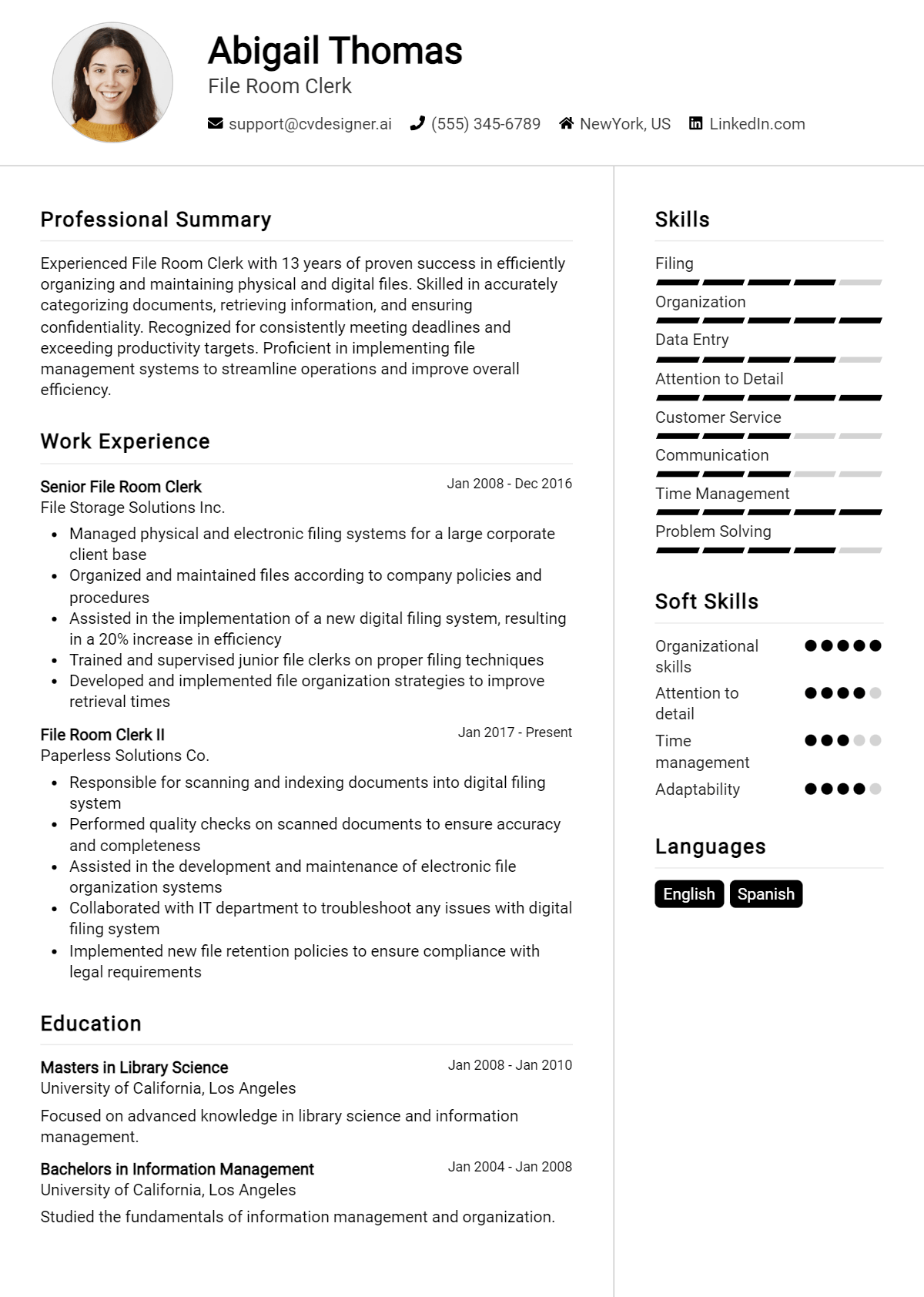
When preparing for a job interview as a File Room Clerk, it's essential to familiarize yourself with the types of questions you may be asked. This role requires attention to detail, organizational skills, and an understanding of filing systems, so interviewers will likely focus on your experience and ability to manage documents efficiently. By anticipating these questions, you can present yourself as a strong candidate who is well-suited for the position.
Here is a list of common job interview questions for the File Room Clerk position, along with examples of the best answers. These questions cover your work history and experience, what you have to offer the employer, and your goals for the future. Expect inquiries about your familiarity with filing systems, your approach to handling confidential information, and how you prioritize tasks in a busy environment. Being prepared with thoughtful responses will help you demonstrate your qualifications and enthusiasm for the role.
1. What experience do you have with filing systems?
I have worked with both electronic and manual filing systems in previous jobs. I’m adept at organizing documents, ensuring easy retrieval, and maintaining accuracy to prevent misfiling. My attention to detail has always helped me manage files efficiently and effectively.
Example:
In my last job, I managed a digital filing system, where I categorized documents by project and date, improving retrieval time by 30%. I also trained new staff on best practices for maintaining accuracy.
2. How do you prioritize tasks in a busy file room?
I prioritize tasks based on deadlines and the volume of requests. I utilize a checklist to ensure that urgent files are processed first while maintaining an organized workflow. Communication with team members is vital to manage expectations and workloads.
Example:
For instance, during peak periods, I focus on urgent requests first and allocate time slots for routine filing, ensuring everything is completed efficiently without compromising quality.
3. How do you handle confidential documents?
I understand the importance of confidentiality and follow strict protocols for handling sensitive information. I ensure that such documents are stored securely and only accessible to authorized personnel. Regular training helps me stay updated on compliance regulations.
Example:
In my previous role, I adhered to confidentiality policies by locking away sensitive files and using password-protected electronic storage for digital documents, ensuring compliance with company standards.
4. Describe a time you improved a filing process.
At my last job, I identified inefficiencies in our filing system. I proposed a new categorization method that combined both chronological and alphabetical organization, which reduced retrieval time by 40%. This change enhanced overall productivity within the team.
Example:
After implementing the new system, I received positive feedback from my colleagues, noting that it made finding documents much quicker and easier, which boosted our team's efficiency.
5. What tools and software are you familiar with for filing tasks?
I have experience with various filing software, including Microsoft SharePoint, Google Drive, and document management systems like M-Files. I am proficient in using these tools to manage files, track revisions, and collaborate with team members effectively.
Example:
In my previous role, I used SharePoint to streamline our document sharing process, which allowed for better collaboration among team members and easier access to files.
6. How do you ensure accuracy when filing documents?
I double-check all documents before filing, verifying that they are labeled correctly. I also maintain a system of checks and balances, where I periodically review files to ensure they are in the right location and organized properly.
Example:
By conducting routine audits of our filing system, I was able to reduce misfiled documents by 20%, ensuring that everything was consistently accurate and reliable.
7. How do you handle a situation where a document is missing?
When a document is missing, I immediately conduct a thorough search of the file room and check with team members. If it remains untraceable, I report it to my supervisor and assist in creating a backup plan to mitigate the issue.
Example:
In a previous job, I once found a missing document by retracing our steps and identifying where it was last accessed. This proactive approach helped us resolve the issue quickly.
8. What do you think is the most important skill for a File Room Clerk?
The most important skill for a File Room Clerk is attention to detail. This ensures that documents are accurately filed and retrieved, preventing errors. Additionally, strong organizational skills and time management are critical to maintaining an efficient filing system.
Example:
In my experience, being detail-oriented has allowed me to minimize errors and maintain a high level of accuracy, which is essential in this role.
9. How do you prioritize your tasks when faced with multiple requests for file retrieval?
I assess the urgency and importance of each request, consulting with team members if needed. I then create a prioritized list to ensure timely responses while maintaining accuracy, which is crucial in a file room setting.
Example:
I would first handle urgent requests from management, then address those with specific deadlines, and finally process routine inquiries, ensuring that all files are retrieved promptly and efficiently.
10. What methods do you use to ensure that files are accurately categorized and easy to locate?
I implement a systematic filing system, using consistent labeling and a digital tracking system. Regular audits help maintain organization and identify any misplaced files, making retrieval efficient.
Example:
By using color-coded labels and a digital index, I ensure that files are easy to find. Regularly reviewing the system helps address any issues before they escalate.
11. Can you describe a time when you had to deal with a difficult colleague in the file room?
I encountered a colleague resistant to new filing procedures. I arranged a one-on-one discussion to understand their concerns, and together we found a compromise that improved our workflow and maintained a positive environment.
Example:
I once helped a colleague adjust to new software by offering training sessions, which improved our teamwork and reduced misunderstandings.
12. How do you handle confidential information in the file room?
I adhere strictly to confidentiality protocols, ensuring that sensitive files are stored securely and only accessible to authorized personnel. Regular training on data privacy helps reinforce these practices.
Example:
I lock confidential files in secure cabinets and ensure that only trained staff access them, maintaining confidentiality at all times.
13. What experience do you have with electronic filing systems?
I have extensive experience with electronic filing systems, including data entry, document scanning, and digital archiving. I prioritize accuracy and efficiency when transitioning from paper to digital formats.
Example:
In my previous role, I led a project to digitize files, which improved retrieval times and reduced physical clutter significantly.
14. How do you stay organized in a fast-paced environment?
I utilize checklists and maintain a clean workspace to manage my tasks effectively. This helps me stay focused and allows for quick adjustments when unexpected requests arise.
Example:
By using daily to-do lists and organizing my workspace, I can quickly adapt to changing priorities while maintaining productivity.
15. Describe a situation where you made a mistake in file handling. How did you resolve it?
I once misfiled a critical document. Upon realizing the error, I immediately notified my supervisor, located the file, and implemented a double-check system to prevent future occurrences, demonstrating accountability and commitment to improvement.
Example:
I corrected my mistake by quickly locating the document and updating our filing procedure to include a verification step to avoid similar errors.
16. What role do you think attention to detail plays in the position of a File Room Clerk?
Attention to detail is essential for a File Room Clerk, as accurate file organization and retrieval prevent costly errors. It ensures that documents are easily accessible and maintains the integrity of our records.
Example:
Without strong attention to detail, documents could be misplaced or misfiled, resulting in delays and potential compliance issues.
17. How do you prioritize your tasks when faced with multiple requests?
I assess the urgency and importance of each request, then create a prioritized list. I communicate with team members to manage expectations and ensure critical tasks are completed on time while maintaining accuracy in filing.
Example:
I would first identify deadlines, then tackle the most urgent requests. For example, if a document is needed for an upcoming meeting, I prioritize that over routine filing tasks.
18. Can you describe a time when you improved a filing system?
In my previous role, I reorganized the filing system by implementing color-coded labels, which enhanced visibility and accessibility. This change reduced the time spent searching for documents by 30%, ultimately improving overall efficiency.
Example:
I introduced a color-coded system that categorized files by department. This method significantly reduced retrieval time and improved team productivity.
19. How do you ensure confidentiality when handling sensitive documents?
I strictly adhere to company policies regarding confidential information. I only share sensitive documents with authorized personnel and ensure that files are securely stored and logged to prevent unauthorized access.
Example:
I always verify the identity of individuals requesting sensitive documents and use secure storage methods to protect confidential information, ensuring compliance with privacy regulations.
20. What tools or software are you familiar with for document management?
I have experience using electronic document management systems like SharePoint and Google Drive. I am also proficient in Microsoft Office Suite, which helps in organizing and managing files efficiently.
Example:
In my last position, I used SharePoint for document management, enabling seamless collaboration and easy access to files for the entire team.
21. Describe how you handle errors in filing or document retrieval.
I address errors promptly by first identifying the mistake, then correcting it by re-filing or re-organizing the documents. I also take note of the error to prevent future occurrences through improved processes.
Example:
When I find an error, I immediately review the documents in question, correct the filing, and adjust our procedures to minimize similar errors in the future.
22. How do you maintain your attention to detail in a repetitive job?
To maintain attention to detail, I take regular breaks and switch tasks when possible. I also implement checklists to ensure accuracy and focus on the importance of each document I handle.
Example:
I break tasks into smaller chunks and use checklists to track progress, which helps me stay focused and maintain accuracy in my work.
23. What strategies do you use to stay organized in your filing work?
I employ a systematic approach, using categorization and labeling for easy access. Regular audits of the filing system ensure everything remains organized and up to date, preventing clutter.
Example:
I categorize files by type and date, regularly review the system, and declutter to ensure everything is organized and easily accessible.
24. How do you handle a situation where you cannot find a requested document?
I remain calm and first double-check the filing system. If the document is still missing, I inform the requester and offer alternatives or solutions, such as recreating the document if necessary.
Example:
If I can't find a document, I check all possible locations, then communicate with the requester to explain the situation and explore options for resolution.
25. How do you prioritize tasks when managing multiple files?
I assess the urgency and importance of each task, categorizing them accordingly. This allows me to focus on high-priority files first while setting aside time for routine tasks. Regularly communicating with my team ensures I remain aligned with any immediate needs.
Example:
When managing multiple files, I prioritize by deadlines and importance. For instance, I tackle urgent requests first, allowing me to stay organized and ensure critical documents are processed without delay, while still addressing routine filing tasks.
26. Describe your experience with digital filing systems.
I have worked extensively with digital filing systems, ensuring documents are scanned, indexed, and stored correctly. My experience includes training team members on software use and maintaining system organization to enhance retrieval efficiency and document security.
Example:
In my previous role, I managed a digital filing system, scanning and indexing thousands of documents. I also trained colleagues on best practices, ensuring our digital archives were organized and easily accessible, which improved efficiency significantly.
27. How do you ensure confidentiality when handling sensitive documents?
I strictly adhere to confidentiality protocols, ensuring sensitive documents are accessed only by authorized personnel. I also maintain secure filing methods and regularly review procedures to protect information from unauthorized access, thus upholding the organization’s integrity.
Example:
To maintain confidentiality, I only share sensitive documents with authorized individuals and secure files in locked cabinets. Additionally, I am diligent in following company protocols to prevent unauthorized access to confidential information.
28. Can you describe a challenging situation you faced in a previous filing role and how you resolved it?
In a past role, we faced a backlog of files due to a system upgrade. I organized a team to prioritize critical files and implemented a daily progress tracker, which helped us clear the backlog efficiently while maintaining accuracy and organization.
Example:
When faced with a large backlog during a system upgrade, I initiated a team effort to prioritize urgent files. We created a tracking system to monitor progress, which allowed us to manage the workload effectively and meet deadlines.
29. What strategies do you use to maintain accuracy in your filing?
I utilize checklists and double-check documents before filing to ensure accuracy. Additionally, I regularly review and update filing procedures to reduce errors and provide training sessions for team members to maintain high standards of accuracy.
Example:
I maintain accuracy by always using checklists for filing, allowing me to verify each document before placement. Regular training sessions with my team help reinforce accuracy standards, minimizing errors in our filing processes.
30. How do you handle requests for files that cannot be found?
I first conduct a thorough search using our indexing system. If files are still missing, I communicate with the relevant departments to gather information and possibly locate the documents. If necessary, I suggest recreating documents to ensure continuity.
Example:
If a file is missing, I start by searching our indexing system thoroughly. If I can’t find it, I reach out to colleagues for help and, if needed, work towards recreating the document to ensure efficiency.
31. What role does teamwork play in your work as a File Room Clerk?
Teamwork is vital in my role, as efficient filing requires collaboration and communication. I regularly coordinate with colleagues to share responsibilities and ensure everyone is aligned on filing procedures, which enhances overall productivity and accuracy.
Example:
In my experience, teamwork enhances our filing processes. I collaborate with colleagues to ensure everyone understands their roles and responsibilities, which leads to more organized filing and quicker document retrieval for our team.
32. How do you stay organized in your filing duties?
I employ a systematic approach by categorizing files, using clear labeling, and maintaining a consistent filing schedule. Regular audits help keep the system organized, ensuring that files are easy to locate, which ultimately enhances workflow efficiency.
Example:
To stay organized, I categorize files clearly and use consistent labeling methods. I also set aside time for regular audits, which helps me maintain an orderly filing system and ensures quick access to documents when needed.
33. How do you prioritize tasks when managing multiple requests for documents?
I assess the urgency and importance of each request, tackling time-sensitive documents first. I maintain an organized system to track requests and deadlines, ensuring all tasks are completed efficiently and accurately.
Example:
For instance, if a document is needed for a meeting within the hour, I prioritize that request over others, ensuring it is retrieved and delivered promptly while keeping track of outstanding tasks.
34. Describe a time when you had to deal with a difficult colleague or client regarding file retrieval.
I encountered a frustrated colleague needing a critical file urgently. I listened to their concerns, reassured them, and expedited the search process. By remaining calm and communicative, I was able to resolve the issue quickly.
Example:
By acknowledging their frustration and providing regular updates, I turned a challenging situation into a positive experience, ultimately retrieving the document in time.
35. What strategies do you use to ensure the accuracy of filing and document retrieval?
I implement a consistent labeling system and regularly audit files for accuracy. I also utilize digital tools to track document locations, which minimizes errors and enhances retrieval speed.
Example:
For instance, I regularly review files for compliance with our labeling system, ensuring all documents are filed correctly and easily accessible when needed.
36. How do you handle confidential or sensitive information in the file room?
I adhere strictly to confidentiality protocols, restricting access to sensitive files and ensuring they are stored securely. I also train staff on handling confidential information properly.
Example:
For example, I maintain locked cabinets for sensitive documents and limit access to authorized personnel only, ensuring compliance with privacy policies.
37. Can you explain how you stay organized in a fast-paced work environment?
I use a combination of checklists and digital tracking tools to maintain organization. Prioritizing tasks and setting clear deadlines helps me manage my workload efficiently without compromising accuracy.
Example:
In a busy office, I keep a daily checklist that I update regularly, allowing me to focus on high-priority tasks while ensuring nothing is overlooked.
38. What experience do you have with filing systems and software?
I have extensive experience with both physical filing systems and digital document management software. I am proficient in tools like Microsoft Excel and document scanning software, enhancing efficiency in file retrieval.
Example:
In my previous role, I digitized records using document management software, which improved retrieval times and reduced physical storage needs significantly.
39. How do you ensure compliance with company policies regarding document handling?
I familiarize myself with company policies and regularly participate in training sessions. I also ensure that all team members understand and adhere to these guidelines to maintain compliance.
Example:
For instance, I conduct quarterly reviews of our procedures and provide feedback to ensure everyone is up-to-date with compliance standards.
40. What steps do you take to improve the efficiency of the file room operations?
I analyze current processes and identify bottlenecks. Implementing new technologies, streamlining workflows, and providing staff training are key strategies I use to enhance overall efficiency.
Example:
For example, I introduced a color-coded system for file organization, which significantly reduced the time taken to locate documents.
41. How do you prioritize tasks when managing multiple requests in a busy file room?
I prioritize tasks by assessing the urgency and importance of each request. I keep a checklist and categorize tasks based on deadlines, which ensures that I meet all necessary timelines efficiently while maintaining organization in the file room.
Example:
For instance, if I receive multiple requests, I first handle those that are time-sensitive, then move on to regular requests, ensuring everything is completed in an orderly manner.
42. Can you describe a time when you identified a problem in the filing system? How did you resolve it?
I encountered a situation where documents were misfiled due to a lack of clear labeling. I took initiative to create a new labeling system and retrained staff on proper filing protocols, which significantly reduced errors and improved retrieval times.
Example:
After implementing the new system, I monitored the filing process and saw a 30% decrease in retrieval errors within a month.
43. What software or tools are you familiar with that assist in file management?
I have experience using document management systems like SharePoint and FileMaker Pro. These tools help streamline filing processes, track document versions, and ensure secure access to files, which enhances overall efficiency in file management.
Example:
In my previous role, I utilized SharePoint to organize digital files, which improved accessibility for team members and minimized retrieval time.
44. How do you ensure the confidentiality and security of sensitive documents?
I ensure confidentiality by implementing strict access controls and regularly training staff on data privacy policies. Additionally, I securely store sensitive documents in locked cabinets and monitor access logs to prevent unauthorized viewing.
Example:
For example, I established a procedure that limits access to specific personnel, which significantly increased our compliance with data protection regulations.
45. How would you handle a situation where a document you need is missing?
In such a scenario, I would first conduct a thorough search of the filing area. If still missing, I would check with colleagues and review logs to trace its last known location, ensuring I document the process for future reference.
Example:
In a past role, I successfully located a missing file by retracing the filing history, which helped improve our tracking system.
46. What steps do you take to maintain an organized file room?
I maintain an organized file room by implementing a systematic filing approach and regularly auditing the files. I also ensure labels are clear and up-to-date, and I encourage feedback from team members on improving filing efficiency.
Example:
By conducting monthly audits, I was able to reduce disorganization and streamline access to critical documents.
How Do I Prepare For A File Room Clerk Job Interview?
Preparing for a job interview is crucial for making a positive impression on the hiring manager. Being well-prepared not only boosts your confidence but also demonstrates your commitment to the role. Here are some key preparation tips to help you shine in your interview for a File Room Clerk position:
- Research the company and its values to understand its culture and mission.
- Practice answering common interview questions related to file management and organizational skills.
- Prepare examples that demonstrate your skills and experience relevant to the File Room Clerk role.
- Familiarize yourself with the software and tools commonly used in file management.
- Dress professionally to create a good first impression.
- Bring multiple copies of your resume and any relevant certifications to share with the interviewer.
- Be ready to discuss your attention to detail and organizational abilities, as these are vital for the position.
Frequently Asked Questions (FAQ) for File Room Clerk Job Interview
Being well-prepared for an interview is crucial, especially when it comes to addressing commonly asked questions. Understanding what to expect can help you present yourself confidently and effectively. Below are some frequently asked questions that candidates may encounter during a File Room Clerk interview, along with practical advice on how to approach them.
What should I bring to a File Room Clerk interview?
When attending a File Room Clerk interview, it is important to bring several key items. Firstly, have multiple copies of your resume ready to share with interviewers. Additionally, prepare a list of references and any relevant certifications or training documents. A notepad and pen can be useful for taking notes during the interview. Finally, consider bringing a portfolio that showcases your organizational skills, such as examples of past work or projects if applicable.
How should I prepare for technical questions in a File Room Clerk interview?
To prepare for technical questions, it is essential to familiarize yourself with the specific software or filing systems used in the industry. Research common practices in document management and understand the terminology related to file organization, archiving, and retrieval. Practice answering questions about your experience with these systems and be ready to explain how you would handle various scenarios in the file room. Additionally, consider doing mock interviews to enhance your confidence in answering technical queries.
How can I best present my skills if I have little experience?
If you have limited experience, focus on transferable skills that are relevant to the File Room Clerk position. Highlight your organizational abilities, attention to detail, and any experience with data entry or customer service. Use examples from your education, volunteer work, or internships to demonstrate how you have successfully completed tasks that align with the job's requirements. Show enthusiasm for the role and a willingness to learn, which can leave a positive impression on the interviewer.
What should I wear to a File Room Clerk interview?
Dressing appropriately for the interview is important as it reflects your professionalism. For a File Room Clerk position, business casual attire is typically a safe choice. This could include dress slacks or a skirt paired with a collared shirt or blouse. Avoid overly casual clothing such as jeans or t-shirts. Ensure that your outfit is clean, neat, and comfortable, allowing you to focus on your interview rather than your attire.
How should I follow up after the interview?
Following up after the interview is a valuable step in the job application process. Send a thank-you email within 24 hours to express your appreciation for the opportunity to interview. In your message, briefly reiterate your enthusiasm for the File Room Clerk position and mention specific points from the interview that resonated with you. This not only shows your professionalism but also keeps you fresh in the interviewer's mind as they make their hiring decision.
Conclusion
In summary, this interview guide for the File Room Clerk position has highlighted the essential aspects of preparing for your interview. It is crucial to emphasize the importance of preparation and practice, as well as demonstrating the relevant skills required for the role. By being well-prepared for both technical and behavioral questions, candidates can significantly improve their chances of success and make a lasting impression on interviewers.
As you move forward, we encourage you to leverage the tips and examples provided in this guide. Approach your interviews with confidence and clarity, knowing that you have equipped yourself with the knowledge to excel. Remember, every interview is an opportunity to showcase your abilities and fit for the position!
For further assistance, check out these helpful resources: resume templates, resume builder, interview preparation tips, and cover letter templates.