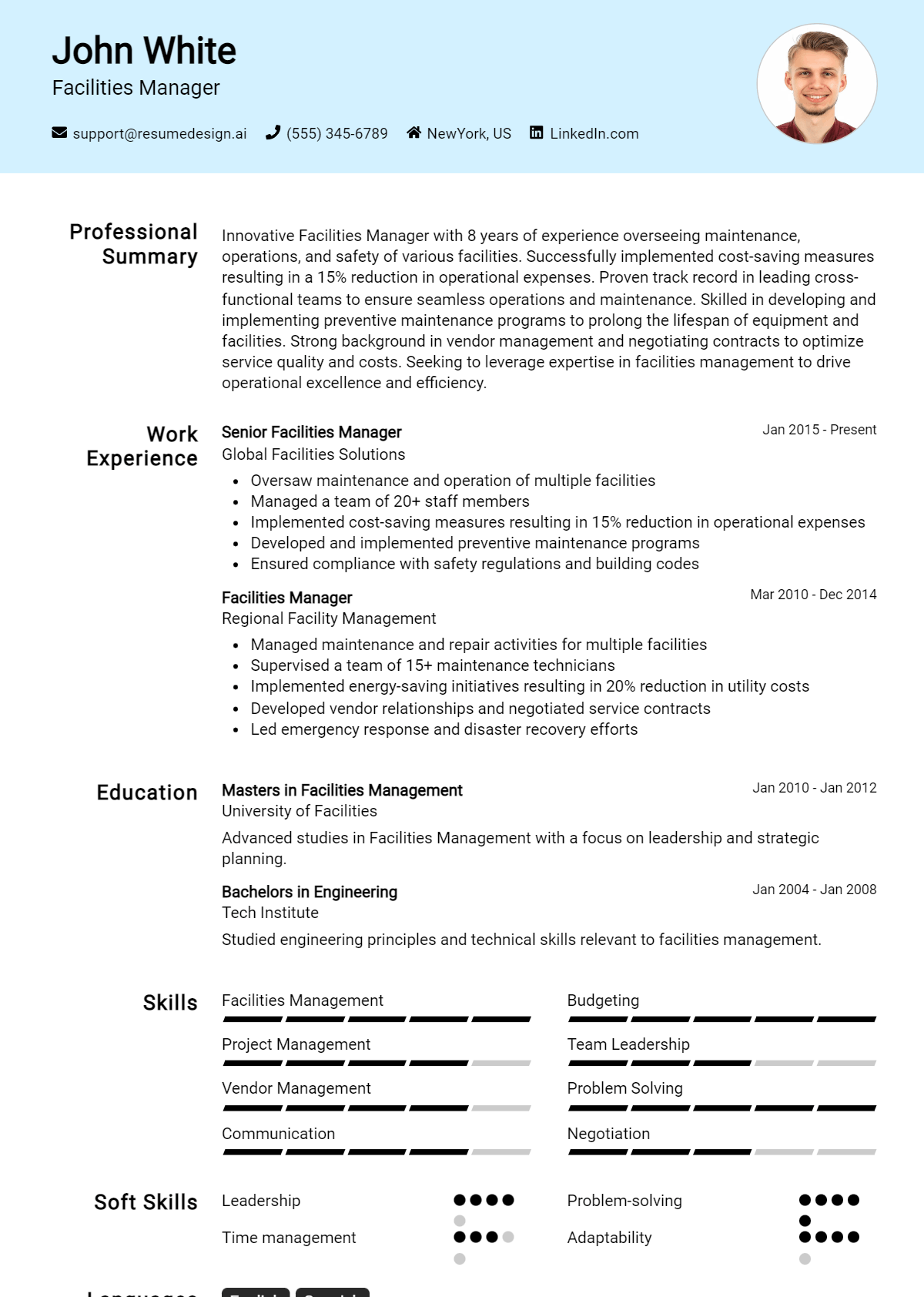
The role of a Facilities Manager is crucial in ensuring that an organization's physical environment is safe, efficient, and conducive to productivity. As you prepare for your interview, it’s essential to be ready for a range of questions that will evaluate your skills, experience, and approach to managing facilities. Understanding these questions can help you articulate your qualifications and demonstrate your value to potential employers.
Here is a list of common job interview questions for Facilities Managers, along with examples of the best answers. These questions cover your work history and experience, what you have to offer the employer, and your goals for the future. Whether it's discussing your strategies for maintenance management or your approach to budgeting, being prepared with thoughtful responses will showcase your expertise in the field.
1. What experience do you have in facilities management?
I have over 7 years of experience in facilities management, overseeing maintenance, safety compliance, and vendor management. My expertise includes implementing efficient processes that enhance operational performance while ensuring a safe and productive environment for employees.
Example:
In my previous role, I managed a team of maintenance staff and coordinated with external vendors to ensure timely repairs and compliance with safety regulations, which improved our facility's efficiency by 20%.
2. How do you prioritize tasks in a facilities environment?
I prioritize tasks by assessing urgency and impact on operations. I use a systematic approach to evaluate requests, ensuring critical issues like safety or compliance are addressed first, while also managing routine maintenance effectively to minimize disruptions.
Example:
For instance, during an HVAC failure, I immediately prioritized repairs over routine landscaping, ensuring employee comfort and safety while scheduling less urgent tasks for later.
3. Can you describe a time you handled a facility emergency?
During a plumbing emergency that caused flooding, I quickly coordinated with emergency services, informed affected staff, and arranged for immediate repairs. My proactive communication minimized disruptions and restored normal operations within hours, showcasing my crisis management skills.
Example:
I led an emergency response team, ensuring everyone evacuated safely while managing repair crews to fix the issue efficiently, ultimately preventing extensive damage.
4. How do you ensure compliance with health and safety regulations?
I stay updated on local regulations and conduct regular audits of our facilities. Training staff on safety protocols and ensuring proper documentation for inspections helps maintain compliance and promotes a culture of safety within the organization.
Example:
In my last position, I implemented a safety training program that reduced workplace incidents by 30%, significantly enhancing our compliance and employee awareness.
5. What strategies do you use for vendor management?
I establish clear expectations and maintain open communication with vendors. I regularly review performance metrics and feedback to ensure service quality, negotiate contracts for best value, and foster long-term relationships that benefit both parties.
Example:
By developing a vendor scorecard, I improved service delivery and reduced costs by 15% through strategic negotiations and performance evaluations.
6. How do you manage a facilities budget?
I create detailed budgets by analyzing past expenditures, forecasting future needs, and identifying cost-saving opportunities. Regular monitoring and adjustments ensure we remain within budget while meeting all operational requirements effectively.
Example:
In my previous role, I implemented energy-saving initiatives that cut our utility costs by 25%, allowing for reinvestment in critical facility upgrades.
7. Describe your approach to team management.
I believe in fostering a collaborative environment where team members feel valued. I focus on clear communication, regular feedback, and professional development to empower my team while ensuring accountability and achieving collective goals.
Example:
By implementing weekly check-ins and training sessions, I improved team morale and efficiency, ultimately decreasing project turnaround times by 15%.
8. How do you handle maintenance requests from staff?
I maintain an organized system for logging and prioritizing maintenance requests, ensuring timely responses based on urgency and impact. Regular updates to staff on progress foster transparency and trust in the facilities management process.
Example:
By introducing a digital ticketing system, I reduced response times by 40%, significantly enhancing staff satisfaction with maintenance services.
9. How do you prioritize maintenance tasks in a busy facility?
I assess tasks based on urgency, safety implications, and impact on operations. I use a priority matrix to categorize tasks and communicate with my team to ensure all critical issues are addressed promptly while scheduling less urgent tasks around them.
Example:
I prioritize tasks by assessing safety risks and operational impacts, using a matrix. For instance, I might address a leaking pipe immediately, while scheduling routine maintenance for less critical equipment over the following weeks.
10. Can you describe a time you managed a facility renovation?
In my previous role, I led a major renovation project, overseeing budget, timelines, and contractor coordination. I engaged stakeholders regularly, ensuring their needs were met while keeping everything on track. The project was completed ahead of schedule and under budget.
Example:
I managed a renovation that involved updating office spaces. By closely monitoring the budget and timelines, I ensured we finished ahead of schedule and saved 15% on costs through effective contractor negotiations.
11. How do you handle conflicts between employees regarding facility usage?
I approach conflicts by facilitating open communication between the parties involved. I listen to their concerns, identify common ground, and work collaboratively to find a solution that accommodates everyone's needs while adhering to facility policies.
Example:
When conflicts arise over space usage, I mediate discussions to understand both sides. For instance, I once helped two departments negotiate a shared meeting room schedule that satisfied both their needs.
12. What strategies do you implement for energy efficiency in facilities?
I conduct regular energy audits to identify inefficiencies and implement solutions like LED lighting, smart thermostats, and energy management systems. These strategies reduce costs and promote sustainability, aligning with company goals for environmental responsibility.
Example:
I initiated an energy audit that led to switching to LED lighting, which reduced energy costs by 30%. Additionally, I implemented a smart thermostat system, enhancing our overall energy efficiency.
13. How do you ensure compliance with health and safety regulations?
I stay updated on regulations and conduct regular training sessions for staff. I implement safety audits and maintain thorough documentation of compliance efforts, ensuring all procedures are followed to protect employees and meet legal standards.
Example:
I ensure compliance by conducting regular safety audits and training sessions. For example, I implemented a monthly safety checklist that significantly improved our adherence to health regulations.
14. Describe your experience with vendor management.
I have extensive experience managing vendors by establishing clear communication, setting expectations, and evaluating performance regularly. This approach ensures quality service delivery while fostering strong relationships, which is crucial for successful facility operations.
Example:
In my last role, I managed several vendors by setting clear expectations and regularly reviewing their performance. This proactive approach led to improved service quality and established lasting relationships.
15. How do you stay current with industry trends in facilities management?
I subscribe to industry publications, attend conferences, and participate in professional organizations. Networking with peers also helps me stay informed about best practices and emerging technologies that can enhance facility management.
Example:
I stay updated by subscribing to relevant publications and attending annual FM conferences. These resources help me learn about new technologies and best practices in facilities management.
16. What role does technology play in your facilities management approach?
Technology is integral to my approach. I use facility management software for maintenance tracking, energy management systems for efficiency, and communication tools to streamline operations. This tech integration enhances productivity and improves the overall management process.
Example:
I rely on FM software for tracking maintenance requests and energy management tools to monitor usage. This approach has significantly improved our operational efficiency and response times.
17. How do you prioritize maintenance requests?
I assess requests based on urgency, impact on operations, and safety. I maintain a digital log to track all requests and categorize them to ensure timely responses, ensuring that critical issues are prioritized without compromising service quality for less urgent tasks.
Example:
I prioritize maintenance by evaluating the safety risks and operational disruption. For instance, a leaking pipe would be addressed immediately, while non-urgent requests are scheduled accordingly to maintain an efficient workflow.
18. Can you describe your experience with budget management in facilities?
I have managed facility budgets by forecasting expenses, negotiating vendor contracts, and monitoring spending. By implementing cost-saving measures without compromising quality, I have consistently kept projects on budget and improved overall financial performance in my facilities.
Example:
In my last role, I reduced operational costs by 15% through strategic vendor negotiations and diligent budget tracking, ensuring all essential services were maintained without overspending.
19. How do you ensure compliance with health and safety regulations?
I stay updated on local regulations, conduct regular audits, and provide training to staff on safety protocols. Implementing checklists and emergency response drills ensures that all employees are prepared and compliant with health and safety standards.
Example:
I ensure compliance by conducting quarterly safety audits and providing training sessions. This proactive approach has helped reduce incidents and maintain a safe working environment for all employees.
20. How do you handle vendor management and relationships?
I prioritize clear communication and regular performance evaluations to ensure all vendors meet our expectations. Building strong relationships through collaboration fosters trust, which leads to more favorable terms and better service levels for our facilities.
Example:
I maintain strong vendor relationships by holding regular meetings to discuss performance and expectations, which has resulted in improved service delivery and cost-effectiveness for our facilities.
21. Describe a challenging project you've managed in facilities.
I managed a major HVAC upgrade that involved coordinating multiple contractors while minimizing disruptions. By developing a detailed project timeline and communication plan, I ensured the project was completed on time and within budget, leading to improved air quality for occupants.
Example:
I successfully coordinated an HVAC upgrade during office hours, minimizing disruptions by scheduling work after hours and communicating clearly with staff, resulting in a smooth transition and improved comfort for our employees.
22. How do you plan for disaster recovery in facilities management?
I create comprehensive disaster recovery plans that include risk assessments, emergency contact lists, and evacuation procedures. Regularly conducting drills and updating the plan based on feedback ensures our facilities are prepared for any emergency situation.
Example:
I drafted a disaster recovery plan that includes quarterly drills and regular reviews, ensuring staff are aware of procedures. This proactive approach minimizes confusion during emergencies and enhances overall safety.
23. How do you manage environmental sustainability in facility operations?
I implement energy-efficient systems and promote recycling initiatives to reduce our environmental footprint. By collaborating with vendors who prioritize sustainability, we have achieved considerable reductions in energy use and enhanced our facility's reputation as environmentally responsible.
Example:
I introduced a sustainability program that included energy audits and waste reduction strategies, resulting in a 20% decrease in energy consumption and increased employee engagement in eco-friendly practices.
24. How do you stay organized and manage multiple projects simultaneously?
I use project management tools to organize tasks and timelines, prioritizing based on deadlines and resource availability. Weekly reviews help me adjust plans and maintain focus on key deliverables, ensuring all projects progress smoothly without conflicts.
Example:
I utilize project management software to track deadlines and tasks. This helps me manage multiple projects efficiently, ensuring that resources are allocated appropriately and all deadlines are met.
25. How do you prioritize maintenance tasks in a facility?
I assess tasks based on urgency, safety concerns, and impact on operations. I use a maintenance management system to track issues, prioritize based on severity, and schedule preventive maintenance to minimize disruptions.
Example:
I prioritize urgent safety issues first, followed by tasks that affect daily operations, using a maintenance management system to keep everything organized and timely.
26. Can you describe a time you successfully managed a facility project?
I managed a major HVAC upgrade by coordinating with contractors, scheduling work around business hours, and ensuring compliance with regulations. The project was completed on time and under budget, significantly improving energy efficiency.
Example:
I led an HVAC upgrade project, managing timelines and budgets effectively, resulting in enhanced energy efficiency and minimal disruption to operations.
27. How do you handle vendor relationships?
I maintain strong vendor relationships through regular communication, performance reviews, and feedback sessions. This helps ensure quality service and timely responses, which is crucial for maintaining facility operations.
Example:
I conduct regular reviews and maintain open communication with vendors, ensuring they meet performance standards and address any issues promptly.
28. What strategies do you employ for budget management?
I implement a detailed tracking system for expenses, prioritize essential projects, and regularly review budget forecasts. This proactive approach allows for adjustments and ensures that we stay within budget while meeting facility needs.
Example:
I track all expenses meticulously, prioritize projects, and adjust forecasts regularly to ensure we meet our budget requirements without compromising quality.
29. How do you ensure compliance with safety regulations?
I keep updated on local, state, and federal regulations, conduct regular safety audits, and provide training for staff. This proactive approach helps minimize risks and maintain a safe environment.
Example:
I regularly review regulations, conduct audits, and provide employee training, ensuring we comply with all safety standards and mitigate risks effectively.
30. Describe your experience with sustainability initiatives in facilities management.
I have implemented energy-efficient systems, recycling programs, and green building practices. These initiatives not only reduce operational costs but also promote a sustainable environment, aligning with corporate responsibility goals.
Example:
I've initiated energy-saving programs and recycling efforts that reduced costs and aligned our facility with sustainability goals, benefiting both the environment and our budget.
31. How do you approach communication with your team?
I foster open communication through regular meetings, updates, and feedback sessions. This transparency helps build trust, encourages collaboration, and ensures everyone is aligned with our goals and objectives.
Example:
I hold regular team meetings and encourage feedback, creating an open environment that fosters collaboration and ensures alignment with our objectives.
32. What role does technology play in your facilities management strategy?
Technology is crucial in streamlining operations, tracking maintenance, and enhancing communication. I utilize management software for scheduling, reporting, and performance monitoring, which increases efficiency and improves overall facility management.
Example:
I leverage management software for tracking maintenance and scheduling, which enhances efficiency and allows for better communication across teams.
33. How do you prioritize maintenance requests in a busy facility?
I prioritize maintenance requests based on urgency and impact on operations. Critical issues affecting safety or essential services take precedence. I use a ticketing system to track requests and ensure timely responses while communicating with my team about priorities.
Example:
For instance, if a heating system fails during winter, I would address that immediately, while less urgent requests can wait until the system is back in order.
34. Can you describe your experience with vendor management?
I have extensive experience managing vendor relationships, negotiating contracts, and ensuring service delivery meets our standards. I regularly evaluate vendor performance and seek feedback to ensure they align with our facility’s needs and budget constraints.
Example:
For example, I renegotiated our cleaning contract, resulting in a 15% cost reduction while improving service quality through regular performance reviews.
35. What strategies do you use for energy management in facilities?
I implement energy-efficient systems, conduct regular audits, and engage staff in energy-saving practices. I also explore renewable energy options and track consumption data to identify areas for improvement and cost savings.
Example:
Recently, I led an initiative to upgrade lighting to LED, which decreased energy usage by 20% annually, significantly cutting costs.
36. How do you handle emergency situations in a facility?
I develop and regularly update emergency response plans, conduct drills, and ensure all staff are trained. In emergencies, I act quickly, assess the situation, and coordinate with emergency services to ensure safety and minimize disruption.
Example:
During a fire drill, I led the evacuation, ensuring everyone was accounted for, which helped improve our response and preparedness for real emergencies.
37. How do you ensure compliance with health and safety regulations?
I stay updated on health and safety regulations and conduct regular audits to ensure compliance. I also provide training to staff and create clear safety protocols, fostering a culture of safety within the facility.
Example:
For instance, after a safety audit, I implemented new training sessions that significantly reduced workplace incidents by 30% within a year.
38. Describe a successful project you managed related to facility upgrades.
I successfully managed a complete HVAC system upgrade, which involved budgeting, vendor selection, and project coordination. The project was completed on time and within budget, resulting in improved air quality and energy efficiency.
Example:
The upgrades reduced energy costs by 25% and increased tenant satisfaction scores by 15%, showcasing the project's success.
39. How do you approach budgeting for facility management?
I approach budgeting by analyzing past expenditures, forecasting future needs, and identifying potential cost-saving opportunities. I collaborate with stakeholders to align the budget with organizational goals while ensuring essential services are adequately funded.
Example:
Last year, I identified areas to cut costs by 10% without sacrificing service quality, which helped us reallocate funds for necessary upgrades.
40. What role does technology play in your facilities management strategy?
Technology plays a crucial role in streamlining operations, improving communication, and enhancing efficiency. I utilize facility management software for real-time monitoring and data analysis, which helps in making informed decisions and optimizing resources.
Example:
By implementing a digital maintenance tracking system, we reduced response times by 40% and improved overall service quality.
41. How do you prioritize maintenance requests in a busy facilities management environment?
I assess urgency and impact on operations, categorizing requests by safety, compliance, and operational efficiency. This systematic approach ensures critical issues are addressed promptly while maintaining a schedule for routine maintenance.
Example:
For instance, I prioritize a leaking roof over cosmetic repairs to ensure safety and prevent further damage, following up with a maintenance schedule for less urgent requests.
42. Can you describe a time when you implemented a cost-saving initiative?
I initiated an energy audit to identify inefficiencies, resulting in the installation of LED lighting, which cut down electricity costs by 30%. This not only saved money but also improved our sustainability efforts.
Example:
By switching to energy-efficient systems, we reduced operational costs significantly, allowing us to allocate resources toward essential facility upgrades and staff training.
43. How do you handle vendor relationships and negotiations?
I maintain open communication and build trust with vendors, regularly reviewing their performance. When negotiating, I focus on mutually beneficial terms, ensuring quality services while controlling costs effectively.
Example:
For example, I successfully negotiated a long-term contract with a vendor, securing a 15% discount by committing to a bulk order, fostering a reliable partnership.
44. What strategies do you employ to ensure compliance with health and safety regulations?
I stay informed about regulations, conduct regular training for staff, and implement safety audits. Creating a culture of safety is key, encouraging employees to report hazards and participate in safety discussions.
Example:
For instance, I hold quarterly safety drills and feedback sessions, which have led to a 40% decrease in workplace incidents over the past year.
45. How do you ensure that facilities are prepared for unexpected emergencies?
I develop comprehensive emergency response plans, conduct regular drills, and ensure all staff are trained. This proactive approach minimizes disruptions and enhances the safety and readiness of our facilities during emergencies.
Example:
For example, during a recent fire drill, our team executed the emergency plan flawlessly, demonstrating our preparedness and commitment to safety.
46. How do you measure the success of your facilities management programs?
I use key performance indicators like response times, maintenance costs, and user satisfaction surveys. Regularly reviewing these metrics allows me to identify areas for improvement and ensure our programs align with organizational goals.
Example:
By analyzing survey feedback, we've improved user satisfaction ratings by 20% over the last year, showcasing the effectiveness of our facilities management initiatives.
How Do I Prepare For A Facilities Manager Job Interview?
Preparing for a facilities manager job interview is crucial to making a positive impression on the hiring manager. A well-prepared candidate not only demonstrates their qualifications but also shows their genuine interest in the role and the organization. Here are some key preparation tips to help you succeed:
- Research the company and its values to understand their mission and culture.
- Practice answering common interview questions, such as those related to project management and conflict resolution.
- Prepare examples that demonstrate your skills and experience relevant to the facilities manager position.
- Familiarize yourself with industry trends and best practices in facilities management.
- Plan your journey to the interview location to ensure you arrive on time.
- Dress professionally to reflect the company’s culture and standards.
- Prepare thoughtful questions to ask the interviewer about the role and the organization.
Frequently Asked Questions (FAQ) for Facilities Manager Job Interview
Being well-prepared for commonly asked questions during interviews is crucial for candidates aspiring to become Facilities Managers. Understanding what to expect can help alleviate anxiety and enhance confidence. Below are some frequently asked questions that candidates may encounter in a Facilities Manager interview.
What should I bring to a Facilities Manager interview?
When attending a Facilities Manager interview, it's important to come prepared. Bring multiple copies of your resume, a list of references, and any certifications relevant to facilities management. Additionally, consider carrying a notepad and pen to take notes during the interview. This demonstrates your professionalism and eagerness to engage with the interviewer about the role and its responsibilities.
How should I prepare for technical questions in a Facilities Manager interview?
Preparing for technical questions requires a solid understanding of facilities management principles, including building systems, maintenance procedures, and compliance regulations. Review the job description to identify key areas of focus and brush up on relevant industry standards. Consider practicing with mock interviews or discussing technical scenarios with colleagues in the field to strengthen your ability to articulate your knowledge effectively.
How can I best present my skills if I have little experience?
If you're entering the field with limited experience, focus on showcasing your transferable skills and any relevant coursework or internships. Highlight your problem-solving abilities, communication skills, and organizational talents. Use specific examples from previous roles, even if they are not directly related to facilities management, to demonstrate your capability to handle responsibilities effectively and your willingness to learn and adapt.
What should I wear to a Facilities Manager interview?
Dressing appropriately for a Facilities Manager interview is key to making a positive first impression. Aim for business professional attire, such as a suit or tailored dress, to convey a sense of authority and professionalism. Ensure that your outfit is clean, neat, and suitable for a corporate environment. Being well-presented shows respect for the interview process and indicates your seriousness about the position.
How should I follow up after the interview?
Following up after an interview is a critical step in the job application process. Send a thank-you email within 24 hours to express your appreciation for the opportunity to interview and reiterate your interest in the position. Personalize your message by mentioning specific points discussed during the interview that resonated with you. This gesture not only keeps you on the interviewer's radar but also reinforces your enthusiasm for the role.
Conclusion
In this interview guide for the Facilities Manager role, we have covered essential aspects such as the importance of preparation, practicing potential interview questions, and effectively demonstrating your relevant skills. Successfully navigating an interview requires a solid foundation in both technical knowledge and soft skills, making it crucial to prepare thoroughly for both technical and behavioral questions to enhance your chances of success.
As you approach your upcoming interviews, remember to leverage the tips and examples provided in this guide. With diligence and confidence, you can present yourself as a strong candidate ready to take on the responsibilities of a Facilities Manager.
For further assistance, check out these helpful resources: resume templates, resume builder, interview preparation tips, and cover letter templates.