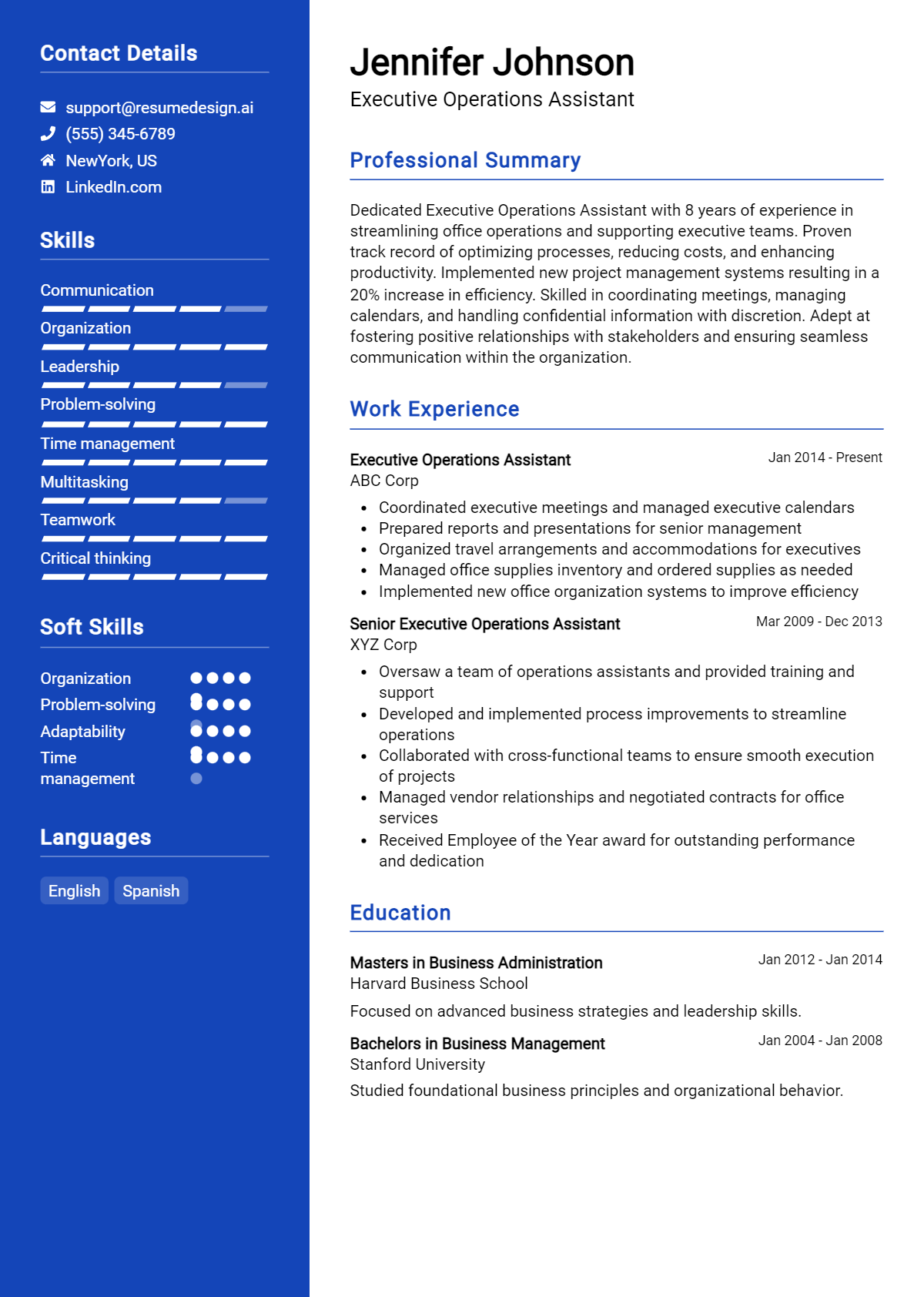
When preparing for an interview as an Executive Operations Assistant, it's essential to anticipate the types of questions you might encounter. This role requires a unique blend of organizational skills, communication abilities, and strategic thinking, often in a fast-paced environment. Understanding common interview questions can not only help you articulate your qualifications but also demonstrate your fit for the position and the organization.
Here is a list of common job interview questions, with examples of the best answers. These questions cover your work history and experience, what you have to offer the employer, and your goals for the future. By crafting thoughtful responses to these inquiries, you can effectively showcase your skills and enthusiasm for the Executive Operations Assistant role, positioning yourself as a strong candidate.
1. Can you describe your experience with project management?
I have managed multiple projects simultaneously, utilizing tools like Trello and Asana to track progress. My organizational skills ensure deadlines are met while coordinating with team members. I prioritize tasks effectively and adapt quickly to changing project requirements.
Example:
In my previous role, I led a project to streamline our operations, coordinating with various departments, which resulted in a 20% increase in efficiency.
2. How do you prioritize tasks in a busy work environment?
I assess tasks based on urgency and importance, often using the Eisenhower Matrix. This helps me focus on high-impact activities first while keeping track of less urgent tasks to ensure nothing falls through the cracks.
Example:
During peak times, I prioritize client requests to maintain satisfaction while scheduling less urgent tasks for later, ensuring all deadlines are met efficiently.
3. Can you provide an example of how you handled a difficult situation at work?
In a previous position, I faced a last-minute cancellation of a key meeting. I quickly rescheduled with all parties involved, finding a suitable alternative time. My proactive communication minimized disruption and maintained stakeholder engagement.
Example:
When a vendor failed to deliver on time, I negotiated a new timeline, ensuring our project stayed on track while maintaining a strong relationship with the vendor.
4. What software tools are you proficient in that are relevant to this role?
I am proficient in Microsoft Office Suite, Google Workspace, and project management tools like Asana and Slack. These tools enhance collaboration and increase productivity, allowing me to manage tasks and communicate effectively with team members.
Example:
I regularly use Excel for data analysis and reporting and have created automated templates that save the team hours of work every month.
5. How do you ensure effective communication within a team?
I promote open channels of communication through regular team meetings and updates. Additionally, I utilize collaborative tools to share information quickly, ensuring everyone stays informed and engaged in ongoing projects.
Example:
By scheduling weekly check-ins and creating a shared document for updates, I foster transparency and encourage team members to voice their ideas and concerns.
6. Describe a time when you had to adapt to a significant change at work.
When our company restructured, I had to adapt to new reporting lines and processes. I embraced the changes by seeking feedback, attending training sessions, and adjusting my workflow to align with new expectations, ensuring continued productivity.
Example:
After a departmental merger, I took the initiative to learn about the new team's dynamics, facilitating smoother collaboration and integration of our processes.
7. What qualities do you think are essential for an Executive Operations Assistant?
Key qualities include strong organizational skills, adaptability, excellent communication, and problem-solving abilities. These traits enable me to manage diverse tasks effectively while supporting executive needs and contributing to overall team success.
Example:
I believe being detail-oriented and proactive are critical attributes that help me anticipate needs and ensure that operations run smoothly.
8. How do you handle confidential information?
I understand the importance of confidentiality and adhere to strict protocols when handling sensitive information. I ensure secure storage and limit access to authorized personnel only, maintaining trust and compliance with company policies.
Example:
In my last role, I managed executive schedules with sensitive details, ensuring all communications were encrypted and stored securely to protect our clients' privacy.
9. Can you describe a time when you had to manage multiple priorities? How did you handle it?
In my previous role, I had to balance scheduling meetings, preparing reports, and managing travel arrangements simultaneously. I prioritized tasks based on deadlines and importance, utilizing a shared calendar for visibility, which helped me stay organized and efficient.
Example:
I once managed overlapping deadlines for a project while coordinating a major event. I created a detailed checklist and allocated specific time blocks for each task, ensuring I met all deadlines without compromising quality.
10. How do you ensure confidentiality when handling sensitive information?
I prioritize confidentiality by strictly following company protocols, including secure data storage and limited access to sensitive information. I also maintain discretion in conversations and always verify the identity of individuals requesting sensitive data.
Example:
In my past role, I routinely handled confidential documents. I ensured they were stored securely and only discussed sensitive matters in private settings, reinforcing a culture of trust and security in the workplace.
11. Describe a challenging problem you faced and how you resolved it.
I encountered a major scheduling conflict that jeopardized an important meeting. I quickly assessed alternative times and communicated with all parties involved, ultimately finding a solution that accommodated everyone, demonstrating my problem-solving and negotiation skills.
Example:
When two executives needed to meet at the same time, I proposed a virtual meeting for one and rescheduled the other. This solution preserved both meetings without impacting the overall agenda.
12. How do you stay organized in a fast-paced environment?
I utilize digital tools like project management software and task lists to keep track of my responsibilities. Regularly reviewing my priorities and setting aside time for planning helps me maintain focus and efficiency in a dynamic environment.
Example:
In my role, I use apps like Trello and Google Calendar to manage tasks. This method allows me to visualize my workload, adjust priorities quickly, and ensure I stay on track with deadlines.
13. How do you handle feedback and criticism?
I view feedback as an opportunity for growth. When receiving criticism, I listen actively, ask clarifying questions, and apply the insights to improve my performance. This approach has helped me build better relationships and enhance my skills.
Example:
Once, I received feedback on my presentation style. I sought specific suggestions and practiced those techniques, ultimately delivering a more engaging presentation that received positive responses from my colleagues.
14. What strategies do you use to improve team communication?
I encourage open dialogue and regular check-ins amongst team members. Utilizing collaborative tools like Slack and creating shared documents fosters transparency and keeps everyone informed, which enhances overall team cohesion and efficiency.
Example:
At my last job, I implemented weekly team meetings and used shared platforms for updates. This practice significantly improved our communication and collaboration, reducing misunderstandings and enhancing project outcomes.
15. Can you give an example of how you have improved a process?
I identified inefficiencies in our expense reporting process, which was time-consuming. I proposed an automated solution that streamlined submissions and approvals, ultimately reducing processing time by 40% and increasing accuracy.
Example:
By implementing an online expense tool, I reduced manual entry errors and increased team compliance with reporting deadlines, leading to faster reimbursements and improved satisfaction among team members.
16. What do you think is the most important quality for an Executive Operations Assistant?
I believe adaptability is crucial for an Executive Operations Assistant. The role often involves shifting priorities and unexpected challenges, so being able to pivot quickly while maintaining high-quality work is essential for success.
Example:
In my experience, adaptability allowed me to successfully manage last-minute changes in executive schedules while ensuring all other tasks were completed on time, demonstrating my ability to remain effective under pressure.
17. How do you prioritize your tasks when managing multiple demands from executives?
I assess the urgency and impact of each task, using a task management tool to organize priorities. I communicate with executives to clarify expectations and deadlines, ensuring that I focus on high-priority items while remaining flexible to shifting needs.
Example:
I prioritize tasks based on deadlines and importance. For instance, I once had to manage scheduling conflicts while preparing materials for a board meeting, so I communicated with all parties involved to ensure everything was completed on time.
18. Can you describe a challenging project you managed and how you ensured its success?
I managed an off-site team-building event, coordinating logistics and schedules for over 100 attendees. I ensured success by creating a detailed timeline, delegating tasks, and maintaining open communication with all stakeholders, which resulted in a seamless event that received positive feedback.
Example:
I coordinated a large team retreat, facing last-minute venue changes. I quickly sourced alternatives, updated all attendees, and maintained a positive attitude, which led to a successful event that fostered team cohesion and morale.
19. How do you handle confidential information?
I prioritize confidentiality by implementing strict protocols for handling sensitive information. This includes using secure communication channels, limiting access to authorized personnel, and regularly reviewing data protection policies to ensure compliance with legal and organizational standards.
Example:
I handled confidential client data in my previous role by using encrypted files and only discussing sensitive matters in private settings. I also trained my team on the importance of confidentiality to maintain trust and security.
20. Describe your experience with budget management.
In my previous position, I assisted in managing a departmental budget, tracking expenses, and preparing financial reports. I collaborated with finance teams to ensure adherence to budgetary constraints while identifying areas for cost savings and efficiency improvements, which enhanced overall financial performance.
Example:
I helped manage a $500,000 budget by tracking expenditures and providing monthly reports. By analyzing spending patterns, I identified savings opportunities, which led to a 10% reduction in costs without compromising service quality.
21. What tools or software do you use for project management?
I am proficient in project management tools like Asana and Trello for tracking progress and collaborating with teams. I also use Microsoft Excel for data analysis and reporting, ensuring that projects stay on track and within budget while enhancing team communication.
Example:
I regularly use Asana for project tracking and Slack for team communication. These tools help keep everyone aligned on deadlines and responsibilities, facilitating smoother project execution and collaboration across departments.
22. How do you ensure effective communication between different departments?
I facilitate effective communication by scheduling regular cross-departmental meetings and using collaboration tools like Slack. I also encourage open dialogue and feedback to ensure that all teams are aligned with the organization’s goals and aware of each other’s priorities and challenges.
Example:
I initiated bi-weekly check-in meetings between departments to discuss ongoing projects. This approach improved transparency and collaboration, ultimately leading to more cohesive teamwork and better project outcomes.
23. Can you provide an example of how you improved a process in your previous role?
I identified that our meeting scheduling process was inefficient, causing conflicts. I proposed and implemented a shared calendar system that allowed team members to view availability, resulting in a 30% reduction in scheduling conflicts and more productive meetings.
Example:
I revamped our onboarding process by creating a standardized checklist. This streamlined the experience for new hires, reducing the onboarding time by 20% and enhancing their integration into the company culture.
24. How do you handle stressful situations or tight deadlines?
I remain calm under pressure by prioritizing tasks and maintaining a positive attitude. I break down projects into manageable steps and communicate with my team to ensure everyone is on the same page, which helps alleviate stress and meet tight deadlines effectively.
Example:
During a tight deadline for a client proposal, I prioritized key deliverables and collaborated with my team efficiently, resulting in a successful submission that not only met the deadline but also exceeded client expectations.
25. How do you prioritize tasks when managing multiple deadlines?
I assess urgency and impact, then use tools like to-do lists and digital calendars to organize tasks. Regular check-ins with my team ensure alignment and allow me to adapt priorities as needed to meet deadlines effectively.
Example:
I use a priority matrix to categorize tasks by urgency and importance, enabling me to focus on high-impact projects first. This approach keeps me organized and efficient, ensuring I meet all deadlines without compromising quality.
26. Describe a situation where you had to handle a difficult client or stakeholder.
I once dealt with an upset client who was unhappy with our service. I listened actively, acknowledged their concerns, and proposed a solution. This approach diffused the situation and ultimately strengthened our relationship by showing commitment to their satisfaction.
Example:
In a past role, a client expressed frustration with a delayed project. I calmly listened, apologized, and communicated the steps we were taking to resolve the issue, which restored their trust and confidence in our team.
27. How do you ensure effective communication within a team?
I promote open communication by facilitating regular meetings and using collaboration tools. I encourage team members to share updates and feedback, ensuring everyone is aligned and informed, which fosters a positive and productive work environment.
Example:
I schedule weekly check-ins and utilize platforms like Slack for ongoing communication. This keeps everyone in the loop and encourages sharing ideas, ensuring effective collaboration and reducing misunderstandings within the team.
28. Can you give an example of how you’ve improved a process in your previous role?
I identified inefficiencies in our document approval process. By implementing a digital tracking system, we reduced approval time by 30%. This change not only increased productivity but also improved team morale and client satisfaction.
Example:
In my last position, I streamlined our reporting process by introducing a shared template, which cut down preparation time by 40%. This allowed the team to focus on analysis rather than formatting, enhancing our overall efficiency.
29. What tools or software are you proficient in that are relevant to this role?
I am proficient in Microsoft Office Suite, Google Workspace, and project management tools like Trello and Asana. Additionally, I have experience with CRM software, which helps in managing client interactions and improving operational efficiency.
Example:
I have extensive experience using Microsoft Excel for data analysis, Google Docs for collaborative projects, and Trello for task management. These tools ensure I can efficiently handle operations and team communication.
30. How do you handle confidential information?
I treat confidential information with the utmost care by following company policies and using secure methods for sharing data. I ensure that sensitive information is only accessible to authorized personnel, maintaining trust and compliance.
Example:
In my previous role, I managed sensitive client data by implementing strict access controls and using encrypted communication channels, ensuring that confidentiality was always maintained in accordance with regulatory requirements.
31. Describe how you manage stress and maintain productivity under pressure.
I manage stress by prioritizing tasks, staying organized, and taking short breaks to recharge. I also practice mindfulness techniques, which help me maintain focus and productivity during high-pressure situations, ensuring I deliver quality work consistently.
Example:
During peak periods, I prioritize tasks and set clear goals for each day. I also take brief breaks to clear my mind, which helps maintain my focus and productivity under pressure while ensuring I meet deadlines.
32. What motivates you to perform well in your role as an Executive Operations Assistant?
I am motivated by the opportunity to contribute to organizational success and improve processes. Knowing that my work directly impacts the efficiency of the team and the satisfaction of clients drives me to perform at my best every day.
Example:
I find motivation in supporting my team and ensuring smooth operations. Seeing the positive outcomes of my efforts, such as improved workflows and happy clients, inspires me to continually strive for excellence in my role.
33. How do you prioritize tasks when you have multiple deadlines to meet?
I assess task urgency and importance, utilizing tools like to-do lists and calendars to manage my schedule effectively. I communicate with team members to ensure alignment and adjust priorities as needed to meet all deadlines successfully.
Example:
I prioritize by assessing deadlines and impact. For instance, I once had three projects due simultaneously and communicated with stakeholders to prioritize based on urgency, ensuring I delivered all tasks on time without compromising quality.
34. Describe a situation where you had to handle a difficult colleague or client.
I encountered a colleague resistant to feedback on a project. I approached them privately to discuss their concerns and collaboratively found a solution that respected their input while meeting project needs, enhancing our working relationship.
Example:
Once, a client was unhappy with project delays. I scheduled a call to listen to their concerns, provided updates, and outlined our plan to expedite progress, which restored their confidence and strengthened our partnership.
35. What strategies do you use for effective communication within a team?
I promote open communication by scheduling regular check-ins, using collaborative tools, and encouraging feedback. Active listening and clear, concise messaging help ensure everyone is aligned and informed, fostering a positive team environment.
Example:
I utilize tools like Slack for quick updates and Zoom for deeper discussions. For instance, I organized weekly team huddles to address issues promptly and share progress, which significantly improved our communication flow.
36. How do you manage sensitive information in your role?
I adhere to confidentiality protocols by limiting access to sensitive data, using secure platforms for communication, and regularly training myself on data protection policies to ensure compliance and maintain trust.
Example:
I ensure sensitive information is stored securely and shared only with authorized personnel. For example, I implement password protections and encryption when handling confidential documents, safeguarding our organization’s integrity.
37. Can you provide an example of how you improved a process in your previous role?
In my last position, I streamlined the expense reporting process by implementing a digital submission system, reducing processing time by 30%. This not only improved efficiency but also enhanced employee satisfaction.
Example:
I noticed our manual reporting was slow, so I introduced an online tool that automated submissions. This change cut down processing time significantly and allowed the finance team to focus on analysis rather than paperwork.
38. How do you stay organized in a fast-paced work environment?
I use a combination of digital tools and traditional methods, like calendars and to-do lists, to keep track of tasks. Regularly reviewing my progress allows me to adjust priorities and maintain organization amidst rapid changes.
Example:
In my previous role, I used project management software to track tasks and deadlines. This helped me stay organized even during busy periods, ensuring that nothing fell through the cracks while maintaining high productivity.
39. What role do you think an Executive Operations Assistant plays in company culture?
An Executive Operations Assistant fosters a positive company culture by facilitating effective communication, supporting team collaboration, and promoting organizational values through daily interactions and initiatives that encourage engagement and teamwork.
Example:
I believe this role is vital in shaping culture. For instance, I organized team-building activities that strengthened relationships and aligned our values, creating an inclusive environment where everyone felt valued and motivated.
40. How do you handle feedback, both positive and negative?
I view feedback as an opportunity for growth. I appreciate positive reinforcement and use it to motivate myself, while I take constructive criticism seriously, reflecting on it to improve my performance and skills continuously.
Example:
When I receive feedback, I take time to reflect on it. For example, after receiving constructive criticism on my reports, I revised my approach and improved clarity, which was later positively acknowledged by my supervisor.
41. How do you prioritize tasks when you have multiple deadlines?
I prioritize tasks based on urgency and importance, using tools like to-do lists and project management software. By assessing deadlines and the impact of each task, I ensure that critical projects are completed on time without compromising quality.
Example:
When faced with overlapping deadlines, I categorize tasks and tackle high-impact items first, often using digital calendars to keep track of priorities and time allocations effectively.
42. Describe a time when you identified a process that needed improvement.
In my previous role, I noticed our meeting scheduling was inefficient. I proposed using a shared calendar tool, which reduced scheduling conflicts and saved time. The implementation improved team communication and productivity significantly.
Example:
I recommended a centralized scheduling software that streamlined our meetings, resulting in a 30% reduction in scheduling time and enhanced collaboration across departments.
43. How do you handle sensitive information in your role?
I handle sensitive information with utmost discretion, adhering to company policies and confidentiality agreements. By implementing secure document management systems and limiting access, I ensure that sensitive data remains protected at all times.
Example:
I regularly review our data protection policies and conduct training sessions to ensure all team members handle sensitive information appropriately and maintain compliance.
44. Can you provide an example of how you improved team collaboration?
I facilitated regular team check-ins and feedback sessions, which fostered open communication and accountability. By introducing collaborative tools, our team improved coordination and shared project updates seamlessly, leading to greater efficiency in our operations.
Example:
I organized bi-weekly team meetings that encouraged sharing ideas and progress, significantly enhancing our collaborative efforts and project outcomes.
45. What strategies do you use to manage stress in a fast-paced environment?
I manage stress by prioritizing self-care and developing effective time-management strategies. Techniques such as mindfulness and breaking tasks into manageable segments help me stay focused and maintain productivity, even under pressure.
Example:
I practice time-blocking and take short breaks during busy periods, which helps me recharge and maintain my performance without feeling overwhelmed.
46. How do you stay organized when managing multiple projects?
I rely on project management tools and maintain detailed schedules to track deadlines and deliverables. By breaking projects into smaller tasks and regularly reviewing progress, I ensure that nothing falls through the cracks and that all projects are completed efficiently.
Example:
Utilizing project management software allows me to visualize timelines, set reminders, and keep all team members updated on project statuses, keeping us on track.
How Do I Prepare For A Executive Operations Assistant Job Interview?
Preparing for an interview is crucial for making a positive impression on the hiring manager. By taking the time to adequately prepare, you can demonstrate your professionalism, enthusiasm for the role, and fit for the company culture. Here are some key preparation tips to help you succeed:
- Research the company and its values to understand its mission and culture.
- Practice answering common interview questions related to operations and support roles.
- Prepare examples that demonstrate your skills and experience relevant to the Executive Operations Assistant position.
- Review the job description thoroughly to align your qualifications with the required skills.
- Dress appropriately for the interview, reflecting the company’s culture and professional standards.
- Prepare thoughtful questions to ask the interviewer about the role and the company.
- Follow up with a thank-you email after the interview to express your appreciation for the opportunity.
Frequently Asked Questions (FAQ) for Executive Operations Assistant Job Interview
Preparing for an interview is crucial, especially for a role like Executive Operations Assistant, where attention to detail and organizational skills are key. Familiarizing yourself with common questions can help you present yourself confidently and effectively, demonstrating your suitability for the position.
What should I bring to an Executive Operations Assistant interview?
For your interview, it's essential to bring multiple copies of your resume, a list of references, and any supporting documents that highlight your qualifications, such as certifications or a portfolio of relevant work. Additionally, prepare a notepad and pen for taking notes during the interview. Having these materials demonstrates your preparedness and professionalism, reinforcing your suitability for an executive support role.
How should I prepare for technical questions in an Executive Operations Assistant interview?
To prepare for technical questions, review the job description thoroughly and identify the specific tools and software mentioned. Familiarize yourself with their functionalities and consider practical scenarios where you might use them. Additionally, practice explaining your experience with these tools in a clear and concise manner. This preparation will help you feel more confident and articulate your technical skills effectively during the interview.
How can I best present my skills if I have little experience?
If you have limited experience, focus on transferable skills relevant to the role, such as communication, organization, and problem-solving. Highlight any internships, volunteer work, or projects where you demonstrated these abilities. Use the STAR method (Situation, Task, Action, Result) to structure your responses and provide concrete examples of how you’ve applied these skills, showcasing your potential to succeed as an Executive Operations Assistant.
What should I wear to an Executive Operations Assistant interview?
Your attire for the interview should reflect professionalism and respect for the company culture. A business formal outfit, such as a tailored suit or a professional dress, is usually appropriate for this role. Choose neutral colors and avoid overly casual clothing. Dressing appropriately not only makes a good first impression but also helps instill confidence in your ability to represent the executive team effectively.
How should I follow up after the interview?
After the interview, it’s important to send a follow-up email within 24 hours. In your message, express gratitude for the opportunity to interview, reiterate your interest in the position, and briefly mention a key point from the discussion that reinforces your fit for the role. This follow-up not only reflects your professionalism but also helps keep you fresh in the interviewer's mind as they make their decision.
Conclusion
In this interview guide, we have covered essential strategies and insights for aspiring Executive Operations Assistants, emphasizing the importance of thorough preparation, practice, and showcasing relevant skills. Candidates must be ready to tackle both technical and behavioral questions, as doing so can significantly enhance their chances of success in the interview process.
By utilizing the tips and examples provided in this guide, you can approach your interviews with confidence and a clear understanding of what employers are seeking. Remember, preparation is key to standing out and making a lasting impression.
Take advantage of the resources available to you, and best of luck in your job search! For further assistance, check out these helpful resources: resume templates, resume builder, interview preparation tips, and cover letter templates.