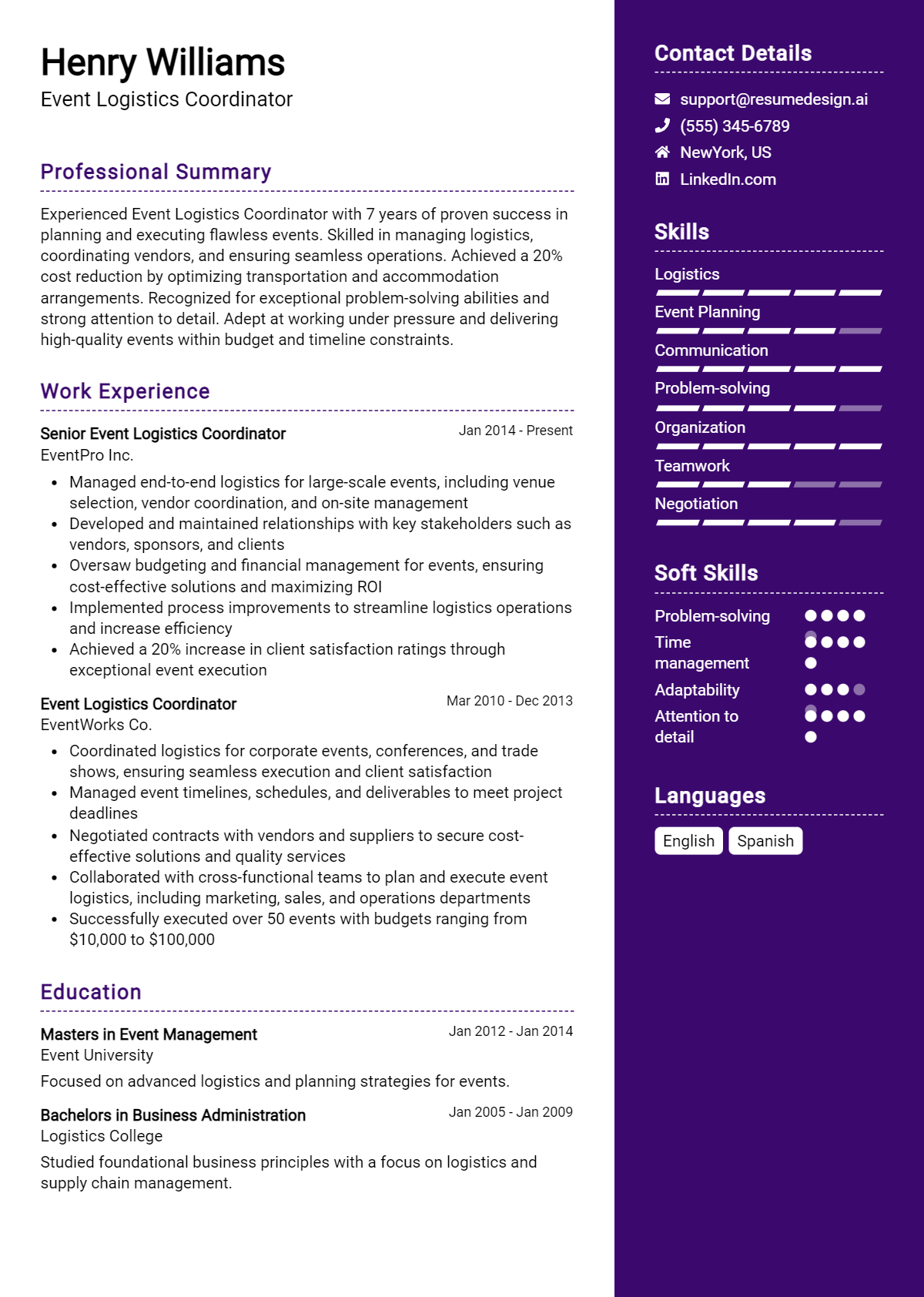
As an Event Logistics Coordinator, you're tasked with the critical responsibility of ensuring that every aspect of an event runs smoothly, from initial planning to final execution. Your ability to manage multiple moving parts, communicate effectively with vendors and clients, and troubleshoot issues on the fly will all be scrutinized in a job interview. Preparing for the types of questions you may encounter can help you articulate your skills and experience more effectively.
Here is a list of common job interview questions for an Event Logistics Coordinator, along with examples of the best answers. These questions cover your work history and experience, what you have to offer the employer, and your goals for the future, providing you with a comprehensive foundation to showcase your qualifications and enthusiasm for the role.
1. Can you describe your experience in event logistics coordination?
I have coordinated various events, from corporate conferences to weddings, overseeing logistics such as venue selection, vendor management, and timeline creation. My attention to detail ensures that every aspect runs smoothly, allowing clients to focus on their guests rather than logistics.
Example:
In my previous role, I successfully managed a three-day conference for 500 attendees, coordinating transportation, catering, and accommodations, resulting in positive feedback and repeat business from the client.
2. How do you prioritize tasks during a busy event?
I prioritize tasks by assessing their urgency and importance, creating a detailed timeline, and delegating responsibilities to my team. Using project management tools helps keep everyone on track, ensuring that critical tasks are completed first to avoid potential issues.
Example:
During a large festival, I prioritized vendor setup and guest registration, ensuring everything was ready before the event started, which minimized delays and improved the guest experience.
3. What strategies do you use for vendor management?
I build strong relationships with vendors by maintaining clear communication and setting expectations. I regularly review contracts and check-in during the planning process to ensure all parties are aligned, which helps in addressing any issues proactively.
Example:
By maintaining open lines of communication with a catering vendor, I successfully navigated a last-minute menu change, ensuring the event went ahead smoothly without compromising on quality.
4. How do you handle unexpected challenges during an event?
I remain calm and focused, quickly assessing the situation to determine the best course of action. I rely on my experience to make informed decisions and communicate effectively with my team to implement solutions swiftly.
Example:
When a speaker was delayed, I quickly arranged for a Q&A session to fill the gap, ensuring the schedule remained on track without causing disruptions.
5. Can you give an example of how you improved an event’s logistics?
At my last event, I streamlined the check-in process by implementing a digital registration system, reducing wait times by 50%. This not only enhanced the attendee experience but also allowed staff to focus on event execution.
Example:
The digital system we used transformed our previous manual check-in, leading to smoother entry and increased attendee satisfaction.
6. How do you ensure effective communication with your team and stakeholders?
I establish clear communication channels from the beginning, utilizing tools like Slack and regular meetings to keep everyone informed. I ensure that all stakeholders receive timely updates, fostering collaboration and transparency throughout the planning process.
Example:
Regular check-ins with my team helped us stay aligned and address concerns early, which ensured a cohesive approach leading up to the event.
7. What role does budgeting play in your event planning process?
Budgeting is crucial in event planning, as it guides all decisions. I create detailed budgets that include all potential costs, regularly tracking expenses to ensure we stay within limits while still delivering a high-quality experience for attendees.
Example:
In a recent project, careful budgeting allowed us to allocate extra funds for a high-impact keynote speaker, significantly enhancing the event's value.
8. How do you evaluate the success of an event?
I evaluate event success through attendee feedback, registration numbers, and whether we met our objectives. Post-event surveys provide insights into areas for improvement, ensuring that each event builds on the last.
Example:
After a successful gala, attendee feedback indicated a 90% satisfaction rate, and we used that data to reinforce our planning strategies for future events.
9. How do you prioritize tasks during a busy event planning period?
I prioritize tasks by assessing deadlines and dependencies. I use a project management tool to list tasks, assign deadlines, and categorize them based on urgency. This structured approach ensures that critical tasks are addressed first while maintaining flexibility for unexpected changes.
Example:
I focus on high-priority tasks first, such as finalizing vendor contracts, then move to logistical details like seating arrangements, ensuring everything aligns with the event timeline.
10. Can you describe a time you managed a last-minute change during an event?
During an event, a keynote speaker canceled last minute. I quickly contacted a backup speaker and rearranged the schedule to accommodate them. By communicating with the team and attendees, we minimized disruption and maintained a smooth flow throughout the event.
Example:
When a speaker canceled, I promptly secured a replacement and adjusted the agenda, ensuring a seamless transition and keeping participants informed.
11. How do you ensure effective communication among team members during event planning?
I facilitate regular check-in meetings and use collaboration tools for updates. Clear communication guidelines help ensure everyone understands their roles and responsibilities, fostering teamwork and quick resolution of any challenges that arise during the planning process.
Example:
I hold weekly meetings and utilize project management software to keep everyone informed and aligned on tasks and timelines.
12. What strategies do you use to manage vendor relationships?
I maintain open lines of communication and establish clear expectations from the beginning. Building rapport through regular updates and feedback creates a partnership that fosters trust, ensuring smooth collaboration and prompt resolution of any issues that may arise.
Example:
I prioritize relationship-building by checking in regularly and providing constructive feedback, which helps in creating a strong partnership with vendors.
13. How do you handle budgeting for events?
I begin by defining the event's goals and creating a detailed budget outline based on estimated costs. Regular tracking of expenses against the budget helps identify potential overruns early, allowing for adjustments and ensuring the event remains financially viable.
Example:
I create a comprehensive budget plan and monitor expenses closely, making adjustments as necessary to stay within financial limits.
14. Describe your experience with event registration systems.
I have experience using various event registration platforms, from setting up online forms to managing attendee data. I ensure a smooth registration process by testing the system before the event and providing clear instructions to attendees for a hassle-free experience.
Example:
I am proficient with platforms like Eventbrite, ensuring user-friendly registration and accurate tracking of attendees for seamless event execution.
15. How do you assess the success of an event?
I evaluate success through attendee feedback, comparing attendance numbers to goals, and analyzing post-event surveys. I also review budgeting outcomes to determine if financial objectives were met, ensuring continuous improvement for future events based on these insights.
Example:
I analyze feedback and attendance metrics alongside budget performance to gauge event success, informing improvements for future planning.
16. What role do you think technology plays in event logistics?
Technology streamlines event logistics by enhancing communication, facilitating real-time updates, and improving attendee engagement through apps and social media. Utilizing event management software significantly enhances efficiency, allowing teams to focus on delivering an exceptional experience for attendees.
Example:
Technology aids in managing logistics and enhances attendee experience, allowing for real-time updates and interaction via apps and social media.
17. How do you prioritize tasks when planning an event?
I prioritize tasks by assessing deadlines, dependencies, and the impact on the event's success. I also use project management tools to stay organized and ensure everyone is aligned. This systematic approach minimizes last-minute issues and ensures smooth execution.
Example:
I focus on critical tasks first, like venue booking and vendor contracts, using project management software to track deadlines and responsibilities, ensuring all team members are aligned and informed throughout the planning process.
18. Can you describe a time you handled a logistical issue during an event?
During a large conference, a key speaker's flight was delayed. I quickly rearranged the schedule, communicated updates to attendees, and coordinated with the AV team to adjust presentation times. This flexibility ensured the event continued smoothly without major disruptions.
Example:
At a recent seminar, a speaker's flight was delayed. I swiftly adjusted the agenda, communicated with attendees, and coordinated with the AV team to minimize disruption, ensuring the event remained engaging and on schedule.
19. How do you ensure effective communication among team members during an event?
I implement regular check-ins and use communication tools to keep everyone updated. Clear roles and responsibilities are defined, and I encourage an open environment for questions and feedback. This fosters collaboration and ensures everyone is on the same page.
Example:
I hold daily briefings leading up to the event, use group messaging apps for real-time updates, and encourage feedback, ensuring all team members are informed and can address any concerns promptly.
20. What strategies do you use to manage event budgets effectively?
I create detailed budgets with cost estimates for all aspects of the event. I regularly review expenses against the budget, looking for cost-saving opportunities without compromising quality. This proactive approach helps maintain financial controls throughout the planning process.
Example:
I develop a comprehensive budget, track expenses meticulously, and conduct weekly reviews to identify savings opportunities, ensuring we stay on budget while delivering a high-quality event experience.
21. How do you handle vendor relationships before and during events?
I build strong vendor relationships through clear communication and mutual respect. Before events, I confirm details and expectations, and during events, I maintain open lines of communication to address any issues promptly, ensuring seamless collaboration.
Example:
I establish rapport by communicating clear expectations and maintaining contact before the event. During the event, I ensure regular check-ins to address any issues, fostering a collaborative atmosphere for successful execution.
22. Can you give an example of how you handled a last-minute change during an event?
At one event, we had to change a keynote speaker due to unforeseen circumstances. I quickly sourced a replacement, updated the agenda, and informed attendees. This adaptability ensured the event proceeded smoothly without diminishing its quality.
Example:
When a keynote speaker canceled last minute, I quickly found a qualified replacement, updated the event materials, and communicated the change to attendees, ensuring the event maintained its momentum and engagement.
23. How do you evaluate the success of an event?
I evaluate event success through attendee feedback, budget adherence, and achievement of objectives. Post-event surveys and debriefs with the team help identify areas for improvement, ensuring future events are even more successful.
Example:
I gather attendee feedback through surveys, analyze budget performance, and assess whether we met our goals. This data informs future planning and enhances overall event quality.
24. What tools or software do you utilize for event planning?
I use various tools like Asana for project management, Google Sheets for budgeting, and Eventbrite for ticketing. These tools streamline communication, help track progress, and ensure all logistical elements are well-coordinated.
Example:
I rely on Asana for task management, Google Sheets for budget tracking, and Eventbrite for ticket sales, ensuring efficient organization and clear communication throughout the planning process.
25. How do you handle last-minute changes during an event?
I prioritize quick communication with all stakeholders and reallocate resources as necessary. Flexibility is key; I remain calm under pressure and focus on solutions to minimize disruption while keeping the event running smoothly.
Example:
When a speaker canceled last minute, I quickly found a replacement and adjusted the schedule, ensuring attendees remained engaged while maintaining the event's integrity.
26. Can you describe your experience with budgeting for events?
I have managed event budgets by tracking expenses, negotiating with vendors, and seeking cost-effective solutions. I ensure every dollar is accounted for, which helps in maximizing the event's impact while staying within financial constraints.
Example:
In my previous role, I successfully reduced costs by 15% by negotiating better rates with suppliers and optimizing resources without compromising quality.
27. What strategies do you use to ensure effective communication among team members?
I establish clear communication channels and regular check-ins. Utilizing project management tools helps keep everyone updated on tasks and deadlines, fostering collaboration and accountability within the team.
Example:
I implemented a shared online platform for updates, which significantly improved our coordination and reduced misunderstandings during the planning phase of our last event.
28. How do you assess the success of an event?
I evaluate success through attendee feedback, budget adherence, and achievement of event goals. I also analyze engagement metrics and post-event surveys to gather insights for future improvements.
Example:
After an event, I collect surveys and analyze attendance numbers, ensuring we meet objectives while identifying areas for improvement for future planning.
29. Describe a challenging event you coordinated and how you resolved issues.
I once coordinated an outdoor festival during a storm warning. I quickly developed a contingency plan, relocated vendors indoors, and communicated changes to attendees, ensuring safety and maintaining a positive experience despite the weather challenges.
Example:
During a festival, I shifted activities indoors due to bad weather and notified attendees through social media, ensuring safety while keeping the event enjoyable.
30. How do you ensure that all event logistics comply with regulations?
I stay informed about local regulations and work closely with authorities. I review all permits required and ensure that vendors and venues comply with safety and legal standards to avoid complications.
Example:
Before each event, I cross-verify all permits and regulations with local authorities to ensure compliance, preventing any legal issues during the event.
31. What tools or software do you use to manage event logistics?
I utilize tools like Asana for project management, Eventbrite for ticketing, and Excel for budgeting. These tools streamline planning and enhance collaboration, making it easier to track progress and communicate with the team.
Example:
I rely on Asana for task management and Google Sheets for budgeting, which significantly enhance our team's efficiency and organization during event planning.
32. How do you manage vendor relationships?
I build strong vendor relationships through clear communication, regular check-ins, and prompt payments. Establishing trust ensures they are motivated to deliver their best services, which is crucial for event success.
Example:
I maintain open lines of communication with vendors and ensure timely payments, which has helped me foster long-term partnerships that benefit future events.
33. Can you describe a time when you had to manage multiple events simultaneously?
In my previous role, I managed three events at once. I prioritized tasks using a detailed timeline, delegated responsibilities to my team, and maintained open communication. This ensured every event was executed flawlessly and on schedule.
Example:
I once coordinated a conference, a gala, and a workshop simultaneously. By creating a shared calendar and regular check-ins with my team, we successfully delivered each event without compromising quality.
34. How do you handle last-minute changes or emergencies during an event?
I remain calm and quickly assess the situation. I prioritize the most critical aspects that need immediate attention and communicate effectively with my team. Flexibility and problem-solving skills are key to adapting to unexpected challenges.
Example:
During an outdoor event, rain forced us to move indoors. I quickly coordinated with vendors and staff to adjust the layout, ensuring a seamless transition while keeping guests informed and comfortable.
35. What strategies do you use to ensure event budgets are adhered to?
I utilize detailed budget tracking tools to monitor expenses closely. Regular updates and comparisons against the budget help me identify potential overruns early, allowing for adjustments before they impact the overall budget.
Example:
I developed a budget tracking spreadsheet for an event, which I updated weekly. This proactive approach helped me stay within budget while identifying areas for cost savings without sacrificing quality.
36. How do you ensure effective communication among team members during an event?
I establish clear communication channels prior to the event, utilizing tools like group chats and walkie-talkies. Regular briefings before and during the event ensure everyone is informed and can address issues promptly.
Example:
For a recent event, I set up a WhatsApp group for real-time updates and conducted a pre-event meeting. This kept everyone aligned and responsive to any changes throughout the day.
37. What role does vendor management play in event logistics?
Vendor management is crucial for seamless logistics. I establish strong relationships, negotiate contracts, and ensure vendors understand our expectations. Regular check-ins help maintain accountability and foster collaboration.
Example:
I prioritized building rapport with vendors, which facilitated smoother communications. During a recent event, this collaboration allowed us to resolve supply issues quickly, ensuring everything ran as planned.
38. Describe a successful event you coordinated and what made it successful.
I coordinated an annual charity gala that exceeded fundraising goals. Success stemmed from meticulous planning, effective marketing, and strong partnerships. Feedback from attendees highlighted the event's smooth execution and engaging activities.
Example:
The charity gala I organized raised 150% of our target. Strong promotion and a well-timed program contributed to its success, alongside a dedicated team ensuring everything went smoothly.
39. How do you evaluate the success of an event after it concludes?
Post-event evaluations are essential. I gather feedback from attendees, team members, and stakeholders to assess what worked well and what didn’t. Analyzing this data helps improve future events.
Example:
After each event, I distribute surveys to gather feedback. I analyze this alongside attendance and financial metrics to evaluate success and identify areas for improvement in future events.
40. How do you stay updated with industry trends and best practices in event logistics?
I regularly attend industry conferences, participate in webinars, and follow relevant publications. Networking with peers also provides insights into innovative practices that can enhance my event logistics strategies.
Example:
I subscribe to industry newsletters and attend annual event planning conferences. This not only keeps me informed about trends but also allows me to learn from experienced professionals in the field.
41. How do you prioritize tasks when managing multiple events simultaneously?
I prioritize tasks by assessing deadlines, event size, and resource availability. I use project management tools to track progress and communicate with team members. This approach ensures that critical tasks are completed on time while maintaining quality across all events.
Example:
I utilize a project management tool like Trello to list and prioritize tasks. For instance, I focus on securing venues and vendors first, followed by logistics and marketing to ensure each event runs smoothly.
42. Can you describe a challenging logistics issue you faced and how you resolved it?
During a large conference, a key vendor canceled last minute. I quickly researched alternatives, negotiated a new contract, and communicated with stakeholders. This swift action minimized disruption and ensured the event proceeded smoothly, demonstrating my problem-solving skills.
Example:
When a caterer canceled, I reached out to three local options within an hour. I secured a replacement and informed the team, ensuring the menu was adjusted in time, and the event was a success.
43. How do you ensure compliance with health and safety regulations at events?
I stay updated on local health and safety regulations and work closely with vendors to ensure compliance. I conduct pre-event checks to verify safety measures are in place, such as emergency exits and first aid kits, ensuring attendee safety.
Example:
Before events, I review local regulations and create a checklist. I collaborate with venue staff to ensure proper signage and emergency procedures are in place, guaranteeing a safe environment for all attendees.
44. How do you handle last-minute changes to an event schedule?
I remain calm and adaptable, quickly assessing the impact of changes. I communicate promptly with all stakeholders, adjusting logistics as needed. My ability to think on my feet ensures that events continue smoothly despite unforeseen circumstances.
Example:
When a speaker canceled, I immediately contacted an alternative and adjusted the agenda. I informed attendees via email, ensuring they were aware of the changes while maintaining the event's flow.
45. What strategies do you use to manage vendor relationships?
I build strong vendor relationships through clear communication and mutual respect. Regular check-ins ensure we are aligned on expectations. I also provide feedback after events, fostering a collaborative environment that encourages growth and improvement.
Example:
I schedule regular meetings with vendors to discuss upcoming events and gather feedback. This approach has led to improved services and strong partnerships, enhancing our overall event quality.
46. How do you measure the success of an event?
I measure success through attendee feedback, registration numbers, and post-event surveys. Analyzing these metrics helps identify strengths and areas for improvement, ensuring that each event is better than the last.
Example:
After an event, I distribute surveys to attendees and analyze registration data. This feedback helps me assess satisfaction levels and informs planning for future events, continually improving our offerings.
How Do I Prepare For A Event Logistics Coordinator Job Interview?
Preparing for an interview is crucial to making a strong impression on your potential employer. As an Event Logistics Coordinator, showcasing your organizational skills, attention to detail, and ability to manage multiple tasks is essential. Here are some key preparation tips to help you stand out during your interview:
- Research the company and its values to understand its culture and mission.
- Practice answering common interview questions related to logistics and event planning.
- Prepare examples that demonstrate your skills and experience relevant to the Event Logistics Coordinator role.
- Familiarize yourself with the latest trends and technologies in event management.
- Dress professionally and choose an outfit that reflects the company's dress code.
- Plan your route to the interview location to ensure punctuality.
- Prepare thoughtful questions to ask the interviewer about the role and team dynamics.
Frequently Asked Questions (FAQ) for Event Logistics Coordinator Job Interview
Preparing for a job interview can be a daunting task, especially for a role as dynamic as an Event Logistics Coordinator. Understanding the commonly asked questions can help candidates feel more confident and articulate during the interview process. Below are some frequently asked questions that candidates might encounter, along with practical advice to help them navigate their interviews successfully.
What should I bring to an Event Logistics Coordinator interview?
When attending an interview for an Event Logistics Coordinator position, it's essential to bring several key items. Start with multiple copies of your resume, as you may meet with several interviewers. Additionally, consider bringing a notepad and pen for taking notes, a list of references, and any relevant certifications or portfolios showcasing your past event planning work. Being well-prepared with these materials demonstrates your professionalism and organization, which are crucial traits for the role.
How should I prepare for technical questions in an Event Logistics Coordinator interview?
To prepare for technical questions, familiarize yourself with the specific tools and software commonly used in event logistics, such as project management tools, budgeting software, and scheduling applications. Review your past experiences and be ready to discuss how you’ve used these tools to solve problems or improve efficiency in previous roles. Additionally, practicing how you would handle hypothetical scenarios related to event planning can give you a solid foundation for answering technical questions confidently.
How can I best present my skills if I have little experience?
If you have limited experience, focus on transferable skills and relevant coursework or volunteer work. Highlight any experience that demonstrates your organizational abilities, attention to detail, and teamwork. You can also discuss your passion for event planning and any informal events you've organized, such as community gatherings or school events. Emphasizing your willingness to learn and adapt can also help convey your potential as a valuable addition to the team.
What should I wear to an Event Logistics Coordinator interview?
For an Event Logistics Coordinator interview, dressing professionally is key. Aim for business casual attire, which strikes a balance between formal and approachable. Choose neat, well-fitted clothing, such as dress slacks or a skirt paired with a collared shirt or blouse. Avoid overly casual items like jeans or sneakers. Remember, your appearance is part of the first impression you make, and dressing appropriately shows that you understand the importance of professionalism in the events industry.
How should I follow up after the interview?
Following up after an interview is a crucial step in the job application process. Send a thank-you email within 24 hours to express your gratitude for the opportunity to interview and reiterate your interest in the position. In your message, mention specific points discussed during the interview that resonated with you, which demonstrates your attentiveness and enthusiasm. This small gesture can leave a positive impression and keep you top of mind as the hiring team makes their decision.
Conclusion
In summary, the Event Logistics Coordinator Interview Guide has highlighted the essential elements of preparation, practice, and the demonstration of relevant skills necessary for a successful interview. Candidates who take the time to prepare for both technical and behavioral questions are more likely to stand out and make a lasting impression on potential employers.
By utilizing the tips and examples provided in this guide, candidates can approach their interviews with confidence and clarity, significantly improving their chances of success in landing their desired role.
Remember, every interview is an opportunity to showcase your abilities and enthusiasm for the position. Take advantage of the resources available to you, and best of luck on your journey to becoming an exceptional Event Logistics Coordinator!
For further assistance, check out these helpful resources: resume templates, resume builder, interview preparation tips, and cover letter templates.