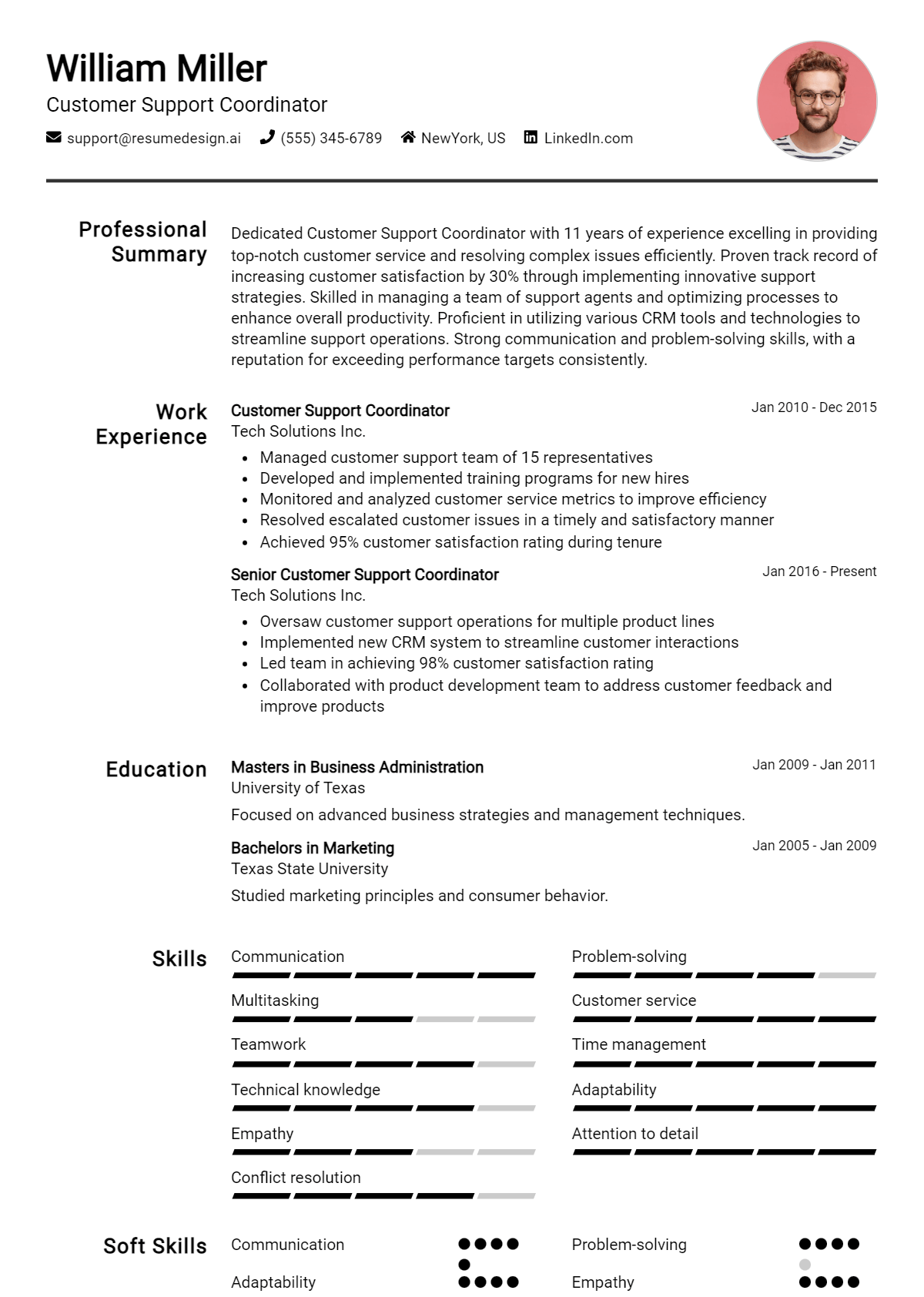
When preparing for a job interview as a Customer Support Coordinator, it's essential to understand the types of questions you may encounter. This role demands not only strong communication skills and problem-solving abilities but also a genuine passion for helping customers. Being well-prepared will allow you to demonstrate your qualifications effectively and showcase your readiness to contribute to the team's success.
Here is a list of common job interview questions for a Customer Support Coordinator position, along with examples of the best answers. These questions delve into your work history and experience, highlighting what you bring to the table for the employer and how your goals align with the company's mission. By preparing thoughtful responses, you can illustrate your capability to excel in a dynamic customer service environment.
1. Can you describe your experience in customer support?
I have over three years of experience in customer support, managing inquiries through various channels. I excel in resolving issues promptly, ensuring customer satisfaction, and maintaining a positive relationship with clients. My proactive communication has significantly improved feedback scores.
Example:
In my previous role, I handled customer inquiries via phone and email, achieving a satisfaction rate of 95%. I implemented a tracking system to resolve issues more efficiently, leading to quicker response times and happier customers.
2. How do you prioritize customer inquiries?
I prioritize customer inquiries based on urgency and impact. I assess each situation, addressing critical issues first while ensuring all customers feel valued. Using a ticketing system helps me stay organized and responsive to high-priority requests.
Example:
For instance, I handle technical issues affecting multiple users first, while still acknowledging simpler queries. This approach ensures that urgent problems are resolved quickly without neglecting individual customer needs.
3. What strategies do you use to handle difficult customers?
I remain calm and empathetic, actively listening to the customer's concerns. I validate their feelings and work collaboratively to find a solution. This approach often diffuses tension and fosters a positive outcome.
Example:
In one instance, I dealt with an upset customer by acknowledging their frustration and providing a clear plan to resolve their issue. This not only turned their experience around but also led to a positive review.
4. How do you ensure customer satisfaction?
I regularly follow up with customers after resolving their issues to ensure they are satisfied. Additionally, I seek feedback to identify areas for improvement. Implementing changes based on this feedback shows customers we value their opinions.
Example:
After resolving a query, I always send a follow-up email asking if everything is satisfactory. This has significantly increased customer loyalty and provided insights for improving our services.
5. Can you give an example of a time you improved a process?
In my last role, I noticed delays in ticket resolutions. I proposed implementing a new tracking system that streamlined our workflow, reducing response times by 30% and enhancing the overall customer experience.
Example:
By introducing a priority tagging system for tickets, I helped the team focus on urgent issues first. This change drastically improved our resolution times and customer satisfaction ratings.
6. How do you handle feedback from customers?
I view customer feedback as an opportunity to improve our services. I take all comments seriously, categorizing them to identify trends. This data informs both personal development and team training sessions, ensuring we continually enhance our support.
Example:
After receiving feedback about our response times, I shared insights with the team. We implemented a new protocol that reduced our average response time by 20%, significantly boosting customer satisfaction.
7. What tools or software are you familiar with in customer support?
I am proficient in several customer support software, including Zendesk and Freshdesk. These tools have equipped me with the ability to streamline ticket management, track customer interactions, and analyze performance metrics effectively.
Example:
Using Zendesk, I optimized our ticketing system, which improved our response time and allowed for better tracking of customer satisfaction metrics, leading to more informed decision-making.
8. How do you stay motivated in a customer support role?
I find motivation in helping customers and solving their problems. Each resolution brings a sense of accomplishment. Additionally, I set personal goals for improvement, which keeps me engaged and striving for excellence in my work.
Example:
I often reflect on positive customer interactions and the difference I made. Setting monthly targets for customer satisfaction ratings keeps me challenged and motivated to continuously improve my skills.
9. How do you prioritize customer requests when you have multiple inquiries at once?
I assess the urgency and impact of each request, focusing on those that affect customers most severely. By categorizing inquiries, I can effectively manage my time and ensure prompt resolutions while keeping customers informed.
Example:
I prioritize urgent issues like service outages first, then follow up on general inquiries. This ensures that critical problems are addressed promptly, resulting in higher customer satisfaction.
10. Describe a situation where you turned an unhappy customer into a satisfied one.
I encountered a frustrated customer due to a delayed order. I listened empathetically, apologized, and expedited their order while offering a discount. This approach not only resolved the issue but also strengthened their loyalty to our brand.
Example:
I once resolved a delivery complaint by personally following up and offering a discount. The customer appreciated the attention and remained loyal, even sharing positive feedback with others.
11. How do you handle difficult customers?
I remain calm and empathetic, listening to their concerns without interruption. Acknowledging their feelings and providing clear solutions helps to de-escalate the situation and builds trust, fostering a more positive interaction.
Example:
When dealing with a difficult customer, I listen actively and validate their feelings. By offering solutions and keeping a friendly tone, I can often turn the conversation around.
12. What tools or software have you used to track customer interactions?
I have used CRM systems like Salesforce and Zendesk to track customer interactions. These tools help me document issues, manage follow-ups, and analyze customer feedback, ensuring efficient and effective support.
Example:
In my previous role, I utilized Zendesk to log customer queries and track resolution times, which improved our response efficiency significantly.
13. Can you give an example of how you improved a customer support process?
I noticed long response times in our support tickets. I proposed implementing a ticket prioritization system, which streamlined our workflow and reduced response times by 30%, ultimately enhancing customer satisfaction.
Example:
By implementing a new ticketing system that categorized inquiries, we significantly improved our response time and customer satisfaction ratings.
14. How do you ensure effective communication with your team?
I promote open communication through regular team meetings and updates. Using collaborative tools like Slack or Trello helps keep everyone aligned, ensuring we share important information and support each other effectively.
Example:
I schedule weekly check-ins and use Slack to discuss ongoing issues, ensuring that our team remains informed and cohesive.
15. What strategies do you use to gather customer feedback?
I implement surveys after interactions and monitor social media for comments. Engaging directly with customers provides insights into their experiences, allowing us to improve our services based on their feedback.
Example:
I regularly send post-service surveys to customers and analyze the feedback to implement necessary changes, which helps us enhance our support quality.
16. How do you stay updated on product knowledge and industry trends?
I allocate time weekly for training sessions, read industry publications, and participate in webinars. Staying informed about products and trends enables me to provide accurate information and enhance customer support experiences.
Example:
I regularly attend training sessions and read relevant articles to stay current with product updates and industry trends, ensuring I provide the best support.
17. How do you prioritize customer support requests?
I assess requests based on urgency, customer impact, and complexity. I utilize a ticketing system to categorize and prioritize issues, ensuring critical problems are addressed first, while also maintaining communication with customers about their request status.
Example:
I prioritize requests by using a ticketing system. For example, urgent issues affecting multiple users take precedence, while minor inquiries are handled subsequently. This ensures efficient resolution and customer satisfaction.
18. Can you describe a time you turned a negative customer experience into a positive one?
Once, a customer was frustrated with a delayed order. I empathized with their situation, offered a discount for the inconvenience, and expedited their order. This approach not only resolved the issue but also built customer loyalty through effective communication.
Example:
A customer was upset about a late delivery. I listened, apologized sincerely, and offered a discount on their next purchase. They appreciated the gesture and became a repeat customer, turning their frustration into loyalty.
19. How do you handle difficult customers?
I approach difficult customers with patience and active listening. I acknowledge their concerns, remain calm, and work collaboratively to find a solution. This helps de-escalate tension and fosters a positive interaction, even in challenging situations.
Example:
When faced with a difficult customer, I stay calm and listen actively. I validate their feelings and assure them I’m here to help. This often diffuses their frustration, allowing us to resolve the issue together.
20. What tools or software are you familiar with for customer support?
I have experience using various customer support tools like Zendesk and Freshdesk for ticket management, as well as CRM systems such as Salesforce. These tools help streamline workflows and enhance communication with customers.
Example:
I’m proficient in Zendesk for ticket management and Salesforce for tracking customer interactions. These tools enable me to efficiently manage inquiries and maintain organized records, improving overall customer support.
21. How do you ensure customer feedback is effectively communicated to the team?
I compile customer feedback into reports and present them during team meetings. I prioritize actionable insights and collaborate on implementing improvements based on customer suggestions, ensuring that the team is aligned with customer needs.
Example:
I collect feedback through surveys and direct interactions, then summarize key points for team meetings. This way, we can address concerns and continuously improve our service based on customer insights.
22. How do you stay updated with product knowledge to assist customers effectively?
I regularly participate in training sessions and review product updates. Additionally, I engage with the product team to clarify features and changes, ensuring I can provide accurate information and support to customers.
Example:
I stay updated by attending regular training sessions and reading product documentation. I also communicate with the product team to clarify new features, allowing me to assist customers effectively.
23. Describe how you handle multiple tasks in a fast-paced environment.
I use effective time management strategies, such as prioritizing tasks and setting deadlines. I also leverage tools like to-do lists and reminders to stay organized, ensuring that I meet customer needs promptly while handling various responsibilities.
Example:
In a fast-paced environment, I prioritize tasks by urgency and impact. I use a digital to-do list to keep track of my responsibilities and ensure timely responses to customer inquiries without sacrificing quality.
24. What role does teamwork play in customer support, and how do you contribute?
Teamwork is crucial in customer support for sharing knowledge and resolving complex issues. I contribute by fostering open communication, collaborating on difficult cases, and supporting my colleagues, ensuring that we deliver the best possible service to customers.
Example:
Teamwork is essential in customer support. I actively share insights with my colleagues and collaborate on challenging cases. This collective effort helps us provide better solutions and improves our overall performance.
25. How do you prioritize tasks when dealing with multiple customer inquiries?
I prioritize tasks by assessing urgency and impact. I categorize inquiries based on complexity and customer needs, ensuring critical issues are addressed first. I also utilize tools like ticketing systems to track and manage workload efficiently.
Example:
For example, if I receive a billing issue and a general inquiry simultaneously, I’d address the billing issue first due to its immediate financial impact on the customer.
26. Can you describe a time when you turned a dissatisfied customer into a satisfied one?
In a previous role, a customer was upset about a delayed order. I listened actively, empathized, and offered a discount for the inconvenience. This approach not only resolved the issue but also strengthened customer loyalty.
Example:
By addressing their concerns directly and providing a solution, the customer expressed appreciation and continued to use our services regularly.
27. What strategies do you use to ensure effective communication with customers?
I emphasize clarity and empathy in communication. Active listening helps me understand customer needs, while confirming details ensures accuracy. I also adapt my communication style based on the customer’s preferences, whether through phone, email, or chat.
Example:
For instance, I often use a friendly tone and concise language in emails to make complex information more accessible and reassuring for the customer.
28. How do you handle feedback or criticism from customers?
I view feedback as an opportunity for improvement. I listen carefully to understand the customer's perspective and acknowledge their feelings. I then take constructive criticism seriously and implement changes to enhance our service quality.
Example:
For example, after receiving feedback about long wait times, I collaborated with my team to improve our response strategies, which resulted in better customer satisfaction.
29. Describe your experience with customer support software and tools.
I have extensive experience with CRM software like Zendesk and Salesforce. These tools help me track customer interactions, manage tickets effectively, and analyze data to improve service delivery and identify trends in customer inquiries.
Example:
Using these platforms, I’ve streamlined workflows, enabling my team to respond to customer queries faster and more accurately.
30. How do you ensure that your team meets customer service goals?
I set clear, measurable goals and regularly review performance metrics. I provide ongoing training and support to my team, ensuring they have the skills required to meet these goals. Regular feedback sessions help keep everyone aligned.
Example:
For instance, I implemented weekly check-ins to discuss progress towards KPIs, which motivated the team and improved overall performance.
31. What role does teamwork play in customer support?
Teamwork is essential in customer support. Collaborating with colleagues ensures a unified approach to resolving issues, sharing knowledge, and enhancing customer experiences. Effective communication fosters a supportive environment where we can collectively meet customer needs.
Example:
For example, during peak times, my team coordinates efforts to share workload efficiently, ensuring timely responses to all inquiries.
32. How do you keep yourself updated with industry trends in customer support?
I stay updated by following industry blogs, participating in webinars, and joining professional networks. Engaging with peers allows me to learn about new technologies and best practices that I can apply to enhance our customer support strategies.
Example:
For instance, I recently attended a webinar on AI in customer service, which inspired me to suggest new tools for our team.
33. How do you prioritize tasks in a busy customer support environment?
I prioritize tasks by assessing their urgency and impact on customer satisfaction. I use tools like ticketing systems to track issues, ensuring urgent matters are addressed first while managing my time effectively to enhance overall service quality.
Example:
In a previous role, I used a ticketing system to categorize issues by priority, allowing me to handle urgent customer inquiries swiftly, which improved response times and customer satisfaction ratings.
34. Can you describe a time when you turned a negative customer experience into a positive one?
Once, a customer was frustrated with a delayed order. I listened actively, empathized, and offered a discount on their next purchase. This not only resolved the issue but also retained their loyalty and improved their perception of our brand.
Example:
I once handled a complaint about a late delivery. After understanding their frustration, I expedited their order and offered a discount, which turned their negative experience into a positive one and earned their continued business.
35. What strategies do you use to train new customer support staff?
I develop a comprehensive training plan that includes shadowing experienced agents, role-playing scenarios, and providing access to FAQs and knowledge bases. This hands-on approach helps new staff quickly adapt and understand customer needs effectively.
Example:
In training new staff, I utilize a combination of shadowing, role-playing, and interactive guides. This method ensures they grasp both the technical and interpersonal skills essential for providing excellent customer support.
36. How do you handle repetitive inquiries from customers?
I track common inquiries and develop a knowledge base with standardized responses. This reduces response time and ensures consistency. Additionally, I analyze trends to identify areas for improvement in our products or services.
Example:
By creating a knowledge base for common questions, I was able to streamline responses and improve efficiency, allowing the team to focus on more complex customer issues without sacrificing service quality.
37. How do you ensure effective communication within the customer support team?
I promote regular team meetings and use collaborative tools to share updates and feedback. Encouraging open dialogue fosters a supportive environment that enhances teamwork and ensures everyone is aligned on goals and priorities.
Example:
I scheduled weekly meetings and utilized team chat tools to ensure everyone was informed about ongoing issues, which improved our communication and allowed us to work together effectively on customer problems.
38. Describe how you handle a situation where a customer is dissatisfied with a solution provided.
I listen to the customer's concerns and validate their feelings. I then offer alternative solutions or escalate the issue to ensure their needs are met. My goal is to turn their frustration into satisfaction through effective resolution.
Example:
When a customer expressed dissatisfaction with our solution, I actively listened and proposed a different approach, demonstrating our commitment to resolving their issue, which ultimately restored their confidence in our service.
39. What metrics do you consider important for evaluating customer support performance?
Key metrics include response time, resolution rate, customer satisfaction scores, and first contact resolution rates. These indicators help assess the effectiveness of our support efforts and identify areas for improvement.
Example:
I focus on metrics like customer satisfaction scores and first contact resolution rates, as they provide insights into our performance and highlight where we can improve our customer support process.
40. How do you stay current with industry trends and changes in customer support practices?
I stay updated by attending webinars, participating in industry forums, and subscribing to relevant publications. Continuous learning helps me implement best practices and adapt our strategies to meet evolving customer expectations.
Example:
I regularly attend industry webinars and follow customer service blogs to keep up with trends. This knowledge allows me to introduce innovative practices that enhance our support team's efficiency and effectiveness.
41. How do you prioritize customer requests when multiple issues arise simultaneously?
In high-pressure situations, I assess the urgency and impact of each issue. I categorize requests based on their severity and customer impact, addressing critical problems first. Effective communication ensures customers are informed of the status while I resolve their concerns promptly. Example: I prioritize based on urgency; for example, a system outage affecting many customers takes precedence over a single account issue. I communicate timelines to affected customers, ensuring they feel valued and informed throughout the process.
42. Can you describe a time when you had to handle a difficult customer? How did you resolve the situation?
I once dealt with an irate customer upset about a billing error. I actively listened to their concerns, empathized, and assured them I would fix the issue. After investigating, I provided a solution and followed up to ensure their satisfaction, which restored their trust. Example: A customer was frustrated over a billing mistake. I listened patiently, apologized for the error, and quickly rectified it. I then followed up with a courtesy call to ensure they were satisfied, which helped rebuild their trust in our service.
43. What strategies do you use to maintain strong relationships with customers?
I focus on active listening and personalized communication. By understanding each customer’s unique needs and preferences, I tailor interactions and follow up regularly. Building rapport through genuine interactions and proactive support fosters long-term relationships and enhances customer loyalty. Example: I maintain relationships by sending personalized follow-ups after resolving issues and checking in periodically. This approach allows me to anticipate needs, demonstrate care, and strengthen rapport, ultimately enhancing customer loyalty and satisfaction.
44. How do you measure the success of your customer support efforts?
I utilize metrics such as customer satisfaction scores, response times, and resolution rates to evaluate support effectiveness. Analyzing feedback helps identify areas for improvement. Regular team reviews and adapting strategies based on data ensure continuous enhancement of service quality and customer experience. Example: I measure success by tracking metrics like CSAT scores and first-contact resolution rates. Regularly reviewing this data allows me to identify trends, implement necessary changes, and ultimately improve customer satisfaction and service efficiency.
45. Describe a situation where you implemented a process improvement in customer support.
In my previous role, I noticed that ticket resolution times were increasing. I implemented a new ticketing system that categorized issues based on urgency. This streamlined workflow reduced response times by 30%, enhancing overall customer satisfaction and team efficiency. Example: I introduced a tiered ticketing system that prioritized urgent issues, which significantly improved resolution times. This change reduced customer wait times and increased overall satisfaction, demonstrating the impact of process improvements in our support workflow.
46. How do you stay updated with the latest customer support trends and technologies?
I regularly participate in webinars, follow industry blogs, and engage in online communities focused on customer support. Networking with peers and attending conferences also helps me stay informed about emerging trends and technologies, allowing me to apply new strategies effectively within my role. Example: I subscribe to industry newsletters and participate in webinars to stay informed about customer support trends. Additionally, I network with professionals at conferences, which inspires me to implement innovative strategies and technologies in our support processes.
How Do I Prepare For A Customer Support Coordinator Job Interview?
Preparing for a job interview is crucial in making a positive impression on the hiring manager. A well-prepared candidate not only demonstrates their interest in the position but also showcases their skills and suitability for the role. To help you stand out in your interview for a Customer Support Coordinator position, consider the following preparation tips:
- Research the company and its values to align your answers with their culture and mission.
- Practice answering common interview questions, such as those related to customer service scenarios and conflict resolution.
- Prepare examples that demonstrate your skills and experience relevant to the Customer Support Coordinator role.
- Familiarize yourself with the tools and software commonly used in customer support, such as CRM systems.
- Review the job description thoroughly to understand the key responsibilities and required skills.
- Plan your attire in advance to ensure you present yourself professionally on the interview day.
- Prepare thoughtful questions to ask the interviewer about the role, team dynamics, and company culture.
Frequently Asked Questions (FAQ) for Customer Support Coordinator Job Interview
Preparing for a job interview is crucial, especially for a role like Customer Support Coordinator, where communication and problem-solving skills are key. Anticipating commonly asked questions can help candidates present themselves effectively and demonstrate their suitability for the position. Below are some frequently asked questions along with practical advice for navigating the interview process.
What should I bring to a Customer Support Coordinator interview?
When attending a Customer Support Coordinator interview, it’s essential to bring several key items. First, have multiple copies of your resume on hand to distribute to interviewers. Also, prepare a list of references and any certifications relevant to customer support. Bringing a notebook and pen can be useful for taking notes during the interview. Finally, consider carrying a portfolio that showcases any relevant projects or experiences, as visual aids can enhance your presentation.
How should I prepare for technical questions in a Customer Support Coordinator interview?
To prepare for technical questions, you should first familiarize yourself with the tools and software commonly used in customer support roles, such as CRM systems and ticketing software. Review the job description carefully to identify specific technologies mentioned and research them. Additionally, practice answering scenario-based questions that may require you to demonstrate problem-solving abilities or technical know-how. Prepare examples from your experience that highlight your skills in using these tools effectively.
How can I best present my skills if I have little experience?
If you have limited experience, focus on transferable skills that relate to the Customer Support Coordinator role, such as communication, teamwork, and conflict resolution. Use examples from previous jobs, internships, or even volunteer experiences to showcase how you’ve successfully handled customer interactions or coordinated tasks. Highlight your eagerness to learn and adapt, as well as any relevant coursework or certifications that demonstrate your commitment to the field.
What should I wear to a Customer Support Coordinator interview?
Selecting the right outfit for your interview is important as it reflects your professionalism and respect for the company. Aim for business casual attire, which typically includes slacks or a skirt paired with a button-up shirt or a blouse. Avoid overly casual clothing such as jeans or sneakers. Make sure your outfit is clean, pressed, and fits well. If you’re unsure about the company culture, it’s better to err on the side of being slightly overdressed than underdressed.
How should I follow up after the interview?
Following up after an interview is a crucial step that can reinforce your interest in the position. Send a thank-you email within 24 hours, expressing gratitude for the opportunity to interview and reiterating your enthusiasm for the role. Reference specific points discussed during the interview to personalize your message. This follow-up not only shows your appreciation but also keeps you top of mind as the hiring team makes their decision.
Conclusion
In this interview guide for the Customer Support Coordinator role, we've covered essential strategies to help you navigate the interview process successfully. Key points include the importance of thorough preparation, practicing your responses, and showcasing your relevant skills and experiences. By being well-prepared for both technical and behavioral questions, you significantly enhance your chances of making a positive impression on potential employers.
Embrace the tips and examples provided in this guide to approach your interviews with confidence. Remember, preparation is key, and with the right mindset and resources at your disposal, you can excel in your interview journey.
For further assistance, check out these helpful resources: resume templates, resume builder, interview preparation tips, and cover letter templates.