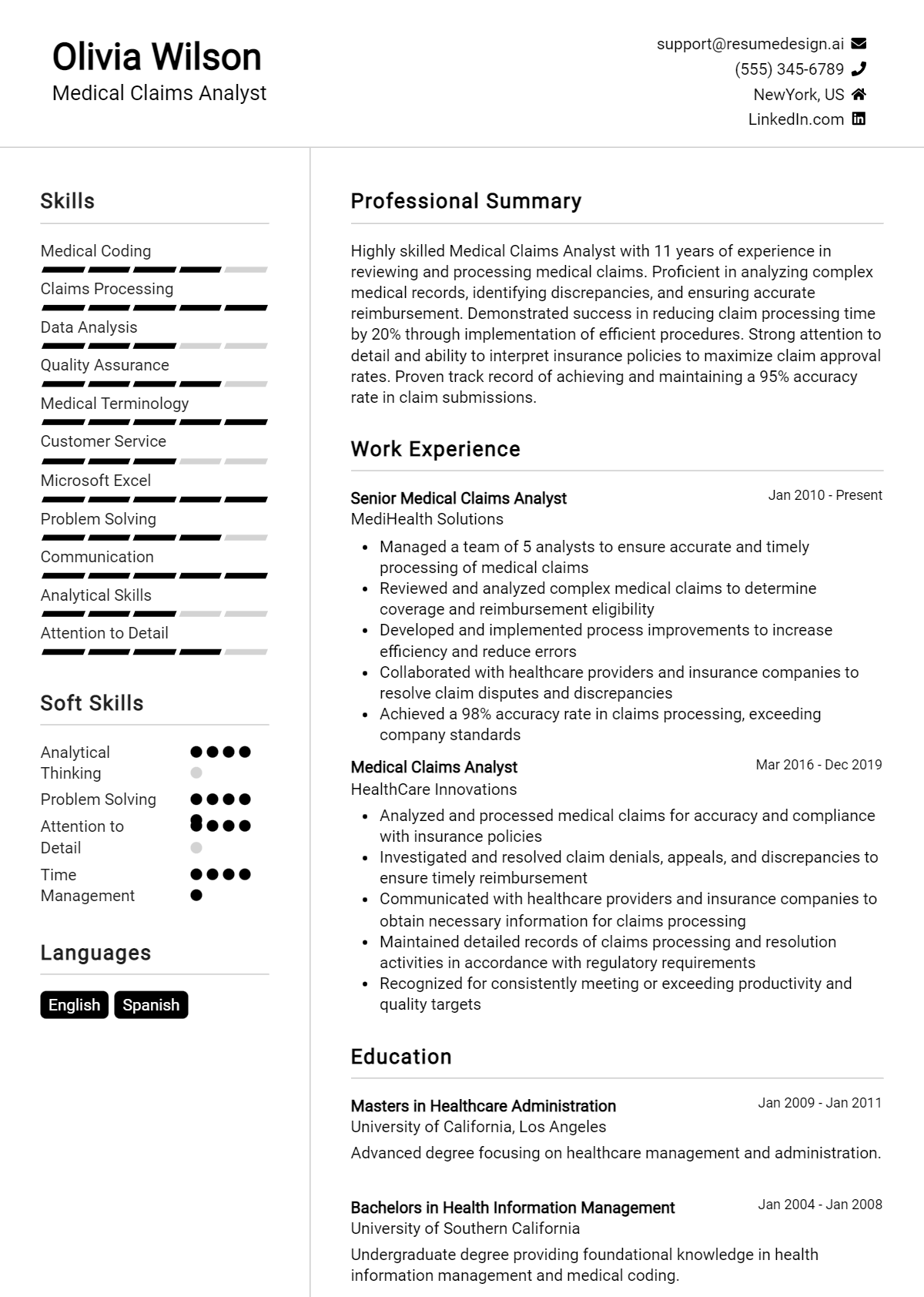
When preparing for a job interview as a Medical Claims Analyst, it's essential to understand the key questions that may arise during the evaluation process. This role demands a combination of analytical skills, attention to detail, and knowledge of medical billing and coding practices. Being equipped with thoughtful responses can significantly enhance your chances of securing the position.
Here is a list of common job interview questions, with examples of the best answers tailored for the Medical Claims Analyst role. These questions cover your work history and experience, what you have to offer the employer, and your goals for the future, allowing you to demonstrate your expertise in claims processing, problem-solving abilities, and commitment to quality service in the healthcare industry.
1. What experience do you have with medical billing and coding?
I have over three years of experience in medical billing and coding, working with various insurance companies. I am proficient in ICD-10, CPT, and HCPCS coding systems, ensuring accurate claims submissions and maximizing reimbursements. My attention to detail helps minimize errors.
Example:
I worked at XYZ Hospital, where I processed over 100 claims daily, ensuring compliance with coding guidelines and reducing claim rejections by 20% through meticulous review.
2. How do you handle denied claims?
When encountering denied claims, I first analyze the reason for denial. I then gather any necessary documentation and communicate with both the provider and the insurance company to resolve the issue. My persistence often leads to successful reprocessing.
Example:
Once, I successfully appealed a denied claim by providing additional medical records, resulting in a full reimbursement for the provider.
3. Can you explain the importance of accuracy in claims processing?
Accuracy in claims processing is crucial to avoid financial losses for healthcare providers and ensure patients receive the correct coverage. Errors can lead to claim denials, delayed payments, and potential audits, which can harm the provider's reputation.
Example:
My thorough review process has consistently maintained a 98% accuracy rate in claims submissions, reducing the risk of denials significantly.
4. What software are you familiar with for claims processing?
I am experienced with various medical billing software, including Epic, Cerner, and Meditech. I have also used electronic health record systems that integrate with billing processes, allowing for efficient claims submission and tracking.
Example:
At my previous job, I utilized Epic to streamline the billing process, which improved our claims turnaround time by 30%.
5. How do you stay updated on changes in healthcare regulations?
I stay updated on healthcare regulations by subscribing to industry newsletters, attending webinars, and participating in professional organizations. I also regularly review CMS updates and other regulatory bodies to ensure compliance with billing practices.
Example:
Through these methods, I successfully adapted my processes to comply with the latest changes in Medicare reimbursement policies.
6. Describe a challenging situation you faced in your previous role and how you handled it.
In my last position, I dealt with a sudden influx of claims due to a new provider joining our network. I prioritized tasks and implemented a tracking system, which improved our workflow and ensured timely processing without sacrificing accuracy.
Example:
As a result, we maintained our standard processing time and received positive feedback from our new provider.
7. What steps do you take to ensure compliance with HIPAA regulations?
I ensure compliance with HIPAA regulations by following strict data privacy procedures, limiting access to sensitive information, and completing ongoing training. I also regularly audit our processes to identify potential risks and implement improvements.
Example:
This proactive approach has helped our team maintain a clean compliance record during internal audits.
8. How do you prioritize your tasks when managing multiple claims?
I prioritize tasks by assessing deadlines and the complexity of each claim. I utilize a task management system to track progress and ensure timely follow-ups. This method allows me to handle high volumes without sacrificing quality.
Example:
By organizing my workload this way, I consistently meet deadlines and maintain a high claim resolution rate.
9. Can you describe your experience with medical coding systems?
I have extensive experience with ICD-10 and CPT coding systems. I regularly review claims for accuracy and ensure compliance with regulations. My attention to detail minimizes errors and optimizes claim processing, which is crucial for timely reimbursements.
Example:
In my previous role, I coded over 300 claims weekly, ensuring adherence to ICD-10 guidelines. This experience enhanced my ability to identify discrepancies, leading to a 15% reduction in claim denials.
10. How do you handle discrepancies in claims?
When discrepancies arise, I investigate by cross-referencing documentation and communicating with healthcare providers. I aim to resolve issues promptly to prevent delays in processing, ensuring all information is accurate and compliant with guidelines.
Example:
Recently, I identified a coding error on a claim. I promptly contacted the provider, clarified the issue, and submitted a corrected claim, which resulted in timely payment.
11. What software are you familiar with for processing claims?
I am proficient in using software such as Epic, Cerner, and Medisoft for claims processing. These tools streamline the workflow and enhance data accuracy, allowing me to efficiently manage and analyze claims.
Example:
At my last job, I utilized Epic for managing claims, which improved processing time by 20%. My familiarity with these systems enables me to quickly adapt to new software.
12. How do you stay updated on changes in healthcare regulations?
I stay informed by subscribing to industry newsletters, attending webinars, and participating in professional organizations. This proactive approach helps me stay current with changes, ensuring compliance and reducing the risk of claim denials.
Example:
For instance, I recently attended a webinar on new Medicare guidelines, which equipped me with knowledge to correctly process claims, enhancing my team's compliance efforts.
13. Can you give an example of a challenging claim situation you've faced?
I once dealt with a complex claim involving multiple providers and services. Coordinating with all parties, I ensured accurate documentation. This experience taught me valuable negotiation skills and the importance of clear communication.
Example:
In that situation, I organized a meeting with the providers and clarified the service details, which led to a successful appeal and full reimbursement.
14. How do you prioritize your workload when dealing with multiple claims?
I prioritize my workload by assessing deadlines and the complexity of each claim. Using a task management system, I ensure that urgent claims receive immediate attention while maintaining overall efficiency in processing.
Example:
For instance, I use a priority matrix to categorize claims, addressing high-value or time-sensitive ones first, which has improved my overall workflow.
15. Describe a time when you improved a claims processing procedure.
I analyzed our claims workflow and identified bottlenecks, proposing a standardized checklist for document verification. This change reduced processing time and increased accuracy, leading to fewer denials.
Example:
After implementing the checklist, our team saw a 30% improvement in claim approval rates within three months, demonstrating the effectiveness of streamlined processes.
16. How do you manage stress during peak processing times?
I manage stress by staying organized and maintaining open communication with my team. I also practice time management techniques, which help me stay focused and efficient during peak times.
Example:
During our busiest month, I created a shared schedule and delegated tasks, which helped reduce pressure and ensured timely processing of all claims.
17. How do you ensure accuracy in your claims analysis?
I ensure accuracy by meticulously reviewing each claim against policy guidelines, verifying patient information, and utilizing software tools for error detection. Regular audits and staying updated on industry changes also help maintain high accuracy levels.
Example:
I cross-reference claims with patient records and policy details, using automated systems to flag discrepancies. Consistent training and audits help mitigate errors, ensuring claims are processed correctly and efficiently.
18. Describe a time when you had to resolve a complex claim issue.
I encountered a complex claim involving multiple services denied due to coding errors. I collaborated with the provider to gather correct documentation, re-coded the claims accurately, and resubmitted them, resulting in successful approval and payment.
Example:
I worked on a claim that was denied multiple times. After thorough investigation and communication with the provider, I identified the coding error, corrected it, and successfully resubmitted, resolving the issue and ensuring timely payment.
19. What tools or software do you use in claims processing?
I utilize various claims processing software like Epic and Centricity, alongside Excel for data analysis. Familiarity with coding systems such as ICD-10 and CPT enhances my efficiency in managing claims effectively.
Example:
I primarily use Epic for claims management and Excel for data analysis. My experience with ICD-10 and CPT coding systems allows me to navigate the claims process smoothly and efficiently.
20. How do you keep up with changes in healthcare regulations?
I stay informed by regularly reviewing industry publications, attending webinars, and participating in professional organizations. Networking with colleagues also provides insights into the latest regulatory changes impacting claims processing.
Example:
I subscribe to healthcare newsletters and attend relevant training sessions. Additionally, I engage with professional groups online to discuss updates and share best practices regarding regulatory changes in claims processing.
21. Can you explain the importance of timely claims submission?
Timely claims submission is crucial to ensure prompt payment and maintain cash flow for healthcare providers. Delayed submissions can lead to denials, increased administrative costs, and potential loss of revenue.
Example:
Timely submission minimizes the risk of denials and cash flow interruptions. It ensures that healthcare providers receive payments promptly, which is essential for their operational sustainability and patient care quality.
22. How do you handle claim denials?
When faced with claim denials, I analyze the denial reason, gather supporting documentation, and appeal the decision if warranted. Communication with the payer is vital to clarify any misunderstandings and facilitate resolution.
Example:
I review the denial reason, identify any errors, and gather necessary documents for an appeal. Maintaining open communication with payers helps expedite the resolution process and recover lost revenue.
23. What metrics do you track to evaluate your claims processing performance?
I track metrics such as claim approval rates, average processing time, denial rates, and revenue recovery rates. These metrics provide insights into my performance and help identify areas for improvement in the claims process.
Example:
I monitor claim approval rates and denial reasons, alongside average processing time. These metrics help me assess efficiency and identify areas needing improvement to enhance overall claims processing performance.
24. Describe your experience with patient billing inquiries.
I have extensive experience addressing patient billing inquiries, explaining charges, and clarifying coverage. I approach each interaction with empathy and patience, ensuring patients feel heard and informed about their claims.
Example:
I frequently assist patients with billing questions, providing clear explanations about their claims and coverage. My goal is to ensure they understand their bills and feel supported throughout the process.
25. Can you describe a time when you identified a discrepancy in a claim? How did you resolve it?
In my previous role, I noticed an inconsistency between the billed services and the patient's records. I cross-referenced the documentation, contacted the provider for clarification, and submitted a corrected claim, ensuring compliance with regulations while enhancing accuracy.
Example:
I found a billing error where the procedure code didn't match the diagnosis. I contacted the healthcare provider, clarified the issue, and resubmitted the corrected claim within a week, improving the accuracy of our claims processing.
26. How do you prioritize your workload when dealing with multiple claims?
I prioritize claims based on their urgency and complexity. I assess deadlines, potential impacts on the patient, and claim value. Using a task management tool, I ensure timely processing and follow-ups, maintaining high quality and efficiency.
Example:
I categorize claims into urgent and standard, tackling urgent claims first. I also allocate time blocks for complex cases, ensuring that I maintain a steady workflow without sacrificing quality. This approach keeps me organized and efficient.
27. What software tools are you familiar with for processing medical claims?
I have experience with various medical billing software, including Epic, Cerner, and Meditech. These tools help streamline the claims process, track submissions, and manage denials effectively. I adapt quickly to new systems as needed.
Example:
I’m proficient in Epic and Meditech for managing claims. I also use Excel for data analysis. My familiarity with these systems enhances my efficiency in processing and tracking claims accurately, ensuring timely follow-ups on submissions.
28. How do you stay updated on changes in healthcare regulations and policies?
I subscribe to industry newsletters, attend webinars, and participate in professional organizations. Regularly reviewing resources like the CMS website helps me stay informed about regulatory changes, ensuring compliance in claims processing.
Example:
I follow industry leaders on LinkedIn and subscribe to healthcare policy updates. Additionally, I attend quarterly seminars which help me understand the latest regulations and their implications for claims processing, ensuring we remain compliant.
29. Describe how you handle a rejected claim.
When I encounter a rejected claim, I review the denial reason thoroughly. I collaborate with the healthcare provider to gather necessary documentation, make corrections, and promptly resubmit the claim to ensure timely payment.
Example:
Upon receiving a rejection for missing documentation, I contacted the provider for the necessary paperwork. I corrected the claim and resubmitted it within 48 hours, ensuring that the issue was resolved quickly and efficiently.
30. Can you explain how you ensure accuracy in your work?
I ensure accuracy by implementing a multi-step review process. I double-check all entries against source documents, utilize checklists, and regularly participate in peer reviews to minimize errors and maintain high standards in claims processing.
Example:
I cross-reference claims with patient records and use a checklist for compliance. Regular peer reviews also help catch errors early, ensuring accuracy in every submission and maintaining our department's reputation for quality.
31. What steps do you take if a provider disputes a claim denial?
I first review the denial details and gather relevant documentation. After confirming the facts, I engage in a constructive conversation with the provider to discuss the dispute, aiming for a resolution that benefits both parties.
Example:
I initiate a discussion with the provider, reviewing the denial reason together. I present supporting documents and clarify any misunderstandings. This collaborative approach often leads to resolutions that satisfy both the provider and our organization.
32. How do you handle stress during high-volume periods?
During high-volume periods, I prioritize tasks, take short breaks to recharge, and maintain open communication with my team. Staying organized and focused helps me manage stress effectively while ensuring claims are processed accurately and on time.
Example:
I stay organized by creating daily to-do lists and breaking tasks into manageable steps. I also practice mindfulness techniques during short breaks, which helps me maintain focus and reduce stress during peak workloads.
33. How do you prioritize tasks when handling multiple claims simultaneously?
I prioritize tasks based on urgency and complexity. I assess deadlines, the potential impact on patients, and the claim's financial implications. This method ensures I manage my workload efficiently while maintaining accuracy.
Example:
For instance, I focus on urgent claims that affect patient care first, then tackle complex claims that require more detailed investigation, ensuring all deadlines are met.
34. Describe a time when you identified a fraudulent claim. What steps did you take?
I once noticed inconsistencies in a claim for an expensive procedure that didn’t match the patient’s treatment history. I gathered evidence and reported it to my supervisor, leading to an investigation that confirmed the fraud.
Example:
After investigating, we denied the claim, protecting the company from a potential financial loss and ensuring compliance with regulations.
35. How do you stay updated with changes in healthcare regulations and policies?
I subscribe to industry newsletters, attend webinars, and participate in professional organizations. Regular training sessions also help me stay informed about new policies and their implications for claims processing.
Example:
This proactive approach allows me to ensure compliance and apply the latest regulations in my daily work effectively.
36. Can you explain the importance of accuracy in claims processing?
Accuracy is crucial in claims processing as it directly impacts reimbursement rates and patient satisfaction. Mistakes can lead to financial losses and affect the provider's reputation, making diligence essential in my role.
Example:
I always double-check my work and utilize software tools to minimize errors, ensuring claims are processed correctly and promptly.
37. How do you handle difficult conversations with healthcare providers regarding claim denials?
I approach difficult conversations with empathy and clarity. I explain the reasons for the denial, providing specific details, and offer solutions or alternatives to resolve the issue while maintaining a professional demeanor.
Example:
For instance, I would say, "I understand your concerns, and here's why the claim was denied. Let’s explore options to rectify this situation together."
38. What software tools are you familiar with for managing medical claims?
I have experience with various medical billing software, including Epic, Cerner, and Meditech. These tools assist in efficient claims processing, tracking, and reporting, enabling me to manage claims effectively.
Example:
I often utilize these systems to streamline workflows and enhance collaboration with other departments.
39. How do you approach analyzing trends in claim denials?
I analyze trends by reviewing denial reports and identifying common reasons for denials. This analysis helps me provide feedback to providers and improve future claims submissions, ultimately reducing denial rates.
Example:
By collaborating with teams to address the root causes of these trends, we can enhance overall claim accuracy.
40. Can you describe your experience with coding systems, such as CPT and ICD?
I have extensive experience with CPT and ICD coding systems, ensuring compliance with coding guidelines. I use these codes to accurately represent patient diagnoses and treatments, which is crucial for claim approvals.
Example:
My knowledge of these systems allows me to identify discrepancies and ensure that claims are supported by the correct documentation.
41. How do you handle discrepancies in medical claims?
When handling discrepancies, I first investigate the claim details by reviewing documentation and communication with providers. I prioritize accuracy and transparency, ensuring that I follow up promptly with relevant parties to resolve the issue efficiently.
Example:
In a previous role, I encountered a claim mismatch. I reviewed the documents, contacted the provider for clarification, and corrected the error within 48 hours, ensuring timely processing and maintaining good relations.
42. Describe your experience with electronic claims processing systems.
I have extensive experience with electronic claims processing systems, including managing submissions, tracking statuses, and resolving rejections. I am proficient in using software tools to enhance efficiency and accuracy in the claims lifecycle.
Example:
In my last position, I utilized an electronic claims system to process over 100 claims daily, reducing rejection rates by 20% through diligent follow-ups and training sessions for junior staff on system functionalities.
43. How do you stay updated on changes in healthcare regulations?
I stay updated on healthcare regulations by subscribing to industry newsletters, attending webinars, and participating in relevant training sessions. This commitment ensures that I maintain compliance and can effectively adapt to any changes impacting claims processing.
Example:
I recently attended a webinar on recent CMS changes, which helped me implement new compliance procedures in our claims review process, ensuring our team remained informed and up to date with the latest regulations.
44. Can you explain the importance of accurate coding in claims processing?
Accurate coding is crucial as it directly impacts reimbursement, compliance, and patient care. Errors can lead to claim denials, delayed payments, and potential legal issues. I prioritize attention to detail to ensure proper coding.
Example:
In a previous role, I identified coding errors that resulted in $50,000 in denied claims. By implementing additional checks, we improved our accuracy rate significantly, ensuring timely payments and compliance.
45. Describe a time when you improved a process in your previous role.
In my previous role, I noticed that the claim review process was taking too long. I analyzed the workflow and suggested a new tracking system that improved collaboration, reducing processing time by 30% and increasing overall productivity.
Example:
After implementing a digital tracking tool, my team reduced our claim processing time from 10 days to 7 days, enhancing our efficiency and improving provider relationships significantly.
46. How do you prioritize your workload when faced with multiple claims?
I prioritize my workload based on deadlines, claim complexity, and potential impact on revenue. I use a task management system to organize my claims, ensuring that urgent issues are addressed promptly while maintaining quality control.
Example:
When faced with multiple claims, I focus first on those with upcoming deadlines and high financial impact. This method helped me clear a backlog of 50 claims in under a week while maintaining accuracy.
How Do I Prepare For A Medical Claims Analyst Job Interview?
Preparing for a job interview is crucial to making a positive impression on the hiring manager. A well-prepared candidate demonstrates professionalism, confidence, and a genuine interest in the role. Here are some essential tips to help you stand out during your interview for a Medical Claims Analyst position.
- Research the company and its values to align your answers with their mission and culture.
- Practice answering common interview questions related to medical claims processing and healthcare terminology.
- Prepare examples that demonstrate your skills and experience relevant to the Medical Claims Analyst role.
- Review industry regulations and standards, such as HIPAA, to showcase your knowledge of compliance.
- Familiarize yourself with the software and tools commonly used in medical claims processing.
- Dress professionally and arrive early to show your commitment and enthusiasm for the position.
- Prepare thoughtful questions to ask the interviewer about the team, processes, and future goals of the company.
Frequently Asked Questions (FAQ) for Medical Claims Analyst Job Interview
Being well-prepared for a job interview can significantly enhance your chances of success, especially for a role as detailed and specialized as a Medical Claims Analyst. Familiarizing yourself with common questions can help you articulate your qualifications and demonstrate your understanding of the industry. Below are some frequently asked questions that candidates may encounter during their interview process.
What should I bring to a Medical Claims Analyst interview?
When attending a Medical Claims Analyst interview, it is essential to bring several key items to present yourself professionally. Start with multiple copies of your resume and a list of references. Additionally, consider bringing a notepad and pen for taking notes during the interview. If you have any certifications or relevant documents that highlight your qualifications, carry those along as well. Being organized and prepared shows your commitment to the role and helps create a positive impression.
How should I prepare for technical questions in a Medical Claims Analyst interview?
To effectively prepare for technical questions, review the core responsibilities of a Medical Claims Analyst, such as understanding medical coding, claims processing, and compliance regulations. Familiarize yourself with common terminologies and software commonly used in the industry. Practicing with sample technical questions and scenarios can help you articulate your thought process during the interview. Additionally, consider brushing up on any relevant laws and guidelines, such as HIPAA, that govern the medical claims process.
How can I best present my skills if I have little experience?
If you have limited experience in the field, focus on transferable skills that relate to the position. Highlight any relevant coursework, internships, or volunteer work that demonstrates your analytical abilities, attention to detail, and familiarity with healthcare processes. Use the STAR (Situation, Task, Action, Result) method to structure your responses, showcasing how your skills can benefit the organization. Emphasize your eagerness to learn and adapt, which can be a valuable asset for entry-level candidates.
What should I wear to a Medical Claims Analyst interview?
Dressing appropriately for a Medical Claims Analyst interview is crucial as it reflects your professionalism and respect for the process. Opt for business professional attire, such as a tailored suit or a conservative dress, depending on your personal style. Stick to neutral colors and avoid overly flashy accessories. Ensure your outfit is clean and well-fitted, as this not only helps you feel confident but also leaves a positive impression on your potential employer.
How should I follow up after the interview?
Following up after an interview is a vital step in the job application process. Send a personalized thank-you email within 24 hours, expressing your gratitude for the opportunity and reiterating your interest in the role. Mention specific topics discussed during the interview to reinforce your engagement and suitability for the position. This follow-up not only demonstrates your professionalism but also keeps you on the interviewer’s radar as they make their final decision.
Conclusion
In summary, this interview guide for the Medical Claims Analyst role has explored essential preparation strategies, the importance of practicing responses, and the need to showcase relevant skills. Preparing for both technical and behavioral questions is crucial, as it significantly enhances a candidate's chances of success in securing the desired position.
As you get ready to face your interviews, remember to leverage the tips and examples provided in this guide. Approach your interviews with confidence and clarity, knowing that thorough preparation can set you apart from the competition.
For further assistance, check out these helpful resources: resume templates, resume builder, interview preparation tips, and cover letter templates.