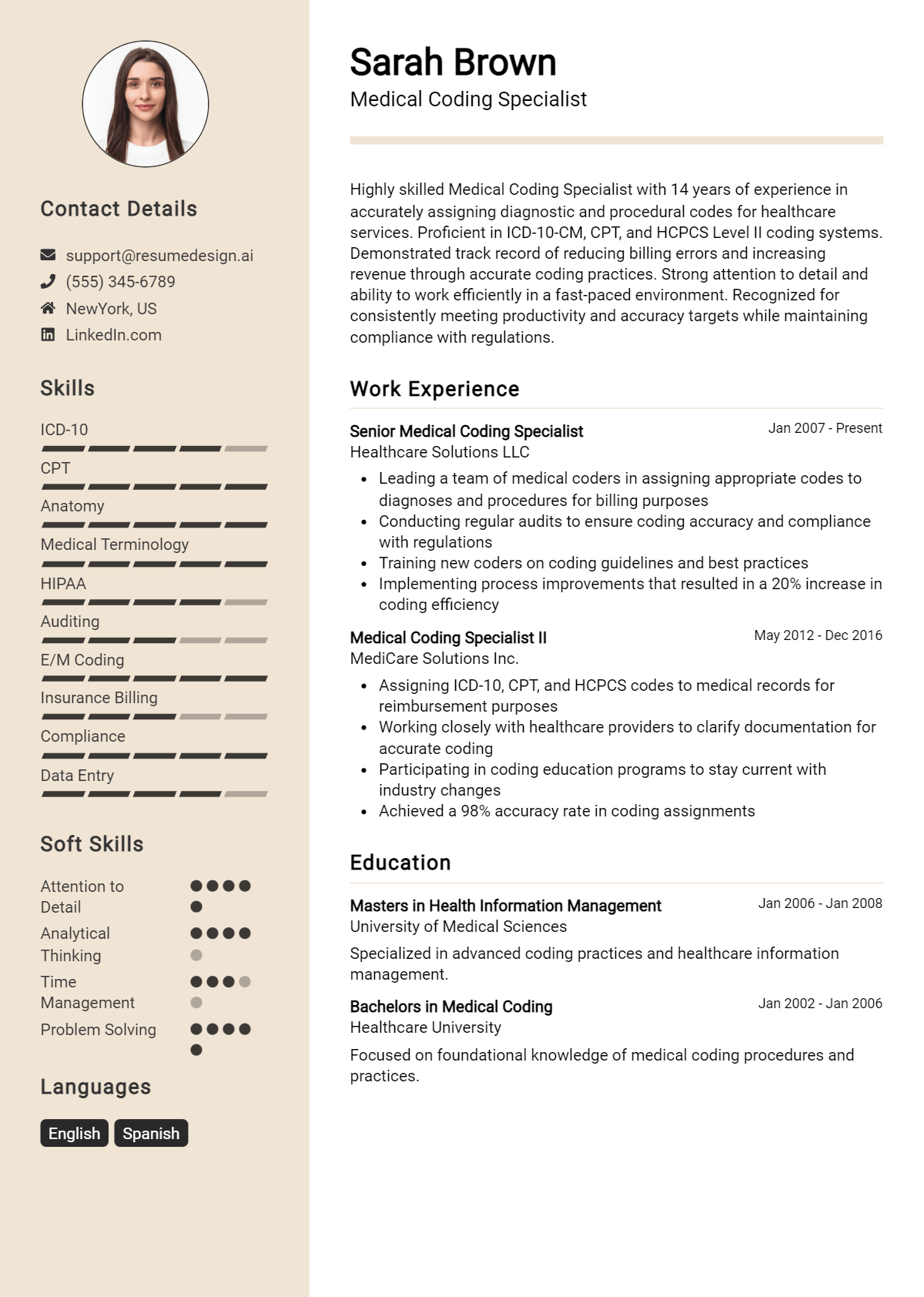
When preparing for a job interview as a Medical Coding Specialist, it's essential to familiarize yourself with the types of questions you may encounter. These questions are designed to assess your technical knowledge, understanding of medical terminology, coding practices, and how well you can adapt to the fast-paced environment of healthcare. Being well-prepared not only demonstrates your expertise but also showcases your commitment to the role.
Here is a list of common job interview questions for the Medical Coding Specialist position, along with examples of the best answers. These questions cover your work history and experience, your proficiency in various coding systems like ICD-10 and CPT, what you have to offer the employer in terms of skills and knowledge, and your goals for the future within the field of medical coding.
1. Can you explain what medical coding is?
Medical coding is the process of translating healthcare diagnoses, procedures, and services into universally recognized alphanumeric codes. This is essential for billing, insurance claims, and maintaining patient records. It ensures accurate communication among healthcare providers and insurers.
Example:
Medical coding involves converting medical reports into codes that represent diagnoses and procedures, facilitating billing and compliance. It's vital for accurate medical records and efficient insurance claims processes.
2. What coding systems are you familiar with?
I am proficient in ICD-10-CM, CPT, and HCPCS Level II coding systems. My experience includes utilizing these codes for various medical specialties, ensuring compliance with regulations and accuracy in billing and reimbursement processes.
Example:
I am well-versed in ICD-10-CM for diagnoses, CPT for procedures, and HCPCS for services. My training and experience ensure I can accurately code across different medical specialties.
3. How do you stay updated with coding regulations?
I regularly attend webinars and workshops, subscribe to coding newsletters, and participate in professional associations such as AAPC. This helps me stay informed about updates to coding guidelines and regulations.
Example:
I stay current by attending annual coding conferences, following coding blogs, and actively participating in AAPC forums to discuss changes and updates in regulations.
4. Describe a challenging coding situation you've faced.
In a previous role, I encountered complex cases with insufficient documentation. I collaborated with healthcare providers to clarify details and ensured accurate coding, which improved claim approval rates and reduced denials.
Example:
I faced a case with incomplete patient records. I reached out to the physician for clarification, enabling accurate coding and significantly reducing claim rejections in the process.
5. How do you handle discrepancies in medical records?
I review the records thoroughly and cross-check them with coding guidelines. If discrepancies persist, I communicate with the healthcare provider for clarification, ensuring accurate and compliant coding while maintaining patient confidentiality.
Example:
I address discrepancies by investigating the coding guidelines and consulting with the provider. This approach not only resolves issues but enhances the accuracy of our coding process.
6. What software tools are you experienced with in coding?
I have hands-on experience with software like 3M CodeFinder, Optum360, and EPIC. These tools streamline the coding process and enhance accuracy while providing comprehensive databases for coding references.
Example:
I regularly use 3M CodeFinder and Optum360 for coding, which have proven to be invaluable in improving my efficiency and accuracy during the coding process.
7. Can you explain the importance of accuracy in medical coding?
Accuracy in medical coding is crucial to ensure proper reimbursement, reduce claim denials, and maintain compliance with regulations. Mistakes can lead to financial losses for providers and jeopardize patient care quality.
Example:
Accurate coding ensures providers receive correct reimbursements, minimizes claim denials, and supports quality patient care. Errors can have serious financial and legal implications.
8. How do you prioritize tasks in a busy coding environment?
I prioritize tasks by assessing deadlines and the complexity of cases. I utilize a task management system to keep track of urgent cases while ensuring that all coding is completed accurately and on time.
Example:
I use a priority matrix to categorize tasks by urgency and complexity, enabling me to focus on high-priority cases while maintaining accuracy across all coding assignments.
9. How do you ensure accuracy in your coding?
I ensure accuracy by consistently following coding guidelines, cross-referencing with updated medical records, and using reliable coding software. Additionally, I regularly participate in training sessions to stay updated on coding changes and best practices.
Example:
I double-check my coding against the documentation and utilize coding manuals. I also attend training workshops to stay current on coding practices, which helps maintain high accuracy and compliance.
10. Can you explain the difference between CPT, ICD-10, and HCPCS codes?
CPT codes are used for reporting medical procedures and services, ICD-10 codes classify diseases and health conditions, while HCPCS codes cover products and services not included in CPT. Understanding these distinctions is vital for accurate medical coding.
Example:
CPT codes focus on procedures, ICD-10 codes classify diagnoses, and HCPCS codes represent non-physician services. Each code set serves a unique purpose in medical billing and coding.
11. How do you handle coding disputes or denials?
I handle disputes by thoroughly reviewing the denial reasons, gathering supporting documentation, and collaborating with the healthcare provider. Clear communication and a detailed appeal letter can often resolve issues effectively.
Example:
When facing a denial, I analyze the denial reason, collect necessary documentation, and submit a detailed appeal. This approach has successfully overturned many coding disputes.
12. What tools or software do you find essential for coding?
I rely on coding software like 3M or Optum360, as well as online resources like CMS guidelines. These tools streamline the coding process and ensure compliance with regulatory updates.
Example:
I utilize 3M coding software for accuracy and efficiency. Additionally, I frequently consult the CMS website for the latest updates on coding guidelines.
13. Describe a challenging coding scenario you've encountered.
I once faced a complex case with conflicting documentation. I consulted the physician for clarification, ensuring I had accurate details before coding. This collaboration led to proper reimbursement and enhanced documentation practices.
Example:
In a complex case with unclear documentation, I reached out to the physician for clarification, which allowed me to code accurately and resolve the issue effectively.
14. How do you stay updated with changes in coding regulations?
I stay updated by subscribing to relevant newsletters, attending webinars, and participating in professional organizations. Continuous education is crucial for adapting to coding changes and maintaining compliance.
Example:
I regularly attend coding webinars and subscribe to industry newsletters. Being a member of the AAPC also helps me stay informed about the latest coding changes.
15. What is your experience with audits?
I have participated in both internal and external audits, reviewing coding accuracy and compliance. I use audit feedback to improve my coding practices and identify areas for further education.
Example:
In previous roles, I participated in audits, addressing discrepancies and implementing feedback. This experience has significantly improved my coding accuracy over time.
16. How do you prioritize your workload as a medical coder?
I prioritize my workload by assessing deadlines and complexity. I create a daily task list, focusing on high-priority cases first while managing time efficiently to meet all deadlines.
Example:
I assess urgency and complexity each day, creating a prioritized task list that allows me to manage my time effectively and meet deadlines consistently.
17. How do you stay current with changes in medical coding guidelines?
I regularly attend webinars and workshops, and I subscribe to industry newsletters. I’m also a member of professional organizations that offer resources and updates on coding changes, which helps me stay informed and compliant in my coding practices.
Example:
I participate in quarterly webinars and follow key industry publications. Additionally, being part of the AAPC allows me to access updated coding guidelines and network with other professionals, ensuring I remain knowledgeable about coding standards.
18. Can you describe a time when you identified an error in coding?
In my previous job, I discovered a recurring error in the coding of a specific procedure. After analyzing the data and discussing it with my team, we corrected the codes, which improved our billing accuracy and reduced claim denials significantly.
Example:
I found an incorrect code for a procedure, leading to multiple claim denials. I presented my findings to the coding supervisor, and together we updated the coding guidelines to prevent future errors, significantly enhancing our claims processing accuracy.
19. How do you handle tight deadlines in your work?
I prioritize my tasks and use effective time management strategies. When facing tight deadlines, I break down tasks into manageable segments and focus on high-priority items first. This approach allows me to meet deadlines without compromising accuracy.
Example:
During peak seasons, I create a daily checklist to prioritize tasks. By focusing on urgent claims first and utilizing tools for efficiency, I consistently meet deadlines while ensuring the accuracy of my coding work.
20. What coding software are you proficient in?
I have extensive experience with coding software such as 3M CodeFinder and Optum360. These tools enhance my coding efficiency and accuracy by providing comprehensive coding guidelines and real-time updates on coding changes.
Example:
I am proficient in 3M CodeFinder and Optum360. My experience with these systems has helped me streamline coding processes and improve accuracy, allowing for efficient claims submissions and reduced processing times.
21. How do you ensure the accuracy of your coding?
I double-check my work against medical records and coding guidelines. I also cross-reference codes using trusted resources and participate in peer reviews to maintain high accuracy levels and minimize coding errors.
Example:
I implement a review process where I cross-check coded information against the medical documentation. Additionally, I collaborate with colleagues for peer reviews, which has significantly helped in catching potential errors before submission.
22. What do you consider the most challenging aspect of medical coding?
The most challenging aspect is keeping up with constant changes in coding guidelines and regulations. It requires ongoing education and adaptability to ensure compliance and accuracy in coding practices.
Example:
The frequent updates to coding standards can be overwhelming. To manage this, I dedicate time each week to review new guidelines and participate in training sessions, ensuring I remain proficient and compliant in my coding responsibilities.
23. How do you handle discrepancies in patient records?
When I encounter discrepancies in patient records, I verify the information with the healthcare provider. I believe clear communication is essential to resolve issues efficiently and ensure accurate coding.
Example:
I reach out to the healthcare provider for clarification when discrepancies arise. This collaboration ensures we maintain accurate records and coding, thereby enhancing the quality of patient care and reducing claim denials.
24. Can you explain the importance of confidentiality in medical coding?
Confidentiality is crucial in medical coding as it protects patient privacy and complies with regulations like HIPAA. As a coder, I ensure that sensitive information is handled properly to maintain trust and legal compliance.
Example:
Maintaining confidentiality is vital in our role. I strictly adhere to HIPAA regulations by ensuring that patient data is only accessible to authorized personnel, thereby safeguarding patient information and upholding ethical standards in healthcare.
25. How do you ensure accuracy in your coding work?
I maintain accuracy by staying updated with coding guidelines and regulations. I double-check my work against the latest coding manuals and use software tools to verify codes. Additionally, I participate in regular training to enhance my coding skills and knowledge. Example: I utilize coding software that flags potential errors and conduct periodic self-audits. Regularly attending workshops helps me clarify updates in coding practices, which significantly minimizes inaccuracies in my submissions.
26. Can you explain the importance of HIPAA in medical coding?
HIPAA ensures the confidentiality and security of patient information. As a Medical Coding Specialist, it's crucial to adhere to HIPAA regulations to protect sensitive data while accurately coding diagnoses and procedures. This builds trust between patients and healthcare providers. Example: I ensure that all patient information is handled with strict confidentiality, following HIPAA guidelines. I avoid discussing patient cases outside of work and utilize secure systems for data management to maintain compliance.
27. How do you handle discrepancies in coding documentation?
I address discrepancies by first reviewing the documentation thoroughly to identify the source of the issue. I then communicate with the healthcare provider for clarification. Collaboration helps ensure accurate coding and proper reimbursement for services rendered. Example: When I encounter discrepancies, I review the patient chart and reach out to the provider for clarification. This proactive approach helps resolve issues quickly, ensuring accurate coding and preventing delays in billing.
28. Describe your experience with coding software and tools.
I have extensive experience with various coding software, including 3M and Optum360. These tools help streamline the coding process, identify errors, and ensure compliance with coding standards. I am also proficient in using electronic health record (EHR) systems for efficient data entry. Example: I regularly use 3M for coding and billing, which enhances my coding efficiency. My proficiency in EHR systems allows me to access patient records swiftly, ensuring accurate and timely coding of all procedures.
29. How do you stay current with changes in coding regulations?
I stay current by subscribing to industry newsletters, attending webinars, and participating in professional coding organizations. Networking with fellow coders also provides insights into regulatory changes. Continuous education is key to maintaining my coding expertise. Example: I subscribe to the AAPC newsletter and attend annual coding conferences. This keeps me informed about updates and changes in regulations, allowing me to adapt my coding practices accordingly.
30. What do you consider the most challenging aspect of medical coding?
The most challenging aspect is keeping up with the frequent changes in coding guidelines and regulations. It requires constant learning and adaptation to ensure compliance and accuracy. Staying organized and proactive helps me manage these challenges effectively. Example: I find that the continuous updates in coding regulations can be overwhelming. However, I create a schedule for reviewing new guidelines and allocate time weekly for training, which helps me manage this challenge efficiently.
31. How do you prioritize your tasks when coding multiple cases?
I prioritize tasks based on deadlines and the complexity of cases. I use a task management system to list and track pending cases, ensuring that I meet submission timelines while maintaining accuracy. Staying organized is essential for efficiency. Example: I categorize my cases by urgency and complexity. I tackle high-priority cases first while scheduling time for more complex ones, ensuring that all submissions are completed accurately and on time.
32. Can you provide an example of how you resolved a coding error?
In a previous role, I discovered a coding error during a routine audit. I promptly corrected the error and informed the billing department to adjust the claim. I also implemented a checklist to prevent similar mistakes in the future. Example: I found an error in a patient's claim during an audit. I corrected it and communicated with the billing team for a swift resolution. I also created a checklist to help prevent future errors and improve accuracy.
33. Can you explain the importance of accuracy in medical coding?
Accuracy in medical coding is crucial as it ensures proper billing, compliance with regulations, and optimal patient care. Inaccurate coding can lead to denied claims or legal issues for healthcare providers. I prioritize accuracy by continuously updating my knowledge and double-checking my work.
Example:
For instance, I regularly attend coding workshops to stay current with changes, which helps me maintain high accuracy in my coding practices.
34. How do you handle coding for a complex medical case?
For complex cases, I thoroughly review all documentation, consult with healthcare providers if needed, and utilize coding manuals and software effectively. I break down the case into manageable parts, ensuring all details are captured accurately to provide the best coding outcome.
Example:
Recently, I handled a multi-specialty case by collaborating with the involved physicians to clarify documentation and ensure precise coding for all procedures.
35. What coding software are you familiar with?
I have experience with several coding software programs, including 3M, Optum360, and AAPC's Codify tool. Each software has unique features, and I adapt quickly to new systems. My familiarity enhances my efficiency and accuracy in coding tasks.
Example:
In my previous role, I used 3M to streamline the coding process, which significantly reduced our turnaround time for claims.
36. Describe a time you had to address a coding error.
When I discovered a coding error in a previous project, I immediately notified my supervisor, corrected the mistake, and implemented a review process. I believe addressing errors promptly fosters trust and ensures compliance, which is vital in medical coding.
Example:
In one instance, I identified a repeated error in a diagnosis code and revised our coding procedures to prevent future occurrences.
37. How do you keep yourself updated on coding guidelines?
I stay updated on coding guidelines by subscribing to industry publications, attending webinars, and participating in professional coding associations. Continuous education is essential in this field to maintain compliance and accuracy in my work as a coding specialist.
Example:
Recently, I completed a webinar on ICD-10 updates, which equipped me with the latest coding practices and guidelines.
38. Can you discuss how you manage tight deadlines?
To manage tight deadlines, I prioritize tasks, create a schedule, and maintain open communication with my team. I focus on efficiency while ensuring accuracy, which helps me meet deadlines without compromising the quality of my work as a coding specialist.
Example:
During peak seasons, I allocate time blocks for coding, which allows me to complete my tasks efficiently while ensuring thoroughness.
39. What is your experience with insurance claims?
I have extensive experience in processing insurance claims, including verifying eligibility, coding accurately for billed services, and following up on denied claims. My attention to detail ensures that claims are submitted correctly, minimizing rejections and delays.
Example:
In my last position, I successfully reduced claim denials by 20% through meticulous coding and prompt follow-ups on outstanding claims.
40. How would you handle a dispute with a physician regarding coding?
In case of a dispute, I would approach the physician with an open mind, presenting the coding guidelines and documentation. Collaborative communication is key to resolving misunderstandings and ensuring accurate coding that reflects the patient's care.
Example:
I once had a discussion with a physician about a diagnosis code, where we reviewed the documentation together to reach a mutual understanding.
41. Can you explain the importance of compliance in medical coding?
Compliance in medical coding ensures that coding practices adhere to regulations and guidelines, reducing the risk of audits and legal issues. It safeguards patient data and maintains the integrity of the healthcare system through accurate billing and reimbursement.
Example:
For example, I regularly review coding updates to ensure compliance with Medicare and Medicaid policies, which minimizes errors and enhances audit preparedness.
42. How do you handle discrepancies between clinical documentation and coding?
When discrepancies arise, I communicate directly with healthcare providers to clarify documentation. I analyze the clinical information and ensure accurate coding by working collaboratively to resolve any inconsistencies while adhering to coding guidelines.
Example:
In a previous role, I found a coding error due to unclear notes. I discussed it with the physician, and we revised the documentation for future clarity.
43. What coding system are you most familiar with, and why?
I am most familiar with the ICD-10 coding system, as it provides comprehensive codes for a wide range of diagnoses. Its specificity allows for better data collection and analysis, which is vital for patient care and billing.
Example:
In my last position, I utilized ICD-10 extensively, resulting in more accurate claims submissions and fewer rejections.
44. Describe a time when you improved a coding process.
I identified inefficiencies in our coding workflow and implemented a training program for staff on new coding guidelines. This initiative reduced errors by 30% and improved our overall coding accuracy, leading to quicker reimbursements.
Example:
After analyzing our data, I created a workshop that enhanced our team's understanding of coding updates, significantly improving our coding turnaround time.
45. How do you stay current with coding updates and regulations?
I regularly attend coding webinars, participate in professional organizations, and subscribe to coding newsletters. Continuous education ensures I remain informed about changes in regulations and coding standards, which is essential for accuracy in my work.
Example:
For example, I recently attended a seminar on the latest ICD-10 updates, which helped me adapt our coding practices accordingly.
46. What challenges do you face in medical coding, and how do you overcome them?
Challenges include staying updated with frequent coding changes and managing high volumes of claims. I prioritize tasks, use coding software for efficiency, and engage in ongoing training to enhance my adaptability and coding accuracy.
Example:
By using a coding management system, I streamlined my workflow, allowing me to handle larger volumes without compromising accuracy.
How Do I Prepare For A Medical Coding Specialist Job Interview?
Preparing for a job interview is crucial to making a positive impression on the hiring manager and showcasing your qualifications for the Medical Coding Specialist role. By taking the time to prepare, you can increase your confidence and improve your chances of standing out among other candidates.
- Research the company and its values to understand its mission and culture.
- Practice answering common interview questions related to medical coding and billing.
- Prepare examples that demonstrate your skills and experience relevant to the Medical Coding Specialist role.
- Familiarize yourself with the latest coding guidelines and updates in the medical field.
- Dress professionally and ensure you have a neat appearance to convey your seriousness about the position.
- Bring copies of your resume and any relevant certifications to share with the interview panel.
- Be ready to discuss your problem-solving skills and how you handle challenging coding scenarios.
Frequently Asked Questions (FAQ) for Medical Coding Specialist Job Interview
Preparing for a job interview as a Medical Coding Specialist is crucial for making a positive impression on potential employers. Understanding common questions that may arise can help candidates articulate their qualifications and demonstrate their readiness for the role. Below are some frequently asked questions to consider when preparing for your interview.
What should I bring to a Medical Coding Specialist interview?
When attending a Medical Coding Specialist interview, it is essential to come prepared with several key items. Bring multiple copies of your resume, a list of references, and any certifications relevant to medical coding, such as CPC or CCS. It’s also helpful to have a notebook and pen for taking notes during the interview. Additionally, if you have a portfolio of relevant work or projects, consider bringing that as well to showcase your skills and experience.
How should I prepare for technical questions in a Medical Coding Specialist interview?
To effectively prepare for technical questions in a Medical Coding Specialist interview, review the coding guidelines and standards, such as ICD-10, CPT, and HCPCS Level II. Familiarize yourself with common medical terminology and coding scenarios you may encounter in the role. Practicing coding exercises or mock interviews can also help build your confidence. Be ready to explain your thought process in coding scenarios and demonstrate how you stay updated with industry changes.
How can I best present my skills if I have little experience?
If you have limited experience in medical coding, focus on highlighting your relevant skills, education, and any internships or volunteer work related to healthcare. Emphasize your knowledge of coding systems and your willingness to learn and adapt. Discuss any coursework or certifications you have completed and explain how they have prepared you for this role. Additionally, share examples of how your soft skills, such as attention to detail and analytical thinking, can contribute to the success of the team.
What should I wear to a Medical Coding Specialist interview?
Selecting the right attire for a Medical Coding Specialist interview is important, as it reflects your professionalism. Aim for business casual or professional attire. For men, this might mean dress slacks and a collared shirt, while women could opt for a blouse with slacks or a professional dress. Avoid overly casual clothing, such as jeans or t-shirts. Remember that first impressions matter, so ensure your clothing is clean, pressed, and appropriate for the workplace environment.
How should I follow up after the interview?
Following up after your interview is a critical step in the process. Send a thank-you email within 24 hours to express your appreciation for the opportunity to interview. In your message, briefly reiterate your interest in the position and highlight a key point from your discussion that showcases your fit for the role. This not only demonstrates your professionalism but also keeps you top-of-mind with the hiring manager as they make their decision.
Conclusion
In this interview guide for the Medical Coding Specialist role, we have covered essential aspects of preparation that can significantly enhance your performance. Emphasizing the importance of preparation, practice, and showcasing relevant skills is crucial for making a lasting impression on potential employers. A comprehensive approach that includes preparing for both technical and behavioral questions will greatly improve your chances of success in securing the position.
As you step into your interview, remember that confidence comes from thorough preparation. Take advantage of the tips and examples provided in this guide, and approach your interviews with a positive mindset. Your dedication and hard work will shine through, and you will be well-equipped to pursue your career in medical coding.
For further assistance, check out these helpful resources: resume templates, resume builder, interview preparation tips, and cover letter templates.