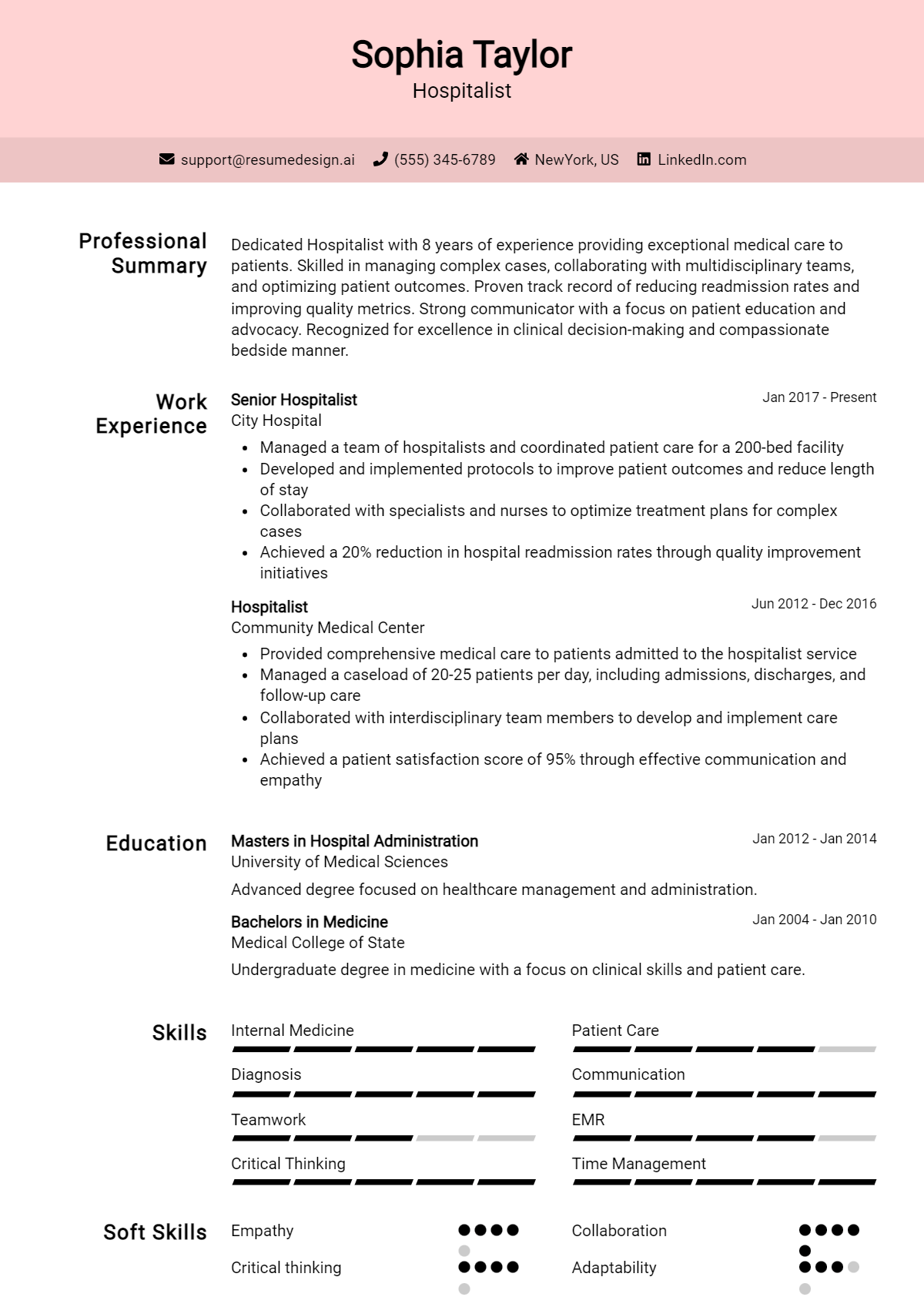
When preparing for a job interview as a hospitalist, it's essential to understand the types of questions you may encounter. This section will guide you through some of the most common interview questions specific to the hospitalist role, helping you to effectively articulate your qualifications, experiences, and career aspirations. A well-prepared candidate can convey not only their clinical expertise but also their ability to work collaboratively within a healthcare team.
Here is a list of common job interview questions for hospitalists, along with examples of the best answers. These questions cover your work history and experience, what you have to offer the employer, and your goals for the future. Being ready to discuss your approach to patient care, your experiences in diverse clinical settings, and your commitment to continuous learning will strengthen your candidacy for this vital role in healthcare.
1. What motivated you to become a Hospitalist?
My passion for providing comprehensive patient care in a hospital setting drove me to become a Hospitalist. I thrive in dynamic environments and value the opportunity to collaborate with specialists to ensure optimal patient outcomes.
Example:
I was drawn to the Hospitalist role because it allows me to engage deeply with patients and address complex medical issues while working alongside a multidisciplinary team.
2. How do you prioritize patient care during a busy shift?
During busy shifts, I prioritize patient care by assessing critical cases first, delegating tasks to nursing staff, and utilizing electronic health records for efficient patient management. Clear communication with the team helps ensure all patients receive timely care.
Example:
I assess patients based on acuity levels and collaborate with my team to ensure the most critical patients are seen first, optimizing our response time and care delivery.
3. Describe a challenging case you managed.
I once managed a patient with multiple comorbidities and rapid deterioration. I coordinated care with specialists, adjusted medications, and closely monitored vital signs, which ultimately stabilized the patient and led to a successful recovery.
Example:
I managed a complex case involving heart failure and pneumonia, collaborating with cardiology and pulmonology to adjust treatments, which resulted in significant patient improvement.
4. How do you handle difficult conversations with patients and families?
I approach difficult conversations with empathy and transparency, ensuring I listen actively and provide clear information. I aim to create a supportive environment where patients and families feel comfortable expressing their concerns.
Example:
I explain complex diagnoses in understandable terms, allowing time for questions, which helps families feel more involved and informed during challenging discussions.
5. What strategies do you use for effective teamwork in the hospital?
I promote effective teamwork by fostering open communication, participating in multidisciplinary rounds, and being open to feedback. Building strong relationships with colleagues enhances collaboration and patient care.
Example:
I organize regular team meetings to discuss cases and share insights, which strengthens relationships and improves overall patient management.
6. How do you stay current with medical advancements?
I stay current by subscribing to medical journals, attending conferences, and participating in continuing medical education. Engaging with peers through professional networks also helps me keep updated with the latest practices and treatments.
Example:
I regularly attend webinars and workshops, and I’m part of a professional group that discusses recent advancements and shares knowledge among members.
7. Can you discuss your experience with electronic health records (EHR)?
I have extensive experience using EHR systems for documentation and patient management. I find that EHRs enhance communication among providers and streamline workflows, allowing us to deliver better patient care efficiently.
Example:
I am proficient in several EHR systems and leverage them to track patient progress and coordinate care with other healthcare providers effectively.
8. How do you approach patient education?
I prioritize patient education by using simple language, visual aids, and teach-back methods to ensure understanding. Empowering patients with knowledge about their conditions promotes adherence to treatment plans and improves outcomes.
Example:
I explain treatment options in layman's terms and encourage questions, which helps patients feel more confident in managing their health.
9. How do you prioritize patient care when you have multiple patients requiring attention?
I assess the urgency of each patient's needs, utilizing vital signs, lab results, and clinical presentation. I prioritize those with critical conditions while ensuring that I communicate effectively with the rest of the team. This approach allows for efficient and safe patient care.
Example:
In a recent shift, I had a patient with severe respiratory distress and another with stable post-op needs. I quickly intervened with the first while delegating the second's care to a nurse, ensuring both received appropriate attention.
10. Can you describe a time when you had to handle a difficult family situation?
I once had a family that was distressed over their loved one's prognosis. I took the time to explain the condition, treatment options, and potential outcomes. By being empathetic and transparent, I helped them feel more at ease and involved in the decision-making process.
Example:
During a critical case, I met with a family who was struggling to understand the situation. I provided clear explanations and addressed their concerns, which helped them process the information and feel supported during a challenging time.
11. How do you stay updated with the latest medical guidelines and practices?
I regularly participate in continuing medical education, subscribe to relevant journals, and attend conferences. Additionally, I engage in peer discussions and online forums to exchange insights and stay informed about the latest clinical practices and evidence-based guidelines.
Example:
I recently attended a conference on hospital medicine, which introduced new protocols for managing sepsis. I also read the latest articles in journals like JAMA to keep my knowledge current and applicable in my practice.
12. Describe your approach to teamwork in a hospital setting.
I believe effective teamwork is crucial in patient care. I foster open communication, actively listen to colleagues, and encourage collaboration. My goal is to create an environment where everyone feels valued and empowered to contribute their expertise for optimal patient outcomes.
Example:
In my last role, I initiated daily huddles with the nursing staff to discuss patient care plans, which improved our coordination and allowed us to address issues proactively, enhancing overall teamwork and patient satisfaction.
13. How do you handle high-stress situations in the hospital?
In high-stress situations, I focus on staying calm and centered. I prioritize tasks, delegate when necessary, and utilize a systematic approach to problem-solving. This method allows me to manage my workload effectively and provide quality patient care, even under pressure.
Example:
During a recent night shift, we faced a sudden influx of patients. I quickly triaged cases, assigned tasks to the team, and maintained open communication, which helped us manage the situation without compromising patient care.
14. What role do you think technology plays in patient care?
Technology is essential for improving patient care. It enhances communication, streamlines documentation, and provides access to real-time data. I leverage electronic health records and telemedicine to ensure accurate information flow and improve patient engagement and outcomes.
Example:
I recently implemented a telehealth system for follow-up appointments that improved patient access and satisfaction, enabling us to monitor their recovery without requiring them to travel to the hospital unnecessarily.
15. How do you approach patient education during hospital stays?
Patient education is vital for recovery. I tailor my approach based on each patient's understanding and needs, using simple language and visual aids. I encourage questions and provide resources to ensure they leave with a clear understanding of their condition and care plan.
Example:
I once created a visual handout for a diabetic patient, outlining dietary guidelines and medication schedules. This helped the patient better manage their condition after discharge, fostering their independence.
16. How do you ensure comprehensive discharge planning for your patients?
I engage in discharge planning from the moment of admission, assessing each patient's needs early. Collaborating with the multidisciplinary team, we create individualized discharge plans that include follow-up appointments and necessary support services, ensuring a smooth transition from hospital to home.
Example:
For a recent patient with complex needs, I coordinated with social services for home health support and set up follow-up visits, ensuring they had the resources needed for a successful recovery post-discharge.
17. How do you handle a situation where a patient's family is dissatisfied with the care provided?
I prioritize open communication, actively listening to their concerns. I would apologize for any distress and provide clarity on the care decisions made. Engaging them in discussions about their loved one's treatment fosters trust and collaboration, ultimately improving their satisfaction.
Example:
I once addressed a family's concerns by arranging a meeting, clarifying treatment plans, and responding to their questions. This not only eased their worries but also reinforced their confidence in our care team.
18. Describe a time when you had to make a quick decision in a high-pressure situation.
In an emergency, I had to decide on administering a critical medication to a patient with rapidly declining vitals. I assessed the situation quickly, consulted with specialists, and initiated treatment, which stabilized the patient and prevented further complications.
Example:
During a code blue, I quickly ordered intubation. My swift decision ensured the patient's airway was secured, and we successfully resuscitated them, highlighting the importance of teamwork in critical moments.
19. How do you approach patient education regarding their diagnosis and treatment options?
I believe in empowering patients through education. I tailor my explanations to their level of understanding, using visual aids when necessary. This approach fosters informed decision-making and encourages active participation in their care journey.
Example:
I once used diagrams to explain a complex condition to a patient. This helped them understand their diagnosis and treatment options, leading to better compliance and satisfaction in the care plan.
20. What strategies do you use to manage your time effectively during a busy shift?
I prioritize tasks based on urgency and patient needs, utilizing a checklist to track progress. Delegating responsibilities to the nursing staff helps manage workload, ensuring that all patients receive timely and high-quality care throughout my shift.
Example:
I use a prioritization matrix to identify critical tasks. This strategy allowed me to efficiently manage my time during a particularly busy shift, ensuring no patient was overlooked.
21. How do you stay current with the latest medical research and guidelines in your field?
I actively engage in continuous education through professional journals, online courses, and conferences. Networking with colleagues and participating in discussions also helps me stay informed about emerging trends and best practices in hospital medicine.
Example:
I subscribe to several medical journals and attend annual conferences. This commitment keeps me updated on the latest guidelines and innovations, which I can integrate into my practice.
22. Can you describe your experience working with interdisciplinary teams?
I have extensive experience collaborating with various healthcare professionals. I value each member's expertise and promote open communication, which enhances patient outcomes and fosters a supportive work environment. Team-based care is essential in hospital settings.
Example:
In a recent case, I worked closely with nurses and pharmacists to develop a comprehensive care plan, resulting in improved patient recovery times and satisfaction scores.
23. What do you believe is the most challenging aspect of being a hospitalist?
The most challenging aspect is balancing patient care with administrative responsibilities. I strive to manage my time effectively, ensuring I remain focused on delivering high-quality patient care while meeting necessary documentation and regulatory requirements.
Example:
I find it challenging to manage paperwork without compromising patient care. Implementing efficient documentation practices allows me to maintain a focus on my patients while fulfilling administrative duties.
24. How do you handle conflicts with colleagues or staff members?
I address conflicts directly but professionally, focusing on collaboration and resolution. I believe in understanding different perspectives and finding common ground to maintain a positive working relationship, which ultimately benefits our patients.
Example:
When disagreements arise, I initiate a private discussion to understand the other person's viewpoint. This approach fosters teamwork and helps resolve issues amicably and efficiently.
25. How do you prioritize patient care when managing multiple cases?
I prioritize patient care by assessing the severity of each case and collaborating with the nursing staff. I utilize a systematic approach to ensure that urgent needs are met first while maintaining communication with the healthcare team to provide comprehensive care.
Example:
For instance, if I have a patient with acute chest pain, I would address that immediately while ensuring that I delegate follow-ups for less urgent cases to my team members.
26. Describe a time when you had to handle a difficult family situation.
I faced a situation where a family was upset about a treatment decision. I listened actively to their concerns, provided clear explanations about the rationale, and involved them in the decision-making process, which helped to alleviate their anxiety and build trust.
Example:
By addressing their concerns and offering support, we were able to reach a consensus on the treatment plan that respected their wishes and ensured quality care for their loved one.
27. How do you stay updated with the latest medical guidelines and treatments?
I stay current by attending medical conferences, participating in webinars, and subscribing to reputable medical journals. Networking with colleagues also helps me gain insights into new practices that enhance patient care and treatment outcomes.
Example:
For instance, I recently attended a conference on chronic disease management that introduced me to innovative treatment protocols, which I have since implemented in my practice.
28. Can you describe your approach to managing a diverse patient population?
I approach diverse patient populations by recognizing cultural differences and tailoring communication accordingly. I ensure my care is sensitive to individual needs, which fosters a trusting relationship and optimizes treatment adherence and outcomes.
Example:
For example, I utilize interpreters and cultural liaisons when necessary to ensure that all patients understand their treatment plans and feel respected within the healthcare environment.
29. How do you handle conflicts with colleagues or staff?
I address conflicts by promoting open communication and understanding differing perspectives. I prefer to discuss issues privately, focusing on resolution rather than blame, which fosters a collaborative team environment and enhances patient care.
Example:
In a recent instance, I facilitated a discussion with a team member to resolve misunderstandings, which ultimately improved our workflow and strengthened our professional relationship.
30. What strategies do you use to ensure effective discharge planning?
I utilize a multidisciplinary approach for discharge planning, engaging social workers and case managers early in the hospitalization. I ensure patients understand their post-discharge care, medications, and follow-up appointments to promote a smooth transition.
Example:
By developing a clear discharge plan and involving the patient and family, I have successfully reduced readmission rates in my previous positions.
31. How do you approach end-of-life discussions with patients and families?
I approach end-of-life discussions with empathy and sensitivity, ensuring that I create a safe space for patients and families to express their feelings. I provide clear information and options, empowering them to make informed decisions.
Example:
By initiating these conversations early, I help families navigate their choices and provide support throughout the process, ensuring their wishes are honored.
32. What role does teamwork play in your practice as a hospitalist?
Teamwork is essential in my practice as a hospitalist. I believe in fostering collaborative relationships with nurses, specialists, and support staff, which enhances communication, improves patient outcomes, and creates a positive work environment for everyone involved.
Example:
For instance, regular multidisciplinary rounds allow us to discuss patient care collectively, ensuring all perspectives are considered and integrated into the treatment plan.
33. How do you approach care coordination among different specialists for a patient?
I prioritize open communication with specialists, ensuring everyone is aligned on the patient’s treatment plan. Regular interdisciplinary meetings and shared electronic health records facilitate this process, enabling us to provide cohesive care and address any concerns promptly.
Example:
I coordinate care by scheduling regular meetings with specialists and using shared electronic health records to keep everyone informed. This approach minimizes miscommunication and ensures that patient care is seamless and comprehensive.
34. Can you describe a time when you had to handle a difficult patient or family situation?
In a previous role, I encountered a family upset about a diagnosis. I took time to listen to their concerns, provided clear information about the treatment plan, and involved them in decision-making. This helped build trust and eased their anxiety.
Example:
When a family was distressed about a diagnosis, I listened actively to their concerns and explained the treatment options clearly. This open dialogue helped alleviate their fears and fostered a collaborative approach to care.
35. How do you ensure the quality of patient care during a busy shift?
I prioritize tasks based on urgency and patient needs. Utilizing a systematic approach to patient rounds and delegating responsibilities to nursing staff ensures I maintain high-quality care, even during demanding shifts.
Example:
During busy shifts, I prioritize tasks by assessing which patients need immediate attention. I also delegate responsibilities to the nursing staff, ensuring that all patients receive the care they need without compromise.
36. What strategies do you use to manage stress and prevent burnout?
I practice self-care by setting aside time for exercise and hobbies outside of work. Regular check-ins with colleagues for support and discussing challenging cases also provide relief and foster teamwork, reducing the risk of burnout.
Example:
To manage stress, I prioritize regular exercise and maintain hobbies to unwind. I also connect with colleagues to share experiences and support each other, which helps create a positive work environment.
37. How do you handle a situation where you disagree with a treatment plan proposed by a specialist?
I approach disagreements professionally, discussing my concerns directly with the specialist. I present evidence-based reasoning for my perspective and remain open to dialogue. Collaboration is key to ensuring the best outcomes for the patient.
Example:
If I disagree with a specialist's treatment plan, I initiate a respectful conversation to express my concerns. I support my viewpoint with evidence and aim for a collaborative solution that prioritizes the patient’s best interests.
38. Describe your experience with electronic health records (EHR) systems.
I have extensive experience using various EHR systems to document patient information, track progress, and communicate with the healthcare team. Proficient in these systems, I leverage them to improve workflow efficiency and ensure accurate patient records.
Example:
I have used multiple EHR systems effectively for documentation and communication. My familiarity with these platforms enhances my efficiency in patient care and ensures that all team members have access to up-to-date information.
39. What role does patient education play in your practice as a hospitalist?
Patient education is crucial in my practice. I strive to empower patients by providing clear, understandable information about their conditions and treatment options, which promotes adherence and improves health outcomes.
Example:
I view patient education as essential. I make it a priority to explain diagnoses and treatment plans clearly, ensuring patients feel informed and empowered to participate in their care decisions.
40. How do you stay current with medical advancements and guidelines in your field?
I regularly attend conferences, participate in webinars, and subscribe to medical journals. Engaging in continuous education helps me stay informed about the latest research and best practices in hospital medicine.
Example:
To stay updated, I attend medical conferences and subscribe to relevant journals. Additionally, I engage in online courses, ensuring that I am aware of the latest advancements and guidelines in hospital medicine.
41. How do you prioritize patient care when managing multiple admissions?
I prioritize patient care by assessing clinical urgency and potential complications. I utilize a systematic approach, ensuring that I address critical cases first while also delegating tasks to my team. Communication with nursing staff is key to maintaining patient safety and efficiency.
Example:
When managing multiple admissions, I assess each patient's condition and prioritize based on severity. For instance, I would address a patient with respiratory distress before less critical admissions, ensuring timely interventions and optimal care delivery.
42. Can you describe a time when you had to deal with a difficult patient or family member?
I once encountered a family upset about a diagnosis. I listened actively to their concerns and provided clear explanations about the treatment plan. By empathizing and involving them in decision-making, I turned a challenging situation into a collaborative experience.
Example:
In a previous role, a family was distressed about their loved one's prognosis. I took the time to listen to their concerns, provided detailed information, and involved them in the care plan, which helped ease their anxiety and fostered trust.
43. What strategies do you employ for effective interdisciplinary communication?
Effective interdisciplinary communication involves regular team meetings, clear documentation, and using a collaborative platform for updates. I prioritize open dialogue, encouraging all team members to voice concerns or insights, which enhances patient care and team cohesion.
Example:
I schedule daily interdisciplinary rounds to discuss patient care. Using a shared electronic health record ensures everyone is informed. I encourage team input, which not only improves patient outcomes but also fosters a cooperative environment.
44. How do you stay current with medical guidelines and protocols?
I stay current by attending medical conferences, participating in online courses, and subscribing to relevant journals. Peer discussions and case reviews also help me remain informed about the latest guidelines and protocols, ensuring that my practice is evidence-based.
Example:
I regularly attend webinars and read journals related to hospital medicine. Additionally, I participate in a local hospitalist group that discusses new guidelines, which keeps my knowledge up-to-date and applicable to my practice.
45. Describe your approach to managing a patient with complex comorbidities.
My approach includes a comprehensive assessment of the patient's conditions, prioritizing treatments based on their interactions. I collaborate with specialists and involve the care team in decision-making to devise a cohesive management plan that addresses all aspects of the patient's health.
Example:
For a patient with diabetes and heart disease, I would coordinate care with an endocrinologist and cardiologist, ensuring medication compatibility. We would create a tailored management plan focusing on both conditions while educating the patient about self-care.
46. How do you handle burnout in a high-stress hospital environment?
I handle burnout by practicing self-care, setting boundaries, and seeking support from colleagues. Regular breaks and engaging in hobbies outside of work help recharge my energy. I also advocate for a supportive work environment that emphasizes mental health awareness.
Example:
To combat burnout, I ensure I take regular breaks and engage in activities I enjoy, like hiking. I also participate in support groups with colleagues, which fosters camaraderie and provides a safe space to discuss challenges we face in our roles.
How Do I Prepare For A Hospitalist Job Interview?
Preparing for a hospitalist job interview is crucial for making a positive impression on the hiring manager. A well-prepared candidate not only showcases their qualifications but also demonstrates their genuine interest in the position and the organization. Here are some key tips to help you get ready for your interview:
- Research the company and its values to understand its mission and culture.
- Practice answering common interview questions, particularly those related to hospitalist roles.
- Prepare examples that demonstrate your skills and experience relevant to the hospitalist position.
- Familiarize yourself with current healthcare trends and challenges in hospital medicine.
- Review your resume and be ready to discuss your previous experiences in detail.
- Dress professionally and arrive early to create a strong first impression.
- Prepare thoughtful questions to ask the interviewer about the team, hospital, and patient care philosophy.
Frequently Asked Questions (FAQ) for Hospitalist Job Interview
Preparing for a job interview can be a daunting task, especially in a specialized field like hospital medicine. Understanding the common questions you may encounter can help you articulate your qualifications and experiences effectively. Here are some frequently asked questions that can guide you in your preparation for a hospitalist job interview.
What should I bring to a Hospitalist interview?
When attending a hospitalist interview, it is essential to come prepared with several key items. Bring multiple copies of your resume, a list of references, and any certifications or licenses relevant to the position. Additionally, consider carrying a notepad and pen for taking notes during the interview. If you have any questions for the interviewers, jot them down to ensure you remember to ask them at the appropriate time.
How should I prepare for technical questions in a Hospitalist interview?
To prepare for technical questions, review common medical scenarios and guidelines relevant to hospitalist practice, such as patient care protocols, diagnostic procedures, and treatment plans. Familiarize yourself with recent advancements in hospital medicine and be ready to discuss how you would handle specific clinical situations. Practicing with colleagues or using mock interviews can also help you articulate your thought process clearly and confidently.
How can I best present my skills if I have little experience?
If you have limited experience as a hospitalist, focus on highlighting your transferable skills and relevant clinical experiences from prior roles. Emphasize your ability to learn quickly, adaptability, and teamwork, as these traits are highly valued in hospital settings. Using specific examples from your training or other medical positions can demonstrate your clinical judgment and preparedness for the role, even if your direct experience is minimal.
What should I wear to a Hospitalist interview?
Dress professionally for your hospitalist interview to make a positive first impression. A business formal outfit, such as a suit or a professional dress, is typically appropriate. Opt for neutral colors and ensure your attire is clean and well-fitted. Additionally, consider the culture of the institution you are interviewing with; if it's more casual, you might choose business casual attire while still maintaining a polished appearance.
How should I follow up after the interview?
Following up after your hospitalist interview is a crucial step in demonstrating your interest in the position. Send a thank-you email within 24 hours to express your appreciation for the opportunity to interview and to reiterate your enthusiasm for the role. Mention specific points from the conversation that resonated with you, and if applicable, address any questions or topics that may have arisen. This keeps the communication open and reinforces your proactive attitude.
Conclusion
In this interview guide for hospitalists, we have explored essential strategies and insights to help you prepare effectively for your upcoming interviews. Emphasizing the importance of thorough preparation, practice, and showcasing your relevant skills is crucial to making a strong impression. By focusing on both technical and behavioral questions, you can significantly improve your chances of success and demonstrate your suitability for the role.
We encourage you to take advantage of the tips and examples provided in this guide. Approach your interviews with confidence, knowing that you are well-prepared to discuss your qualifications and experiences. Remember, your journey to becoming a successful hospitalist begins with a solid foundation in interview readiness.
For further assistance, check out these helpful resources: resume templates, resume builder, interview preparation tips, and cover letter templates.